
Sustainable Fashion For Dummies is my best overall pick for readers who want a broad, approachable introduction, while A Practical Guide to Sustainable Fashion suits readers seeking design fundamentals and Mending Life focuses on repairing clothes. These books differ in scope: some explain the fashion system, while others help readers change wardrobe habits, develop a brand, or work in the industry. The right choice depends on whether you want accessible guidance, deeper supply-chain and materials coverage, or hands-on projects. A broad overview may be less actionable than a repair handbook, while a specialist text may assume prior knowledge. Read on for the full comparison and recommendations by reader type.

Get your wardrobe favorites delivered free with Prime
- Fast, free delivery on millions of items
- Prime Video, Amazon Music and more included
- Member-only deals all year
Key Takeaways
- The broadest entry point is not the most hands-on: Sustainable Fashion For Dummies offers an accessible overview, while Mending Life puts the emphasis on clothing repair.
- Design and industry books serve different goals: A Practical Guide to Sustainable Fashion addresses design learning, while Circular Fashion examines sustainability across supply chains.
- Practical formats vary: Sustainable Wardrobe pairs advice with projects, and Build Your Sustainable Fashion Brand is framed as a guided workbook for aspiring labels.
- Specialist topics narrow the audience: Sustainable Fashion’s 3D Toolkit focuses on virtual prototyping and waste reduction, which is more relevant to technical designers than casual readers.
- Ethical style can mean different things: What to Wear and Why centers guilt-free wardrobe choices, while Historical Perspectives on Sustainable Fashion offers a longer view of how the field has developed.
| Sustainable Fashion For Dummies |  | Best for Beginners | Format: Paperback / ebook | Series: For Dummies | Audience: Beginners and general readers | VIEW ON AMAZON | See Our Full Breakdown |
| Historical Perspectives on Sustainable Fashion: Inspiration for Change | 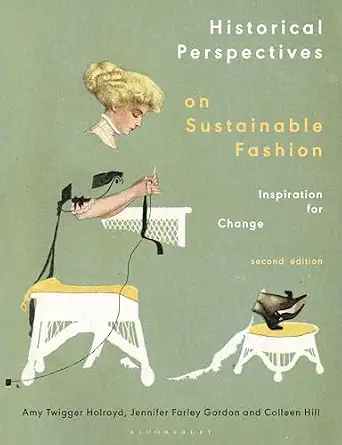 | Best for History and Context | Format: Paperback / hardcover | Type: Edited academic collection | Focus: History of sustainable fashion and change-making | VIEW ON AMAZON | See Our Full Breakdown |
| Circular Fashion: A Supply Chain for Sustainability in the Textile and Apparel Industry |  | Best for Industry Professionals | Format: Paperback | Focus: Circular economy in textile and apparel supply chains | Audience: Industry professionals and business students | VIEW ON AMAZON | See Our Full Breakdown |
| Sustainable Fashion and Textiles: Design Journeys |  | Best Overall | Format: Paperback | Focus: Sustainable fashion and textile design, lifecycle thinking | Audience: Design students, professionals, engaged general readers | VIEW ON AMAZON | See Our Full Breakdown |
| A Practical Guide to Sustainable Fashion (Basics Fashion Design) |  | Best for Design Students | Format: Paperback | Series: Basics Fashion Design | Subject: Sustainable Fashion | VIEW ON AMAZON | See Our Full Breakdown |
| Build Your Sustainable Fashion Brand: A Guided Printable Workbook |  | Best for Aspiring Brand Founders | Product Type: Guided Workbook | Format: Printable | Primary Topic: Sustainable fashion brand development | VIEW ON AMAZON | See Our Full Breakdown |
| The Sustainable Fashion Handbook |  | Best Reference Format | Product Type: Book | Format: Reference handbook | Core Topics: Principles, materials, and practices of sustainable fashion | VIEW ON AMAZON | See Our Full Breakdown |
| Sustainable Wardrobe: Practical Advice and Projects for Eco-Friendly Fashion |  | Best for Everyday Wardrobe Action | Product Type: Book | Series: Sustainable Living Series | Series Number: 6 | VIEW ON AMAZON | See Our Full Breakdown |
| Sustainable Fashion: Take Action – Bundle Book + Studio Access Card |  | Best for Students and Coursework | Format: Bundle Book + Studio Access Card | Product Type: Educational textbook package | Includes: Print book plus online Studio access | VIEW ON AMAZON | See Our Full Breakdown |
| Sustainable Fashion: Responsible Consumption, Design, Fabrics, and Materials |  | Best Materials-and-Design Deep Coverage | Format: Book | Product Type: Trade nonfiction | Core Topics: Responsible consumption, design approaches, eco-friendly fabrics and materials | VIEW ON AMAZON | See Our Full Breakdown |
| The Future of Fashion: Understanding Sustainability in the Fashion Industry |  | Best for Industry Context | ASIN: 1641371404 | Title: The Future of Fashion: Understanding Sustainability in the Fashion Industry | Product type: Book | VIEW ON AMAZON | See Our Full Breakdown |
| Sustainable Fashion’s 3D Toolkit: Virtual Prototyping for Eco-Conscious Technical Designers to Minimize Waste and Accelerate Ethical Production (Fashion Metaverse) |  | Best for Technical Designers | ASIN: B0H46HJRSZ | Product type: Book | Subject: Sustainable fashion, virtual prototyping, ethical production | VIEW ON AMAZON | See Our Full Breakdown |
| What to Wear and Why: Your Guilt-Free Guide to Sustainable Fashion |  | Best for Everyday Wardrobe Choices | ASIN: 1506497004 | Title: What to Wear and Why: Your Guilt-Free Guide to Sustainable Fashion | Format: Book | VIEW ON AMAZON | See Our Full Breakdown |
| Sustainable Fashion: A Complete Guide to Ethical Style and Conscious Consumption |  | Best for Ethical Style and Consumption | ASIN: B0DXNB19PK | Title: Sustainable Fashion: A Complete Guide to Ethical Style and Conscious Consumption | Series: Luminous Prosperity Green Book | VIEW ON AMAZON | See Our Full Breakdown |
| Mending Life: A Handbook for Repairing Clothes and Hearts |  | Best for Repair and Slow Fashion | ASIN: 1632175177 | Title: Mending Life: A Handbook for Repairing Clothes and Hearts | Format: Book | VIEW ON AMAZON | See Our Full Breakdown |
| sustainable fashion book | Format | Audience |
|---|---|---|
| Sustainable Fashion For Dummie | Paperback / ebook | Beginners and general readers |
| Historical Perspectives on Sus | Paperback / hardcover | Students, academics, design professionals |
| Circular Fashion: A Supply Cha | Paperback | Industry professionals and business students |
| Sustainable Fashion and Textil | Paperback | Design students, professionals, engaged general readers |
| A Practical Guide to Sustainab | Paperback | Fashion design students and educators |
| Build Your Sustainable Fashion | Printable | — |
| The Sustainable Fashion Handbo | Reference handbook | Eco-conscious general readers |
| Sustainable Wardrobe: Practica | — | Consumers and home wardrobe-builders |
| Sustainable Fashion: Take Acti | Bundle Book + Studio Access Card | — |
| Sustainable Fashion: Responsib | Book | Students, makers, and self-directed learners |
| The Future of Fashion: Underst | — | — |
| Sustainable Fashion’s 3D Toolk | — | — |
| What to Wear and Why: Your Gui | Book | — |
| Sustainable Fashion: A Complet | — | — |
| Mending Life: A Handbook for R | Book | — |
More Details on Our Top Picks
Sustainable Fashion For Dummies
Sustainable Fashion For Dummies earns its place as the gentlest entry point in this lineup. Where What to Wear and Why takes a lifestyle-magazine tone, this book leans on the familiar For Dummies structure — short sections, plain language, checklists — to walk newcomers through sustainable materials, conscious shopping habits, and building an ethical wardrobe step by step. Compared with Circular Fashion, which assumes industry fluency, this one translates jargon into everyday decisions: what to buy, what to skip, and how to care for what you own. The tradeoff is depth. Readers who already know their GOTS from their OEKO-TEX will find the coverage general, and it favors broad principles over specific brand guidance. But for someone starting from zero, that breadth is the point.
Pros:- Accessible, jargon-free introduction suited to complete newcomers
- Practical guidance that translates directly into shopping and wardrobe decisions
- Familiar For Dummies format makes complex topics easy to digest in short sittings
Cons:- Too basic for readers already familiar with sustainable fashion
- Focuses on general principles rather than detailed brand-specific recommendations
Best for: Everyday shoppers with no prior sustainability knowledge who want a friendly, structured starting point
Not ideal for: Readers already fluent in sustainable fashion concepts or those wanting detailed brand-by-brand recommendations
- Format:Paperback / ebook
- Series:For Dummies
- Audience:Beginners and general readers
- Focus:Sustainable materials, conscious shopping, ethical wardrobe building
- Tone:Instructional, plain-language
- Depth:Introductory
Our verdict“If you’re buying your first sustainable fashion book and want zero intimidation, start here — then graduate to something deeper like Design Journeys.”
Historical Perspectives on Sustainable Fashion: Inspiration for Change
Not every reader wants a how-to; some want the why. This collection fills that gap by tracing how fashion’s relationship with sustainability has evolved, using historical case studies as fuel for contemporary change. Compared with the practical orientation of Sustainable Wardrobe or Sustainable Fashion For Dummies, it offers almost no actionable advice — but that’s not its job. It excels at giving designers, students, and writers the intellectual grounding that how-to guides skip entirely, showing that repair, reuse, and slow production have deep precedents rather than being recent trends. The academic register is the main tradeoff: it reads closer to a university text than a coffee-table browse. For readers building a serious sustainable fashion library, it pairs well with the tactical books here rather than replacing them.
Pros:- Unique historical angle not covered by practical guides in this lineup
- Edited collection brings multiple scholarly perspectives to the topic
- Strong source of inspiration and precedent for designers and educators
Cons:- Academic tone can feel dense for general readers
- Little to no actionable guidance for everyday shopping decisions
- Narrower appeal than mainstream titles like the Dummies guide
Best for: Fashion students, researchers, and design professionals who want historical context to inform their work
Not ideal for: Casual readers looking for immediate wardrobe advice or shopping tips
- Format:Paperback / hardcover
- Type:Edited academic collection
- Focus:History of sustainable fashion and change-making
- Audience:Students, academics, design professionals
- Tone:Scholarly
- Depth:Intermediate to advanced
Our verdict“This is the thinking person’s pick — buy it for context and inspiration, not for a shopping checklist.”
Circular Fashion: A Supply Chain for Sustainability in the Textile and Apparel Industry
Circular Fashion is the most operationally serious title in this batch. Rather than asking what to hang in your closet, it asks how the entire textile and apparel supply chain can be redesigned for resource efficiency, recovery, and circularity. Compared with A Practical Guide to Sustainable Fashion, which speaks to individual designers, this book zooms out to systems level — sourcing, production loops, end-of-life strategy — making it better suited to supply chain managers, sustainability officers, and apparel business students. The density is real: a general reader who enjoyed Sustainable Fashion For Dummies will likely find this dry and technical. That specialization is exactly why it earns its role — no other book here addresses the industrial mechanics of circularity with this focus.
Pros:- Rare systems-level treatment of circularity across the textile supply chain
- Directly relevant to professionals working in apparel production and sustainability roles
- Covers resource efficiency and end-of-life strategy, not just eco-friendly materials
Cons:- Too specialized and technical for casual readers
- Assumes baseline industry knowledge that beginners won’t have
- Minimal relevance to personal shopping or wardrobe decisions
Best for: Supply chain managers, apparel industry professionals, and business students focused on sustainability operations
Not ideal for: General readers or hobbyists — the technical supply-chain focus goes far beyond wardrobe-level advice
- Format:Paperback
- Focus:Circular economy in textile and apparel supply chains
- Audience:Industry professionals and business students
- Approach:Systems and operations analysis
- Tone:Technical, professional
- Depth:Advanced
Our verdict“If your job touches apparel supply chains, this is the reference; everyone else should pick a consumer-facing title instead.”
Sustainable Fashion and Textiles: Design Journeys
Kate Fletcher’s Design Journeys stands out as the strongest all-around pick because it bridges the gap this lineup otherwise splits in two. It carries the design credibility of A Practical Guide to Sustainable Fashion while remaining readable enough for motivated non-designers, and it goes deeper into materials, lifecycle thinking, and design process than Sustainable Fashion For Dummies ever attempts. Its lifecycle framework — following fiber, fabric, and garment through production, use, and disposal — gives readers a mental model that applies whether they’re designing a collection or simply rethinking purchases. The tradeoffs: it’s denser than a beginner guide, the textile-science passages require patience, and it’s less immediately actionable than a workbook like Build Your Sustainable Fashion Brand. Still, for depth-plus-accessibility, nothing in this batch competes.
Pros:- Balances design-professional depth with general readability better than anything else here
- Lifecycle approach connects materials, production, use, and disposal into one framework
- Widely regarded as a foundational text in fashion sustainability education
Cons:- Denser and slower-moving than beginner-oriented titles
- Textile-science sections demand patience from non-technical readers
- Fewer immediate checklists or action items than practical guides
Best for: Design students, makers, and committed readers who want substantial depth without a purely academic tone
Not ideal for: Readers wanting quick tips or brand lists — this rewards sustained reading and reflection
- Format:Paperback
- Focus:Sustainable fashion and textile design, lifecycle thinking
- Audience:Design students, professionals, engaged general readers
- Approach:Design-process and lifecycle framework
- Tone:Reflective but accessible
- Depth:Intermediate to advanced
Our verdict“If you buy one book from this roundup and want it to last, this is the one — deep enough to grow with, clear enough to start with.”
A Practical Guide to Sustainable Fashion (Basics Fashion Design)
This entry earns its spot as the most classroom-ready option. Sitting in the established Basics Fashion Design series, it delivers sustainable principles in a format built for coursework — visual references, structured chapters, and exercises that make it easy for educators to teach and students to apply. Compared with Design Journeys, which offers richer conceptual depth, this guide trades philosophical framing for direct studio applicability: briefs, examples, and design processes students can use in their next project. It also stays designer-focused, unlike Circular Fashion, which addresses industry systems rather than individual practice. The drawback is ceiling — advanced designers or professionals will outgrow its introductory coverage quickly, and it assumes some design-school context that complete newcomers may lack.
Pros:- Purpose-built for design education with exercises and structured chapters
- Part of a trusted series educators already use in fashion programs
- Translates sustainability principles directly into studio practice
Cons:- Introductory depth that advanced students and professionals will outgrow
- Assumes design-school context that non-designers won’t have
- Less conceptual grounding than deeper texts like Design Journeys
Best for: Fashion design students and educators who need a structured, teachable introduction to sustainable practice
Not ideal for: Working professionals seeking advanced strategy, or non-designers wanting consumer-level advice
- Format:Paperback
- Series:Basics Fashion Design
- Subject:Sustainable Fashion
- Audience:Fashion design students and educators
- Approach:Practical, studio-oriented design guidance
- Depth:Introductory
Our verdict“The clear pick for coursework and studio learning — but if you’re past student level, move up to Design Journeys instead.”
Build Your Sustainable Fashion Brand: A Guided Printable Workbook
Most books in this roundup teach you about sustainable fashion; this one makes you do something with that knowledge. Where Sustainable Wardrobe offers projects for consumers, this printable workbook is built for the founder-to-be, walking designers, students, and entrepreneurs through planning and launching an eco-friendly label step by step. The printable format is a genuine advantage — you can reprint worksheets as your brand concept evolves instead of scribbling in margins. The tradeoff is depth: unlike Sustainable Fashion and Textiles: Design Journeys, it won’t teach you material science or industry theory. It assumes you bring the ideas and it supplies the structure. Buyer beware that the listing is thin on detail about exactly which worksheets are included, so expect a planning tool rather than a reference library.
Pros:- Action-oriented format that turns reading into an actual brand plan
- Printable worksheets can be reused and reprinted as concepts evolve
- Directly targeted at ethical fashion rather than general business advice
- Works equally well for students building portfolio projects and entrepreneurs launching labels
Cons:- Little published detail about the number or depth of included worksheets
- Narrow focus on brand-building leaves out consumer-side sustainability topics
- Not a reference book — once completed, its usefulness depends on your project
Best for: Ethical fashion entrepreneurs and design students who want a structured, fill-in-the-framework path from brand idea to launch
Not ideal for: Readers seeking theory or industry context — Circular Fashion or Sustainable Fashion and Textiles cover supply chains far more thoroughly
- Product Type:Guided Workbook
- Format:Printable
- Primary Topic:Sustainable fashion brand development
- Intended Audience:Ethical fashion designers, students, entrepreneurs
- Use Case:Planning, designing, and launching an eco-friendly fashion brand
- Approach:Interactive worksheets rather than narrative reading
Our verdict“Buy this if you’re actively building an eco-fashion brand and need structure, not if you’re still learning what sustainable fashion means.”
The Sustainable Fashion Handbook
Positioned as a reference guide rather than a narrative read, this handbook works best as the book you keep within reach — the one you consult when you need a quick grounding in principles, materials, and responsible practices. Compared with Sustainable Fashion: Take Action, which is built for coursework with structured lessons, this is the pick for self-directed readers who dip in and out rather than follow a syllabus. Its scannable, handbook-style organization is what earns it a slot over more essayistic titles like Historical Perspectives on Sustainable Fashion. The honest drawback: listing details are sparse, so buyers are trusting the format and publisher reputation more than documented content scope. It also won’t hand you projects the way Sustainable Wardrobe does — this is understanding, not doing.
Pros:- Handbook structure makes it easy to consult specific topics on demand
- Covers principles, materials, and practices in one compact volume
- Suits both newcomers and readers who already own project-based guides
- Publisher-backed reference format built for repeated use
Cons:- Sparse public detail on contents makes pre-purchase research difficult
- No project or action components for readers who learn by doing
- May overlap with more specialized titles already on your shelf
Best for: Eco-conscious readers who want a durable go-to reference on sustainable fashion principles rather than a single linear read
Not ideal for: Hands-on learners wanting projects or step-by-step action plans — this informs rather than instructs
- Product Type:Book
- Format:Reference handbook
- Core Topics:Principles, materials, and practices of sustainable fashion
- Reading Style:Consultative reference rather than linear narrative
- Audience:Eco-conscious general readers
- Use Case:Ongoing reference for responsible fashion choices
Our verdict“This is the shelf reference for readers who want reliable answers on sustainable fashion fast, not a course or a craft manual.”
Sustainable Wardrobe: Practical Advice and Projects for Eco-Friendly Fashion
Among books that stay at the consumer level, this one earns its place by pairing advice with hands-on projects — the combination most titles in this roundup skip. Where The Sustainable Fashion Handbook explains concepts, and Build Your Sustainable Fashion Brand targets founders, this book meets you at your closet: buying less, choosing better, and making things last. It sits in the established Sustainable Living Series, which matters if you like a consistent voice across eco-topic books. Its practical slant makes it a natural companion (or alternative) to Mending Life, though it spreads across the whole wardrobe rather than concentrating on repair alone. The catch is breadth-over-depth: ambitious readers chasing supply chain or design-level sustainability will find it stays deliberately everyday, without the industry rigor of Circular Fashion.
Pros:- Combines practical advice with actual projects instead of concepts alone
- Focused on actions an ordinary wardrobe-owner can take this week
- Part of a consistent series for readers building an eco-living library
- Accessible enough for complete beginners to sustainable fashion
Cons:- Consumer-level scope skips industry, design, and production topics
- Project depth in any one area is shallower than a dedicated book like Mending Life
- Format and page count details are limited in the listing
Best for: Everyday shoppers who want to green their own wardrobe with concrete habits and small projects, not theory
Not ideal for: Industry professionals or students needing supply chain, design, or production depth
- Product Type:Book
- Series:Sustainable Living Series
- Series Number:6
- Core Topics:Building a sustainable wardrobe; eco-friendly fashion practices
- Features:Practical advice plus hands-on projects
- Audience:Consumers and home wardrobe-builders
Our verdict“The most actionable pick for readers who want to change how they dress, not how the industry works.”
Sustainable Fashion: Take Action – Bundle Book + Studio Access Card
This is the only textbook-style bundle in the lineup, pairing the Sustainable Fashion: Take Action book with a Studio Access Card for supplementary online content. That structure is its entire value proposition: compared with Sustainable Fashion: Responsible Consumption, Design, Fabrics, and Materials, which covers similar topical ground in a standard trade book, this version is organized for structured learning — coursework, self-study sequences, and assessments. Students who buy the wrong edition and miss the access card will lose the interactive half of the package, so verify the bundle before checkout. The tradeoff is cost and flexibility: casual readers get a heavier, more academic treatment than Sustainable Wardrobe offers, and the digital component depends on access codes that may not suit used or borrowed copies. For enrolled students, though, it’s the format that matches how fashion programs actually teach.
Pros:- Textbook organization supports systematic study rather than casual browsing
- Studio Access Card adds interactive online learning material
- Covers industry-level sustainable practices, not just consumer tips
- Suited to both coursework and serious professional development
Cons:- Bundle pricing and access codes make it a poor value for casual readers
- Digital components may be unusable with used or resold copies
- Heavier academic tone than approachable titles like What to Wear and Why
Best for: Fashion students and professionals in structured courses who need the full textbook-plus-online-learning package
Not ideal for: Casual readers — the academic pacing, bundled pricing, and access-code requirements outweigh the content benefits
- Format:Bundle Book + Studio Access Card
- Product Type:Educational textbook package
- Includes:Print book plus online Studio access
- Intended Audience:Students and professionals studying fashion sustainability
- Focus:Sustainable practices in the fashion industry
- Learning Style:Structured coursework with supplementary digital content
Our verdict“Buy it if a course requires it or you want curriculum-grade structure; skip it for leisure reading.”
Sustainable Fashion: Responsible Consumption, Design, Fabrics, and Materials
This title stakes out the technical middle ground of the roundup: responsible consumption on one side, design, fabrics, and materials on the other. That dual coverage is what separates it from narrower picks — Sustainable Wardrobe handles the consumption half for everyday readers, while this book extends into the material science and design decisions that students and makers actually confront. Compared with the Take Action textbook bundle, it delivers comparable topical breadth in a standard trade format without access codes or coursework apparatus, which makes it the better choice for self-learners. The honest weakness is transparency: detailed content information is scarce, so depth in any single chapter is hard to verify before buying. If you already own Sustainable Fashion and Textiles: Design Journeys, expect some overlap on the design-and-materials side.
Pros:- Broad coverage spanning consumption, design, fabrics, and materials in one volume
- Standard book format with no access codes or course requirements
- Bridges consumer and industry perspectives in a single resource
- Solid standalone choice for self-directed learning
Cons:- Very limited published detail about chapter content and depth
- Potential overlap with design-focused titles you may already own
- No practical projects or action framework to apply the material
Best for: Design students, makers, and self-learners who want fabric- and design-level sustainability coverage without a textbook commitment
Not ideal for: Readers wanting hands-on projects or a consumer wardrobe guide — this stays at the informational level
- Format:Book
- Product Type:Trade nonfiction
- Core Topics:Responsible consumption, design approaches, eco-friendly fabrics and materials
- Coverage Level:Consumer and industry perspectives combined
- Audience:Students, makers, and self-directed learners
- Access Requirements:None — standalone print content
Our verdict“A sensible self-study pick for readers who want materials-and-design breadth without the textbook bundle’s commitments.”
The Future of Fashion: Understanding Sustainability in the Fashion Industry
The Future of Fashion earns its place for readers who want to understand how environmental and ethical concerns are shaping the fashion industry. Its broad industry focus makes it a useful counterpoint to Mending Life, which centers on repairing individual garments, and to the 3D Toolkit, which concentrates on technical design workflows. That scope may help readers connect sustainability choices to wider sector changes, though the available description does not identify specific case studies, methods, or practical exercises. I would choose it for a big-picture introduction to fashion and sustainability, not as a step-by-step wardrobe manual. The main tradeoff is that the topic sounds relevant but the sparse product details make its depth and accessibility hard to judge.
Pros:- Directly focuses on sustainability within the fashion industry
- Connects environmental and ethical considerations
- Offers a broader perspective than repair-focused guides such as Mending Life
Cons:- Available product data does not describe its examples, structure, or level of detail
- Its industry focus may feel too specialized for readers seeking everyday outfit advice
Best for: Readers seeking an industry-level introduction to the environmental and ethical issues shaping fashion
Not ideal for: Readers who want documented projects, detailed sourcing advice, or hands-on wardrobe and repair instructions
- ASIN:1641371404
- Title:The Future of Fashion: Understanding Sustainability in the Fashion Industry
- Product type:Book
- Subject:Sustainability in the fashion industry
- Themes:Environmental and ethical considerations
- Stated focus:How sustainability is shaping the industry’s direction
Our verdict“Choose this for a broad look at sustainability across the fashion sector; pick Mending Life for practical garment repair.”
Sustainable Fashion’s 3D Toolkit: Virtual Prototyping for Eco-Conscious Technical Designers to Minimize Waste and Accelerate Ethical Production (Fashion Metaverse)
Sustainable Fashion’s 3D Toolkit is the most specialized pick here: it focuses on virtual prototyping and 3D workflows for technical designers seeking to reduce waste and support ethical production. That gives it a different job from The Future of Fashion, which takes an industry-wide view, and What to Wear and Why, which is framed around everyday wardrobe choices. Virtual prototypes can help designers refine ideas before producing physical samples, making the sustainability angle directly relevant to development work. The tradeoff is a narrow audience: readers without technical fashion experience may find little that applies to their own shopping or closet. The product data also provides no detail about software, exercises, or the toolkit’s specific workflow, so buyers cannot assess its practical depth from the description alone.
Pros:- Centers virtual prototyping as a waste-reduction approach
- Targets technical design workflows rather than general sustainability discussion
- Connects digital design with ethical production goals
Cons:- The technical focus may exclude readers without fashion design experience
- Available product data does not name software, exercises, or specific methods
- Its fashion metaverse theme may be less relevant to readers focused on physical clothing choices
Best for: Technical fashion designers exploring 3D prototyping to reduce physical samples and support more efficient production
Not ideal for: General readers and beginner sewists looking for accessible wardrobe advice or repair techniques
- ASIN:B0H46HJRSZ
- Product type:Book
- Subject:Sustainable fashion, virtual prototyping, ethical production
- Theme:Fashion Metaverse
- Stated format:Toolkit-style guide
- Primary audience:Technical fashion designers
- Stated workflow:3D virtual prototyping
Our verdict“Pick this if you work in technical fashion design and want a 3D workflow focus; choose What to Wear and Why for everyday wardrobe guidance.”
What to Wear and Why: Your Guilt-Free Guide to Sustainable Fashion
What to Wear and Why is aimed at readers who want sustainable fashion to inform ordinary clothing decisions. Its practical, guilt-free framing sets it apart from The Future of Fashion, which looks at industry direction, and the 3D Toolkit, which addresses professional design processes. The description points to advice for building a more environmentally conscious wardrobe, making this the clearest fit for someone deciding what to wear and why. The tone also suggests guidance without making sustainability feel like a test of personal virtue. The limitation is that the available data does not say what advice or wardrobe methods the book includes. Readers seeking named projects or concrete repair instruction may find Mending Life a more clearly defined match.
Pros:- Frames sustainable clothing choices for everyday readers
- Uses a guilt-free approach that may feel more welcoming than prescriptive advice
- Focuses on building a more environmentally conscious wardrobe
Cons:- Available product data does not specify the book’s advice or projects
- Its practical depth is unclear from the description
- Does not indicate technical design or garment repair instruction
Best for: Everyday shoppers who want practical, nonjudgmental guidance for making more environmentally conscious wardrobe choices
Not ideal for: Readers who need a detailed repair manual or technical guidance on fashion design and production
- ASIN:1506497004
- Title:What to Wear and Why: Your Guilt-Free Guide to Sustainable Fashion
- Format:Book
- Subject:Sustainable fashion
- Stated approach:Guilt-free clothing choices
- Stated focus:Practical advice for an environmentally conscious wardrobe
Our verdict“Choose this for approachable wardrobe guidance; choose Mending Life if repairing existing clothes is your main goal.”
Sustainable Fashion: A Complete Guide to Ethical Style and Conscious Consumption
Sustainable Fashion: A Complete Guide to Ethical Style and Conscious Consumption is the most direct match for readers interested in both how they dress and how they consume. That pairing separates it from What to Wear and Why, whose description centers on wardrobe choices, and from The Future of Fashion, which takes a broader industry view. Its stated ethical-style and conscious-consumption focus could suit readers who want those two concerns addressed together. Still, the source data offers no chapter details, methods, or examples, so the word “complete” cannot be evaluated from the listing alone. The series information identifies it as book four in the Luminous Prosperity Green Book series, which may matter to readers deciding whether to seek related books. Readers who need a clearly described practical skill, such as mending, have a more specific option in Mending Life.
Pros:- Explicitly pairs ethical style with conscious consumption
- Addresses personal choices rather than focusing only on industry systems
- Includes series and book-number information in the available data
Cons:- No detailed contents, methods, or examples are provided
- The stated scope is difficult to judge despite the title’s broad claim
- Does not identify specific hands-on projects or repair instruction
Best for: Readers looking for a guide framed around both ethical personal style and more conscious consumption
Not ideal for: Buyers who need a clearly documented curriculum, specific wardrobe projects, or step-by-step repair guidance
- ASIN:B0DXNB19PK
- Title:Sustainable Fashion: A Complete Guide to Ethical Style and Conscious Consumption
- Series:Luminous Prosperity Green Book
- Book number:4
- Stated subject:Sustainable fashion
- Stated focus:Ethical style and conscious consumption
Our verdict“Consider this for its combined ethical-style and consumption focus, but choose Mending Life for a clearly specified practical skill.”
Mending Life: A Handbook for Repairing Clothes and Hearts
Mending Life earns the most hands-on role in this group by linking clothing repair with a mindful approach to sustainable fashion. Repairing a garment can extend its use, making this a tangible alternative to the broader wardrobe advice described for What to Wear and Why or the industry discussion in The Future of Fashion. The blend of technique and slow-fashion philosophy may appeal to readers who want practical action alongside reflection. The tradeoff is its narrower scope: someone seeking help with shopping choices, fabric impacts, or design technology will likely need another book. The product data also does not name specific repair methods or skill levels, so beginners cannot tell how much instruction the handbook provides before choosing it.
Pros:- Combines clothing repair with sustainable fashion principles
- Encourages extending the life of garments instead of replacing them
- Offers a practical focus that contrasts with industry-oriented titles
Cons:- The handbook’s repair methods and skill level are not specified in the available data
- Its repair-centered scope does not cover the full range of sustainable shopping questions
- No detailed product information is provided
Best for: Readers who want to learn clothing repair while adopting a slower, more mindful approach to fashion
Not ideal for: Shoppers seeking broad buying advice, textile-industry analysis, or 3D design workflows
- ASIN:1632175177
- Title:Mending Life: A Handbook for Repairing Clothes and Hearts
- Format:Book
- Subject:Clothing repair and sustainable fashion
- Stated focus:Patching and mending garments
- Theme:Slow fashion and mindful clothing
Our verdict“Choose this if garment repair is your route into slow fashion; pick What to Wear and Why for broader everyday wardrobe choices.”

How We Picked
I compared the 15 titles by the job they appear designed to do: introduce sustainable fashion, support everyday clothing decisions, teach design or repair skills, or explain industry systems and emerging methods. I gave broader, accessible books an advantage for readers who have not settled on a specific topic, while hands-on books stand out when their format connects directly to a clear task. I also considered how well each title’s stated focus matches the sustainable fashion question a buyer is trying to answer.
The order reflects usefulness across likely reader needs, clarity of purpose, and how distinct a book’s focus is within this group. A specialist title can be the stronger choice for its intended audience even when its narrow scope makes it less suitable as a general introduction. Product details here are limited to the supplied titles, so readers should check the edition, format, contents, and any included access materials before choosing.
Factors to Consider When Choosing Sustainable Fashion Books
Start with the change you want a book to help you make. Sustainable fashion covers personal wardrobe choices, textile and product design, manufacturing systems, and clothing care, so titles with similar wording can serve very different readers.
Choose a reader level that matches your starting point
A beginner benefits from plain-language framing and a broad map of the subject before tackling specialized production methods or supply chains. More advanced readers may find a general introduction too wide and prefer a book centered on design, materials, or industry operations. A common mistake is choosing a technical title because it sounds more authoritative, even when its terminology or focus does not match the reader’s needs. Check the contents and sample pages when available, especially if the book will be used for study or professional reference. If several people will share the book, a broad overview can be more useful than a narrow manual.
Decide whether you want ideas or something to do
Some books explain why fashion systems create environmental and social pressures; others are structured around projects, exercises, or practical wardrobe actions. Pick based on whether you want to understand the issue, change your own habits, or develop a skill. A workbook can be useful when you want prompts to move a project forward, but it may not replace a reference book with wider background. Likewise, an overview may clarify the choices without giving step-by-step repair or design instruction. Look for evidence of the format in the description rather than assuming every book labeled a guide is a how-to.
Match the subject to your sustainability goal
Personal consumption, clothing repair, textile selection, brand development, and supply-chain redesign are related, but they require different knowledge. Before buying, write down the question you want answered, such as how to care for clothes longer or how circular systems affect apparel production. That simple step can prevent a mismatch between a lifestyle book and a professional text. Readers interested in several parts of the field may do better with a broad book first, then add a specialist title when a specific need emerges. If your goal is narrow, a focused book can save time by giving that topic more attention.
Check the format and any included access
Book formats affect how comfortably you can use diagrams, worksheets, projects, and reference material. A printable workbook may be most useful when you can write in or print its activities, while a title with a studio access card may depend on access terms that should be checked before purchase. Digital and print editions can also differ in how they display technical illustrations or exercises. Buyers often focus on the title and overlook whether the format supports the intended activity. Confirm what is included and whether access has limits before relying on a companion resource.
Balance breadth against depth
A wide-ranging book can connect wardrobe choices to materials and the fashion industry, but it has less room to teach every subject in depth. A specialist book can provide more focused coverage while leaving other parts of sustainable fashion untouched. This is a tradeoff, not a quality flaw: the best scope depends on whether you are exploring or solving a defined problem. Avoid expecting one title to function at once as a beginner’s guide, technical reference, and repair manual. If you need both a big-picture view and a practical skill, plan for two complementary books rather than demanding both jobs from one.
Look for the kind of evidence you need
Readers making personal wardrobe choices may prioritize clear explanations and usable advice; students and professionals may need sourcing, case studies, technical detail, or references. These needs are easy to confuse when descriptions rely on broad claims about ethical or eco-conscious fashion. Inspect chapter headings, publication details, and sample pages to see whether the book explains methods and tradeoffs or mainly presents recommendations. For fast-changing topics such as digital production, check publication date and whether the examples still reflect current tools. A book can be valuable as an introduction even when it is not the final word on a changing field.
Frequently Asked Questions
Which book should I choose if I am new to sustainable fashion?
I would start with Sustainable Fashion For Dummies if you want an accessible overview before choosing a narrower topic. If you are more interested in how design decisions shape clothing, A Practical Guide to Sustainable Fashion may fit better. Readers who mainly want practical wardrobe changes can look at Sustainable Wardrobe or What to Wear and Why. Check the contents first, since an introductory label does not tell you how much space a book gives to action versus background. Choose the one that answers the question you are already asking.
Which title is the best fit for repairing clothes?
Mending Life: A Handbook for Repairing Clothes and Hearts is the most directly repair-focused title in this group. Sustainable Wardrobe also signals a practical approach, but its broader focus may spread attention across more than mending. Before choosing, check whether you need illustrated instructions, project ideas, or reflections on clothing care. A repair-centered handbook may be more useful than a general sustainability overview if your goal is to keep garments in use. If you are learning a specific sewing technique, confirm that the book covers it before buying.
Which book is more useful for a fashion student or designer?
The right choice depends on the work you are doing. A Practical Guide to Sustainable Fashion and Sustainable Fashion and Textiles: Design Journeys point toward design learning, while Circular Fashion focuses on supply chains. The specialized Sustainable Fashion’s 3D Toolkit is aimed at virtual prototyping and technical design, so it may suit a narrower professional need. Compare chapter lists and technical depth with your course or project requirements. A broad consumer guide may offer context, but it is unlikely to replace targeted design or production material.
Should I buy a broad overview or a specialized book first?
Choose a broad overview if you are still deciding which part of sustainable fashion matters most to you. It can help connect clothing choices, materials, design, and industry practices, though it may treat each subject briefly. A specialist book makes more sense when you already have a clear goal, such as developing a fashion brand or learning about circular supply chains. The common mistake is buying a focused title for general curiosity and then finding that it leaves out the wider context. If you are unsure, start broad and add a specialist reference when a concrete question emerges.
What should I check before choosing a workbook or book with online access?
Confirm whether the resource is a printed workbook, a printable file, or a book paired with a separate access card. Check what the activities involve and whether you can complete them with the tools and time you have. For Build Your Sustainable Fashion Brand, consider whether you want guided prompts for developing a label; for the bundle edition, verify what studio access includes and any activation conditions. Access terms and formats can differ by edition or seller, so read the listing details carefully. A conventional book may be a better fit if you want continuous reading rather than exercises or companion materials.
Conclusion
For the broadest starting point, I recommend Sustainable Fashion For Dummies as the best overall choice. Sustainable Wardrobe is my best value-style pick for readers who want practical wardrobe guidance and projects in one direction, while The Sustainable Fashion Handbook is the best premium-style choice for someone seeking a dedicated reference; check its contents to confirm the scope you need. Beginners can also choose What to Wear and Why for a personal style angle. For specific needs, pick Mending Life for repair, Build Your Sustainable Fashion Brand for guided brand work, or Sustainable Fashion’s 3D Toolkit for virtual prototyping. Match the book to the task you want to tackle, and its place in the lineup becomes easier to judge.
Fall Picks
fall essentials
As an affiliate, we earn on qualifying purchases.