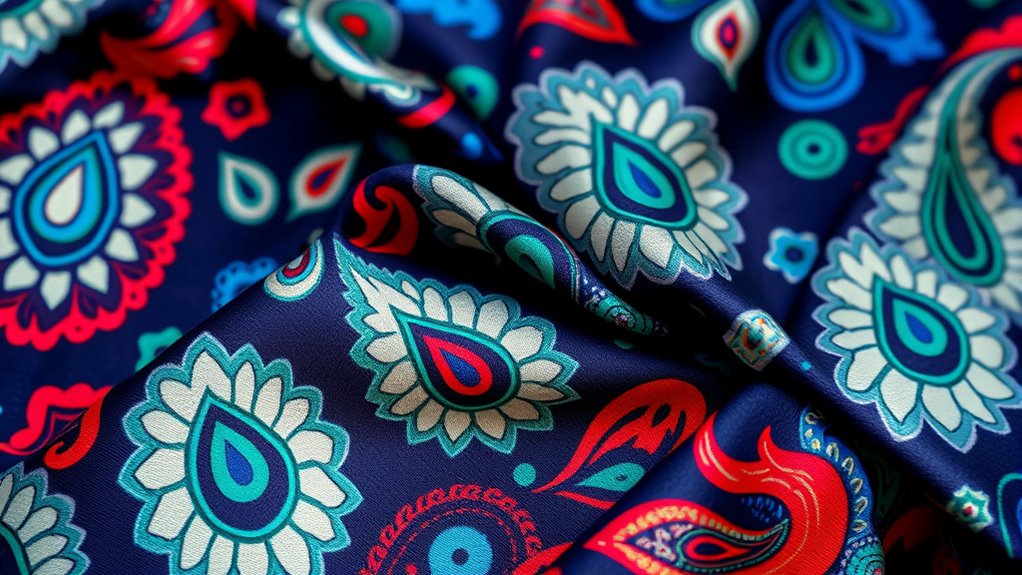

Paisley’s journey starts in Persia, where artisans created teardrop motifs symbolizing life and eternity. Traders brought these designs to India, blending local styles and making them symbols of luxury. European merchants adopted the pattern, naming it after Paisley, Scotland, which produced famous shawls. Over time, it reemerged in fashion, from Victorian styles to today’s streetwear, representing craftsmanship and cultural exchange. If you continue exploring, you’ll uncover how this timeless pattern has woven through history and modern style.
Key Takeaways
- Paisley originated in Persia centuries ago, symbolizing life and eternity through teardrop motifs.
- The pattern was introduced to India via traders, blending local textile styles and gaining cultural significance.
- European traders and the East India Company popularized paisley in the 17th and 18th centuries, naming it after Paisley, Scotland.
- It experienced a revival during the Victorian era, becoming associated with luxury, fashion, and versatility.
- Today, paisley’s vibrant designs continue to influence modern fashion and pop culture, symbolizing timeless craftsmanship.
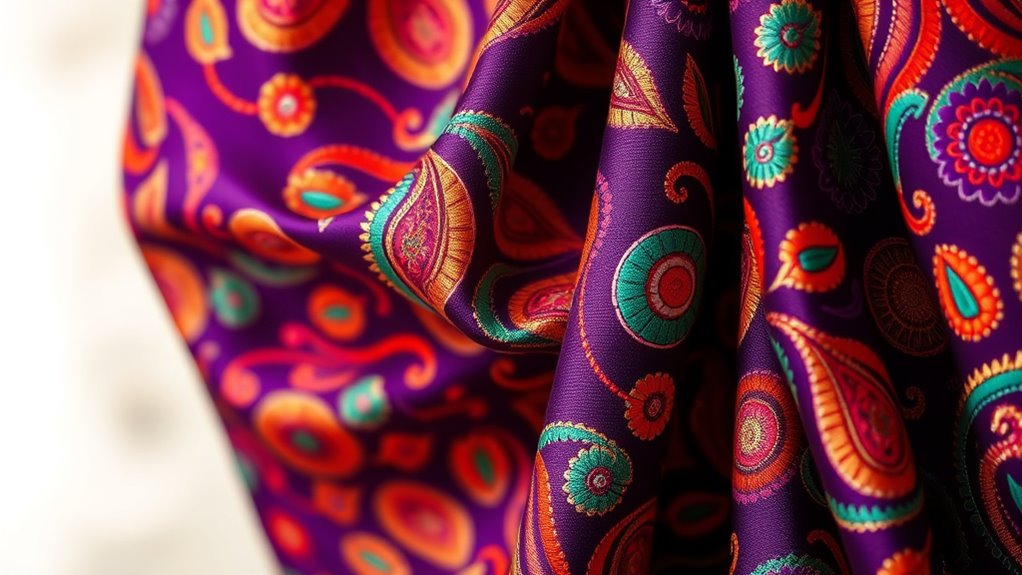
Have you ever wondered how a small town can shape someone’s destiny? It’s fascinating to think that a pattern as intricate as paisley could have such a rich journey, starting from its historical origins and now experiencing a fashion resurgence worldwide. The story begins centuries ago in Persia, where artisans crafted the distinctive teardrop-shaped motifs that would eventually become synonymous with this pattern. These designs weren’t just decorative; they held cultural and spiritual significance, representing life and eternity. When traders brought these textiles to India, the pattern evolved further, blending with local styles and becoming an integral part of Indian textiles. Over time, the intricate paisley design gained fame across regions, symbolizing luxury and craftsmanship.
Discover how Persia’s paisley pattern journeyed from cultural symbol to global fashion icon.
As European traders encountered these textiles, especially in the 17th and 18th centuries, they brought the pattern back home, where it was embraced by the East India Company and other merchants. It was during this period that the pattern was named “paisley,” after the Scottish town of Paisley, which became a hub for producing textiles featuring this motif. The town’s looms churned out shawls and fabrics that showcased the pattern’s complexity, making it a popular fashion statement among the European elite. These shawls, often imported from India, became highly sought after, turning paisley into a symbol of elegance and wealth.
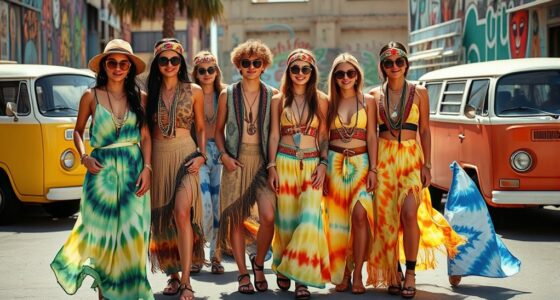
Fast forward to the 19th and 20th centuries, when paisley experienced a major fashion resurgence—thanks to the Victorian obsession with exoticism and the rise of textile manufacturing. During this period, the pattern was adopted by designers and fashion houses, becoming a staple in everything from dresses to accessories. It wasn’t just about tradition anymore; paisley became a versatile, contemporary print that could evoke bohemian flair or sophisticated elegance, depending on how it was styled. Its ability to transform and adapt helped it transcend cultural boundaries and stay relevant through decades of changing trends. Additionally, modern fashion has embraced textile revival by combining traditional motifs with contemporary designs.
Today, paisley’s journey continues as it reemerges in modern fashion and pop culture. From high-end runway shows to streetwear, the pattern’s intricate details and vibrant history make it a favorite again. Its origins remind us of a time when textiles carried stories across continents, and its ongoing popularity proves that good design, rooted in deep history, never really fades away. The pattern’s resilience and adaptability demonstrate how a simple motif can shape identities and influence fashion, linking past to present in a timeless dance.

vimate Satin Head Scarf for Women-Fashion Printed Blue Silk Feeling Square Scarf for Hair Bandanas (Style 48)
- Fabric and Size: Silky polyester fabric, 27.5×27.5 inches
- Versatile Accessories: Can be used as hairbands, scarves, and more
- Multiple Styles: Variety of designs for a fashionable look
As an affiliate, we earn on qualifying purchases.
As an affiliate, we earn on qualifying purchases.
Frequently Asked Questions
How Did Paisley Patterns Originate in Persia?
You might not know that paisley patterns originated in Persia, where they held symbolic meanings representing life, eternity, and spirituality. As trade routes expanded, these intricate designs spread across Asia and into Europe, influencing textile art everywhere. You can see how their detailed shapes and cultural significance made paisley a symbol of beauty and mystique, evolving over centuries into a beloved motif in fashion and design worldwide.
What Materials Are Traditionally Used in Paisley Textiles?
You’ll find that traditional paisley textiles use fiber types like wool, silk, and cotton. These materials are chosen for their durability and ability to hold vibrant dyes. Skilled artisans employ dyeing techniques such as vegetable dyes and resist dyeing, which enhance the intricate patterns. The combination of fiber types and dyeing methods creates the rich, detailed look that makes paisley textiles so distinctive and timeless.
When Did Paisley Become Popular in Western Fashion?
You might think paisley gained popularity in the 19th century, but its true rise in Western fashion history happened earlier, in the late 18th century. Its intricate textile design became a symbol of luxury and exoticism, spreading through Britain and Europe. You see, this pattern’s journey from Persia to Western wardrobes highlights its cultural significance and timeless appeal, making it a staple in fashion history and textile design even today.
Are There Cultural Significances Behind Paisley’s Design Elements?
You’ll find that paisley’s design elements carry rich cultural significance, with symbolic meanings that vary regionally. For example, in Persia, the boteh motif represents life and eternity, while in India, it’s linked to spirituality. These regional variations influence how the pattern is interpreted, making paisley more than just a decorative element—it’s a reflection of cultural beliefs and traditions that have traveled and evolved over time.
How Has Paisley’s Popularity Evolved in Modern Pop Culture?
You’ve probably noticed paisley’s wild comeback in modern pop culture, especially in bohemian fashion and contemporary accessories. Its popularity has skyrocketed, making it the go-to pattern for those wanting to appear effortlessly stylish. From festival-ready scarves to trendy shoes, paisley’s charm endures, proving that even a pattern with ancient roots can become a symbol of coolness. Who knew a teardrop motif could become everyone’s favorite fashion statement?
Conclusion
As you explore Paisley’s journey from Persia to pop culture, you realize how a pattern can tell a story. Did you know that over 80% of fashion enthusiasts worldwide have worn paisley-inspired designs? It’s incredible how this ancient motif has evolved, weaving through centuries and styles. So, next time you see a paisley scarf or shirt, remember it’s more than just a pattern—it’s a piece of history that continues to influence today’s trends.