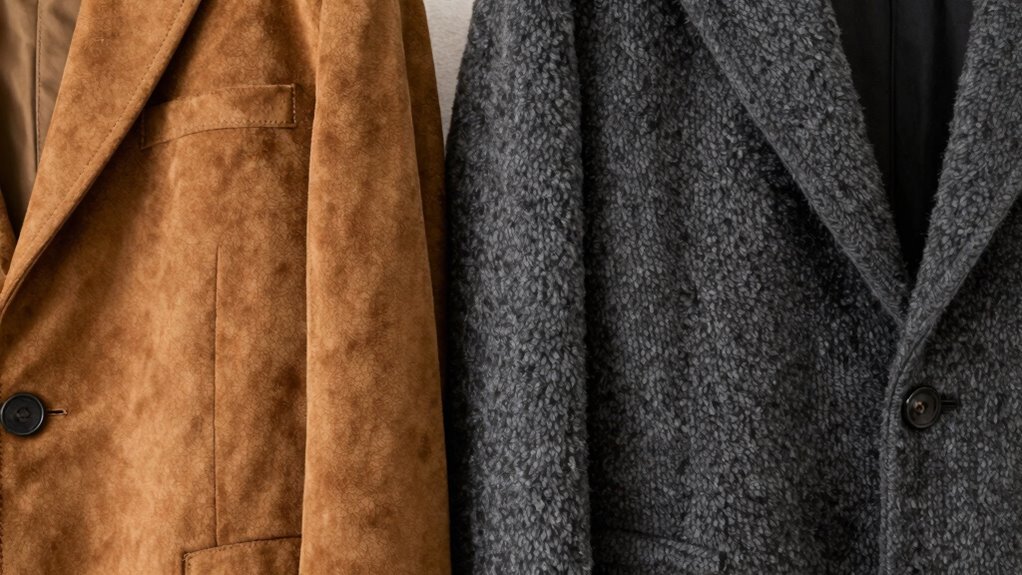
Suede jackets provide a stylish look but offer less warmth, making them better for dry, mild winter days. Their soft texture doesn’t trap heat well, so they’re not ideal for harsh cold. Wool coats, on the other hand, trap heat effectively with their thick fibers, making them great for colder climates. They’re more durable and reliable in winter weather. If you want to discover how each offers different kinds of warmth, keep exploring the details.
Key Takeaways
- Wool coats provide substantial, consistent warmth due to their thick, densely woven fibers trapping heat effectively.
- Suede jackets offer lighter, more superficial warmth suitable for mild, dry winter days.
- Wool’s insulating properties make it ideal for extremely cold climates and harsh winter conditions.
- Suede’s warmth is less effective in wet or damp conditions, as moisture compromises insulation and material integrity.
- The textured surface of suede offers style but contributes less to heat retention compared to the dense fiber structure of wool.
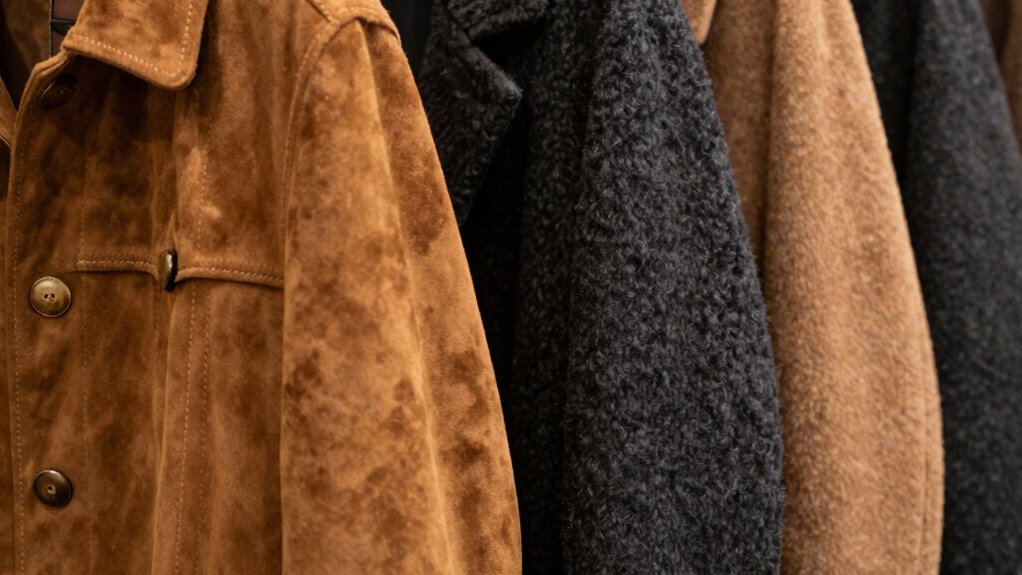
When it comes to elevating your winter wardrobe, suede jackets and wool coats are two versatile options that combine style with functionality. Both pieces contribute significantly to your overall look, but they do so in very different ways, especially when it comes to creating warmth and adapting to various settings. Understanding these differences helps you make smarter choices based on your needs and the kind of warmth you seek.
Suede jackets offer exceptional fashion versatility. Their soft, textured surface lends a classic, refined look that can be dressed up or down with ease. Whether you’re heading out for a casual weekend or dressing for a more polished occasion, a suede jacket fits seamlessly into your wardrobe. Its sleek appearance complements a variety of outfits, from jeans and t-shirts to tailored trousers. However, when it comes to material durability, suede has its limitations. The delicate nature of the material means it’s more susceptible to damage from moisture, stains, and rough handling. You need to be mindful of the weather and take proper care to maintain its appearance, making suede better suited for dry, mild winter days. Proper maintenance and material care are essential to prolong its lifespan.
Suede jackets are versatile and stylish but require careful maintenance in dry, mild winter weather.
Wool coats, on the other hand, excel in providing substantial warmth, making them a reliable choice for colder climates. Their thick, densely woven fibers trap heat effectively, so you stay cozy even in freezing temperatures. Wool coats are also incredibly durable; their sturdy fabric withstands daily wear and tear, and with proper maintenance, they can last for many seasons. The material’s durability makes wool coats a smart investment, especially if you’re looking for a piece that can endure the rigors of winter. Additionally, wool is a naturally sustainable material, which aligns with eco-conscious fashion choices. While wool coats often have a more traditional or classic look, modern designs now incorporate sleek cuts and contemporary details, allowing you to enjoy both style and practicality.
Ultimately, your choice depends on what you prioritize—whether it’s the fashion versatility of a suede jacket or the material durability and warmth of a wool coat. Suede gives you a refined, adaptable look but requires more care, while wool offers dependable warmth and longevity, even if it’s a bit more utilitarian in appearance. Both options elevate your winter wardrobe, but the key is matching the right piece to your climate, lifestyle, and style preferences. Knowing these differences ensures you’ll stay stylish, warm, and prepared no matter the weather.
As an affiliate, we earn on qualifying purchases.
Frequently Asked Questions
Which Material Is More Environmentally Sustainable, Suede or Wool?
Wool is generally more environmentally sustainable than suede because it’s an eco-friendly material, especially when sourced responsibly. Wool production involves animal welfare considerations, but when farms practice humane treatment, it has a lower environmental impact. Suede, made from animal hides, often involves more chemical processing and less sustainable practices. So, if you’re aiming for eco-friendliness, wool is usually the better choice, aligning with sustainable and ethical priorities.
How Do Suede Jackets Compare in Durability to Wool Coats?
Suede jackets tend to be less durable than wool coats, especially with frequent seasonal styling or exposure to elements. Wool offers better resilience, maintaining its shape and warmth over time, making it ideal for versatile fashion choices throughout the seasons. You’ll find wool coats withstand wear and tear longer, while suede may require more care to keep looking sharp, but both add unique style to your wardrobe.
Can Suede Jackets Be Waterproofed Effectively?
Yes, you can waterproof suede jackets effectively. Applying a waterproof treatment creates a water-resistant barrier, helping your jacket repel rain and snow. Make sure to choose a product specifically designed for suede, and follow the instructions carefully. Regularly reapplying the treatment will maintain water resistance. Keep in mind, waterproofing won’t make suede completely waterproof, but it substantially improves its ability to withstand wet conditions.
Are Wool Coats Suitable for Humid or Rainy Climates?
Ever wondered if wool coats are good in humid or rainy climates? They aren’t ideal because wool offers limited water resistance and isn’t fully waterproof. Wool coats are better suited for cooler, dry weather since they trap heat and wick moisture. For humid or rainy environments, look for water-resistant or waterproof outerwear to stay dry and comfortable. Wool’s warmth works best where moisture isn’t constantly present.
How Should I Care for and Clean Suede Versus Wool Garments?
You should care for suede and wool garments differently. For suede, use a suede brush for stain removal and avoid water; keep it stored in a breathable bag away from direct sunlight. For wool, gently spot clean stains with a damp cloth and use wool-specific detergents. Store wool in a cool, dry place, preferably folded, and keep suede protected with a suede protector spray. Proper care guarantees longevity for both.
Conclusion
Whether you choose the softness of suede or the coziness of wool, each jacket offers a unique warmth that suits your style and needs. Suede jackets bring a smooth, sophisticated touch, while wool coats provide a hearty, traditional embrace. Both protect you from the cold, both elevate your look, and both promise comfort in different ways. So, pick what feels right, wear it confidently, and face the chill with warmth, style, and purpose.