TL;DR
Luxury silk scarves combine fiber quality, weave, design, craftsmanship, and finishing; the word “silk” on a label does not tell you everything. Match the scarf’s fabric and dimensions to how you’ll wear it, check its composition and care instructions, and judge value by the details and your own use rather than brand name alone.
A silk scarf can turn a plain white shirt into an outfit you remember—or spend years tucked in a drawer because it slips, feels too delicate, or never seems to match. The difference often starts with fabric, size, and how you plan to wear it, not the price tag.

Get your wardrobe favorites delivered free with Prime
- Fast, free delivery on millions of items
- Prime Video, Amazon Music and more included
- Member-only deals all year
Luxury silk scarves draw their appeal from several details working together: the silk fiber, the weave, the print, the finishing, and the story behind the piece. That combination can feel like a small painting you can wear, but “luxury” is not a guarantee of quality, easy care, or resale value.
Here’s how to read the details, choose a scarf for your wardrobe, style it in everyday life, and care for it so it keeps its color and drape. You’ll also see what to check before buying, since sizing varies by brand and similar-looking scarves can behave very differently.
Judge luxury by fiber, weave, craftsmanship, design, finishing, and transparent production details—not the word “silk” or label prestige alone.
Use the fabric to guide your choice: twill offers structure, satin has a glossy face, and chiffon or georgette drapes lightly.
Momme measures fabric weight; a higher number does not automatically mean better quality.
Match the scarf’s dimensions to your intended style and check actual measurements because sizing varies by brand.
Follow the care label, keep silk away from direct sun and rough surfaces, and avoid rubbing stains.
What makes a silk scarf feel luxurious?
A luxury silk scarf gets its character from fiber, weave, design, craftsmanship, and finishing working together. The word “silk” alone does not tell you the fiber grade, fabric weight, or how the scarf was made. Think of the label as the first page of a story, not the whole book.
Mulberry silk is widely used for fine scarves because its long, smooth filaments can create an even fabric with a soft feel. But the weave changes the experience: twill has structure and often suits detailed prints, while satin feels smooth and glossy on one side. Chiffon and georgette are lighter and more fluid, so they flutter and drape differently around your neck.
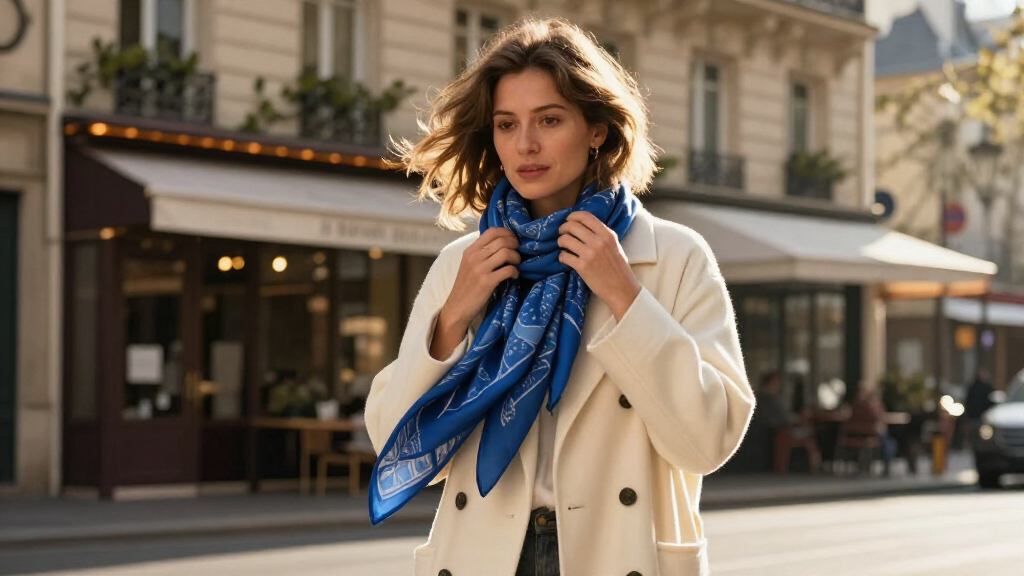
Finishing adds another clue. A hand-rolled hem is a traditional detail, but it does not prove that every part of a scarf is superior. A clean, even edge and a print that looks sharp on the fabric matter too. For example, a square scarf with crisp blue-and-cream equestrian motifs might hold its shape as a neckerchief, while a sheer floral chiffon scarf moves more like a ribbon in a breeze.
For a useful buying check, look for the fiber composition, weave, dimensions, care label, and production details. If a brand describes its silk as ethical or sustainable, ask what that means and whether it shares verifiable information about sourcing or production. Luxury usually comes from a combination of visible craft and useful transparency, not a grand adjective.
Popular right now

Dyson Ball Allergy Upright Vacuum

Vitamix Propel Series 510 Professional-Grade Blender, 48 oz, Slate

Hisense E6 Cinema Series 55-Inch 4K UHD QLED Smart Fire TV
As an affiliate, we earn on qualifying purchases.
Which silk weave suits the way you dress?
The best silk weave depends on the look and movement you want: twill feels structured, satin looks glossy, and chiffon or georgette drapes lightly. None is universally best. A scarf that stays neatly knotted may suit you better than one that floats around your shoulders, even if both carry intricate prints.
Use this quick comparison when a product page gives you the fabric name but little explanation:
| Fabric | Feel and appearance | Useful for |
|---|---|---|
| Silk twill | Structured, with a subtle diagonal texture | Neck knots, squares, and detailed prints |
| Silk satin | Smooth, with a glossy face | Polished accents and fluid draping |
| Silk chiffon | Very light and sheer | Airy wraps and layered styling |
| Silk georgette | Light with a softer, slightly textured surface | Loose ties and gentle movement |
Imagine packing for a work trip. A twill square can sit under a blazer collar without collapsing, while chiffon may suit a warm evening better, when you want something soft around your shoulders. The weave also affects how the print reads: a firm twill can make fine lines look crisp; a sheer fabric lets colors overlap against whatever you wear beneath it.
Momme is a traditional measure of silk fabric weight. It can help you compare similar scarves, but a bigger number only signals heavier fabric; it does not prove better quality. Check the care instructions as well, since dyes and finishes can change what the scarf needs after a day in perfume, sun, or rain.
How can you tell whether the price is worth it?
A silk scarf’s price makes more sense when you compare its material, construction, design, provenance, and your likely use. A famous label may contribute to the cost, but it cannot tell you whether the scarf’s color suits your wardrobe or whether you’ll enjoy caring for it. Value is personal: a well-made scarf you wear weekly may serve you better than a rare print you avoid touching.
Before buying, walk through these checks:
- Read the composition label. Smoothness and shine alone cannot confirm pure silk.
- Check the fabric and dimensions. Confirm the weave and measure the scarf against one you already wear.
- Inspect the finishing. Look at the hem, seams, print clarity, and how the fabric falls.
- Look for production details. “Made in” may describe only the final stage, not where weaving, printing, or finishing took place.
- Read the care instructions. Specialist cleaning can change the real cost and effort of ownership.
For example, if you want a scarf to tie around your hair on busy mornings, a narrow, easy-to-style piece may deliver more everyday value than a large collectible square. If you want an heirloom gift, you might care more about a meaningful pattern, clear provenance, and careful packaging. Ask what makes a silk scarf luxurious in the specific item in front of you; the answer should include details you can verify.
Resale can be part of the decision, but it is not a promise of profit. Recognizable designs may attract secondhand buyers, yet price depends on condition, rarity, authenticity, documentation, and demand. Treat resale as a possible bonus, not the reason to stretch your budget.
How do you choose a size you’ll actually wear?
Choose a scarf size by starting with the job you want it to do: small squares and narrow scarves suit hair or bag styling, while large squares offer more ways to wrap and drape. Measurements vary by brand, so check the listed dimensions rather than assuming that “small,” “classic,” or “large” means the same thing everywhere.
A practical test: take a scarf you already own and try the style you have in mind. If you want a neckerchief, fold that scarf into a triangle and tie it gently. If you want a head covering or shoulder wrap, spread it out across your shoulders. That quick try-on tells you more than a product photo with a model wearing a perfectly arranged knot.
Picture a weekend lunch in a denim jacket. A medium square can add a pop of red at the neckline, while a slim scarf can thread through a ponytail or loop around a tote handle. On a breezy evening, a larger square may work as a loose wrap. Each option gives the print a different amount of room to show itself.
Color matters as much as size. Look at the colors you wear most often—perhaps navy, camel, or soft green—and decide whether you want a quiet accent or a bold contrast. A scarf does not need to match every outfit. It can act like a small window of color in a familiar wardrobe, giving a plain coat a new mood without asking you to change how you dress.
Five easy ways to style a silk scarf
A silk scarf works best when you tie it loosely enough to move without straining the fabric. You can wear one at the neck, in your hair, on a bag, through belt loops, or as a light wrap. Start with a simple fold and adjust it to feel comfortable; there is no single right way to wear it.
Try these five options with a scarf you already own:
- Neck knot: Fold a square into a triangle or long band, then tie a soft knot at the front or side.
- Headband: Fold a narrow scarf into a strip and knot it beneath your hair at the nape.
- Hair tie: Wrap a slim scarf around a ponytail, leaving the ends to move freely.
- Bag accent: Loop it around a handle for a small burst of color; keep it clear of rough hardware.
- Belt detail: Thread a narrow scarf through belt loops, tying it at the side so the knot does not dig in when you sit.
Suppose you are wearing a black sweater and jeans to meet a friend. A small cream-and-rust scarf at the neck can warm up the outfit, while the same print on your bag feels more playful. The fabric becomes part of how you express your style, not a test you have to pass.
Avoid tying the scarf so tightly that the fibers crease or strain. If it is a light chiffon, a double knot may flatten its delicate drape; a sturdier twill can usually handle a more defined fold. Try the style at home first, then notice whether it stays put while you walk, turn your head, or reach for your coffee.
How do you keep silk looking bright and smooth?
To protect a silk scarf, follow its care label and limit exposure to sunlight, perfume, cosmetics, perspiration, and friction. Silk is a natural protein fiber, and its feel, sheen, drape, and durability vary with the yarn, weave, finishing, and care. A scarf may look sturdy on the hanger yet need gentle handling at the sink.
Care instructions differ by scarf. Some call for specialist cleaning; others permit careful hand-washing. If the label allows hand-washing, use cool water and detergent made for silk, handle the fabric gently, and never wring it. A bright scarf with a complicated print or a visible stain deserves extra caution: avoid rubbing or applying household stain remover, and ask a cleaner experienced with silk for guidance.
Here is a familiar scenario: you wear a scarf on a sunny afternoon, then notice a dab of foundation near the edge. Resist the urge to scrub. Rubbing can rough up the surface or spread the mark, and a strong cleaner may affect the dye. Check the care label first, and seek professional advice if the scarf is valuable or the mark remains.
Once clean and fully dry, store it away from direct sunlight and sharp or rough objects. Fold or roll it loosely to limit hard creases. Perfume can leave marks, so apply it before dressing and let it dry before tying the scarf. A few gentle habits help the colors stay vivid, like keeping a small watercolor painting away from a sunny windowsill.
What should you check before buying a scarf as a gift?
A good silk scarf gift fits the recipient’s colors, preferred size, routine, and appetite for delicate care. A spectacular print can miss the mark if the person rarely wears scarves or dislikes specialist cleaning. Think about how they dress on an ordinary day, not just how the piece looks inside its gift box.
For someone who wears neutral coats, a small square with one lively accent color can be easy to reach for. For a friend who loves bold outfits, an original floral or geometric design may feel more personal. If they travel often, a scarf that works at the neck, in the hair, or as a light wrap may earn more use than a narrow piece with just one purpose.
Check the dimensions, composition, and care label before you buy, since these details vary by brand. Packaging, monograms, and limited editions can add a personal touch, but their availability differs across regions and collections. If the scarf is a surprise, choose a return policy that gives the recipient room to exchange it for a different size or color.
For a wedding or milestone gift, you might include a short note about why you chose the print: perhaps its deep green reminds you of a favorite garden walk together. That personal story can make the scarf feel more thoughtful than a price tag ever could. The best gift is one the recipient feels comfortable wearing, whether they tie it at the neck, loop it through a bag handle, or simply admire its colors on a dresser.
Frequently Asked Questions
How can I tell whether a silk scarf is real silk?
Check the sewn-in composition label, seller documentation, and brand information. Shine and texture alone cannot confirm that a scarf is pure silk. If the details are missing or unclear, ask the seller before buying.
What does momme mean on a silk scarf?
Momme measures silk fabric weight and can help you compare similar fabrics. A higher number means heavier fabric, but it does not prove that the scarf is better made. Consider the weave, fiber, finishing, and intended use too.
Can I wash a silk scarf at home?
Follow the scarf’s care label: some scarves need specialist cleaning, while others permit gentle hand-washing. If hand-washing is allowed, use cool water and detergent formulated for silk, handle it gently, and avoid wringing. For a valuable piece or a stain, consult a cleaner experienced with silk.
How should I choose the right scarf size?
Start with how you plan to wear it: small squares and narrow scarves suit hair and bag styling, while larger squares give you more options for neckwear and wrapping. Check the actual measurements because sizing varies by brand. Trying the style with a scarf you already own can help you choose.
Do luxury silk scarves hold their value?
Some sought-after scarves attract secondhand buyers, but resale prices can fall below retail and are never guaranteed. Condition, authenticity, rarity, documentation, and buyer demand all affect value. Buy a scarf because you enjoy it, and treat any resale appeal as a possible bonus.
Conclusion
Choose a silk scarf by the details you can check and the ways you’ll truly wear it: composition, weave, dimensions, finishing, care, and personal style. A luxury label can tell you who made a design, but the scarf’s usefulness comes from how it feels in your hands and fits into your days.
Pick one you’ll reach for. Then let a flash of silk—at your collar, in your hair, or on a well-traveled bag—bring a little color along for the ride.