Clean beauty labels can be tricky because terms like “natural,” “green,” or “clean” aren’t strictly regulated and often mean different things across brands. They may suggest absence of harmful chemicals, but without verified certifications, these claims can be misleading. Instead, check ingredient lists for natural components and look for recognized labels like USDA Organic or EWG Verified, which set clear standards. Understanding what these labels really mean helps you make safer, more informed choices as you explore further.
Key Takeaways
- “Clean” labels are unregulated and vary in meaning; certifications provide more reliable verification.
- Terms like “natural” or “non-toxic” are often unverified and may be misleading without proof.
- Certifications such as USDA Organic and EWG Verified set standards for ingredient safety and transparency.
- Always check ingredient lists for natural components and minimal synthetics to assess product cleanliness.
- Labels alone do not guarantee safety; research standards and scrutinize ingredients for informed choices.
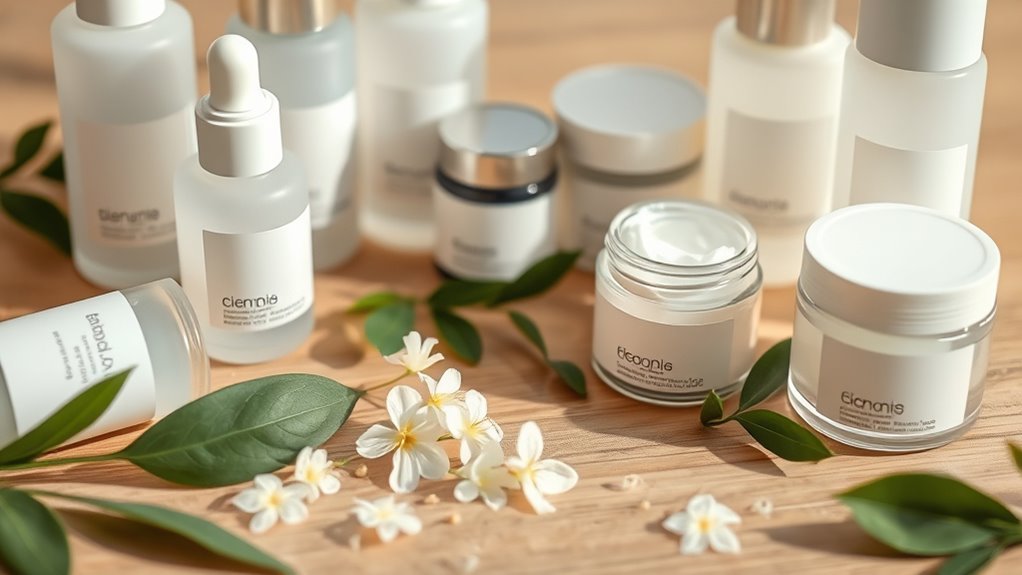
Understanding clean beauty labels can be confusing, as the term isn’t strictly regulated and varies between brands. When you see a product labeled as “clean,” it might suggest that it’s free from harmful chemicals or that it uses natural ingredients, but the reality isn’t always so straightforward. Many brands rely on marketing buzzwords rather than adhering to consistent standards, so it’s vital to look deeper. One key factor to consider is whether the product meets recognized certification standards, which can provide more confidence in its claims. Certifications like USDA Organic, EWG Verified, or COSMOS help verify that a product contains natural ingredients and adheres to specific safety and sustainability criteria. These standards set clear benchmarks for what qualifies as “clean,” making it easier for you to make informed choices.
Look for trusted certifications like USDA Organic, EWG Verified, or COSMOS to confidently identify truly clean beauty products.
However, not all labels are backed by certification. Some brands use vague terms like “green,” “natural,” or “non-toxic” without any formal verification. These claims can be misleading, as they often lack transparency about the ingredients or processes involved. When evaluating a product, check the ingredient list for natural ingredients—plant extracts, essential oils, minerals—things you recognize and trust. A product with a high percentage of natural ingredients and minimal synthetic additives tends to be a better choice if you’re aiming for a cleaner routine. But remember, “natural” doesn’t always mean safe for everyone; some plant-based ingredients can still cause allergic reactions, so always read ingredient details carefully.
Certification standards are designed to cut through marketing hype. They establish baseline requirements for ingredient sourcing, manufacturing practices, and product safety. For instance, a certification like USDA Organic not only ensures the ingredients are natural but also that they are grown and processed without synthetic pesticides or fertilizers. Similarly, EWG Verified focuses on transparency, ingredient safety, and company practices. When a product bears these marks, it indicates a higher level of scrutiny and a commitment to certain cleanliness standards, giving you peace of mind.
In the end, understanding what a clean beauty label truly signifies requires some research. Look for products with reputable certification standards and scrutinize their ingredient lists. Don’t just rely on the front label—delve into the details to see if the product genuinely aligns with your desire for natural ingredients and safe, transparent manufacturing practices. This way, you can confidently choose products that support your health and the environment, rather than falling for marketing claims that may not hold up under scrutiny.
Frequently Asked Questions
Are Clean Beauty Products More Effective Than Conventional Ones?
Clean beauty products aren’t necessarily more effective than conventional ones. While natural ingredient benefits can include gentler formulations and fewer irritants, cosmetic efficacy claims vary widely. You might find that some clean products deliver comparable results, but others may require more consistent use or additional products to achieve desired effects. Ultimately, effectiveness depends on the ingredients’ quality and your skin’s response, not just whether a product is labeled “clean.”
Can Clean Beauty Labels Guarantee Product Safety?
Clean beauty labels can’t guarantee product safety, as regulatory oversight varies and isn’t always strict. You need to look for ingredient transparency, so you know exactly what’s in your products. Brands that openly share ingredient lists and follow safety standards help you make better choices. Remember, just because a product is labeled “clean” doesn’t mean it’s automatically safe—stay informed and scrutinize labels yourself.
How Often Do Clean Beauty Standards Change?
Clean beauty standards evolve frequently, often influenced by regulatory updates and industry trends. You should stay informed because these changes can happen annually or even more often as new research emerges and regulations shift. By keeping an eye on credible sources, you can better understand what current standards mean for your products and guarantee you’re making informed choices aligned with the latest industry developments.
Do Clean Beauty Products Cost More Than Regular Products?
Did you know that clean beauty products often cost up to 20% more than regular ones? This pricing difference stems from higher-quality ingredients and stricter sourcing standards. Consumer expectations for transparency and safer ingredients drive brands to invest more, which can increase costs. So, if you’re shopping for clean beauty, be prepared for a potentially higher price, but also for products that align better with your health and ethical values.
Are All Ingredients Listed on Clean Beauty Labels?
Not all ingredients are always listed on clean beauty labels. While some brands prioritize ingredient transparency, others may omit certain components, especially if they’re deemed safe but not considered natural or clean. You should always read labels carefully and research unfamiliar ingredients. Keep in mind that ingredient omissions don’t necessarily mean harmful ingredients are present, but transparency varies, so stay vigilant and educated about what’s in your products.
Conclusion
So, next time you see a “clean” label, remember it’s not the whole story. It might sound reassuring, but those labels can be tricky—sometimes misleading, sometimes incomplete. Are you really getting what you think? The truth is, understanding what’s behind the label could change everything. Stay curious, ask questions, and don’t settle for surface promises. Because in the world of clean beauty, what’s hidden might be just as important as what’s shown.