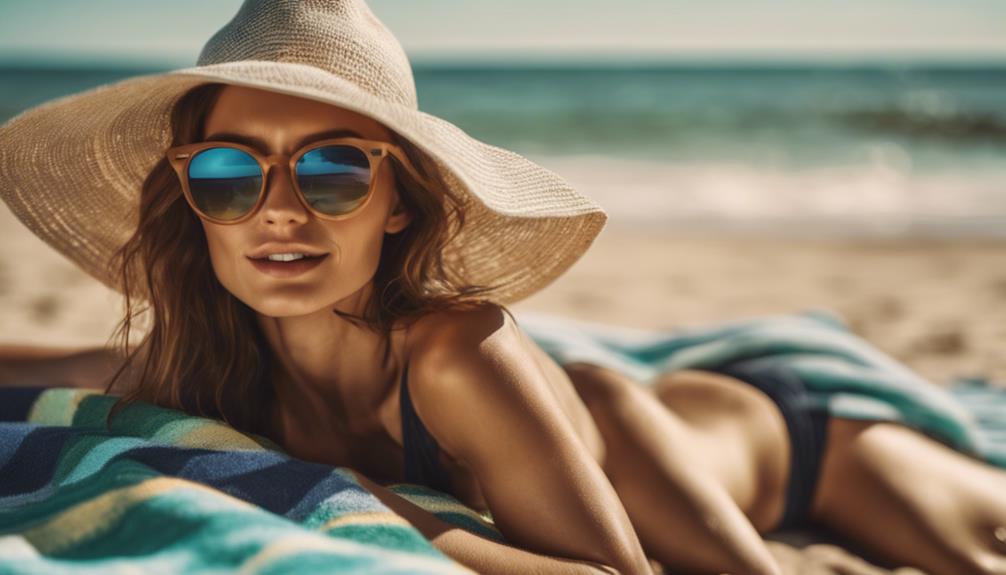
To become an expert in achieving a perfect tan, it’s essential to understand your skin type first, as this can greatly impact the results! If you have fair skin, it’s best to sunbathe in the morning or late afternoon to avoid getting sunburned. Remember to switch sides every 15-30 minutes for an even tan, and always apply a broad-spectrum sunscreen. After tanning, moisturize your skin with aloe vera and consider eating carrots or spinach to enhance your glow. With practice, you’ll achieve that coveted sun-kissed look. Stay tuned for more tips on how to achieve the perfect tan!

Get your wardrobe favorites delivered free with Prime
- Fast, free delivery on millions of items
- Prime Video, Amazon Music and more included
- Member-only deals all year
Key Takeaways
- Identify your skin type using the Fitzpatrick scale to tailor your tanning approach and minimize risks.
- Always apply broad-spectrum sunscreen with SPF 15-30 and reapply every two hours for effective protection.
- Rotate positions every 15-30 minutes while tanning to ensure even coverage and optimal melanin production.
- Consider alternatives like spray tans or self-tanning lotions for a sun-kissed look without UV exposure.
Tanning Frequency and Techniques
To achieve a flawless tan, switch sides every 15-30 minutes to guarantee even coverage and boost melanin production. Think of it like flipping a pancake—nobody wants one side burnt!
If you've got fair skin, try tanning in the morning or after 3 PM to avoid sunburn, while those with medium to brown skin can soak up some rays during peak hours—just remember to keep an eye on your skin!
Listen to what your skin's telling you; if it starts to sting, it's time to turn over.
And for a bit of a shortcut, stand-up tanning beds can save you the hassle of flipping around.
Skin Safety and Sunscreen

Protecting your skin from harmful UV rays is essential for a safe tanning experience. You don't want to end up looking like a lobster, right? So, make sure to apply sunscreen generously to all exposed skin before you hit the sun.
Here are some tips to keep your skin safe:
- Choose a broad-spectrum sunscreen with an SPF of 15-30.
- Reapply every two hours, especially after swimming or sweating.
- Don't forget those tricky areas like your ears and underarms!
Understanding Skin Types
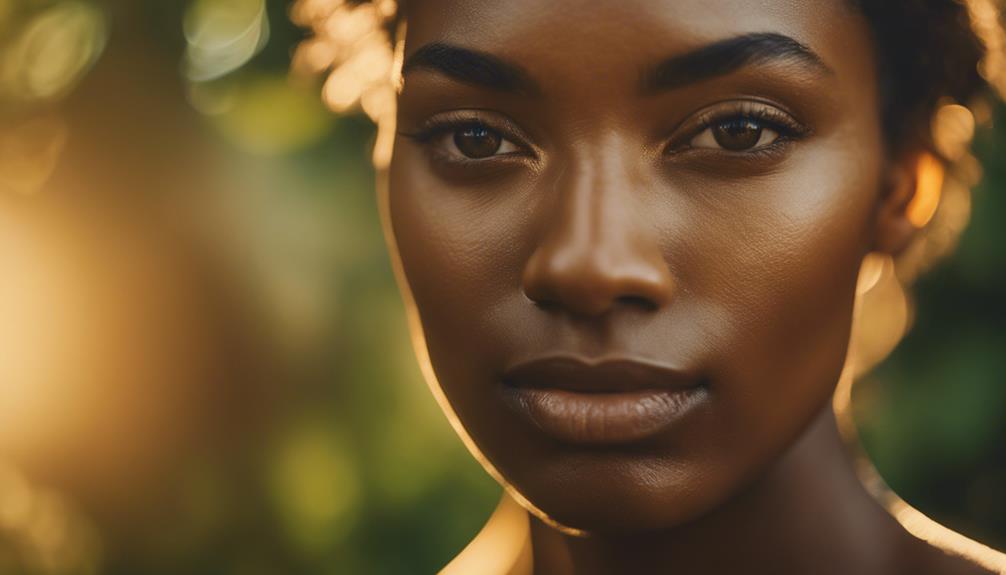
Understanding your skin type is essential for tailoring your tanning approach and minimizing risks during sun exposure.
Think of your skin as a unique canvas; some people can bask in the sun like a pro, while others might end up looking like a lobster!
By evaluating your skin's reaction, you can determine how much sun it can handle. For example, if you burn easily, you might want to limit your tanning time and use that trusty SPF.
You can also use the Fitzpatrick scale to gauge your skin type, which helps you know when to tan and when to retreat.
Post-Tan Care
After soaking up the sun, taking care of your skin is key to maintaining that beautiful tan and ensuring it lasts longer. You wouldn't want all that hard work to fade away too quickly, right?
So, let's plunge into some simple post-tan care tips:
- Moisturize with aloe vera or a rich lotion to keep your skin hydrated.
- Drink water like it's your new favorite drink; hydration is essential!
- Take cool showers to soothe your skin and avoid hot water, which can dry it out.
Alternatives to Traditional Tanning
Exploring alternatives to traditional tanning can help you achieve a gorgeous glow without the risks associated with UV exposure.
Have you ever tried a spray tan? It's like getting a sun-kissed look in just minutes!
Self-tanning lotions are another option; they let you control the color and intensity, making it easy to rock that bronzed vibe.
Plus, you can wear tan-through swimsuits, which allow some color to seep through while you're in the water—no more awkward tan lines!
Remember, these methods can be fun and safe, giving you the chance to experiment with different shades.
Diet for Better Tanning

A balanced diet rich in certain nutrients can enhance your tanning results and support skin health. Think of your body as a garden; if you nourish it well, it blooms beautifully!
Here are some foods you should consider adding to your plate:
- Carrots: Packed with beta-carotene, they're like nature's tanning pills!
- Spinach: Full of antioxidants, it helps keep your skin looking fresh and vibrant.
- Tomatoes: Rich in lycopene, they can protect your skin from sun damage—talk about a superhero food!
Common Tanning Myths
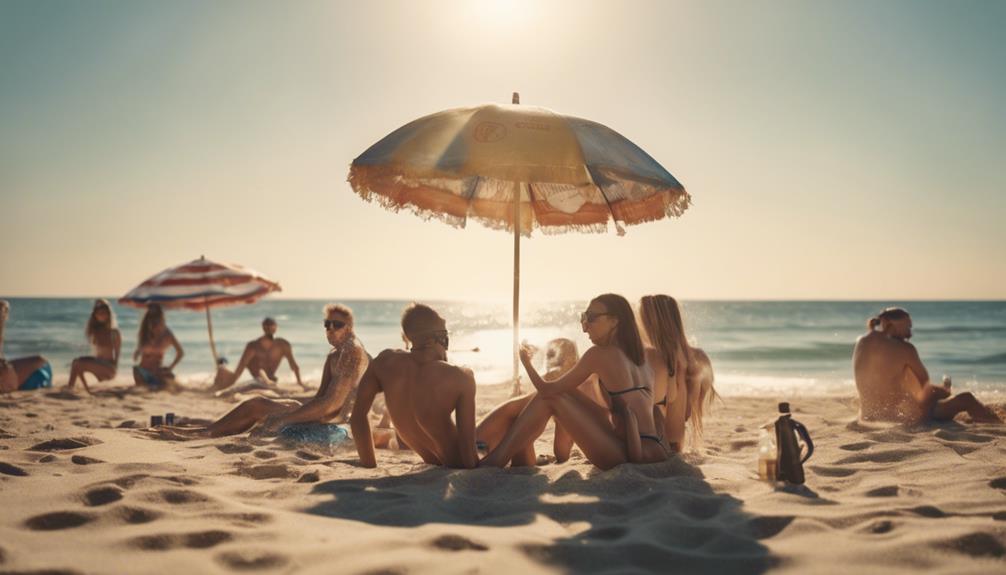
Many people often believe that a base tan can prevent sunburn, but in reality, it offers minimal protection against UV damage. It's like thinking your sunscreen is your superhero cape—it just doesn't work that way! Here are some other common myths you might hear:
| Myth | Truth | Impact |
|---|---|---|
| You can't tan on a cloudy day | UV rays still penetrate clouds | You can still get burned! |
| Tanning beds are safe | They emit harmful UV rays | Increased skin cancer risk! |
| Darker skin doesn't need sunscreen | Everyone needs protection from UV rays | Skin damage can happen to anyone! |
Frequently Asked Questions
How Can I Achieve a Tan Without Direct Sun Exposure?
You can achieve a tan without direct sun exposure by using self-tanning lotions or sprays. Just apply evenly, exfoliate beforehand, and follow up with moisturizer to maintain a natural-looking glow. Enjoy your bronzed skin!
What Is the Best Time of Day to Tan Outdoors?
The best time to tan outdoors is usually in the morning or after 3 PM. You'll reduce sunburn risk during these hours, allowing your skin to tan safely while enjoying the sun's warmth.
Can I Tan if I Have Sensitive Skin?
Yes, you can tan with sensitive skin, but you need to be cautious. Start with short sessions, apply sunscreen generously, and listen to your skin. If you feel stinging, it's time to seek shade.
How Do I Remove a Spray Tan Safely?
To remove a spray tan safely, exfoliate with a gentle scrub or a tan-removing solution. Soak in warm water to loosen the tan, then moisturize afterward to keep your skin hydrated and healthy.
Are There Any Natural Oils That Enhance Tanning?
Imagine sun-kissed skin glistening in golden light. Natural oils like coconut and olive can enhance tanning by moisturizing and nourishing your skin. Just remember, they won't replace sunscreen—always protect yourself while soaking up those rays!
Are there Risks to Tanning at Home Compared to Professional Tanning?
When it comes to home sun tanning tips, there are definitely risks to consider. Tanning at home may lead to uneven results, overexposure to UV rays, and potential skin damage. Professional tanning salons offer controlled environments and trained staff to minimize these risks. It’s important to weigh the pros and cons before choosing.
Conclusion
Now that you're armed with all this tanning wisdom, you're ready to rock that sun-kissed glow!
Did you know that about 90% of skin aging is caused by sun exposure?
So, while you're soaking up those rays, remember to protect your skin and keep it hydrated.
Whether you choose to tan naturally or go for a self-tanner, embrace your unique beauty and enjoy the process.
Happy tanning, and may your glow be ever radiant!
Halloween Picks
halloween
As an affiliate, we earn on qualifying purchases.