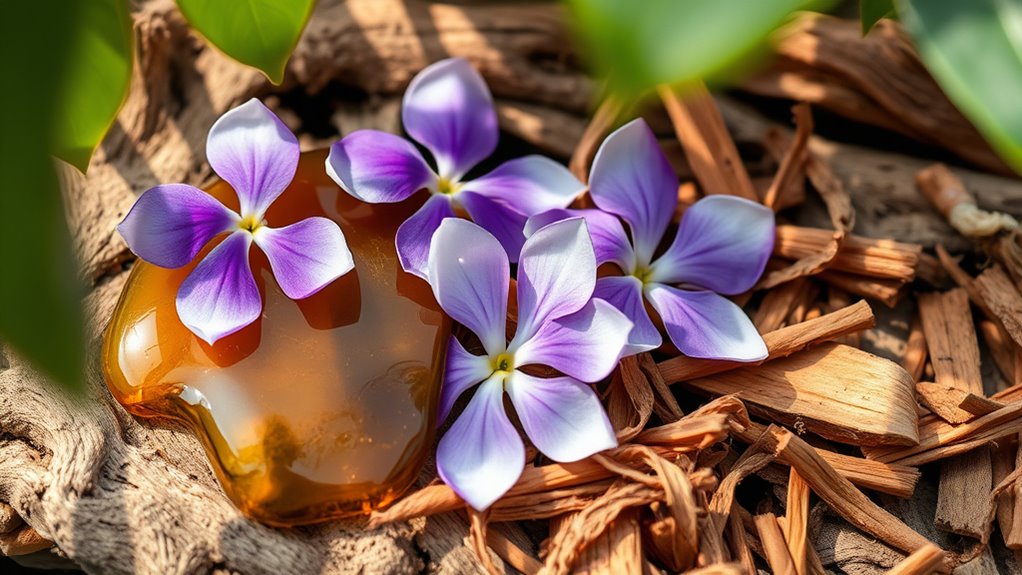

Natural fragrances made from resins, woods, and florals offer an authentic, sustainable way to enjoy scents that connect you to nature. Resins like frankincense and myrrh, grounding woods such as sandalwood and cedar, and fresh florals like jasmine create complex, balanced aromas. These fragrances are crafted with care, emphasizing ethical sourcing and craftsmanship. If you want to explore more about how these natural ingredients shape unique scents, you’ll find plenty of inspiring details ahead.
Key Takeaways
- Natural fragrances are crafted from resins, woods, and florals, offering authentic and layered scent experiences.
- Resins like frankincense and myrrh provide depth and warmth to natural perfumes.
- Woods such as sandalwood and cedar serve as grounding base notes in fragrance blends.
- Florals like jasmine introduce fresh, delicate aromas that enhance complexity and appeal.
- Ethical sourcing and sustainable harvesting of these ingredients support environmental and community well-being.
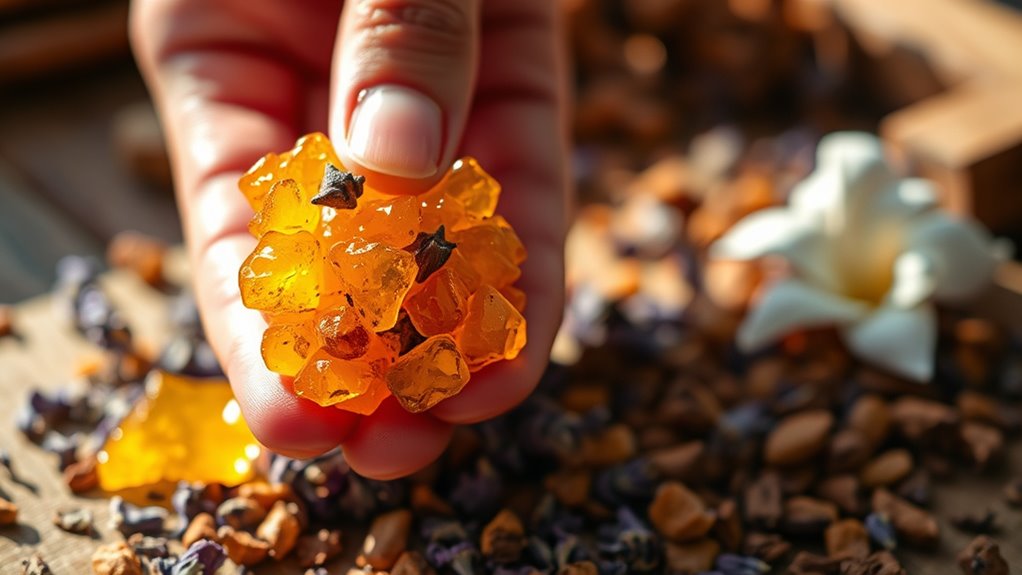
Natural fragrances have gained popularity because they offer a pure and authentic scent experience without synthetic chemicals. When you choose natural options, you’re embracing a process rooted in sustainable sourcing, ensuring that the ingredients are harvested responsibly and with respect for the environment. This commitment not only preserves ecosystems but also supports local communities that rely on harvesting resins, woods, and florals. As you explore these scents, you’ll notice the depth and complexity that come from carefully selected ingredients, often sourced through ethical practices that prioritize the planet’s health.
Fragrance blending plays a vital role in creating harmonious natural scents. You might be surprised to learn how skilled perfumers combine various resins like frankincense and myrrh, woods such as sandalwood and cedar, and an array of fresh or blooming florals to craft enchanting aromas. Each ingredient brings its unique character, and when blended thoughtfully, they produce a multi-layered fragrance that’s both comforting and invigorating. Unlike synthetic fragrances, which often rely on artificial molecules, natural blends rely on the inherent qualities of these raw materials, making the scent more genuine and nuanced.
You’ll find that natural fragrances often emphasize simplicity and balance. For example, a fragrance might highlight the warm, grounding notes of cedarwood paired with the sweet, floral aroma of jasmine, creating a scent that’s both earthy and uplifting. The process of fragrance blending in natural perfumery involves patience and precision, as each ingredient’s strength and subtlety are carefully considered. This approach results in a well-rounded aroma that can evoke memories, moods, and even a sense of connection to nature itself. Additionally, many natural fragrances are associated with aromatherapy, which enhances their appeal for wellness and holistic health practices.
As you explore natural fragrances, you’ll appreciate the artistry behind sourcing and blending. These scents are not just about aroma; they reflect a philosophy that values sustainability and authenticity. By choosing natural, handcrafted perfumes, you’re supporting practices that respect the environment and promote the responsible use of resources. The blend of resins, woods, and florals becomes more than just a scent — it’s a tribute to craftsmanship, ethical sourcing, and a desire to experience the genuine beauty of nature in every spritz. Ultimately, natural fragrances allow you to wear a story of sustainability and artistry, making each scent a meaningful choice in your personal collection.
Frequently Asked Questions
How Are Natural Fragrances Sustainably Sourced and Harvested?
You can guarantee natural fragrances are sustainably sourced through ethical harvesting practices that protect ecosystems and support local communities. By choosing suppliers committed to sustainable harvesting, you help prevent overharvesting and environmental damage. Look for certifications or transparent sourcing methods, which indicate ethical sourcing. Supporting these practices not only preserves the plants and trees but also promotes fair wages, ensuring the longevity of fragrance ingredients for future generations.
What Are the Most Rare and Expensive Natural Fragrance Ingredients?
You’ll find that the most rare and expensive natural fragrance ingredients include oud, ambergris, and saffron, prized for their exotic ingredient rarity. In luxury fragrance markets, these components fetch high prices due to their limited availability and complex harvesting processes. Oud, in particular, is sought after for its deep, woody aroma, making it a symbol of opulence. Their scarcity elevates the exclusivity of high-end perfumes.
Can Natural Fragrances Cause Allergic Reactions or Sensitivities?
Ever wonder if natural fragrances might turn against you? They can, indeed. You might experience allergic skin reactions or fragrance sensitivities, especially if you have sensitive skin or allergies. Natural ingredients like resins, woods, and florals contain potent compounds that can trigger reactions. Always do a patch test before full use, and consult a dermatologist if you notice irritation. Natural doesn’t always mean risk-free—be cautious and informed.
How Do Natural Fragrances Compare to Synthetic Ones in Longevity?
Synthetic scents typically have greater durability than natural fragrances, making their fragrance longevity comparison quite favorable for lasting wear. You’ll notice that synthetic ingredients often cling longer on your skin or clothing, providing consistent aroma throughout the day. If you want a scent that endures, synthetic options usually outperform natural fragrances. However, natural fragrances may fade faster, but they often offer a softer, more nuanced aroma.
Are Natural Fragrances Suitable for All Skin Types and Ages?
You might think natural fragrances suit everyone, but skin compatibility varies. They’re generally gentle and suitable for most skin types, yet sensitive skin may react. Age appropriateness depends on personal preference rather than strict rules; lighter floral scents work well for all ages, while richer, resinous notes might be better for mature skin. Always test a small area first to guarantee comfort, regardless of your age or skin type.
Conclusion
Embrace the timeless allure of natural fragrances—resins that ground, woods that warm, and florals that uplift. Let each scent guide you to authenticity, to simplicity, to nature’s own artistry. Savor the complexity, cherish the purity, and celebrate the harmony they bring. In every whiff, find a moment of peace, a touch of elegance, a connection to the earth. Truly, natural fragrances invite you to experience beauty in its purest, most authentic form.