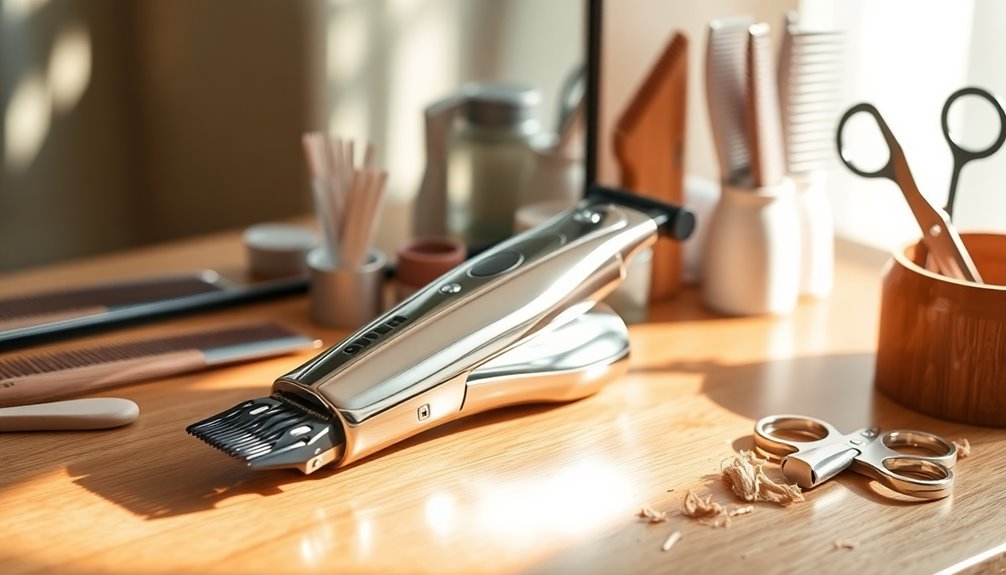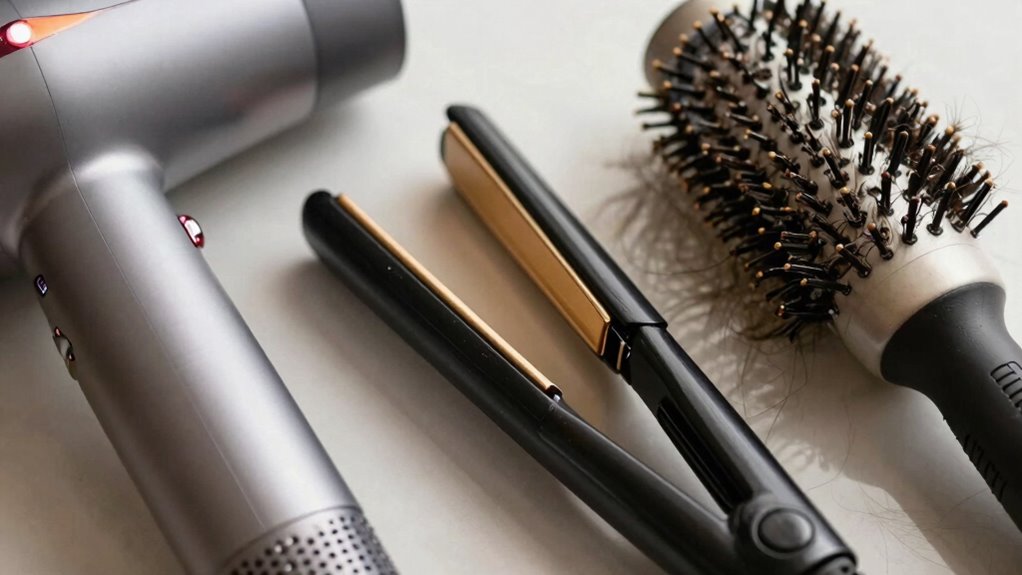

Hair dryers damage your hair by stripping moisture with high heat, causing dryness and frayed ends. Flat irons damage by melting keratin, weakening your strands over repeated use, especially at temperatures above 400°F. Stylers like curling wands expose hair to direct heat, increasing breakage and split ends, especially without protection. To protect your hair and learn how to minimize damage, discover more about effective styling practices and protective products.

Get your wardrobe favorites delivered free with Prime
- Fast, free delivery on millions of items
- Prime Video, Amazon Music and more included
- Member-only deals all year
Key Takeaways
- Flat irons melt keratin proteins at high temperatures, weakening hair structure and causing dryness and split ends.
- Hair dryers strip moisture from hair, leading to brittleness and frayed ends when used improperly or at high heat.
- Stylers like curling wands expose hair to repeated, direct heat, increasing the risk of cumulative damage and breakage.
- High heat settings across all tools accelerate keratin breakdown, resulting in dry, brittle, and damaged hair over time.
- Protective products with ingredients like silicones, argan oil, or keratin can mitigate damage from all heat styling devices.

Using hair dryers, flat irons, and stylers may seem like quick fixes for your perfect hairstyle, but each tool damages your hair in different ways. When you regularly expose your hair to high heat, you risk weakening the strands, causing dryness, and leading to breakage. The key to minimizing damage lies in understanding how heat affects your hair and taking steps to protect it. Heat protection products are essential; they form a barrier that helps shield your hair from direct heat and reduce ingredient effects that might otherwise strip moisture or cause brittleness. Look for heat protectants containing ingredients like silicons or polymers, which coat the hair shaft and distribute heat evenly, preventing hot spots that cause damage.
Flat irons, in particular, use direct heat to straighten hair, often at temperatures exceeding 400°F. The intense heat can melt the keratin proteins within your hair, leading to compromised structural integrity over time. The ingredient effects of some styling products can worsen this damage—alcohol-based sprays can dry out your hair, while certain silicones may build up and weigh strands down. To counteract this, opt for lightweight, nourishing serums with ingredients like argan oil or keratin, which help strengthen hair and restore moisture after styling. Applying these before and after using heat tools helps maintain elasticity and prevents excessive dryness. Additionally, avoiding the highest temperature settings when possible can significantly reduce thermal damage.
Use nourishing serums with argan oil or keratin to strengthen and hydrate hair after heat styling.
Hair dryers, on the other hand, emit warm or hot air that can strip moisture from your hair if used improperly. When you use a high heat setting without a heat protectant, the water inside your hair evaporates too quickly, leaving behind brittle, frayed ends. To combat this, set your dryer to a lower temperature and keep it moving to avoid concentrated heat in one spot. Using heat protectants with humectants like glycerin or panthenol can help lock in moisture, creating a barrier that shields hair from dehydration. Additionally, ingredients like aloe vera can soothe the scalp and hair, reducing irritation and damage caused by high heat. Understanding heat damage mechanisms can guide you to better hair care practices and product choices, especially when selecting appropriate heat settings.
Stylers such as curling wands or crimpers also pose risks. They often use direct heat to create waves or curls, which can cause similar damage as flat irons. Repeated use without proper heat protection leads to cumulative damage, making hair more prone to split ends and breakage. Again, choosing products with nourishing ingredients like coconut oil or shea butter can help mitigate these effects, providing a layer of protection and moisture. Remember, the longer your hair is exposed to heat, the greater the damage, so always aim for the lowest effective temperature and use heat protectant sprays or creams that contain beneficial ingredients to safeguard your hair’s health. Regular deep conditioning treatments can also help repair some of the damage caused by heat styling.
As an affiliate, we earn on qualifying purchases.
Frequently Asked Questions
Can Heat Protectants Fully Prevent Damage From Styling Tools?
Heat protectants can’t fully prevent heat damage from styling tools, but they do considerably reduce it. Their product efficacy varies depending on the formulation and how you apply them. You should always use a heat protectant before styling to minimize damage, but remember, no product can block all heat harm. For best results, combine protectants with lower heat settings and proper styling techniques to keep your hair healthier.
How Often Should I Replace My Damaged Styling Tools?
You should replace your damaged styling tools when you notice decreased performance, frayed cords, or visible damage, as these affect styling longevity and safety. Regular tool maintenance, like cleaning and checking for damage, helps extend their lifespan. Don’t hold onto tools that no longer work efficiently—using damaged tools can lead to uneven styling and potential hair damage. Replace them promptly to guarantee safe, effective styling sessions every time.
Are Ceramic or Tourmaline Tools Gentler on Hair?
Ceramic tools are generally gentler on hair because of their even heat distribution and ceramic safety, reducing the risk of hot spots that can cause damage. Tourmaline benefits include emitting negative ions, which help lock in moisture and add shine, making them also a gentle option. Both are good choices, but if you want extra smoothness and less damage, tourmaline tools might be the better pick for you.
Do Certain Hair Types Resist Damage Better Than Others?
Yes, some hair types resist damage better than others. Your hair texture plays a big role; thicker, coarser hair often has higher damage resistance, while fine, fragile hair is more vulnerable. If you have curly or wavy hair, it might withstand heat styling better than straight, thin strands. Understanding your hair’s unique texture helps you choose gentler tools and techniques, reducing overall damage and keeping your hair healthier.
What Are Natural Alternatives to Heat Styling?
Like nature’s gentle touch, you can opt for natural alternatives to heat styling. Try DIY hair masks filled with nourishing ingredients like honey, coconut oil, and avocado to hydrate and strengthen your hair. Herbal hair rinses with chamomile or rosemary soothe your scalp and add shine without damage. These methods help preserve your hair’s health, offering a safe, chemical-free way to style and care for your locks.
Conclusion
Remember, each styling tool is like a double-edged sword—powerful but capable of causing damage. If you want shiny, healthy hair, treat your tools with care, like a gardener tending delicate blooms. Use heat protectants, avoid excessive heat, and give your hair regular breaks. By understanding how these tools affect your hair, you can keep your tresses vibrant and strong, turning your styling routine into a gentle dance rather than a destructive storm.
Halloween Picks
halloween
As an affiliate, we earn on qualifying purchases.