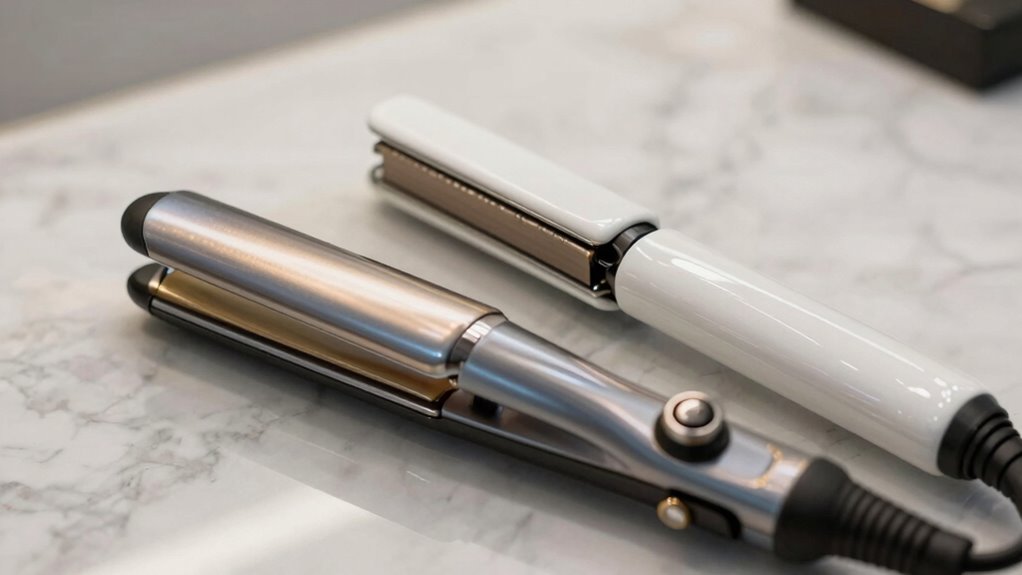
Choosing between titanium and ceramic flat irons depends on your hair type and styling goals. Titanium heats up quickly, offers high heat, and is great for thick, resistant, or curly hair needing fast styling, while ceramic provides gentle, even heat ideal for fine or damaged hair. Understanding these differences helps you select the best tool to protect your hair and achieve your desired look. Keep exploring to discover which flat iron suits you best.

Get your wardrobe favorites delivered free with Prime
- Fast, free delivery on millions of items
- Prime Video, Amazon Music and more included
- Member-only deals all year
Key Takeaways
- Titanium flat irons heat quickly, are durable, and ideal for thick, curly, or resistant hair types needing high heat.
- Ceramic flat irons provide gentle, even heat, making them better suited for fine, damaged, or sensitive hair.
- Choosing the right material depends on hair texture, damage level, and styling goals for optimal hair health.
- Titanium irons offer faster styling but require careful use to prevent damage; ceramic irons prioritize gentle, consistent heat.
- Proper maintenance and heat protection enhance the longevity of both types, ensuring safe, effective styling tailored to hair type.
Titanium flat iron for thick curly hair
As an affiliate, we earn on qualifying purchases.
As an affiliate, we earn on qualifying purchases.
What Are Titanium and Ceramic Flat Irons?
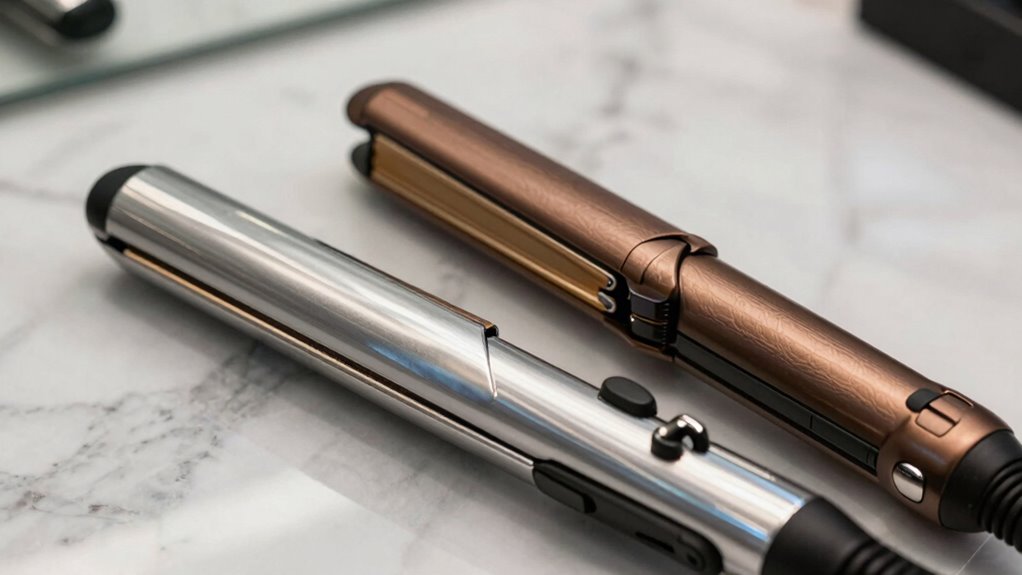
Titanium and ceramic flat irons are popular tools for achieving smooth, sleek hairstyles, but they differ in their materials and how they work. Titanium plates heat up quickly and maintain consistent high temperatures, making them ideal for fast styling. Ceramic plates, on the other hand, distribute heat more evenly, reducing the risk of damaging your hair. To protect your hair from heat damage, always use heat protection sprays before styling. When choosing your flat iron, consider your hair type and styling techniques. For thicker or more resistant hair, titanium irons can deliver the power needed. If you have fine or damaged hair, ceramic irons are gentler and help prevent overheating. Understanding these differences helps you select the right tool for healthier, more effective styling. Additionally, opting for energy-efficient models can contribute to more sustainable styling practices. Being aware of heat distribution can further improve your styling results and protect your hair from unnecessary damage. Incorporating temperature controls allows for more precise heat settings tailored to your hair’s needs, further minimizing potential damage. Incorporating connected technology in your styling tools can also help monitor and optimize heat application for better results.
How Do Titanium and Ceramic Plates Differ in Material and Heat Conductivity?
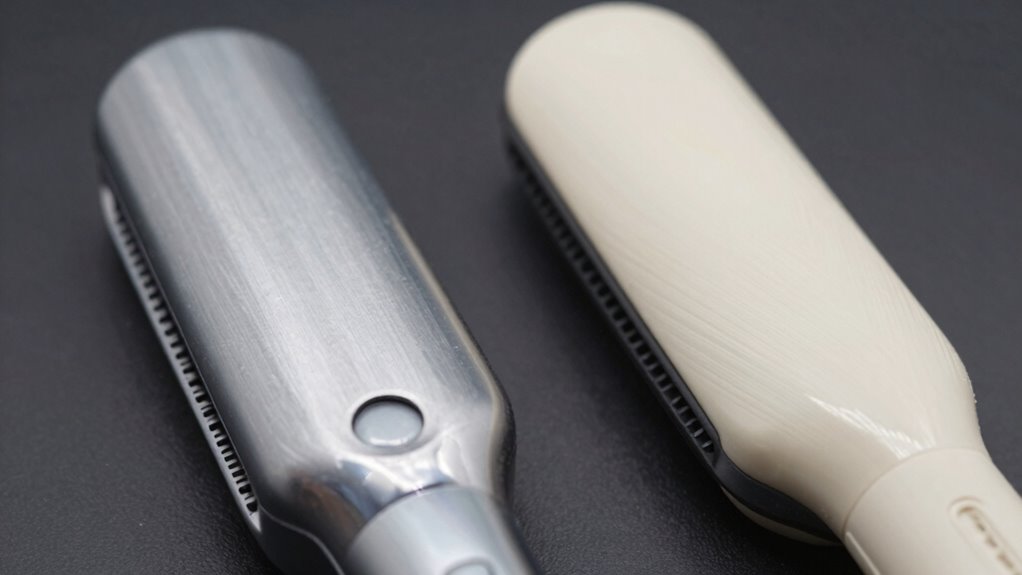
Titanium and ceramic plates differ mainly in their material makeup, which affects how they transfer heat to your hair. Titanium heats up quickly and evenly, offering efficient heat transfer, while ceramic provides a gentler, more consistent heat. Consider their durability and longevity, as titanium tends to last longer but may be pricier than ceramic options. Additionally, the heat conductivity of each material influences how evenly your hair is styled and how fast the plates heat up. The thermal properties of these materials also impact their suitability for different hair types and styling preferences. Understanding the material composition can help you choose the right iron for your styling needs.
Material Composition Differences
While both titanium and ceramic plates are popular choices for flat irons, they differ especially in their material composition and heat conductivity. Titanium plates are made from a strong, lightweight metal known for their exceptional material durability, resisting scratches and warping over time. The manufacturing process for titanium involves high-precision techniques that ensure consistent quality and strength. Ceramic plates, on the other hand, are created from glazed or infused ceramic materials, which provide smoothness and even heat distribution. However, ceramic can be more brittle and prone to chipping or cracking with frequent use. These material differences influence not only the longevity of your flat iron but also how it interacts with your hair. Understanding these distinctions helps you choose a tool suited to your styling needs and hair type.
Heat Transfer Efficiency
Material composition directly affects how flat irons transfer heat to your hair. Titanium plates excel in heat conduction, meaning they heat up quickly and distribute heat evenly across the surface. This rapid heat transfer allows for efficient styling with fewer passes, reducing damage. Ceramic plates, on the other hand, have moderate heat conduction; they heat more slowly but provide consistent, gentle heat. Ceramic also retains heat well, which helps maintain a stable temperature during use. This heat retention ensures your styling remains uniform, especially for delicate hair types. Additionally, ceramic coating can enhance the durability and smoothness of the plates, improving overall performance. The thermal conductivity of the material plays a crucial role in how well the flat iron performs, influencing both heating speed and heat distribution. Moreover, heat transfer efficiency impacts the overall styling process, making the choice of material more significant. The material’s heat retention capabilities also affect how well the plates maintain consistent temperature throughout styling. Overall, titanium’s superior heat conduction makes it ideal for fast, high-temperature styling, while ceramic’s heat retention offers a more gentle, controlled approach. Your choice depends on your hair’s needs and your styling preferences. Additionally, Ceiling Fans are an example of technological innovations that improve energy efficiency, which can be a factor when considering appliances for your home.
Durability and Longevity
When considering durability and longevity, it’s important to recognize that titanium and ceramic plates have distinct characteristics based on their material properties. Titanium plates are highly heat resistant, making them durable and less prone to damage over time. They can withstand frequent use at high temperatures, which benefits those who style often. Ceramic plates, on the other hand, offer good heat resistance but may wear down faster with extended use, especially if exposed to high heat regularly. This impacts their longevity and styling ease, as ceramic plates might require more careful handling to avoid cracks or chips. Material strength plays a significant role in how well these plates hold up over time. Additionally, heat conductivity of titanium allows for quicker heat transfer, contributing to more efficient styling sessions. The wear and tear process can be accelerated if plates are not properly maintained or if the heat settings are too high. Proper plate maintenance can extend the lifespan of both types, ensuring consistent results over time.
Which Flat Iron Is Best for Your Hair Type and Styling Goals?
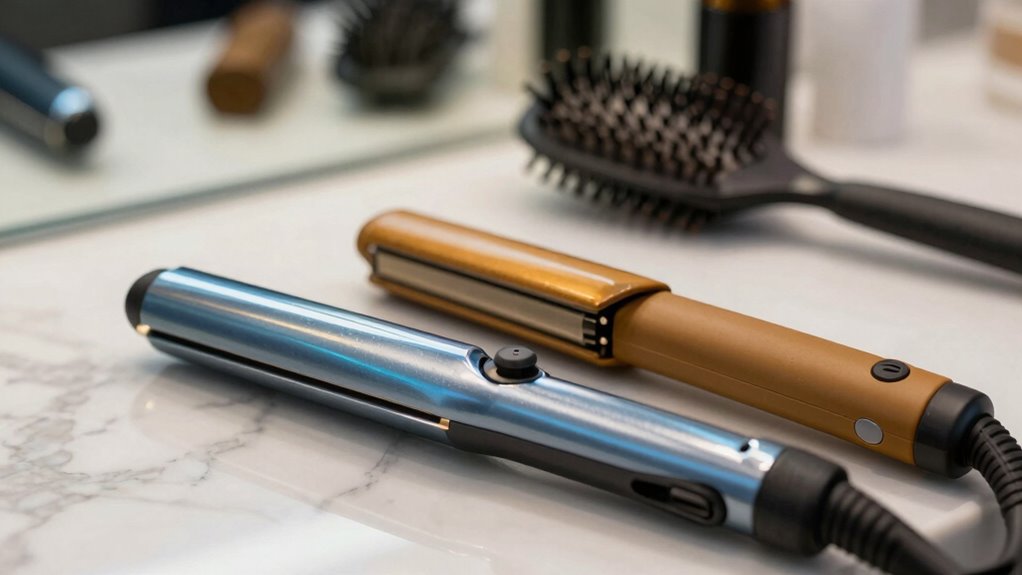
Choosing the right flat iron depends on your hair texture and your styling goals. Some irons work better on thick, curly hair, while others are ideal for fine or straight hair. Consider the versatility of the flat iron to see if it can handle different styles you want to create. Additionally, understanding hair type considerations can help you select the most suitable technology, such as titanium or ceramic, for optimal results. Recognizing the technology differences can further guide your choice based on heat distribution and durability. For example, insulated jackets for winter often incorporate advanced materials that can withstand diverse conditions, much like how specific flat iron technologies are designed to cater to various hair types.
Hair Texture Compatibility
Selecting the right flat iron depends on your hair texture and your styling goals. If you have thick, coarse hair, you’ll need a high heat setting to style efficiently without increasing heat damage. Fine or delicate hair requires lower temperatures to prevent damage and achieve smooth results quickly. Curly hair benefits from a flat iron that can handle its texture while reducing styling time. Additionally, considering elevated home and personal well-being can help you choose tools that promote healthier hair habits and reduce potential damage. Matching your flat iron to your hair type ensures you style efficiently while minimizing heat damage and maintaining styling speed. Understanding heat transfer properties can further assist in selecting the most suitable flat iron for your needs. Proper heat distribution and temperature control are essential factors that influence the health and appearance of your hair over time.
Styling Versatility Options
To achieve a variety of styles with your flat iron, it’s important to contemplate the versatility features that match your hair type and styling goals. Look for a flat iron with adjustable heat settings to protect your hair from damage and enhance styling options. Some irons come with rounded plates, perfect for creating curls, waves, or straight looks, offering more styling flexibility. Consider models with multiple plate widths to target different hair lengths and textures. Heat protection features are essential to prevent damage during frequent use, especially if you’re experimenting with various styles. Choosing a flat iron that offers these versatility options allows you to switch effortlessly between sleek straight hair, beach waves, or tight curls, making it a versatile tool suited for your unique hair and styling ambitions. Additionally, selecting a device with safety features can provide extra peace of mind during styling sessions. Incorporating versatility into your choice ensures your flat iron adapts to your evolving styling needs, much like reliable backup power ensures consistent performance during outages.
Pros and Cons of Titanium and Ceramic Flat Irons for Different Hair Textures
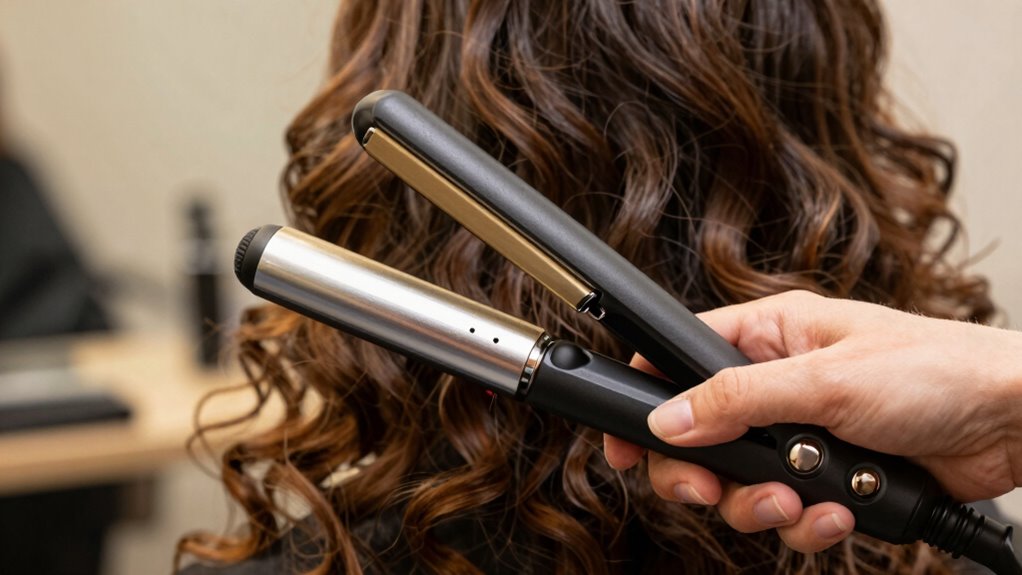
Titanium and ceramic flat irons each have unique advantages and drawbacks that can impact different hair textures. Titanium heats up quickly, offering fast styling speed, which is great if you’re short on time. It also provides consistent heat, helping with heat protection for thicker or coarser hair. However, its high heat can sometimes cause damage if not used carefully. Ceramic irons heat more gradually, providing gentler, even heat, making them ideal for fine or damaged hair, and offering better heat protection. They tend to be slower but are less likely to cause heat damage.
- Titanium for quick styling and high heat needs
- Ceramic for gentle heat and better heat protection
- Titanium’s rapid heat can be harsh on delicate hair
How to Choose the Best Flat Iron for Your Hair Thickness and Damage Level
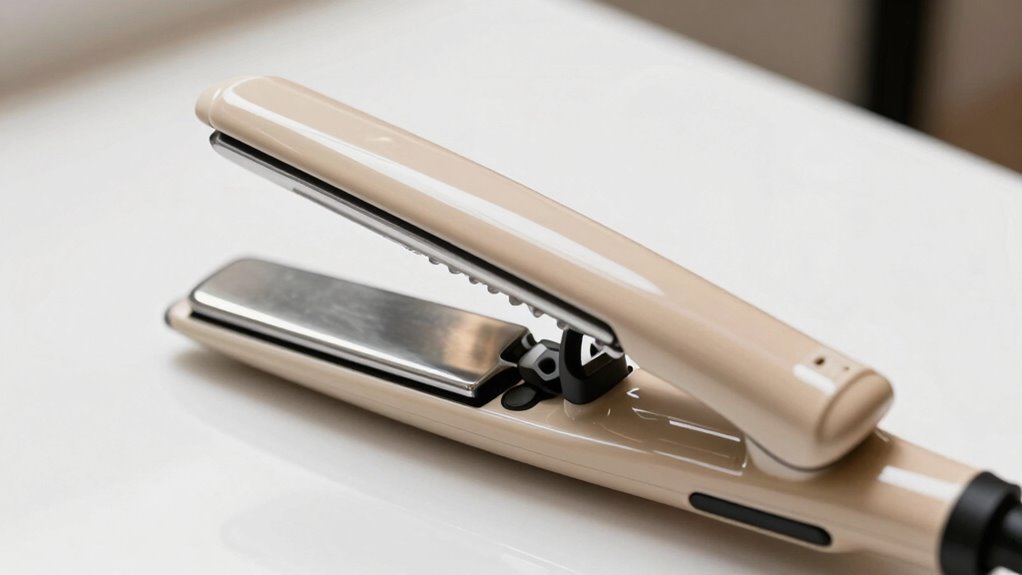
Choosing the right flat iron depends largely on your hair’s thickness and damage level. If you have thick or coarse hair, opt for a flat iron with higher heat settings and wider plates to guarantee efficient styling and reduced styling time. For damaged or fragile hair, select a flat iron with adjustable temperature controls and lower heat options to protect your hair health. Thin or fine hair requires gentle heat to prevent breakage, so choose a flat iron with precise temperature control. The goal is to balance styling speed with hair health; too high heat can cause damage, while too low may be ineffective. By considering your hair’s specific needs, you’ll find a flat iron that styles effectively without compromising your hair’s integrity.
Safe Use and Maintenance Tips for Your Flat Iron
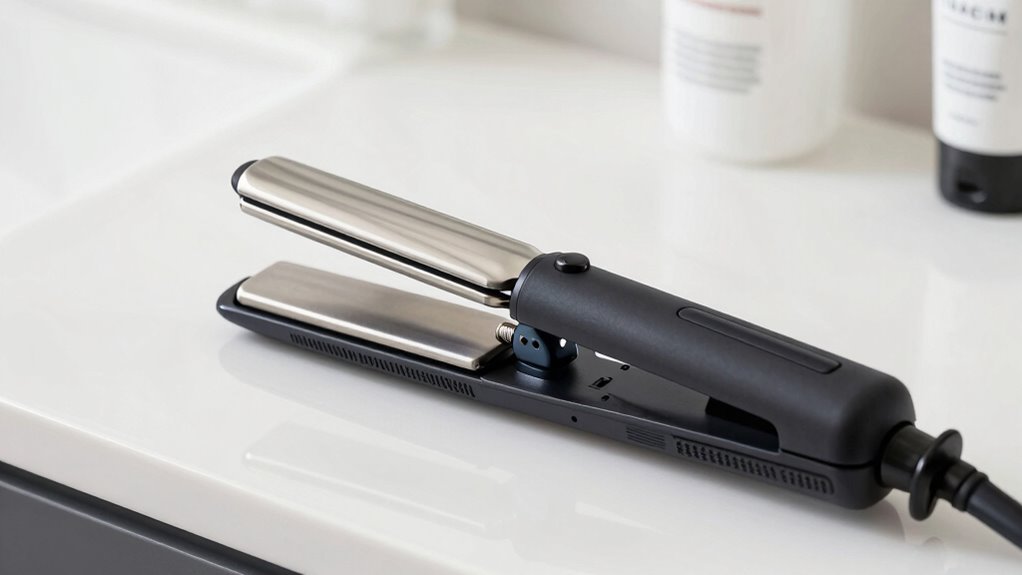
Using your flat iron safely and maintaining it properly are essential for prolonging its lifespan and protecting your hair. Always apply heat protection before styling to prevent damage, especially when using high temperatures. When you’re done, let the iron cool completely before storing it to avoid accidents. Consider using storage solutions like heat-resistant pouches or organizers to keep the plate surfaces safe and prevent dust buildup. Regularly clean the plates with a damp cloth to remove product residue and uphold peak performance. Check the cord for damage and avoid wrapping it tightly around the iron to prevent fraying. Proper handling and routine maintenance will ensure your flat iron stays effective and your hair remains healthy.
Proper maintenance and safety tips keep your flat iron effective and your hair healthy.
- Use heat protection every time you style
- Store in heat-resistant cases or organizers
- Clean plates regularly to prevent residue buildup
Frequently Asked Questions
Can Titanium or Ceramic Flat Irons Damage Hair More Easily?
Titanium flat irons can damage your hair more easily because they heat up quickly and have intense heat distribution, which might lead to burns or breakage if not used carefully. Ceramic irons, with their even heat distribution and softer material, tend to be gentler and less likely to cause damage. Plus, ceramic’s material durability means it maintains consistent heat longer, reducing the risk of sudden heat spikes that can harm your hair.
Are There Specific Hair Colors That Respond Better to Titanium or Ceramic Plates?
Did you know that darker hair absorbs heat 20% more efficiently than lighter shades? You might find that hair color influences how your hair responds to flat irons. For example, darker hair can heat up faster and may require lower heat settings, especially with titanium plates that conduct heat quickly. Lighter hair might need slightly more heat to achieve the same straightening effect without damage, so consider your hair color when choosing your flat iron.
How Long Do Titanium and Ceramic Flat Irons Typically Last?
Titanium flat irons usually last around 3 to 5 years, thanks to their durability, while ceramic irons can last 2 to 4 years with proper care. To maximize their lifespan, follow maintenance tips like cleaning plates regularly, avoiding dropped appliances, and storing them properly. Your flat iron’s longevity depends on usage frequency and care, so treat it gently and perform routine maintenance to keep it functioning effectively for years.
Do Different Voltage Standards Affect Titanium or Ceramic Flat Iron Performance?
Different voltage standards can impact your titanium or ceramic flat iron’s performance during international travel. Make certain to check voltage compatibility before plugging in; some irons are dual voltage, allowing seamless use worldwide, while others require a converter or adapter. Using the right voltage ensures consistent heat and prevents damage, so always verify your flat iron’s specifications to enjoy reliable styling wherever you go, avoiding unexpected power issues.
Can I Use a Titanium or Ceramic Flat Iron on Wet Hair Safely?
You shouldn’t use a titanium or ceramic flat iron on wet hair because it damages your strands. These irons get very hot, and applying heat on damp hair can cause breakage and split ends. Always use a heat protectant and make sure your hair is thoroughly dry before styling. Also, look for features like moisture resistance in your flat iron to prevent moisture-related damage and guarantee safer, more effective styling.
Conclusion
Choosing the right flat iron depends on your hair type and styling needs. Remember, “a stitch in time saves nine”—investing in the right tool now prevents damage later. Whether you opt for titanium or ceramic, proper use and maintenance guarantee your hair stays healthy and beautiful. Prioritize your hair’s unique needs, and you’ll achieve sleek, shiny results without regrets. Your perfect flat iron is out there—just find what works best for you.
Halloween Picks
halloween
As an affiliate, we earn on qualifying purchases.