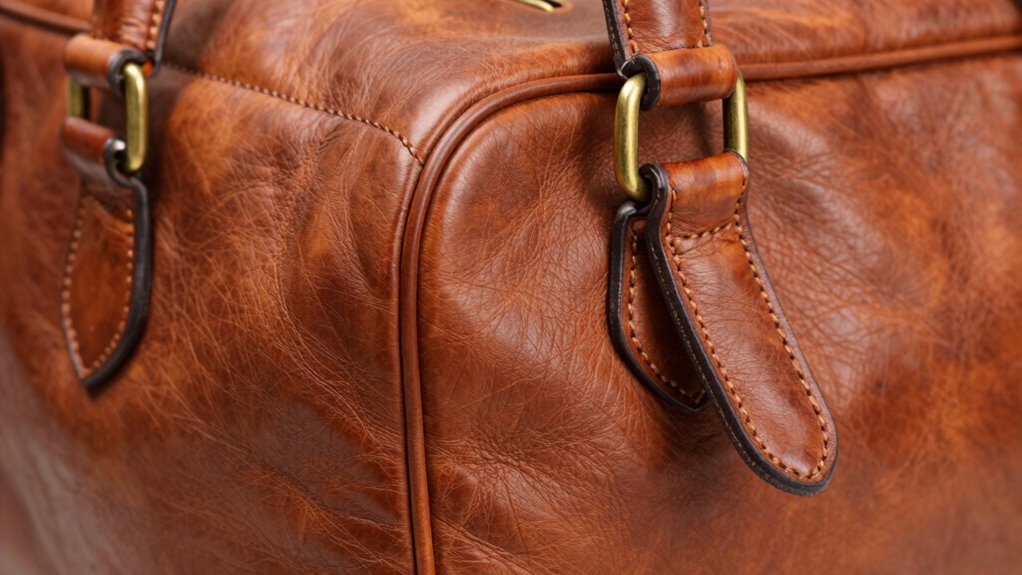
To tell if a leather bag will age well, check its stitching first—look for even, tight stitches that show craftsmanship. Inspect the edges; smooth, finished edges with proper burnishing resist cracking over time. For hardware, choose durable materials like brass or stainless steel that resist tarnishing and scratches. Proper care and attention to detail make all the difference, so continue to explore how these aspects impact your bag’s longevity.
Key Takeaways
- Even, tight stitching with consistent spacing indicates durable, high-quality craftsmanship that resists early wear.
- Smooth, well-finished edges with sealing or burnishing develop a natural patina, reflecting good craftsmanship and aging well.
- Hardware made from brass, stainless steel, or nickel resists tarnishing and corrosion, ensuring longevity and aesthetic appeal.
- Properly attached hardware and reinforced stitching prevent loosening or breakage over time.
- Regular maintenance like cleaning, conditioning, and careful handling prolongs the bag’s structural integrity and graceful aging.
How to Inspect Stitching for Leather Bag Durability
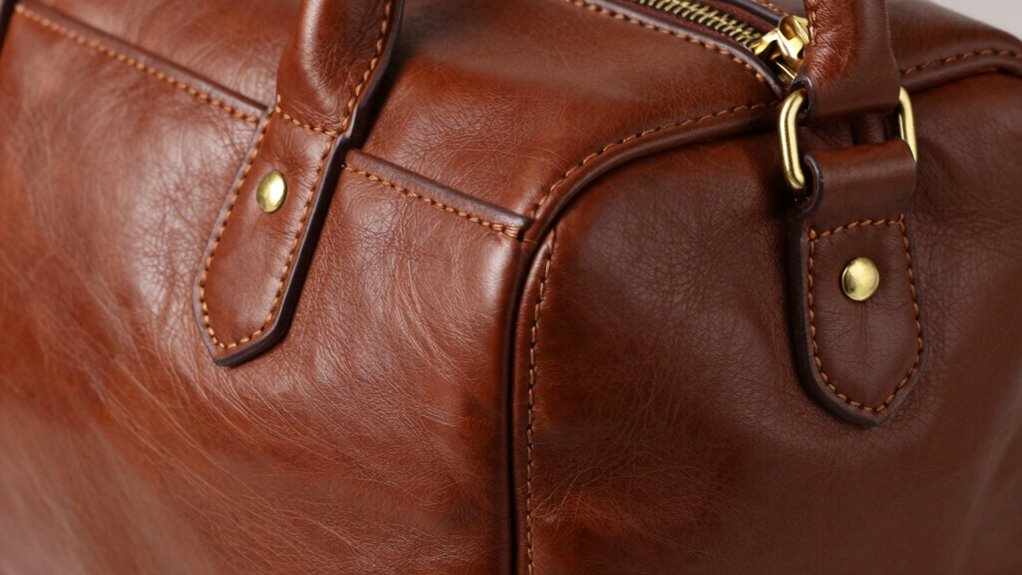
Inspecting the stitching on a leather bag is essential to determine its durability. When examining, look closely at the craftsmanship, ensuring the stitches are even, tight, and consistent. Quality stitching indicates the bag was sewn with care, which is crucial for longevity. Pay attention to areas under stress, like handles and seams, where weak stitches can lead to tearing. Understanding the leather’s origins helps you assess its quality: leather dyeing and leather tanning influence how well the material holds up over time. Properly tanned leather with even dyeing is less likely to crack or fade, complementing strong stitching. If the stitching shows signs of unraveling or unevenness, it’s a red flag that the bag may not withstand regular use. Durable stitching is key to a long-lasting leather bag. Additionally, considering leather care and maintenance can extend the lifespan of your bag and keep the stitching in excellent condition over time. Regular cleaning and conditioning help preserve the leather’s flexibility and prevent deterioration that can impact stitching integrity, and understanding proper leather treatment techniques can further enhance durability. Paying attention to stitching craftsmanship and material quality will help you select a leather bag that ages gracefully and remains reliable for years.
Recognizing Quality Edges That Age Well
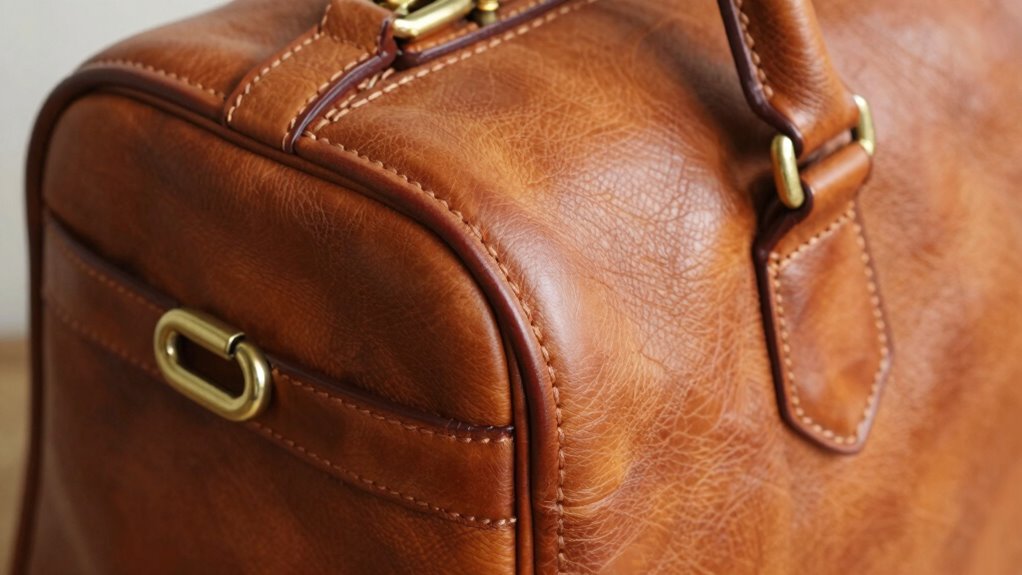
You can spot quality edges by looking for smooth finishes that show no roughness or unevenness, indicating careful craftsmanship. Natural edges that develop a rich patina over time highlight the leather’s durability and character. Paying attention to these details helps guarantee your bag will age beautifully and last for years. Additionally, well-constructed edges often feature precise stitching, which enhances both the appearance and longevity of the leather. Recognizing edge finishing techniques can also provide insight into the overall quality of the craftsmanship involved.
Smooth Edge Finishes
Smooth edge finishes are a key indicator of craftsmanship in leather bags, especially when it comes to their ability to age gracefully. Well-finished edges are polished and sealed, preventing fraying and damage over time. You’ll notice high-quality bags often feature embossed textures along the edges, adding a refined touch that enhances durability. Keep an eye out for subtle color variations where the edges meet the body; these differences can indicate meticulous hand-finishing. Smooth edges not only look sleek but also suggest careful craftsmanship, which translates into a bag that ages beautifully. Over time, these edges may develop a gentle patina, but the initial quality of the finish guarantees your bag maintains its elegance and structural integrity for years. Additionally, paying attention to edge sealing techniques can help you identify leather that’s been crafted to withstand the test of time, especially since craftsmanship directly influences how well a bag ages. Recognizing leather quality in the edges can also provide insight into the overall durability of the bag over its lifespan. Properly finished edges often involve edge burnishing, which further contributes to the bag’s ability to age gracefully by creating a protective barrier. A focus on techniques used in finishing can give you clues about the level of detail and care invested in the bag’s construction.
Natural Edge Patina
Natural edge patina is a telltale sign of a high-quality leather bag that ages gracefully. Over time, the edges develop a unique character, revealing your bag’s history. This natural aging process is influenced by leather sourcing and your handling, creating a rich, desirable leather scent. Authentic edges often show slight variations and a subtle sheen, indicating superior craftsmanship. The table below highlights key aspects:
| Aspect | Indicator | Significance |
|---|---|---|
| Leather sourcing | Full-grain leather | Ensures durability and natural aging |
| Edge finish | Uncoated, raw edges | Develops a beautiful patina over time |
| Leather scent | Natural, subtle aroma | Reflects quality and proper tanning |
| Handling | Regular use, gentle care | Enhances aging and character |
| Patina development | Smooth, glossy edge aging | Signifies high-quality, well-aged leather |
Additionally, the tanning process plays a crucial role in how well the edges age and develop character over time. Proper tanning techniques help ensure the edges will age gracefully and maintain their integrity.
Why Hardware Material and Finish Matter in Leather Bags
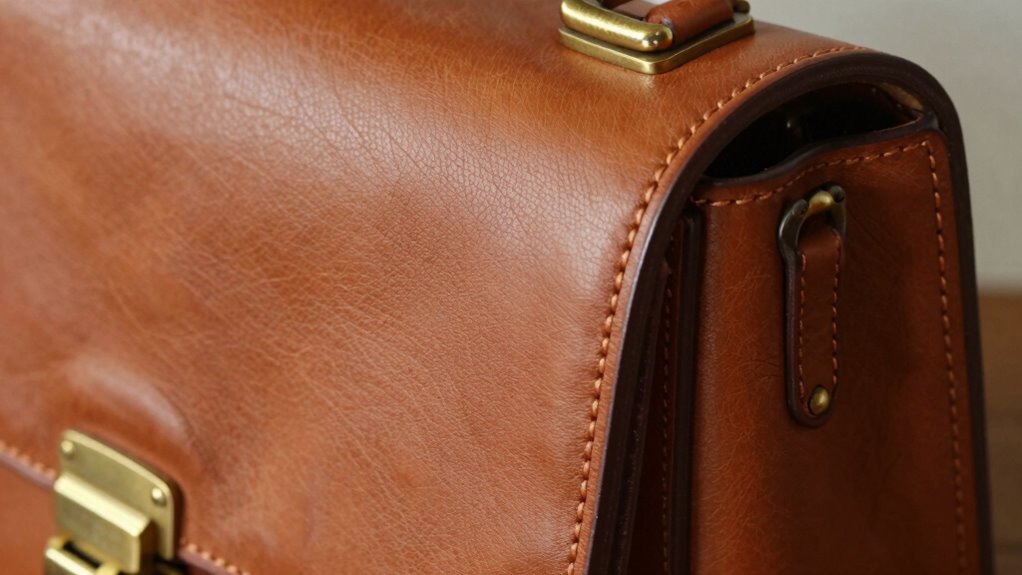
The hardware on a leather bag plays a crucial role in both its durability and visual appeal. High-quality finishes resist scratches and tarnishing, maintaining their shine over time. Conversely, cheap or improper finishes may wear quickly, exposing the metal underneath and accelerating metal corrosion. Choosing hardware made from sturdy materials like brass or stainless steel offers better resistance to rust and corrosion. The finish also affects the overall look—polished, matte, or brushed finishes each give a different aesthetic. Investing in hardware with durable finishes ensures your bag stays functional and attractive, even after years of use. Additionally, selecting hardware with corrosion resistance can significantly prolong the lifespan of your leather bag. Understanding the material composition of hardware can help in selecting the best options for longevity. Moreover, hardware with eco-friendly finishes is becoming increasingly popular among conscious consumers. To ensure longevity, it’s important to consider the metal type used in hardware manufacturing, as this impacts how well it ages. In the end, quality hardware enhances both the longevity and style of your leather bag.
Common Signs of Poor Stitching on Leather Bags
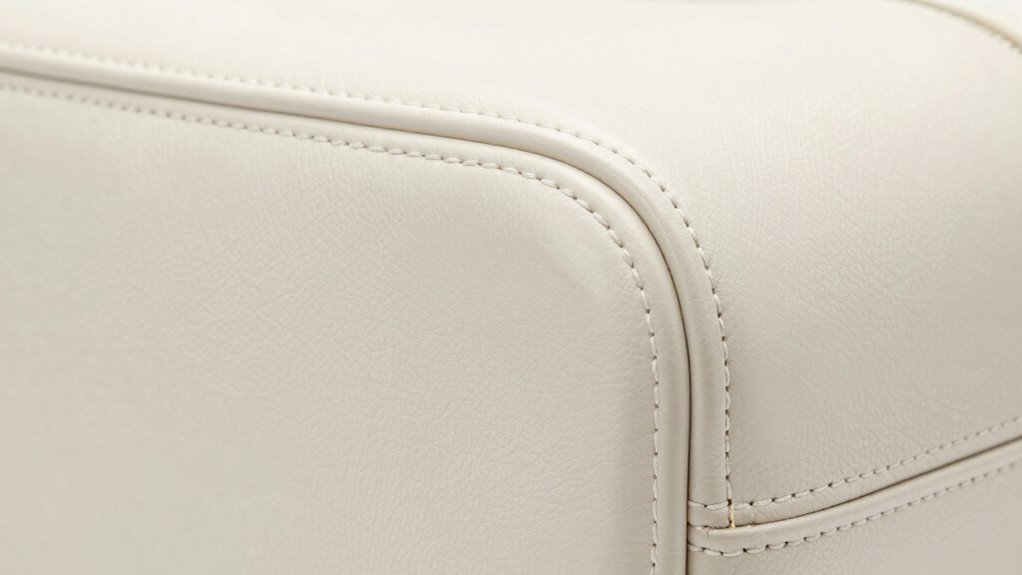
Look closely at the stitching on your leather bag; loose or uneven stitches are clear warning signs. You might also notice fraying thread edges, which indicate poor craftsmanship. Recognizing these issues helps you avoid bags that won’t hold up over time. Additionally, inspecting trusted business listings can guide you toward reputable brands known for quality craftsmanship. Paying attention to sound healing science can also inform your choices by understanding how durable materials can influence overall longevity. Understanding material durability can provide further insight into which bags are designed to age gracefully. Evaluating manufacturing standards can ensure that the bag’s construction adheres to industry best practices for longevity, especially when considering quality control processes.
Loose or Uneven Stitches
Loose or uneven stitches are clear signs that a leather bag’s craftsmanship may be subpar. If you notice stitches that are inconsistent in length or appear to be sagging, it indicates poor thread tension. Proper thread tension ensures the stitches are tight and secure, preventing early wear or tearing. Additionally, irregular stitch patterns—such as crooked or uneven rows—show a lack of attention to detail during manufacturing. These flaws compromise the bag’s durability and aesthetic appeal. When inspecting a leather bag, look closely at the stitching along seams and edges. Well-crafted bags maintain uniform stitch length and consistent spacing, reflecting quality workmanship. Avoid bags with loose or uneven stitches, as they tend to deteriorate faster and signal inferior craftsmanship.
Fraying Thread Edges
Fraying thread edges are a telltale sign that a leather bag’s stitching isn’t holding up well. When you notice threads coming loose or unraveling, it indicates poor craftsmanship or wear over time. Fraying thread edges can lead to further damage, like leather peeling around the seams, compromising the bag’s integrity. You might also see loose threads that catch on objects or appear frayed, signaling weak stitching. This deterioration often occurs with constant use or exposure to elements. Pay attention if the stitches appear uneven or if the thread color starts to fade or unravel. These signs suggest the stitching isn’t durable enough for long-term use and could result in more significant damage to your bag’s structure and appearance. Proper maintenance and inspection can help prevent or identify these issues early. Additionally, selecting bags with quality hardware can ensure longevity, as hardware that ages well resists rust and tarnish.
Edges That Resist Cracking and Wear Over Time
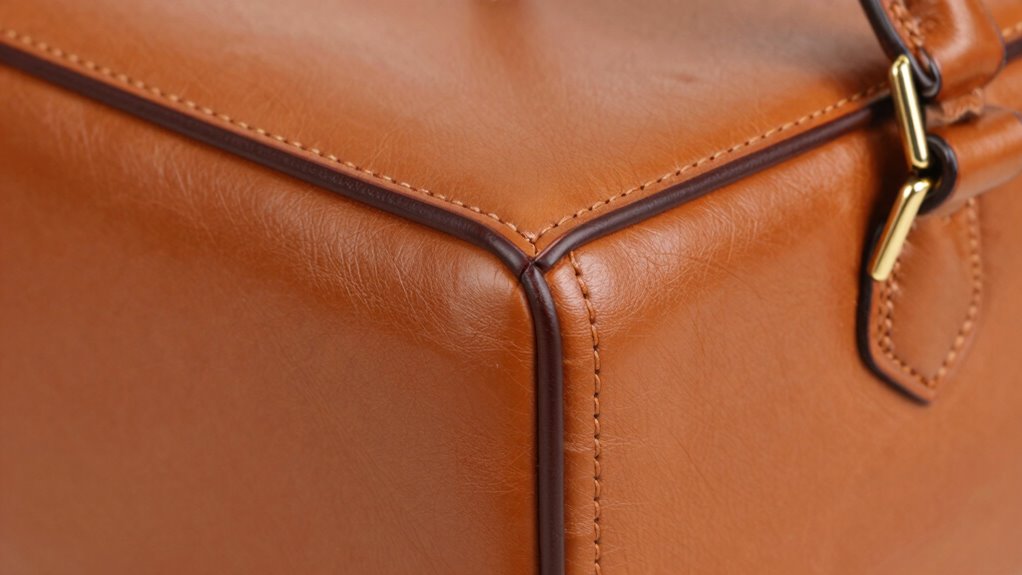
Edges that resist cracking and wear over time are essential for maintaining the durability and appearance of a leather bag. Properly finished edges prevent edge cracking and surface wear, extending the bag’s lifespan. High-quality edges are often sealed with edge paint or burnished for added protection. This prevents moisture and friction from damaging the leather. To understand how different techniques compare, consider this table:
| Technique | Benefits | Limitations |
|---|---|---|
| Burnished Edges | Smooth finish, enhanced durability | Requires skilled craftsmanship |
| Sealed Edges | Waterproof, resistant to surface wear | May peel over time |
| Painted Edges | Color consistency, protection against cracking | Less natural look |
Choosing the right method depends on your style and usage needs.
Comparing Hardware Options: Brass, Chrome, and Nickel
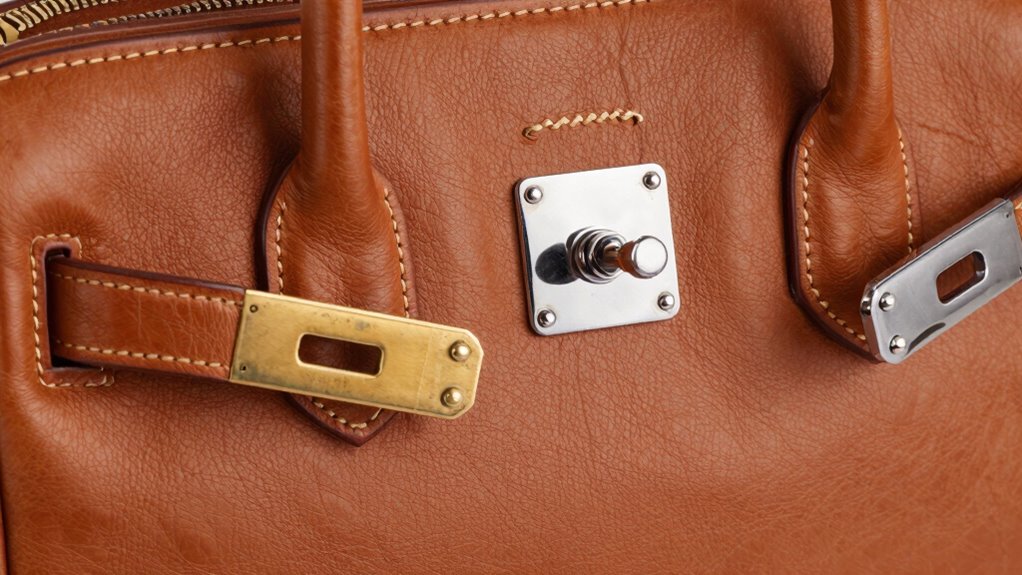
When choosing hardware for your leather bag, you’ll want to consider durability and how well it resists wear over time. The style and aesthetic appeal also matter, as brass, chrome, and nickel each offer a different look. Additionally, think about corrosion resistance and how much maintenance each option requires to keep your bag looking its best.
Durability and Wear Resistance
Choosing the right hardware for your leather bag can considerably impact its durability and resistance to wear over time. Brass, chrome, and nickel each offer different strengths for longevity and resilience. Brass hardware tends to develop a unique patina, making it ideal for those who want a vintage look, but it requires proper leather care to prevent tarnishing. Chrome hardware is highly resistant to corrosion and scratches, making it perfect for everyday use. Nickel hardware combines durability with a sleek appearance, resisting tarnish while maintaining its shine. When selecting hardware, consider how it will age with your fashion accessories. Durability depends on factors like material composition, exposure to moisture, and handling, so choose wisely if you want your leather bag to last and age beautifully.
- Resistance to corrosion and scratches
- Patina development over time
- Ease of maintenance and cleaning
- Impact on overall leather care
- Suitability for daily versus occasional use
Aesthetic Appeal and Style
Hardware options like brass, chrome, and nickel not only influence the durability of your leather bag but also define its overall aesthetic. Brass adds warmth and a vintage feel, often complementing natural leather tanning tones, while chrome offers a sleek, modern shine that pairs well with cooler color palettes. Nickel strikes a balance, providing a subtle, versatile finish that suits various styles. When considering hardware, think about color matching with your leather’s hue—darker tanned leathers tend to look striking with brass, whereas chrome and nickel work well with lighter or dyed leathers. The choice of hardware can elevate your bag’s style, making it more classic or contemporary, depending on your preference. Ultimately, your selection should enhance the bag’s overall aesthetic and harmony with its leather finish.
Corrosion and Maintenance
Different hardware options vary markedly in how well they resist corrosion and what maintenance they require. Brass, chrome, and nickel each behave differently over time, affecting your leather care routine and bag longevity. Brass resists corrosion but may tarnish, requiring polishing to maintain its shine. Chrome is highly resistant to rust but can chip or peel if scratched. Nickel offers good corrosion resistance but may develop a patina with age. To keep your bag looking its best, clean hardware regularly and avoid exposure to moisture. Proper maintenance prevents corrosion, preserving both the aesthetic appeal and structural integrity of your bag. Over time, choosing the right hardware can considerably impact how well your leather bag ages and how long it remains a stylish, functional piece.
- Brass develops a unique patina over time, adding character.
- Chrome is easy to clean with a damp cloth, ideal for busy schedules.
- Nickel’s corrosion resistance makes it a low-maintenance choice.
- Regular leather care extends bag longevity, especially around hardware.
- Protect hardware from moisture and harsh chemicals to prevent damage.
How Proper Stitching and Edges Make Your Bag Look Better Over Time
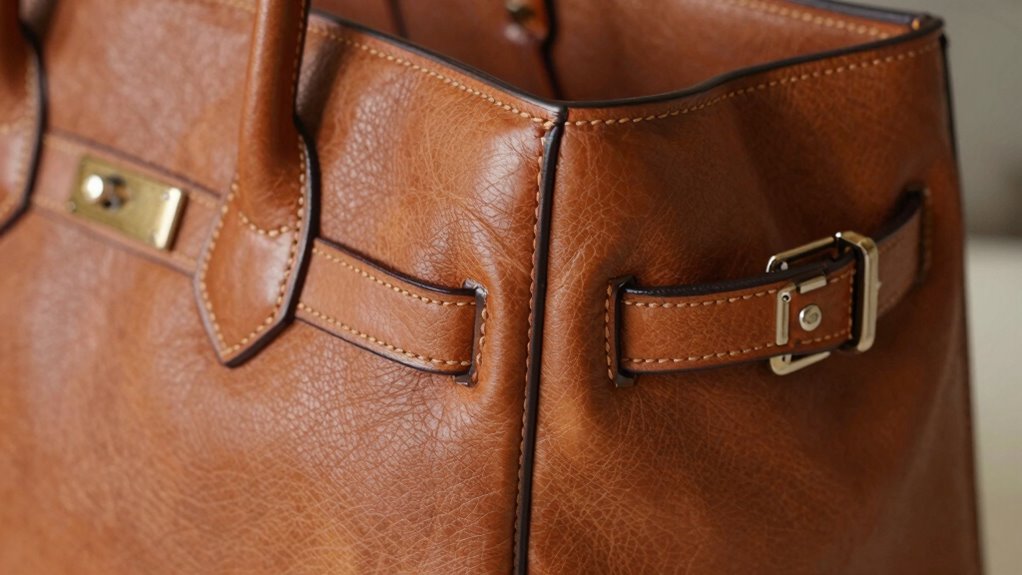
When your leather bag features proper stitching and well-finished edges, it naturally looks more polished and durable over time. Quality stitching keeps the bag’s structure intact, preventing fraying and unraveling, even as the leather ages. Well-finished edges add a sleek look, hiding raw edges and protecting against wear. Over time, the leather dye develops a richer patina, enhancing the bag’s character. Proper edges and stitching also protect the bag lining from damage caused by rough edges or loose threads. This careful craftsmanship ensures your bag maintains its shape and appearance longer. As the leather ages gracefully, the consistent stitching and smooth edges contribute to a sophisticated, well-maintained look that improves with time.
Hardware Attachments That Boost Durability
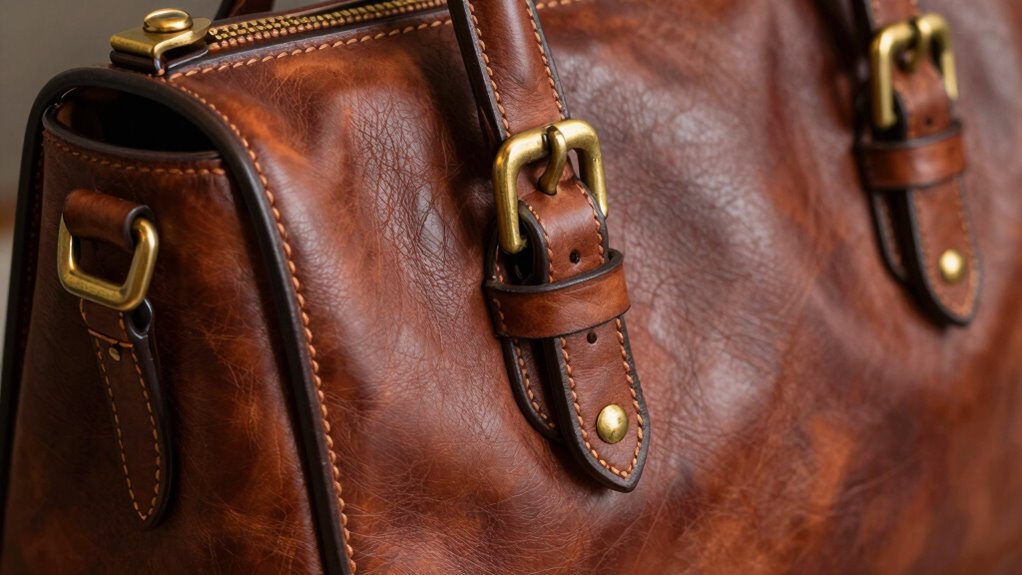
High-quality hardware attachments are essential for enhancing your leather bag’s durability. The right metal finishes and attachment methods ensure your bag withstands daily wear and tear. Look for hardware with corrosion-resistant finishes like brass, nickel, or gunmetal, which age beautifully. Secure attachment methods such as rivets, reinforced clasps, and sturdy buckles provide extra strength. Well-constructed hardware prevents loosening and detachment over time. Choosing hardware with smooth, polished finishes reduces scratching and tarnishing. Properly attached hardware not only boosts durability but also elevates your bag’s overall style. Investing in quality hardware is key to ensuring your leather bag stays functional and attractive for years to come. Remember, durable hardware is the backbone of a long-lasting leather bag.
What to Check Before Buying a Leather Bag: Inspection Tips
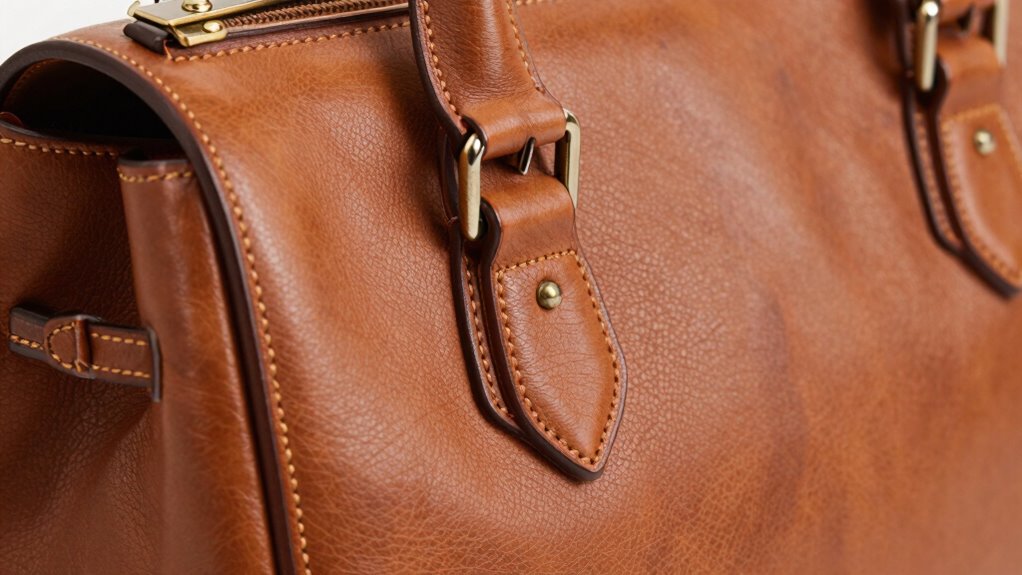
Before purchasing a leather bag, it’s important to carefully inspect its craftsmanship and materials to guarantee you’re getting good quality. Check the leather’s surface for consistency; quality leather should feel soft and supple, not stiff or cracked. Examine the stitching—look for even, tight stitches with no loose threads, as this reflects good craftsmanship. Pay attention to the edges; well-finished edges indicate careful construction. Inspect the hardware for sturdiness and smooth operation, ensuring it won’t easily tarnish or break. Also, consider how you’ll care for the bag—proper leather care extends its lifespan. When storing your bag, keep it in a cool, dry place and use a dust bag to prevent scratches. These tips help you evaluate quality and ensure your leather bag remains beautiful over time.
How to Care for Stitching, Edges, and Hardware to Keep Your Bag Looking Its Best
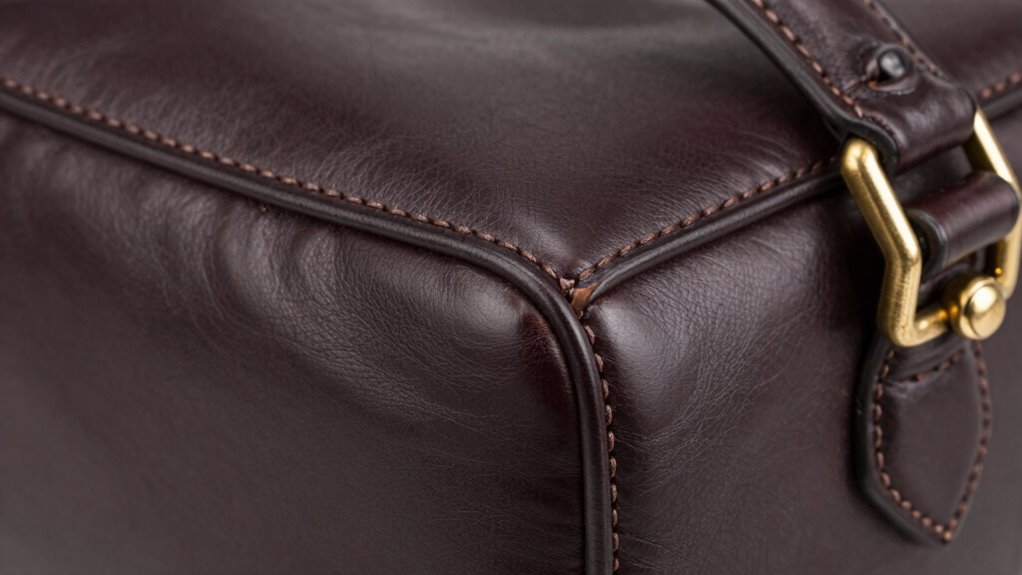
To keep your leather bag looking its best, you need to pay close attention to the stitching, edges, and hardware, as these elements are essential for both durability and appearance. Regularly inspect the stitching for loose threads and gently clean hardware with a soft cloth to prevent tarnishing. Protect the edges by applying a leather conditioner or edge dressing, which helps prevent cracks and wear. Be cautious with the interior lining; avoid spills and stains, and consider using leather dye to touch up faded areas. When cleaning, avoid harsh chemicals that can damage the leather or hardware. Proper care guarantees your bag ages gracefully and retains its aesthetic appeal.
Regularly inspect stitching, clean hardware gently, protect edges, and avoid harsh chemicals for lasting leather bag beauty.
- Clean hardware with a soft cloth periodically
- Use leather dye to restore faded areas
- Apply edge dressing for extra protection
- Avoid overstuffing to preserve stitching
- Keep the interior lining free of stains
Frequently Asked Questions
How Does Leather Type Influence Bag Aging and Durability?
The leather type greatly influences how your bag ages and lasts. Full-grain leather, with its natural grain, ages beautifully, developing character over time. Top-grain offers good durability and dye stability, ensuring colors stay vibrant. Correctly selecting leather with stable dye and a resilient grain means your bag will age gracefully, resisting wear and maintaining its appeal. You’ll enjoy your bag longer, knowing it’s made from quality leather designed to withstand time.
Can Repair Techniques Restore Worn Stitching or Edges Effectively?
Yes, repair techniques like stitching reinforcement and edge refinishing can effectively restore worn stitching or edges. You can have a skilled artisan reinforce loose stitches or replace damaged ones, strengthening the bag’s structure. Edge refinishing smooths out scuffed or frayed edges, giving your bag a refreshed look. These methods prolong your bag’s life and maintain its appearance, making it a worthwhile investment to keep it looking and functioning well over time.
What Environmental Factors Accelerate Hardware Tarnishing or Corrosion?
Imagine your hardware as a brave knight facing relentless storms. Humidity damage and pollution effects act like corrosive elements, speeding tarnishing and corrosion. High humidity creates a constant damp environment, whispering secrets of rust, while pollution deposits settle like dark shadows, eroding surfaces. Together, they weaken the armor of your bag’s hardware, making it vulnerable over time. Protect your investment by minimizing exposure to moisture and pollutants to keep it shining bright.
How Do Different Leather Finishes Affect Aging and Maintenance?
Different leather finishes impact aging and maintenance by influencing the leather’s appearance and upkeep. For example, a matte finish may show scratches more easily, while a glossy finish resists dirt better. You might notice a leather scent that fades over time, and color fading can occur with prolonged sun exposure. Proper cleaning and conditioning help preserve the finish, keeping your bag looking new longer and maintaining its natural charm.
Is It Possible to Identify Genuine Craftsmanship Beyond Visible Quality?
Can you truly see craftsmanship, or does it whisper behind the seams? You can, by feeling the brand’s reputation and noticing artisanal techniques woven into each stitch. Authentic craftsmanship reveals itself in precise stitching, durable edges, and hardware that ages gracefully. When you recognize these subtle signs, you’re appreciating more than a bag—you’re connecting with the skill and tradition behind it, making your investment feel truly priceless.
Conclusion
When you pay attention to stitching, edges, and hardware, you’re not just choosing a bag—you’re investing in a piece that ages gracefully. Sometimes, the tiniest details reveal the quality inside. Think about how the right hardware or well-crafted edges can turn a simple bag into a timeless accessory. So next time you shop, trust your instincts and look beyond the surface—your perfect, durable leather bag might just be waiting where you least expect it.