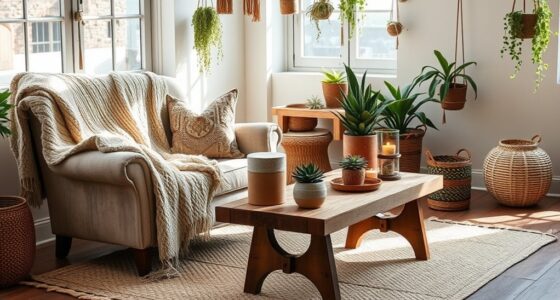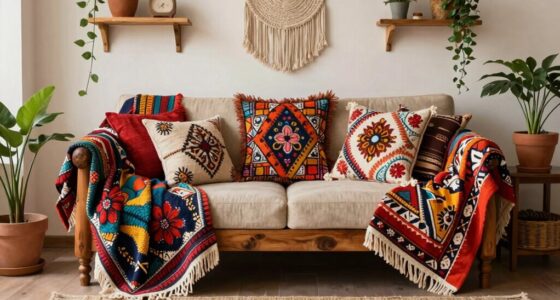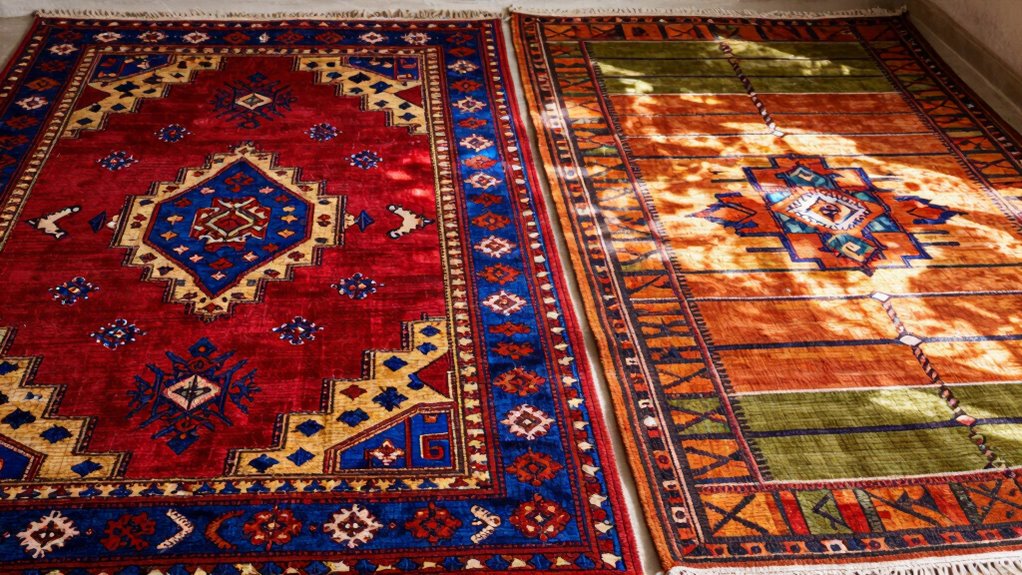

Moroccan rugs often bring a sense of warmth, stability, and tradition with earthy tones and geometric patterns that evoke grounded, tranquil energy. Kilim rugs, with their vibrant colors and intricate designs, can create lively, vibrant, or reflective atmospheres depending on their symbolism. If you want to understand how these unique qualities influence your space’s vibe and how to choose the right rug, keep exploring how colors and patterns shape energy.

Get your wardrobe favorites delivered free with Prime
- Fast, free delivery on millions of items
- Prime Video, Amazon Music and more included
- Member-only deals all year
Key Takeaways
- Moroccan kilims often feature earthy tones and geometric patterns that evoke stability and grounded energy.
- Traditional Moroccan designs reflect spiritual and communal values, fostering a sense of authenticity and cultural connection.
- Regional variations in kilims influence space mood, with some offering vibrant colors for vibrancy and others calming tones for tranquility.
- Handwoven craftsmanship and embedded symbolism enhance the emotional and cultural significance of Moroccan kilims.
- The overall energy created by kilims depends on color choices, patterns, and regional influences, shaping the environment’s atmosphere.
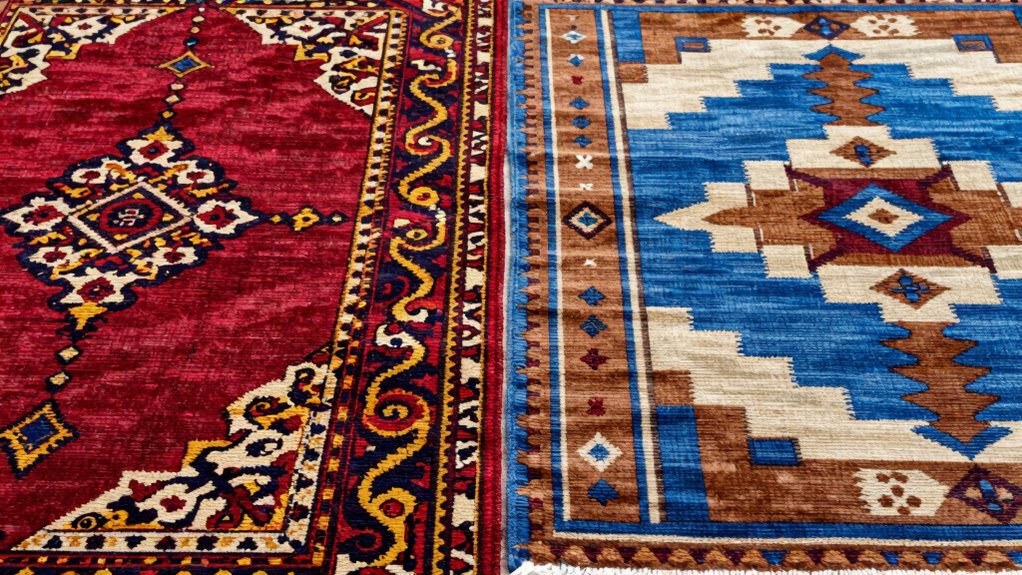
Kilim rugs are more than just beautiful floor coverings; they also influence the energy of a space in unique ways. When you walk into a room adorned with a kilim, you might notice how the colors and patterns evoke different feelings and atmospheres. The colors used in these rugs are rich with symbolism, often representing specific emotions or cultural beliefs. For example, bold reds can symbolize vitality, courage, or protection, while blues might evoke calmness, spirituality, or serenity. Understanding these color meanings helps you intentionally choose a kilim that aligns with the energy you want to foster in your space.
Kilim colors evoke emotions—reds for vitality, blues for serenity—helping you craft your desired energy.
Cultural significance plays an essential role in how kilim rugs influence your environment. These rugs aren’t just decorative items; they carry stories, traditions, and histories from their origins. In Moroccan culture, for instance, kilim patterns often tell stories of daily life, spirituality, and communal values. When you incorporate such a rug into your home, you’re not only adding visual interest but also connecting with centuries of cultural expression. This connection can introduce a sense of authenticity, grounding, and warmth that impacts the overall energy of your space.
Moroccan kilims tend to feature geometric designs and earthy tones, which can create a grounded, stable atmosphere. The traditional patterns, often symbolic, invite a sense of continuity and cultural pride. In contrast, other kilims might feature more vibrant colors and intricate motifs, contributing to a lively, energetic vibe. Your choice of a Moroccan or other regional kilim can considerably shape the mood—whether you seek tranquility, vibrancy, or a sense of heritage. Regional influences also play a significant role in how these rugs affect your environment. Additionally, the handwoven craftsmanship involved in creating kilim rugs adds to their cultural and energetic value. The stories, symbolism, and cultural roots woven into its fibers make the rug a meaningful focal point, influencing how you feel in that space. Whether Moroccan or from another region, each rug has the power to shape your environment’s mood and vibe. By understanding the symbolism behind the colors and patterns, you can select a kilim that enhances your space’s energy, making it more vibrant, peaceful, or grounded—whatever suits your personal style and needs.
As an affiliate, we earn on qualifying purchases.
Frequently Asked Questions
How Do Moroccan and Kilim Rugs Differ in Design Origin?
You’ll notice Moroccan and Kilim rugs differ in design origin through their unique cultural symbolism and regional craftsmanship. Moroccan rugs often feature bold geometric patterns influenced by Berber traditions, reflecting their rich cultural symbolism. In contrast, Kilim rugs originate from regions like Turkey and Persia, showcasing intricate motifs created through skilled regional craftsmanship. These origins shape their distinct styles, making each rug a beautiful representation of its cultural heritage.
What Materials Are Commonly Used in Moroccan Versus Kilim Rugs?
You’ll find Moroccan rugs often crafted from wool, dyed with vibrant natural dyes, and woven using traditional techniques that create plush textures. Kilim rugs, on the other hand, typically use wool or cotton, with bold geometric patterns achieved through flat weaving techniques. Both rely heavily on natural dyes, but Moroccan rugs tend to have more luxurious, pile textures, while Kilims offer sleek, flat surfaces that highlight their striking designs.
Are There Specific Rooms Where Each Rug Type Is Better Suited?
You’ll find Moroccan rugs suit living rooms or bedrooms best, thanks to their warm, bold color schemes and intricate patterns that add energy. Pair them with neutral furniture for balance. Kilim rugs are ideal for entryways or dining rooms because of their geometric designs and durable materials. They complement modern or rustic furniture styles, creating a welcoming vibe. Choose based on your space’s energy and your preferred color and furniture pairing.
How Do the Cleaning and Maintenance Requirements Vary?
Coincidentally, cleaning methods and maintenance frequency differ greatly between these rugs. For Moroccan rugs, you’ll want gentle vacuuming weekly and occasional professional cleaning to preserve their plush fibers. Kilim rugs, with their flat weave, handle vacuuming more frequently, about twice a week, and spot cleaning as needed. Both require regular maintenance, but Moroccan rugs demand more delicate care to keep their vibrant colors and textures intact.
Can These Rugs Influence Room Temperature or Acoustics?
Yes, these rugs can influence room temperature and acoustics. Moroccan rugs, often thicker and plush, provide better thermal insulation, helping keep a room warmer. Kilim rugs, being flatter, offer less insulation but still absorb sound, improving acoustics by reducing echo. By choosing the right rug, you can enhance comfort and sound quality in your space, making your environment cozier and quieter.
Conclusion
As you explore the world of rugs, you’ll notice how Moroccan and kilim pieces subtly influence your space’s ambiance. While each type offers its own unique charm, it’s the gentle energy they impart that truly completes your room’s story. Embracing these textiles allows you to foster an environment of warmth and depth, inviting a quiet elegance that’s both soothing and sophisticated. Ultimately, it’s the delicate interplay of their energies that makes your space feel beautifully alive.
Halloween Picks
halloween
As an affiliate, we earn on qualifying purchases.