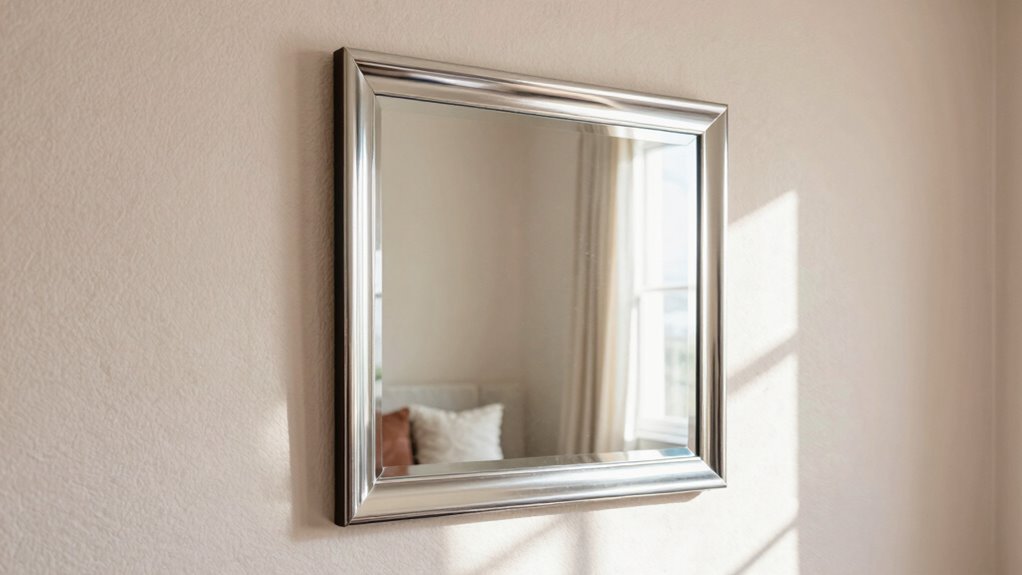

To double the light in small rooms, place mirrors opposite windows or light sources, so they bounce natural and artificial light around the space. Choose large, appropriately sized mirrors that reflect a wide area, and hang them at eye level for maximum effect. Use unobstructed placement to avoid clutter and increase brightness. Proper framing and secure mounting add style and safety. Keep exploring these tips for a brighter, more open room without overwhelm.
Key Takeaways
- Place mirrors opposite windows or light sources to reflect natural light and brighten the room effectively.
- Use large, horizontally oriented mirrors to maximize light reflection and create a sense of spaciousness.
- Hang mirrors at eye level to optimize light bounce and enhance visual balance in small spaces.
- Position mirrors at angles that reflect dark corners or shaded areas, increasing overall brightness.
- Keep wall colors light and uncluttered to complement mirror placement for maximum light amplification.
Why Mirrors Are a Game-Changer for Small, Dim Rooms
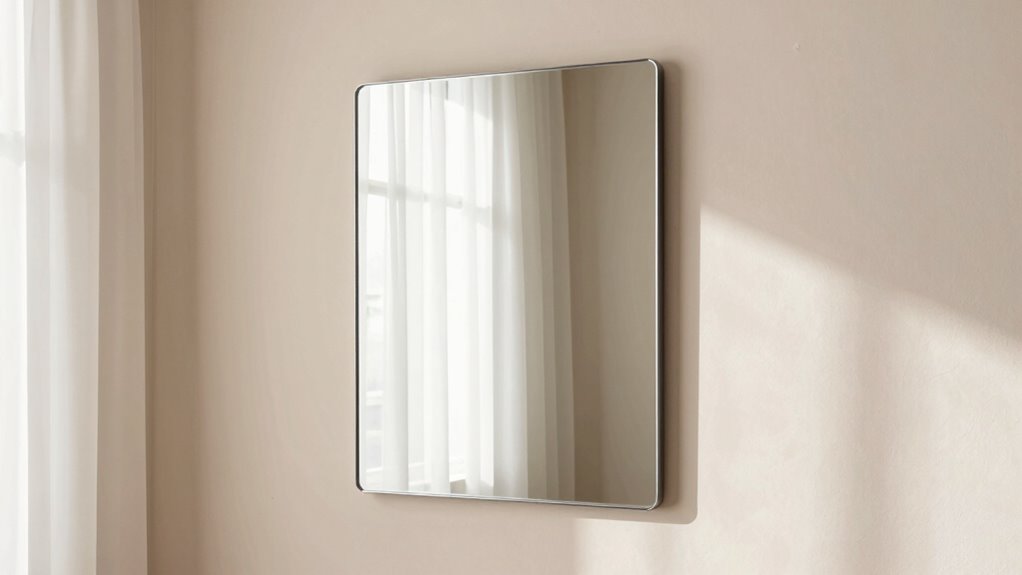
Have you ever wondered how to make a small, dim room feel instantly brighter and more spacious? Mirrors are a simple, effective solution. The shapes of mirrors can dramatically influence the room’s feel—elongated vertical mirrors add height, while wide rectangular ones create a sense of openness. Round mirrors soften sharp corners and introduce a friendly, inviting vibe. Frame styles also matter; sleek, frameless designs blend seamlessly, making the space feel less cluttered. Ornate frames add character without overwhelming the room’s size. Choosing the right combination of mirror shapes and frame styles helps reflect more light and create an illusion of depth. Additionally, understanding lighting optimization techniques can enhance the effect of your mirrors, amplifying brightness and openness. When combined with strategic light placement, this trick transforms tiny, shadowy spaces into bright, airy retreats, making your small room appear larger and more welcoming instantly.
How to Choose the Right Mirrors for Small Spaces and Brightness
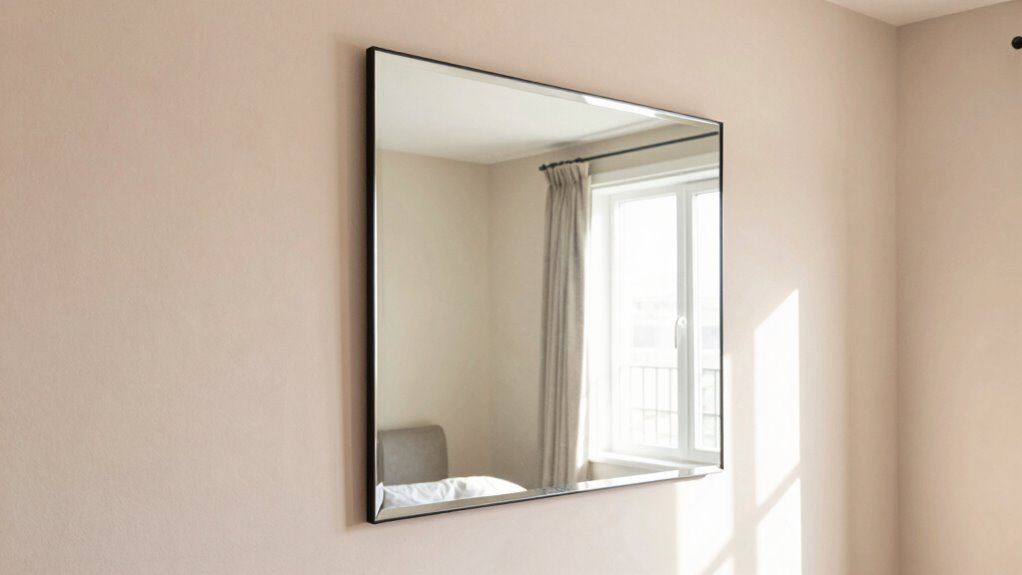
To enhance brightness and space, you need to carefully position your mirrors for maximum reflection. Choosing the right size guarantees your mirror complements your room without overwhelming it. By considering placement strategies and size, you can create a sense of openness and light in small rooms. Additionally, experimenting with different mirror placements can optimize reflection angles and further improve brightness. Incorporating smart home automation can also help control lighting and mirror functions for enhanced ambiance.
Reflective Placement Strategies
Choosing the right mirrors for small spaces requires careful placement to maximize their reflective potential. Position your mirror where it can catch natural or artificial light, such as opposite windows or light fixtures. Keep in mind that mirror frames can add style and influence how light bounces; sleek, frameless designs often reflect more brightness, while decorative frames can create focal points. Also, consider wall colors—light hues reflect more light and make the space feel larger, so place mirrors where they enhance these effects. Avoid cluttering corners or placing mirrors where they won’t reflect anything meaningful. Proper placement guarantees that your mirror amplifies light and opens up the room, making small spaces feel brighter, more spacious, and inviting. Reflective placement strategies play a crucial role in enhancing room brightness and perceived size. Additionally, paying attention to lighting conditions can significantly improve the effectiveness of your mirror placement, as well-placed mirrors can maximize the impact of both natural and artificial illumination. For optimal results, consider the angle of reflection, which can dramatically influence how light is distributed throughout your space. Understanding spatial arrangement principles can further enhance how effectively your mirrors contribute to a brighter environment.
Optimal Mirror Size Selection
Selecting the right mirror size for a small room is essential to maximizing brightness and creating a sense of space. A larger mirror can reflect more light and make the room appear bigger, but it shouldn’t overwhelm the space. Consider mirror frame styles that complement your decor; sleek, minimal frames tend to suit smaller rooms better. When choosing size, aim for a balance that enhances the room without dominating it. Proper mirror maintenance tips, such as regular cleaning with a soft cloth, ensure your mirror stays bright and clear. Be mindful of the reflection area—too small, and it won’t have the desired impact; too large, and it can feel overwhelming. Ultimately, selecting a mirror that fits proportionally and stylistically will optimize brightness and expand your space. Additionally, understanding proper placement techniques can significantly enhance the mirror’s effectiveness in small rooms. Incorporating lighting considerations can further amplify the reflected light and brighten the space even more.
Where and How to Hang Mirrors to Reflect Light Effectively
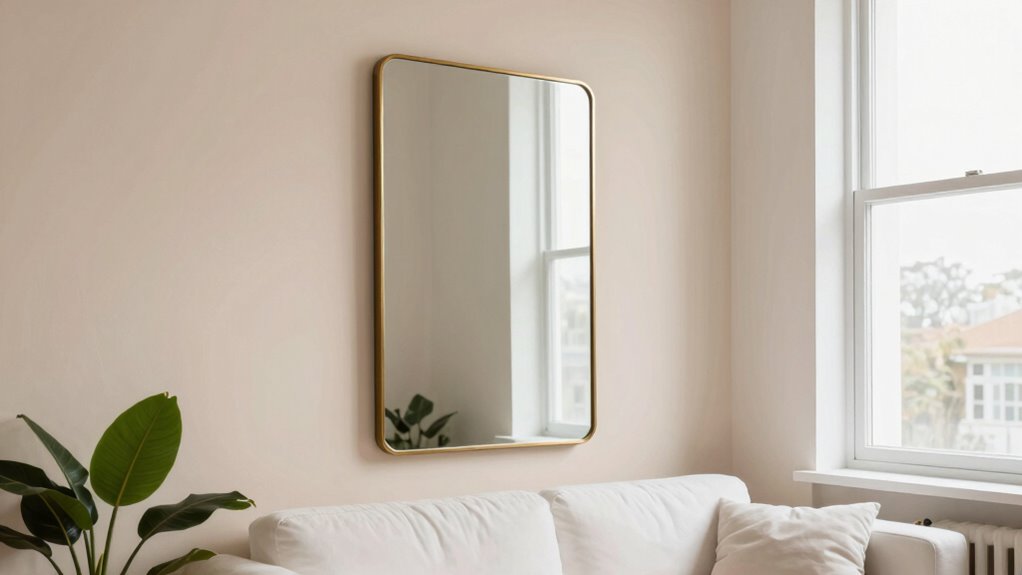
When hanging mirrors in small rooms, positioning is key to maximizing light reflection. You want to place your mirror where it can catch natural light, such as opposite windows or near light sources. Wall mounting is essential; confirm the mirror is securely attached at eye level for best effect. Consider the mirror framing—an attractive frame can enhance the overall look while drawing attention to its placement. Avoid hanging mirrors too high or too low, which can diminish their reflective purpose. Keep the mirror angled to reflect light directly into dark corners or across the room. Proper placement ensures you double the light without cluttering the space, making your small room feel brighter and more open. Additionally, choosing the right mirror placement techniques can significantly enhance the room’s natural brightness and create a more inviting atmosphere. Incorporating nanotechnology-based coatings on mirrors could further improve their reflective efficiency by reducing glare and increasing durability, especially in areas with high humidity or frequent cleaning. Utilizing innovative reflective surface coatings can also optimize light bounce and overall room brightness. Understanding the importance of security systems in safeguarding your home can provide peace of mind, especially in smaller spaces where vulnerabilities might be more apparent. Moreover, experimenting with different mirror orientations can help optimize light reflection based on your specific room layout.
Tips for Creating the Illusion of Space With Mirror Placement
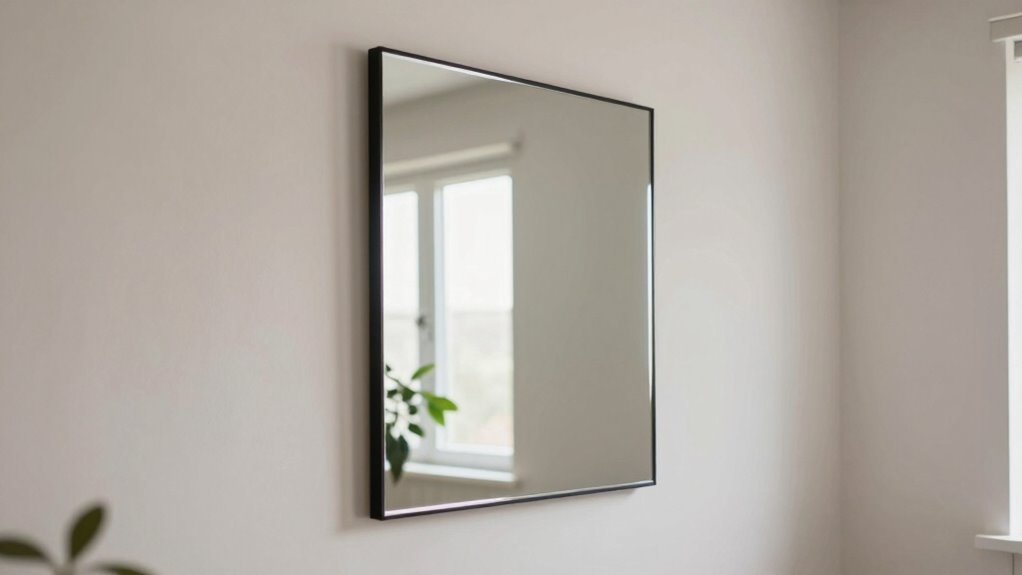
To make your small room feel more spacious, focus on strategic mirror placement that maximizes reflection. Position mirrors to bounce light around the space, brightening it and creating an open feel. Using reflective light techniques can transform your room into a brighter, larger-looking area. Proper mirror positioning can significantly enhance the perception of space and improve overall room ambiance. Additionally, understanding home lighting principles can help you optimize the effect of your mirrors for a more inviting environment. Incorporating knowledge of light diffusion can further enhance the illusion of space by softening harsh shadows and distributing light evenly throughout the room. Being mindful of light direction can also help you achieve the most effective reflection and spaciousness.
Strategic Mirror Placement
Placing mirrors thoughtfully can instantly make a small room feel larger and more open. Position your mirror where it reflects natural light or a focal point to maximize its impact. Consider the mirror’s frame; sleek, minimal frames blend seamlessly, while decorative frames add style. When choosing wall colors, opt for light shades that enhance the mirror’s reflective qualities and amplify the sense of space. Hang the mirror at eye level for balanced proportions and visual harmony. Avoid cluttered arrangements that can distract from the illusion of openness. Instead, focus on clean lines and strategic placement to create depth. The right placement, combined with well-chosen mirror frames and wall colors, transforms your small room into a brighter, more inviting space.
Reflective Light Techniques
Strategic mirror placement can substantially enhance the way natural light fills your small room, creating a brighter and more expansive feel. To maximize this effect, consider using different mirror shapes—oval, rectangular, or round—to add visual interest and direct light effectively. Larger, horizontally oriented mirrors reflect more light and make spaces seem wider, while vertical shapes add height. Frame styles also matter: sleek, frameless mirrors provide a seamless look that amplifies light, whereas ornate frames can add personality without blocking reflections. Position mirrors opposite windows or light sources to bounce sunlight deeper into the room. Additionally, experimenting with mirror placement techniques can help you find the most effective setup for your space. Proper mirror positioning leverages natural viewing angles to optimize light reflection and spatial perception. By choosing the right shapes and frame styles, you can manipulate reflective light to double the perceived space and brighten your small room effortlessly.
Decorating With Mirrors and Lighting to Maximize Brightness
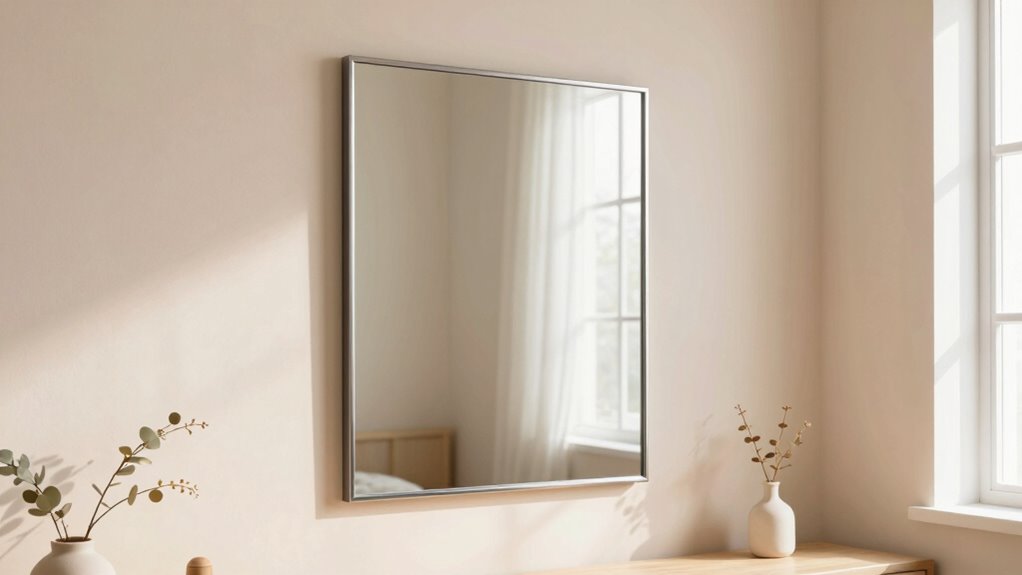
Using mirrors effectively can dramatically enhance the brightness in small rooms, making them feel more open and inviting. To maximize light, choose mirror shapes like elongated or circular designs that reflect more surface area. Incorporate frame materials such as sleek metal or elegant wood, which add sophistication and help complement your decor. Position mirrors opposite light sources, like windows or lamps, to bounce light around the space. Consider the overall aesthetic—fancy beveled edges or minimalist frames can elevate the room’s style while boosting brightness. Additionally, understanding how natural light can influence your living environment—creating a brighter, more open space can positively impact your overall well-being and financial mindset. Employing light reflection principles can further optimize this effect, ensuring your small room feels more spacious and welcoming. Enhancing your understanding of ambient lighting can help you choose the right placement and fixtures for even better brightness.
Common Mistakes to Avoid When Using Mirrors in Small Rooms
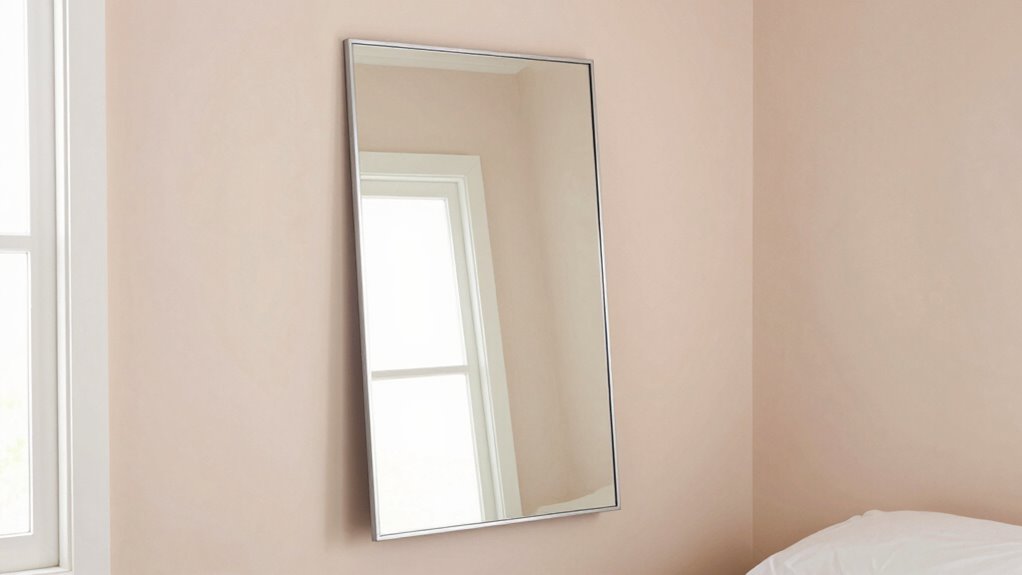
One common mistake is overloading a small room with too many mirrors, which can create a cluttered and chaotic feel rather than enhancing the space. Instead, choose mirror shapes that complement your room’s layout—rounds soften corners, while rectangular shapes add structure. Avoid mismatched frame styles that clash with your decor; instead, opt for cohesive or minimal frames to keep the look sleek. Be cautious with mirror placement: too many on one wall can overwhelm, and mismatched sizes may disrupt harmony. Focus on strategic placement to reflect light and create depth without clutter. To help visualize, consider this guide:
| Mirror Shape | Frame Style | Placement Tip |
|---|---|---|
| Round | Minimalist | Use as accent in small corners |
| Rectangular | Ornate | Hang above furniture |
| Oval | Modern | Position opposite windows |
| Square | Classic | Group for gallery effect |
| Irregular | Eclectic | Use sparingly for interest |
How to Hang and Secure Mirrors Safely and Stylishly
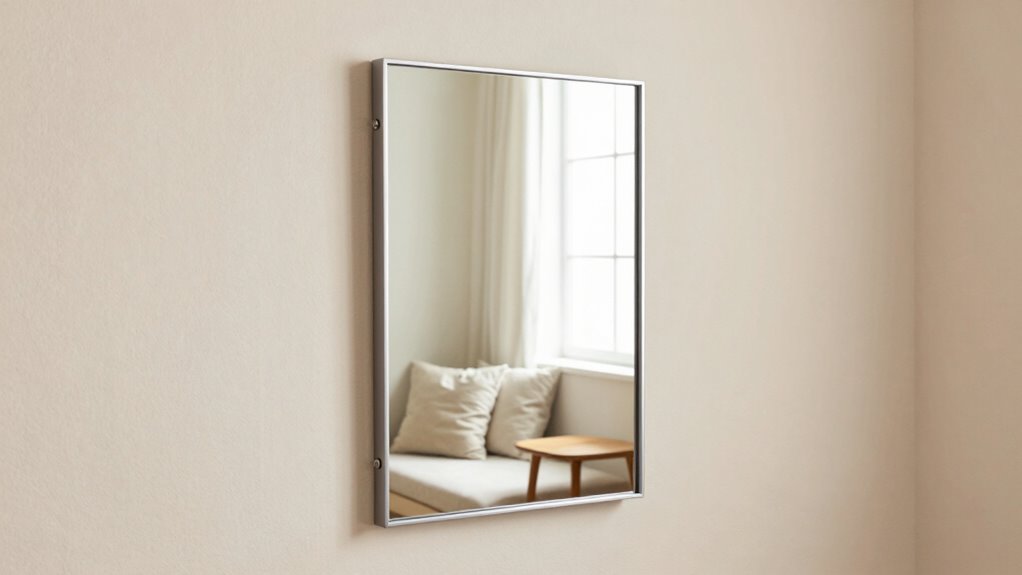
Hanging and securing mirrors properly not only enhances their style but also guarantees safety and stability. To achieve this, choose the right wall mounting hardware based on your mirror’s style and weight. Use anchors and hooks suitable for your wall material, whether drywall or brick. Make certain the mounting points align with the mirror’s frame or mounting hardware for a secure fit.
Secure mirrors properly with appropriate hardware for safety and style.
Consider these tips for a polished look:
- Select wall mounting hardware that complements your mirror style for a cohesive appearance
- Use a level to ensure perfect positioning and symmetry
- Opt for secure anchors and screws to prevent accidents and damage
Proper wall mounting creates a sleek, safe display while amplifying light in your small room.
Before-And-After Examples: Transforming Small Rooms With Mirrors
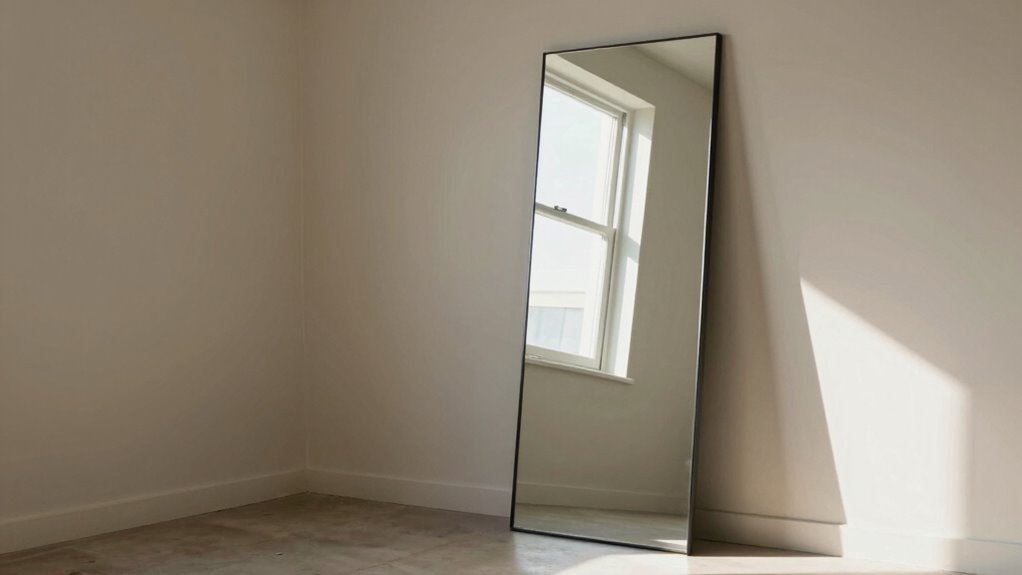
Transforming a small room with mirrors can create an immediate sense of spaciousness and light. Before-and-after examples show how strategic placement and choice of mirror frame styles can dramatically change a space’s feel. For instance, a large, frameless mirror reflected natural sunlight, doubling the brightness and opening up the room. In another example, a vintage-style frame added charm without overwhelming the space. Keep mirror cleaning tips in mind—regular dusting and gentle cleaning guarantee your reflection remains crystal clear, enhancing the room’s brightness. These transformations prove that a well-placed mirror isn’t just decorative; it’s a powerful tool for making small rooms appear larger, brighter, and more inviting. With the right frame styles and maintenance, you’ll see stunning results every time.
Frequently Asked Questions
Can Mirrors Improve Energy Efficiency in Small Rooms?
Yes, mirrors can improve energy efficiency in small rooms. By reflecting natural light, they reduce the need for artificial lighting, saving energy. To maximize this effect, place mirrors strategically near windows or light sources. Combine this with energy-saving techniques and eco-friendly materials to create a more sustainable space. This simple trick enhances brightness and reduces electricity use, making your small room more eco-friendly and energy-efficient.
What Mirror Shapes Work Best for Enhancing Light?
You should choose decorative mirror styles with elongated or oval shapes, as they reflect more light and create a sense of space. Opt for mirrors with light enhancing materials like glass or mirrored surfaces that maximize brightness. Avoid overly ornate or cluttered frames, which can distract from the reflective surface. By selecting the right shape and materials, you’ll effectively boost natural light and make your small room feel more open and inviting.
How Often Should Mirrors Be Cleaned for Optimal Brightness?
Think of your mirror as a window into brightness; to keep it shining, you should clean it regularly—about once a week or every two weeks, depending on usage and environment. Adhering to a consistent cleaning schedule guarantees mirror maintenance stays simple and effective, maximizing light reflection. Use a gentle cleaner and a soft cloth, and you’ll keep your space looking brighter and more inviting, just like a clear, sunny day.
Are There Specific Mirror Frames That Boost Light Reflection?
Yes, choosing mirrors with decorative frames or minimalist designs can boost light reflection in your small room. Decorative frames with metallic or glossy finishes reflect more light, enhancing brightness. Minimalist designs with clean lines and simple borders minimize distraction and maximize reflective surfaces. You should select a frame that complements your decor while ensuring it doesn’t absorb too much light. Proper placement combined with these frames creates a brighter, more spacious feel.
Can Mirrors Be Used to Hide Imperfections on Walls?
Mirrors can work wonders to hide wall imperfections, making them nearly disappear. You just need to strategically position one opposite or near the flaw, reflecting light and drawing attention away from uneven wall textures or paint color inconsistencies. By choosing a mirror that complements your wall’s texture and paint color, you create a seamless look. The right placement can make your imperfections vanish like a magic trick!
Conclusion
So, next time your tiny room feels more cave than cozy, remember: a mirror isn’t just a fancy wall ornament. With the right placement and a bit of cleverness, you’ll be doubling your light and your space in no time. Who knew that a simple reflective surface could turn your gloomy box into a bright, airy haven? Just avoid the rookie mistakes, and you’ll be the envy of all small-room dwellers—without breaking a sweat or the bank.