
Romantic dressing has a surprising history rooted in cultural ideals and societal values, evolving from Renaissance fabrics and embroidery symbolizing devotion to Victorian modesty with corsets hinting at allure. Styles like Rococo reflected flirtation and playful elegance, while Hollywood influenced modern romance with glamour and iconic lovers. Clothing has long served as a visual language of love, weaving stories of beauty or status. To discover more about how fashion continues to embody emotional expression across eras, keep exploring this fascinating history.

Get your wardrobe favorites delivered free — and shop member deals
- Fast, free delivery on millions of items
- Access to Prime Big Deal Days deals on October 6–7
- Prime Video, Amazon Music and more included
Key Takeaways
- Romantic dressing has roots in historical fashion, symbolizing love, status, and societal values across different eras.
- Clothing like Renaissance fabrics and embroidery conveyed devotion and wealth, shaping romantic expressions.
- Cultural norms, such as Victorian modesty or traditional motifs, deeply influenced romantic fashion choices.
- Styles like Rococo and Hollywood glamour reflected societal attitudes toward flirtation, sensuality, and love.
- Modern romantic fashion continues a cultural dialogue, blending historical influences with contemporary expressions of love.
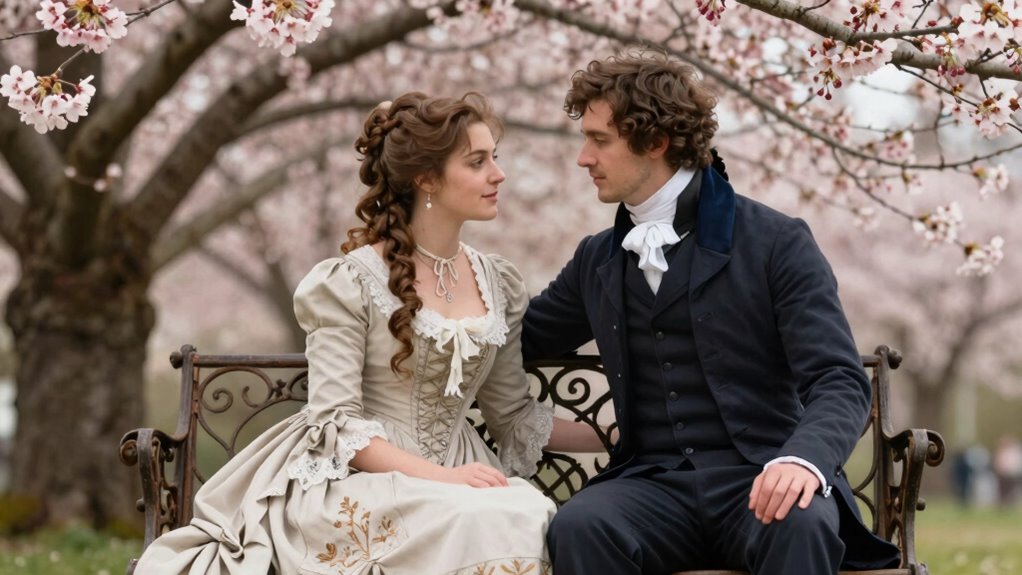
Romantic dressing has always been more than just fashion; it’s a reflection of cultural ideals, emotional expression, and societal values throughout history. When you explore its roots, you find that historical fashion played a significant role in shaping how romance was expressed through clothing. In different eras, what people wore wasn’t just about style—it conveyed messages about love, status, and identity. For example, during the Renaissance, intricate fabrics, lace, and embroidery became symbols of wealth and devotion, emphasizing romantic ideals of beauty and courtship. Clothing was used to display affection and admiration, often with detailed embellishments that reflected cultural influences from the time.
Romantic fashion reflects cultural ideals, emotional expression, and societal values through history’s intricate and symbolic clothing.
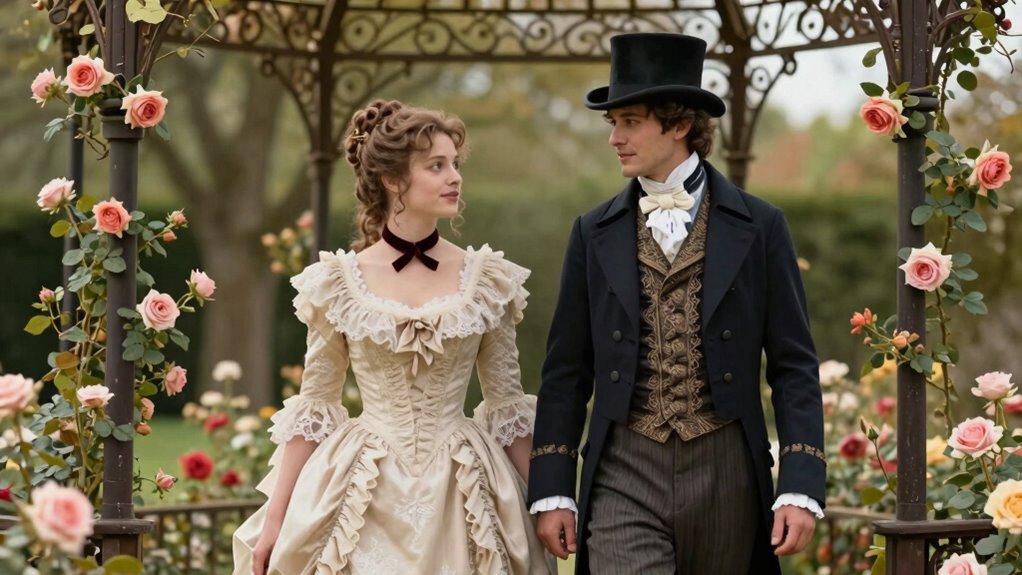
Throughout history, cultural influences heavily dictated romantic fashion. In Victorian England, the emphasis was on modesty and decorum, yet the gentle curves of corsets and flowing dresses subtly hinted at femininity and allure. You can see how societal expectations shaped what was considered romantic, with clothing serving as a visual language. Meanwhile, in the East, traditional garments like the kimono or saree incorporated symbolic colors and motifs that expressed love and devotion, blending cultural influences with romantic ideals. These garments weren’t just attire—they were stories woven into fabric, reflecting cultural narratives about love and relationships.
As you trace the evolution of romantic dressing, you realize that each era’s fashion choices reveal deeper societal values. The 18th-century Rococo style, with its delicate ribbons, pastel shades, and ornate details, created a sense of playful elegance and flirtation. It was a visual celebration of sensuality, but within the boundaries of social decorum. During the 20th century, the influence of cinema and popular culture transformed romantic fashion into a more accessible expression of desire and individuality. Hollywood glamour and iconic lovers’ styles shifted societal perceptions, making romance more about personal expression than strict tradition.
In essence, romantic dressing is a mirror of its time, shaped by historical fashion trends and cultural influences that reflect broader societal beliefs about love and beauty. Every piece of clothing—from a Victorian corset to a modern chiffon dress—carries the legacy of those influences. Understanding the cultural influences behind these styles can deepen your appreciation for how fashion is intertwined with societal values. As you wear what’s considered romantic today, you’re participating in a visual dialogue that spans centuries, connecting you to the emotional and cultural expressions of love that have evolved but never truly disappeared. This history reminds you that fashion is an ongoing story, continuously influenced by the cultural currents that define each era’s unique approach to romance.
As an affiliate, we earn on qualifying purchases.
Frequently Asked Questions
How Did Romantic Fashion Influence Modern Dating Attire?
Romantic fashion influences your modern dating attire through subtle dress codes and fashion symbolism. You might wear softer fabrics or elegant styles that evoke romance, signaling your interest or mood. These clothing choices draw from historical symbols of love and attraction, helping you communicate non-verbally. By understanding these influences, you can craft outfits that express your romantic intentions effortlessly, blending tradition with contemporary style to make a meaningful impression.
What Cultural Differences Shaped Romantic Dressing Styles?
You might be surprised to learn that nearly 60% of cultures emphasize traditional attire in romantic dressing, reflecting deep cultural symbolism. These styles are shaped by historical influences and regional customs, influencing how people express love. In some cultures, vibrant colors symbolize passion, while in others, specific patterns or fabrics carry romantic significance. Understanding these differences helps you appreciate the unique ways cultures celebrate love through traditional attire.
When Did Romantic Dressing Become Mainstream?
Romantic dressing became mainstream in the early 19th century, during the Romantic era. The fashion evolution from elaborate, ornate styles to softer, more expressive clothing reflected a shift toward individualism and emotional expression. Historical origins trace back to this period when designers emphasized lace, flowing fabrics, and personal flair. As art and literature celebrated emotion, fashion followed suit, making romantic dressing a popular, mainstream trend that continues to influence today’s styles.
Were There Any Iconic Figures Associated With Romantic Fashion?
You might think iconic figures only existed in history books, but many are real and inspiring. Vintage silhouettes and Victorian aesthetics shaped romantic fashion, with figures like Jane Austen and Oscar Wilde embodying this style. Their timeless elegance shows how romantic dressing isn’t just about clothes but a reflection of personality. Embrace these influences, and you’ll see how historic icons continue to inspire modern romantic fashion.
How Has Romantic Dressing Evolved With Social Media?
Social media has transformed romantic dressing by blending vintage aesthetics with celebrity trends. You now effortlessly incorporate retro styles into your wardrobe, inspired by influencers and fashion icons sharing their romantic looks online. Platforms like Instagram and TikTok make it easy to discover new ideas, remix vintage pieces, and stay updated on trending romantic fashion. This evolution makes romantic dressing more personalized and accessible, encouraging you to embrace timeless elegance with a modern twist.
Conclusion
As you reflect on the delicate tapestry of romantic dressing, you realize it’s more than just fabric and style—it’s a whisper of history, a subtle dance of emotions. Every choice you make echoes the passions and whispers of those who came before, softly guiding your expression of love. Embrace this timeless tradition, letting your attire speak softly but profoundly, revealing the gentle depth of your heart’s silent song.
Fall Picks
fall essentials
As an affiliate, we earn on qualifying purchases.