To get your accent chair pairing right, focus on size and seat height that match your space. If the chair is too big or small, or if the seat height isn’t comfortable or cohesive with other furniture, your whole room can feel off. Proper proportions and ergonomic height create harmony and comfort. Curious how to measure and select the perfect pieces? Stay with us — you’ll discover the secrets to balanced, stylish living rooms.
Key Takeaways
- Proper scale and seat height ensure comfort and visual harmony with existing furniture.
- Measuring room dimensions and furniture proportions helps select appropriately sized accent chairs.
- Seat height should allow feet flat on the floor with knees at a 90° angle for ergonomic comfort.
- Mismatched proportions or seat heights disrupt room balance and cause discomfort.
- Styling with textures, patterns, and accessories enhances cohesion and balances visual weight.
Why Proper Accent Chair Size and Seat Height Matter
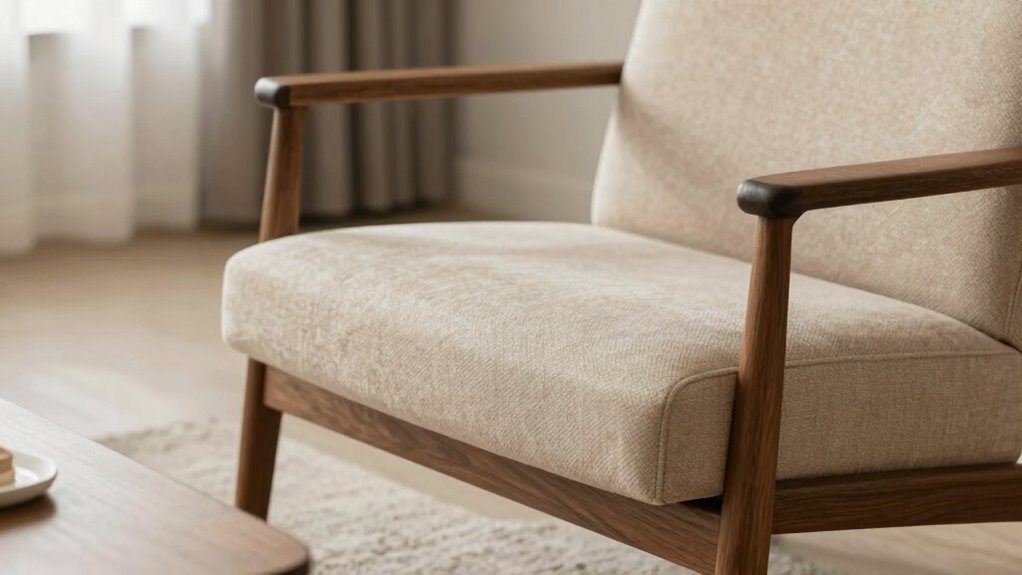
Choosing the right size and seat height for your accent chair is essential because it directly affects both comfort and style. When selecting a chair, consider how fabric textures can enhance the overall look—smooth velvets add elegance, while rougher weaves create a cozy vibe. The size should complement your space without overwhelming it, ensuring the chair fits comfortably without crowding other furniture. Proper seat height ensures you can sit and stand with ease, preventing discomfort over time. Furniture proportions also play a crucial role in achieving visual harmony within your room. Additionally, ergonomic considerations can improve long-term comfort and functionality. An appropriately sized accent chair with the right fabric textures and decorative touches creates a balanced, inviting focal point that elevates your room’s style while offering comfort. Paying attention to scale and placement ensures the chair enhances the overall room design rather than disrupting it.
How to Assess the Right Scale for Your Space
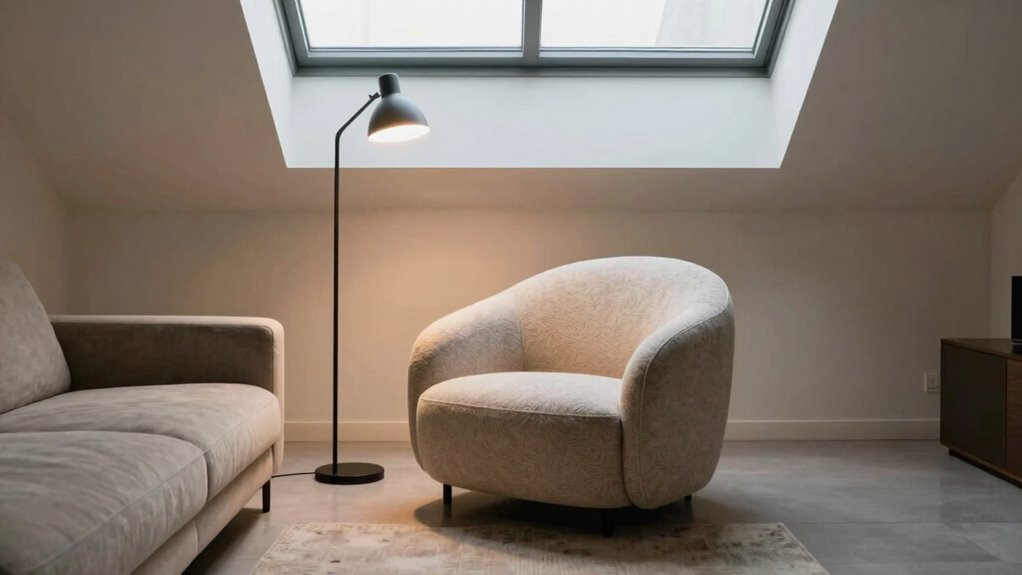
To determine the right scale for your accent chair, start by measuring your space carefully. Consider the room’s dimensions and how much clearance you need around the chair for easy movement. Think about the fabric patterns you prefer—larger patterns can make a smaller chair feel more prominent, while smaller patterns suit larger, more subdued chairs. Pay attention to decorative accents in the room; a bulky or ornate piece may overwhelm a small space, so choose a chair that complements rather than competes. Visualize the chair’s size relative to existing furniture, ensuring it neither dominates nor gets lost. A well-scaled accent chair enhances your room’s harmony, creating a balanced and inviting atmosphere. Additionally, understanding contrast ratio can help you select furniture and decor that visually pop against the room’s background, adding depth and interest. Considering furniture proportions also plays a crucial role in achieving visual balance and harmony in your space. Recognizing the importance of authenticity and self-identity can further influence your choices, ensuring your decor genuinely reflects your personal style and enhances your comfort.
Measuring Seat Height for Comfort and Style
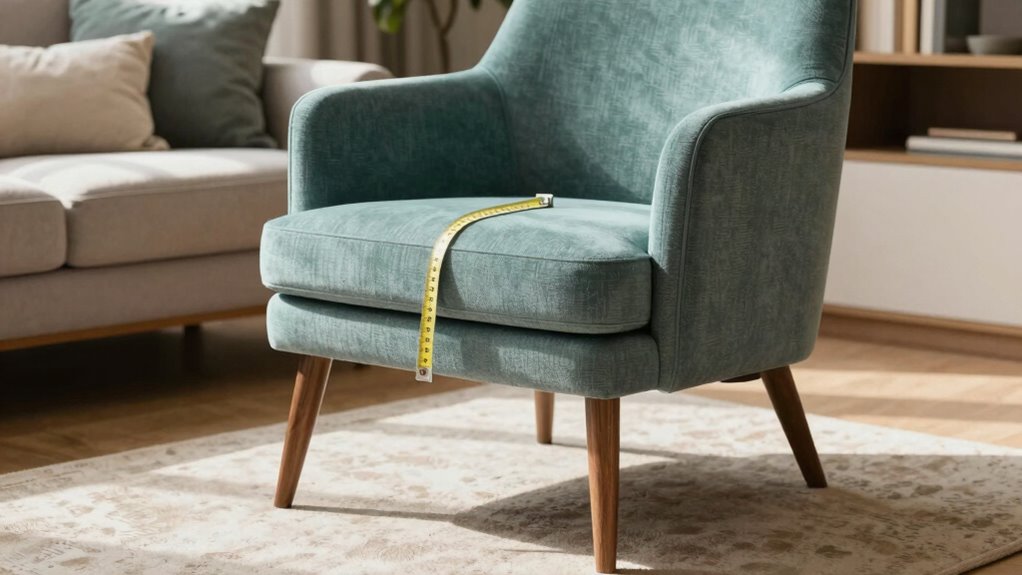
Measuring the seat height of your accent chair guarantees both comfort and style align perfectly with your space. To guarantee ergonomic comfort, aim for a seat height that allows your feet to rest flat on the floor with your knees at a 90-degree angle. This minimizes strain and enhances daily comfort. Equally important is aesthetic appeal; a seat height that complements your other furniture creates a cohesive look. Use a tape measure to find the height from the floor to the top of the seat cushion, then compare it to standard heights—usually between 16 and 18 inches. When your chair’s seat height strikes the right balance, you’ll enjoy a stylish piece that feels inviting and functional, elevating your overall room design. Additionally, considering local craftsmanship can add authentic Italian charm and quality to your space. Paying attention to ergonomic principles ensures your seating remains comfortable for extended use. Incorporating proper scale helps your accent chair blend seamlessly with existing furniture, creating harmony in your room.
Common Mistakes When Pairing Accent Chairs With Sofas

One common mistake is choosing accent chairs that don’t match the proportions of your sofa, making the space look unbalanced. Ignoring seat height harmony can also create discomfort and visual clutter. To avoid these pitfalls, pay attention to how the chairs and sofa relate in size and height.
Mismatched Proportions and Scale
When pairing an accent chair with a sofa, mismatched proportions and scale can easily disrupt the room’s balance. If the chair is too small, it can look lost next to a bulky sofa, or if it’s too large, it can dominate the space. To avoid this, consider these points:
- Match the chair’s seat height closely with the sofa’s for harmony.
- Use texture contrast and material diversity to add visual interest without overwhelming scale.
- Pay attention to the overall proportions—an oversized chair might overpower the room, while a petite one can look out of place.
- Incorporating Free Floating furniture arrangements can help achieve a more balanced and flexible layout that complements your space’s proportions.
Balancing scale creates a cohesive look, and varying textures ensures your pairing feels intentional and lively, rather than mismatched or awkward.
Ignoring Seat Height Harmony
Ignoring seat height harmony is a common mistake that can make your room feel unbalanced and uncomfortable. When the chair’s seat is too high or low compared to your sofa, it disrupts ergonomic comfort and visual balance. You might find yourself leaning awkwardly or feeling seated out of sync. To help, consider this comparison:
| Accent Chair Seat Height | Sofa Seat Height |
|---|---|
| 17-18 inches | 17-19 inches |
| Slightly lower | Slightly higher |
| Same height preferred | Same height preferred |
| Too high can cause strain | Too low feels cramped |
| Proper harmony improves | Enhances comfort and style |
Matching seat heights ensures a cohesive look and comfortable seating experience. Additionally, understanding seat height harmony can help you select furniture that complements your space and promotes better posture.
Tips for Choosing an Accent Chair Based on Room Layout
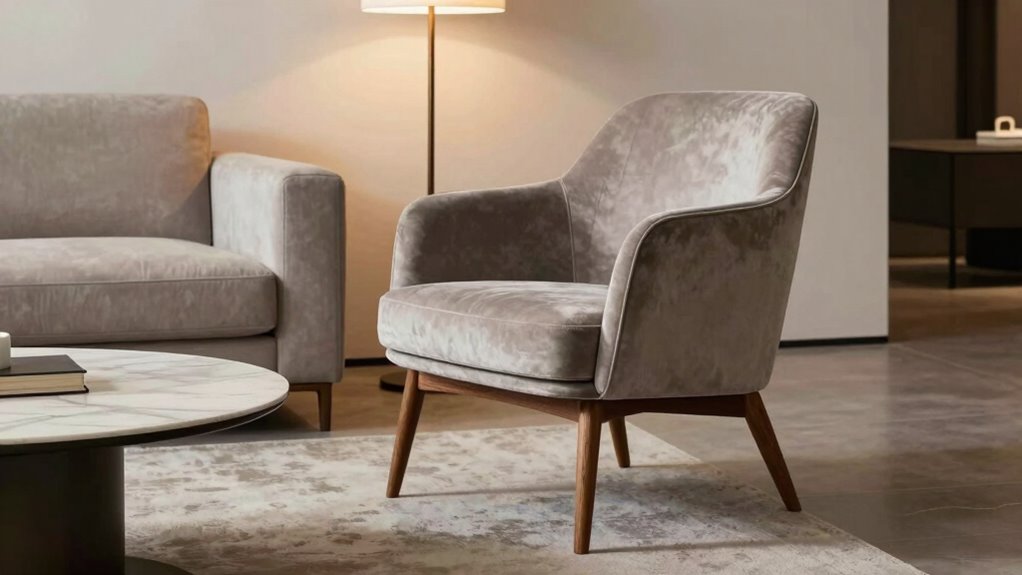
Choosing the right accent chair depends largely on your room’s layout. First, consider the space’s flow—if it’s open, place your chair where it can serve as a focal point or conversation starter. Second, think about fabric patterns; a bold pattern can energize a neutral room, while subtle textures add sophistication. Third, incorporate decorative accessories like throw pillows or small side tables to complement the chair’s placement and style. Position the chair near existing furniture so it feels natural and inviting, avoiding clutter or awkward gaps. Keep scale in mind: if the room is small, opt for a compact chair that won’t overwhelm the space. Additionally, understanding the scale of your furniture helps create balance and harmony within the room. Proper placement guarantees your accent chair enhances the room’s harmony and visual appeal. To further refine your design, consider interior design basics such as mood boards and narratives to ensure your accent chair aligns with the overall aesthetic.
Troubleshooting Off-Scale Pairings: Fixing Mismatched Chairs
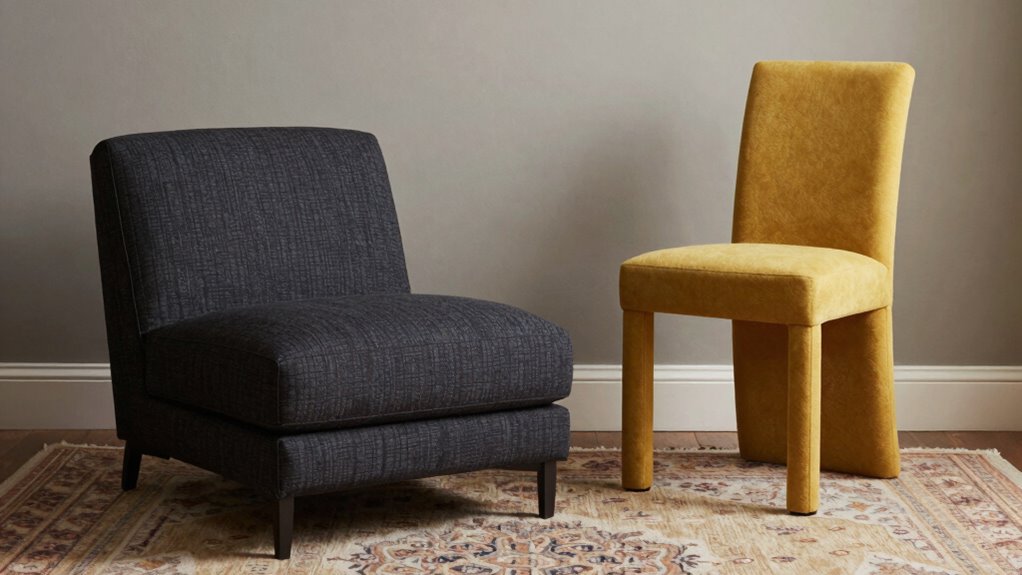
Mismatched chair sizes can disrupt the harmony of your space, but with a few simple adjustments, you can fix off-scale pairings effectively. First, consider your fabric choices: opting for similar textures or complementary patterns can visually unify mismatched chairs. Incorporate decorative accents like cushions or throws in coordinating colors to create a cohesive look. If one chair feels too small or large, swapping out fabric covers or adding height-adjustable cushions can help balance the scale. Focus on small details that draw the eye across both pieces, making the mismatch less noticeable. Remember, subtlety is key—these tweaks can transform an awkward pairing into a harmonious ensemble without a complete overhaul. Exploring design trends can also provide fresh ideas for balancing mismatched furniture pieces. Additionally, understanding scale and how it influences room harmony can guide your pairing decisions effectively.
Simple Steps to Create Balanced and Cohesive Living Rooms

To create a balanced and cohesive living room, start by matching the scale of your furniture to the space, ensuring no piece overwhelms or gets lost. Make sure your seats are at a comfortable height to promote easy conversation and flow. Understanding furniture proportions can help you select pieces that complement each other and your room’s dimensions. Additionally, paying attention to visual weight can help you achieve harmony in your arrangement and prevent cluttered or unbalanced looks. Recognizing furniture scale is essential for preventing awkward or uninviting layouts. Incorporating design principles such as balance and symmetry can further enhance the overall harmony of your space. Finally, choose a unified color palette to tie everything together and give your room a harmonious look. Incorporating appropriate outdoor gear can also enhance the overall ambiance, especially if your space extends to a patio or balcony.
Balance With Scale
Achieving balance with scale is essential for creating a living room that feels harmonious and inviting. To do this, consider three key steps:
- Match the material textures of your furniture to create visual cohesion, such as combining smooth leather with soft woven fabrics. Material textures influence how the eye perceives space and can impact the overall harmony of your interior. Incorporating visual weight can further enhance the sense of balance within your layout. Additionally, paying attention to visual weight distribution helps ensure that no one area dominates the room, fostering a more cohesive look. Using furniture proportions that complement each other also plays a crucial role in achieving this balance.
- Select accent chair styles that complement your main seating, whether sleek modern or plush traditional, ensuring they don’t overpower or get lost in the space.
- Vary the sizes of furniture pieces, pairing larger sofas with smaller accent chairs to maintain proportion and avoid visual imbalance.
- Consider the overall mental wellbeing index of your space, which can be influenced by how well the furniture arrangement promotes comfort and relaxation.
Seat Height Harmony
When selecting accent chairs, ensuring their seat height complements your main seating is essential for a cohesive look. The height of your accent chair should be in harmony with your dining table, providing comfortable seating without awkwardness. If your dining table is tall, choose chairs with a slightly higher seat to maintain visual balance. Conversely, for lower tables or window treatments, opt for seats that don’t overpower the space. Consider how the chair’s height relates to nearby window treatments—high-backed chairs can compete if the window treatments are low, disrupting harmony. Aim for a seamless flow where each piece feels connected, and the eye naturally moves across the room without interruption. Proper seat height creates visual cohesion, making your living room feel intentional and well-designed.
Cohesive Color Palette
Having the right seat height helps create visual balance, but selecting a cohesive color palette ties the entire room together. To achieve this, consider these simple steps:
- Choose a dominant color that sets the mood and use it across larger surfaces like walls, rugs, or curtains for strong color coordination.
- Incorporate 2-3 complementary or analogous hues to add depth and harmony, ensuring they work well with your primary tone.
- Mix materials thoughtfully—wood, metal, fabric—so that textures and finishes support your color scheme without clashing.
This approach keeps the palette balanced and unified, making your space feel intentional and polished. Remember, a cohesive color palette creates a seamless flow, elevating your living room’s overall vibe.
Final Tips for Perfect Accent Chair Pairings

To guarantee your accent chair complements your space perfectly, focus on balancing color, style, and scale. Consider fabric textures to add depth and interest, mixing smooth fabrics with textured weaves. Pay attention to leg styles; sleek, tapered legs create a modern feel, while chunky or turned legs add traditional charm. These details influence the overall vibe and harmony of your pairing. Use this table as a quick guide:
| Fabric Textures | Leg Styles | Pairing Tips |
|---|---|---|
| Smooth, linen | Tapered, metal legs | Modern, minimalistic look |
| Textured weaves | Chunky wood legs | Cozy, traditional ambiance |
| Velvet, plush | Turned, ornate legs | Luxe, sophisticated style |
Choose wisely, and your accent chair will elevate your space effortlessly.
Frequently Asked Questions
How Does Furniture Style Influence Accent Chair Pairing Choices?
Your furniture style greatly influences your accent chair pairing choices by guiding you toward cohesive designs. If your space has a modern look, choose sleek, minimalist chairs, while traditional styles call for ornate, plush options. Mixing styles can work if you find complementary pieces, but sticking to a consistent furniture style guarantees harmony. Ultimately, selecting an accent chair that aligns with your overall style makes your space feel intentional and balanced.
What Materials Are Best for Balancing Chair Size and Comfort?
Think of choosing materials like selecting a sturdy ship for a voyage. Opt for fabrics with high durability like linen blends or performance fabrics to withstand daily use, ensuring comfort and longevity. Prioritize sustainable materials like organic cotton or recycled fibers to balance style with eco-consciousness. These choices help your accent chair feel perfectly proportioned and inviting, creating a cozy, lasting spot that stands up to everyday life.
Can Unconventional Shapes Work as Accent Chairs in Small Spaces?
Yes, unconventional shapes like quirky shapes can work as accent chairs in small spaces, adding visual interest without overwhelming the room. Just guarantee you prioritize space optimization by choosing compact designs and placing them thoughtfully. These unique shapes can serve as statement pieces, making your small space feel more dynamic and personalized. Keep the scale in check and avoid bulky furniture to maintain a balanced, functional area.
How Do Lighting and Room Color Affect Accent Chair Placement?
Lighting ambiance and room color coordination play key roles in accent chair placement. You should position your chair where natural or ambient light highlights it, creating a cozy focal point. Coordinate the chair’s color with your room’s palette to enhance harmony, while contrasting it to make a statement. Proper placement considers these factors, ensuring your accent chair feels integrated and inviting, rather than out of place or overshadowed.
Are There Specific Design Principles for Mixing Chair Patterns and Textures?
Think of pattern mixing and texture pairing as a dance—balance is key. You want contrasting patterns that complement, like stripes with florals, and textures that add depth, such as velvet with leather. Keep colors harmonious to avoid chaos. By mixing patterns thoughtfully and pairing textures intentionally, you create visual interest without overwhelming the space, making your accent chairs feel integrated and stylish, rather than discordant.
Conclusion
Think of your living room as a symphony—each piece a note, playing in harmony. When your accent chair’s size and seat height are off, it’s like a discordant chord that jars the melody. By tuning your seat height and scale just right, you create a balanced composition. Remember, when all elements align, your space sings with comfort and style—turning your room into a masterpiece that feels as good as it looks.