When choosing an area rug size room by room, consider your furniture layout and room dimensions to create a balanced space. For living rooms, opt for a rug that anchors all furniture pieces or extends under front legs. In bedrooms, choose a rug big enough to sit under the bed and furniture. Avoid small rugs that clutter the space or overwhelming sizes that make the room feel cramped. To discover more tips for perfect fit and style, continue exploring how to select the ideal size for each room.
Key Takeaways
- Measure your room and furniture to select a rug that anchors the space without overwhelming or leaving excessive bare floor.
- For living rooms, choose a rug that fits under all major furniture pieces or extends beyond the front legs of sofas and chairs.
- In bedrooms, opt for rugs that sit beside or partially under the bed to add comfort without cluttering the room.
- For dining areas, select a rug large enough to accommodate the table and chairs, even when pulled out.
- Consider material durability and maintenance needs to ensure the rug size suits your lifestyle and cleaning routine.
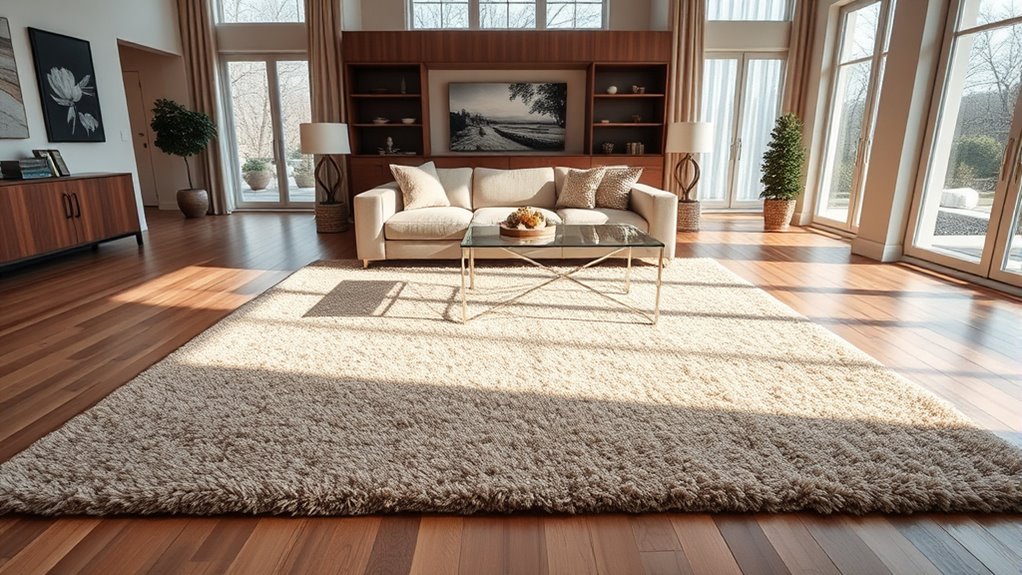
Selecting the right size for your area rug is essential to creating a balanced and inviting space. The size you choose influences the room’s overall feel and functionality, so it’s worth taking the time to get it just right. When considering rug size, you’ll want to think about the room’s dimensions and how the rug will interact with your furniture. For example, in a living room, a rug that’s too small can make the space feel disjointed, while one that’s too large might overpower the room. A good rule of thumb is to select a rug that either anchors all your furniture pieces or at least extends under the front legs of your sofas and chairs.
Choosing the right rug size creates balance and enhances your room’s style.
Your choice of rug material also plays a significant role in both aesthetics and maintenance. Natural fibers like wool are durable and plush, making them ideal for high-traffic areas, but they require regular cleaning to maintain their appearance. Synthetic options, such as nylon or polypropylene, often come with stain resistance and easier rug maintenance, which is perfect if you have kids or pets. When selecting a rug size, consider how much wear and tear it will endure. Larger rugs tend to distribute foot traffic more evenly, preserving their look longer, while smaller rugs might need more frequent cleaning or replacement.
In terms of rug maintenance, cleaning frequency and methods can influence your size decision. Larger rugs can be more challenging to clean thoroughly, especially if you don’t have easy access to a professional cleaning service. Conversely, smaller rugs are easier to shake out, vacuum, or spot clean. Think about how often you’re willing to maintain the rug’s appearance. If you choose a rug with a delicate material or intricate pattern, you might prefer a size that makes cleaning manageable, avoiding areas where dirt can hide or damage can occur.
Additionally, consider the shelf life of rugs when selecting a size, as larger rugs may require more careful handling over time to prevent wear and tear. When it comes to the overall room design, your rug size should complement the space without overwhelming it. A rug that’s too small might leave too much bare floor, while one that’s too large can make the room feel cramped. Consider the layout of your furniture, the room’s dimensions, and your lifestyle to find the perfect balance. Remember, a well-chosen rug size, paired with the right material and maintenance routine, will tie your room together, making it cozy and stylish for years to come.
Frequently Asked Questions
How Do I Measure My Space Accurately for a Rug?
To measure your space accurately for a rug, start by measuring your furniture’s dimensions and the room’s overall size. Use a tape measure for precise measurements, noting key areas where the rug will go. Keep rug placement tips in mind, like leaving enough space around the edges for a balanced look. This way, you’ll guarantee the rug fits perfectly and complements your room’s layout.
What Rug Size Is Best for High-Traffic Areas?
For high-traffic areas, opt for a larger rug that covers most of the space, ensuring durability concerns are met by choosing durable materials like wool or nylon. A bigger rug also helps protect your flooring and minimizes show-through. Make sure it coordinates with your style, balancing pattern and color to complement your decor. This way, you create a stylish, long-lasting space that withstands daily wear and tear.
Can I Layer Different Rug Sizes in One Room?
Sure, layering different rug sizes in one room is a fantastic idea—if you enjoy chaos! Use layering techniques to combine mixed material rugs for a textured, eclectic look. Start with a larger base rug, then add smaller ones on top to define spaces or add visual interest. Just be careful not to turn your room into a rug maze; balance is key to avoid overwhelming your space.
How Do I Choose a Rug Size for Open-Concept Spaces?
You should choose a rug size for open-concept spaces that anchors your furniture arrangement and defines zones. Opt for a rug large enough to fit all key pieces or at least the front legs of sofas and chairs to create cohesion. Make certain the colors coordinate with your furniture and decor, making the space feel unified. A well-sized rug enhances flow and makes the area inviting without overwhelming the room.
What Are the Common Mistakes When Selecting Rug Sizes?
You might fall into rug size misconceptions by choosing a rug that’s too small or too large for your space. Improper rug placement is another common mistake, such as placing the rug too close to furniture edges or unevenly anchoring the room. To avoid these issues, measure your space carefully and visualize how the rug will fit with your furniture, ensuring it enhances rather than disrupts your room’s flow.
Conclusion
Ultimately, selecting the right rug size truly grounds your space, making it feel cohesive and inviting. While many believe that the rug should always anchor all furniture, research shows that a slightly smaller rug can create a more dynamic, layered look, adding depth without overwhelming the room. Trust your instincts, but remember—size matters, and sometimes, less really is more when it comes to perfecting your room’s aesthetic.