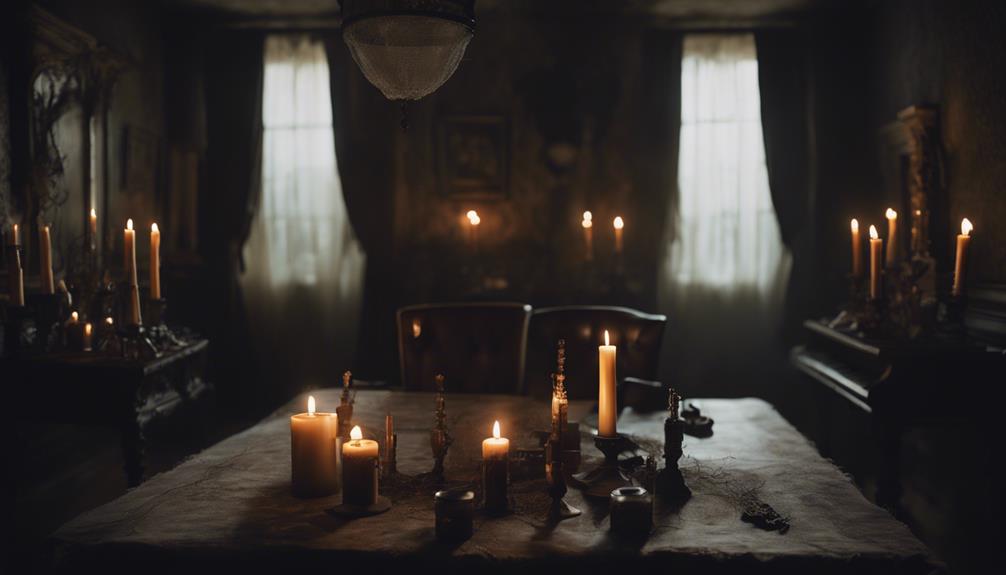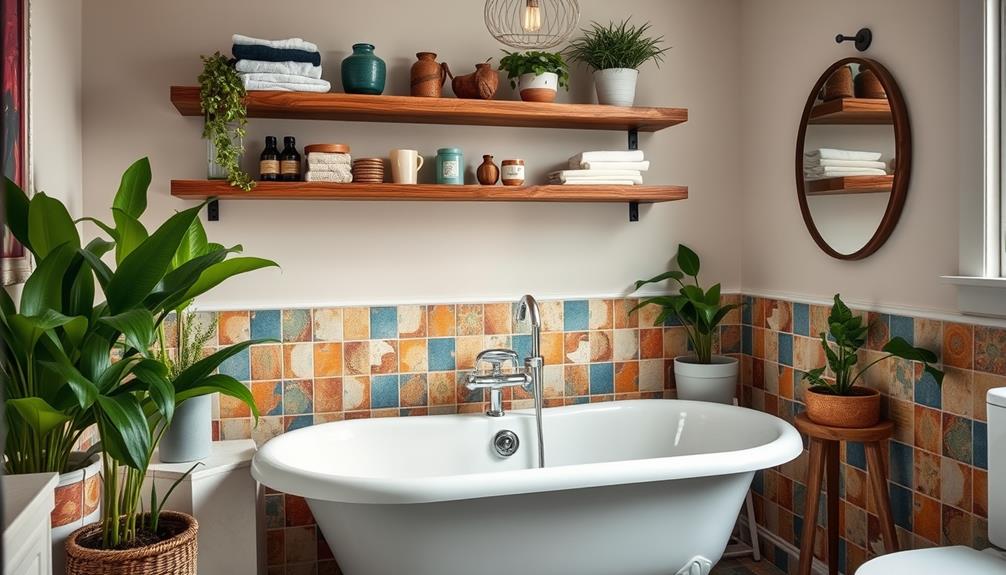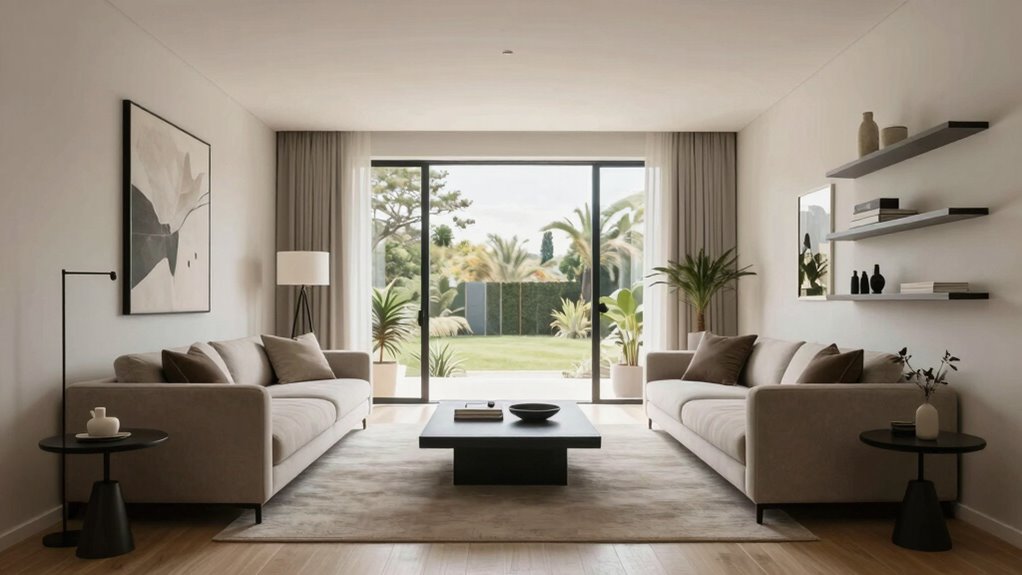

To improve a room by editing sightlines, focus on clearing clutter and removing obstructions to create a more open feel. Arrange furniture thoughtfully to enhance flow and direct attention to focal points like artwork or decor. Use light, neutral colors to make spaces seem larger, and incorporate natural elements to add calmness. Strategically place accents within key sightlines to guide the eye and balance the space. Keep these tips in mind to transform your room into a harmonious, inviting area. Want to learn more?

Get your wardrobe favorites delivered free with Prime
- Fast, free delivery on millions of items
- Prime Video, Amazon Music and more included
- Member-only deals all year
Key Takeaways
- Clear clutter and obstructions to enhance natural sightlines and create an open, inviting space.
- Strategically place focal points like artwork on prominent walls to direct attention and improve visual flow.
- Arrange furniture to facilitate easy navigation and maintain unobstructed views throughout the room.
- Use light, neutral colors to expand perceived space and guide the eye naturally along sightlines.
- Incorporate natural elements or decorative accents to add interest and emphasize key areas without clutter.
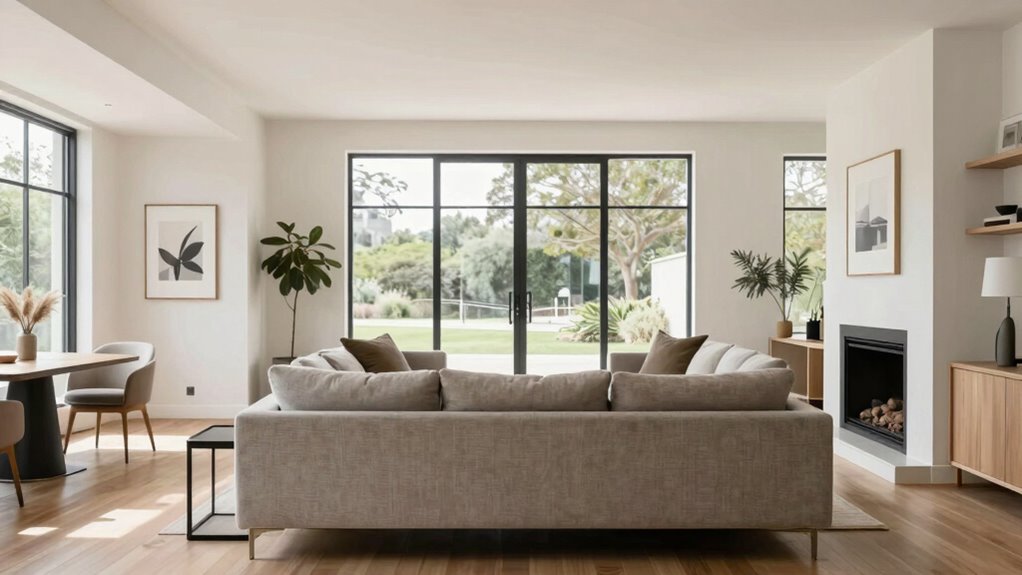
Improving a room’s feel often starts with how you see it. When you change your perspective or adjust what’s visible, you can instantly transform the space’s atmosphere. One effective way to do this is by editing sightlines—how your eye moves through a room and what it encounters first. By controlling these views, you can create a more inviting, balanced, and cohesive environment. Start by examining the room from various angles and identify any clutter, obstructions, or distracting elements that draw attention away from the main features or focal points. Clearing or rearranging these elements helps establish cleaner sightlines, making the space feel more open and intentional. Incorporating biodiversity principles, such as adding natural elements or plants, can also enhance visual interest and create a more calming atmosphere. Additionally, paying attention to natural light sources can significantly influence how sightlines are perceived and how inviting the space feels.
Decorative accents play a key role in guiding your eye and enhancing sightlines. Strategically placing art, vases, or sculptures can serve as visual anchors, drawing attention to specific areas and creating a sense of flow. For example, a bold piece of artwork on a prominent wall can direct your gaze and anchor the room’s design. Similarly, arranging decorative accents so they’re visible within the primary sightlines helps create a deliberate visual path, making the space feel more curated and unified. Keep in mind that these accents shouldn’t clutter the room but rather complement the overall aesthetic. Paying attention to visual hierarchy can help ensure that your focal points are emphasized effectively. Additionally, understanding how spatial flow influences movement through the space can lead to more intentional arrangements that improve sightlines. Recognizing how furniture placement impacts the visual pathways can further enhance the room’s overall harmony and ease of movement.
Color schemes also significantly influence how you perceive a space. Light, neutral tones tend to open up a room, making sightlines feel longer and more expansive. Conversely, darker shades can add coziness but may make the room feel more enclosed if not balanced properly. When editing sightlines, consider how your chosen color palette interacts with the room’s layout. Painting walls in a cohesive, harmonious color can prevent visual chaos, allowing your eye to naturally follow the intended flow. Incorporate contrasting colors sparingly to emphasize focal points or architectural features, which helps in directing your gaze along specific sightlines and adding interest.
In essence, editing sightlines isn’t just about rearranging furniture or painting walls. It’s about designing the space so your eyes naturally move through it in a way that highlights its best features and minimizes distractions. Use decorative accents thoughtfully to draw focus, and select a color scheme that enhances the openness or intimacy you desire. When done correctly, these adjustments make your room feel more spacious, balanced, and inviting—transforming how you experience and enjoy the space every day.
Popular right now

De'Longhi Rivelia Automatic Espresso Machine with Grinder and Milk Frother, Beige

Samsung 43-Inch M70H Series 4K Mini LED Smart TV (2026)

Ninja Crispi Microwave and Air Fryer with FusionCrisp, Silver, MW101
As an affiliate, we earn on qualifying purchases.
Frequently Asked Questions
How Do Sightlines Affect Room Functionality?
Sightlines directly impact your room’s functionality by influencing how easily you can move and see key areas. When you arrange furniture thoughtfully, you avoid blocking important sightlines, making the space more open and accessible. Window positioning also matters—placing furniture away from windows ensures natural light flows freely and views aren’t obstructed. Clear sightlines help you navigate comfortably, create a sense of spaciousness, and enhance overall usability of your room.
Can Furniture Placement Change a Room’s Perceived Size?
Yes, furniture arrangement can change a room’s perceived size. By strategically placing larger pieces against walls and leaving open space in the center, you create a sense of spaciousness. Compact furniture or multi-functional pieces help maximize space perception, making the room feel larger. You should also consider sightlines; clear views through the room enhance the feeling of openness, making it seem more expansive and inviting.
What Tools Are Best for Visualizing Sightline Adjustments?
You should use virtual walkthroughs and augmented reality tools to visualize sightline adjustments effectively. Virtual walkthroughs let you explore different furniture arrangements and see how sightlines change in real time. Augmented reality apps overlay digital furniture onto your actual space, helping you assess potential modifications instantly. These tools provide an immersive experience, making it easier to make informed decisions about furniture placement and room layout to improve sightlines.
How Do Lighting Choices Influence Sightline Effectiveness?
Lighting choices greatly influence sightline effectiveness by shaping the room’s ambiance and directing attention. Natural illumination brightens key areas, making sightlines clearer and more inviting. Meanwhile, strategic lighting ambiance, like focused or layered lights, enhances visual flow and minimizes obstructions. You should use a mix of natural and artificial lighting to create a balanced environment that highlights important features and maintains unobstructed sightlines throughout the space.
Are There Any Color Schemes That Enhance Sightlines?
Bright, contrasting colors can sharply enhance sightlines, making key areas stand out and guiding your eye naturally. Conversely, subtle, harmonious color schemes create a seamless flow, preventing visual clutter and maintaining clear sightlines. You should choose a balance—using color contrast to highlight focal points while relying on color harmony for the overall flow. This approach helps your room feel open and inviting, improving visibility and ease of movement.
Conclusion
By editing your sightlines, you transform a cluttered, chaotic space into a calming retreat. It’s like clearing a foggy window—you suddenly see everything clearly and feel more relaxed. Sometimes, the smallest changes, like repositioning furniture or removing obstructions, make the biggest difference. Just as a good book’s ending leaves you satisfied, a well-designed room brings peace and clarity. So, embrace the process, and watch your space become your favorite place to unwind.