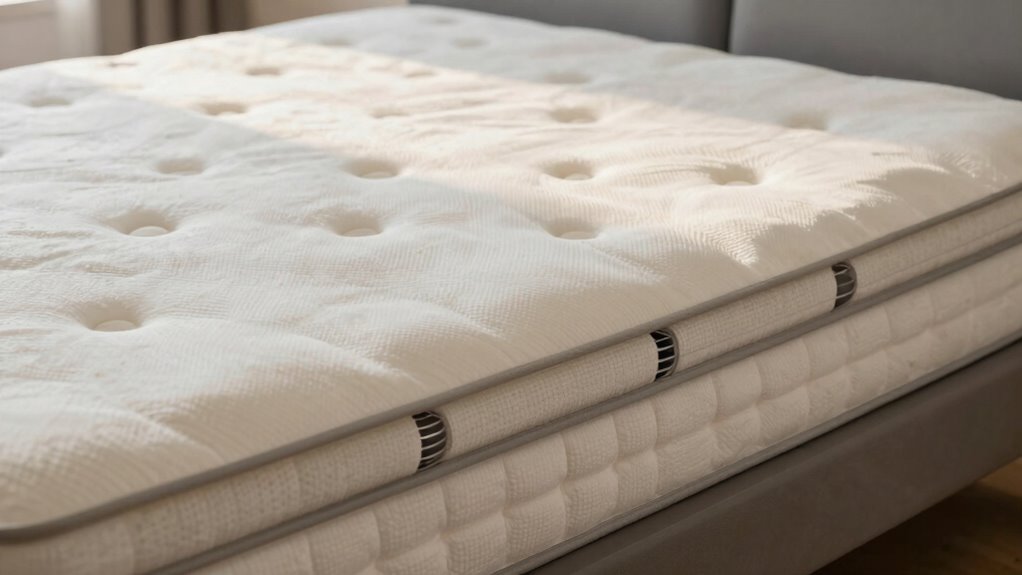

Choosing between latex and hybrid mattresses depends on your comfort priorities. Latex offers natural resilience, quick responsiveness, and a firm yet cozy surface, making it great if you prefer a natural, durable feel. Hybrids combine coils and foam layers, providing a balanced support and plushness for a contouring experience. Consider your preferred sleep surface and frame compatibility. To discover more about which suits your needs best, keep exploring the details behind each option.

Get your wardrobe favorites delivered free with Prime
- Fast, free delivery on millions of items
- Prime Video, Amazon Music and more included
- Member-only deals all year
Key Takeaways
- Latex mattresses offer a natural, responsive feel with quick movement recovery, while hybrids provide a balance of support and plushness through coils and foam layers.
- Hybrids tend to be softer and contour more closely to the body, whereas latex mattresses are firmer and more resilient.
- Latex provides consistent support and maintains shape over time, potentially offering better long-term comfort than hybrid models.
- Hybrid mattresses can offer personalized pressure relief with memory foam layers, but may be less durable if support is insufficient.
- The choice depends on whether you prioritize natural responsiveness and durability (latex) or contouring and support flexibility (hybrid).
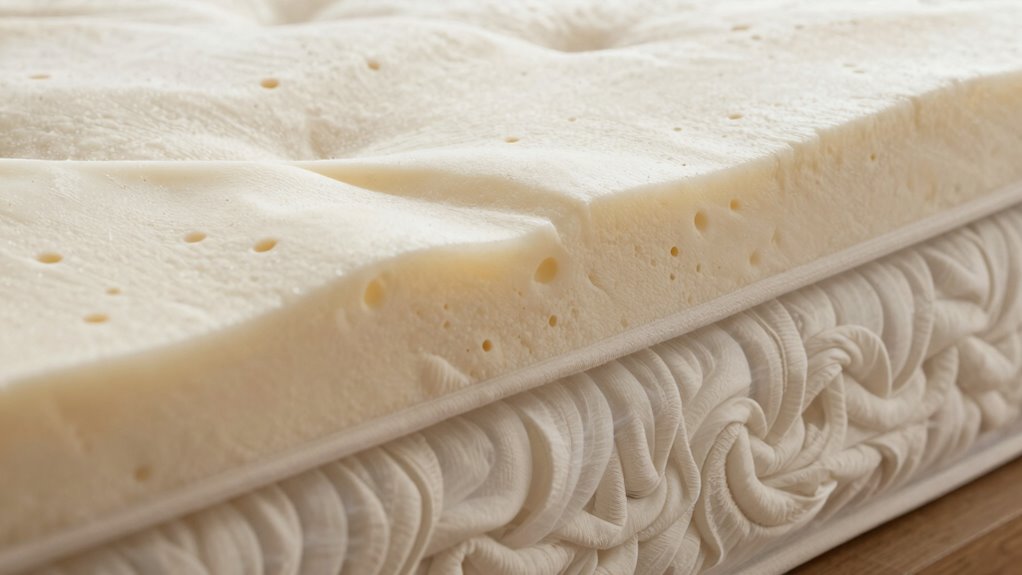
Are you torn between choosing a latex or a hybrid mattress? Making this decision can feel overwhelming since both options offer distinct advantages, but knowing what to look for helps you find the best fit. Latex mattresses are known for their natural resilience and durability, providing a firm yet comfortable surface that responds quickly to your movements. They tend to be hypoallergenic and resistant to dust mites, making them a popular choice for allergy sufferers. Hybrid mattresses, on the other hand, combine innerspring coils with foam layers, often including memory foam, to provide a balance of support and cushioning. They are generally designed for people who want the buoyant feel of springs with added pressure relief.
One key aspect to evaluate is how each mattress type interacts with your existing bed frame. Latex mattresses are typically compatible with a wide range of bed frames because they’re often thicker and more resilient. They can work well with platform beds, slatted frames, or box springs, provided the foundation offers sufficient support. However, because latex is naturally more responsive, it usually maintains its shape over time, reducing concerns about sagging or uneven wear. Hybrid mattresses, with their combination of coils and foam layers, also work well with most bed frames, but you should pay attention to the coil gauge and the thickness of the foam layers. A sturdy, well-ventilated frame enhances the longevity of a hybrid mattress, especially if it features a memory foam layer, which may be more sensitive to improper support or sagging. Additionally, considering the material composition of the mattress can help you identify which option will meet your needs better.
Memory foam, often included in hybrid designs, molds closely to your body, offering personalized pressure relief, which many sleepers find comforting. But it’s important to consider bed frame compatibility here. Some frames, especially those with minimal support or uneven slats, can cause the foam to sag or develop impressions over time. If you’re leaning toward a hybrid mattress with a memory foam layer, ensure your bed frame provides consistent, even support to prolong the mattress’s lifespan. Additionally, if you prefer a minimalist or modern look, make sure your frame’s design can handle the weight and thickness of the hybrid mattress without compromising comfort or stability. When selecting a mattress, also consider the material durability, which influences how well it will hold up with regular use.
Ultimately, your choice hinges on your preferences for support, responsiveness, and how your existing bed frame interacts with these materials. Latex offers a more natural, all-around durable option that’s easy to pair with various frames. Hybrid mattresses, especially those with memory foam, deliver a plush, contouring experience but demand a sturdy foundation for higher performance. By evaluating your comfort needs and checking bed frame compatibility, you can make a confident decision that leads to restful nights and long-lasting satisfaction.
latex mattress for allergy sufferers
As an affiliate, we earn on qualifying purchases.
As an affiliate, we earn on qualifying purchases.
Frequently Asked Questions
How Long Do Latex and Hybrid Mattresses Typically Last?
You can expect a latex mattress to last around 10 to 20 years, thanks to its excellent material longevity and durability comparison. Hybrid mattresses typically last 7 to 12 years, as they combine foam and coil components that wear out faster. Your choice depends on how long you want your mattress to stay supportive. Regular care and quality materials can extend your mattress’s lifespan, ensuring better value over time.
Are Hybrid Mattresses More Expensive Than Latex Ones?
Hybrid mattresses tend to be more expensive than latex ones because of their higher material costs and complex construction, which combines springs and foam or latex layers. You’ll likely notice a pricing difference when shopping, with hybrids costing more due to the materials used and manufacturing processes involved. If budget is a concern, latex mattresses usually offer a more affordable option, though hybrids provide additional support and features that some sleepers prefer.
Which Mattress Type Is Better for Allergy Sufferers?
You’re only as healthy as your environment, so choosing the right mattress matters. For allergy sufferers, latex mattresses are often better because they resist dust mites and mold, reducing allergy triggers. Hybrid mattresses, with foam and innerspring layers, may trap allergens more easily. Breathability considerations also favor latex, which naturally ventilates better, helping keep allergens and moisture at bay. Ultimately, latex offers a more hypoallergenic and breathable option.
Can Hybrid Mattresses Be Customized for Firmness?
Yes, hybrid mattresses can be customized for firmness. Many brands offer mattress customization options, allowing you to adjust firmness levels to suit your comfort preferences. You can often choose different layers or add toppers to achieve the desired firmness, making it easier to find the perfect sleep environment. Firmness adjustment in hybrid mattresses provides personalized support, helping you enjoy better sleep tailored specifically to your needs.
How Do Temperature Regulation Features Differ Between the Two?
You’ll find that latex mattresses generally excel at temperature regulation thanks to their natural cooling properties and open-cell structure, which promote airflow. Hybrid mattresses often incorporate cooling technology like gel-infused foams or breathable fabrics to enhance temperature control. Latex has better insulation properties, helping keep you cool without trapping heat, while hybrids may vary depending on their specific cooling features. Your choice depends on your preference for natural cooling versus advanced cooling tech.
Conclusion
Ultimately, choosing between latex and hybrid mattresses depends on your personal comfort and needs. Sometimes, it’s the small details—the slight bounce or the subtle firmness—that reveal what truly makes you rest easier. You might find that a seemingly minor factor unexpectedly aligns with your sleep preferences, making your choice feel almost serendipitous. In the end, trusting your instincts and embracing the unexpected comfort can turn what feels like a coincidence into the perfect sleep solution.
Halloween Picks
halloween
As an affiliate, we earn on qualifying purchases.