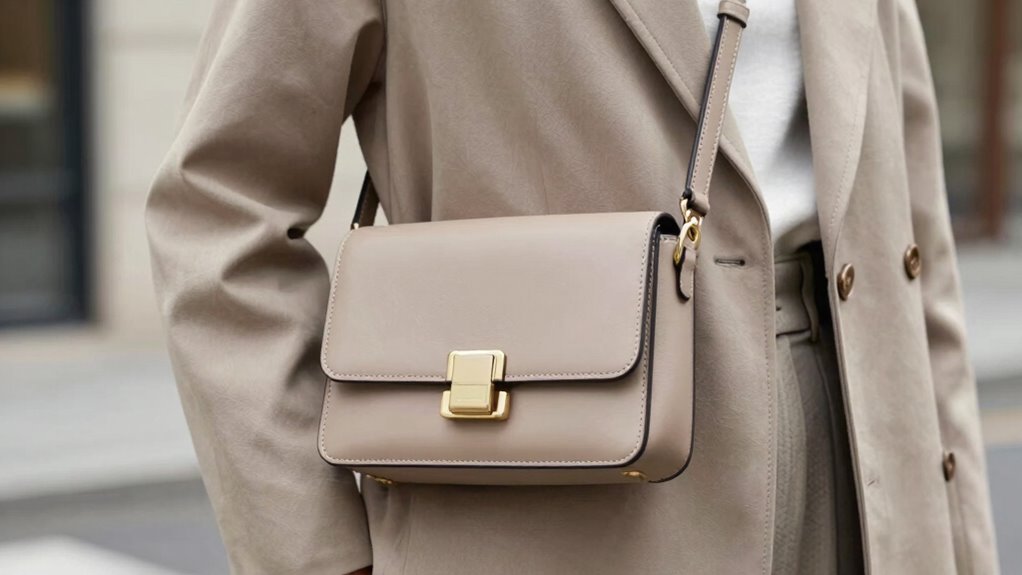
To find a comfortable crossbody strap length, follow the ‘hip bone’ rule by measuring around your hip bone for the best fit. This position ensures your bag sits naturally, evenly distributes weight, and stays secure without slipping. Adjust your straps so they hang at this level for ideal comfort, balancing style and support. If you want to learn how to measure easily and customize your fit, keep exploring these helpful tips.
Key Takeaways
- The ‘Hip Bone’ rule suggests adjusting the crossbody strap to hang at the hip bone for optimal comfort.
- Measure around your hip bone with a flexible tape to determine the ideal strap length.
- Adjust the strap so the bag rests comfortably at hip level, evenly distributing weight.
- Proper strap length prevents slipping, strain, and ensures a balanced, ergonomic fit during wear.
- Wear the bag first, then fine-tune the strap to sit naturally at the hip bone for maximum comfort.
Why Strap Length Matters for Crossbody Bag Comfort
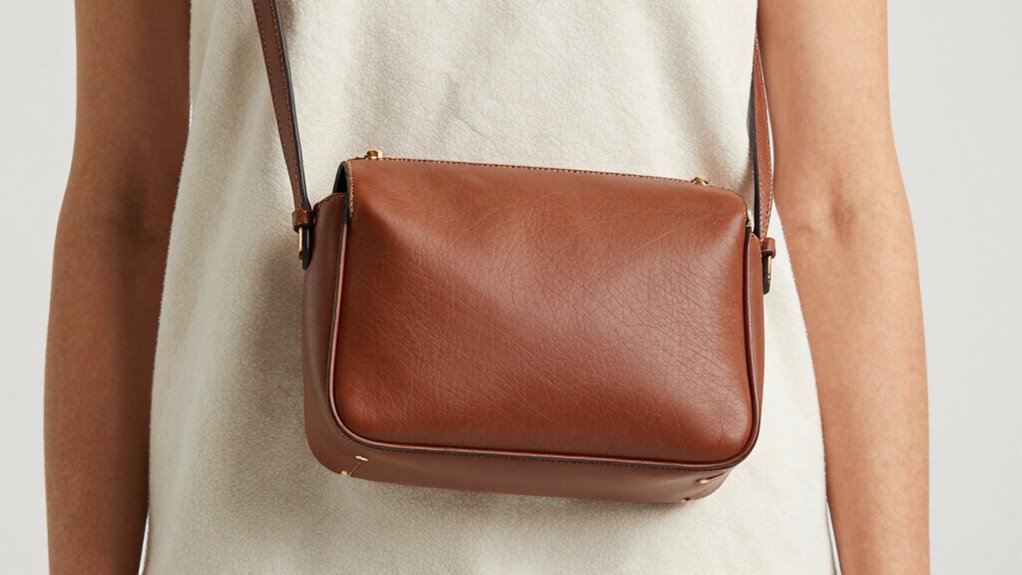
Have you ever noticed how adjusting your bag’s strap can make a big difference in how comfortable it feels? The strap length directly impacts your comfort and overall ergonomics. A strap that’s too tight can cause strain on your shoulder or neck, while one that’s too loose might make your bag slide around or hit your hips awkwardly. Proper strap length assures even weight distribution, reducing fatigue and discomfort during prolonged wear. When your crossbody bag fits well, it feels effortless and helps maintain good posture. It’s not just about style—comfort ergonomics play a vital role in how you experience your bag throughout the day. Finding the right strap length keeps you comfortable, functional, and pain-free. Additionally, understanding strap adjustment techniques can help you customize your fit for maximum comfort. Paying attention to strap material can also influence how the strap feels against your skin and its durability over time. Selecting the correct strap length is essential for ergonomic comfort, especially when carrying heavier loads.
What Is the ‘Hip Bone’ Rule and How Can It Help?
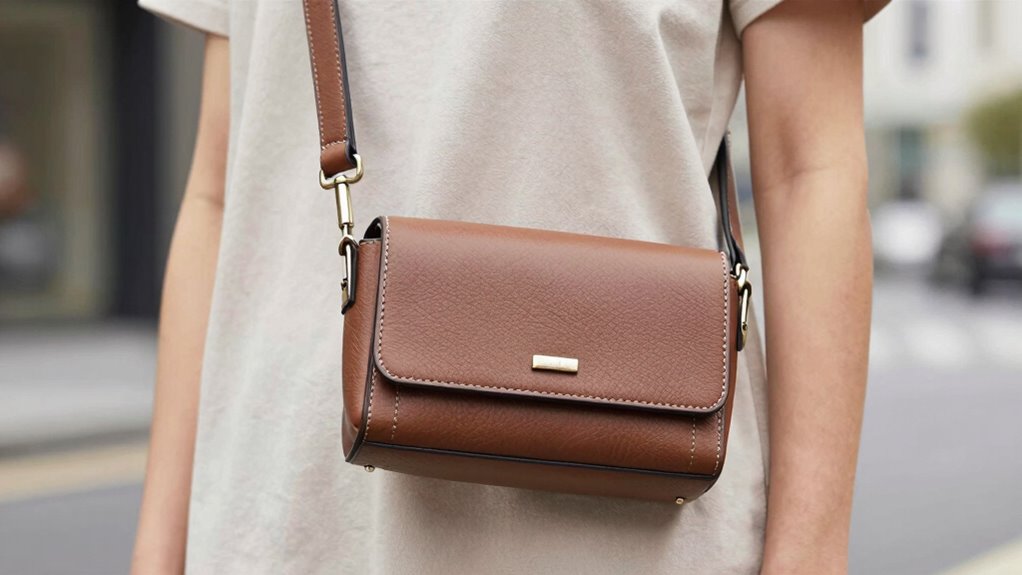
The ‘Hip Bone’ Rule offers a simple way to find the ideal strap length for your crossbody bag. It suggests that your bag’s strap should hang around your hip bone, providing a natural and comfortable position. This rule helps you achieve the right comfort balance, preventing the strap from being too tight or too loose. When your strap aligns with your hip bone, it distributes weight evenly, reducing strain on your shoulder and back. Using this rule, you can easily select a strap length that feels secure yet comfortable, making your bag more functional for daily use. The ‘Hip Bone’ Rule simplifies the process, ensuring your crossbody bag fits just right for a comfortable, hands-free experience. Additionally, researching product reviews can help you choose a strap that offers both durability and comfort, while understanding ergonomic design principles can further enhance your overall carrying experience. Incorporating personal comfort preferences into your choice can also make a significant difference in how you carry your bag throughout the day. For added ease, paying attention to adjustable straps allows for quick modifications to suit different outfits or activities. Recognizing proper weight distribution can further optimize comfort and reduce fatigue during extended wear.
How to Measure Your Hip Bone for the Perfect Crossbody Strap Length
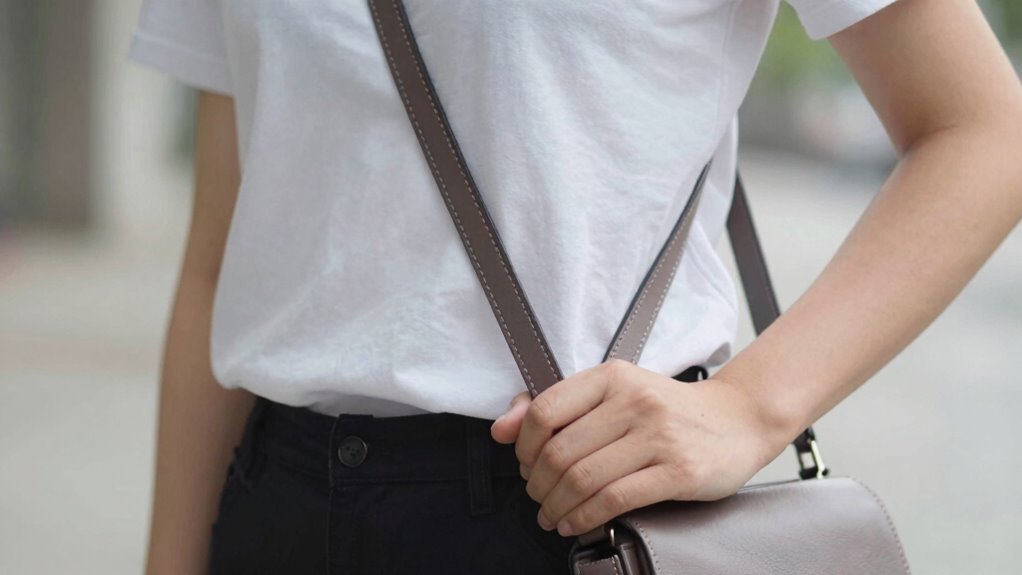
To measure your hip bone accurately, start by locating the top of your hip on each side. Use a flexible tape measure and keep it level around your hips. For the best fit, choose a strap material that complements your outfit’s color coordination and feels comfortable against your skin. Here’s a quick guide:
| Step | Action |
|---|---|
| 1 | Find the widest part of your hips. |
| 2 | Wrap the tape measure around this point. |
| 3 | Keep the tape snug but not tight. |
| 4 | Record the measurement in inches or cm. |
| 5 | Use this measurement to determine strap length. |
This ensures your crossbody sits comfortably at your hip bone, with the right strap length based on your measurements. For added comfort, consider choosing a strap that utilizes ergonomic design principles to better distribute weight and reduce strain. Additionally, selecting a strap length that aligns with your body proportions can enhance overall comfort during extended wear. Knowing your correct measurement technique and understanding gadget ergonomics can help you achieve a more precise and comfortable fit.
Finding the Right Strap Length for Your Body Type
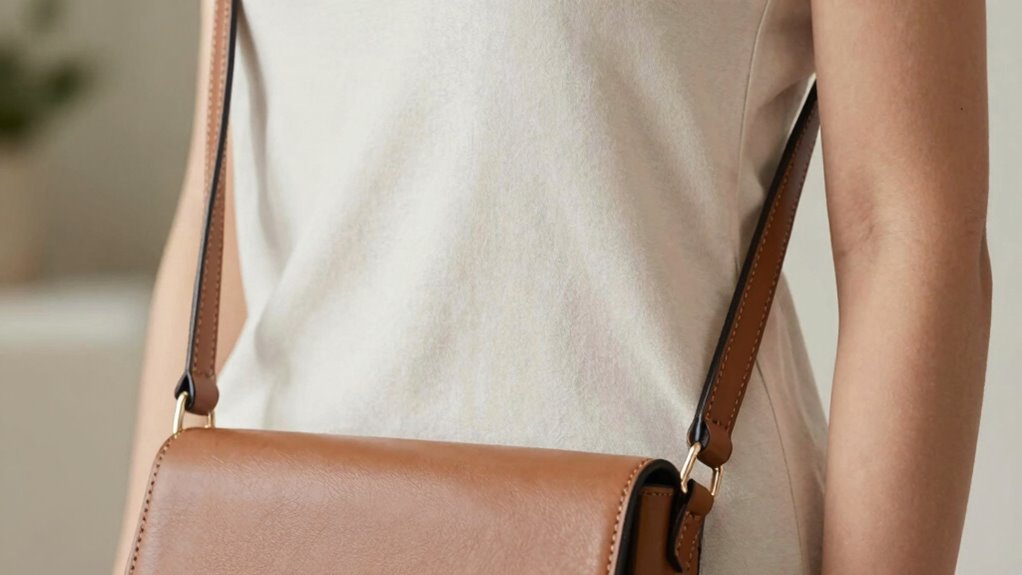
Choosing the right strap length depends on your body type, as different builds require different fits for comfort and style. To find your ideal length, consider these factors:
Selecting the perfect strap length ensures comfort and style tailored to your body type and outfit.
- Body shape and height: Shorter individuals may prefer a shorter strap for a snug fit, while taller people might need a longer one for comfort.
- Strap material: Softer leather or fabric straps tend to drape differently than stiffer materials, affecting how they sit.
- Color coordination: Match the strap length to your outfit’s style—longer straps work well with casual looks, while shorter ones suit formal attire.
- Understanding body proportions can help you select a strap length that enhances your overall silhouette and ensures a comfortable, balanced look. Adjust according to your body type for a balanced, comfortable fit that complements your style and ensures ease of movement.
How to Adjust and Customize Your Crossbody Bag Strap for Comfort
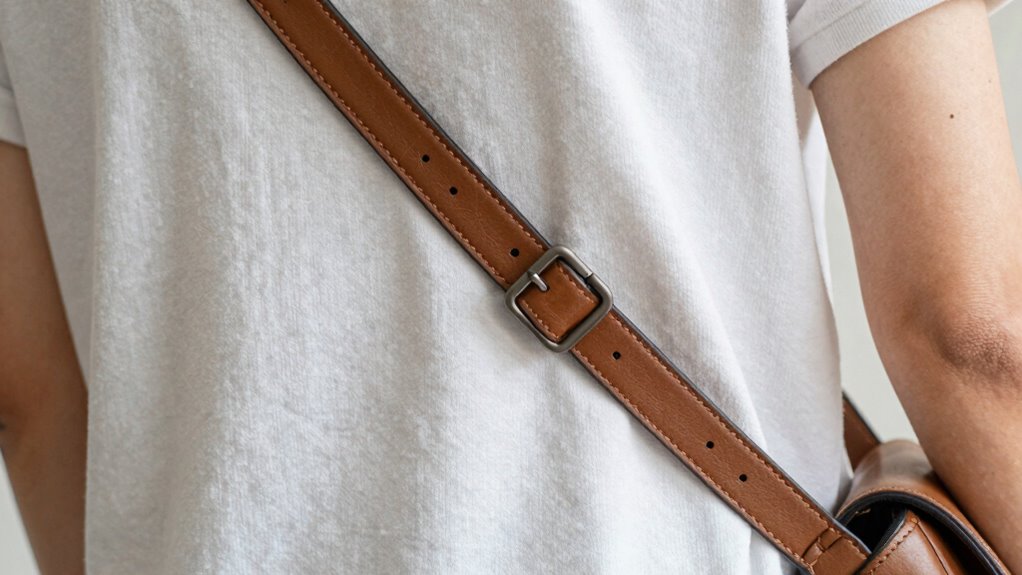
Adjusting your crossbody strap is quick and straightforward, so you can customize it for maximum comfort. Once you know how to modify the length, finding your perfect fit becomes easy. Let’s explore simple steps to help you get the most comfortable and secure wear. Understanding proper strap adjustment helps prevent discomfort and potential strain during everyday use. Additionally, selecting an energy-efficient design can contribute to more sustainable fashion choices. Incorporating ergonomic principles into your strap adjustment can further enhance comfort and reduce fatigue. Paying attention to user comfort factors ensures that you enjoy your bag without unnecessary discomfort or strain, and considering adjustment techniques can make the process even easier and more effective.
Adjust Strap Length Easily
Getting your crossbody strap just right can make all the difference in comfort, and luckily, adjusting it is a straightforward process. To achieve the perfect strap length through easy adjustment, follow these steps:
- Locate the buckle or sliding mechanism on your strap.
- Hold the buckle firmly and slide it to lengthen or shorten the strap.
- Test the strap length by wearing the bag, then tweak as needed for a comfortable fit.
- Ensuring the strap sits at your hip bone can help distribute weight evenly and prevent shoulder strain for optimal comfort.
Most straps are designed for quick adjustments, so you can easily customize the length for different outfits or activities. Remember, the goal is to have the strap sit at your hip bone for ideal comfort. With these simple steps, you’ll enjoy a perfect, personalized fit every time.
Find Your Ideal Fit
To find your ideal fit, start by wearing your crossbody bag and evaluating where the strap naturally rests on your body. Adjust the strap length so the bag sits comfortably at your hip bone, not too high or low. Consider the strap material—smooth leather offers flexibility, while woven fabrics provide extra grip. When customizing, think about color coordination; matching or contrasting strap and bag colors can enhance your style. Use the table below to help fine-tune your fit:
| Goal | Adjustment Tip | Material Impact |
|---|---|---|
| Comfort | Wear the bag for a few minutes first | Soft strap material molds better |
| Style Enhancement | Match or contrast strap and bag colors | Creates visual harmony or pop |
| Proper Placement | Adjust strap length for hip bone | Ensures balanced weight distribution |
| Versatility | Choose adjustable straps for flexibility | Adapt to different outfits |
Additionally, choosing the right strap length can significantly improve your overall comfort and ease of use. Ensuring the strap is properly adjusted can help prevent strain and discomfort during extended wear. Remember that adjustable straps provide greater adaptability for various outfits and activities. Incorporating proper fit techniques can also help distribute weight evenly, reducing fatigue. Being aware of ergonomic considerations can further enhance comfort during extended use.
Common Fit Mistakes and How to Fix Them
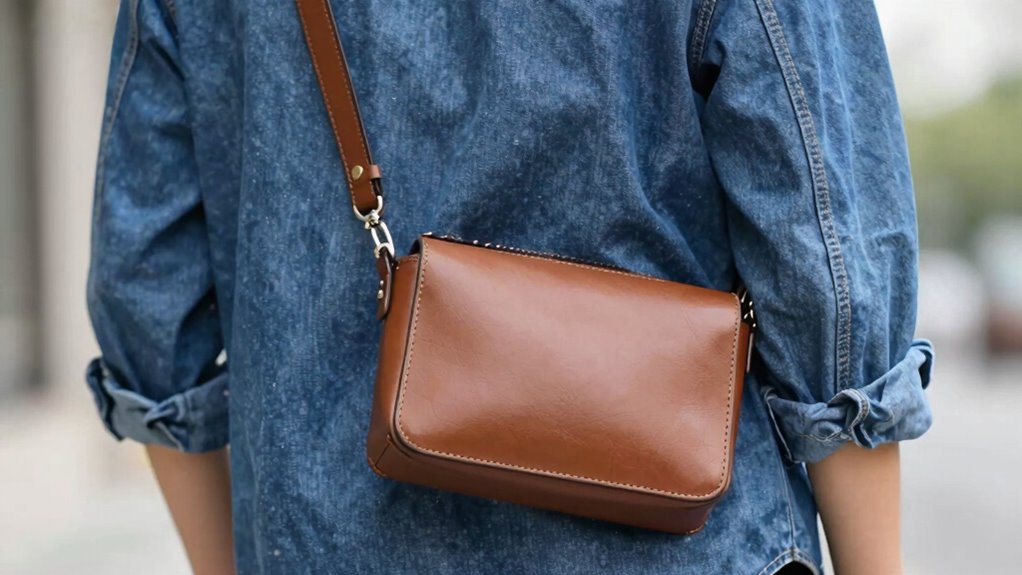
One common mistake is using a strap that’s too long, causing your bag to slip or hang awkwardly. Another issue is placing the strap incorrectly on your shoulder, which can lead to discomfort or uneven weight distribution. To fix these, adjust the strap length and make sure it’s positioned properly for a secure, comfortable fit.
Overly Long Straps
Overly long straps are a common mistake that can make your bag look awkward and feel uncomfortable to wear. When straps hang too low, they compromise strap security and disrupt aesthetic balance. To fix this:
- Adjust the strap length so it sits comfortably at your hip bone, ensuring it’s not too loose or too tight.
- Use buckle holes or sliding adjusters to secure the strap securely, preventing slipping.
- Consider shortening the strap if it consistently hangs too long, creating a cleaner, more polished look.
Properly fitting straps keep your bag stable and comfortable, preventing it from shifting excessively. Achieving the right length enhances strap security and maintains aesthetic balance, making your crossbody bag both functional and stylish.
Incorrect Shoulder Placement
Incorrect shoulder placement is a common mistake that can cause discomfort and affect the overall look of your crossbody bag. When your shoulder isn’t properly positioned, you may experience strap slippage or uneven weight distribution, making carrying uncomfortable. To fix this, make sure your shoulder is relaxed and aligned with your strap. Proper shoulder positioning keeps the strap from slipping and maintains balance. Here’s a quick guide:
| Shoulder Positioning | Effect on Fit | Common Issue |
|---|---|---|
| Relaxed and level | No strap slippage | Bag feels secure |
| Slightly forward | Strap slides off | Adjust strap length |
| Tensed or hunched | Discomfort | Shoulder strain |
| Relaxed and back | Better weight distribution | Comfortable fit |
Focus on relaxed, level shoulders to improve comfort and prevent strap slippage.
Style Tips: Choosing the Best Strap Length for Your Outfit
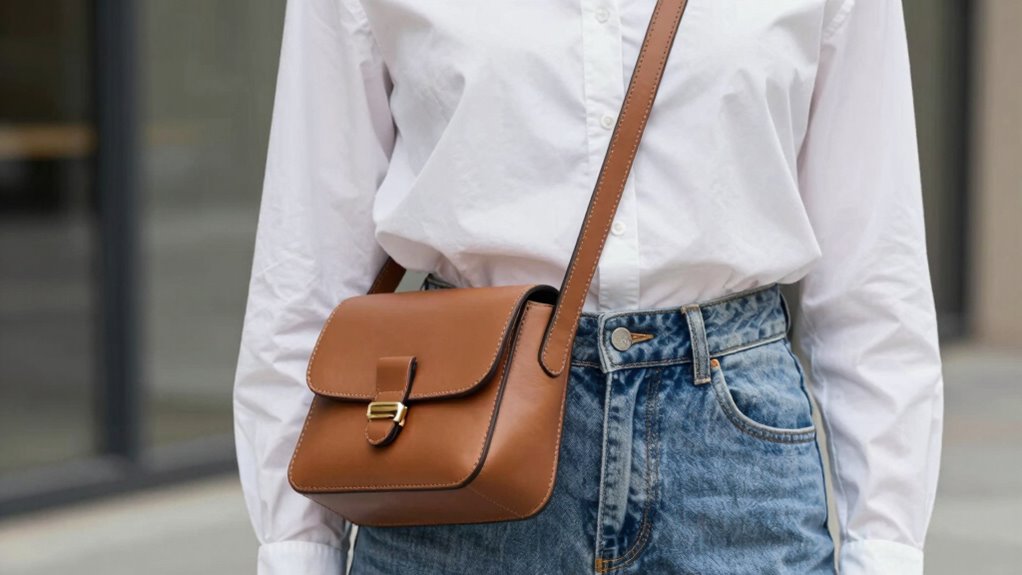
Choosing the right strap length can instantly elevate your outfit and guarantee comfort throughout the day. To do this, consider three key tips:
- Match strap material to your bag and outfit for a cohesive look. For example, leather straps pair well with polished attire, while fabric ones suit casual wear.
- Coordinate strap color with your ensemble—neutral tones work universally, but a pop of color can add personality.
- Adjust the length so the bag sits comfortably at your hip or just below your waist, ensuring ease of movement.
Troubleshooting: What to Do When Your Strap Feels Off
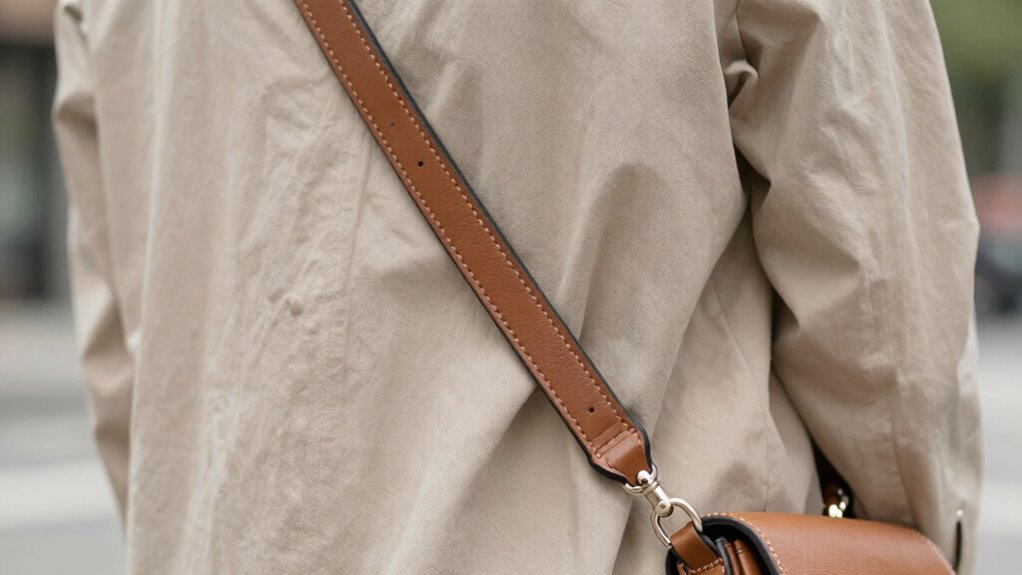
When your strap feels off, it’s often a sign that adjustments are needed to improve comfort and stability. Start by checking your current strap length and consider making strap length adjustments if it feels too tight or loose. Comfort troubleshooting involves ensuring the strap sits comfortably at your hip bone, not too high or low. If the strap is slipping or causing discomfort, try shortening or lengthening it incrementally. Make sure the strap isn’t twisted or uneven, as that can affect how it feels. Adjustments should feel natural, giving you support without strain. Remember, a well-fitted strap helps distribute weight evenly and prevents fatigue. Regularly review your strap length and tweak it as needed to maintain ideal comfort and function.
Caring for Your Adjustable Strap to Keep It Lasting
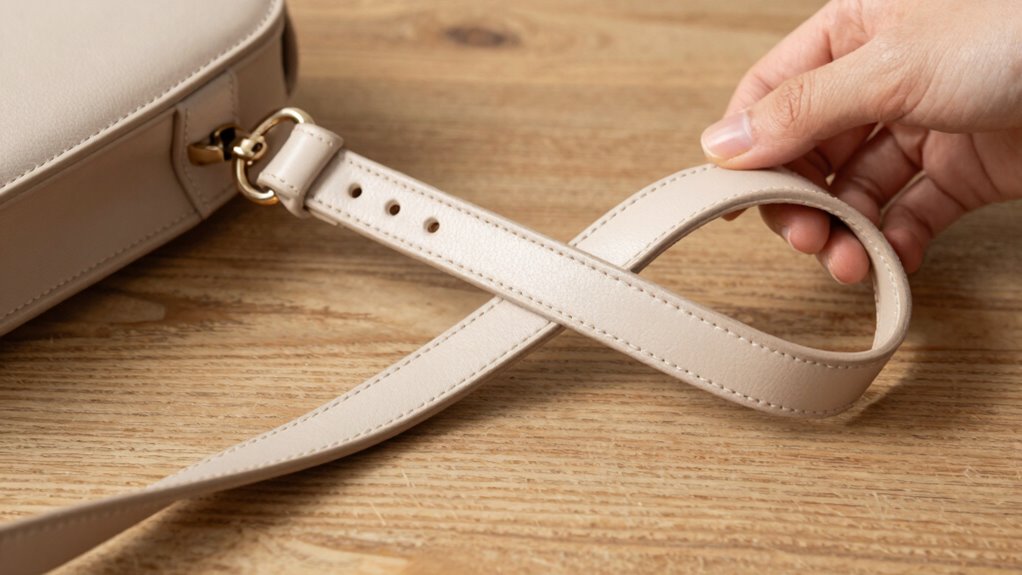
To keep your adjustable strap functioning smoothly and lasting longer, regular care is key. Proper maintenance preserves both the strap material and buckle durability. Here are three steps to help you care for your strap:
- Clean the strap gently with a damp cloth to remove dirt and oils, preventing damage to delicate materials.
- Check the buckle regularly for signs of wear or looseness, and tighten or replace it if needed.
- Avoid overloading your bag, which strains the strap material and stresses the buckle, reducing longevity.
Frequently Asked Questions
Can the ‘Hip Bone’ Rule Be Applied to All Bag Styles?
Yes, you can apply the ‘hip bone’ rule to most bag styles, but it’s mainly useful for crossbody bags. Strap length customization guarantees comfort and style compatibility, allowing your bag to sit perfectly at your hip or waist. For larger or more structured bags, you might need different adjustments. Always consider your personal comfort and the look you want when customizing strap length, regardless of bag style.
What Materials Affect the Adjustability of Crossbody Straps?
Did you know that 65% of bags with adjustable straps use materials that enhance flexibility? The materials affecting strap adjustability include those with adjustable hardware, like buckles and sliders, which let you customize length easily. Additionally, strap elasticity plays a role, offering stretch for comfort and ease of wear. Choosing these materials guarantees your crossbody stays comfortable, regardless of how much you adjust it for the perfect fit.
How Does Body Posture Influence Strap Comfort?
Your posture impact can profoundly influence strap comfort. When you maintain good ergonomic design, it helps distribute weight evenly, reducing strain on your shoulders and neck. Poor posture, on the other hand, causes uneven pressure, making straps feel tighter or more uncomfortable. Adjusting your posture ensures the strap sits correctly, preventing discomfort and promoting better support. Always keep your shoulders back and spine aligned for ideal strap comfort.
Are There Specific Brands Known for Adjustable Strap Quality?
Did you know that 75% of shoppers prioritize strap durability when choosing bags? Brands like Coach, Fossil, and Michael Kors are known for their high-quality adjustable straps, which promise both durability and comfort. These brands have built strong reputations over years of crafting reliable accessories. When selecting a bag, opt for these brands to guarantee your strap’s quality and longevity, making your daily carry both comfortable and dependable.
How Often Should I Check My Strap Length for Optimal Comfort?
You should check your strap length regularly, ideally every few days or whenever you notice discomfort. Use strap adjustment tips like loosening or tightening as needed to maintain comfort. The comfort adjustment frequency depends on your daily activities and body changes, so stay attentive. When your bag feels too tight or too loose, it’s time to re-adjust for peak comfort, ensuring your crossbody strap stays supportive and comfortable throughout the day.
Conclusion
Mastering the ‘hip bone’ rule will transform your crossbody comfort from a shaky mess to a rock-solid fit. Say goodbye to annoying slips, shoulder aches, and bag battles—you’ll feel like the bag was made just for you! Once you get your strap length right, every outing becomes an effortless, stylish adventure. So, embrace these tips, tweak away, and prepare to conquer the world with the perfect, perfectly comfy crossbody!