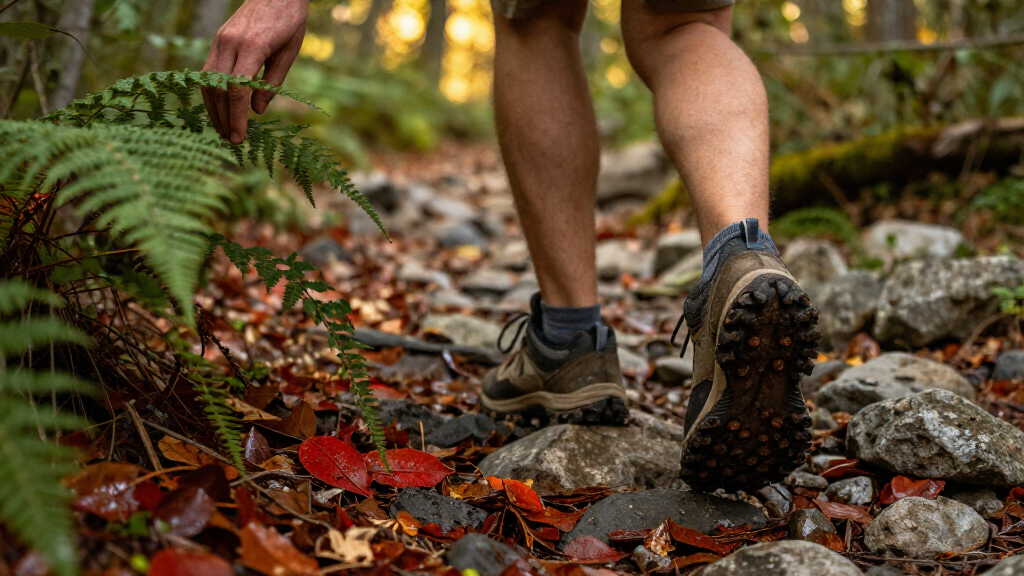

The Brooks Women’s Caldera 8 Ultra takes my top spot as the best chunky trail shoe overall, thanks to its max-cushion midsole that absorbs long-mileage pounding without going mushy on rocky ground. Close behind, the Salomon Speedcross Peak Gore-Tex wins on aggressive grip and weather protection, while the Saucony Excursion TR14 proves you don’t need to spend big for a properly chunky, capable trail shoe. The main tradeoff in this category is simple: the thicker the stack, the less ground feel and the more weight you carry — so the right pick depends on whether you want pillow-soft comfort or a lower, more connected ride. Waterproof membranes like Gore-Tex add protection but reduce breathability on hot summer trails. Read on for the full breakdown of all ten shoes, including who each one suits and who should skip it.
Key Takeaways
- The Brooks Caldera 8 Ultra and New Balance Hierro Hiker topped the rankings because they pair thick midsoles with stable ride geometry — chunky cushioning that doesn’t wobble on uneven terrain.
- The Saucony Excursion TR14 and NORTIV 8 deliver the chunky-trail look and decent performance at a fraction of the cost, though both cut corners on outsole durability for technical descents.
- The Salomon Speedcross Peak’s deep lug pattern was the clear grip winner in mud and loose dirt, but those same lugs feel clumsy on pavement — a real issue if your routes mix road and trail.
- Wide-toe-box options (Altra Lone Peak 8, NORTIV 8) suit runners with wide feet or swelling on long days, but both trade away the snug heel hold that narrow-footed hikers need.
- Waterproof models (Oboz Hyalite, Hierro Hiker, Speedcross Peak) proved best kept for cool, wet seasons; in warm weather they ran noticeably hotter than their non-waterproof rivals.
| New Balance Men’s Fresh Foam 410 V9 Trail Running Shoe |  | Best for Mixed-Surface Versatility | Brand: New Balance | Model: 410 V9 | Cushioning: Fresh Foam / BIO Foam | VIEW LATEST PRICE | See Our Full Breakdown |
| Oboz Women’s Hyalite Low B-Dry Waterproof Hiking Shoes |  | Best for Supportive Wet-Weather Hiking | Brand: Oboz | Model: Hyalite Low B-Dry | Target gender: Women’s | VIEW LATEST PRICE | See Our Full Breakdown |
| Altra Women’s Lone Peak 8 Trail Running Shoe |  | Best Lightweight Trail Runner | Brand: Altra | Model: Lone Peak 8 | Target gender: Women’s | VIEW LATEST PRICE | See Our Full Breakdown |
| New Balance Fresh Foam X Hierro Hiker Gore-TEX Waterproof Trail Shoe (Women’s) | 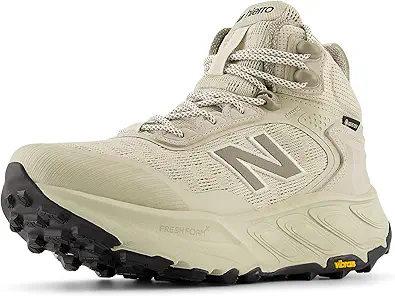 | Best Plush Waterproof Pick | Brand: New Balance | Model: Fresh Foam X Hierro Hiker | Target gender: Women | VIEW LATEST PRICE | See Our Full Breakdown |
| Salomon Women’s Speedcross Peak Gore-Tex Waterproof Trail Running Shoe |  | Best for Secure Wet-Trail Traction | Brand: Salomon | Target gender: Women’s | Waterproofing: Gore-Tex membrane | VIEW LATEST PRICE | See Our Full Breakdown |
| NORTIV 8 Men’s Trail Running Shoes with Wide Toe Box |  | Best for a Roomy Toe Box | Gender: Men’s | Upper: Jacquard mesh | Midsole: EVA | VIEW LATEST PRICE | See Our Full Breakdown |
| adidas Women’s Terrex Rockadia Wide Hiking Shoe – Green |  | Best for Wide-Fit Day Hikes | Gender: Women’s | Fit: Wide | Upper: Textile and synthetic | VIEW LATEST PRICE | See Our Full Breakdown |
| Brooks Women’s Caldera 8 Ultra Trail Running Shoe |  | Best for Plush Ultra-Distance Cushioning | Gender: Women’s | Model: Caldera 8 | Predecessor: Caldera 7 | VIEW LATEST PRICE | See Our Full Breakdown |
| Brooks Women’s Cascadia 20 Trail Running Shoe |  | Best for Technical Trail Protection | Gender: Women’s | Outsole: Vibram Megagrip with Traction Lug technology | Lug depth: 4 mm | VIEW LATEST PRICE | See Our Full Breakdown |
| Saucony Excursion TR14 Women’s Trail Running Shoes |  | Best for Deep-Lug Trail Grip | Gender: Women’s | Category: Trail | Cushioning: VERSARUN | VIEW LATEST PRICE | See Our Full Breakdown |
| chunky trail shoe | Outsole | Closure | Brand | Model |
|---|---|---|---|---|
| New Balance Men’s Fresh Foam 4 | AT Tread | Lace-up | New Balance | 410 V9 |
| Oboz Women’s Hyalite Low B-Dry | — | Lace-up | Oboz | Hyalite Low B-Dry |
| Altra Women’s Lone Peak 8 Trai | MaxTrac rubber | — | Altra | Lone Peak 8 |
| New Balance Fresh Foam X Hierr | Vibram rubber | — | New Balance | Fresh Foam X Hierro Hiker |
| Salomon Women’s Speedcross Pea | All Terrain Contagrip | Quicklace system | Salomon | — |
| NORTIV 8 Men’s Trail Running S | — | Lace-up | — | — |
| adidas Women’s Terrex Rockadia | Full-length Adiwear rubber | Lace-up | — | — |
| Brooks Women’s Caldera 8 Ultra | Rubber | — | — | Caldera 8 |
| Brooks Women’s Cascadia 20 Tra | Vibram Megagrip with Traction Lug technology | Lace-up | — | — |
| Saucony Excursion TR14 Women’s | — | — | — | — |
More Details on Our Top Picks
New Balance Men’s Fresh Foam 410 V9 Trail Running Shoe
The Fresh Foam 410 V9 suits runners who split time between paths and pavement. Its AT Tread outsole is designed for both surfaces, so a route that starts on a road and turns onto a trail does not demand a shoe change. Fresh Foam and BIO Foam cushioning add lightweight shock absorption, though the supplied details do not suggest the plush underfoot feel of the Fresh Foam X Hierro Hiker. Durable overlays support the breathable mesh upper, but mesh can be less resistant to sharp rock contact than more protective constructions. That makes this a practical, flexible pick for maintained trails and everyday mileage, rather than the strongest choice for rough, rocky routes. I rank it for surface versatility, with a clear tradeoff in upper protection.
Pros:- AT Tread outsole is specified for on-road and off-road use
- Fresh Foam and BIO Foam cushioning provide lightweight shock absorption
- Breathable mesh upper is reinforced with durable overlays
- Lace-up closure allows a customized fit
Cons:- Mesh may be less durable in extremely rocky conditions
- Cushioning is described as lightweight rather than especially plush
Best for: Runners who connect paved paths with maintained trails and want one shoe for both
Not ideal for: Runners tackling very rocky routes who need a more protective upper
- Brand:New Balance
- Model:410 V9
- Cushioning:Fresh Foam / BIO Foam
- Outsole:AT Tread
- Sole material:Rubber
- Outer material:Mesh
- Closure:Lace-up
Our verdict“Choose the 410 V9 for varied pavement and trail routes; choose the Hierro Hiker if plush cushioning and added toe protection matter more.”
Oboz Women’s Hyalite Low B-Dry Waterproof Hiking Shoes
The Hyalite Low B-Dry is the hiking-focused choice here for women who want waterproofing and structured underfoot support. Its B-DRY membrane is intended to keep feet dry while allowing breathability, and the triple-density O FIT insole adds medium-to-high arch support. That support-led setup differs from the lighter, moderate-cushion feel described for the Altra Lone Peak 8, which is a more running-oriented option. The Hyalite also uses suede, a nubuck rand, and abrasion-resistant mesh, giving the upper a mix of reinforcement and breathability without making it a full-leather shoe. Its all-terrain rubber outsole is suited to trails, pavement, and travel. Skip it if you need an especially rugged, full-leather upper for severe terrain.
Pros:- B-DRY waterproof membrane is paired with breathable construction
- Triple-density O FIT insole provides medium-to-high arch support
- Suede, nubuck rand, and abrasion-resistant mesh combine reinforcement with ventilation
- All-terrain rubber outsole is described for trails and pavement
Cons:- Mesh sections may be less durable than a full-leather upper on rugged terrain
- Supportive hiking construction is less suited to buyers prioritizing a light trail-running shoe
Best for: Women hikers who want waterproof day-hike shoes with noticeable arch support for travel and everyday wear
Not ideal for: Hikers who prioritize a full-leather upper for repeated use over especially rugged, rocky terrain
- Brand:Oboz
- Model:Hyalite Low B-Dry
- Target gender:Women’s
- Waterproofing:B-DRY breathable membrane
- Insole:O FIT triple-density EVA
- Midsole:KINERTIA
- Heel drop:8 mm
- Sole material:Rubber
- Closure:Lace-up
Our verdict“Pick the Hyalite for wet day hikes where arch support matters more than the Lone Peak 8’s lighter trail-running focus.”
Altra Women’s Lone Peak 8 Trail Running Shoe
At 9.16 oz (259 g), the Lone Peak 8 is the lineup’s clearest choice for runners who want a lighter shoe and moderate cushioning instead of a bulky, plush ride. Its 25 mm stack and Altra EGO midsole offer cushioning, while the MaxTrac rubber outsole is built for grip on rugged terrain. Compared with the waterproof Salomon Speedcross Peak, the Lone Peak 8 keeps its listed construction focused on ripstop mesh and does not claim a waterproof membrane. That makes it a less weather-protective pick, but a more straightforward option for runners who value low weight and trail grip. The main tradeoff is the moderate cushion: runners seeking a soft, highly cushioned feel should look to the Fresh Foam X Hierro Hiker instead.
Pros:- Listed weight is 9.16 oz (259 g)
- MaxTrac rubber outsole is designed for rugged trail grip
- Altra EGO midsole provides responsive cushioning
- Ripstop mesh upper
Cons:- Moderate cushioning may feel too firm for runners seeking a plush ride
- No waterproofing is listed, unlike the Salomon Speedcross Peak
Best for: Women trail runners who prioritize lower weight, moderate cushioning, and grip on rugged routes
Not ideal for: Runners who want plush cushioning or waterproof protection for wet-weather outings
- Brand:Altra
- Model:Lone Peak 8
- Target gender:Women’s
- Weight:9.16 oz / 259 g
- Stack height:25 mm
- Midsole:Altra EGO
- Cushioning:Moderate
- Outsole:MaxTrac rubber
- Outer material:Ripstop mesh
Our verdict“Choose the Lone Peak 8 for a lighter, moderate-cushion trail run, and the Hierro Hiker if you want more plushness and waterproofing.”
New Balance Fresh Foam X Hierro Hiker Gore-TEX Waterproof Trail Shoe (Women’s)
The Fresh Foam X Hierro Hiker brings together three features that suit chunky trail-shoe buyers: plush Fresh Foam X cushioning, a Vibram rubber outsole, and GORE-TEX waterproofing. Toe Protect technology adds a barrier against rocks and roots, a useful difference from the mesh upper of the lighter Altra Lone Peak 8. That extra coverage and weather protection point toward longer hikes and year-round outings rather than a minimal-feeling run shoe. The tradeoff is a more protective, cushioned setup that may feel like more shoe than runners want on fast, dry routes. Its listed cotton inner material also may retain moisture when wet, even though the upper includes GORE-TEX. I rank it highest for plush cushioning with weather and toe protection.
Pros:- GORE-TEX upper is designed for waterproof protection
- Fresh Foam X midsole provides plush cushioning
- Vibram rubber outsole offers trail grip
- Toe Protect technology guards against rocks, roots, and debris
Cons:- Cotton inner material may retain moisture when wet
- Plush, protective construction may be more shoe than runners want for fast outings
Best for: Women hikers who want plush cushioning, waterproofing, and toe protection for year-round trail outings
Not ideal for: Fast, dry-trail runners who prefer a lighter, less cushioned shoe
- Brand:New Balance
- Model:Fresh Foam X Hierro Hiker
- Target gender:Women
- Waterproofing:GORE-TEX
- Midsole:Fresh Foam X
- Outsole:Vibram rubber
- Toe protection:Toe Protect technology
- Outer material:Mesh
- Inner material:Cotton
Our verdict“Choose the Hierro Hiker for plush, protected wet-weather hiking; the Lone Peak 8 better fits runners prioritizing lower weight and moderate cushioning.”
Salomon Women’s Speedcross Peak Gore-Tex Waterproof Trail Running Shoe
The Speedcross Peak Gore-Tex is aimed at runners who want a secure fit and dependable traction across changing trail surfaces. Its All Terrain Contagrip outsole is specified for wet, dry, loose, and hard ground, while the Gore-Tex membrane adds waterproof protection. The Quicklace system tightens with one pull, and Sensifit construction is intended to hold the foot securely. Compared with the New Balance Fresh Foam X Hierro Hiker, the Speedcross Peak emphasizes fit security and terrain grip; the Hierro listing gives more detail about plush cushioning and toe protection. The Speedcross has an advanced cushioning system, but the supplied details place it in the moderate-run category rather than high-intensity racing. Its ankle-height shaft may also feel less like a low-profile trail shoe.
Pros:- Gore-Tex membrane provides waterproof protection
- All Terrain Contagrip outsole is specified for varied surfaces
- Quicklace system allows one-pull tightening
- Sensifit construction is designed for a secure fit
Cons:- Cushioning is described as better suited to moderate runs than high-intensity racing
- Ankle-height shaft may not suit runners who prefer a low-profile shoe
Best for: Women trail runners who need waterproofing, secure quick adjustment, and traction across mixed trail conditions
Not ideal for: Racers seeking high-intensity performance or runners who prefer a low-profile shoe without an ankle-height shaft
- Brand:Salomon
- Target gender:Women’s
- Waterproofing:Gore-Tex membrane
- Outsole:All Terrain Contagrip
- Sole material:Rubber
- Outer material:Textile
- Shaft height:Ankle
- Closure:Quicklace system
- Fit construction:Sensifit
Our verdict“Choose the Speedcross Peak for waterproof grip and a secure quick-lace fit; pick the Hierro Hiker if plush cushioning and toe protection are your priorities.”
NORTIV 8 Men’s Trail Running Shoes with Wide Toe Box
The NORTIV 8 makes the most sense for runners who want a wide toe box and a chunky, cushioned feel for mixed trail and pavement. Its lightweight EVA midsole absorbs impact, while the 4 mm rubber lugs suit paths where you may also spend time on harder surfaces. Compared with the Saucony Excursion TR14, which has deeper 6 mm lugs for more committed off-road grip, this shoe looks better suited to varied everyday routes than muddy or highly technical trails. The breathable Jacquard mesh upper should help with airflow, but the supplied details do not give its weight, drop, or stack height, so buyers cannot easily judge how bulky it feels. Pick it for toe room and adaptable traction; skip it if you need measured fit data or deep-lug bite.
Pros:- Wide toe box allows more room for toe spread
- Breathable Jacquard mesh upper
- Lightweight EVA midsole provides cushioning
- 4 mm rubber lugs suit mixed trail and pavement
Cons:- 4 mm lugs offer less depth than the Saucony Excursion TR14’s 6 mm lugs
- Weight and drop measurements are not provided
Best for: Men who want extra toe room for everyday runs that mix maintained trails with pavement
Not ideal for: Runners who need deep lugs for muddy terrain or precise weight and drop measurements before choosing a shoe
- Gender:Men’s
- Upper:Jacquard mesh
- Midsole:EVA
- Sole:EVA and rubber
- Outsole lug depth:4 mm
- Closure:Lace-up
Our verdict“Choose the NORTIV 8 if toe room and cushioning matter more than deep lugs or detailed fit measurements.”
adidas Women’s Terrex Rockadia Wide Hiking Shoe – Green
The Terrex Rockadia is a straightforward pick for hikers who want a wide fit and cushioning for woodland paths and rocky day hikes. Its full-length Adiwear rubber outsole is built for durability, while the EVA midsole adds comfort over longer walks. Against the more running-focused Brooks Cascadia 20, the Rockadia puts less emphasis on technical trail protection and traction details, making it a simpler hiking choice rather than a shoe for fast, demanding terrain. The tradeoff is that its textile and synthetic upper may feel less airy than mesh-led options such as the Saucony Excursion TR14. Buyers also get no lug-depth figure to compare grip precisely. This is the sensible choice for wide-footed walkers who value an uncomplicated hiking shoe; runners seeking detailed grip or protection features should look elsewhere.
Pros:- Wide fit offers extra room
- Full-length Adiwear rubber outsole is designed for durability
- EVA midsole adds cushioning for walks and hikes
- Lace-up closure allows fit adjustment
Cons:- No lug-depth measurement is supplied for comparing trail grip
- Textile and synthetic upper may breathe less than the mesh upper on the Saucony Excursion TR14
Best for: Women with wider feet who want a cushioned shoe for woodland paths and moderate rocky hikes
Not ideal for: Trail runners tackling technical routes who want specified lug depth and reinforced debris protection
- Gender:Women’s
- Fit:Wide
- Upper:Textile and synthetic
- Midsole:EVA
- Outsole:Full-length Adiwear rubber
- Closure:Lace-up
- Color:Green
Our verdict“Choose the Terrex Rockadia for wide-fit comfort on everyday hikes rather than technical trail running.”
Brooks Women’s Caldera 8 Ultra Trail Running Shoe
The Caldera 8 earns its place for runners who want high-volume cushioning over long, rough outings. Its nitrogen-infused DNA LOFT v3 foam and raised sidewalls are aimed at combining plush impact protection with a steadier platform, while the air mesh upper balances breathability with snag resistance. Compared with the Brooks Cascadia 20, the Caldera leans harder into a high, soft ride; the Cascadia offers more explicit traction and protection details, including a Vibram Megagrip outsole and reinforced toe cap. That makes the Cascadia easier to match to wet, rocky routes, while the Caldera better fits buyers prioritizing cushioning over distance. The tradeoff is its high stack height, which may feel bulky to runners who prefer a closer-to-ground shoe. Choose it for plush ultra-trail comfort, not a low-profile ride.
Pros:- Nitrogen-infused DNA LOFT v3 cushioning is designed for plush long-distance comfort
- Raised sidewalls and widened base support stability
- Air mesh upper is breathable and snag-resistant
- Carbon Neutral Certified
Cons:- High stack height may feel bulky to low-profile shoe fans
- The supplied details do not specify lug depth or outsole grip technology
Best for: Women running long distances on rough trails who prefer substantial cushioning and a broad, stable platform
Not ideal for: Runners who want a low-profile feel or need outsole lug and traction details before choosing
- Gender:Women’s
- Model:Caldera 8
- Predecessor:Caldera 7
- Cushioning:Nitrogen-infused DNA LOFT v3
- Outsole:Rubber
- Upper:Air mesh with TPEE
- Certification:Carbon Neutral Certified
Our verdict“Pick the Caldera 8 if plush cushioning is your priority for long trail days and you are comfortable with a high stack.”
Brooks Women’s Cascadia 20 Trail Running Shoe
The Cascadia 20 is the more route-ready choice for runners who face changing surfaces and want traction and underfoot protection to be central to the shoe. Its Vibram Megagrip outsole has 4 mm lugs for wet or dry ground, while Trail Adapt technology and flexible lugs aim to keep the platform supportive as terrain changes. A reinforced toe cap and mudguard add protection against rocks, roots, and debris. Compared with the Brooks Caldera 8, the Cascadia gives clearer evidence of its grip and protective build; the Caldera is the better fit for runners who chiefly want a plush, high-stack ride over distance. The Cascadia still brings cushioned DNA FLASH v2 foam, but its technical features may be more shoe than casual walkers need. Choose it for challenging routes; skip it for simple paths and relaxed walks.
Pros:- Vibram Megagrip outsole is specified for wet and dry traction
- 4 mm lugs and flexible lugs support varied terrain
- Reinforced toe cap and mudguard shield against trail debris
- Trail Adapt technology pairs support with flexibility
Cons:- Technical protection and traction may be unnecessary for casual walking
- The supplied cushioning description does not state the stack height or overall shoe weight
Best for: Women trail runners who regularly run over wet, rocky, or debris-strewn terrain
Not ideal for: Casual walkers on maintained paths who do not need technical traction and added toe protection
- Gender:Women’s
- Outsole:Vibram Megagrip with Traction Lug technology
- Lug depth:4 mm
- Cushioning:Nitrogen-infused DNA FLASH v2
- Upper:Air mesh with 3D overlay protection
- Closure:Lace-up
- Predecessor:Cascadia 19
Our verdict“Choose the Cascadia 20 for varied, demanding trails where grip and debris protection matter more than a simple walking setup.”
Saucony Excursion TR14 Women’s Trail Running Shoes
The Excursion TR14 is the lineup’s straightforward option for runners who want deeper lugs and impact cushioning without a long list of technical add-ons. Its 6 mm lugs offer more depth than the 4 mm lugs on the NORTIV 8 and Brooks Cascadia 20, which can help on loose or rough ground. VERSARUN cushioning and a trail-specific mesh upper with supportive overlays round out a practical dirt-running setup. Compared with the Cascadia 20, it gives up named technologies such as Vibram Megagrip and Trail Adapt, so buyers get fewer stated features for wet, technical routes. It also lacks the Caldera 8’s emphasis on plush, high-stack comfort for ultra-distance outings. Choose the Saucony for basic off-road runs where lug depth matters; look elsewhere if you want advanced stability or premium protection details.
Pros:- 6 mm lugs provide more depth than the 4 mm options from NORTIV 8 and Brooks Cascadia 20
- VERSARUN cushioning offers impact protection
- Trail-specific mesh upper includes supportive overlays
- 8 mm offset is specified
Cons:- Basic feature set lacks the Cascadia 20’s named traction and stability technologies
- The supplied details do not specify advanced protection for technical terrain
Best for: Women seeking a simple trail-running shoe with deeper lugs for dirt paths and loose ground
Not ideal for: Runners who need advanced stability or specified wet-weather grip technology for technical routes
- Gender:Women’s
- Category:Trail
- Cushioning:VERSARUN
- Lug depth:6 mm
- Offset:8 mm (23/31)
- Weight:8.8 oz
- Upper:Synthetic and mesh
Our verdict“Choose the Excursion TR14 for uncomplicated dirt running with deeper lugs, and step up to the Cascadia 20 for more specified technical features.”

How We Picked
My ranking centers on what “chunky” actually promises: a thick, protective midsole combined with genuine trail capability. I compared stack height and cushioning feel, but weighted that against stability — a tall shoe that rolls on side slopes is a liability, not a luxury. Outsole grip came next, judged on lug depth, rubber compound, and how each shoe performed across mud, loose gravel, and wet rock rather than on dry paths alone.
Fit and foot shape played a major role too. This lineup includes both traditional narrow racing fits (Salomon, Saucony) and wide toe-box designs (Altra, NORTIV 8), and the ranking reflects how well each shoe serves the feet it was built for rather than punishing a shoe for the wrong buyer. Finally, I weighed build quality, waterproofing value, and durability against asking price to separate shoes that earn their premium from those trading mostly on brand name. Shoes that balanced most of these factors with honest, well-documented drawbacks ranked above one-dimensional performers.
| chunky trail shoe | Brand | Cushioning | Closure | Midsole |
|---|---|---|---|---|
| New Balance Men’s Fresh Foam 4 | New Balance | Fresh Foam / BIO Foam | Lace-up | — |
| Oboz Women’s Hyalite Low B-Dry | Oboz | — | Lace-up | KINERTIA |
| Altra Women’s Lone Peak 8 Trai | Altra | Moderate | — | Altra EGO |
| New Balance Fresh Foam X Hierr | New Balance | — | — | Fresh Foam X |
| Salomon Women’s Speedcross Pea | Salomon | — | Quicklace system | — |
| NORTIV 8 Men’s Trail Running S | — | — | Lace-up | EVA |
| adidas Women’s Terrex Rockadia | — | — | Lace-up | EVA |
| Brooks Women’s Caldera 8 Ultra | — | Nitrogen-infused DNA LOFT v3 | — | — |
| Brooks Women’s Cascadia 20 Tra | — | Nitrogen-infused DNA FLASH v2 | Lace-up | — |
| Saucony Excursion TR14 Women’s | — | VERSARUN | — | — |
Factors to Consider When Choosing Best Chunky Trail Shoes
Chunky trail shoes occupy a strange middle ground between running shoes and hikers, and buyers routinely pick wrong by focusing on looks or stack height alone. These are the factors that actually determine whether your purchase works out.Cushioning Height vs. Stability
The most common mistake is assuming more cushioning is always better. A tall midsole absorbs impact beautifully on fire roads and long descents, but it also raises your center of gravity, which increases ankle roll on cambered or rocky trails. Beginners especially benefit from a moderately chunky shoe with a wide base — like the Caldera 8 or Hierro Hiker — rather than an ultra-tall, narrow-platform design. Ask yourself where you’ll actually run: smooth, long trails reward thick stacks; technical terrain rewards lower, firmer shoes. If your routes mix both, aim for the middle of the range rather than the extremes. Also note that soft foam compresses over time, so a shoe that feels plush on day one may feel quite different at 300 miles.
Waterproofing: When It Helps and When It Hurts
Waterproof membranes are the category’s biggest double-edged sword. A Gore-Tex or B-Dry liner keeps morning dew, shallow puddles, and drizzle out, which is genuinely valuable in autumn, winter, and spring. In summer, the same membrane traps heat and sweat, and once water enters over the collar — on a deep crossing, for instance — it stays inside far longer than in a non-waterproof shoe. My advice is to match the membrane to your season and terrain, not to treat waterproofing as a free upgrade. If you run mostly in warm, dry conditions, a breathable mesh shoe will serve you better than a premium waterproof model. Deep-water hikers should also know that no trail shoe is truly submersion-proof.
Outsole Grip and Lug Design
Lug pattern tells you more about a shoe’s intended use than almost any other spec. Deep, widely spaced lugs (like the Speedcross Peak’s) excel in mud and loose dirt but buzz and wear quickly on asphalt. Shallow, tightly spaced multi-directional lugs handle mixed terrain and occasional pavement far better. Rubber compound matters too — sticky compounds grip wet rock superbly but wear faster than firmer blends. If your trails involve river crossings or polished stone, prioritize grip compound; if you’re mostly on dirt and gravel, almost any decent lug pattern will hold. Check whether the lugs extend to the toe and heel edges as well, since that’s where you need bite on steep climbs and braking descents.
Toe Box Shape and Fit
Trail swelling is real: on runs longer than about 90 minutes, feet can expand a half size or more, which is why many trail shoes now come with anatomically wide toe boxes. Shoes like the Altra Lone Peak 8 and NORTIV 8 are built around this philosophy, giving toes room to splay on descents — a genuine comfort advantage on long, steep downhills. The tradeoff is that a roomy toe box can feel sloppy for narrow-footed runners, causing friction and heel lift. Traditional fits from Salomon and Saucony lock the foot down more securely but can pinch wide feet or bunions. Whatever you choose, consider going up a half size from your road-shoe size, especially if you plan long mountain days.
Durability and Where Your Money Goes
Trail shoes wear out in predictable places: the outsole lugs, the midfoot rock plate area, and the upper’s toe bumper. Budget chunky trail shoes often look the part but use softer rubber and thinner mesh, meaning you may replace them twice as often as a premium pair — which erases the savings. Mid-range and premium shoes usually justify their price through tougher outsole compounds, reinforced uppers, and more resilient foam. That said, don’t assume the most expensive shoe is the most durable; some premium racing-oriented models sacrifice longevity for weight savings. A reasonable benchmark is 300–500 miles for a quality trail shoe, and rotating two pairs doubles the lifespan of each. Inspect the outsole and midsole foam for cracking before assuming the upper’s condition tells the whole story.
Heel-to-Toe Drop and Stride Style
Drop — the height difference between heel and forefoot — ranges from zero (the Altra Lone Peak 8) to roughly 10mm in traditional designs. Lower drops encourage a more midfoot strike and strengthen calves and achilles over time, but switching abruptly from a high-drop shoe to zero-drop is a classic cause of calf strain and achilles soreness. Higher drops offload the calves and suit heel strikers, heavier runners, and anyone returning from lower-leg injury. There’s no universally correct answer; the mistake is changing drop dramatically without a gradual adjustment period. If you’re new to trail running or buying your first chunky pair, a moderate 4–8mm drop is the safest starting point.
Frequently Asked Questions
Are chunky trail shoes good for hiking as well as running?
For most day hikes, yes — chunky trail shoes like the Hierro Hiker and Oboz Hyalite are specifically built with hikers in mind, offering cushioning, grip, and a lighter feel than traditional boots. The advantages are less fatigue on long days and faster drying if they do get wet. Where they fall short is ankle support: a low-cut shoe can’t protect against rollover the way a mid or boot can, so hikers carrying heavy loads or crossing very rough, off-trail terrain should be more cautious. For backpacking with a heavy pack, a more structured shoe or boot is usually the better call. For day hikes and fastpacking, chunky trail shoes are often the more comfortable choice.
Should I size up in chunky trail shoes?
For long trail runs and steep descents, going up a half size is usually wise because feet swell and toes get driven into the front of the shoe downhill. This matters even more in chunky models, since thick cushioning compresses over time and fit can shift subtly. However, sizing up too much creates heel slippage and blisters — the opposite problem. The best test is a thumb’s width of space in front of your longest toe while your heel is locked back, checked late in the day when feet are naturally larger. Wide-footed buyers should look at width options or naturally roomy models like the Lone Peak 8 or NORTIV 8 instead of simply lengthening the shoe.
Is Gore-Tex worth it for trail shoes?
It depends almost entirely on climate and season. In wet, cold conditions — Pacific Northwest winters, UK mud season, alpine spring — a waterproof membrane keeps feet dry and warm and is absolutely worth the extra cost and weight. In hot weather or on sweaty climbs, the membrane blocks breathability and can leave feet wetter from the inside than a mesh shoe would be from the outside. Waterproof shoes also take much longer to dry once water gets in over the top. If you run year-round, many trail runners own two pairs: a waterproof winter shoe and a breathable summer one. If you can only buy one, base the decision on when you’ll do most of your miles.
Can I wear chunky trail shoes on pavement and roads?
Occasionally, yes — regularly, with caution. The deep lugs on aggressive trail shoes like the Speedcross Peak feel unstable and noisy on asphalt, and they wear down quickly on hard surfaces, effectively ruining the outsole you paid for. Chunky cushioning itself handles pavement fine; it’s the lug pattern that causes problems. If your typical route involves a mile of road to reach the trailhead, look for shoes with shallower, tighter lug patterns — the Caldera 8 and Excursion TR14 handle mixed surfaces better than the deep-lugged alternatives. If you run more than half your mileage on pavement, a road shoe or hybrid design will serve you better and last longer.
How do I know when to replace chunky trail shoes?
Trail shoes usually tell you they’re finished before they fall apart, and three signs matter most. First, inspect the outsole lugs: once they’ve worn down to near-flat, traction on mud and loose ground is gone and no cushioning can compensate. Second, press the midsole foam with your thumb — if it stays compressed or shows visible creases and cracking, the cushioning has collapsed even if the upper still looks new. Third, watch for new aches in your knees, hips, or feet, which often appear as foam loses its shock absorption. A quality chunky trail shoe typically lasts 300–500 miles, with budget models closer to the low end. Rotating two pairs and rinsing off mud after runs will extend that lifespan noticeably.
Conclusion
The right chunky trail shoe depends less on which one is “best” and more on which one matches your feet, seasons, and terrain. For best overall, the Brooks Caldera 8 Ultra balances plush cushioning, stability, and all-day comfort across the widest range of conditions. The Saucony Excursion TR14 is my best value pick — a genuinely capable chunky trail shoe that lets beginners try the category without a big commitment. For best premium, the New Balance Hierro Hiker Gore-Tex justifies its price with waterproof protection and refined construction, while the Salomon Speedcross Peak is the best for wet, muddy, technical terrain. Wide-footed buyers and long-distance hikers should gravitate toward the Altra Lone Peak 8 or NORTIV 8, and the Oboz Hyalite Low suits hikers who want waterproofing in a shoe-first package. Whichever direction you take, prioritize fit and outsole match with your actual trails over stack height — that’s what separates a shoe you love from one that sits in the closet.