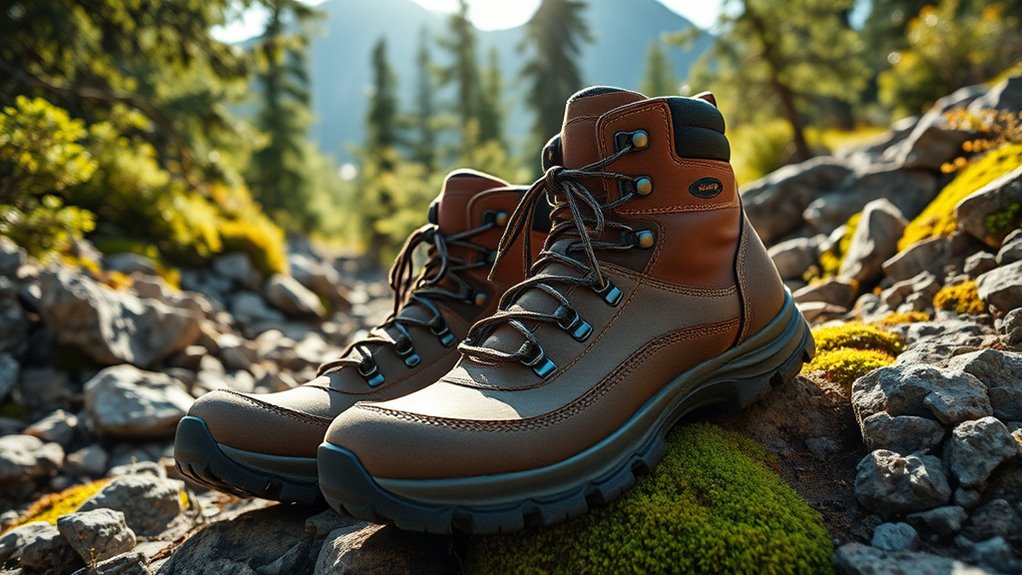

For rugged trails, my best overall pick is the SCARPA Men’s Kinesis Pro GTX, a supportive, protective choice for demanding terrain. The Zamberlan Men’s Vioz GTX stands out for hikers who want a sturdy leather boot, while the Arc’teryx Konseal Trek is a more nimble option for buyers who value a lighter feel. The main tradeoff is between support and durability on rough ground versus lower weight and easier movement on long days. Fit, break-in needs, waterproofing, and the load you carry can change which boot makes sense for you. Continue reading for the full breakdown of all 15 options and the buyer priorities that separate them.

Get your wardrobe favorites delivered free with Prime
- Fast, free delivery on millions of items
- Prime Video, Amazon Music and more included
- Member-only deals all year
Key Takeaways
- Support and protection set the leaders apart: the SCARPA Kinesis Pro GTX, Zamberlan Vioz GTX, and Kenetrek Mountain Extreme suit rougher terrain better than lighter, more casual models.
- Waterproof construction is not the whole story: a membrane helps in wet conditions, but boot height, fit, drainage, and drying time also matter on long or multi-day routes.
- Premium does not always mean the stiffest boot: the Arc’teryx Konseal Trek and Danner Mountain 600 options favor easier movement, while mountaineering-oriented designs trade flexibility for structure.
- Value-oriented models involve real compromises: Columbia Transverse, Timberland White Ledge, and the Flume Mid may suit less technical use, but they are not the strongest choices for sustained, heavily loaded travel over severe terrain.
- Fit should decide close calls: even a highly supportive boot can cause discomfort if heel hold, toe room, or volume do not match your foot and expected sock thickness.
| Columbia Men’s Transverse Hike Waterproof |  | Best Lightweight All-Weather Pick | Upper: Leather and mesh | Waterproof technology: OMNI-TECH | Shaft height: Ankle | VIEW ON AMAZON | See Our Full Breakdown |
| Danner Men’s Mountain 600 ID Gore-Tex Waterproof Hiking Boots |  | Best Cushioned Lightweight Boot | Outer material: Nylon | Waterproof lining: Gore-Tex | Water resistance: Waterproof | VIEW ON AMAZON | See Our Full Breakdown |
| Zamberlan Men’s Vioz GTX Hiking Boots |  | Best Premium Leather Support | Upper: Hydrobloc full-grain leather | Shaft height: Calf high | Shaft circumference: 6 inches | VIEW ON AMAZON | See Our Full Breakdown |
| Kenetrek Men’s Bridger High Hiking Boots |  | Best for Ankle Support and Fit Choice | Upper: Leather | Shaft height: 7 inches | Shaft circumference: 9 inches | VIEW ON AMAZON | See Our Full Breakdown |
| Kenetrek Men’s Mountain Extreme Non-Insulated Hiking Boots |  | Best for Heavy Loads and Severe Terrain | Upper material: 100% leather | Leather thickness: 2.8 mm | Shaft height: 10 inches | VIEW ON AMAZON | See Our Full Breakdown |
| Danner Mountain 600 Men’s Hiking Boots |  | Best for Wet, Varied Trails | Shaft height: Ankle | Waterproof: Yes; Danner Dry barrier | Uppers: Full-grain leather or suede | VIEW ON AMAZON | See Our Full Breakdown |
| Men’s Waterproof Hiking Boots Non-Slip Lightweight Mid Top Ankle Boots Breathable Trekking Shoes |  | Best Lightweight Pick | Fabric type: Synthetic suede and fabric | Sole material: Synthetic rubber | Weight: 1.25 lb (size 10) | VIEW ON AMAZON | See Our Full Breakdown |
| KEEN Men’s Targhee 4 Mid Height Waterproof Hiking Boots | 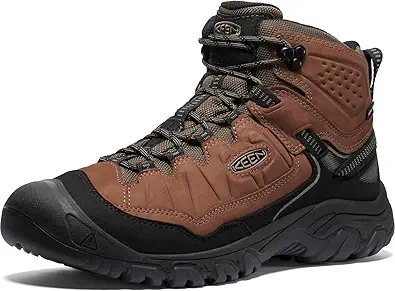 | Best for All-Day Comfort | Shaft height: Mid | Waterproof: Yes | Construction: Direct-attach | VIEW ON AMAZON | See Our Full Breakdown |
| Arc’teryx Konseal Trek Boot for Men |  | Best for Approach and Alpine Terrain | Intended use: Approach and alpine climbing | Upper: Textile, synthetic, and leather | Outer material: Leather | VIEW ON AMAZON | See Our Full Breakdown |
| SCARPA Men’s Kinesis Pro GTX Hiking Boots |  | Best for Technical, Rugged Terrain | Weight: 1 lb 14 oz | Upper: Smoothout Leather PFAS-Free, 2.4 mm | Lining: GORE-TEX PFAS-Free | VIEW ON AMAZON | See Our Full Breakdown |
| Timberland Men’s White Ledge Mid Waterproof Hiking Boots |  | Best Value for General Rugged-Trail Use | Upper: Waterproof premium leather | Lining: ReBOTL fabric | Shaft: Mid | VIEW ON AMAZON | See Our Full Breakdown |
| SCARPA Men’s Kailash Plus GTX Hiking Boots |  | Best for Backpacking Support | Best use: Backpacking | Upper: 1.8mm nubuck leather | Lining: GORE-TEX ePE Bluesign, PFAS-compliant | VIEW ON AMAZON | See Our Full Breakdown |
| La Sportiva Karakorum Mountaineering and Hiking Boots |  | Best for Mountaineering-Ready Terrain | Upper: 2.8mm Idro-Perwanger roughout leather with Vibram rubber rand | Lining: Dry-Best | Insole: 8mm high-density nylon with anti-torsion plate | VIEW ON AMAZON | See Our Full Breakdown |
| Timberland Men’s Flume Mid Waterproof Hiking Boot |  | Best for Straightforward Wet-Trail Day Hikes | Upper: Waterproof premium Timberland leather | Sole: Rubber with multi-directional lugs | Shaft: Ankle | VIEW ON AMAZON | See Our Full Breakdown |
| ECCO Sport Rugged Track Plain Toe High Waterproof Hiking Boots |  | Best for Roomier Ankle Coverage | Material: Premium leather and textile | Water protection: Waterproof membrane | Lining: Textile | VIEW ON AMAZON | See Our Full Breakdown |
| premium hiking boots for rugged trail | Outsole | Upper | Lining | Shaft circumference |
|---|---|---|---|---|
| Columbia Men’s Transverse Hike | — | Leather and mesh | — | 1 inch |
| Danner Men’s Mountain 600 ID G | Danner Plyolite | — | — | — |
| Zamberlan Men’s Vioz GTX Hikin | Zamberlan Vibram 3D | Hydrobloc full-grain leather | Microtex wicking nylon | 6 inches |
| Kenetrek Men’s Bridger High Hi | KT-Light | Leather | — | 9 inches |
| Kenetrek Men’s Mountain Extrem | K-Talon | — | — | — |
| Danner Mountain 600 Men’s Hiki | Vibram Fuga with Megagrip compound | — | — | 29.5 cm |
| Men’s Waterproof Hiking Boots | — | — | Breathable lining | — |
| KEEN Men’s Targhee 4 Mid Heigh | — | — | Breathable mesh | — |
| Arc’teryx Konseal Trek Boot fo | Rubber | Textile, synthetic, and leather | — | — |
| SCARPA Men’s Kinesis Pro GTX H | Vibram Biometric, XS Trek | Smoothout Leather PFAS-Free, 2.4 mm | GORE-TEX PFAS-Free | — |
| Timberland Men’s White Ledge M | Rubber with multi-directional lugs | Waterproof premium leather | ReBOTL fabric | 9.75 inches |
| SCARPA Men’s Kailash Plus GTX | Vibram Biometric/XS Trek | 1.8mm nubuck leather | GORE-TEX ePE Bluesign, PFAS-compliant | — |
| La Sportiva Karakorum Mountain | — | 2.8mm Idro-Perwanger roughout leather with Vibram rubber rand | Dry-Best | 22.86 centimeters |
| Timberland Men’s Flume Mid Wat | — | Waterproof premium Timberland leather | Mesh | 9.25 inches |
| ECCO Sport Rugged Track Plain | Rubber | — | Textile | 12 inches |
More Details on Our Top Picks
Columbia Men’s Transverse Hike Waterproof
The Transverse Hike suits hikers who want waterproof coverage and adaptable traction without the substantial build of a tall leather boot. Its OMNI-TECH construction pairs a waterproof barrier with breathable materials, while TECHLITE cushioning aims to soften repetitive trail impact. Compared with the Zamberlan Vioz GTX, which uses full-grain leather and a calf-high shaft for more coverage, this Columbia has an ankle-height profile and a leather-and-mesh upper that favors lighter, less restrictive wear. OMNI-GRIP rubber traction adds versatility across changing surfaces, but the supplied details do not establish the same heavy-load support as the Kenetrek Mountain Extreme. The narrow listed shaft circumference may also limit fit for some hikers. I’d choose it for mixed-weather day hikes, not demanding trips where maximum ankle coverage and load support take priority.
Pros:- OMNI-TECH waterproof, breathable construction suits changing weather
- TECHLITE cushioning is designed to absorb impact with energy return
- OMNI-GRIP outsole provides traction across varied terrain
- Leather-and-mesh upper balances durable materials with a lighter design
Cons:- Ankle-height shaft offers less coverage than the Zamberlan Vioz GTX
- Listed shaft circumference may feel narrow for some wearers
- Provided details do not specify the support features needed for heavy-load hiking
Best for: Day hikers seeking a lighter ankle-height shoe with waterproof protection and traction for mixed terrain
Not ideal for: Backpackers carrying heavy loads or hikers who want a tall shaft and substantial ankle coverage
- Upper:Leather and mesh
- Waterproof technology:OMNI-TECH
- Shaft height:Ankle
- Shaft circumference:1 inch
- Sole material:Rubber
- Traction:OMNI-GRIP
- Impact absorption:TECHLITE
- Other features:Metal hardware and cushioned collar
Our verdict“Choose the Transverse Hike for waterproof, traction-ready day hikes when a lighter ankle-height design matters more than extended coverage or heavy-load support.”
Danner Men’s Mountain 600 ID Gore-Tex Waterproof Hiking Boots
Danner’s Mountain 600 ID is the lineup’s lightweight comfort-led option: a Gore-Tex lining keeps the focus on wet-weather protection, while the Vibram SPE midsole and OrthoLite footbed add cushioning for long days on foot. Its flexible build is better suited to hikers who prize easier movement than the more substantial structure of the Kenetrek Mountain Extreme, whose rigid nylon midsole is designed around carrying heavy loads. The Danner’s Danner Plyolite outsole is described as built for traction on rugged terrain, though the provided details give less specific outsole information than the Kenetrek’s K-Talon designation or Columbia’s OMNI-GRIP system. That makes the Mountain 600 ID a compelling match for varied trail days, but not the clearest pick for maximum stiffness or support under a loaded pack. I’d shortlist it for hikers who want cushioning without a heavy-feeling boot.
Pros:- Gore-Tex lining provides waterproof protection
- Vibram SPE midsole and OrthoLite footbed add cushioning
- Lightweight, flexible design favors easier movement
- Outsole is designed for traction on rugged terrain
Cons:- Flexible construction may provide less rigid support than the Kenetrek Mountain Extreme under heavy loads
- Provided product details do not specify shaft height or fit range
- Outsole traction design is less specifically described than the Columbia’s OMNI-GRIP system
Best for: Hikers who want waterproof protection and cushioned support in a lightweight, flexible boot for varied trail days
Not ideal for: Backpackers prioritizing rigid support for heavy loads or buyers who want a specifically detailed aggressive outsole design
- Outer material:Nylon
- Waterproof lining:Gore-Tex
- Water resistance:Waterproof
- Sole material:Rubber
- Midsole:Vibram SPE
- Footbed:OrthoLite
- Outsole:Danner Plyolite
- Color:Almond Butter
Our verdict“Pick the Mountain 600 ID if you want a flexible, cushioned waterproof boot for varied hikes rather than a rigid boot for heavy loads.”
Zamberlan Men’s Vioz GTX Hiking Boots
The Vioz GTX is the lineup’s premium full-grain leather choice for hikers who want substantial coverage and a more supportive feel on rugged routes. Its calf-high shaft and Zamberlan Flex System are designed to pair forward movement with lateral support, while the Vibram 3D outsole and PU midsole target traction and underfoot comfort. Compared with the Danner Mountain 600 ID, which leans toward a lightweight, flexible feel, the Vioz puts more emphasis on leather construction and height around the lower leg. Gore-Tex Performance Comfort protection and a moisture-wicking collar lining suit damp outings, but the taller profile and full-grain upper may feel like more boot than casual day hikers need. The supplied details do not list the boot’s weight, so buyers cannot compare its carry burden directly with the Kenetrek Bridger High. I’d favor it when coverage and structured trail support outweigh a minimalist feel.
Pros:- Full-grain Hydrobloc leather upper offers a substantial boot construction
- Gore-Tex Performance Comfort membrane provides waterproof, breathable protection
- Calf-high shaft offers more coverage than ankle-height options such as the Columbia Transverse Hike
- Zamberlan Flex System is designed to allow forward flex while retaining lateral support
Cons:- Taller, leather-forward design may feel excessive for casual or low-mileage hikes
- Weight is not provided, making direct carry-weight comparisons difficult
- Greater coverage and structure may feel less flexible than the Danner Mountain 600 ID
Best for: Hikers seeking a tall full-grain leather boot with waterproof protection and support for rugged, uneven routes
Not ideal for: Day hikers who prefer a low-profile, lightweight boot or need a stated weight before choosing footwear
- Upper:Hydrobloc full-grain leather
- Shaft height:Calf high
- Shaft circumference:6 inches
- Membrane:Gore-Tex Performance Comfort
- Lining:Microtex wicking nylon
- Outsole:Zamberlan Vibram 3D
- Midsole:PU
- Flex system:Zamberlan Flex System (ZFS)
Our verdict“Choose the Vioz GTX when full-grain leather, tall coverage, and structured support matter more than a lightweight, easygoing feel.”
Kenetrek Men’s Bridger High Hiking Boots
The Bridger High stands out for hikers who want ankle support without jumping to a 10-inch boot. Its 7-inch leather upper, K-Straps, and lace-to-toe closure are designed to secure the foot on uneven ground, while a full-length nylon midsole adds structure beneath it. Unlike the Kenetrek Mountain Extreme, which is built around a rigid midsole for heavy loads, the Bridger High is presented as a lightweight option at 2.9 pounds per pair. Windtex provides waterproof, breathable protection, and the KT-Light outsole targets trail traction. Medium and wide widths give it a useful fit distinction from the Columbia Transverse Hike, though those are the only listed width choices. Its support-focused construction may also feel more boot-like than the flexible Danner Mountain 600 ID. I’d pick it for rugged day hikes where secure footing and a choice of width matter.
Pros:- K-Straps and 7-inch upper are designed to support the ankle on uneven terrain
- Medium and wide width options give some fit flexibility
- Windtex membrane provides waterproof, breathable protection
- Full-length nylon midsole and KT-Light outsole support stability and trail traction
Cons:- Only medium and wide widths are listed
- A 7-inch shaft and support-focused construction may feel less flexible than the Danner Mountain 600 ID
- Its listed 2.9-pound pair weight is less suited to hikers prioritizing the lightest possible footwear
Best for: Hikers with medium or wide feet who want a supportive 7-inch leather boot for uneven trails without a heavy-load-focused build
Not ideal for: Hikers needing narrow-width sizing or those who prefer a more flexible, low-profile boot for easy trails
- Upper:Leather
- Shaft height:7 inches
- Shaft circumference:9 inches
- Weight:2.9 pounds per pair
- Membrane:Windtex waterproof, breathable, flexible
- Midsole:Full-length nylon
- Outsole:KT-Light
- Widths:Medium or wide
- Closure:Lace-to-toe
Our verdict“Choose the Bridger High for medium or wide feet and added ankle support on rugged day hikes, but skip it if you need narrow sizing or a very flexible boot.”
Kenetrek Men’s Mountain Extreme Non-Insulated Hiking Boots
The Mountain Extreme is the most load-focused, rigid option in this group. Its 2.8 mm full-grain leather upper, 7 mm nylon midsole, and K-Talon outsole point toward demanding trails where durable construction, underfoot support, and grip matter more than a nimble stride. That makes it a different proposition from the Kenetrek Bridger High, which is lighter by design and emphasizes ankle support for rugged hiking. The Windtex membrane adds waterproof, breathable protection, but this boot is explicitly non-insulated: hikers spending long periods in severe cold may need a different setup. Its rigid support can also feel stiff, especially for buyers accustomed to a flexible boot like the Danner Mountain 600 ID. At 10 inches high, it offers more shaft coverage than the Bridger High, but also a more substantial feel. I’d reserve it for heavy packs and rough routes.
Pros:- 2.8 mm full-grain leather upper is built for durable trail use
- 7 mm nylon midsole provides rigid support for carrying heavy loads
- Windtex membrane offers waterproof, breathable protection
- K-Talon outsole is designed for traction on rugged terrain
Cons:- Non-insulated construction may not suit extended use in very cold conditions
- Rigid support can feel stiff compared with the Danner Mountain 600 ID
- 10-inch shaft and substantial build may be excessive for lighter day hikes
Best for: Backpackers carrying heavy loads on rugged trails who want a tall, durable leather boot with rigid support
Not ideal for: Hikers seeking a flexible boot for casual day trips or insulation for extended outings in very cold conditions
- Upper material:100% leather
- Leather thickness:2.8 mm
- Shaft height:10 inches
- Waterproof membrane:Windtex waterproof, breathable
- Midsole:7 mm nylon
- Outsole:K-Talon
- Sole material:Rubber
- Insulation:Non-insulated
- Origin:Imported
Our verdict“Pick the Mountain Extreme for heavy packs and rugged terrain when rigid support matters more than flexibility or cold-weather insulation.”
Danner Mountain 600 Men’s Hiking Boots
The Danner Mountain 600 is a strong match for hikers who want dependable wet-weather protection without moving to a more specialized alpine boot. Its Danner Dry waterproof barrier and Vibram Fuga outsole with Megagrip are aimed at keeping feet dry and grip steady across damp trail surfaces. Compared with the more protective, technical SCARPA Kinesis Pro GTX, this Danner is positioned as a more approachable trail option, with a triple-density Ortholite footbed for cushioned support. The tradeoff is weight: it may feel cumbersome to hikers who prioritize a light stride, and its premium positioning may not suit buyers seeking a simpler everyday boot. I’d choose it for mixed-condition hikes where waterproofing and traction matter more than minimizing bulk.
Pros:- Danner Dry waterproof barrier helps protect against wet trail conditions.
- Vibram Fuga outsole with Megagrip is designed for grip on wet and dry surfaces.
- Triple-density Ortholite footbed adds cushioned support.
- Full-grain leather or suede uppers offer a durable construction option.
Cons:- May feel heavy on long hikes or for hikers accustomed to lightweight footwear.
- Premium positioning may put it beyond buyers seeking a basic trail boot.
- Limited color options reduce choice.
Best for: Hikers tackling wet, mixed-surface trails who want a waterproof leather or suede boot with cushioned underfoot support.
Not ideal for: Fast-and-light hikers or buyers seeking a low-bulk boot; this model may feel heavy, and its premium positioning may not fit a tighter budget.
- Shaft height:Ankle
- Waterproof:Yes; Danner Dry barrier
- Uppers:Full-grain leather or suede
- Footbed:Ortholite triple-density polyurethane
- Midsole:Rubberized EVA
- Outsole:Vibram Fuga with Megagrip compound
- Shaft circumference:29.5 cm
Our verdict“Choose the Mountain 600 for wet, varied trails when durable uppers and dependable grip matter more than a lightweight feel.”
Men’s Waterproof Hiking Boots Non-Slip Lightweight Mid Top Ankle Boots Breathable Trekking Shoes
For hikers who want to keep boot weight down, this synthetic mid-top stands apart from the leather-built Danner Mountain 600 and SCARPA Kinesis Pro GTX. The listed weight is 1.25 lb for size 10, while a waterproof SL-TEX membrane, breathable lining, and removable memory foam insoles cover basic wet-weather and comfort needs. The anti-collision toe design adds protection for routine trail knocks, making this a plausible choice for day hikes and outdoor errands. Its lighter build comes with less assurance for repeated, intensive use: the supplied details warn that sole durability may vary, and the boot may need a break-in period. I’d pick it for moderate trails and daily wear, not for hikers expecting a heavily built boot for sustained technical terrain.
Pros:- Listed weight of 1.25 lb for size 10 keeps weight relatively low.
- SL-TEX membrane provides waterproof protection.
- Breathable lining and removable memory foam insoles support day-long wear.
- Anti-collision toe design adds protection from trail impacts.
Cons:- Sole durability may vary during intensive use.
- May need a break-in period before it feels comfortable.
- Synthetic suede and fabric construction is less suited to buyers seeking a substantial leather boot.
Best for: Day hikers and outdoor commuters who want a lightweight, waterproof mid-top for moderate trails and everyday wear.
Not ideal for: Hikers regularly covering rough, technical terrain or demanding long-term sole durability; the product data notes that durability may vary with intensive use.
- Fabric type:Synthetic suede and fabric
- Sole material:Synthetic rubber
- Weight:1.25 lb (size 10)
- Waterproofing:SL-TEX membrane
- Lining:Breathable lining
- Insole:Removable memory foam
- Toe protection:Anti-collision toe design
Our verdict“Choose this boot for moderate hikes and daily wear if low weight matters more than a rugged, heavy-duty build.”
KEEN Men’s Targhee 4 Mid Height Waterproof Hiking Boots
The KEEN Targhee 4 Mid favors supportive, protective trail comfort over the lighter feel of the synthetic mid-top in this lineup. Its KEEN Original Fit, removable Luftcell footbed, bruise plate, and high-abrasion rubber toe guard suit hikers who want room and underfoot protection on rocky or muddy routes. The KEEN.ALL-TERRAIN outsole and waterproof construction make it a more trail-focused choice than that lightweight option, while the SCARPA Kinesis Pro GTX is the more technical alternative for demanding terrain. The Targhee’s drawback is bulk: it may feel heavy to hikers who move quickly or prefer minimal footwear. I’d favor it for long days on uneven trails, but not for anyone prioritizing a light, agile boot.
Pros:- Waterproof construction pairs with breathable mesh lining.
- KEEN.ALL-TERRAIN rubber outsole is designed for muddy and rocky surfaces.
- Bruise plate and high-abrasion rubber toe guard add protection on rough trails.
- Removable Luftcell footbed and KEEN Original Fit support a comfortable, roomy feel.
Cons:- May feel heavy to hikers who prefer lightweight footwear.
- Limited color options narrow the available choices.
Best for: Hikers who want a roomy-fitting, waterproof mid boot with toe and underfoot protection for long days on rocky or muddy trails.
Not ideal for: Fast-and-light hikers or those who dislike a substantial boot; its weight may feel cumbersome, and color choice is limited.
- Shaft height:Mid
- Waterproof:Yes
- Construction:Direct-attach
- Traction:KEEN.ALL-TERRAIN rubber outsole
- Lining:Breathable mesh
- Footbed:Removable Luftcell
- Protection:Bruise plate and high-abrasion rubber toe guard
- Fit:KEEN Original Fit
Our verdict“Pick the Targhee 4 Mid for supportive, protective comfort on rough day hikes if you can accept a heavier boot.”
Arc’teryx Konseal Trek Boot for Men
The Arc’teryx Konseal Trek is the lineup’s clearest approach-oriented pick: its stated use includes approach and alpine climbing, and its design targets extra-rugged terrain. That focus makes it a different proposition from the KEEN Targhee 4 Mid, which emphasizes cushioning and trail comfort, and the waterproof Danner Mountain 600. Breathable materials are intended to help release moisture vapor and regulate temperature, a useful contrast for strenuous movement. The supplied product details do not list a waterproof membrane, so I would not choose it for consistently wet hikes on that basis. They also provide no weight or specific outsole compound, making it harder to judge bulk and grip against the SCARPA Kinesis Pro GTX. Its appeal is specialized terrain use, with less detail on wet-weather protection.
Pros:- Designed for extra-rugged terrain and approach use.
- Intended for approach and alpine climbing.
- Breathable materials help moisture vapor escape and regulate temperature.
- Made in a Fair Trade Certified facility.
Cons:- The supplied details do not specify a waterproof membrane.
- No weight or specific outsole compound is listed, limiting direct assessment of bulk and traction.
Best for: Hikers and climbers looking for an approach-style boot for extra-rugged terrain who value breathable materials and Fair Trade Certified facility production.
Not ideal for: Buyers who need confirmed waterproof protection or detailed weight and outsole information before choosing a boot for consistently wet, technical routes.
- Intended use:Approach and alpine climbing
- Upper:Textile, synthetic, and leather
- Outer material:Leather
- Outsole:Rubber
- Insole:Synthetic
- Breathability:Materials designed to help moisture vapor escape and regulate temperature
- Production:Made in a Fair Trade Certified facility
Our verdict“Choose the Konseal Trek for approach-oriented, extra-rugged terrain if breathable construction matters more than confirmed waterproofing.”
SCARPA Men’s Kinesis Pro GTX Hiking Boots
For demanding trails where a supportive, substantial boot is an asset, the SCARPA Kinesis Pro GTX makes the strongest technical case in this group. Its 2.4 mm PFAS-free leather upper, PFAS-free GORE-TEX lining, PU midsole, and Vibram XS Trek outsole bring together durable construction, waterproof protection, and trail grip. Compared with the lighter synthetic mid-top, it is built for a more rugged use case; against the Arc’teryx Konseal Trek, it has a specified waterproof lining and outsole compound rather than an approach-focused description alone. The cost of that build is weight: at 1 lb 14 oz, it may feel like too much boot for casual hikes. I’d choose it for technical routes, not for hikers prioritizing a light, easygoing stride.
Pros:- PFAS-free GORE-TEX lining provides waterproof protection.
- 2.4 mm PFAS-free leather upper is built for durability.
- Vibram XS Trek outsole is designed for dependable grip.
- Efficient lacing system allows a customizable fit.
Cons:- Weight of 1 lb 14 oz may feel substantial on long hikes.
- Premium positioning may not suit buyers seeking a simpler boot.
- Limited color options.
Best for: Experienced hikers tackling rugged, technical trails who want a leather boot with specified waterproof lining and a secure lacing system.
Not ideal for: Casual day hikers and fast-and-light trekkers who want low weight; this boot weighs 1 lb 14 oz and its premium positioning may not suit every buyer.
- Weight:1 lb 14 oz
- Upper:Smoothout Leather PFAS-Free, 2.4 mm
- Lining:GORE-TEX PFAS-Free
- Insole:Activ Plus
- Midsole:2D PU
- Outsole:Vibram Biometric, XS Trek
- Country of origin:Italy
- Size reference:EU 44.5 / US 11
Our verdict“Choose the Kinesis Pro GTX for technical, rugged trails when waterproof leather construction and traction matter more than minimizing weight.”
Timberland Men’s White Ledge Mid Waterproof Hiking Boots
The White Ledge Mid is a practical choice for hikers who want waterproof leather and dependable tread without the more technical build of the SCARPA Kailash Plus GTX. Its seam-sealed construction and gusseted tongue help limit water and trail debris, while the multi-directional rubber lugs provide grip for ordinary rough paths. An EVA footbed and midsole add cushioning for day hikes and lighter loads, though they are less purpose-built for demanding backpacking than the SCARPA’s Vibram outsole and supportive construction. Rustproof speed-lace hardware is a useful durability detail, but the listed specs give no weight, making it harder to judge how tiring it may feel over long distances. I’d choose this for mixed-use hiking, not technical mountain routes where specialized support matters more.
Pros:- Waterproof premium leather with seam-sealed construction
- Gusseted tongue helps keep water and debris out
- EVA footbed and midsole provide cushioning for day hikes
- Multi-directional rubber lugs and rustproof lace hardware
Cons:- No weight information is provided, limiting comparisons for long-distance use
- Less technically specified for demanding backpacking than the SCARPA Kailash Plus GTX
- Mid-height shaft may not suit hikers who prefer lower or taller coverage
Best for: Day hikers and occasional backpackers who want waterproof leather, straightforward lacing, and cushioned support for established rugged trails.
Not ideal for: Hikers carrying heavy packs over technical alpine terrain who need documented weight, specialized mountaineering support, or a more technical outsole.
- Upper:Waterproof premium leather
- Lining:ReBOTL fabric
- Shaft:Mid
- Shaft circumference:9.75 inches
- Outsole:Rubber with multi-directional lugs
- Closure:Speed lace hardware with lace hooks
- Footbed and midsole:EVA
- Gusseted tongue:Yes
Our verdict“Choose the White Ledge Mid for cushioned, waterproof everyday hiking on rugged but nontechnical trails rather than demanding mountain routes.”
SCARPA Men’s Kailash Plus GTX Hiking Boots
For long days under a pack, the Kailash Plus GTX is the most purpose-built backpacking option in this group. Its 1.8mm nubuck leather upper, GORE-TEX ePE lining, light PU midsole, and Vibram Biometric/XS Trek outsole combine weather protection with support and traction across varied ground. Compared with the Timberland White Ledge Mid, it has a more technical backpacking specification and a named Vibram outsole; the tradeoff is a more substantial feel that some hikers may find tiring on casual walks. The lining is listed as PFAS-compliant, a useful detail for buyers weighing materials as well as weather protection. At 1 lb 6 oz per half pair in size 42, its weight is specified, but it still isn’t a lightweight pick. I’d favor it for loaded hikes, not fast, minimal day trips.
Pros:- GORE-TEX ePE Bluesign lining is waterproof and breathable
- Vibram Biometric/XS Trek outsole is specified for varied-terrain grip
- Nubuck leather upper and light PU midsole support backpacking use
- Weight is provided for comparison: 1 lb 6 oz per half pair in size 42
Cons:- May feel heavy for hikers accustomed to lighter day-hiking footwear
- More substantial than the Timberland White Ledge Mid for casual trails
- Limited color options are noted
Best for: Backpackers who carry a loaded pack over changing terrain and want a waterproof boot with a specified Vibram outsole and supportive construction.
Not ideal for: Fast-moving day hikers or buyers prioritizing a light boot, since its substantial build may feel like more boot than short outings require.
- Best use:Backpacking
- Upper:1.8mm nubuck leather
- Lining:GORE-TEX ePE Bluesign, PFAS-compliant
- Insole:Comfort – Flex Plus
- Midsole:Light PU
- Outsole:Vibram Biometric/XS Trek
- Weight:1 lb 6 oz per half pair, size 42
- Origin:Italy
Our verdict“Pick the Kailash Plus GTX for supportive, waterproof backpacking; skip it if a light feel matters more than under-pack stability.”
La Sportiva Karakorum Mountaineering and Hiking Boots
The Karakorum is the specialist choice here: it is designed for heavy hiking, backpacking, and light-duty mountaineering rather than everyday trail mileage. Its 2.8mm roughout leather upper, rubber rand, anti-torsion plate, and Vibram Couloir sole point to a stiffer, more protective build than the Timberland Flume Mid. That structure can make rough, uneven ground feel more controlled, while the listed crampon compatibility gives mountaineers a feature the more general-purpose boots in this batch don’t claim. The tradeoff is weight: at 30.97 oz / 878 g, it may feel burdensome on long approaches or easy trails. Water protection is described as water-repellent leather with Dry-Best lining, not a stated waterproof membrane. I’d reserve it for demanding routes and mountaineering use, rather than choose it as an all-purpose wet-weather hiking boot.
Pros:- Thick 2.8mm leather upper with a Vibram rubber rand for rugged use
- Anti-torsion plate adds structure on uneven terrain
- Vibram Couloir sole and stated crampon compatibility suit mountaineering-oriented routes
- Cushioned SBR Aircushion midsole
Cons:- Listed weight of 30.97 oz / 878 g may feel tiring over long hikes
- Water protection is described as water-repellent rather than membrane waterproofing
- Crampon compatibility may require inspection and is not guaranteed
Best for: Experienced hikers and light-duty mountaineers who need a robust leather boot, torsional support, and a crampon-compatible design for demanding terrain.
Not ideal for: Casual hikers, fast day-trippers, or anyone needing a clearly specified waterproof membrane and a lighter boot for long approaches.
- Upper:2.8mm Idro-Perwanger roughout leather with Vibram rubber rand
- Lining:Dry-Best
- Insole:8mm high-density nylon with anti-torsion plate
- Midsole:SBR Aircushion
- Sole:Vibram Couloir
- Weight:30.97 oz / 878 g
- Shaft circumference:22.86 centimeters
- Sizes:38–48, including half sizes
Our verdict“Choose the Karakorum for rough mountaineering-oriented routes where structure matters more than low weight or clearly specified membrane waterproofing.”
Timberland Men’s Flume Mid Waterproof Hiking Boot
The Flume Mid focuses on the basics for wet, rugged day hikes: a waterproof leather upper, gusseted tongue, EVA footbed, and rubber tread with multi-directional lugs. Compared with the White Ledge Mid, it has a slightly shorter listed shaft circumference and mesh lining, while both offer leather protection, EVA cushioning, and speed-lace hardware. The result is a straightforward option for hikers who don’t need the more specialized backpacking support of the SCARPA Kailash Plus GTX. Its gusseted tongue helps block trail debris, and the lugs are intended to grip uneven paths. The available specs don’t give a weight, and the boot may feel heavy on longer outings; that makes it less appealing for fast mileage. I’d pick it for general wet-weather trail days, not for technical terrain or pack-heavy trips.
Pros:- Waterproof premium leather upper for wet-weather trail use
- Gusseted tongue helps keep debris and water from entering
- Rubber outsole with multi-directional lugs
- EVA footbed and rustproof speed-lace hardware
Cons:- May feel heavy during long hikes
- No weight figure is supplied for comparing long-distance comfort
- Less specialized for backpacking than the SCARPA Kailash Plus GTX
Best for: Day hikers who want waterproof leather, debris protection, and cushioned footing for muddy or uneven trails without a mountaineering-focused boot.
Not ideal for: Backpackers seeking a specified lightweight build or more technical support for extended, heavily loaded routes.
- Upper:Waterproof premium Timberland leather
- Sole:Rubber with multi-directional lugs
- Shaft:Ankle
- Shaft circumference:9.25 inches
- Lining:Mesh
- Insole:EVA footbed
- Hardware:Rustproof speed lace hardware with lace hooks
- Gusseted tongue:Yes
Our verdict“The Flume Mid suits wet-trail day hikers who value simple leather protection and traction over low weight or backpacking-specific support.”
ECCO Sport Rugged Track Plain Toe High Waterproof Hiking Boots
The ECCO Sport Rugged Track stands apart with a listed 12-inch shaft circumference, broader than the Timberland Flume Mid’s 9.25 inches. That may suit hikers who want more room around the ankle, though shaft circumference alone doesn’t establish overall fit. Its waterproof membrane, premium leather-and-textile construction, and rugged rubber outsole make it a credible option for rough, wet paths; the soft textile lining and removable inlay sole also allow some adjustment to underfoot feel. Compared with the La Sportiva Karakorum, this is a more general hiking boot, without the listed anti-torsion plate or mountaineering-oriented crampon compatibility. The tradeoffs are a potentially heavy build and a possible leather break-in period. I’d choose it for waterproof trail comfort and roomier shaft proportions, not technical climbing or fast, lightweight hiking.
Pros:- Waterproof membrane for wet trail conditions
- Rugged rubber outsole intended to provide traction across varied terrain
- Soft textile lining and removable inlay sole offer interior comfort and adjustment
- Listed 12-inch shaft circumference distinguishes it from the Timberland Flume Mid
Cons:- Rugged construction may feel heavy
- Leather parts may need a break-in period
- Technical support features are less specifically documented than on the La Sportiva Karakorum
Best for: Hikers who want waterproof leather-and-textile construction, ankle coverage, and a removable inlay sole for adjusting the interior fit.
Not ideal for: Fast hikers seeking a light boot or mountaineers who need the structural and crampon-oriented features listed for the La Sportiva Karakorum.
- Material:Premium leather and textile
- Water protection:Waterproof membrane
- Lining:Textile
- Outsole:Rubber
- Shaft height:Ankle
- Shaft circumference:12 inches
- Inlay sole:Removable textile
Our verdict“Choose the ECCO Rugged Track for waterproof hiking with a roomier listed shaft and removable inlay, but not for lightweight pace or mountaineering use.”

How We Picked
I compared these boots by how well their construction matches rugged trail demands: support underfoot, upper protection, stability, traction intent, waterproofing, and suitability for carrying a pack. I also weighed practical ownership factors such as expected break-in, flexibility, weight tradeoffs, and the likelihood that a boot’s design would feel excessive on easier trails. Since fit varies by foot shape and product details can differ by version, I treat these as selection criteria rather than a claim that one boot will fit everyone.
The ranking favors boots with a clear role and a stronger match for uneven, rocky, or demanding routes. Models built for heavier-duty hiking and mountaineering rank ahead of lighter or more casual designs for this specific use case, while versatility and accessibility still count. Value picks remain in the lineup, but they rank lower when their design appears better suited to moderate trails than sustained rugged use. The best choice for a buyer depends on terrain, pack weight, climate, and fit—not a single feature.
Factors to Consider When Choosing Premium Hiking Boots For Rugged Trails
Before choosing among these premium hiking boots, start with the demands of your routes rather than the most impressive-sounding specification. A boot that feels reassuring on rocky traverses may feel tiring on smooth day hikes, and a lighter model can become uncomfortable when a heavy pack magnifies instability. Use these broader checks to match the boot to your feet, terrain, and hiking habits.
Match Boot Stiffness to Terrain and Pack Weight
Stiffness helps a boot resist twisting and supports your foot on uneven ground, but more stiffness is not automatically better. For rocky routes, off-trail sections, or heavier loads, a supportive platform can reduce the effort of keeping your footing steady. On maintained trails and lighter day hikes, a rigid boot may limit natural movement and feel tiring. A common mistake is buying a mountaineering-oriented design for ordinary hiking because it sounds more durable. Think about the roughest terrain you hike often, not the rarest trip you hope to take. If your plans span both smooth paths and technical ground, decide which use deserves priority before paying for a specialized build.
Treat Fit as a System, Not Just a Length
Boot fit depends on heel hold, toe-box shape, instep volume, and how securely the lacing lets you adjust pressure. A thumb’s width at the toe is only a starting point; your heel should stay controlled without forcing the forefoot into a narrow or painful position. Try boots with the socks you expect to wear, and test them on an incline if possible. Downhill movement can expose a fit problem that feels minor while standing still. Buyers often size up for toe room but overlook heel slip, which can lead to rubbing and instability. If two models offer similar support, prioritize the one that holds your heel and gives your toes room to spread.
Choose Waterproofing for Your Climate
A waterproof membrane can help on wet trails, through shallow puddles, and in changeable weather, but it does not make a boot immune to water entering over the cuff. Membranes can also reduce ventilation and may take longer to dry when water gets inside. In warm, dry climates, a breathable non-waterproof option may feel more comfortable than a sealed boot. For persistent rain, mud, or cold shoulder-season hikes, waterproofing may be worth the heat and drying tradeoff. Do not buy waterproof boots on the assumption that they will keep feet comfortable in every condition. Match the protection to the weather you encounter most, and consider gaiters when trail conditions call for extra coverage.
Balance Durability Against Weight and Break-In
Heavier, reinforced boots can provide structure and resist wear, but each extra ounce is carried with every step. Sturdy leather models may also need more gradual break-in than flexible synthetic designs, so plan short walks before a long trip. Buyers sometimes equate a firm new boot with reliable support, even when the shape or pressure points are wrong for their feet. A boot should feel secure, not painful, from the first fitting. Paying more makes sense when you need a specific combination of protection, stability, and long-term serviceability. If your hikes are short and your pack is light, a simpler, lighter build may be the more useful choice.
Look Beyond the Outsole Label
Traction depends on lug shape, rubber compound, outsole condition, and the surface underfoot—not just a claim that a boot has a grippy sole. Deep, spaced lugs can shed mud, while a flatter contact pattern may feel steadier on hard ground. No outsole removes the need to slow down on loose scree, wet roots, or steep descents. Consider the surfaces you hike most and whether you need a sole that favors mud shedding, rock contact, or general trail use. A common mistake is choosing an aggressive tread for every route, even when it can feel less comfortable on packed paths. Check that traction priorities do not come at the expense of the stability and fit you need.
Buy for Your Actual Load and Hiking Frequency
A heavy backpack changes how much support and torsional control your feet may need, while a small daypack places less demand on a boot. Frequent hikers may get more value from a durable, supportive construction than occasional users who mostly walk maintained trails. Still, a high-spec boot can be a poor purchase if its stiffness, weight, or break-in demands discourage regular use. Match the boot to the load you carry on most trips, then check whether it can handle your occasional harder outing. If you routinely carry substantial gear over rough terrain, favor stability over a very flexible feel. If your routes are mixed and your load is light, versatility may matter more than maximum reinforcement.
Frequently Asked Questions
Which boot should I choose if I hike rocky trails with a heavy pack?
Start with supportive designs such as the SCARPA Kinesis Pro GTX, Kenetrek Mountain Extreme, or Zamberlan Vioz GTX, then let fit determine the final choice. These models are better aligned with demanding terrain than lighter, more casual options in this roundup. A stiffer boot can help when the ground is uneven and your pack adds load, but it may feel excessive on easy trails. Try the boot with your usual hiking socks and test heel hold on an incline. Choose the one that feels stable without pinching or forcing your foot into an unnatural position.
Do I need a waterproof boot for rugged hiking?
Not necessarily; the right choice depends on your climate and how often you encounter rain, mud, or wet vegetation. Waterproof models can help keep water out, but they may run warmer and take longer to dry if water enters from above. In hot, dry conditions, breathability may matter more than a membrane. For regular wet-weather hiking, waterproof construction paired with suitable socks and gaiters can make sense. Decide based on the conditions you face most often rather than treating waterproofing as a universal upgrade.
Are mountaineering-style boots too stiff for regular hiking trails?
They can be, especially on maintained trails or shorter hikes with a light pack. Designs such as the La Sportiva Karakorum and Kenetrek Mountain Extreme are aimed at users who need a more structured boot for demanding terrain, so their stiffness may limit comfort on easier routes. If most of your hiking involves moderate paths, a more flexible option may feel less tiring. The tradeoff is reduced support and protection when the route becomes rough or the load increases. Choose a mountaineering-oriented boot only when its added structure matches hikes you do regularly.
How much break-in should I expect before a long trek?
Break-in varies with construction, materials, and how closely the boot matches your foot, so I would not plan a long trek around an untested pair. Wear the boots on short walks first, then increase distance and add your typical pack gradually. Pay attention to heel movement, hot spots, toe contact on descents, and pressure from the lacing. Sturdy leather boots may need more adjustment time than flexible models, but persistent pain is a fit warning rather than something to simply endure. If a long trip is approaching, choose a pair you can test well ahead of departure.
Should I choose a lighter boot or a more supportive one for long days?
Let terrain and pack weight guide the decision. A lighter boot can reduce fatigue and feel more natural over long distances on established trails, while a supportive boot may feel steadier on rough ground or under a heavier load. The Arc’teryx Konseal Trek represents a more nimble direction in this lineup, whereas models such as the SCARPA Kinesis Pro GTX prioritize structure. Neither approach is better for every hiker. If your routes mix smooth miles and technical sections, decide whether reduced fatigue or added protection matters more for the majority of your trip.
Conclusion
For the strongest all-around match to rugged routes, I recommend the SCARPA Men’s Kinesis Pro GTX as best overall, with the Zamberlan Men’s Vioz GTX a compelling alternative for hikers who prefer a traditional leather build. For a premium, demanding-use choice, look at the Kenetrek Mountain Extreme or La Sportiva Karakorum, provided their stiffer character fits your terrain and hiking habits. Buyers seeking value for less technical use can compare the Columbia Transverse and Timberland White Ledge, while beginners may find the more approachable, flexible feel of the Danner Mountain 600 or KEEN Targhee 4 Mid easier to live with. For a lighter, more agile feel, consider the Arc’teryx Konseal Trek; for rugged routes with substantial support demands, give the SCARPA, Zamberlan, and Kenetrek options priority. Your best choice is the one that fits securely and matches the terrain you actually hike.
Halloween Picks
halloween
As an affiliate, we earn on qualifying purchases.