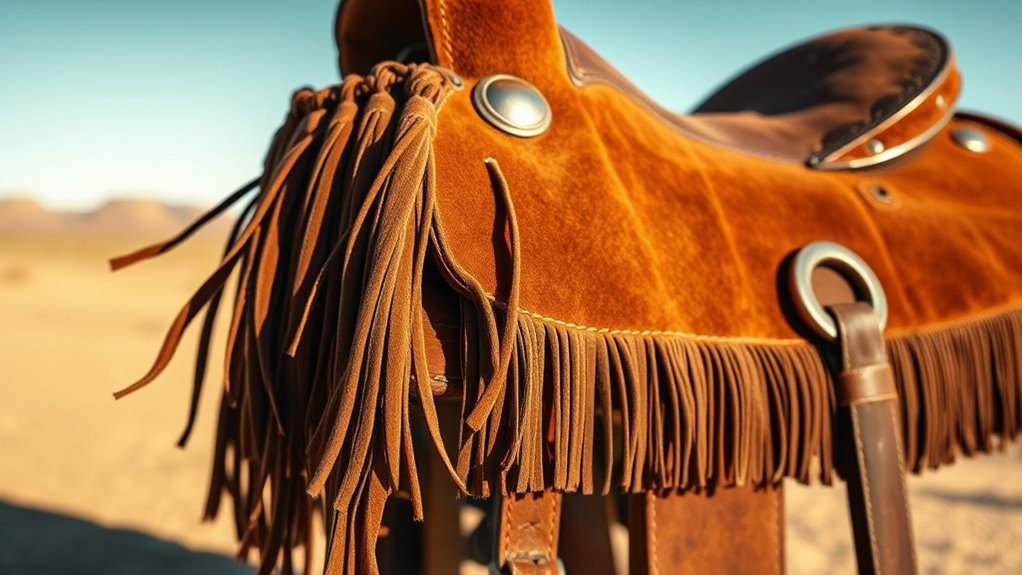

Suede and fringe in Western style stem from Native American craftsmanship and frontier practicality, used for clothing, accessories, and footwear. Suede, made from tanned animal hides, symbolizes resourcefulness and artisanal skill, while fringe adds both decorative flair and functional water runoff. Over time, these elements shifted from Native traditions to mainstream Western fashion, embodying rugged elegance and cultural heritage. To discover more about their rich history and transformation, keep exploring their story.

Get your wardrobe favorites delivered free with Prime
- Fast, free delivery on millions of items
- Prime Video, Amazon Music and more included
- Member-only deals all year
Key Takeaways
- Suede originated from animal hides used by Native Americans and settlers, symbolizing craftsmanship and resourcefulness.
- The material evolved into a versatile textile for clothing, accessories, and footwear in Western fashion.
- Fringe initially served as a functional feature for weather protection and water runoff.
- Both suede and fringe became iconic elements blending utility with decorative artistry in Western style.
- Their history reflects cultural adaptation, artisanal skill, and the rugged aesthetic of frontier and cowboy fashion.
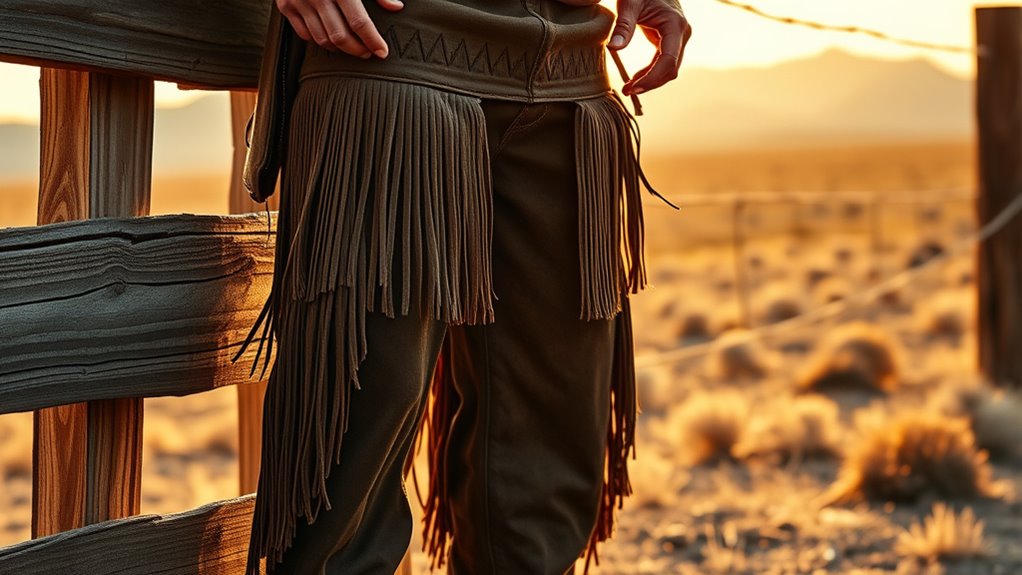
Have you ever wondered how suede and fringe became iconic elements in fashion? Their story is rooted in a rich history evolution that spans centuries and cultures, shaping the way we see Western style today. It all starts with the practical needs of early Native American tribes and frontier settlers, who used animal hides not only for survival but also for expression. Suede, a type of leather with a soft, napped finish, emerged from this tradition. Originally, it was crafted from the hides of animals like deer and elk, tanned and processed to create durable yet flexible material. Over time, artisans refined their techniques, turning suede into a versatile fabric that could be dyed, decorated, and sewn into clothing, accessories, and footwear. This material became a symbol of craftsmanship and resourcefulness, deeply tied to the frontier spirit. The craftsmanship involved in creating suede reflects a deep connection to cultural heritage and skilled artisanal techniques.
As the history evolution progressed, suede’s popularity spread beyond Native American communities. In the late 19th and early 20th centuries, it made its way into mainstream Western fashion, especially as cowboys and ranchers sought sturdy yet stylish gear. Suede jackets, chaps, and boots became staples for those living on the frontier, blending function with a rugged aesthetic. Meanwhile, fringe—initially a decorative feature—also played a significant role. Fringe was originally used to help water run off clothing and protect garments from weather, but it quickly took on a more expressive purpose. Native Americans and early settlers added fringe to their garments, creating movement and visual interest, which also served as a way to display craftsmanship and cultural identity.
As an affiliate, we earn on qualifying purchases.
Frequently Asked Questions
How Did Suede and Fringe Originate in Western Fashion?
Suede and fringe originated from Western folklore and cowboy aesthetics, where they served functional and decorative purposes. You’ll see suede used for durability, while fringe adds movement and flair. Cowboys adopted these elements to withstand rugged outdoor conditions, and over time, they became iconic fashion statements in Western style. Today, you recognize suede and fringe as symbols of rugged individuality, blending tradition with modern Western fashion influences.
What Materials Are Commonly Used for Western-Style Suede and Fringe?
Like a painter’s palette, western-style suede and fringe come alive with rich materials. You’ll find leather crafts using soft, durable suede, often made from calf, deer, or pigskin. Textile innovations now introduce synthetic options, making fringes lightweight and versatile. These materials let you embrace tradition while adding a modern twist, turning your outfit into a tapestry of history and style, as if wearing a story woven from the finest leather and textiles.
Are There Cultural Significances Tied to Suede and Fringe in Western Wear?
You should know that suede and fringe in Western wear carry cultural significance tied to Native American symbolism and Western cowboy attire. Fringe often represents spiritual protection and cultural expression, while suede reflects tradition and craftsmanship. When you wear these elements, you’re honoring the history and artistry of Native American tribes and Western cowboy heritage, blending cultural respect with authentic Western style. Always be mindful of their cultural importance.
How Has the Popularity of Suede and Fringe Evolved Over Time?
You’ll notice that suede and fringe have gained and lost popularity over time, influenced heavily by the fashion industry and celebrity trends. In the past, celebrities embraced these styles, making them more mainstream, but at times, they’ve faded from the spotlight. Today, you see a resurgence as designers incorporate suede and fringe into modern Western-inspired fashion, showing how their appeal evolves with shifting trends and celebrity influence.
What Are Modern Ways to Incorporate Suede and Fringe Into Western Outfits?
You can incorporate suede and fringe into your western outfits by adding boho accessories like fringe bags or suede boots for a chic touch. Try contemporary layering with suede vests over flowy tops or pairing fringe details with modern jewelry. Mixing textures and styles keeps your look updated while paying homage to classic western elements. This approach guarantees your outfit feels fresh, stylish, and uniquely yours.
Conclusion
As you step back and reflect, suede and fringe remind you of wild Western adventures, yet they’ve found a modern home in your wardrobe. The rugged charm of their history stands next to the sleek, contemporary style you wear today. It’s a surprising contrast—timeless tradition blending seamlessly with current trends. In this dance between past and present, you realize that Western style isn’t just about history; it’s about expressing your unique, adventurous spirit every day.
Halloween Picks
halloween
As an affiliate, we earn on qualifying purchases.