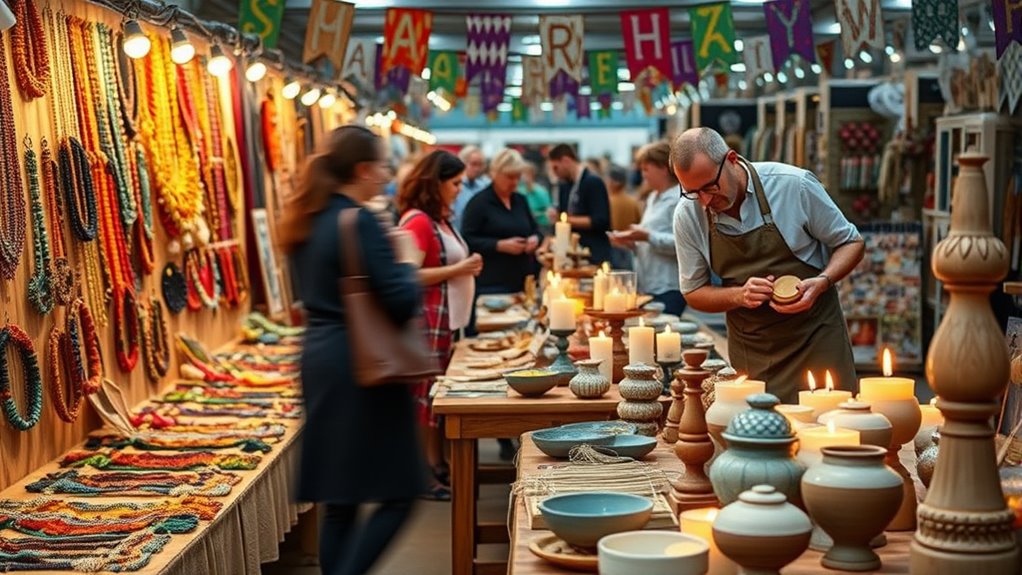

When exploring craft fairs and maker culture, look for items made with sustainable materials like reclaimed wood, organic fabrics, or recycled metals, as this shows a commitment to environmental responsibility. Notice artisanal techniques such as hand-looming or pottery, which highlight craftsmanship and tradition. Pay attention to storytelling and authentic presentation, which connect you to the maker’s process. Supporting these practices helps sustain small artisans and traditional skills—continue to explore and discover even more about this vibrant community.
Key Takeaways
- Look for items made with sustainable, eco-friendly materials like reclaimed wood or organic fabrics.
- Observe artisanal techniques such as hand-looming or pottery that reflect craftsmanship.
- Seek authentic storytelling and transparent sourcing from artisans to connect with the work’s background.
- Support vendors practicing ethical, traditional methods that emphasize quality over mass production.
- Engage with demonstrations or displays to deepen appreciation for the craftsmanship and sustainable practices.
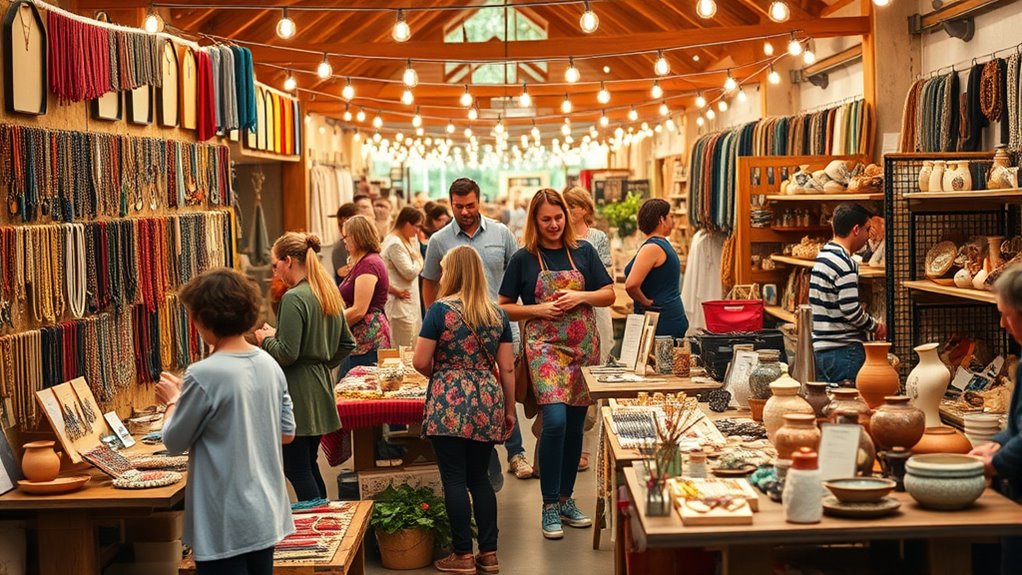
Craft fairs have become vibrant hubs for maker culture, where artisans and hobbyists showcase their unique creations directly to the public. As you explore these lively markets, you’ll notice a growing emphasis on sustainable materials, reflecting a shared commitment to environmental responsibility. Artisans often choose eco-friendly options like reclaimed wood, organic fabrics, or recycled metals, ensuring their craft not only delights but also minimizes ecological impact. This focus on sustainability isn’t just a trend; it’s a core value that influences the entire craft community. When browsing through booths, look for signs or labels indicating the use of sustainable materials. These details often tell a story about the maker’s dedication to reducing waste and supporting ethical sourcing.
Craft fairs highlight sustainable materials, showcasing makers’ commitment to eco-friendly, ethical craftsmanship.
Equally important is recognizing artisanal techniques that highlight craftsmanship and tradition. Many creators employ age-old methods passed down through generations, such as hand-looming, pottery wheel throwing, or intricate embroidery. These artisanal techniques set handcrafted items apart from mass-produced goods, giving each piece a sense of authenticity and character. As you examine items, observe the details—stitching, finishing, or carving—that reveal the level of skill involved. Makers often share their process or story behind their craft, adding depth and appreciation for their work. Choosing items crafted with artisanal techniques supports small-scale artisans and keeps traditional skills alive.
While wandering the fair, pay attention to how the artisans present their work. Authenticity often shines through in their storytelling, packaging, and display. Many makers emphasize transparency about their materials and techniques, inviting you into their creative process. This openness helps you connect with the story behind each piece, making your purchase more meaningful. You might also find workshops or demonstrations at the fair, offering a chance to see artisanal techniques firsthand or even try your hand at them. Participating or observing these processes deepens your appreciation for the craftsmanship involved and reinforces the value of handmade items.
Ultimately, what you look for at craft fairs reflects your values and interests. Prioritize items made from sustainable materials and created using artisanal techniques to support ethical, environmentally friendly practices. Recognize the skill and effort that go into each piece and consider how your choices can contribute to a more sustainable maker community. Additionally, understanding the importance of high-quality craftsmanship can help guide your selections and deepen your appreciation for handmade goods. By paying attention to these aspects, you transform your shopping experience into a meaningful act of supporting craftsmanship, tradition, and environmental consciousness. In doing so, you become part of a larger movement that values quality, authenticity, and responsible production—making every purchase at a craft fair more than just a transaction.
Frequently Asked Questions
How Can I Spot Authentic Handmade Items at Craft Fairs?
To spot authentic handmade items, look for signs of genuine handmade craftsmanship like unique details, slight imperfections, and personalized touches. Talk to the artist about their process to gauge their authenticity and passion. Trust your instincts if the piece feels special and well-made. Authentic handmade items often have labels or business cards that reflect the artist’s story, helping you connect directly with the creator and ensuring artist authenticity.
What Are the Latest Trends in Maker Culture?
You might think maker culture is all about traditional tools, but ironically, digital craftsmanship dominates now. You’ll see more virtual maker communities sharing designs and collaborating online, pushing innovation beyond physical boundaries. Trends include 3D printing, laser cutting, and augmented reality projects. Embracing these digital shifts, makers connect globally, creating a dynamic culture that’s as much about tech as hands-on craft, making the scene more interconnected and innovative than ever.
How Do I Get Involved in Local Craft Fairs?
To get involved in local craft fairs, start by researching upcoming maker community events in your area. Register early through the craft fair registration process to secure your spot. Prepare your best crafts, and consider joining maker groups for support and advice. Attend these events as a participant or volunteer to network with fellow artisans. This hands-on involvement helps you showcase your work and become part of the vibrant maker community.
What Safety Tips Should I Follow When Attending Craft Markets?
When attending craft markets, prioritize safety precautions by always staying aware of your surroundings. Keep your valuables secure and avoid carrying large amounts of cash. Verify vendors by checking their credentials or reviews to guarantee authenticity. Follow any event-specific safety guidelines, like mask-wearing or social distancing. Trust your instincts—if something feels off, don’t hesitate to leave or seek help. Staying alert helps you enjoy the experience safely.
How Can I Support Sustainable and Eco-Friendly Makers?
You can support sustainable and eco-friendly makers by choosing products made from eco-friendly materials, participating in recycling initiatives, and sharing their story. Look for makers who prioritize recycled, biodegradable, or upcycled materials, and who actively promote recycling initiatives. Engage with their work, spread awareness, and purchase intentionally to help create a more sustainable craft community. Your support encourages more makers to adopt environmentally conscious practices and promotes a greener future.
Conclusion
As you explore craft fairs and maker culture, remember it’s like wandering through a vibrant garden—each booth a unique bloom. One time, I watched a handmade necklace spark a connection between a creator and a visitor, proving that these events are more than shopping; they’re a celebration of passion and community. So, keep your eyes open and your heart curious. You’ll find treasures that tell stories, turning simple purchases into meaningful experiences.