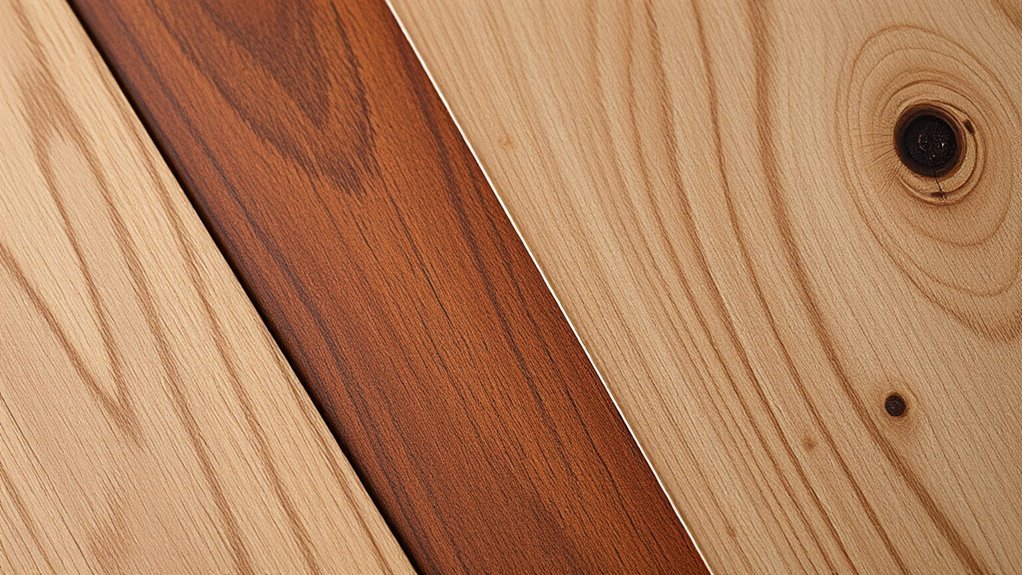

When mixing wood tones, focus on balancing grain patterns, contrasting stain colors, and natural variations for visual interest. Use complementary or slightly contrasting shades—like warm honey with cool gray—and vary scale and placement to achieve harmony. Lighting also plays a key role, so consider how natural and artificial light will affect your tones. To master this, paying attention to these details will help create a cohesive, appealing space; stay tuned to learn more.

Get your wardrobe favorites delivered free — and shop member deals
- Fast, free delivery on millions of items
- Access to Prime Big Deal Days deals on October 6–7
- Prime Video, Amazon Music and more included
Key Takeaways
- Choose complementary or contrasting stain colors that share undertones for visual harmony.
- Mix wood species with varied grain patterns to add interest while maintaining balance.
- Test stains on scrap wood to preview combined tones before installation.
- Distribute darker and lighter woods evenly throughout the space for cohesive flow.
- Consider lighting conditions to ensure the wood tones appear harmonious in natural and artificial light.
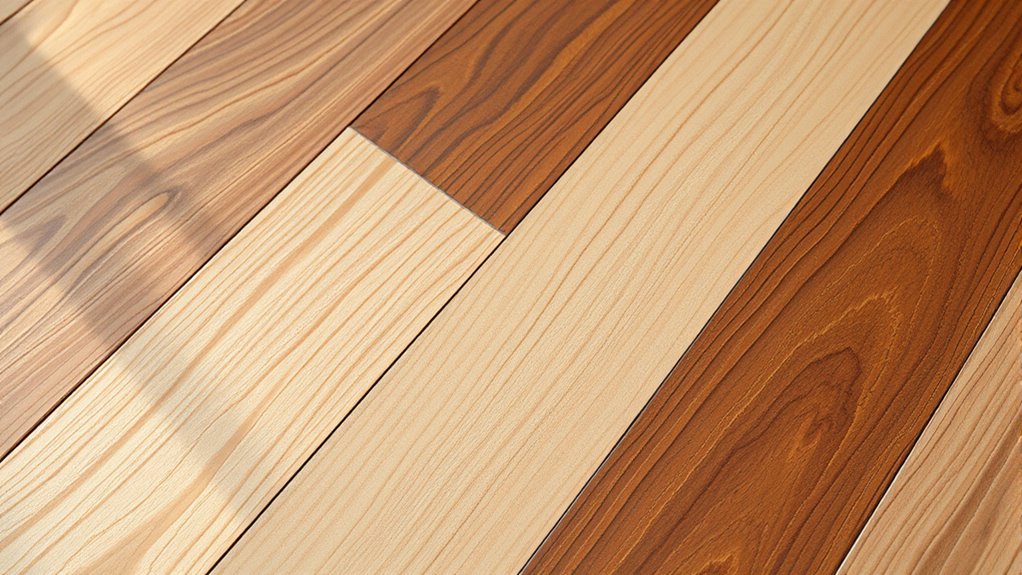
Have you ever wondered how to combine different wood tones seamlessly in your space? Achieving a cohesive look might seem tricky at first, but understanding how wood grain patterns and stain color coordination work together can make all the difference. When mixing woods, the key is to pay attention to the natural variations in grain and color, rather than trying to match everything perfectly. Different wood species have unique grain patterns—some are straight and uniform, while others are more swirling or intricate. Recognizing these differences helps you create visual interest without overwhelming the senses. For example, pairing a sleek, straight-grain oak with a more textured, wavy-grain walnut can add depth to your design. The goal is to balance contrast with harmony, so your space feels thoughtfully curated rather than chaotic. Considering wood quality assessment can also guide you in selecting pieces that will age well and maintain their appearance over time. Stain color coordination plays a vital role in blending diverse wood tones. Rather than choosing woods that are identical in hue, aim for shades that complement each other. Light stain on one piece and a darker stain on another can work beautifully if they share undertones—think warm honey and rich caramel, or cool gray and muted taupe. When selecting stains, test them on scrap pieces of each wood type to see how they interact with the grain and natural color variations. This way, you avoid surprises once everything is installed. It’s also helpful to consider the overall color palette of your room. If your walls are neutral, you can afford more contrast between wood tones; if you want a more unified look, stick with similar stain shades or incorporate a unifying element like a shared undertone. Another tip is to vary the scale and placement of different wood tones to create visual flow. For instance, if you have a dark wood coffee table, balance it with lighter wood accents in picture frames or shelving. This prevents one tone from dominating the space and helps the eye move smoothly across the room. Mixing wood tones isn’t about creating perfect matchups but about embracing natural diversity and making intentional choices. Keep in mind that the lighting in your space also influences how wood colors appear. Natural light can make warm tones pop, while artificial lighting might cast cooler hues. Adjust your stain choices and pairing strategies accordingly, and you’ll develop a harmonious, inviting environment.
As an affiliate, we earn on qualifying purchases.
Frequently Asked Questions
How Do I Match Wood Tones With Existing Furniture?
To match wood tones with existing furniture, start with color swatch matching to find complementary shades. Pay attention to grain pattern coordination, ensuring the new pieces don’t clash visually. You can mix different tones by choosing pieces with similar undertones or contrasting textures. Don’t be afraid to experiment; natural variations in wood can create a cohesive, stylish look when you balance color and grain patterns thoughtfully.
What Lighting Conditions Affect Wood Tone Perception?
Imagine your room bathed in warm sunlight or dimly lit by soft bulbs; these lighting conditions dramatically influence how you perceive wood tones. Natural light reveals true colors, highlighting warm or cool undertones, while artificial lighting, like LED or incandescent, can cast different hues, making wood appear richer or duller. Pay attention to these lighting sources, as they shape your overall impression of your furniture’s color and warmth.
Can Mixing Wood Tones Make a Room Look Larger?
Yes, mixing wood tones can make a room look larger by creating visual depth and contrast. When you combine different wood tones thoughtfully, it adds dimension to your space, preventing it from feeling flat. Use a mix of light and dark woods to enhance contrast, which tricks the eye into perceiving more depth. This technique makes your room appear more spacious and dynamic, boosting its overall sense of openness.
Are Certain Wood Tones Better for Small Spaces?
Think of a small room as a cozy whisper, where certain wood tones can make it feel more open. Light-stained woods with subtle grain patterns reflect more light, enhancing space. Opt for stain options like natural or whitewash finishes that keep the area bright and airy. Dark or busy grain patterns tend to close in a space, so choose wisely; lighter, simpler woods will make your small room feel larger and inviting.
How Do I Maintain Color Consistency Over Time?
To maintain color consistency over time, you should regularly clean your wood surfaces and avoid excessive sunlight exposure. Use a high-quality stain preservative to protect the finish, and consider applying a clear topcoat periodically. Keep in mind that wood aging can alter color, so maintaining consistent conditions helps preserve your desired look. Proper care prevents uneven fading and keeps your tones looking fresh and harmonious over the years.
Conclusion
Mixing wood tones might seem tricky, but it’s actually about trusting your eye and breaking the rules. When you combine different woods thoughtfully, you create depth and warmth that feel just right. Don’t be afraid to experiment—sometimes, breaking conventional wisdom leads to the most stunning results. Remember, your space should reflect your personality. So go ahead, mix those wood tones confidently, and let your design tell a story that feels uniquely yours.
Halloween Picks
halloween
As an affiliate, we earn on qualifying purchases.