In open floor plans, you can zone your space effectively by using rugs and screens. Place large rugs to anchor seating areas and create visual boundaries, helping define distinct zones without walls. Lightweight screens or folding partitions can offer flexible separation for added privacy while preserving flow. Thoughtful furniture arrangement and strategic lighting further enhance each area’s purpose. To discover more ways to create a balanced, functional layout, keep exploring these versatile zoning ideas.
Key Takeaways
- Use large rugs to define and anchor specific zones within the open floor plan, creating visual boundaries without physical barriers.
- Position screens strategically to partition areas while maintaining flow and openness, offering flexible zoning options.
- Combine rugs and screens to establish distinct spaces like living, dining, and work zones for functional separation.
- Ensure rugs complement screens in style and color to create cohesive, harmonious zones that enhance visual clarity.
- Arrange furniture around rugs and screens to promote natural movement and clearly delineate different activity areas.
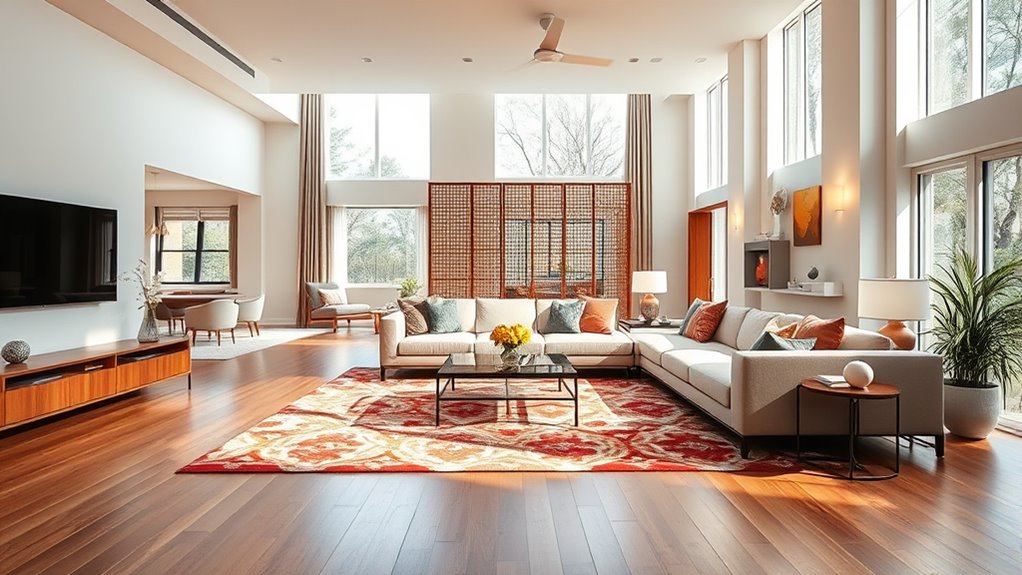
Open floor plans have become a popular choice for modern homeowners seeking a sense of openness and connectivity in their living spaces. When designing such a space, zoning becomes essential to create distinct areas without sacrificing the overall flow. One effective way to achieve this is through thoughtful furniture arrangement. By strategically placing sofas, tables, and shelves, you can define zones for relaxing, dining, or entertaining, all while maintaining the open feel. For example, positioning a sofa and a couple of armchairs around a central rug can visually separate the living area from the dining space. You don’t have to block off sections completely; instead, use furniture to create subtle boundaries that guide movement and define purpose.
Lighting design plays a pivotal role in this zoning process. Instead of relying solely on ambient overhead lighting, incorporate layered lighting to highlight different zones. Use pendant lights over the dining table to create a focal point, while floor lamps or table lamps can add warmth and intimacy to the living area. Dimmable lights give you flexibility, allowing you to adjust the ambiance based on the activity. Proper lighting not only enhances the visual separation but also sets the mood for each zone. Combining natural light with well-placed fixtures can help delineate spaces during the day, making the entire area feel cohesive yet distinct.
When arranging furniture, consider the sight lines and how each piece interacts with the space. Avoid cluttering areas with too much furniture, which can hinder the open atmosphere. Instead, choose pieces that complement each other and fit well within the designated zones. Rugs are also powerful tools in zoning; they add texture, color, and define boundaries without creating visual barriers. A large area rug can anchor a seating area, while smaller rugs can subtly mark transition zones. Remember, the key is balance: furniture and rugs should enhance the flow rather than disrupt it.
Lighting and furniture arrangement should work together harmoniously. For instance, placing a reading nook with a comfortable chair and a side table near a window, illuminated by a dedicated lamp, creates a cozy, functional zone. Meanwhile, pendant lights or track lighting can be directed towards specific areas, emphasizing their purpose. This combination of strategic furniture placement and layered lighting design helps you carve out zones within your open floor plan, offering privacy and functionality without sacrificing the sense of space. Ultimately, your goal is to craft a living environment that feels spacious, welcoming, and well-organized—where each zone seamlessly integrates into the whole.
Frequently Asked Questions
How Do Rugs Affect Room Acoustics in Open Floor Plans?
Rugs play a vital role in affecting room acoustics by absorbing sound, which reduces echo and noise levels. They help improve sound absorption, making conversations clearer and less disruptive. Additionally, rugs provide a layer of acoustic privacy, helping to contain sounds within specific zones in open floor plans. By strategically placing rugs, you create a more comfortable, quieter environment, enhancing overall acoustic comfort and privacy in your space.
What Materials Are Best for Portable Room Screens?
You should opt for portable room screens made from lightweight materials like fabric options such as canvas, polyester, or mesh. These materials are easy to move and provide some acoustic benefits, helping to absorb sound and create distinct zones. Lightweight fabrics also add a soft visual touch, making your space feel more cozy and private without the bulk of heavier materials. Consider breathability and durability when choosing the best fabric for your needs.
Can Zoning With Rugs Improve Energy Efficiency?
Yes, zoning with rugs can improve energy efficiency by creating distinct areas that help contain heat or cool air. You can use rugs as zoning strategies to block drafts or reduce heat loss, especially in open floor plans. By strategically placing rugs, you guide airflow and minimize energy use, making your space more comfortable and conserving energy overall. This simple tactic enhances comfort while supporting energy conservation efforts.
How Do I Choose the Right Size for Rugs and Screens?
To choose the right size for rugs and screens, consider your space and how you want to zone it. For rugs, opt for a size that anchors your furniture and creates distinct areas, using decorative patterns to add visual interest. When placing rugs, make certain they extend beyond furniture edges. For screens, pick a size that offers privacy without overwhelming the room, focusing on proper rug placement to define zones effectively.
Are There Any Safety Concerns With Movable Room Dividers?
Movable room dividers can pose safety concerns like fire hazards if they block exits or come into contact with heat sources. Stability concerns also exist if they aren’t sturdy enough, risking tipping over or falling. To guarantee safety, choose dividers that are stable, avoid placing them near flames or heat, and always verify they meet safety standards. Regularly check their stability and positioning to prevent accidents.
Conclusion
By using rugs and screens, you can turn your open floor plan into a harmonious symphony of spaces. These elements act like gentle brushstrokes, adding color and structure without overwhelming the room. With a smart mix of zoning techniques, you’ll create a versatile, inviting home where each area flows seamlessly yet feels distinctly yours. Embrace these tools, and watch your open layout bloom into a beautifully balanced living space.