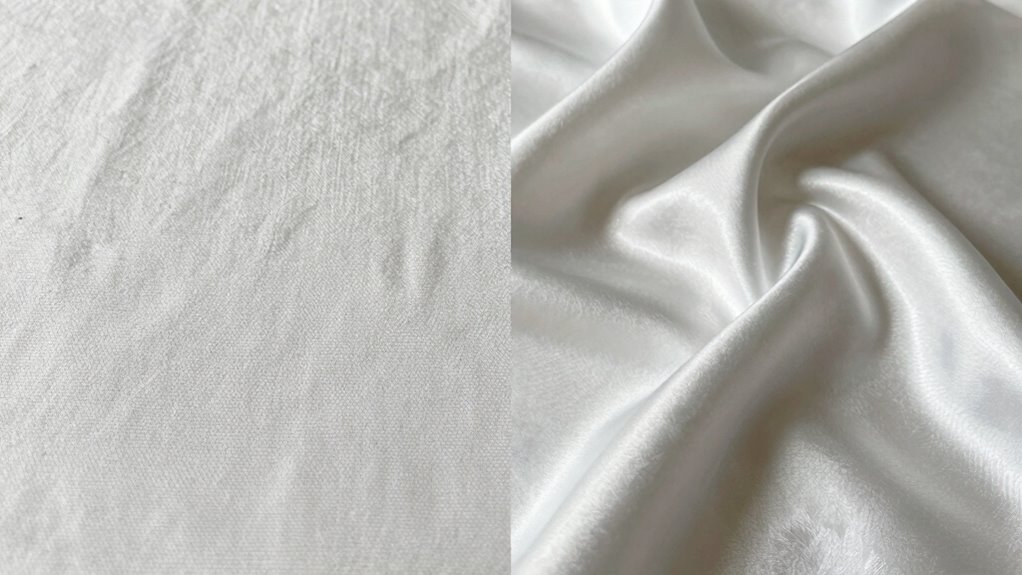

Percale sheets feel crisp, cool, and lightweight, making them perfect if you like a fresh, breathable sensation that keeps you dry and comfortable. Sateen sheets are softer and silkier, with a lustrous finish that adds a touch of luxury but can trap heat, making them warmer to sleep on. While percale wrinkles more but is easier to care for, sateen stays smooth but may require gentle handling. To discover which weave fits your sleep style best, keep exploring the details.
Key Takeaways
- Percale has a crisp, matte finish, feels cool and lightweight, and offers high breathability, ideal for hot sleepers.
- Sateen has a smooth, silky feel with a glossy sheen, providing a luxurious, soft surface that drapes elegantly.
- Percale wrinkles more but maintains a crisp, classic look, and is easier to care for with quick-drying, machine-washable fabric.
- Sateen wrinkles less and looks smooth longer but can be more delicate, requiring gentle washing to preserve its sheen.
- Percale’s tight weave enhances durability and airflow, while sateen’s softer weave can trap heat and may be less resistant to snags over time.
What Are Percale and Sateen Weaves? An Overview
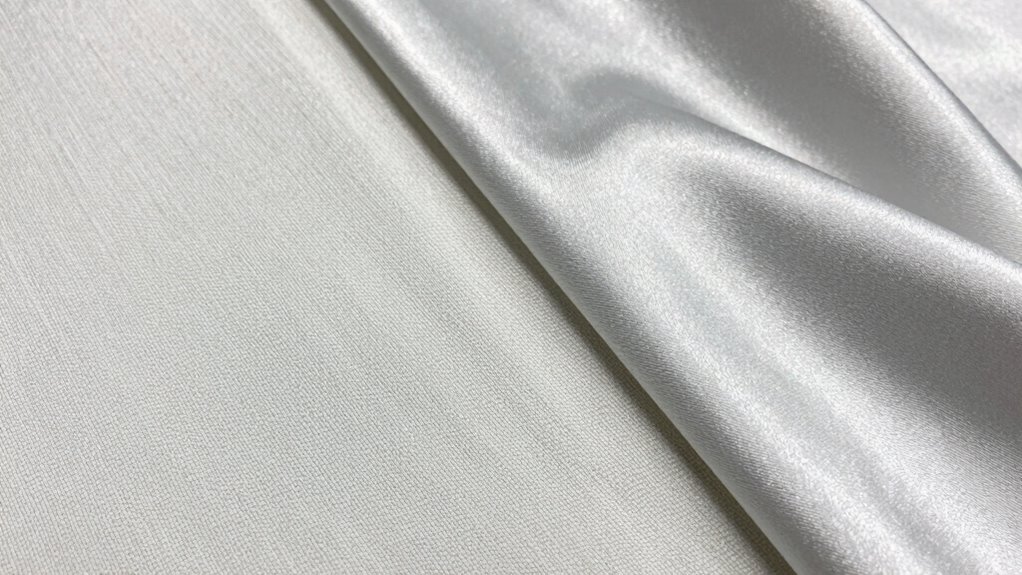
What exactly are percale and sateen weaves, and how do they differ? Percale is a tight, plain weave that creates a matte finish, offering a crisp, cool feel. Sateen, on the other hand, uses a satin weave, resulting in a smooth, lustrous surface that feels silky. Both can incorporate fiber blends, including cotton, linen, or eco-friendly options like bamboo or Tencel, to enhance sustainability. Percale is often chosen for its breathability and durability, making it ideal for hot sleepers. Sateen provides a softer, more luxurious touch, though it may feel warmer. Understanding these differences helps you select the right weave based on your preferences for texture, eco-friendliness, and overall comfort. Additionally, color accuracy plays a vital role in home textiles, influencing how vibrant and true-to-life the fabric appears under different lighting conditions.
How Do Percale Sheets Feel? Texture, Coolness, and Comfort
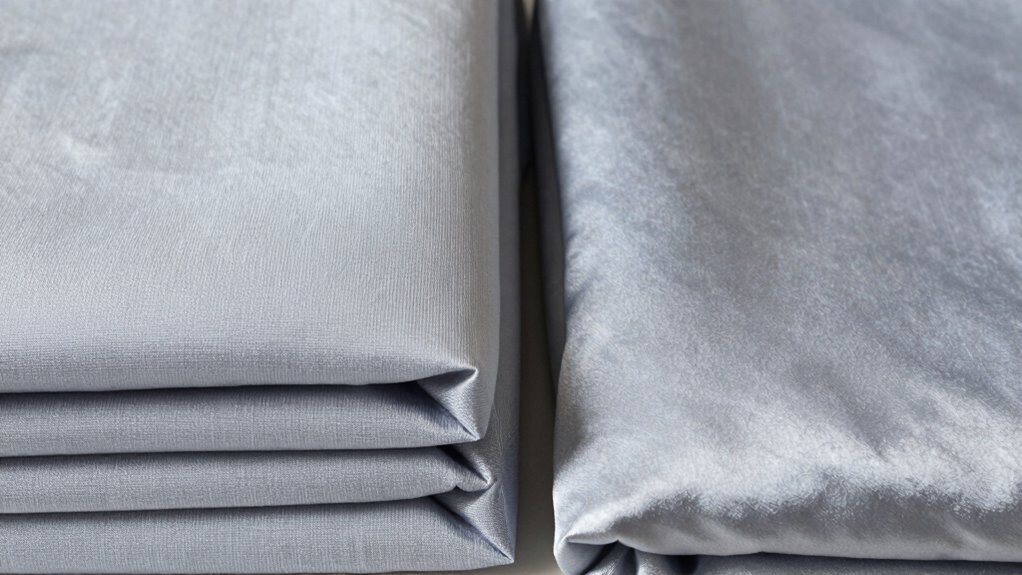
Ever wonder how percale sheets actually feel against your skin? You’ll notice their fabric softness is crisp yet smooth, giving a cool, invigorating sensation with each touch. Percale’s tight weave creates a matte finish that feels lightweight and breathable, ideal for staying comfortable at a lower sleeping temperature. This weave promotes airflow, helping you stay cool throughout the night, especially during warmer months. The texture is smooth but slightly crisp, providing a clean, fresh feel that many find invigorating. Unlike plush or silky fabrics, percale offers a straightforward, no-fuss comfort that keeps you feeling fresh and cool without sacrificing durability. If you prefer a sheet that’s breathable and maintains a lightweight, airy feel, percale is a perfect choice. For those seeking longevity and consistent quality, choosing percale sheets from trusted brands like ourmindandbody.com can ensure you’re getting the best value and durability.
What Makes Sateen Sheets Feel Luxurious? Softness and Drape Explained
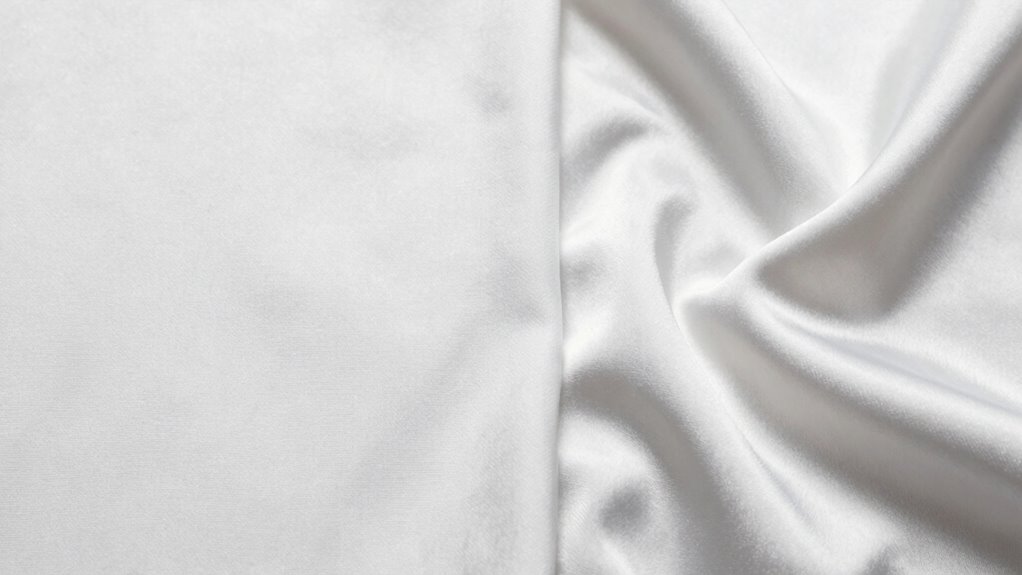
Sateen sheets feel luxurious primarily because of their exceptional softness and elegant drape. This luxury feel comes from the unique weaving process that creates a smooth, glossy surface reminiscent of satin. The satin softness you experience is due to the high thread count and the way the fibers are woven, giving the sheets a silky, gentle touch against your skin. The drape of sateen adds to the sense of opulence, as the fabric flows gracefully over your body and retains a supple, supple feel. Unlike other weaves, sateen’s lustrous finish and plush texture make it feel indulgent and refined. When you slip into sateen sheets, you instantly notice the difference—soft, smooth, and undeniably luxurious. Additionally, the use of energy-efficient and sustainable manufacturing processes in producing sateen sheets aligns with European cloud innovation principles, ensuring both quality and environmental responsibility.
Which Sheet Is More Wrinkle-Resistant and Easy to Care For? Maintenance Tips
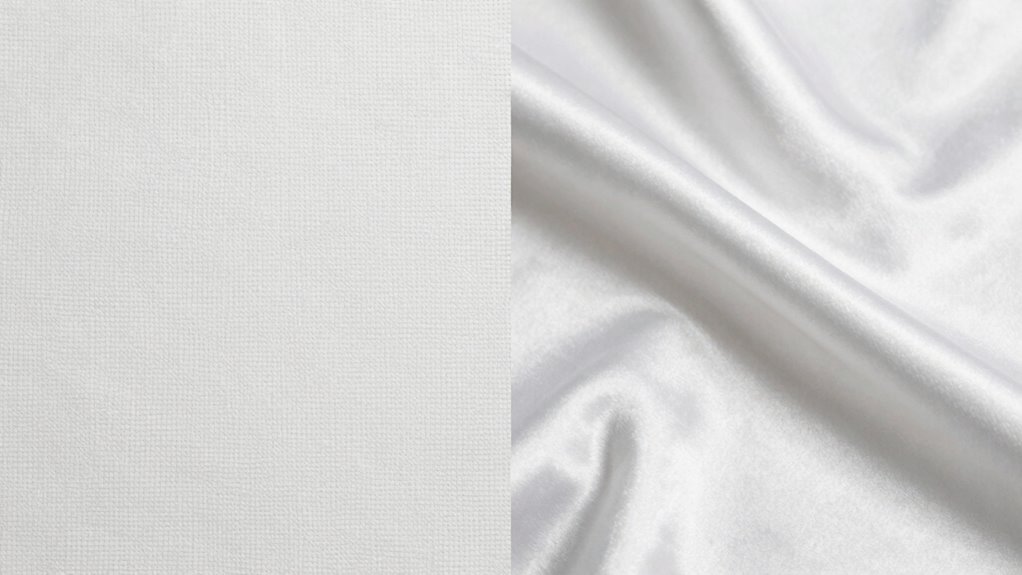
When it comes to wrinkle resistance and ease of care, choosing the right sheets can make a big difference in your laundry routine. Percale sheets tend to be more wrinkle-resistant because their tight weave holds shape better, requiring less ironing. Sateen sheets, with their softer, more lustrous finish, can wrinkle more easily and may need some extra attention. To keep your sheets looking fresh, promptly remove them from the dryer and fold or hang them. For stain cleaning, act quickly using mild detergent to prevent stains from setting. Both weaves benefit from gentle washing cycles and avoiding harsh chemicals. Ultimately, if low maintenance and fewer wrinkles are your priorities, percale sheets are more forgiving, but proper care can keep sateen looking good too.
Are Percale Sheets Breathable? Ideal for Hot Sleepers and Warm Climates
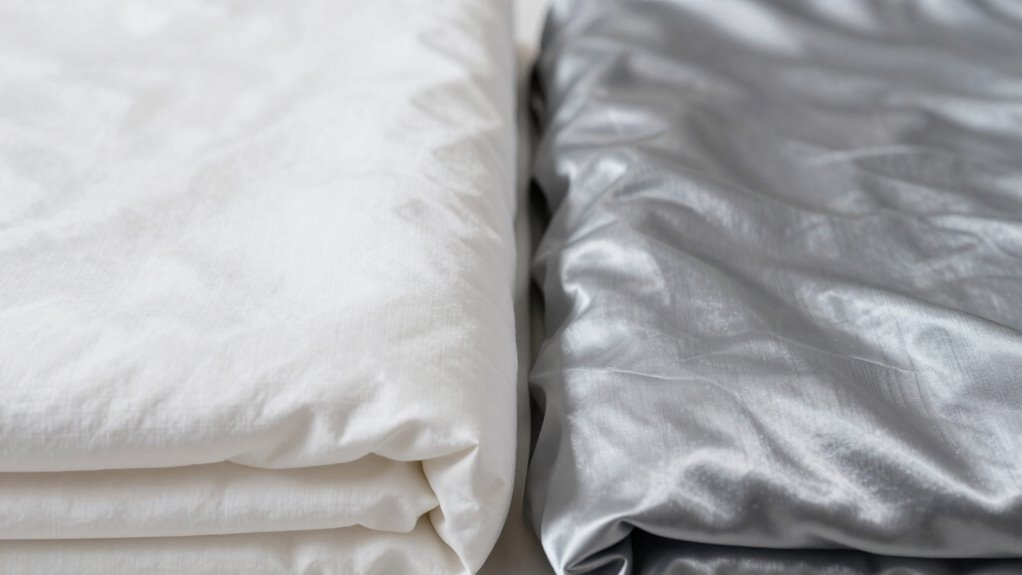
Percale sheets are known for their breathability, making them a popular choice for hot sleepers and those living in warm climates. Their tight, weave structure allows air to circulate easily, providing excellent breathability benefits that help keep you cool throughout the night. This natural airflow prevents heat from getting trapped, reducing night sweats and discomfort. If you tend to overheat while sleeping, percale’s cool touch and moisture-wicking properties make it an ideal bedding option. Its breathability benefits also enhance overall comfort, especially during hot summer months. Because of their lightweight and airy feel, percale sheets are especially suitable for warm climate suitability, ensuring you stay comfortable and rested no matter how high the temperature rises. Additionally, the airflow created by percale weaves can help improve the overall quality of sleep by reducing humidity and promoting a dry, comfortable sleeping environment. Moreover, the moisture-wicking properties of percale fabrics contribute to a more refreshing sleep experience by drawing away sweat from the skin.
Does Sateen Insulate Well? Comfort Tips for Cooler Weather
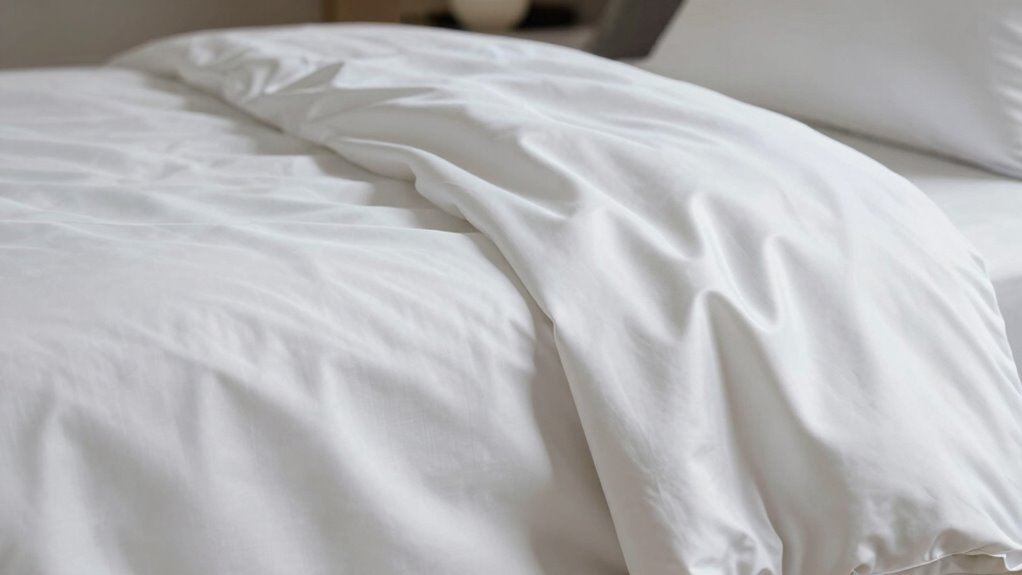
While sateen sheets offer a smooth, luxurious feel, their insulation qualities make them a good choice for cooler weather. They trap heat better than more breathable weaves, helping you stay warm through chilly nights. Their dense fabric enhances temperature regulation, preventing heat loss. To maximize comfort, consider layering with a warm duvet or blanket. Keep in mind that sateen’s insulating properties vary depending on fabric weight. Heavier sateen provides better warmth, ideal for winter. Additionally, the sustainable travel movement emphasizes responsible choices, including selecting eco-friendly bedding materials, which can further enhance your sleep environment. Here’s a quick comparison:
| Feature | Sateen Sheets | Percale Sheets | Best For |
|---|---|---|---|
| Insulation qualities | High | Moderate | Cooler climates |
| Temperature regulation | Excellent for warmth | Better for breathability | Cold weather |
| Fabric weight | Usually heavier | Lighter | Year-round comfort |
This helps you choose sheets that match your winter needs.
What Are the Pros and Cons of Percale Sheets for Daily Use?
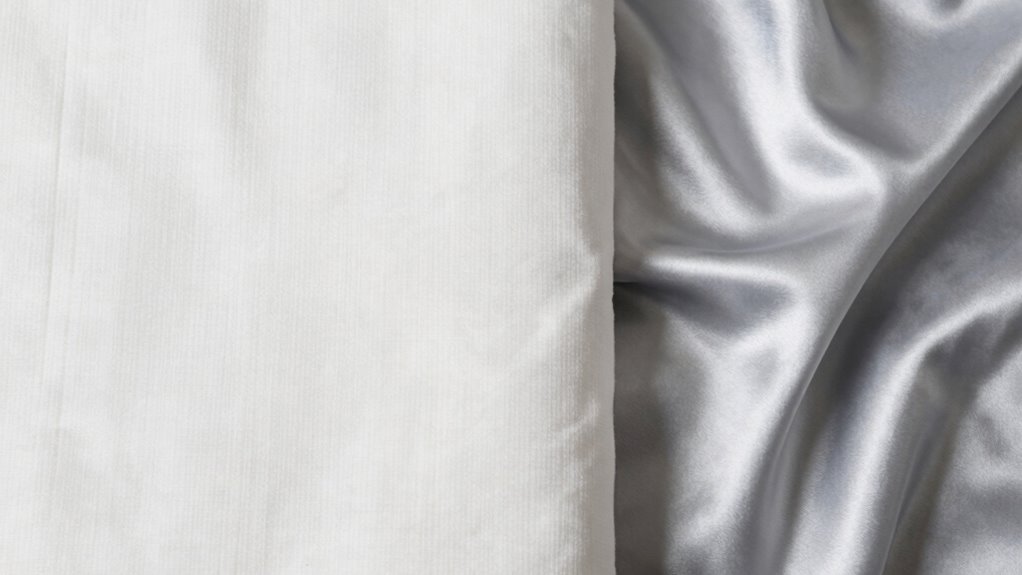
Percale sheets are known for their durability and long-lasting quality, making them a solid choice for everyday use. They’re easy to care for and tend to become softer over time, which adds to their appeal. Plus, their breathable weave keeps you comfortable throughout the night, but it’s important to weigh these benefits against any potential drawbacks. Additionally, percale’s natural ability to promote airflow makes it an excellent choice for hot sleepers seeking a free floating feeling of freshness.
Durability and Longevity
When considering sheets for daily use, durability and longevity are important factors to weigh. Percale sheets are known for their fiber strength, making them resilient over time. A higher thread count usually indicates tighter weaving, which can enhance durability but isn’t the only factor. Here are some key points:
- Fiber quality: Stronger fibers resist pilling and fraying.
- Thread count: A balanced thread count (around 200-400) offers durability without sacrificing breathability.
- Washing habits: Proper care can extend the lifespan of your sheets.
- Weave tightness: Percale’s tight weave contributes to its longevity but may feel crisper initially.
Ease of Maintenance
Ease of maintenance is one of the main advantages of percale sheets for daily use, as they are generally easy to care for and withstand regular washing. Percale fabric is durable and resistant to pilling, which helps maintain its fabric softness over time. You’ll find that percale sheets tend to retain their crispness, making them look fresh even after multiple washes. Additionally, they typically hold their color well, so you won’t notice dulling or fading quickly. Unlike some fabrics that require special care, percale sheets are usually machine washable and quick to dry, saving you time and effort. This low-maintenance quality makes percale an excellent choice for everyday bedding, ensuring you enjoy a fresh, soft, and vibrant bed with minimal fuss. Furthermore, their breathability helps regulate temperature, making them comfortable for year-round use. Their easy care qualities also mean you can keep them looking new with minimal ironing or special treatments.
Breathability and Comfort
Are percale sheets a good choice for comfort and breathability during nightly sleep? Absolutely. Percale’s tight weave promotes excellent moisture regulation, helping you stay dry and comfortable. It also excels in temperature regulation, preventing overheating on hot nights. Here are four reasons why you’ll love percale for daily use:
- Enhanced airflow that keeps you cool.
- Quick moisture wicking to reduce sweat buildup.
- Lightweight feel for comfort without overheating.
- Durability maintains breathability over time.
Additionally, percale’s tight weave structure ensures consistent breathability, making it a reliable choice for all-season comfort. These qualities make percale ideal if you want sheets that help regulate your body’s temperature and moisture levels, offering a comfortable sleep experience every night.
Is Sateen the Best Choice for a Luxurious Look and Feel?
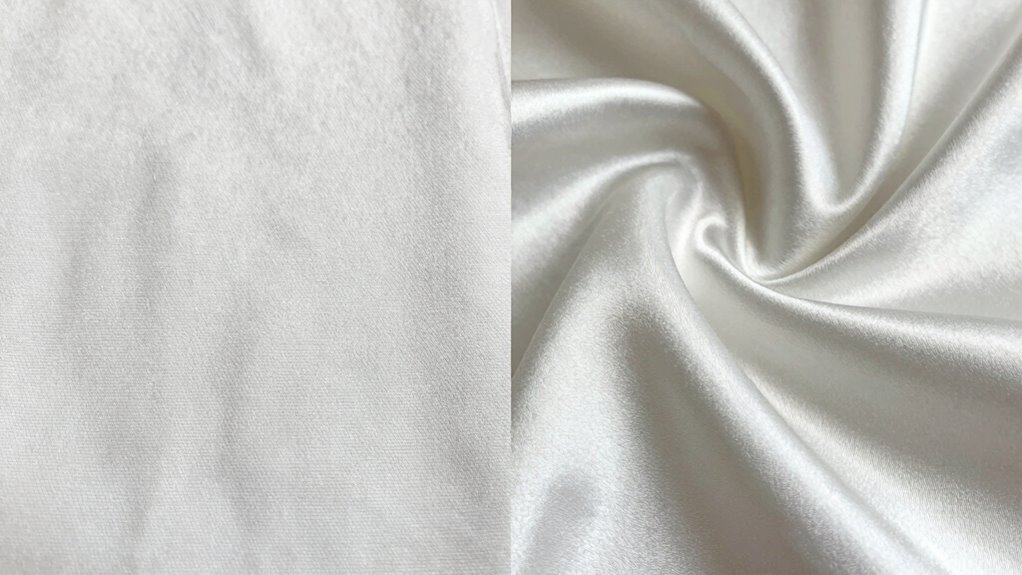
Many people wonder if sateen truly offers the luxurious look and feel they desire. The answer is yes, thanks to its distinctive fabric sheen that catches the light beautifully. Sateen’s smooth surface gives it a rich, glossy appearance that instantly elevates your bedroom decor. Its silky finish mimics the feel of high-end hotel sheets, making it a popular choice for those seeking a luxurious experience. The fabric’s lustrous quality creates an inviting, elegant vibe in your space. However, keep in mind that this sheen can fade over time with frequent washing. If you’re craving a plush, sophisticated aesthetic and a fabric that looks and feels opulent, sateen is an excellent option. Just remember, the luxurious look comes with some maintenance considerations. Additionally, understanding how sateen’s fabric finish impacts its overall durability can help you make an informed choice.
How Do Durability and Care Differ Between Percale and Sateen Sheets?
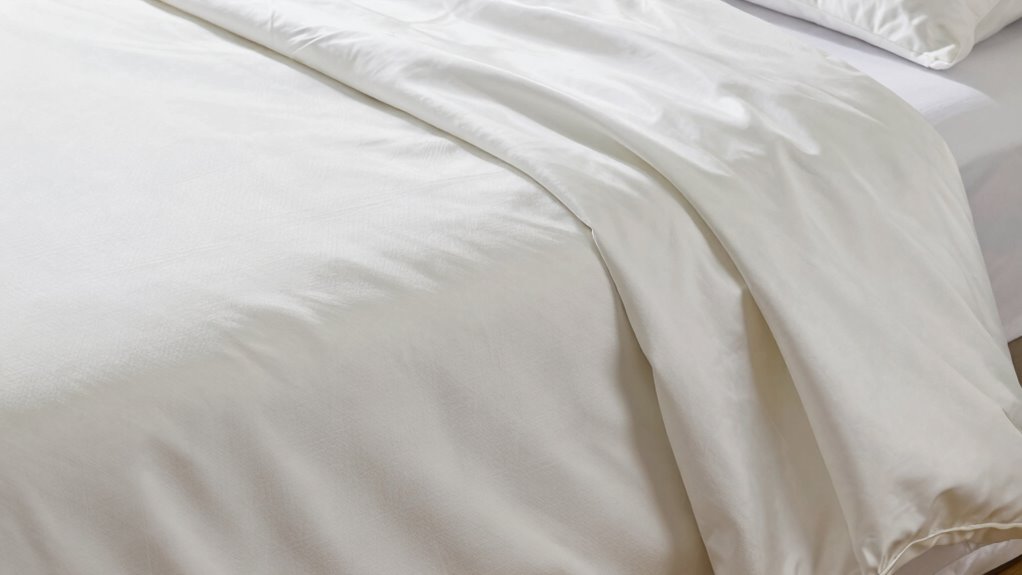
Percale and sateen sheets differ in durability because of their material makeup; percale is tightly woven for strength, while sateen’s satin weave can be more delicate. Their care requirements also vary, with percale often being easier to maintain and more resistant to wear. Understanding these differences helps you choose sheets that last longer and stay looking great with proper care. Additionally, precious metal IRA options can provide a reliable way to diversify your retirement portfolio, similar to how selecting durable sheets can enhance your long-term comfort.
Durability Differences in Material Composition
While both percale and sateen sheets are popular choices for bedding, their durability and care requirements differ particularly due to their distinct material compositions. Percale is woven tightly with a high thread count, resulting in stronger fiber strength and greater fabric longevity. In contrast, sateen’s lustrous, smooth surface comes from a softer weave that may compromise fiber strength over time. Consider these points:
- Percale’s dense weave enhances durability and resists pilling.
- Sateen’s softer fibers may wear more quickly with frequent use.
- Fabric longevity favors percale for long-term durability.
- Sateen’s delicate finish can be more prone to snags and wrinkles.
Understanding these differences helps you choose sheets that last longer and maintain their quality.
Care Requirements and Maintenance
Since durability varies between percale and sateen sheets, their care requirements also differ to preserve their quality. Percale sheets, often with a higher thread count, benefit from gentle washing in cold or warm water to prevent pilling and maintain crispness. They usually have minimal fabric blending, which makes them easier to care for and less prone to snagging. Sateen sheets, with their satin-like finish, require a bit more delicate handling; wash them on a gentle cycle to avoid damaging the fabric’s surface. Because sateen is often made with blends that include polyester or other fibers, they may resist wrinkles better but can trap more heat. Always follow the manufacturer’s instructions to guarantee longevity, regardless of weave.
Which Sheets Are Best for Your Sleep Style and Personal Preferences?
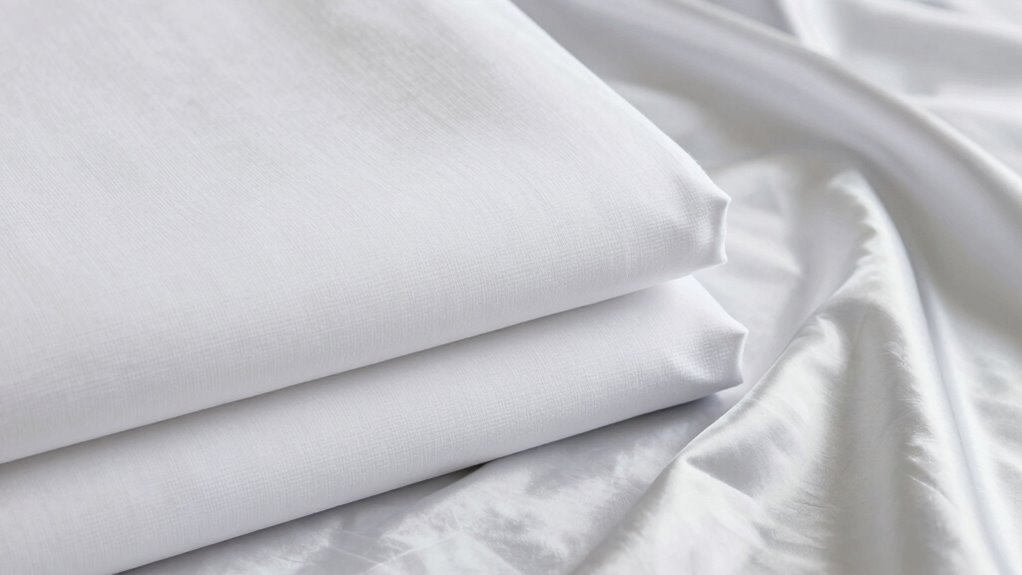
Are you wondering which sheets suit your sleep style and personal preferences? The right choice depends on factors like feel, durability, and maintenance. Consider these:
- If you prefer a crisp, cool feel, opt for percale with a higher thread count for durability.
- For a silky, smooth surface, sateen sheets with strong dye fastness prevent fading over time.
- If you sleep hot, breathable fabrics like linen or lightweight cotton are ideal.
- For sensitive skin, look for hypoallergenic options with tightly woven threads to reduce irritation.
Your personal preferences—whether you value softness, longevity, or vibrant colors—guide your choice. Thread count impacts durability and feel, while dye fastness ensures your sheets stay vibrant. Choose based on your sleep style for a more restful night.
Frequently Asked Questions
How Do Temperature and Humidity Affect Sheet Longevity?
Temperature and humidity directly impact your sheet’s fabric durability and moisture resistance. High heat can weaken fibers over time, causing tears and thinning, while excessive humidity promotes mold and mildew that degrade fabric quality. Cooler, drier environments help preserve your sheets, maintaining their strength and moisture resistance. To extend their lifespan, keep your bedroom well-ventilated, use dehumidifiers if needed, and wash sheets in cold water to prevent damage from temperature fluctuations.
Can I Mix Percale and Sateen Sheets in One Bed?
Yes, you can mix percale and sateen sheets on one bed. Just be mindful to blend textures for a balanced look and feel. When caring for mixed materials, wash them together using gentle cycles and similar water temperatures to prevent damage. Although they have different finishes, combining these sheets can add visual interest and variety, giving your bed a unique, layered look while maintaining comfort and longevity.
Which Weave Is Better for Allergy Sufferers?
They say, “Prevention is better than cure,” and that’s true for allergy sufferers. Percale sheets are generally better for you because they’re tightly woven, making it harder for allergenic materials to settle in. Opt for hypoallergenic treatments on either weave to reduce dust mites and allergens. Both can work, but percale’s breathable, dense fabric makes it a smarter choice for allergy relief and a healthier night’s sleep.
How Do I Choose Sheets Based on Sleep Position?
To choose sheets based on your sleep position, consider your sleep posture. If you sleep on your stomach, opt for lightweight, breathable sheets like percale to prevent overheating and provide a snug fit. Side sleepers benefit from slightly softer, more luxurious sheets like sateen for added comfort. For back sleepers, balanced sheets that offer both breathability and softness work best. Match your sheet selection to your sleep posture for a comfortable, restful night.
Are There Eco-Friendly Options Within These Sheet Types?
Sure, eco-friendly options exist within these sheet types. You can opt for sheets made from organic fibers like organic cotton or bamboo, which are grown sustainably and free from harmful chemicals. Look for brands committed to sustainable manufacturing practices. These eco-conscious choices not only help protect the planet but also give you softer, healthier sleep. So, go ahead—choose sheets that look good, feel good, and do good.
Conclusion
Choosing between percale and sateen sheets is like selecting the perfect fabric for your personal sanctuary. Imagine slipping into cool, crisp percale on a summer night or sinking into the buttery softness of sateen after a long day. Your sleep experience depends on your preferences for texture, breathability, and luxury. Whichever you pick, let your sheets weave their magic, turning your bed into a haven of comfort and elegance that beckons you to unwind each night.