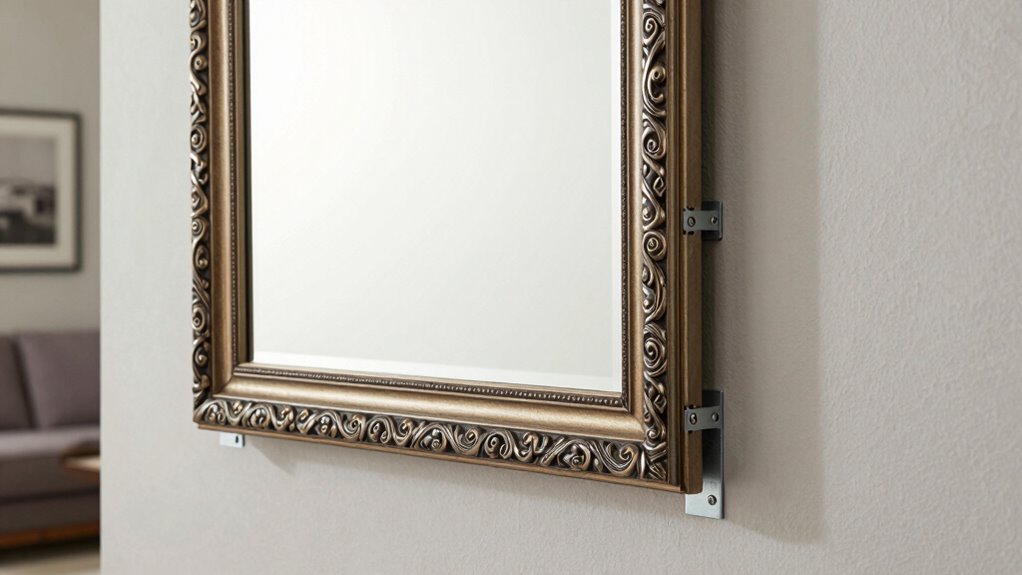
To hang heavy mirrors safely, first locate wall studs using a stud finder or tapping for solid spots for better support. Choose anchors rated for the weight and compatible with your wall type, such as toggle or expansion anchors for drywall. Always measure and verify the mirror’s weight to select suitable hardware and ensure the fasteners match the load capacity. For detailed steps, tips, and troubleshooting, continue exploring how to secure your mirror properly.
Key Takeaways
- Use a stud finder to locate wall studs for secure mounting, especially for heavy mirrors.
- Choose wall anchors rated for the mirror’s weight, such as toggle or expansion anchors, for drywall installation.
- Verify hardware weight ratings match or exceed the mirror’s weight to ensure safety.
- Reinforce mounting points with studs or appropriate anchors to prevent wall damage or accidents.
- Always double-check level alignment and stability after mounting to ensure secure and safe hanging.
Assess Your Wall and Mirror Before You Start

Before hanging a heavy mirror, you should carefully evaluate your wall and the mirror itself. Start by examining the wall texture; smooth drywall can support different mounting methods compared to textured or brick surfaces. Determine the mirror shape, as it influences how you’ll distribute weight and choose hardware. For example, a large rectangular mirror might need multiple anchors, while a round mirror may focus weight at a central point. Consider the weight of the mirror and whether your wall can handle it without damage. Check for studs behind the wall for secure mounting, especially if your wall is drywall. Knowing your wall’s texture and the shape of your mirror helps you plan the best way to hang it safely and securely. Additionally, understanding weight ratings of anchors and hardware ensures your mounting method will support the mirror’s weight reliably. Always verify that your chosen hardware is rated for the specific load capacity required to prevent accidents or damage. Being aware of European standards for hardware safety can further ensure secure installation. Ensuring you use the correct mounting hardware that complies with safety standards is essential for a secure and safe installation. Properly selecting appropriate anchoring methods based on your wall type further enhances safety and stability.
Why Properly Securing Heavy Mirrors Matters
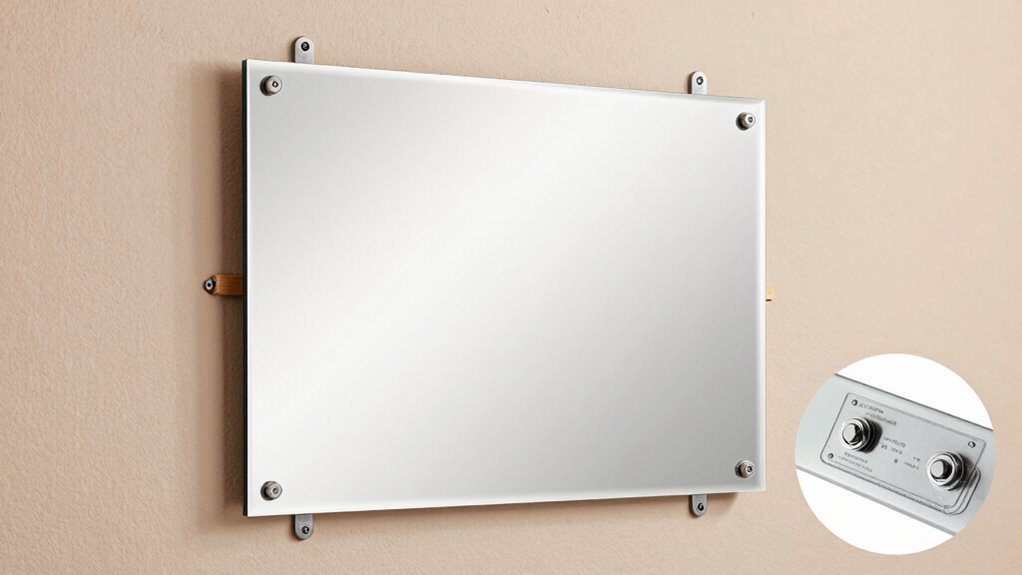
Securing a heavy mirror properly is essential to prevent accidents and damage. Without proper wall reinforcement, the weight can cause your mirror to fall, risking injury and property damage. Following safety guidelines ensures you select the right anchors and mounting techniques for your wall type. Properly secured mirrors reduce the chance of slips, falls, or shattered glass accidents. Reinforcing the wall with studs or appropriate anchors provides the support needed for heavy loads. Remember, even a slight mistake can lead to dangerous situations. By prioritizing wall reinforcement and adhering to safety guidelines, you protect yourself and your home. Proper hanging practices give you peace of mind knowing your mirror is securely mounted and safe for everyday use. Additionally, understanding the importance of weight ratings helps ensure you choose the correct hardware for your mirror’s weight. Knowing your wall type and using appropriate hardware is crucial for a secure installation. Proper hardware selection and installation techniques are vital to long-term safety and durability. To ensure maximum security, always double-check the installation instructions and consult with professionals if unsure. Being aware of environmental conditions can also influence the choice of mounting hardware, especially in areas with humidity or temperature fluctuations.
Find Wall Studs Easily : A Simple Method
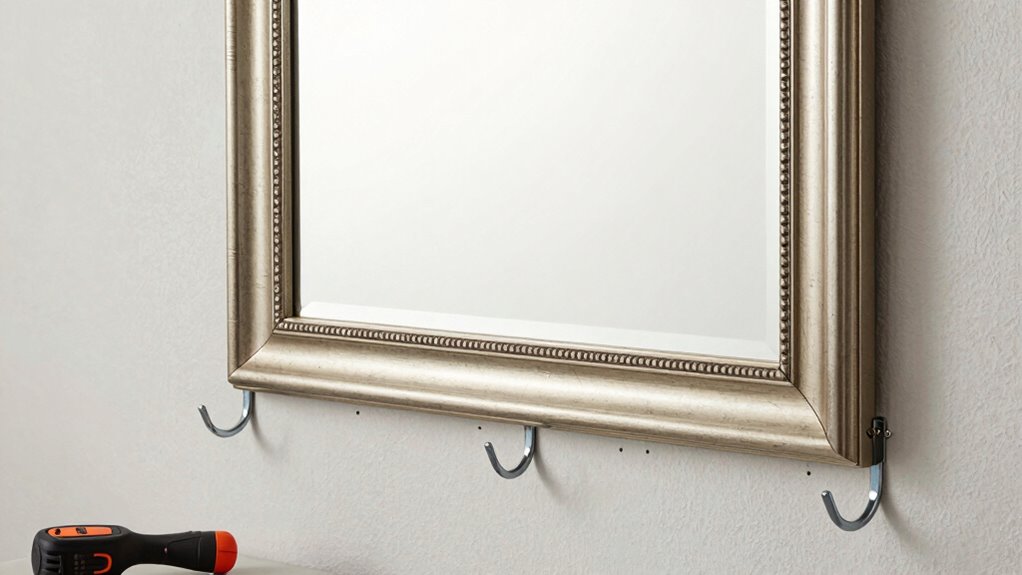
Finding wall studs is easier than you think. You can use a stud finder or tap the wall to listen for hollow spots, which indicate gaps. Measuring along the wall for pattern changes also helps you locate the studs quickly. Additionally, stud placement patterns can guide you, as many walls follow standard spacing conventions. Knowing the typical wall stud spacing can further improve your accuracy in finding the right spots.
Use a Stud Finder
Using a stud finder is one of the easiest and most reliable ways to locate wall studs quickly. It simplifies wall assessment, ensuring you find solid support for hanging heavy mirrors. Simply turn it on and glide it across the wall. When it detects a stud, it signals with a light or beep, guiding you to the exact location. To make it fun and clear, here’s a quick guide:
| Step | Action |
|---|---|
| 1 | Switch on your stud finder |
| 2 | Place it flat against the wall |
| 3 | Move slowly horizontally |
| 4 | Watch for signals or lights |
| 5 | Mark the stud edge |
This tool eliminates guesswork and helps you confidently identify wall studs for safe hanging. Incorporating wall structure awareness can further improve accuracy and ensure you’re locating the most secure spot. Additionally, understanding the typical stud spacing can help you estimate where studs are likely to be positioned, saving you time during the process. Recognizing common wall materials can also influence your choice of tools and method for accurate results.
Tap for Hollow Spots
Even if you don’t have a stud finder, you can still locate wall studs by tapping on the wall’s surface. This simple method, called tap testing, helps you identify hollow wall areas where studs aren’t present. When you tap over a hollow wall, it produces a dull, resonant sound, signaling an absence of a stud. Conversely, a solid thud indicates a potential stud behind the surface. Use these tips to make the process easier: 1. Gently tap along the wall with your knuckles or a small tool. 2. Listen carefully for the hollow, echoing sounds. 3. Mark spots where the sound changes to find studs or hollow spaces. 4. Confirm your findings with light pressure to avoid damaging the wall. Properly locating studs enhances wall decor security and ensures safer hanging of heavy mirrors. Additionally, understanding your wall’s structure can prevent unnecessary damage and improve hanging safety, especially when dealing with heavy objects like mirrors.
Measure Wall Patterns
Measuring wall patterns can reveal the regular spacing of studs behind your wall surface. To do this, mark a small section and tap along it to listen for solid hits, which indicate studs. Studs are typically spaced 16 or 24 inches apart, creating a predictable wall pattern. Once you identify one stud, measure from that point to locate others. Keep in mind that different wall materials, like drywall, plaster, or paneling, affect how you detect studs and what tools you should use. Material compatibility is key for accurate results and to avoid damaging your wall. Using a stud finder can help verify your measurements, especially when working with delicate or unusual wall surfaces. This simple method helps you find the best spots for hanging heavy mirrors securely.
How Heavy Is Your Mirror? Measure Before Hanging
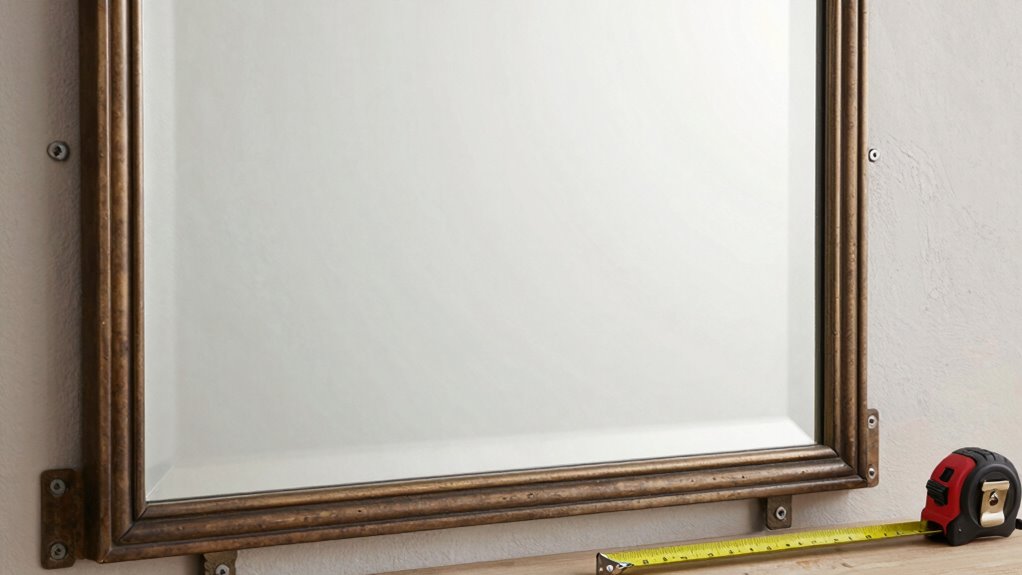
Before you start hanging your mirror, knowing its weight is vital. Accurate measurement ensures you select the right hardware and prevent accidents. To get an accurate mirror weight, follow these steps:
Knowing your mirror’s weight ensures safe, proper hanging and prevents accidents.
- Use a sturdy scale to weigh the mirror carefully.
- If the mirror isn’t portable, estimate its weight by measuring dimensions and referencing manufacturer specs.
- Double-check your measurement for precision—measurement accuracy can make or break your hanging plan.
- Keep a record of the weight to compare with the weight ratings of anchors and hardware.
- Consider the Free Floating nature of some mirrors, which can influence how weight is distributed and supported, ensuring you choose suitable hardware.
- Remember that regular appliance maintenance plans can help keep your hardware in top shape, especially for heavier or frequently moved mirrors.
- Understanding weight ratings of hardware and anchors ensures your mirror is safely supported and reduces the risk of damage or injury.
- Knowing the material of the wall can also impact your choice of anchors and hardware, as different wall types require specific support systems for safety.
- Additionally, assessing the wall structure can help determine if extra reinforcement is needed for heavier mirrors, ensuring safety and stability.
Choose the Best Anchors and Hardware for Heavy Mirrors
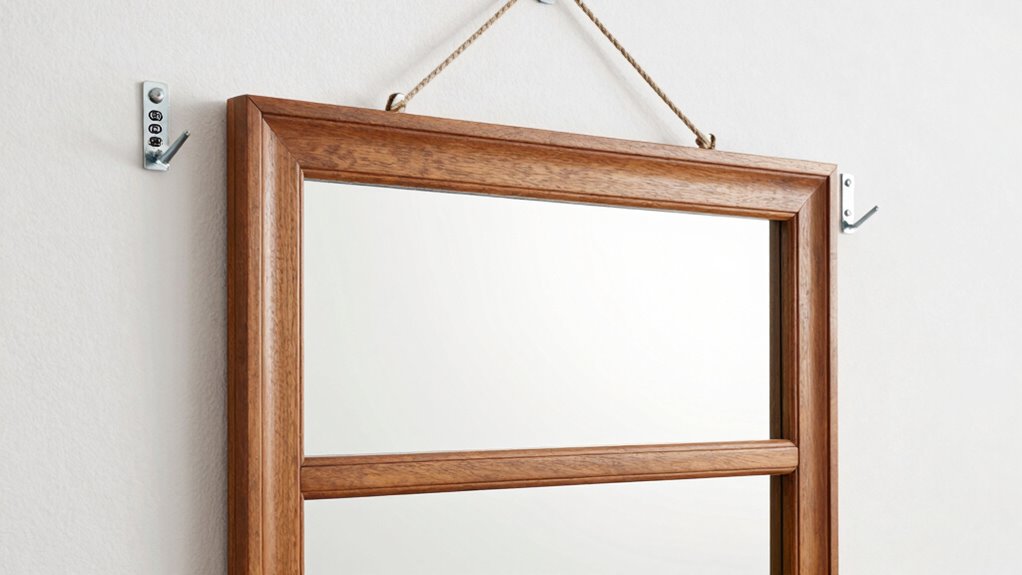
Choosing the right anchors and hardware is essential when hanging heavy mirrors, as using the incorrect options can lead to serious safety hazards. Consider decorative frame considerations; select anchors that won’t damage or distort your mirror’s frame while ensuring they support the weight. Heavy-duty toggle bolts, molly bolts, or heavy-duty hooks are often best for substantial loads. Aesthetic placement tips include choosing hardware that blends seamlessly with your mirror’s design and wall color, maintaining a clean look. Use wall anchors rated for the weight of your mirror, and always follow manufacturer instructions. Proper hardware not only keeps your mirror secure but also preserves its appearance, making your space both stylish and safe. Never compromise on the strength and quality of your anchors for heavy mirrors. Weight ratings are crucial for ensuring safety and stability when hanging heavy items. Additionally, understanding the studs and wall structure can greatly influence the choice of hardware, ensuring your mirror hangs securely and safely.
How to Hang Your Heavy Mirror Step by Step
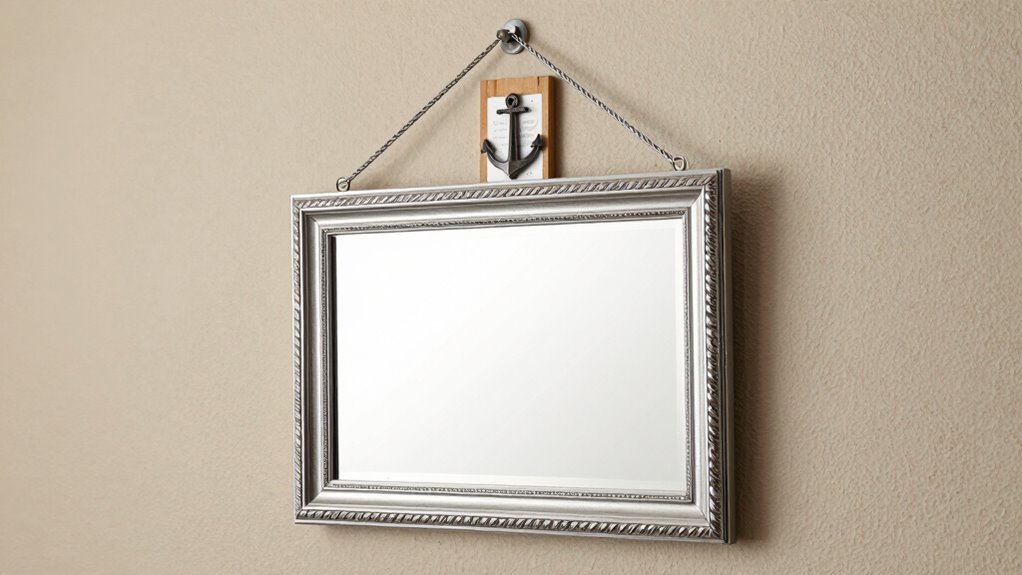
Hanging a heavy mirror requires careful preparation and precise execution to guarantee safety and stability. Follow these steps to transform your space and enhance your decorating ideas:
- Pick the perfect spot that complements your wall color choices and maximizes visual impact.
- Locate wall studs or use appropriate anchors to support the weight safely.
- Mark your hang points accurately, ensuring the mirror is level and centered.
- Mount the mirror securely, double-checking all hardware is tight and stable.
Take your time to ensure each step is done right. A well-hung heavy mirror not only adds beauty but also creates a focal point that elevates your room’s style and personality.
Troubleshooting Common Heavy Mirror Hanging Issues
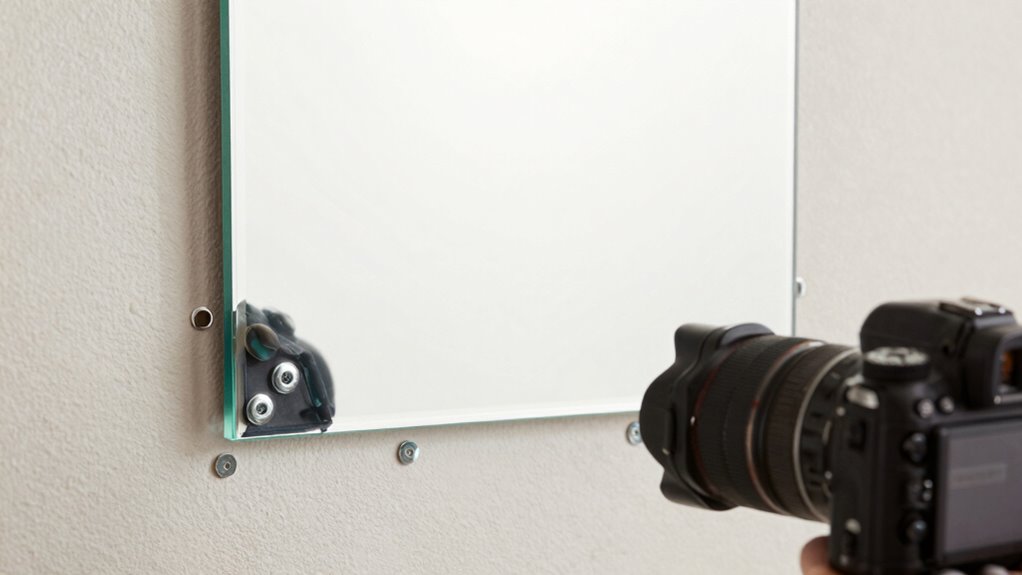
If your mirror isn’t hanging securely, check whether you’re using the right wall anchors for your wall type. Make sure the anchors can support the weight of your mirror to prevent accidents. Confirm that your hooks and hardware match the mirror’s weight to avoid issues down the line.
Identifying Proper Wall Anchors
Selecting the right wall anchors is essential for securely hanging heavy mirrors. Proper anchors guarantee your mirror stays safely mounted, especially if your wall involves drywall installation or requires wall reinforcement. To identify the best anchors, consider these key factors:
- Weight Rating: Choose anchors rated for your mirror’s weight to prevent accidents.
- Wall Material: Use specific anchors for drywall, masonry, or plaster to ensure stability.
- Anchor Type: Expandable or toggle anchors provide better wall reinforcement on drywall.
- Installation Tips: Follow manufacturer instructions carefully for secure mounting, avoiding weaker options that can damage drywall or fail under load.
Verifying Weight Capacity
Ensuring your mirror’s weight capacity matches the wall anchors is essential to prevent accidents or damage. Before hanging, verify the mirror’s weight and compare it with the anchor’s rated capacity. Proper mirror maintenance includes regularly checking the integrity of wall anchors and hooks, especially after any impact or over time. To assist, consider this quick reference:
| Mirror Weight | Recommended Anchor Type |
|---|---|
| Up to 50 lbs | Plastic expansion anchors |
| 50-100 lbs | Toggle bolts or heavy-duty anchors |
| Over 100 lbs | Stud-mounted anchors |
| Any weight | Use multiple anchors for safety |
Proper wall preparation guarantees secure support, reducing the risk of hanging issues. Always double-check weight ratings before proceeding.
Use a Level to Hang Your Mirror Straight and Perfectly
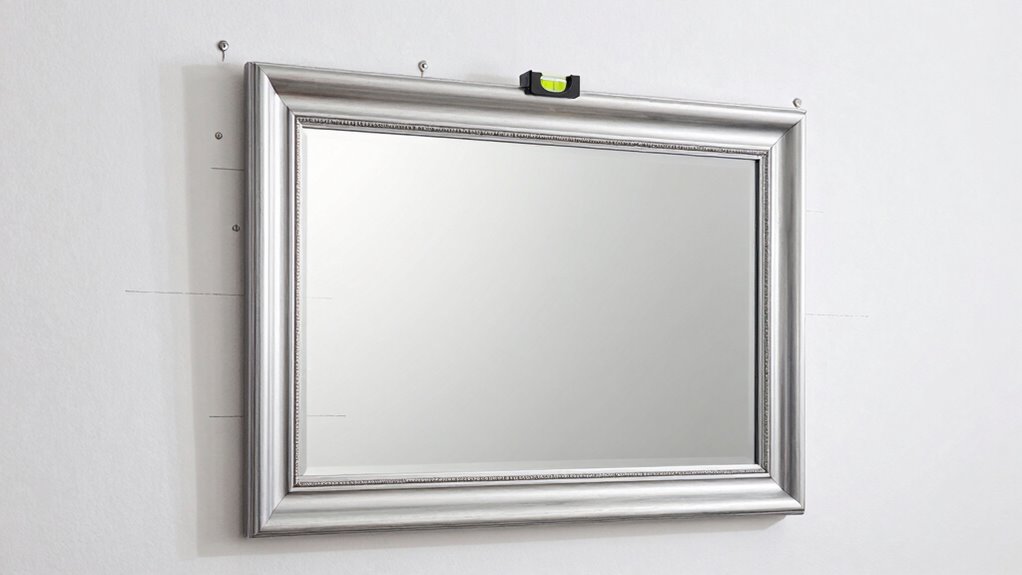
Hanging a mirror perfectly straight becomes much easier when you use a level. This simple tool guarantees your mirror placement is flawless and your wall alignment looks professional. To achieve this, follow these steps:
- Position the mirror where you want it, then place the level across the top or side.
- Adjust the mirror until the bubble centers perfectly, indicating straightness.
- Mark the mounting points once you’re satisfied with the alignment.
- Double-check with the level before drilling to confirm the mirror will hang evenly.
Using a level not only prevents crooked placement but also boosts your confidence in your DIY skills. Remember, proper wall alignment makes your space look polished and balanced, so take your time with this essential step.
Do You Need a Professional to Hang Your Heavy Mirror?

While hanging a heavy mirror might seem straightforward, it’s often best to think about whether you have the right tools and experience. Large mirrors, especially those with unique mirror shapes or decorative accents, can be challenging to secure properly. If you’re unsure about locating studs or choosing the right anchors, a professional can guarantee your mirror hangs safely and evenly. Professionals have the expertise to handle heavy loads and tricky wall types, preventing potential damage or accidents. Plus, if your mirror’s design is intricate, a specialist can help preserve its appearance while ensuring it’s securely mounted. Ultimately, if you’re not confident in your skills or tools, hiring a professional guarantees your mirror stays safely on the wall, enhancing your space without risk.
Frequently Asked Questions
What Are the Signs My Mirror Is Unsafe?
If your mirror feels loose, shifts easily, or makes creaking noises, it’s a sign of unsafe mirror safety and compromised wall integrity. Check for cracks or sagging around the mounting points, and confirm the anchors or studs are secure. If it’s wobbling or feels unstable, it’s best to re-evaluate your hanging method. Ignoring these signs risks damage or injury, so address any issues promptly to keep your wall safe.
Can I Hang a Heavy Mirror on Drywall Alone?
You shouldn’t hang a heavy mirror on drywall alone. To guarantee safety, use drywall anchors rated for the mirror’s weight, but for extra security, opt for stud installation. Find a stud using a stud finder and drill directly into it, which provides a strong, reliable support. Combining drywall anchors with stud installation gives you the best stability, preventing accidents and damage.
How Often Should I Check the Mirror’s Mounting?
You should check your mirror’s mounting at least once every six months to guarantee safety. Regular mirror maintenance and safety inspections catch any signs of looseness or damage before accidents happen. Pay attention to any shifts or loosening, especially if you notice vibrations or minor movement. Staying proactive keeps your mirror secure and your space safe, giving you peace of mind knowing your wall decor remains firmly in place.
Are There Weight Limits for Different Types of Anchors?
Yes, there are weight limits for different types of anchors based on their anchor ratings and weight guidelines. You should always check the manufacturer’s specifications to verify the anchor can support your mirror’s weight. For heavier mirrors, opt for anchors with higher weight ratings and adhere to the recommended weight guidelines to prevent accidents. Always follow the guidelines closely for safe and secure hanging.
What Tools Are Essential for Secure Hanging?
Did you know that using the right tools can prevent 80% of hanging accidents? To hang heavy mirrors safely, you need vital tools like a drill, level, measuring tape, and pencil. Measuring and marking are key steps to guarantee proper placement. These tools help you accurately locate studs or anchors and keep your mirror secure, reducing the risk of damage or injury. Always double-check your measurements before drilling!
Conclusion
Hanging heavy mirrors safely isn’t just about avoiding damage—it’s about your safety too. Did you know that improper mounting can cause injuries or damage worth hundreds of dollars? By choosing the right anchors, finding studs, and following proper steps, you minimize risks and guarantee your mirror stays secure. Take the time to do it right; your space and safety depend on it. Remember, a well-hung mirror is both beautiful and safe.