
Wall-mounted fireplaces are a sleek, space-saving choice, but ensuring proper installation is key. You need to find sturdy wall studs using a quality stud finder and verify your wall can support the weight. Maintain safe clearances from combustibles—usually around 6-12 inches—and know that venting options vary, with some requiring proper routes to the outside. Many myths surround venting and support, but understanding these details helps you install safely and effectively; continue exploring for expert tips.

Get your wardrobe favorites delivered free with Prime
- Fast, free delivery on millions of items
- Prime Video, Amazon Music and more included
- Member-only deals all year
Key Takeaways
- Proper stud finder use and accurate marking ensure safe, stable mounting for wall-mounted fireplaces.
- Maintain recommended clearances from combustibles and follow manufacturer guidelines to prevent overheating and fire hazards.
- Venting myths often lead to improper installation; verify vent type (direct vent, ventless, or power vent) and placement.
- Confirm the wall’s load-bearing capacity and reinforce drywall with studs or framing to support fireplace weight securely.
- Avoid common venting misconceptions by understanding proper airflow, clearance, and wall support requirements for safety.
As an affiliate, we earn on qualifying purchases.
What Are Wall-Mounted Fireplaces and Why Are They Popular?
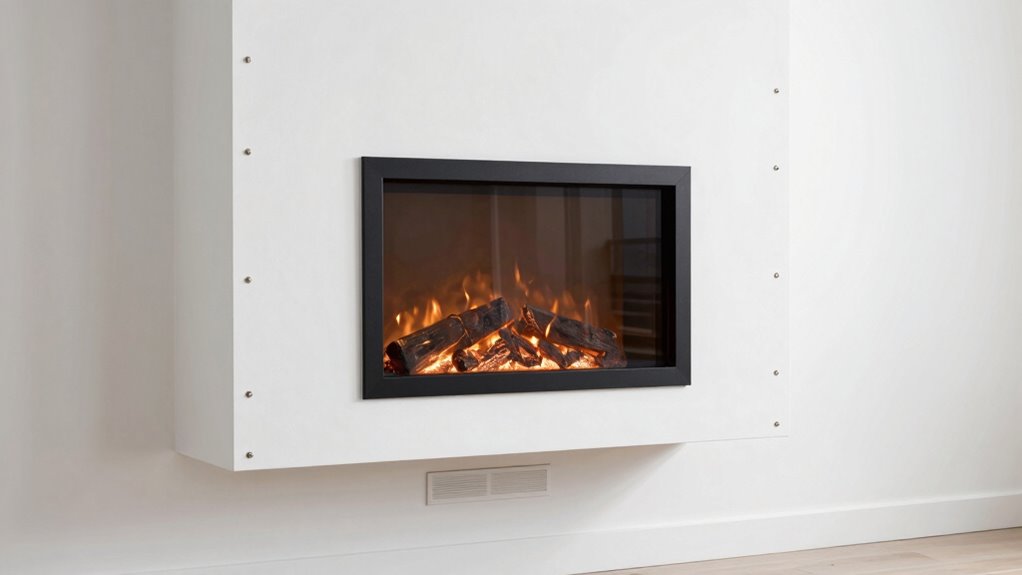
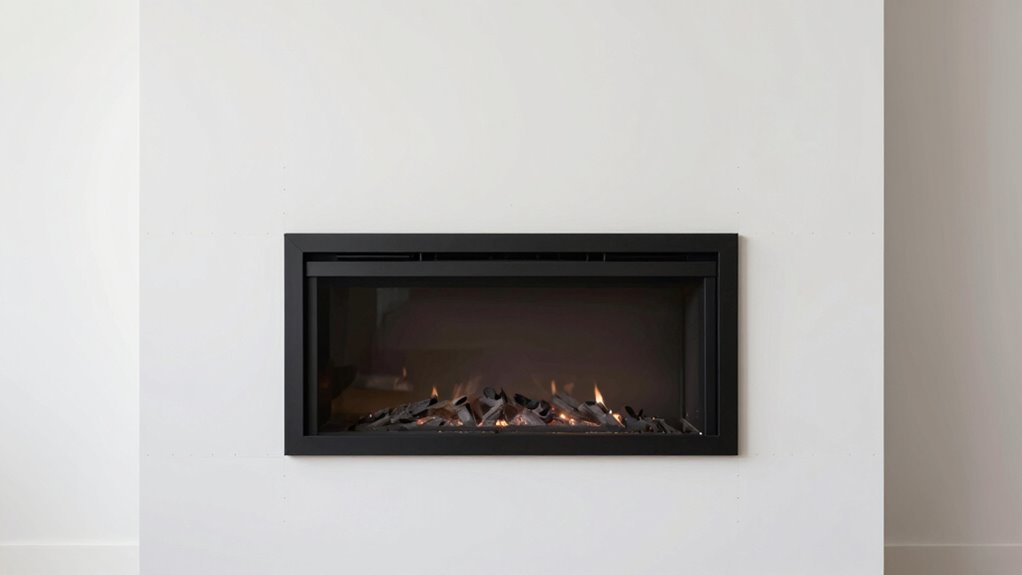
Wall-mounted fireplaces are sleek, space-saving heating solutions that have gained popularity in modern homes. They enhance fireplace aesthetics by adding a contemporary touch to any room, making them a stylish focal point. Their design integration is seamless, allowing you to mount them on almost any wall without sacrificing space or functionality. These fireplaces come in various styles and finishes, giving you flexibility to match your decor. Plus, they’re easy to operate and maintain, providing efficient heat without the bulk of traditional units. Their clean, minimalist look appeals to homeowners seeking a modern, sophisticated vibe. Whether you want to create a cozy atmosphere or make a bold design statement, wall-mounted fireplaces offer a perfect blend of form and function that elevates your living space. Understanding installation requirements ensures safe and proper setup, including clearances and venting, maximizing both safety and performance. Additionally, proper understanding of fire safety standards is crucial to prevent potential hazards.
How Do I Find Wall Studs for Mounting a Fireplace?
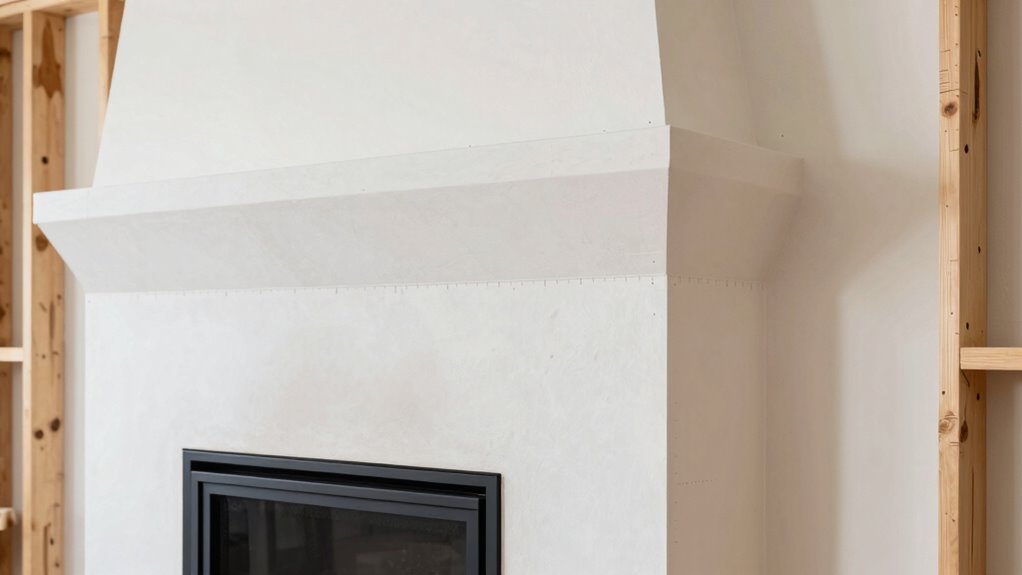
To securely mount your fireplace, you need to locate the wall studs first. Using a proper stud finder makes the process easier and more accurate. Be sure to measure and mark the positions carefully to guarantee a safe and solid installation. Consulting a reliable backup power guide can also help you understand load requirements and safety considerations for your setup. Additionally, understanding the power output of electric components can assist in planning for any integrated electrical features or venting systems. Knowing the wall material is essential, as it influences the type of mounting hardware and techniques needed for a secure installation. Properly identifying the stud locations ensures your fireplace is mounted safely and securely, preventing potential damage or accidents. Recognizing the wall studs is crucial for supporting the weight of the fireplace and avoiding damage to the wall.
Locate Wall Studs Easily
Finding wall studs is a crucial step before mounting a fireplace, as they provide the necessary support for the weight. To locate studs easily, start by looking for the clues that wall decoration offers. Use a measuring tape to mark out standard stud spacing, typically 16 or 24 inches apart, from a corner or electrical outlet. Tap gently along the wall; a solid sound indicates a stud. You can also look for clues like nail or screw marks, which often mark stud locations. Keep a consistent pattern to help you pinpoint the best mounting spot. Additionally, understanding home theater projector technology can help you plan optimal placement and avoid areas with obstructions. Knowing stud finder techniques can further simplify the process and improve accuracy. Properly wall anchoring methods are essential to ensure your fireplace remains secure and stable, while also maintaining the sleek, clean look that enhances your fireplace’s aesthetics.
Use Proper Stud Finders
Using a proper stud finder makes locating wall studs faster and more accurate. Invest in a quality stud finder designed for stud detection, as it will reliably identify the edges and center of studs behind the wall. Digital or magnetic stud finders can simplify the process, especially if you’re unsure of your wall structure. Avoid cheap or outdated models, which may give false readings. When using the stud finder, move it slowly across the wall’s surface, paying attention to signals indicating the edges of a stud. Confirm your findings by double-checking in different areas. Proper stud detection ensures your fireplace is mounted securely, preventing movement or damage over time. Using the right tool makes the entire installation safer and more straightforward.
Measure and Mark Accurately
Once you’ve located the wall studs with a quality stud finder, the next step is to measure and mark their exact positions. Accurate marking guarantees your fireplace mounts securely, maintaining both safety and aesthetics. Consider wall material considerations—drywall, brick, or concrete—when choosing your marking tools. Use a pencil to make clear, visible marks at the stud centers, and double-check measurements to avoid errors. Keep in mind that proper placement affects fireplace aesthetics, so take your time to align marks precisely. If mounting a heavy unit, ensure the studs are spaced correctly to support the weight. Precise measuring and marking help you avoid misalignments, making installation smoother and ensuring your fireplace looks great and functions safely. Understanding structural support is crucial when mounting heavy fixtures like fireplaces.
What Clearance Is Needed to Install a Wall Fireplace Safely?
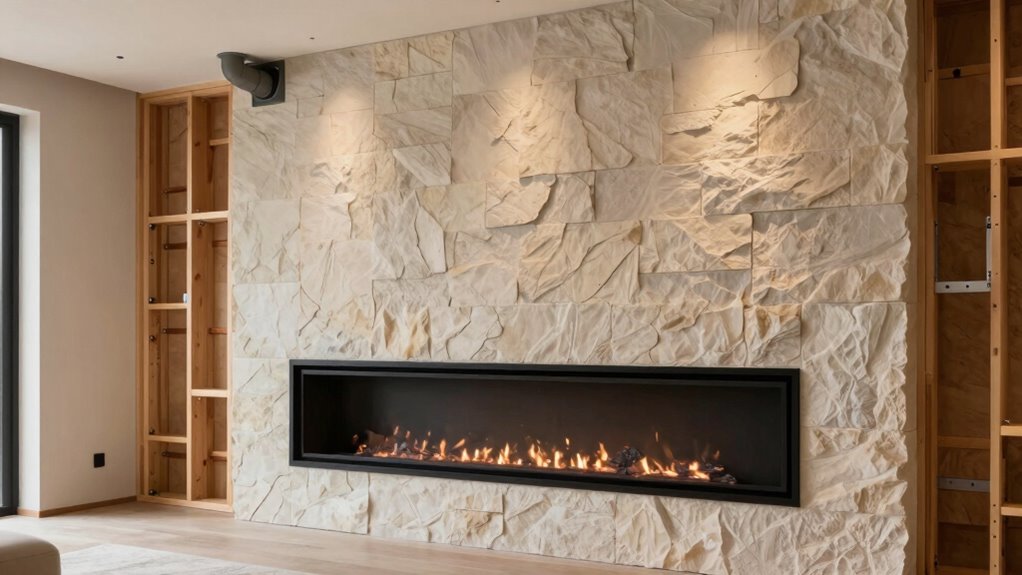
Ensuring proper clearance is essential for the safe installation of a wall-mounted fireplace. You need enough space to prevent heat damage and ensure safety while maintaining good fireplace aesthetics. Typically, manufacturers specify minimum clearances based on the wall material, such as drywall, brick, or concrete. For drywall, a common clearance is at least 3 inches from combustible materials, while non-combustible wall surfaces may require less. Always follow the manufacturer’s guidelines and local building codes to avoid fire hazards. Keep in mind that insufficient clearance can lead to overheating or damage to your wall. Accurate measurements and adherence to clearance requirements help you achieve a safe, functional, and visually appealing installation that enhances your living space without compromising safety. Proper installation practices are crucial for maintaining both safety and efficiency of your fireplace. Additionally, understanding fire safety clearances can help prevent accidental hazards and ensure long-term durability of your setup. Being aware of studded wall locations can also aid in choosing optimal mounting points to ensure stability and safety. Consulting stud finder tools can assist in accurately locating studs and avoiding electrical wiring or plumbing behind the wall. Furthermore, verifying wall structure integrity ensures the wall can support the weight and heat output of your fireplace safely.
Can I Install a Wall Fireplace Without Venting? What Are My Options?
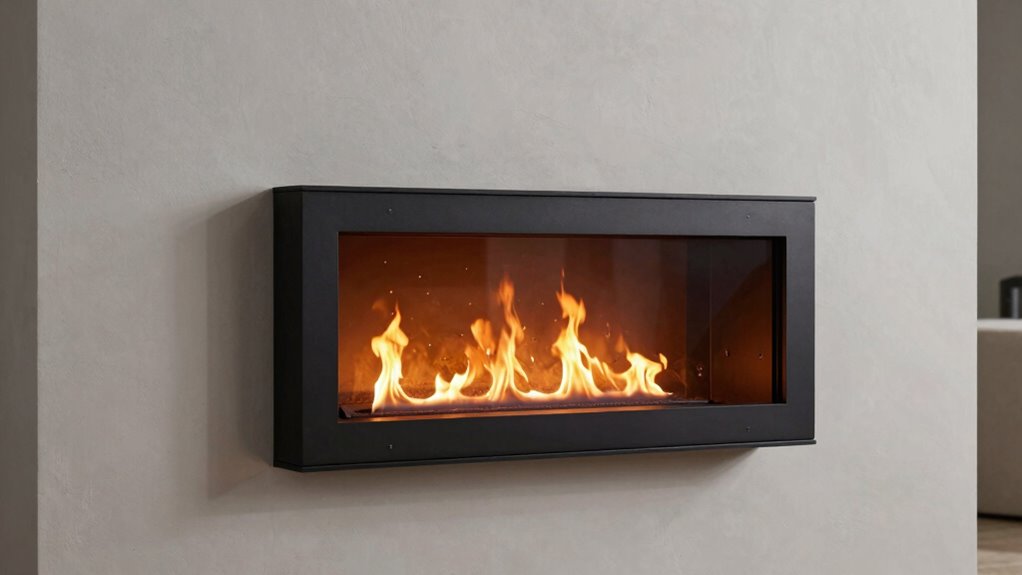
If you’re considering a wall fireplace without venting, there are options like electric units and ventless gas models that require no chimney or venting. However, it’s important to comprehend safety and code requirements for these installations before proceeding. Knowing your choices helps ensure you select a safe, compliant, and efficient heating solution. For example, understanding Youngster Choice can provide insights into alternative income sources and safety considerations in home installations.
Electric Wall Fireplace Options
Are you wondering whether you can enjoy the warmth and ambiance of a wall-mounted fireplace without the hassle of venting? Electric wall fireplaces are a perfect solution. They offer realistic flames, electric heating, and easy operation with a remote control. You can choose from various styles and sizes to fit your space and decor. These units are simple to install, often requiring just an outlet, and don’t need venting or gas lines.
| Feature | Benefit |
|---|---|
| Electric heating | Provides warmth efficiently |
| Remote control | Convenient operation |
| Easy installation | No venting or gas required |
| Realistic flames | Creates cozy ambiance |
Electric options let you enjoy the fire’s glow without complex venting or extensive renovations.
Ventless Gas Fireplaces
Ventless gas fireplaces offer a convenient way to add warmth and ambiance without the need for venting or extensive installation. These fireplaces eliminate the need for chimney or vent piping, making them ideal for tight spaces and quick upgrades. When considering fireplace design, ventless options allow flexible placement and sleek, modern aesthetics. Keep in mind, installation techniques vary but generally involve direct venting of the gas line and proper ventilation to ensure safety. Before choosing this option, be aware of some key points:
- No chimney or vent required
- Efficient heat output
- Suitable for small or enclosed spaces
- May require air quality considerations
- Limited fire design options compared to vented models
Always consult local codes to confirm if ventless fireplaces are permitted in your area.
Safety and Code Considerations
When considering installing a wall-mounted fireplace without venting, it’s crucial to prioritize safety and adhere to local building codes. Fire safety should always come first, so verify that ventless or unvented options meet your area’s regulations. Building codes specify strict requirements for clearances, ventilation, and proper installation to prevent fire hazards and indoor air quality issues. Skipping these guidelines can lead to dangerous situations, including carbon monoxide buildup or fire risks. Always consult with a licensed professional or local authorities before proceeding. Choosing a ventless fireplace might seem convenient, but understanding your options and respecting safety standards ensures your home remains safe and compliant. Proper installation safeguards your loved ones and preserves the integrity of your space.
Which Venting Systems Are Common for Wall-Mounted Fireplaces?
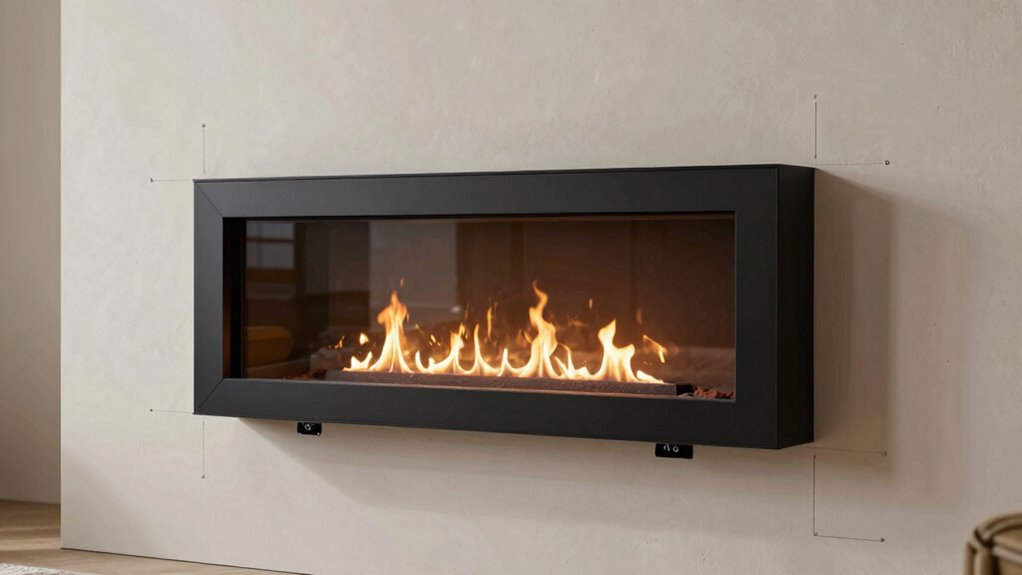
Many wall-mounted fireplaces use direct venting systems that efficiently channel exhaust gases outside through a wall or roof. These systems keep your space clean and safe while maintaining sleek fireplace aesthetics and enhancing your wall decoration. Common venting options include:
- Direct vent systems with sealed combustion for safety
- Power vent systems that use fans to expel gases
- Natural vent systems relying on natural draft
- Zero-clearance units with integrated venting
- Thin-profile vent pipes designed for minimal wall intrusion
Choosing the right venting system depends on your home’s layout and your desired look. Proper venting guarantees safe operation and preserves the visual appeal of your wall-mounted fireplace, making it a stunning focal point without compromising safety.
How Do I Choose the Best Location for My Wall Fireplace?
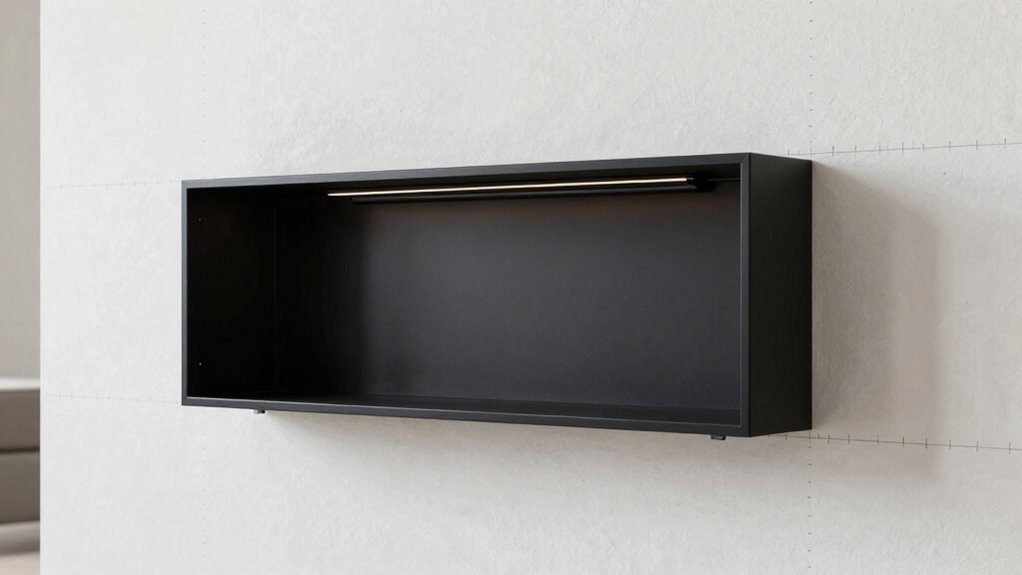
Choosing the right spot for your wall fireplace means considering wall space and ensuring there’s enough room for installation. You’ll also need to keep safety clearances in mind to prevent hazards. Don’t forget to plan for proper venting and clearance to keep everything functioning safely and efficiently. Additionally, understanding mounting options can help you select the most secure and aesthetically pleasing placement. Remember that stud placement is crucial for securely mounting heavier units, so locating wall studs will provide added safety and stability. Consulting local building codes can ensure your installation complies with safety standards and regulations.
Wall Space Requirements
Finding the right spot for your wall fireplace begins with evaluating your wall space carefully. You need enough room for the unit itself and to balance your interior design. Consider how the fireplace will serve as a focal point and complement decorative accents. To do this effectively, keep in mind:
- The height and width of the fireplace in relation to your wall size
- Clearance for ventilation and maintenance access
- Placement near power sources if electric
- Compatibility with existing wall features
- Visual balance within the room’s overall aesthetic
- Understanding the science behind venting can help ensure safe and efficient installation.
Choosing the right wall space ensures your fireplace enhances your interior design without overcrowding or obstructing other elements. Proper placement makes a statement and creates a cozy, inviting atmosphere.
Safety Clearances Needed
To guarantee your wall fireplace is both beautiful and safe, you must pay close attention to safety clearances. Proper clearance ensures fire safety by keeping combustible materials, such as drywall or furniture, at a safe distance from the unit. Check your fireplace manufacturer’s guidelines for specific measurements, typically ranging from 6 to 12 inches. Additionally, consider electrical wiring; it should be installed away from heat sources to prevent damage or fire hazards. Avoid running wires behind the unit or through areas prone to heat buildup. Ensuring adequate space around your fireplace reduces the risk of accidents and improves heat efficiency. Remember, following clearance rules isn’t just about compliance—it’s about creating a safe, functional, and attractive focal point in your room.
Venting and Clearance
Venting and clearance are crucial factors when selecting the ideal location for your wall fireplace. Proper venting guarantees safe operation and efficient heat flow, while adequate clearance prevents fire hazards. When choosing a spot, consider how the placement affects fireplace aesthetics and complements your room design. Wall material considerations also play a role; some materials may require special mounting techniques or extra insulation. Keep these in mind:
- Guarantee venting routes are accessible and unobstructed
- Maintain recommended clearance from combustible materials
- Choose a location with excellent viewing angles for aesthetics
- Consider wall thickness and material for secure mounting
- Verify nearby electrical and gas connections are feasible
Is My Wall Structurally Suitable for Mounting a Fireplace? Safety Tips to Know
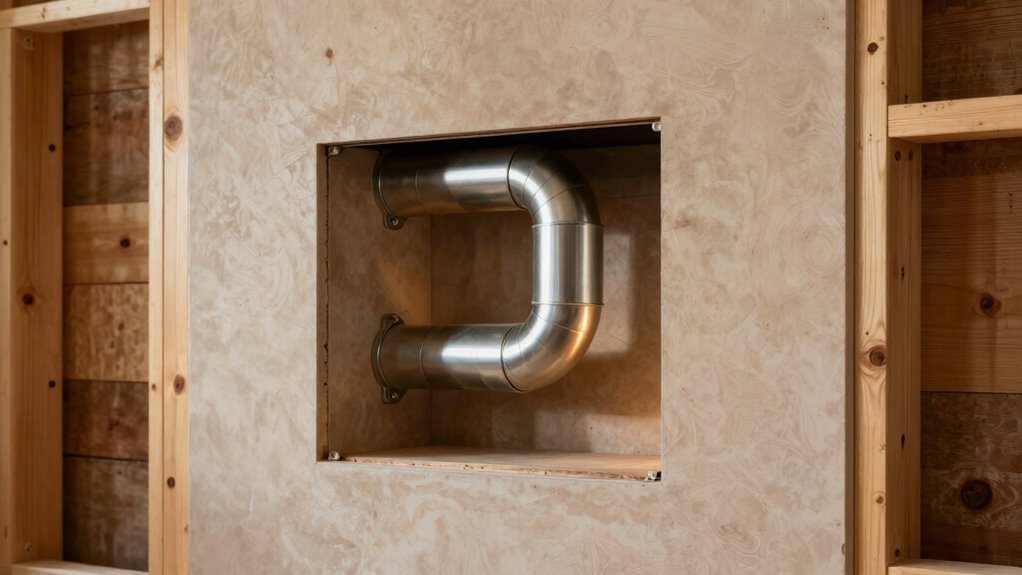
Before mounting a fireplace on your wall, it’s essential to determine if the structure can support its weight safely. Start by evaluating the wall’s structural integrity—whether it’s made of sturdy studs and solid framing. Drywall considerations are vital; drywall alone isn’t designed to hold heavy fixtures, so you’ll need to locate and reinforce the studs behind the wall. Use a stud finder to identify these support points, and verify they can bear the fireplace’s weight. If your wall isn’t strong enough, consider adding reinforcement or consulting a professional. Never rely solely on drywall anchors or screws, as they may not provide adequate support. Safety first—proper evaluation and reinforcement prevent accidents and ensure your fireplace remains securely mounted. Additionally, understanding the wall’s load-bearing capacity can help you determine if your wall can safely accommodate a fireplace. Assessing the wall’s structural support is a crucial step in preventing potential hazards and ensuring long-term safety. It’s also wise to consider the environmental considerations that might affect your wall’s ability to hold the fixture over time.
What Are Typical Clearances for Different Wall Fireplaces?
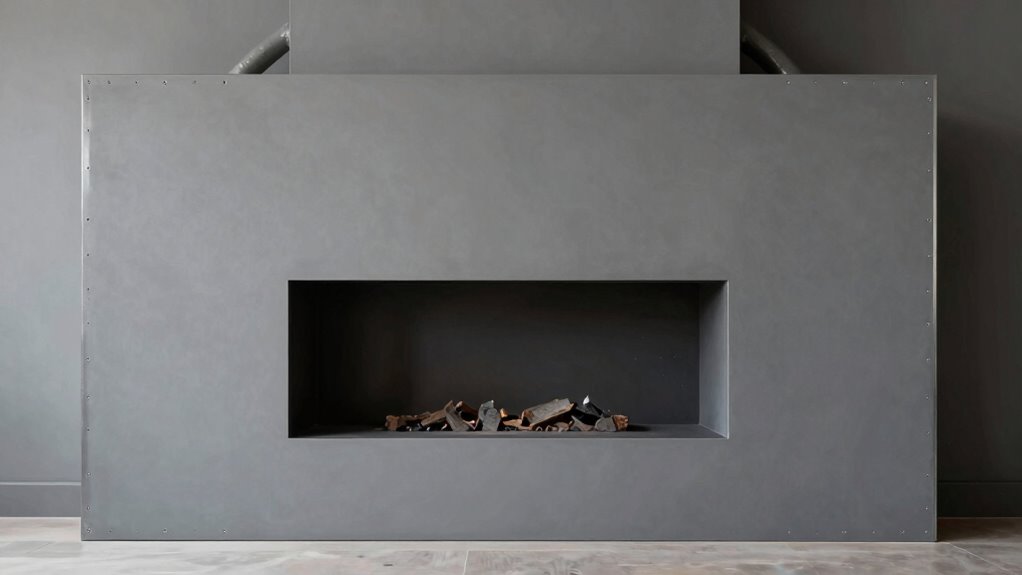
Understanding the typical clearances for wall-mounted fireplaces is crucial to guarantee safety and proper operation. Clearances vary depending on the fireplace model, coatings, and placement. Generally, you should maintain at least 6-12 inches of clearance from combustible materials, including decorative mantels and wall coatings. Fireplaces with specialized coatings or finishes may require larger gaps to prevent overheating. Always check manufacturer specifications for precise measurements. Keep these points in mind:
Maintain 6-12 inches clearance from combustibles for safe, efficient wall-mounted fireplace operation.
- Maintain recommended distance from combustible wall coatings
- Allow extra clearance for decorative mantels
- Ensure proper airflow around the unit
- Follow local building codes and safety guidelines
- Verify clearances before installing any wall-mounted fireplace
Adhering to these clearances helps prevent fire hazards and ensures your fireplace operates safely and efficiently.
How Do Venting Requirements Affect Where I Place My Wall Fireplace?
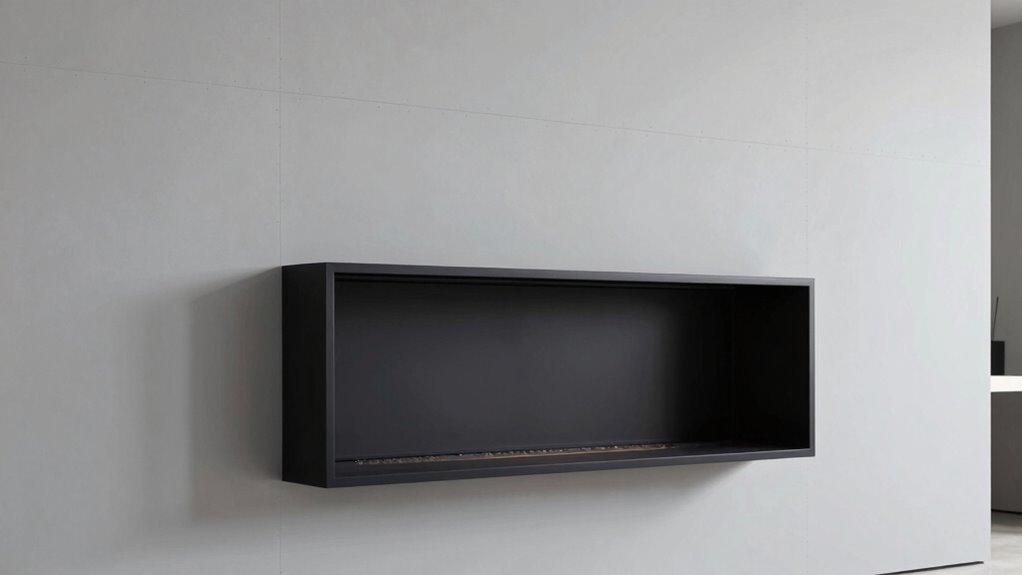
The placement of your wall-mounted fireplace is directly influenced by its venting requirements, which are essential for safe and efficient operation. Proper venting ensures good airflow, preventing heat buildup and minimizing fire hazards. These requirements can affect your fireplace’s location, especially if venting needs to run horizontally or vertically through the wall or ceiling. Keep in mind that vent placement impacts fireplace aesthetics; a well-integrated vent system maintains a sleek look. Additionally, consider maintenance considerations—easy access to vent components simplifies cleaning and inspections. You might need to plan for vent chase space or specific wall structures. Ignoring venting guidelines can compromise safety and performance, so always follow manufacturer instructions and consult professionals to find the ideal placement that balances aesthetics, safety, and functionality.
Top Tips for a Safe and Stylish Wall-Mounted Fireplace Installation
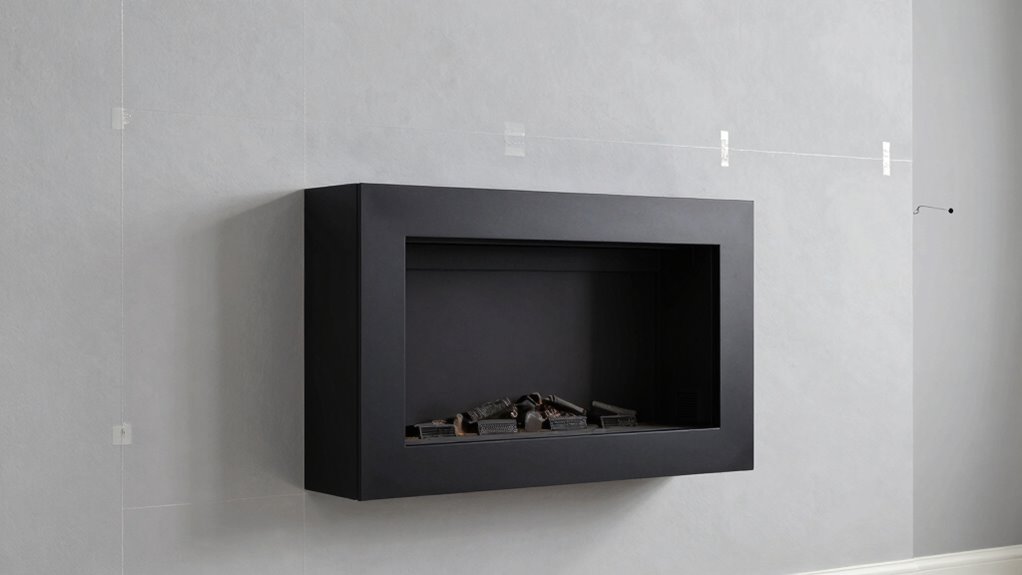
Installing a wall-mounted fireplace safely and stylishly requires careful planning and attention to detail. To achieve a sleek look and guarantee safety, consider these top tips:
- Choose a focal point that complements your fireplace decor for maximum visual impact.
- Follow manufacturer guidelines on clearances to prevent heat damage.
- Use proper mounting hardware and consult professionals for support.
- Incorporate accessible maintenance tips, like cleaning vents regularly, to keep it functioning efficiently.
- Select a design that matches your room’s aesthetic, balancing form and function.
Frequently Asked Questions
What Are the Most Common Materials Used for Wall-Mounted Fireplace Surrounds?
You’ll find that common fireplace surround materials include materials like stone, tile, wood, and metal. These materials are popular for decorative finishes because they add style and durability. Stone and tile offer a sleek, modern look, while wood provides warmth and a traditional feel. Metal surrounds are often minimalist and contemporary. When choosing your fireplace surround materials, consider your home’s décor and the venting requirements for a safe, attractive installation.
How Does Insulation Impact Wall Fireplace Installation and Safety?
Insulation impacts your wall fireplace installation by enhancing safety and energy efficiency. Using proper insulation types, like mineral wool or foam board, helps prevent heat transfer to combustible materials. It’s essential to follow safety precautions, such as maintaining correct clearances and installing fire-resistant insulation around the unit. This not only protects your wall and surrounding structures but also ensures your fireplace operates safely and efficiently over time.
Are There Specific Building Codes for Wall-Mounted Fireplaces in Rental Properties?
Rental regulations require you to follow specific building codes when installing wall-mounted fireplaces, and lease agreements often specify restrictions. You must check local codes for safety standards, clearance requirements, and venting rules. Failing to follow these can lead to legal liabilities, loss of deposits, or lease violations. Always consult your landlord or property manager first, ensuring your installation stays compliant, clear, and curb-appealing, creating cozy, compliant comfort.
Can I Retrofit an Existing Fireplace With a Wall-Mounted Design?
Yes, you can retrofit an existing fireplace with a wall-mounted adaptation, but it requires careful planning. You’ll need to contemplate a fireplace retrofit that involves installing a wall-mounted insert or unit, ensuring proper clearances, studs, and venting. It’s crucial to check local building codes and possibly consult a professional to ensure safety and compliance. With the right approach, transforming your traditional fireplace into a sleek wall-mounted feature is achievable.
What Maintenance Is Required for Wall-Mounted Fireplaces Over Time?
You should regularly perform cleaning routines and inspect components to keep your wall-mounted fireplace in top shape. Clean glass doors and vents to prevent soot buildup and guarantee proper airflow. Check for loose or damaged parts, such as filters or thermocouples, and replace them if needed. Regular maintenance helps maintain efficiency, safety, and prolongs your fireplace’s lifespan, so schedule inspections at least once a year or as recommended by the manufacturer.
Conclusion
Now that you understand the ins and outs of wall-mounted fireplaces, you’re ready to turn your wall into a cozy masterpiece. Think of your space as a blank canvas, waiting to be painted with warmth and style. With careful planning and safety in mind, you’ll create a stunning focal point that radiates comfort. Embrace the process, and soon, your wall will glow with the inviting charm of a perfectly installed fireplace.
Halloween Picks
halloween
As an affiliate, we earn on qualifying purchases.