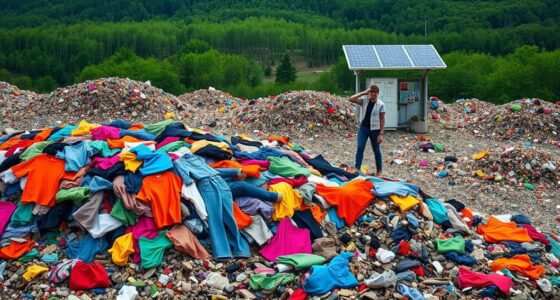
Trend-based wardrobes lead to hidden waste because you keep buying new clothes to follow fleeting styles, which quickly become trash. This cycle causes more textile waste and drains resources like water, energy, and raw materials. Discarded garments pile up in landfills, harming the environment. If you continue exploring, you’ll discover how making mindful choices can help reduce this waste and create a more sustainable wardrobe.
Key Takeaways
- Trend-driven wardrobes lead to frequent clothing disposal, increasing textile waste and environmental harm.
- Rapid turnover of trendy clothing results in high resource consumption and waste sent to landfills.
- Short-lived fashion cycles encourage overconsumption, reducing garment longevity and sustainability.
- Constant purchasing of trendy items diminishes the durability and reuse of quality clothing.
- Hidden waste accumulates from discarded fast fashion, undermining efforts for sustainable wardrobe practices.

In today’s fast-paced fashion world, trend-based wardrobes encourage quick outfit updates, but they also hide a significant waste problem. When you chase the latest styles, it’s easy to overlook how rapidly your wardrobe can become cluttered with items that quickly fall out of favor. This cycle leads to a lot of discarded clothing, contributing to environmental harm and resource depletion. Embracing sustainable fashion means thinking beyond fleeting trends and focusing on wardrobe longevity—building a collection of versatile, timeless pieces designed to last. By doing so, you reduce waste and make a more conscious choice about your fashion consumption.
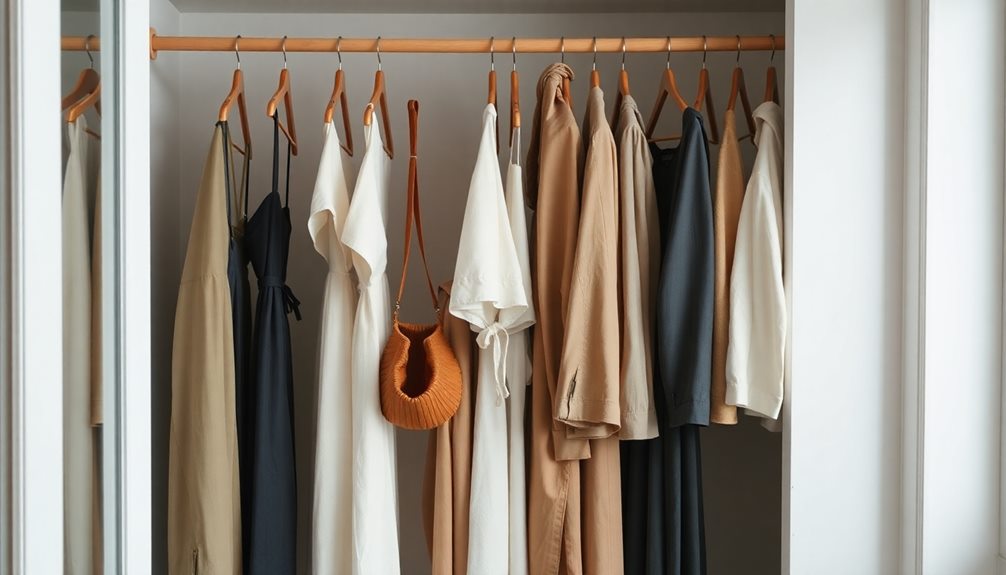
Trend cycles push you to constantly buy new clothes to stay current, but this often results in unused garments piling up in your closet. Instead of frequently replacing outfits, investing in high-quality, durable pieces fosters wardrobe longevity. When your clothes are made to last, you’re less likely to toss them after a few wears, decreasing the volume of textile waste sent to landfills. Sustainable fashion emphasizes this approach, encouraging you to choose items that withstand changing trends and withstand the test of time. This shift not only benefits the environment but can also save you money in the long run, as quality pieces tend to be more resilient and versatile.
Invest in durable, high-quality pieces to build a timeless wardrobe that reduces waste and saves money.
You might also notice that trend-based wardrobes foster a disposable attitude toward clothing. When fashion is driven by seasonal trends, you tend to see your wardrobe as interchangeable rather than as a curated collection. This mindset leads to more frequent shopping sprees, often for pieces that are only relevant for a short period. Instead, cultivating wardrobe longevity means selecting items that are adaptable and timeless, allowing you to mix and match effortlessly across seasons. This sustainable approach encourages you to value quality over quantity, reducing the cycle of overconsumption that fuels waste. Incorporating biodiversity principles into your fashion choices can further enhance your commitment to sustainability, as it emphasizes the importance of resource conservation and ecological balance.
Furthermore, when you focus on sustainable fashion and wardrobe longevity, you’re more likely to care for your clothes properly. Proper maintenance, such as washing clothes at lower temperatures and repairing minor damages, extends their lifespan. This responsible attitude diminishes the need to replace clothing frequently, which helps curb the waste generated from fast fashion. Overall, shifting your mindset from fleeting trends to sustainable, long-lasting pieces transforms your wardrobe into a more eco-friendly, efficient collection. Not only do you contribute to reducing textile waste, but you also develop a personal style rooted in quality and durability rather than fleeting fads. Developing a deeper understanding of clothing lifecycle can help you make more informed, sustainable choices in your fashion journey.
high quality durable wardrobe staples
As an affiliate, we earn on qualifying purchases.
As an affiliate, we earn on qualifying purchases.
Frequently Asked Questions
How Can Consumers Identify Truly Sustainable Wardrobe Options?
To identify truly sustainable wardrobe options, look for clothing made from sustainable materials like organic cotton or recycled fabrics. Check if brands prioritize ethical sourcing, ensuring fair labor practices and transparency in their supply chains. You can also research certifications like Fair Trade or GOTS, which verify sustainability efforts. By paying attention to these details, you make conscious choices that reduce waste and support responsible fashion practices.
What Are the Environmental Impacts of Fast Fashion Trends?
Fast fashion trends profoundly impact the environment by increasing textile waste and overproduction. When you buy quickly and discard often, you contribute to overflowing landfills filled with unwearable clothes. The overproduction impact means factories churn out more garments than needed, wasting resources like water, energy, and raw materials. This cycle accelerates pollution and climate change, making it essential for you to choose sustainable options and reduce impulse purchases.
How Often Should Wardrobe Contents Be Reviewed for Waste Reduction?
Like a skilled gardener tending to a wild overgrowth, you should review your wardrobe every three to six months. This keeps clothing donation opportunities open, prevents clutter, and promotes better wardrobe organization. Regular check-ins help you identify items you no longer wear, reducing waste and environmental impact. Staying proactive guarantees your wardrobe stays sustainable, stylish, and aligned with your values—making each piece count and minimizing unnecessary waste.
Are There Affordable Ways to Reduce Wardrobe Waste?
Yes, you can cut wardrobe waste affordably by focusing on clothing durability and mindful shopping habits. Choose quality pieces that last longer, reducing the need for frequent replacements. When shopping, prioritize versatile, timeless items over fast fashion trends. Repair clothes instead of discarding them and donate or sell what you no longer wear. These simple steps help you save money, lessen waste, and build a sustainable wardrobe over time.
What Role Do Brands Play in Minimizing Fashion Waste?
Did you know that over 60% of consumers want brands to be more transparent? Brands play a vital role in minimizing fashion waste by embracing transparency and ethical manufacturing practices. When they openly share their supply chain details and commit to sustainable materials, they empower you to make informed choices. Your support encourages brands to prioritize eco-friendly production, ultimately reducing waste and fostering a more sustainable fashion industry.
Conclusion
So, next time you reach for that trendy piece, remember it’s not just about style—it’s about the waste lurking behind the scenes. Like a silent thief, fast fashion steals resources and leaves environmental scars. Will you let fleeting trends dictate your wardrobe, or will you choose mindful purchasing? The choice is yours—because every garment you buy is a chapter in the story of our planet. Make it a story worth telling.