
Cashmere, merino, and alpaca fibers each have unique qualities and sourcing methods. Cashmere comes from goats in Mongolia and China, offering soft luxury but can cause land degradation if overused. Merino wool, from sheep in Australia and New Zealand, provides fine breathability with responsible farming practices. Alpaca fiber, from Peru and Bolivia, is hypoallergenic, low-impact, and ethically harvested. Understanding these differences helps you make eco-conscious choices—there’s more to discover about their environmental impacts and ethical sourcing.
Key Takeaways
- Cashmere is softer and more luxurious, sourced from goat undercoats in Mongolia and China.
- Merino wool is fine, breathable, and mainly produced in Australia and New Zealand.
- Alpaca fiber is hypoallergenic, environmentally friendly, and comes from Peru, Bolivia, and Ecuador.
- Each fiber has distinct environmental impacts, with alpaca being the most sustainable and cashmere the most land-intensive.
- Ethical sourcing and responsible farming practices are essential for reducing environmental harm across all three fibers.
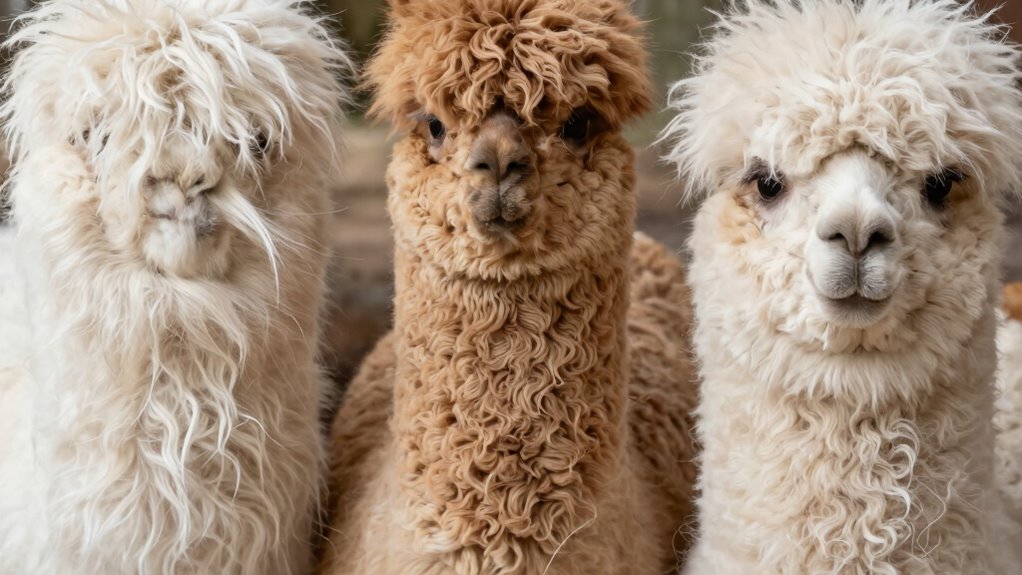
If you’re choosing between cashmere, merino, and alpaca for your next cozy sweater, understanding their differences can help you make the right choice. Each fiber offers unique qualities, and knowing about their sustainability impacts and fiber sourcing methods can influence your decision, especially if eco-friendliness matters to you. Cashmere comes from the undercoat of cashmere goats, primarily in Mongolia and China. While luxurious and incredibly soft, cashmere’s sustainability impacts are significant due to intensive fiber sourcing methods. Overgrazing and unregulated harvesting can lead to land degradation and affect herds’ health. Ethical sourcing is crucial here; choosing brands that prioritize sustainable practices helps reduce environmental harm. Merino wool is derived from Merino sheep, mostly raised in Australia and New Zealand. Its fiber is known for its fine, soft texture and excellent breathability. When contemplating sustainability impacts, merino’s fiber sourcing methods are relatively more sustainable, especially when farms follow humane practices and responsible grazing management. These methods help prevent overgrazing, land degradation, and water pollution. Additionally, some producers engage in ethical shearing, ensuring sheep aren’t harmed during fiber collection. Alpaca fiber comes from the fleece of alpacas, primarily in Peru, Bolivia, and Ecuador. Alpacas are gentle creatures that graze on natural grasses, and their fiber production isn’t as environmentally taxing as cashmere. The fiber sourcing methods involve shearing alpacas once a year, which is a humane and low-impact process. Moreover, alpaca fiber is naturally hypoallergenic and resistant to pests, making it a desirable sustainable option. Sustainability impacts with alpaca are generally positive, especially when farmers practice sustainable grazing and avoid overharvesting. Alpaca farms tend to have a smaller ecological footprint because of their minimal water use and land requirements. Furthermore, responsible farming practices can significantly enhance the sustainability of alpaca fiber. Awareness of fiber quality standards can also help consumers make more informed choices about the longevity and durability of their garments. When choosing among these fibers, it’s essential to consider not just comfort and warmth but also how the fiber was sourced. Increasingly, brands are transparent about their fiber sourcing methods, allowing you to opt for more sustainable options. By selecting products from companies committed to ethical practices, you contribute to reducing environmental impacts and supporting responsible farming communities. In the end, your choice of fiber impacts not just your wardrobe but also the planet. Whether you prioritize the luxurious softness of cashmere, the fine breathability of merino, or the eco-friendly aspects of alpaca, understanding their sourcing and sustainability impacts ensures you make a conscious, well-informed decision.
As an affiliate, we earn on qualifying purchases.
Frequently Asked Questions
Which Fiber Is the Most Sustainable?
You’ll find alpaca fiber is the most sustainable because it has a lower environmental impact and often comes from ethical sourcing practices. Alpacas require less water and land, and their gentle grazing helps preserve ecosystems. Merino and cashmere can have higher environmental footprints due to intensive farming and sourcing methods. By choosing alpaca, you support eco-friendly options that prioritize sustainable farming and animal welfare.
How Do the Prices Compare?
You’ll find that prices vary based on luxury appeal and fabric durability. Cashmere tends to be the priciest due to its luxurious feel and fine fibers, making it highly sought after. Merino offers a good balance of quality and affordability, while alpaca is generally more affordable but still durable. If you prioritize luxury appeal, expect to pay more, but for durability, all three fibers offer good options at different price points.
Are They Suitable for All Climates?
Yes, these fibers are suitable for various climates, offering great fashion versatility. Cashmere keeps you warm in cold weather, while Merino is breathable and perfect for transitional seasons. Alpaca is lightweight yet insulating, making it adaptable year-round. Their cultural significance adds depth to your wardrobe, allowing you to embrace tradition while staying comfortable. You can enjoy stylish, functional pieces suited for different climates, enriching your fashion choices with meaningful, climate-appropriate textiles.
Can They Be Machine Washed?
You shouldn’t machine wash cashmere, Merino, or alpaca, as it can damage their delicate fibers. Instead, follow care instructions like hand washing or using a gentle cycle with cold water. For stain removal, gently dab with a mixture of water and mild detergent, avoiding harsh scrubbing. Always lay your garments flat to dry, and avoid the dryer to keep them soft and maintain their shape.
Which Fiber Is the Warmest?
Think of fiber as a warm blanket wrapping you in comfort—Alpaca is the coziest, offering superior warmth. Its fiber blend benefits include excellent insulation and moisture-wicking, making it ideal for cold weather. Historically, Alpaca has been prized in the Andes for centuries, earning its reputation as the warmest of these luxurious fibers. You’ll find it keeps you warm even in the harshest climates, making it a top choice for winter wear.
Conclusion
Think of cashmere, merino, and alpaca as different characters in a cozy story, each with their own unique voice and personality. Choosing between them is like selecting the perfect friend for a chilly day—each offers warmth, softness, and style in their own special way. By understanding their differences, you’re like a wise storyteller, crafting your wardrobe with the right characters to keep you comfortable and stylish through every season.