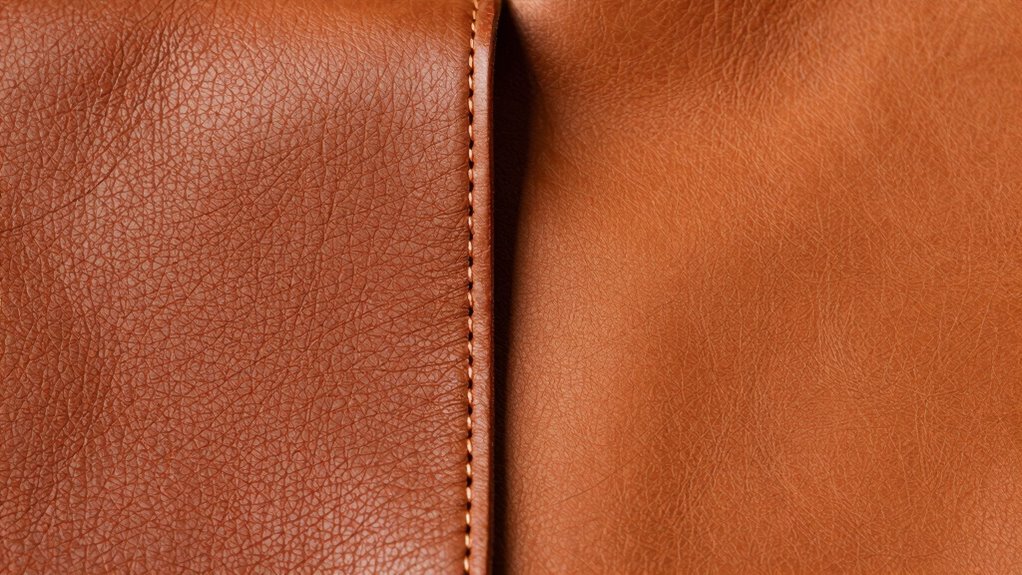
Genuine leather often refers to lower-quality hides that are processed to make affordable products, but they can lack durability and a refined appearance. Better leather grades come from higher-quality, sustainably sourced hides that undergo careful tanning processes, resulting in products that are softer, more durable, and develop a beautiful patina over time. These higher grades also reflect ethical sourcing and eco-friendly methods. Want to see how these differences truly impact the leather’s look, feel, and longevity? Keep exploring to find out more.
Key Takeaways
- “Genuine leather” often refers to lower-quality hides, while better leather grades are made from thicker, more carefully processed hides.
- Higher-quality leathers undergo more sustainable and eco-friendly tanning processes, enhancing durability and appearance.
- Better leather develops a rich patina over time, whereas genuine leather may crack or fade more quickly.
- Premium leathers are softer, more supple, and have a refined finish compared to mass-produced genuine leather items.
- Ethical sourcing and sustainable practices are more common with higher-grade leathers, ensuring better quality and environmental impact.
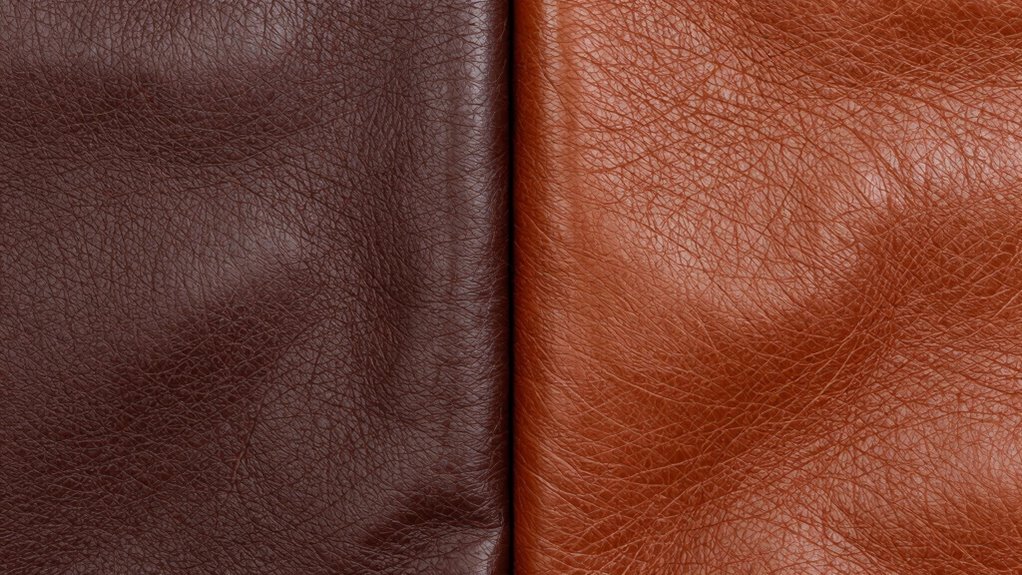
When shopping for leather products, it’s important to understand that not all leather is created equal. The term “genuine leather” often appears on many goods, but it can be misleading. Genuine leather is typically made from lower-quality hides, which are processed through various treatments, including leather tanning, to produce a finished material. Leather tanning is a vital step in creating durable leather; it involves treating raw hides to prevent decomposition and enhance flexibility. However, the quality of the tanning process varies considerably. Better leather grades usually come from more careful, often more sustainable sourcing, where higher-quality hides are chosen and processed with greater attention to detail. This results in a product that not only looks and feels better but also lasts longer.
When you’re evaluating different leather products, keep in mind that genuine leather doesn’t necessarily mean inferior. It’s a broad category that includes everything from inexpensive, mass-produced items to high-quality pieces labeled as “genuine.” The real difference lies in the grade of the leather used and the quality of the tanning process. Higher-grade leathers are often tanned using environmentally friendly methods, which are part of sustainable sourcing practices. Sustainable sourcing means that the hides are obtained ethically, with consideration for environmental impact and animal welfare. This approach often involves vegetable tanning or other eco-friendly methods that avoid harmful chemicals, ensuring the leather is both better for the planet and of higher quality. Additionally, the process of environmentally friendly tanning helps preserve the natural qualities of the hide, resulting in a more authentic and high-quality end product. A focus on ethical sourcing also supports fair labor practices and sustainability efforts within the industry.
Better leather grades typically feature thicker, more uniform hides, resulting in a more refined appearance and superior durability. These leathers tend to age more gracefully, developing a rich patina over time, unlike lower-grade options that may crack or fade quickly. When you opt for higher-grade leather, you’re investing in a product that’s crafted with greater skill, often involving meticulous leather tanning processes that preserve the hide’s natural qualities. This results in a softer, more supple feel and a finish that exudes quality. Additionally, better leather grades often come from sustainable sourcing initiatives, which help reduce environmental harm and promote ethical practices within the industry.
As an affiliate, we earn on qualifying purchases.
Frequently Asked Questions
How Can I Tell Genuine Leather From Synthetic Alternatives?
You can tell genuine leather from synthetic alternatives by examining the leather labeling and texture. Genuine leather often feels soft, with natural imperfections and a distinct smell, while synthetic imitation tends to be uniform and plasticky. Check the label carefully—if it says “genuine leather,” it’s real, but beware of misleading synthetic imitation. You can also do a water test; genuine leather absorbs moisture slowly, unlike synthetic materials.
Are Higher-Grade Leathers More Eco-Friendly?
Higher-grade leathers can be more eco-friendly because they often undergo eco-friendly tanning processes and use natural, eco-friendly dyes. You’ll find that top-quality leathers are usually tanned with fewer harmful chemicals, reducing environmental impact. Plus, better leathers tend to last longer, meaning less waste over time. So, by choosing higher-grade leather, you support more sustainable practices and get a durable product that’s better for the planet.
Does Better Leather Require More Maintenance?
You might notice that better leather often requires more maintenance because its finer quality demands careful leather care. To keep it looking its best, follow simple maintenance tips like regular conditioning and avoiding direct sunlight. While it might seem like extra effort, caring for higher-grade leather guarantees it ages beautifully, maintaining its elegance and durability. So, yes, better leather does require a bit more attention, but the stunning results are worth it.
Can Lower-Grade Leather Still Be Durable?
Yes, lower-grade leather can still be durable if it’s properly tanned and sourced from quality animals. Leather tanning methods, like vegetable or chrome tanning, affect its resilience. Even with lower grades, if the animal sourcing is good and the tanning process is thorough, the leather can withstand daily use. Keep in mind, regular care and maintenance help preserve its durability over time, regardless of the grade.
What Are the Most Common Misconceptions About Leather Grades?
Think of leather grades as different chapters in a story—many believe “genuine leather” is the whole tale, but that’s a misconception. People often think all leather is equal, but leather tanning and finishing vary greatly, influencing quality. Some assume higher grades mean more durability, yet proper tanning and finishing techniques can make lower grades surprisingly resilient. Don’t judge leather solely by grade; look at how it’s processed, not just labeled.
Conclusion
So, next time you’re choosing leather, remember that genuine leather might be more common, but better grades like full-grain or top-grain offer durability and beauty that truly stand out. Coincidentally, it’s often those small details—like how the leather ages—that reveal its quality. Whether you’re after longevity or just a rich look, understanding the difference helps you make smarter choices. Because in the end, it’s those subtle differences that make all the difference in your leather journey.