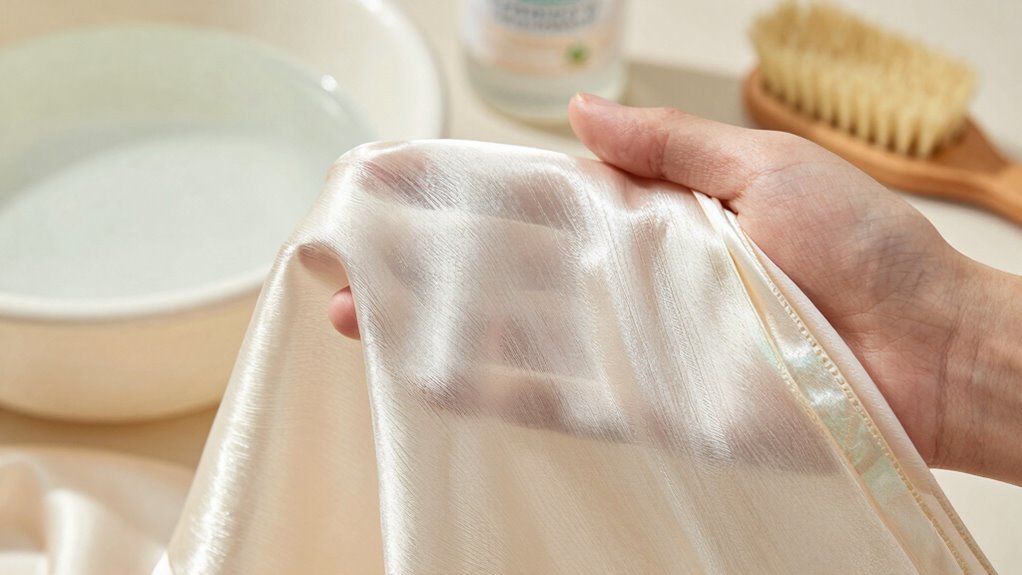

To care for delicate fabrics without overwashing, you should opt for hand washing or dry cleaning for items like silk and wool. Use gentle detergents, cold water, and avoid wringing or twisting the fabric. Air dry flat away from heat and sunlight to prevent damage. Store items properly in breathable containers and use fabric softeners sparingly. Following these tips helps maintain your fabrics’ quality and prolongs their lifespan—discover more tips for delicate care below.
Key Takeaways
- Spot clean stains promptly to avoid frequent full washes.
- Use gentle hand washing techniques with cold water and mild detergent.
- Air dry fabrics flat or on a hanger to prevent unnecessary washing.
- Utilize fabric fresheners or steaming to refresh between washes.
- Store delicate items properly to reduce the need for frequent cleaning.
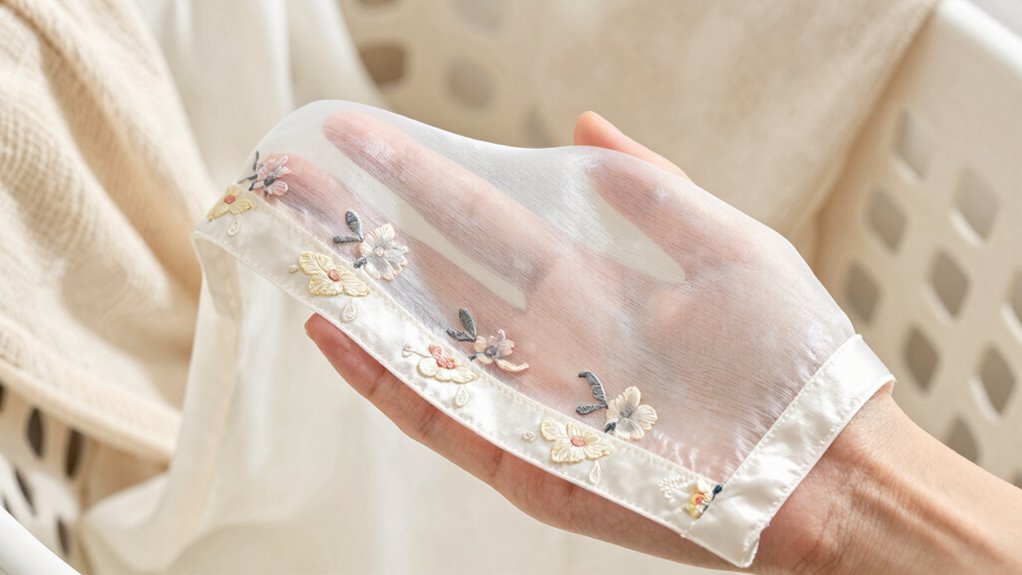
Delicate fabrics require special care to maintain their softness, appearance, and longevity. Unlike sturdier textiles, these fabrics often demand gentle handling to prevent damage. One way to do this is by understanding when and how to use fabric softeners. When washing delicate items, choosing a mild fabric softener can help keep fibers soft and reduce static buildup. However, it’s essential to use softeners sparingly, as overuse can leave residues that weaken fabric over time. Always read the labels to guarantee the softener is suitable for delicate fabrics, and consider diluting it more than usual for extra protection.
Use mild fabric softeners sparingly to protect delicate fabrics and maintain their softness and appearance.
Sometimes, the best approach is to avoid washing delicate fabrics altogether. Dry cleaning methods are often recommended for items like silk, wool, or embellished garments. These professional services use specialized solvents and gentle techniques that clean without risking damage from agitation or harsh detergents. If you opt for dry cleaning, make sure to communicate the fabric type to the cleaner so they can select the most appropriate method. This minimizes the risk of shrinkage, color fading, or fabric distortion that can happen with regular machine washing. Proper storage practices also play a vital role in maintaining delicate fabrics and preventing unnecessary damage. Using proper storage techniques like folding in breathable cotton bags or avoiding hanging heavy items can help preserve their condition. Regularly inspecting stored textiles for signs of deterioration can help you address issues early and prolong their usability.
In cases where you prefer to do it yourself, hand washing is typically safer than machine washing. Fill a basin with cold water and add a small amount of mild detergent designed for delicate fabrics. Gently submerge the item and softly agitate it without wringing or twisting. Rinse thoroughly with cold water to remove all soap. When drying, avoid the dryer entirely. Instead, lay the fabric flat on a clean towel, gently pressing out excess water, then allow it to air dry away from direct sunlight or heat sources. This prevents stretching or shrinking that heat can cause. Additionally, choosing gentle washing techniques can further prolong the life of your delicate items. Using appropriate detergents formulated specifically for delicate fabrics can also enhance protection and cleanliness. Proper drying and handling ensure the fabric retains its original texture and appearance for longer periods.
delicate fabric hand washing detergent
As an affiliate, we earn on qualifying purchases.
As an affiliate, we earn on qualifying purchases.
Frequently Asked Questions
Can I Spot Clean Delicate Fabrics Without Washing the Entire Item?
Yes, you can spot clean delicate fabrics without washing the whole item. Use gentle brushing to remove surface dirt, then apply a small amount of stain treatment directly to the affected area. Gently dab with a clean cloth or sponge, avoiding harsh scrubbing. This method helps preserve the fabric’s integrity while effectively tackling stains, reducing the need for full washes and extending the life of your delicate garments.
What Household Items Can Safely Clean Delicate Fabrics?
You can use household items like a mixture of cold water and mild dish soap or white vinegar for stain removal on delicate fabrics. Avoid harsh chemicals, but fabric softeners can sometimes help reduce static or stiffness after cleaning. Always test a small, hidden area first to prevent damage. Gently dab or blot stains, and avoid rubbing, which can harm delicate fibers. These simple household items safely clean and refresh your delicate fabrics.
How Often Should Delicate Fabrics Be Cleaned to Prevent Damage?
Did you know that most delicate fabrics only need cleaning after 3-4 wears? You should clean them sparingly, about once every few wears, to prevent damage. Use cold water temperature to protect fibers, and avoid fabric softeners that can weaken delicate textiles over time. Spot clean when possible, and hang or lay flat to dry. This approach keeps your fabrics fresh without risking unnecessary wear.
Is Dry Cleaning Always Necessary for Delicate Fabrics?
Dry cleaning isn’t always necessary for delicate fabrics. You can often use gentle hand washing or spot cleaning with mild detergent to handle stains and fabric softening. For minor stains, apply a small amount of stain remover carefully, then wash gently. This approach prevents damage from harsh chemicals and minimizes overexposure to cleaning agents, helping your delicate fabrics stay in good shape longer without the need for dry cleaning.
How Can I Prevent Delicate Fabrics From Yellowing or Discoloring?
Stop the clock from ticking on your delicate fabrics by using gentle fabric treatments and proper storage. To prevent yellowing or discoloring, always wash with cold water and avoid harsh chemicals. Consider using color-preserving detergents and storing your textiles away from sunlight. These steps help maintain vibrant hues and protect your fabrics’ integrity, ensuring they stay beautiful for ages. You’re basically giving your delicate pieces a timeless, fresh look.
Conclusion
So, next time you’re faced with delicate fabrics, remember that gentle handling can make all the difference. But what if you discover a stain or a tricky spot that’s hard to clean? Will your careful approach hold up, or will it require a daring new method? The secret lies in knowing when to step back and trust your instincts—because sometimes, the most delicate fabrics demand not just gentle care, but a touch of intuition you haven’t yet uncovered.