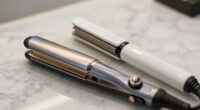
When it comes to high-speed hair dryers, airflow typically has a bigger impact on drying time and hair health than heat alone. A powerful airflow speeds up moisture removal and ensures even drying, while excessive heat can cause damage and frizz. Using the right balance—high airflow with moderate heat—lets you dry quickly without harming your hair. Stick around for tips on optimizing these settings for the best results.
Key Takeaways
- Airflow volume primarily determines drying speed and efficiency by removing moisture more effectively.
- Proper heat levels prevent damage; excessive heat risks hair weakening, regardless of airflow.
- High airflow with lower heat offers gentle, fast drying and reduces thermal injury.
- Focusing on airflow design and technology can outperform wattage or heat intensity alone.
- Balanced settings of airflow and heat optimize drying, safety, and hair health.
How Airflow Affects Your Hair Drying Time
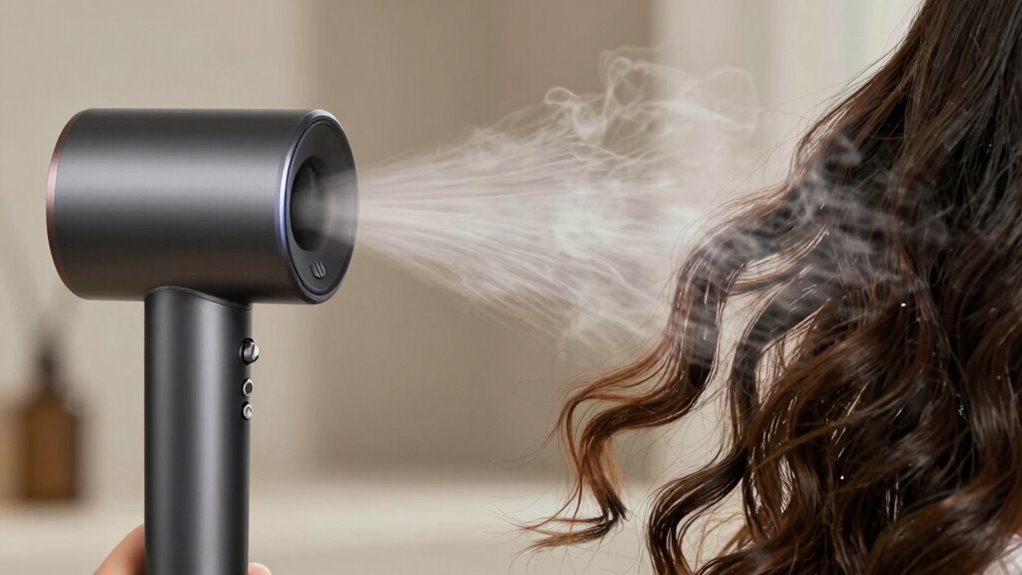
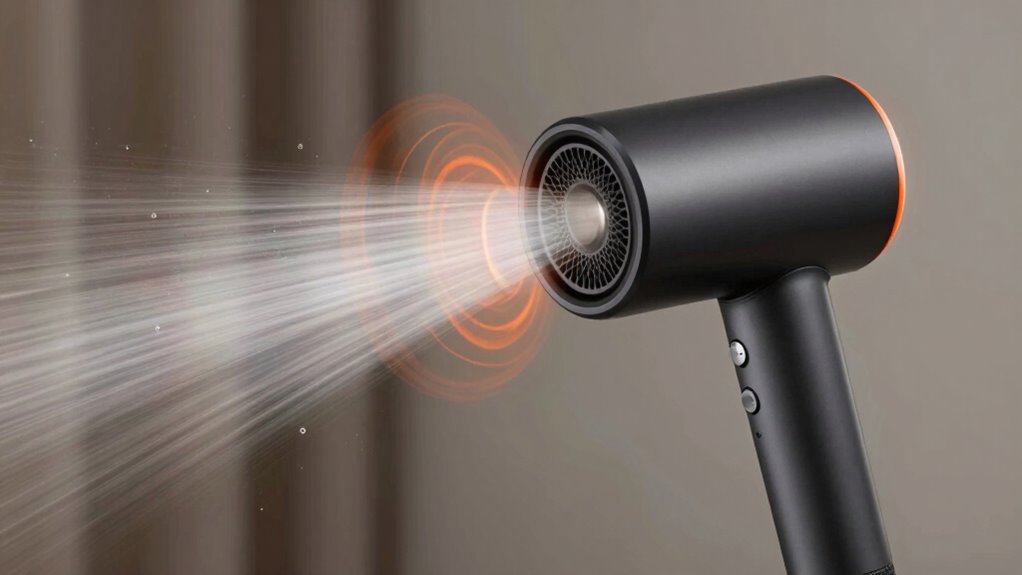
Airflow plays a crucial role in how quickly your hair dries with a high-speed dryer. The airflow volume directly impacts drying efficiency, meaning the more air the dryer pushes out, the faster your hair will dry. High airflow volume helps remove moisture quickly by increasing the amount of air passing over your hair strands. This improved airflow speeds up evaporation, reducing overall drying time. If your dryer delivers strong, consistent airflow, you’ll notice a significant difference in how long it takes to finish drying. Additionally, airflow design can influence how effectively the air reaches all areas of your hair, further impacting overall drying speed. Properly engineered airflow patterns ensure even distribution and prevent hot spots, enhancing both drying efficiency and hair health. When selecting a dryer, considering the performance metrics can help you find models that balance airflow and heat for optimal results. To maximize efficiency, choosing a dryer with both high airflow and a well-designed airflow pattern can make a notable difference in your drying experience. Understanding these airflow dynamics can also guide you in maintaining your dryer for better performance over time.
How Heat Settings Impact Drying Speed and Hair Health

Using higher heat settings can speed up your drying process, but it also increases the risk of heat damage to your hair. Finding the ideal temperature helps you dry quickly without sacrificing hair health. Let’s explore how to balance these factors for the best results. Additionally, choosing the appropriate heat temperature and understanding its impact on hair can help optimize the drying process and maintain hair integrity. Being aware of heat damage prevention techniques can further protect your hair during styling. Proper sizing and load considerations in your styling tools can also contribute to safer hair care and more efficient drying, ensuring your hair stays healthy over time. Incorporating safe styling practices can also help reduce long-term damage and support healthy hair over time. Understanding airflow and how it interacts with heat can make a significant difference in achieving quick yet gentle drying.
Heat Damage Risks
While higher heat settings can speed up drying, they also increase the risk of damaging your hair. Excessive heat can cause thermal injury, weakening hair strands and making them more prone to breakage. It can also lead to scalp irritation, causing redness, itching, and discomfort. Prolonged exposure to high temperatures strips moisture from your hair and scalp, reducing overall health and shine. If you’re not careful, you might unknowingly compromise your hair’s strength and scalp condition. Balancing heat and airflow is essential to prevent these risks. Using the highest heat setting isn’t always better; it’s about finding a safe level that dries efficiently without harming your hair or scalp. Always monitor your drying process to minimize thermal injury and scalp irritation. Understanding hair temperature thresholds can help you choose settings that protect your hair while drying effectively. Being aware of thermal injury risks is crucial for maintaining healthy hair over time and avoiding long-term damage. Additionally, understanding hair damage prevention techniques can help you maintain optimal hair health during regular styling routines. Incorporating proper drying practices can further reduce thermal stress and promote hair longevity, especially when combined with appropriate heat settings to ensure safe, effective drying.
Optimal Temperature Settings
Finding the right temperature setting on your hair dryer can markedly influence both drying time and hair health. Accurate temperature control guarantees you avoid excessive heat, reducing damage while maintaining effective drying. When your dryer offers precise temperature accuracy, you can set it to the ideal level for your hair type, balancing speed and safety. Using a lower, controlled heat setting not only minimizes heat damage but also enhances energy efficiency, saving power over time. High-speed dryers with adjustable temperature options allow you to customize your drying process, ensuring you don’t waste energy on unnecessary heat. Proper temperature control is essential for optimizing drying efficiency and maintaining hair health over the long term. Additionally, understanding the effects of heat on different hair textures enables you to tailor your drying routine for better results and healthier hair. Incorporating temperature regulation features can lead to more consistent and safer drying experiences, especially for sensitive or damaged hair types. Moreover, selecting a dryer with accurate temperature settings can significantly improve your overall hair care routine by preventing unintended heat exposure. Recognizing the importance of thermal protection can help you choose dryers that better safeguard your hair during styling.
Does Higher Wattage Mean Faster Drying?
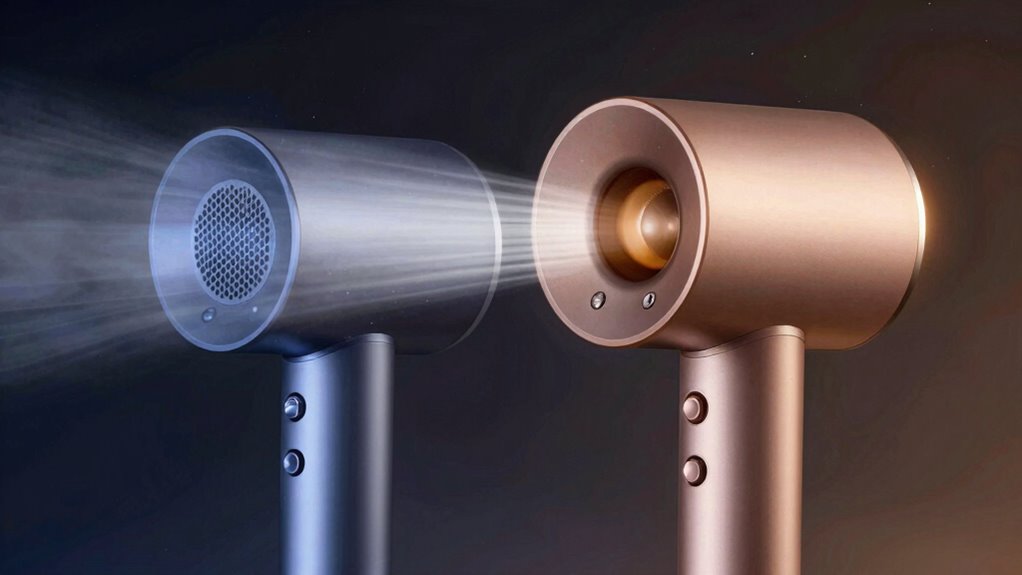
Higher wattage often suggests a faster drying time, but it doesn’t guarantee it. Many wattage misconceptions lead people to believe that a dryer’s power alone determines drying speed. In reality, wattage indicates how much energy the motor consumes, not how efficiently it dries your hair. A high-wattage dryer might have strong airflow, but if it lacks proper design or airflow optimization, drying speed won’t improve considerably. Conversely, a lower-wattage dryer with excellent airflow and heat distribution can dry your hair just as quickly. Instead of focusing solely on wattage, consider how the dryer’s airflow, heat settings, and design features work together to deliver fast, healthy results. Wattage is just one piece of the puzzle in achieving efficient drying. Additionally, understanding Net+ Certification Benefits can help you select the best tech tools for your styling needs. Recognizing the importance of performance factors, such as airflow and heat distribution, can lead to better choices regardless of wattage. For example, some advanced dryers incorporate innovative technology that enhances drying efficiency without increasing wattage. A thorough understanding of airflow dynamics can help you select a dryer that maximizes drying speed while maintaining hair health.
Choosing the Best Hair Dryer for Fast, Healthy Results
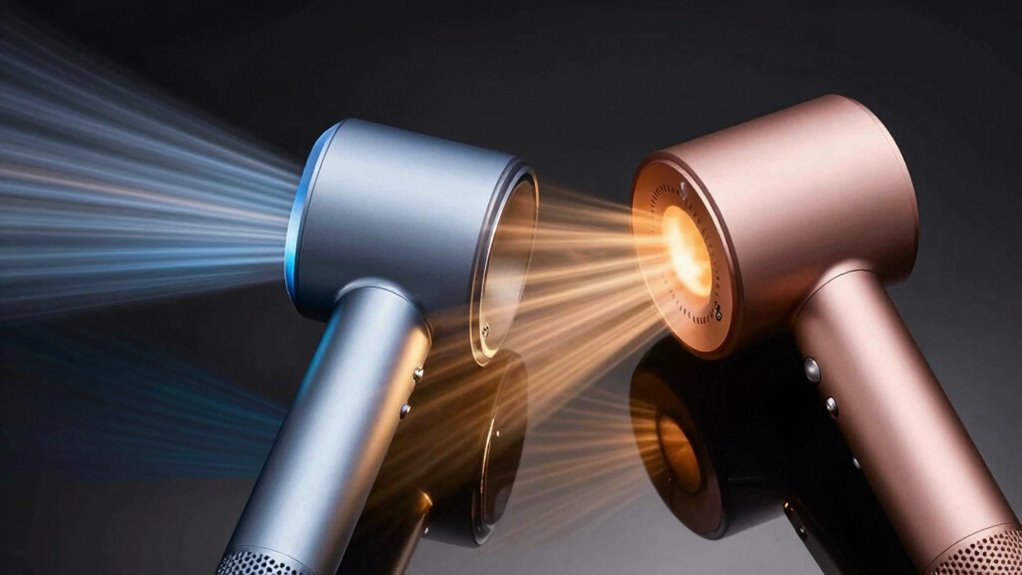
Choosing the best hair dryer for fast, healthy results involves more than just looking at wattage. To optimize your hair styling and enjoy travel convenience, consider these key factors:
- Adjustable heat and speed settings for gentle drying and styling flexibility.
- Lightweight, compact design that’s easy to pack and handle on the go.
- Ion technology to reduce frizz and boost shine without damaging your hair.
- Long-lasting durability to ensure reliable performance during frequent travel or daily use.
A high-quality dryer with these features helps you dry quickly while maintaining healthy hair. It also makes styling easier and more efficient, whether at home or on the road. Focus on airflow, heat control, and portability for the best results.
Debunking Myths About High-Speed Hair Dryers
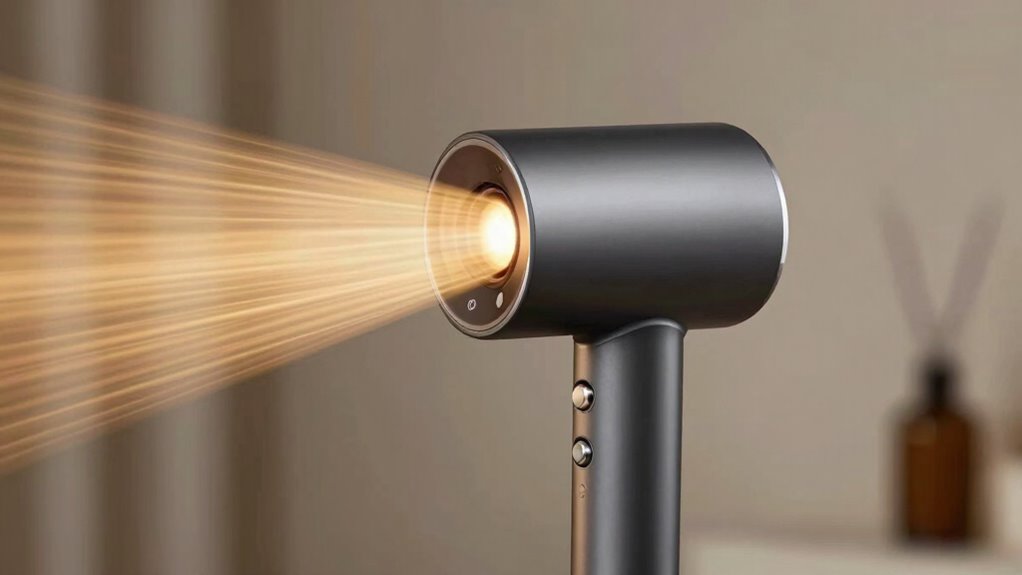
Many myths surround high-speed hair dryers, leading people to underestimate their effectiveness or worry about potential damage. Myth busting reveals that higher airflow doesn’t necessarily harm your hair if used properly. Instead, product marketing often emphasizes heat over airflow, creating misconceptions about what truly speeds up drying. Remember, it’s not just about high speed—it’s about balance. To clarify, consider this table:
| Myth | Reality |
|---|---|
| More heat dries hair faster | Excess heat causes damage, not efficiency |
| High speed damages hair | Proper use with cool or medium heat prevents harm |
| Faster drying means better | Overdoing speed can lead to frizz and breakage |
| Airflow isn’t important | Proper airflow reduces drying time safely |
Focus on effective airflow and gentle heat, not just product marketing hype.
Tips to Dry Your Hair Faster Without Damage
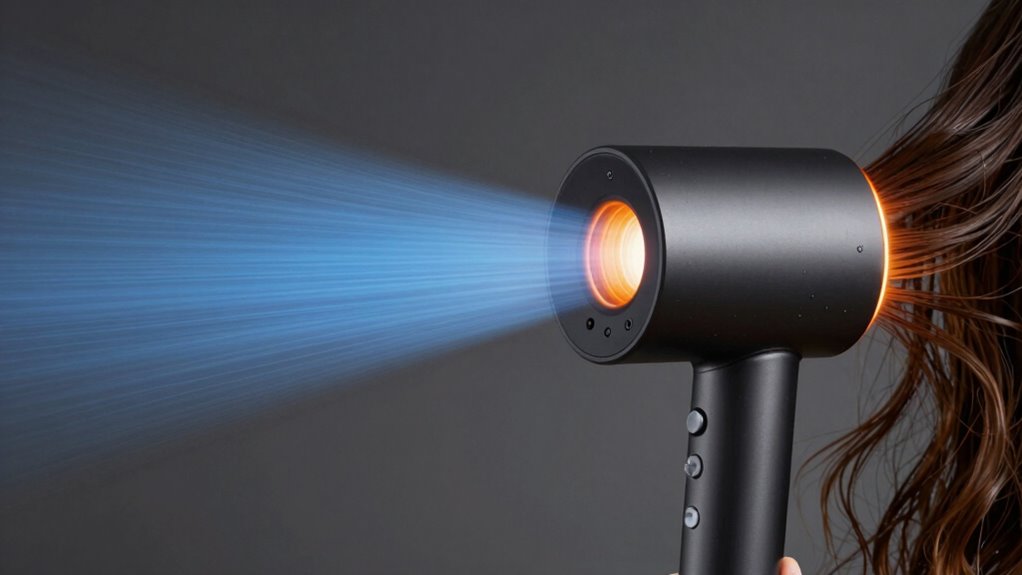
To dry your hair faster without causing damage, start by using the cool air setting on your dryer. This helps reduce heat exposure while still speeding up the process. Remember to apply heat safely by keeping the dryer moving and avoiding direct, prolonged contact with your scalp.
Use Cool Air Settings
Using the cool air setting on your hairdryer can help dry your hair faster while minimizing heat damage. Cool air, or low heat, helps set your style without risking excessive dryness or breakage. To maximize this method, try these tips:
- Finish with a blast of cool air after using heat to seal the cuticles.
- Use cool air during the final drying stages to lock in moisture.
- Avoid switching to high heat; stick with low heat and cool air for gentle drying.
- Keep the cool air flowing steadily to reduce overall drying time and prevent overheating.
Apply Heat Safely
Applying heat carefully is essential to dry your hair faster without causing damage. Use the lowest effective heat setting to protect your hair’s health and maintain your hairdryer’s product durability over time. Keep the dryer moving constantly to prevent localized heat buildup, which can weaken hair strands. Be mindful of noise levels; a quieter dryer often indicates better insulation and less risk of overheating. Avoid holding the dryer in one spot for too long, as this can lead to heat damage. Instead, focus on evenly distributing heat and airflow. Using a heat protectant spray before drying adds an extra layer of safety. By following these tips, you’ll dry your hair efficiently while minimizing damage and preserving your dryer’s longevity.
Using Airflow and Heat Settings Effectively for Perfect Blowouts

Mastering airflow and heat settings is essential for achieving a flawless blowout. To optimize your styling, consider these tips:
- Use high airflow with lower heat for gentle drying and smoothing, especially with ceramic technology that evenly distributes heat.
- Switch to lower airflow and higher heat for targeted styling, leveraging ionic features to reduce static and boost shine.
- Combine medium airflow with moderate heat for finishing touches, ensuring your hair remains shiny and frizz-free.
- Always adjust settings based on hair type—thinner hair benefits from lower heat, while thicker hair may need higher heat with controlled airflow.
Frequently Asked Questions
How Does Humidity Affect Drying Time and Hair Health?
Humidity impacts your drying time and hair health by affecting moisture retention. When humidity is high, your hair absorbs more moisture from the air, making it take longer to dry and increasing the risk of damage. Conversely, low humidity helps your hair release moisture faster, reducing drying time and potential harm. To protect your hair, adapt your drying techniques based on humidity levels, using suitable heat and airflow settings.
Can Professional Salons Achieve Faster Results Than Home Dryers?
Yes, professional salons can achieve faster results than home dryers by using advanced salon equipment and professional techniques. They typically have high-powered, high-quality dryers with stronger airflow and adjustable heat settings, allowing for quicker drying without damaging hair. Skilled stylists also optimize techniques like sectioning and proper tool handling, ensuring efficient, faster results. With the right tools and skills, you’ll notice a significant difference in drying speed and hair health.
What Role Does Nozzle Attachment Play in Drying Efficiency?
Think of the nozzle attachment as a focused beam of sunlight, directing your drying power. The nozzle size determines how concentrated the airflow is, while the attachment material affects heat retention and comfort. A narrow nozzle speeds up drying by concentrating airflow, but a larger one offers gentler styling. Choosing the right nozzle depends on your hair type and desired finish, making your drying process efficient and tailored.
Are There Specific Hair Types That Benefit More From High Airflow?
If you have low-porosity hair or scalp sensitivity, high airflow can be especially beneficial, helping you dry hair faster without excessive heat that could cause damage or irritation. You’ll notice quicker results and less stress on your scalp. For high-porosity hair, high airflow can enhance drying efficiency, but always balance it with heat settings to prevent dryness. Adjust your dryer settings based on your hair porosity and scalp sensitivity for ideal results.
How Often Should I Replace My Hair Dryer for Optimal Performance?
You should replace your hair dryer every 2 to 4 years for peak performance. Stick to a maintenance schedule by regularly cleaning the filter and checking for any damage. Over time, parts wear out, reducing efficiency and safety. Following a consistent replacement frequency ensures you get the best airflow and heat performance, preventing overheating or motor failure. Don’t ignore signs like strange noises or reduced airflow—those are clues it’s time for a new dryer.
Conclusion
Remember, speed isn’t everything—it’s about finding the right balance. Focus on maximizing airflow and using heat wisely to dry your hair quickly without damage. Don’t forget, patience is a virtue, and rushing can harm your hair’s health. By understanding how your dryer works, you can achieve salon-quality results at home. So, take your time and trust the process—sometimes, slow and steady truly wins the race.