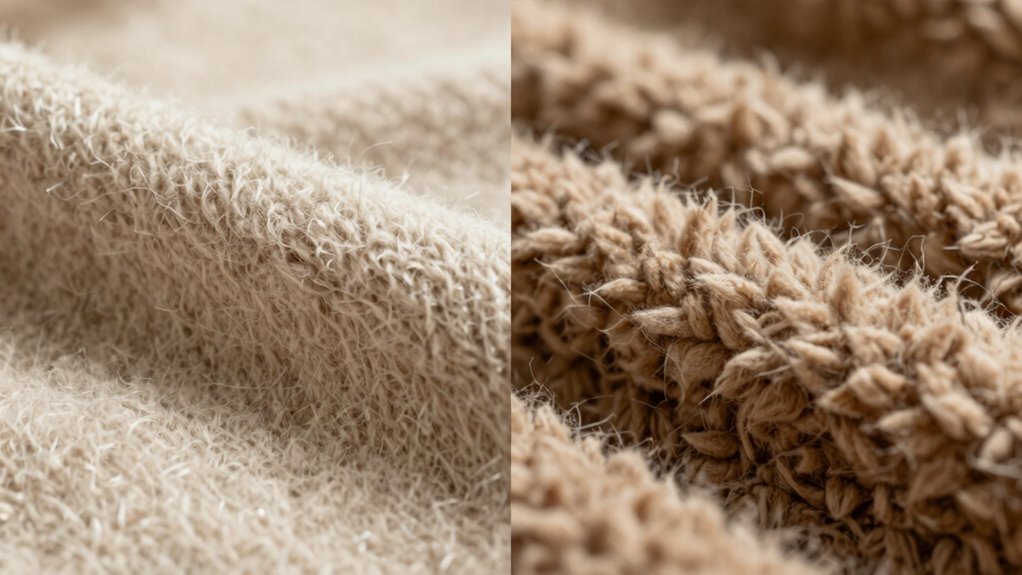
When comparing merino wool and alpaca, you’ll find that alpaca provides greater warmth due to its denser fibers, making it ideal for cold environments. Merino wool is softer, less itchy, and well-suited for sensitive skin, offering excellent moisture-wicking and breathability for active wear. Layering with merino under alpaca adds versatile insulation, but proper care is essential to maintain durability. To discover which fiber best fits your climate and needs, continue exploring the details ahead.
Key Takeaways
- Alpaca fibers are denser and warmer than merino wool, making them ideal for extreme cold conditions.
- Merino wool is finer and softer, resulting in less itchiness and better comfort for sensitive skin.
- Both fibers excel at moisture management, but merino offers superior breathability and moisture-wicking for active wear.
- Alpaca is naturally hypoallergenic and requires less chemical processing, maintaining its luxurious feel and durability.
- Layering with merino as a base and alpaca for insulation provides versatile warmth and comfort across different climates.
What Makes Merino Wool and Alpaca Unique?
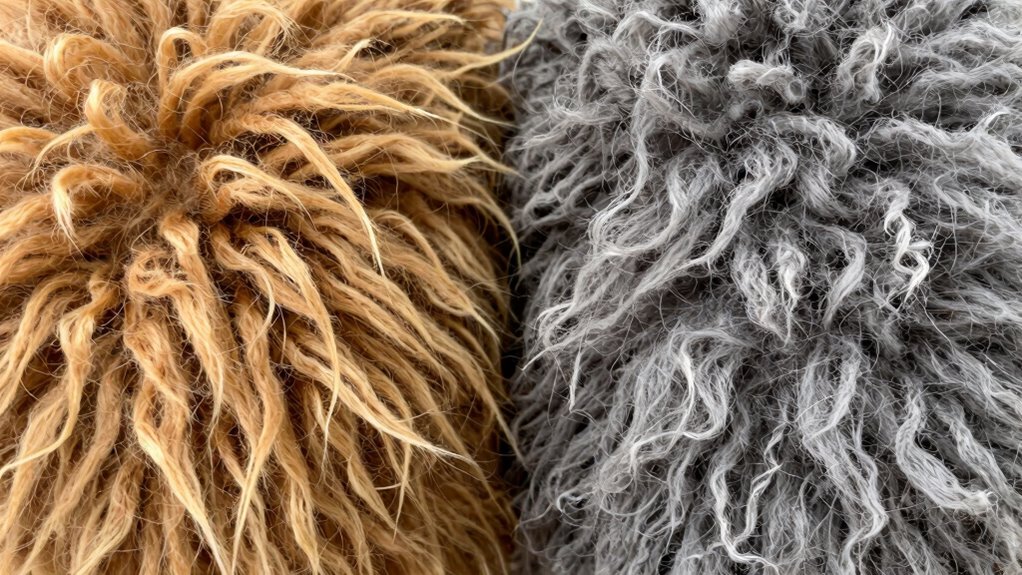
Ever wonder what sets Merino wool and alpaca apart? Both fibers come from animals raised through sustainable farming practices, emphasizing eco-friendly methods. Merino sheep produce fine, soft wool that’s highly regarded for its versatility, while alpacas offer a luxurious, lightweight fiber. sustainable farming practices also influence the quality and environmental impact of each fiber. The key difference lies in fiber processing: Merino wool undergoes a meticulous process to remove lanolin, resulting in a smooth, itch-free fabric. Alpaca fiber, on the other hand, is naturally hypoallergenic and doesn’t require as much chemical treatment. These farming and processing distinctions give each fiber unique properties—Merino wool’s fine, elastic qualities versus alpaca’s silky softness. Processing methods also influence the durability and feel of the finished product, further distinguishing these fibers. Additionally, the fiber structure impacts how each material responds to moisture and temperature, influencing their performance in various climates.
Which Keeps You Warmer: Merino Wool or Alpaca?
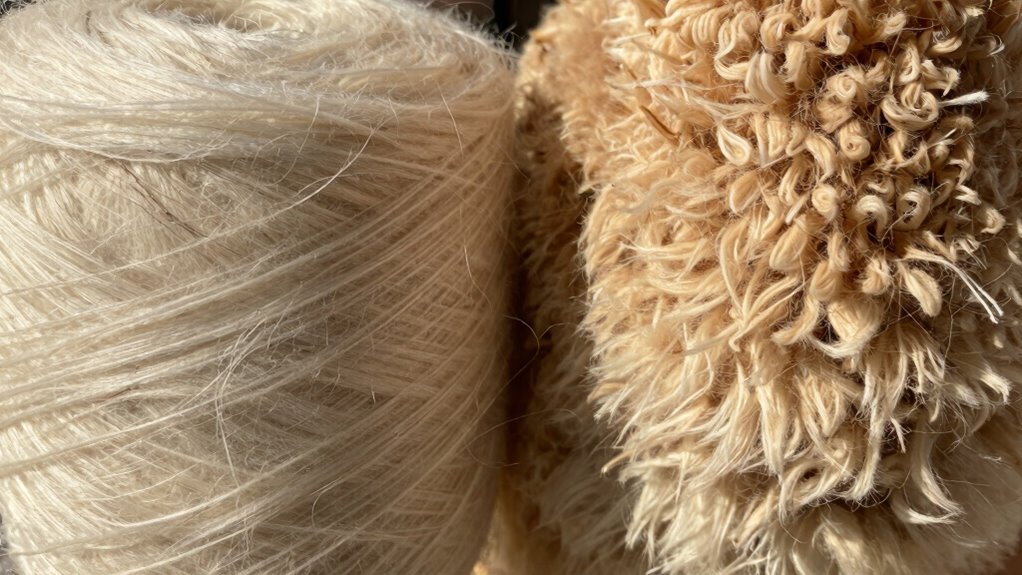
When it comes to staying warm, both Merino wool and alpaca offer excellent insulation, but their effectiveness depends on their fiber properties. Merino wool traps heat efficiently thanks to its fine fibers, which create tiny air pockets that insulate your body. Alpaca, with its denser fibers, provides even greater warmth, making it ideal for extreme cold. Additionally, both fibers are valued for their fiber sustainability, as they’re renewable and biodegradable. Culturally, alpaca holds deep significance in Andean communities, symbolizing heritage and tradition, which adds to its appeal. While Merino wool is widely appreciated for its versatile warmth and softness, alpaca’s superior insulation makes it the warmer choice in frigid conditions. Your choice depends on the level of warmth you need and the cultural value you place on the fibers. fiber properties play a crucial role in determining the insulation capabilities of each material. Moreover, fiber durability can influence how well each material performs over time and with repeated use.
How Do Merino and Alpaca Feel Next to the Skin? Are They Suitable for Sensitive Skin?
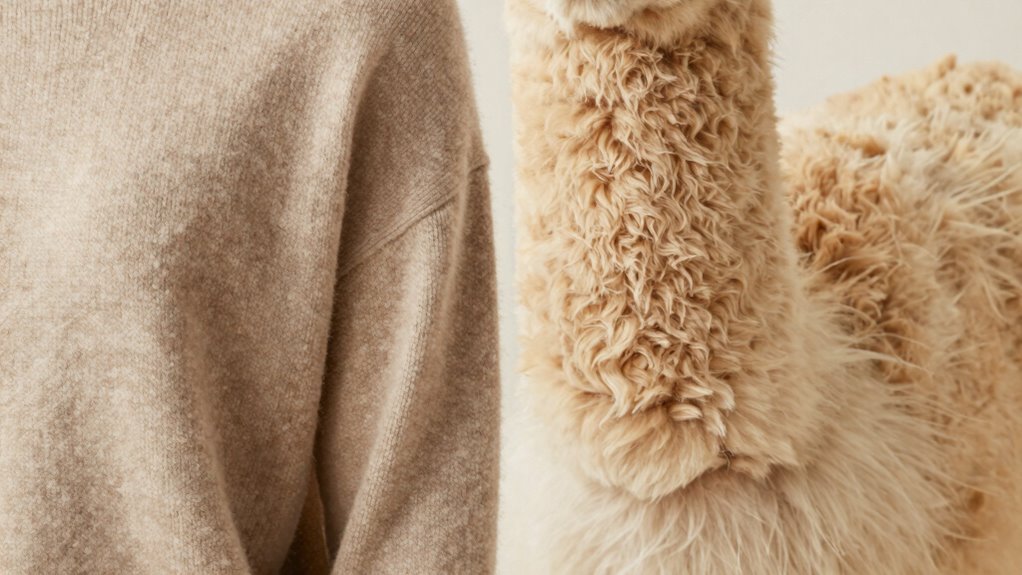
Both Merino and Alpaca fibers are known for their softness, but they can feel different against sensitive skin. You might notice that Merino is gentle and less itchy, making it a popular choice for those prone to irritation. Alpaca, while incredibly soft, can sometimes be slightly coarser, so it’s worth considering your skin’s sensitivity before choosing. Additionally, some Gold IRA market providers emphasize the importance of high-quality fibers to ensure comfort and durability in clothing. Proper fiber processing can significantly impact the overall feel and performance of the material.
Skin Sensitivity Compatibility
If you have sensitive skin, choosing the right material can make a big difference in comfort. Merino wool is known for its softness and fine fibers, making it generally suitable for sensitive skin. Alpaca, while also soft, has a smoother surface but can sometimes cause irritation depending on processing.
| Feature | Merino Wool | Alpaca | Considerations |
|---|---|---|---|
| Fiber dyeing | Gentle, eco-friendly dyes | Often less dyeing involved | Affects skin sensitivity |
| Texture | Soft, fine fibers | Silky, smooth but variable | Sensitive skin may react to coarser fibers |
| Environmental impact | Low with sustainable methods | Slightly higher, less chemical use | Choose brands emphasizing eco-friendliness |
| Itch factor | Minimal when processed well | Usually minimal | Proper processing reduces irritation |
Itchiness Levels Comparison
Understanding how merino and alpaca fibers feel against your skin is essential if you have sensitive skin, as the itchiness levels can markedly affect comfort. Merino wool is known for its high fiber softness, making it less likely to cause irritation. Its fine fibers often feel smooth and gentle, suitable for those prone to itchiness. Alpaca, on the other hand, has fibers that are typically softer than traditional wool but can vary depending on the breed. While alpaca generally causes less itchiness than coarser wools, some people with very sensitive skin might still experience slight irritation. Overall, merino tends to have lower itchiness levels, making it a safer choice for sensitive skin, whereas alpaca’s fibers are soft but may still cause minor discomfort for some individuals. Additionally, fiber fineness plays a crucial role in how these materials feel next to the skin.
Softness and Comfort
When it comes to softness and comfort, merino wool is renowned for its incredibly smooth and gentle feel against the skin. Its fiber softness creates a luxurious material comfort that many find pleasant, even for those with sensitive skin. Merino fibers are fine and smooth, reducing irritation and itchiness, making it suitable for prolonged wear. In contrast, alpaca feels soft but can vary depending on the fiber’s processing; some may find it slightly coarser, affecting material comfort. While alpaca offers warmth and a silky touch, it might not suit everyone with ultra-sensitive skin. Overall, merino’s fiber softness generally provides superior comfort, making it a popular choice for base layers and everyday wear. Alpaca, though luxurious, may require careful selection for sensitive skin types.
How Breathable and Moisture-Wicking Are Merino and Alpaca?

Both Merino wool and alpaca fibers excel in moisture management, making them popular choices for activewear and outdoor clothing. They help with thermal regulation and moisture control by drawing sweat away from your skin and allowing it to evaporate. Merino’s fine fibers provide excellent breathability, keeping you dry and comfortable during activity. Alpaca, while slightly less breathable, still manages moisture well and offers better insulation. To compare their performance:
| Feature | Merino Wool | Alpaca | Best For |
|---|---|---|---|
| Breathability | High | Moderate | Active pursuits |
| Moisture-Wicking | Excellent | Good | High-sweat activities |
| Thermal Regulation | Superior | Good | Cold-weather wear |
| Moisture Control | Very effective | Effective | All-weather comfort |
Tips for Layering With Merino Wool for Versatile Warmth
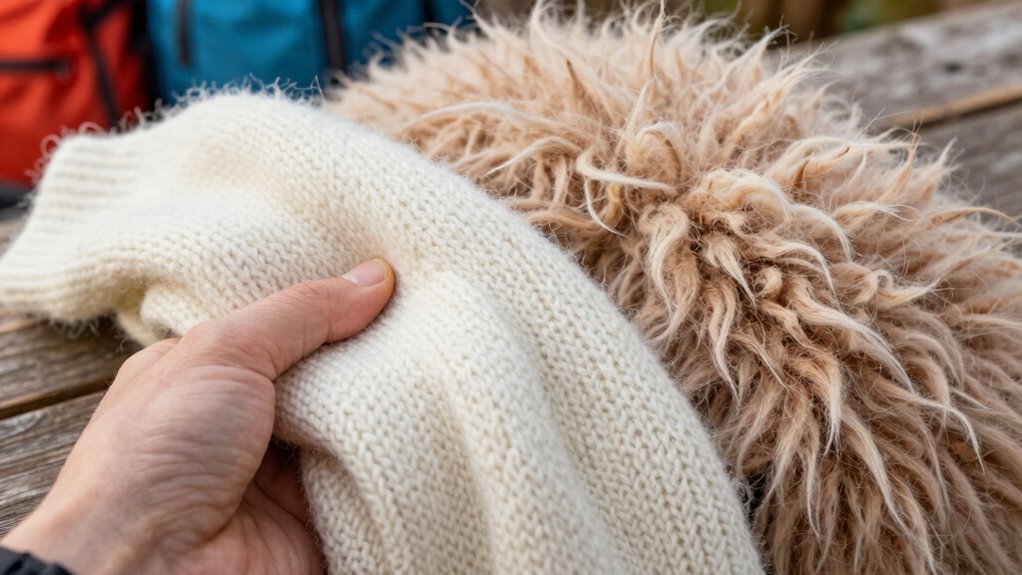
Layering with Merino wool is a smart way to stay warm and adaptable in changing weather conditions. Use effective layering techniques by starting with a moisture-wicking base layer to keep sweat away from your skin. Add a lightweight Merino mid-layer for insulation that adjusts to temperature changes, helping with natural temperature regulation. When it’s colder, layer more Merino pieces or add an outer shell for wind and water protection. Keep in mind, Merino’s breathability prevents overheating, so you can stay comfortable during activity or rest. Focus on fit—clothes should be snug but not tight—to maximize warmth and movement. Additionally, understanding the best layering practices can help you optimize your warmth and comfort in various conditions. For optimal performance, selecting appropriate clothing materials that complement Merino wool can enhance your layering system. Incorporating smart clothing technology can further improve moisture management and temperature regulation, making your layering system even more effective. Being mindful of layering techniques for different climates ensures you stay comfortable whether you’re in mild or extreme weather, and by combining these layering tips, you’ll enjoy versatile warmth with Merino wool, whether you’re hiking, commuting, or relaxing outdoors.
How to Layer With Alpaca for Comfort and Efficiency

To layer with alpaca effectively, start with a suitable base layer that keeps you warm and wicks moisture. Next, add additional layers that balance insulation and breathability to stay comfortable in changing conditions. By choosing the right pieces, you’ll maximize both warmth and efficiency throughout your day. Additionally, selecting appropriate layering techniques can help prevent overheating and moisture buildup, ensuring comfort during extended wear. Incorporating moisture-wicking fabrics into your layering system can further enhance comfort by managing sweat and humidity effectively. Understanding layering principles can also optimize how each piece interacts, improving thermal regulation and overall comfort and performance. Practicing proper layering techniques can also extend the lifespan of your clothing and reduce waste, contributing to a more sustainable wardrobe.
Choosing the Right Base Layer
Choosing the right base layer is essential for staying comfortable and dry in any outdoor activity, and alpaca wool is an excellent option to contemplate. Its natural properties help regulate temperature and wick moisture, keeping you dry and comfortable. When selecting your base layer, consider fiber sustainability, as alpaca wool has a lower environmental impact compared to synthetic options. Look for high-quality, ethically sourced alpaca garments to maximize benefits. Additionally, understanding the decoding slang behind certain fiber descriptions can help you better interpret product labels and make more informed choices. Key factors include: – Softness and itch factor for skin comfort – Breathability and moisture-wicking capabilities – Durability and durability-to-weight ratio – Environmental impact and sustainable fiber practices – Fit and layering compatibility with other garments
Layering for Warmth and Breathability
Once you’ve selected a high-quality alpaca base layer, building an effective system for warmth and breathability becomes straightforward. Start by adding an insulating mid-layer, like a fleece or wool sweater, to boost thermal insulation without sacrificing breathability. Make sure your outer layer is wind and water-resistant to protect against the elements while allowing moisture management. Alpaca fibers excel at wicking moisture away from your skin, preventing dampness and chills. Incorporate ventilation zippers or mesh panels if possible, to enhance airflow during activity. Layering smartly ensures you stay warm without overheating. Remember, the key is balancing insulation and moisture management, so your clothing system adapts to changing conditions and keeps you comfortable throughout your outdoor adventure. Additionally, choosing breathable fabrics can further optimize moisture control and comfort during active wear. Incorporating layering techniques that include moisture-wicking base layers and breathable outer shells can significantly improve overall comfort. Proper layering strategies, such as adjusting layers based on activity level, are essential for maintaining comfort and efficiency in varied weather conditions. A well-designed layering system also helps prevent overheating and sweat buildup, which is crucial for maintaining warmth and dryness. Being mindful of moisture management helps prevent the chill from damp clothing, especially in unpredictable weather.
How Durable Are Merino and Alpaca? Care and Maintenance Tips

Merino wool is renowned for its durability, thanks to its fine but strong fibers that withstand regular wear. To keep your merino clothing in top shape, follow simple care routines like gentle washing in cold water and avoiding harsh detergents. Alpaca, while softer, is also quite durable but needs careful handling to prevent pilling and fiber breakage. Proper maintenance extends the lifespan of both fibers. Seasonal variations also influence how you should care for your garments, as different temperatures and conditions can affect fiber performance.
- Use mild detergents to protect fiber integrity
- Avoid high heat when drying or ironing
- Store items folded to prevent stretching
- Regularly check for and remove stains promptly
- Hand wash or use delicate cycles for longevity
Focusing on stain removal and gentle care routines helps maintain softness and durability for both merino and alpaca garments.
What Are the Costs and Value of Merino Wool Compared to Alpaca?

When comparing Merino wool and alpaca, you’ll notice differences in cost and price range. Merino tends to be more affordable upfront, but alpaca offers a longer-lasting investment. Understanding these costs helps you decide which fiber provides better value for your needs.
Cost Differences and Price Range
Are you curious about how the costs of merino wool compare to those of alpaca? Generally, alpaca tends to be more expensive due to its rarity and luxurious fiber softness. When doing a price comparison, you’ll find that merino wool offers a more affordable option without sacrificing quality, making it a popular choice for everyday wear. The price range for merino varies based on quality and garment type, while alpaca prices are often higher, reflecting its premium status. Factors influencing costs include fiber softness, fiber processing, and sourcing. Keep in mind that alpaca’s higher price often correlates with increased durability and warmth.
- Rarity and sourcing impact overall costs
- Fiber softness influences retail prices
- Processing techniques affect price variation
- Pure alpaca is usually pricier than blended options
- Investment in alpaca garments can be higher but offers longevity
Longevity and Investment Value
Although alpaca garments often come with a higher upfront cost, they tend to last longer and maintain their quality over time, making them a wise investment. Their durability results from strong fibers that resist pilling and wear, reducing the need for frequent replacements. When considering longevity and investment value, it’s important to factor in sustainability practices and ethical sourcing. Alpacas are typically raised with gentle, sustainable methods that minimize environmental impact, adding to their appeal. Conversely, merino wool’s natural resilience offers good longevity, but its durability can vary based on quality and care. Both fibers can provide value over time if sourced responsibly. For example, piercing care and hygiene practices can influence the lifespan of clothing, highlighting the importance of proper maintenance. Ultimately, investing in ethically sourced alpaca or merino guarantees you’re supporting sustainable practices while enjoying durable, long-lasting garments.
Which Fiber Is Better for Your Climate and Activity Level?
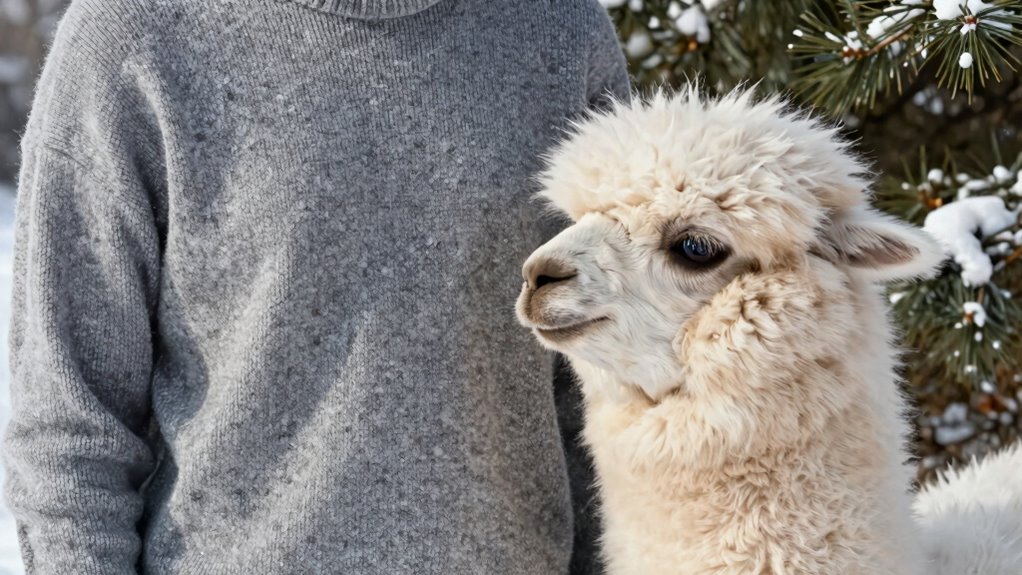
Choosing the right fiber depends heavily on your climate and activity level. If you’re active outdoors or live in a colder environment, you’ll want a fiber with good climate suitability and moisture-wicking properties. Merino wool excels in regulating temperature and staying comfortable during high activity, while alpaca offers superior warmth but less breathability. For milder or humid climates, merino’s moisture management keeps you dry and reduces odor. In colder, dry conditions, alpaca’s insulation keeps you warm without extra bulk. Consider activity considerations like hiking, skiing, or everyday wear, as these influence which fiber performs best.
Choose fibers suited to your climate and activity for optimal comfort and performance.
- Climate suitability for temperature extremes
- Moisture-wicking and breathability
- Insulation and warmth retention
- Odor resistance during activity
- Durability under frequent use
Which Fiber Is Best for Your Needs: Merino or Alpaca?
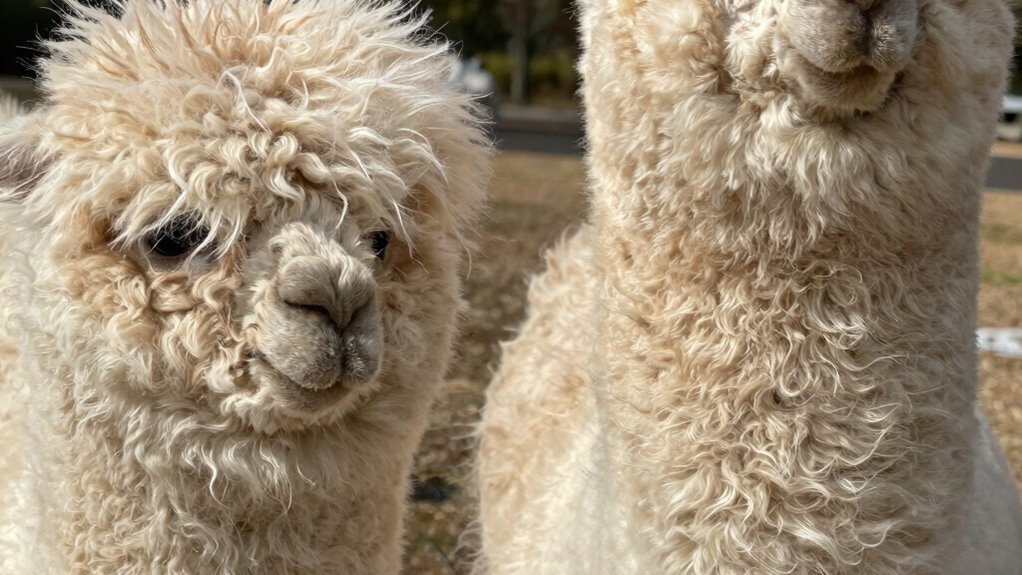
When deciding between merino wool and alpaca, it’s important to contemplate your specific needs and priorities. If you prefer versatile, moisture-wicking fibers, merino is a strong choice, especially since it blends well with other fibers for added performance. Alpaca, on the other hand, offers exceptional warmth and a softer feel, making it ideal for cold climates. Consider the ecological impact too—alpaca requires less water and land, making it a more sustainable option. Fiber blending allows you to combine the best qualities of both, tailoring your clothing for comfort and function. Ultimately, your choice depends on whether warmth, itch factor, or eco-friendliness matters most to you. Both fibers have unique benefits, so match your needs with their characteristics for the best fit.
Frequently Asked Questions
How Eco-Friendly Are Merino Wool and Alpaca Fibers?
You’ll find that both merino wool and alpaca fibers are quite eco-friendly, especially when sourced from sustainable farming practices. Merino sheep are often grazed on land that benefits from rotational grazing, reducing environmental impact. Alpacas have gentle grazing habits and require less water and feed. Overall, their ecological impact is minimal, making these fibers a good choice if you care about sustainability and reducing your environmental footprint.
Can Merino and Alpaca Fibers Be Blended With Other Materials?
Blending merino and alpaca fibers is like mixing vibrant colors to create a unique hue—you get tailored material combinations. You can blend these fibers with synthetic or natural materials to enhance durability, stretch, or softness. Fiber blending allows you to customize your textiles, making them more versatile for different uses. So, yes, combining merino and alpaca with other fibers is a common way to improve performance and comfort in your clothing or gear.
Which Fiber Is More Resistant to Odors Over Time?
You’ll find that merino wool is more resistant to odors over time, thanks to its natural antimicrobial properties, which help keep your clothing fresher longer. Alpaca, while warm and soft, isn’t as odor-resistant, so it may need more frequent washing. When considering fiber longevity, merino tends to maintain its odor resistance and quality longer with proper care. This makes merino a better choice if odor resistance is your top priority.
How Does Each Fiber Perform in Extremely Cold Conditions?
In extremely cold conditions, Merino and Alpaca fibers both excel in thermal insulation, but Alpaca generally offers better warmth due to its higher density. You’ll find Alpaca fiber provides superior moisture wicking, helping to keep you dry and warm. Merino also insulates well and wicks moisture effectively, but Alpaca’s natural properties make it slightly more suitable for extreme cold. Both fibers help you stay warm and dry in harsh environments.
Are There Hypoallergenic Options Within Merino and Alpaca Products?
You might think hypoallergenic options are rare, but both merino and alpaca offer gentle choices. If you have sensitive skin, look for merino wool labeled as “superfine” or “ultrafine,” which minimizes itching. Alpaca’s natural smooth fibers also tend to be hypoallergenic, making them ideal for sensitive skin. So, yes, you can find cozy, hypoallergenic options in both fibers—your skin’s comfort isn’t a myth.
Conclusion
Choosing between merino and alpaca depends on your needs, but don’t worry—both fibers offer exceptional warmth and comfort. If you’re worried about itchiness, merino’s softness makes it a great choice for sensitive skin, while alpaca’s luxurious feel may appeal if you prioritize insulation. Either way, with proper care, these natural fibers can last for years. So, pick what suits your climate and activity, and enjoy cozy, sustainable warmth all year round.