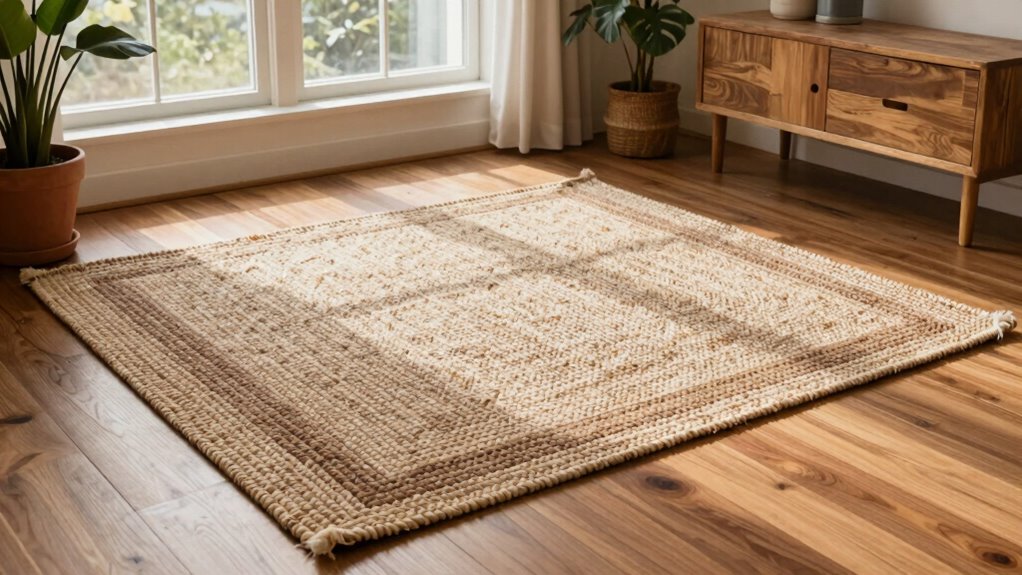
Jute rugs are eco-friendly, made from sustainable fibers, making them great for casual, low-traffic spaces like bedrooms or entryways. They add warmth and texture but aren’t ideal for areas with high moisture or heavy foot traffic, as spills and sunlight can cause stains and fading. Proper maintenance helps preserve their look, but knowing where they work best will help you avoid common issues. To discover tips for choosing and caring for jute rugs, keep exploring.
Key Takeaways
- Jute rugs thrive in casual, low-traffic areas like bedrooms and entryways due to their natural texture and eco-friendly qualities.
- They are best suited for spaces that prioritize style and comfort but avoid high-moisture zones to prevent damage.
- Jute rugs lack stain resistance and fade under direct sunlight, making them less ideal for high-traffic or sun-exposed areas.
- Proper maintenance, such as regular vacuuming and moisture control, is essential to prolong their appearance and durability.
- Natural fiber options like sisal and coir offer greater resistance to wear, while jute provides a softer, rustic aesthetic with some limitations.
What Are Jute Rugs and Why Are They Eco-Friendly?

Jute rugs are natural floor coverings made from fibers harvested from the jute plant, a sustainable and biodegradable resource. These rugs offer significant eco-friendly benefits because they’re made from sustainable materials that renew quickly and require minimal processing. By choosing jute, you reduce your environmental impact, as it’s a renewable resource that doesn’t rely on harmful chemicals or synthetic fibers. Jute cultivation improves soil health and requires less water compared to other crops, making it a responsible choice for eco-conscious homeowners. Not only are these rugs biodegradable at the end of their life, but they also help lower your carbon footprint during production. Overall, jute rugs are an environmentally friendly flooring option that combines sustainability, durability, and natural beauty.
Where Do Jute Rugs Work Best in Your Home?
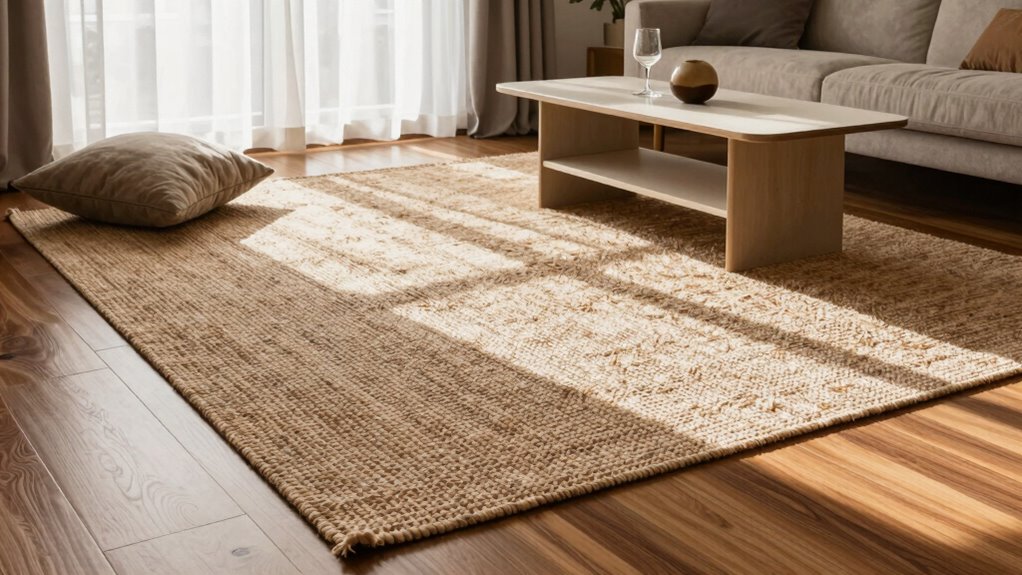
Because of their natural texture and neutral tones, jute rugs work best in casual, relaxed spaces like living rooms, dining areas, and entryways. They add warmth and complement decorative accents such as cushions or throws. Jute rugs are also a pet-friendly option, resisting scratches and shedding less than other fibers. To help you decide where they fit best, consider this table:
| Space | Why It Works |
|---|---|
| Living Rooms | Adds texture, creates a cozy atmosphere |
| Dining Areas | Durable for high foot traffic, easy to clean |
| Entryways | Welcoming, hides dirt well, enhances decor |
Use jute rugs where comfort, style, and practicality align—perfect for laid-back, stylish homes. Additionally, understanding fiber durability can help you select the best rug for your space, especially when considering maintenance requirements for longevity. Proper cleaning methods are essential for preserving their natural appearance and extending their lifespan, and choosing the right underlay or padding can improve comfort and durability. Being aware of resistance to moisture can also guide you in placing jute rugs in suitable areas to prevent damage.
What Are the Common Challenges of Using Jute Rugs?
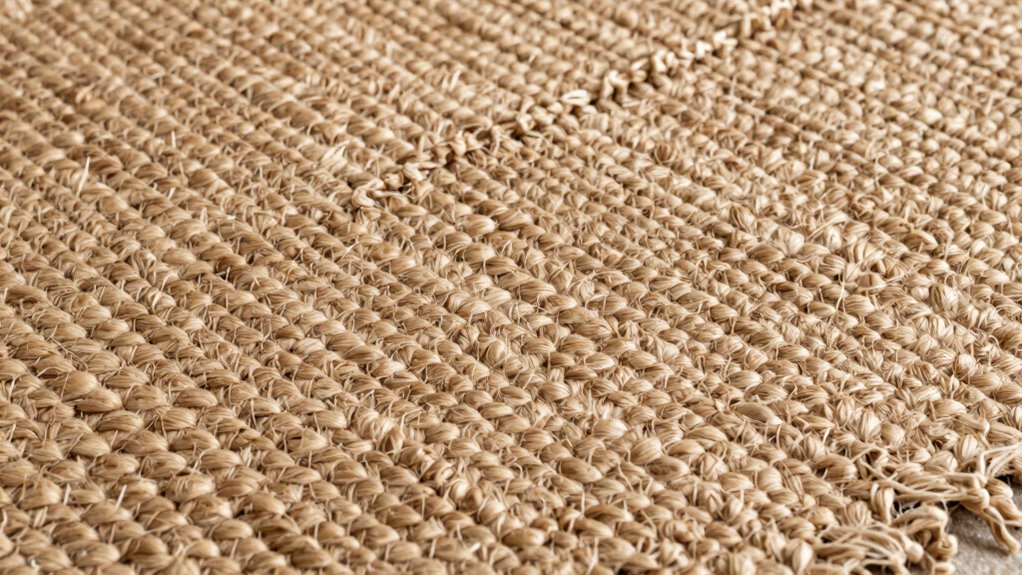
While jute rugs add natural charm and warmth to casual spaces, they also come with specific challenges that can affect their performance and longevity. One major issue is their lack of stain resistance; spills can seep into the fibers and stain easily. Second, jute rugs are prone to color fading when exposed to direct sunlight, which can diminish their vibrant appearance over time. Additionally, moisture is a concern—exposure to water or humidity can weaken the fibers and promote mold growth. Proper ventilation can help mitigate some moisture-related issues and prolong the rug’s life. Moreover, Gold IRA markets show how specialized investment options require careful consideration, much like choosing the right rug for your space. These challenges mean you need to be cautious with placement and maintenance. Protecting your rug from spills, limiting sun exposure, and controlling humidity will help preserve its look and durability. Being aware of these common hurdles guarantees your jute rug remains a beautiful, natural addition to your space. Additionally, understanding fiber properties can help you select the best care routine for your rug’s longevity.
How Can You Keep Your Jute Rug Looking Great?
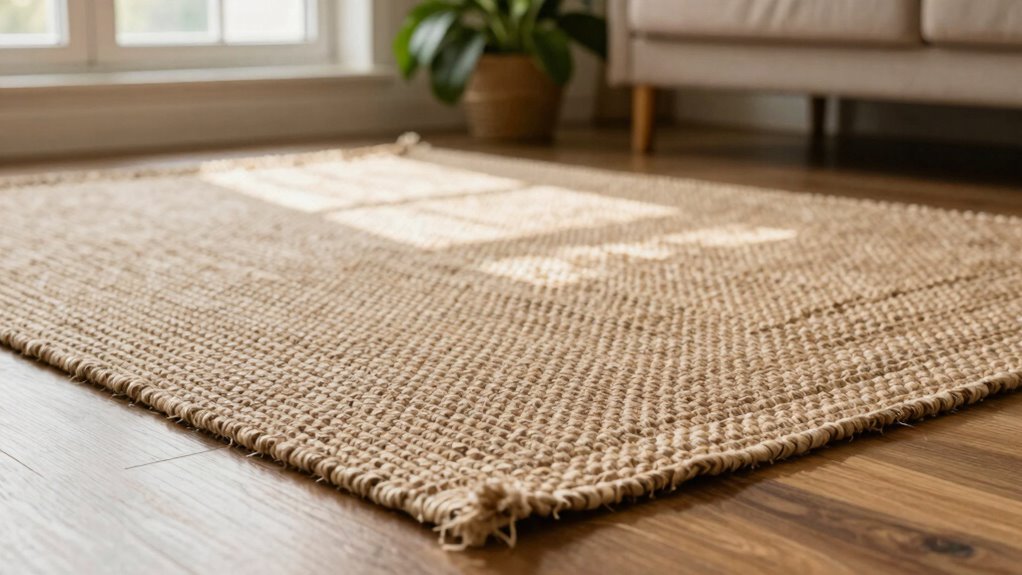
To keep your jute rug looking great, regular vacuuming is essential to remove dirt and prevent buildup. Protect it from moisture by avoiding spills and using a damp cloth for spot cleaning, and always choose gentle, suitable cleaners. These simple steps will help maintain its natural beauty and durability over time. Additionally, consider using upholstery protectors to prevent stains and damage from everyday wear. Implementing proper cleaning techniques can further extend the lifespan of your jute rug and keep it looking fresh. Regularly inspecting your rug for signs of fiber deterioration can help address issues early and preserve its appearance. Being aware of potential environmental hazards that can harm natural fibers is also crucial for proper care. Remember that choosing appropriate cleaning products tailored for natural fibers can significantly reduce the risk of damage.
Regular Vacuuming Techniques
Regular vacuuming is essential for maintaining the appearance and durability of your jute rug. It helps prevent dirt buildup and keeps your rug looking fresh. To keep your rug in top shape, establish a consistent cleaning schedule based on foot traffic.
- Vacuum at least once a week for low-traffic areas, and more often in high-traffic spots.
- Use a vacuum with a gentle brush or suction setting to avoid damaging the fibers.
- Always vacuum in the direction of the rug’s weave to prevent fraying and maintain its integrity.
- Incorporate European cloud servers into your storage solutions to ensure data security and environmental sustainability.
- Understanding haute couture principles can inspire more refined and delicate cleaning techniques for luxurious textiles.
Stick to your vacuum frequency to prevent dirt from embedding, which can cause wear over time. Regular vacuuming preserves your rug’s natural beauty and extends its lifespan.
Protect From Moisture
Moisture is one of the biggest threats to your jute rug’s appearance and longevity. To protect it, focus on moisture control and mold prevention. Keep your rug in dry areas and avoid placing it where spills or humidity are common. Use a dehumidifier or ensure good ventilation to reduce moisture levels. If your rug gets wet, dry it promptly with towels and air circulation. Regularly check for signs of mold or dampness, especially in humid climates. Proper moisture management is essential for maintaining the integrity of natural fiber rugs like jute. Additionally, understanding air quality can help prevent mold growth and preserve your rug’s condition over time. Good air circulation and ventilation practices play a crucial role in maintaining a healthy environment for your natural fiber rugs. Here’s a quick guide:
| Moisture Control Tips | Mold Prevention Strategies | Common Mistakes |
|---|---|---|
| Use waterproof pads | Keep area dry | Leaving spills unattended |
| Ventilate often | Clean spills immediately | Ignoring damp patches |
| Avoid high humidity | Use mold inhibitors | Forgetting to dry thoroughly |
| Be aware of dehumidifier benefits | Regularly inspect for mold | Not addressing spills promptly |
Use Appropriate Cleaners
Choosing the right cleaners is essential to keeping your jute rug looking its best. You want to protect its natural fibers while supporting eco-friendly benefits and sustainable sourcing. To do this, stick to gentle, natural cleaning solutions. Here are three tips:
- Use a mixture of mild dish soap and water for spot cleaning—avoid harsh chemicals that can damage fibers.
- Opt for eco-friendly cleaners that are biodegradable and free from toxic ingredients, preserving your rug’s natural integrity.
- Regularly vacuum with a soft brush attachment to remove dirt without excessive moisture, reducing wear and extending lifespan.
- Be mindful of air purifier maintenance when cleaning your space to ensure that airborne dust and allergens do not settle on your rug, helping maintain its cleanliness and longevity. Proper air purifier upkeep can also prevent the accumulation of dust that may settle on your rug’s fibers over time, especially when combined with HVAC optimization strategies to improve overall indoor air quality.
How Do You Choose a Jute Rug for Different Traffic Levels?
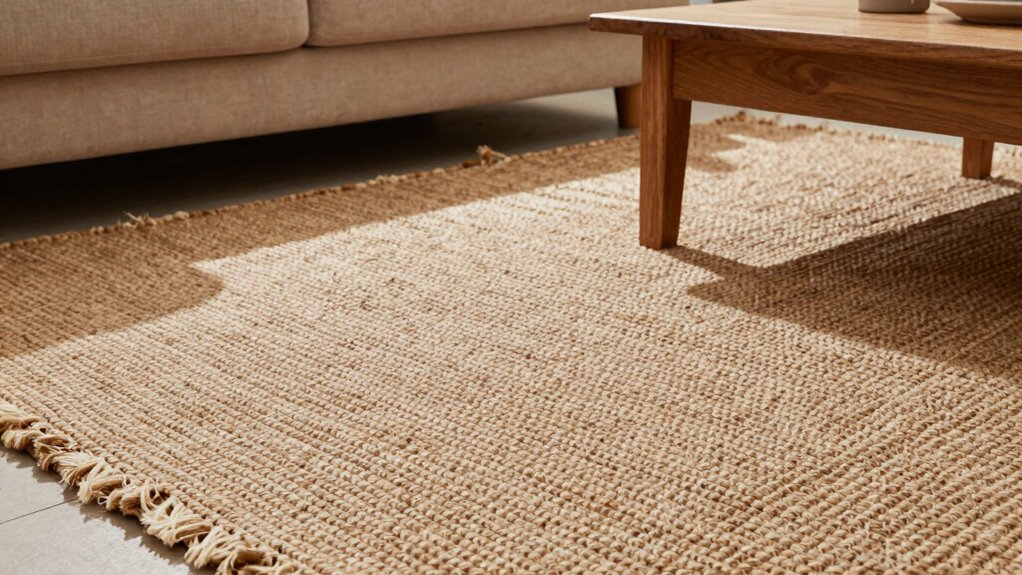
When selecting a jute rug, consider how much foot traffic your space gets. For light traffic areas, you can choose softer, more delicate options that look great but may wear faster. In high-traffic zones, opt for sturdier, tightly woven rugs that can withstand constant use without showing wear quickly. Additionally, understanding the material’s durability can help you make more informed choices for your space. Considering the thermal behavior of jute can also influence how well the rug maintains its appearance over time, especially in varying environmental conditions.
Light Traffic Areas
If your home features light-traffic areas like bedrooms or formal living rooms, selecting a jute rug becomes simpler. Since these spaces don’t experience heavy wear, you can prioritize style versatility and dye options to match your decor. Opt for rugs with subtle patterns or solid colors to enhance elegance. Here are three tips:
- Choose lighter shades or neutral dyes for a soft, sophisticated look.
- Consider dyed jute rugs to introduce subtle color accents without overwhelming the space.
- Focus on style versatility by selecting simple designs that complement various decor styles.
Heavy Traffic Zones
Heavy traffic zones demand rugs that can withstand constant wear without losing their appeal. When choosing a jute rug for high-traffic areas, durability concerns are key. Look for tightly woven fibers and thicker textures that resist crushing and fraying. While jute offers aesthetic versatility, some styles are better suited for busy spaces. Consider the table below to match your needs:
| Traffic Level | Rug Type | Key Features |
|---|---|---|
| Heavy | Flatweave, Braided | High durability, low pile height |
| Moderate | Textured, Twisted | Balance of style and resilience |
| Light | Loose weave, Fringe | Less durable, for decorative use |
| Very Heavy | Reinforced, Seagrass | Extra strength for constant use |
Choose wisely to keep your space stylish and functional.
Jute Rugs vs. Other Natural Fiber Options: Which Is Right for You?

Choosing the right natural fiber rug depends on your specific needs and preferences. When comparing jute to other options like sisal, seagrass, and coir, consider these factors:
- Durability concerns: Sisal and coir tend to be more durable for high-traffic areas, while jute can wear faster over time.
- Aesthetic options: Jute offers a softer texture and warm, rustic look, while sisal and seagrass provide a more coarse, natural appearance.
- Maintenance: Jute requires more careful cleaning and is less resistant to moisture, unlike sisal and seagrass, which handle spills better.
Frequently Asked Questions
Are Jute Rugs Suitable for Outdoor Use?
Jute rugs aren’t ideal for outdoor use because they lack indoor durability and UV resistance. Exposure to sun, rain, and moisture causes jute to deteriorate quickly, fading colors and weakening fibers. If you want a rug that withstands outdoor conditions, look for materials specifically designed for outdoor durability and UV resistance. Jute’s natural fibers simply aren’t built to hold up outside, so it’s best to keep them indoors.
How Do I Prevent Mold and Mildew on Jute Rugs?
To prevent mold and mildew on your jute rug, you should focus on moisture control and proper ventilation. Keep the rug in a dry, well-ventilated area, avoiding damp spots. Use a dehumidifier if necessary, and wipe off any spills immediately to reduce moisture. Regularly air out the rug and avoid placing it in humid environments, as these steps help keep mold and mildew at bay and preserve your rug’s quality.
Can Jute Rugs Be Dyed or Customized?
You can dye or customize jute rugs, though it’s a delicate process. Surprisingly, only about 10% of jute rugs are professionally dyed or customized due to their natural fibers. Using dyeing techniques like fiber-reactive dyes or natural stains, you can create unique designs. Keep in mind that customization options are limited, and improper dyeing may weaken the fibers or cause uneven coloring, so it’s best to consult a professional for best results.
What Are the Best Cleaning Methods for Jute Rugs?
To keep your jute rug clean, vacuum regularly to prevent dirt buildup. For stain removal, gently blot the area with a clean cloth and mild detergent mixed with water; avoid soaking the fibers. Never use harsh chemicals or steam cleaning, as they can damage the jute. Remember, proper vacuum maintenance and prompt stain removal help preserve your rug’s natural beauty and extend its lifespan.
Do Jute Rugs Shed Fibers Over Time?
Yes, jute rugs can shed fibers over time, especially with heavy foot traffic or improper cleaning. This fiber shedding is common and can raise durability concerns, as loose fibers may accumulate or wear away. To minimize shedding, you should avoid excessive vacuuming and use gentle cleaning methods. Regular maintenance helps prolong your rug’s lifespan, but some shedding is inevitable due to the natural fibers used in jute rugs.
Conclusion
Now that you know where jute rugs excel and their potential pitfalls, the real question is whether they’re the right choice for your space. Will their natural charm and eco-friendliness outweigh the challenges you might face? The answer depends on your lifestyle and priorities. But one thing’s for sure—once you’ve experienced the unique warmth of a jute rug, you might never look at your floors the same way again. Are you ready to make your move?