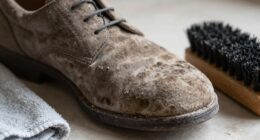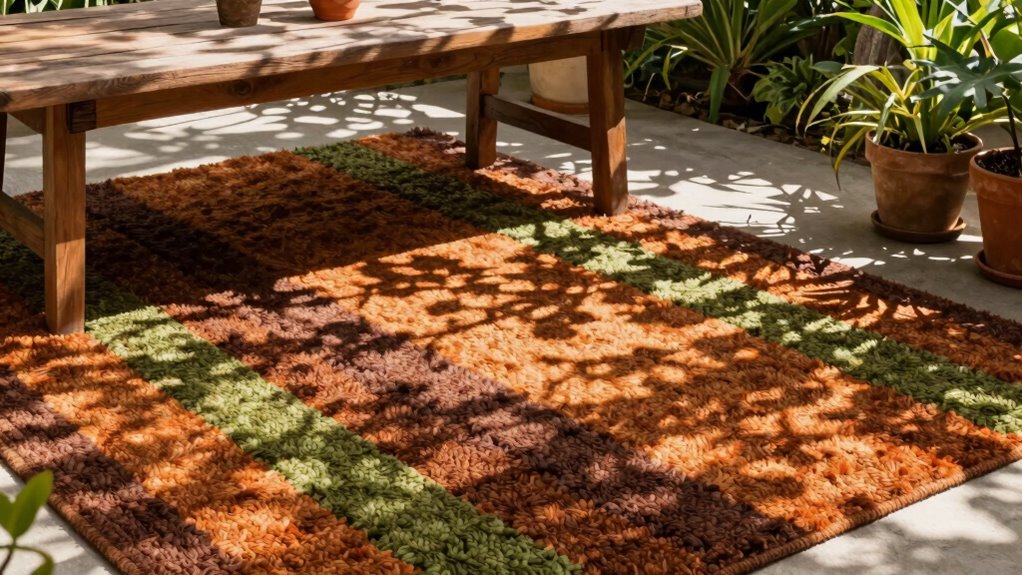

To prevent mildew smells on your outdoor rug, choose synthetic materials like polypropylene or outdoor-engineered fabrics, as they dry quickly, resist moisture, and are mildew-resistant. Avoid natural fibers such as jute, sisal, or coir, which trap dampness and encourage mold growth. Selecting durable, water-resistant options and maintaining proper airflow, regular cleaning, and quick drying are key. Keep exploring to discover the best ways to keep your outdoor space fresh and mildew-free.
Key Takeaways
- Synthetic fibers like polypropylene resist moisture, dry quickly, and inhibit mold and mildew growth.
- Outdoor-engineered fabrics with water-resistant coatings prevent water penetration and reduce mildew development.
- Smooth, tightly woven fibers limit moisture trapping, lowering the risk of mildew smell formation.
- Proper maintenance, including regular cleaning and drying, enhances mildew prevention in outdoor rugs.
- Natural fibers trap dampness, making them less suitable for outdoor settings where mildew is a concern.
Why Material Choices Matter for Mildew-Resistant Outdoor Rugs
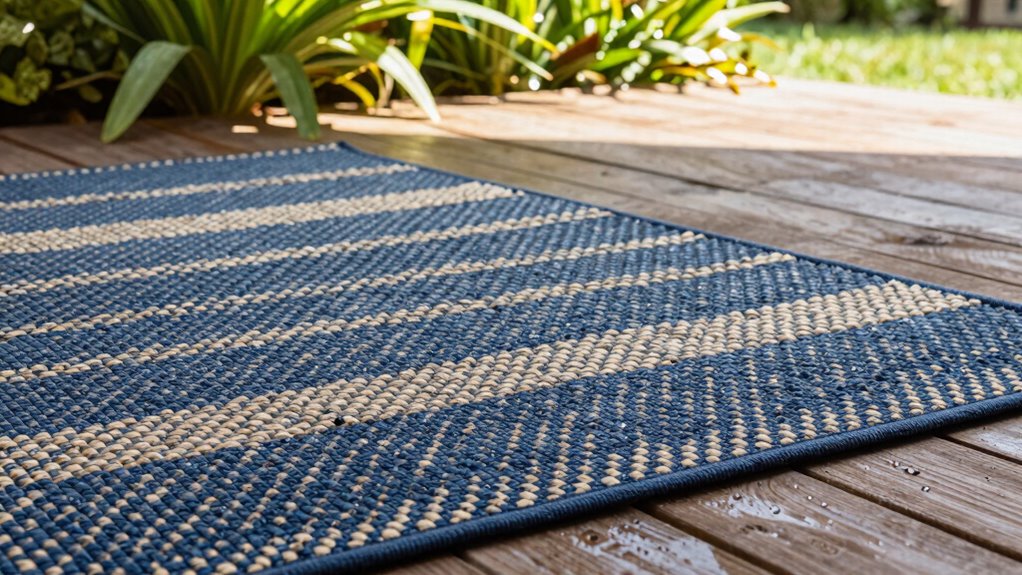
Choosing the right material for your outdoor rug is essential because it directly affects how well it resists mildew. Fiber textures play a key role—smooth, tightly woven fibers allow less moisture to penetrate, reducing mold growth. Textured fibers with loose weaves trap more dampness, increasing the chance of mildew. Additionally, color durability matters; vibrant, fade-resistant dyes often come from synthetic fibers that resist moisture and mildew better than natural ones. Selecting materials with durable fibers ensures your rug stays mildew-free longer, even in damp environments. Fabrics designed for outdoor use are often engineered for enhanced moisture resistance and longevity. To further prevent mildew, choosing energy-efficient materials contributes to sustainability and long-term durability. By paying attention to fiber textures and color durability, you can choose a material that not only looks good but also withstands moisture, keeping your outdoor space fresh and mold-free for years. Proper drainage systems are crucial to prevent water from pooling on or under the rug, which can promote mildew growth, and incorporating moisture-resistant coatings can add an extra layer of protection.
How to Pick the Best Outdoor Rug Materials to Prevent Mildew
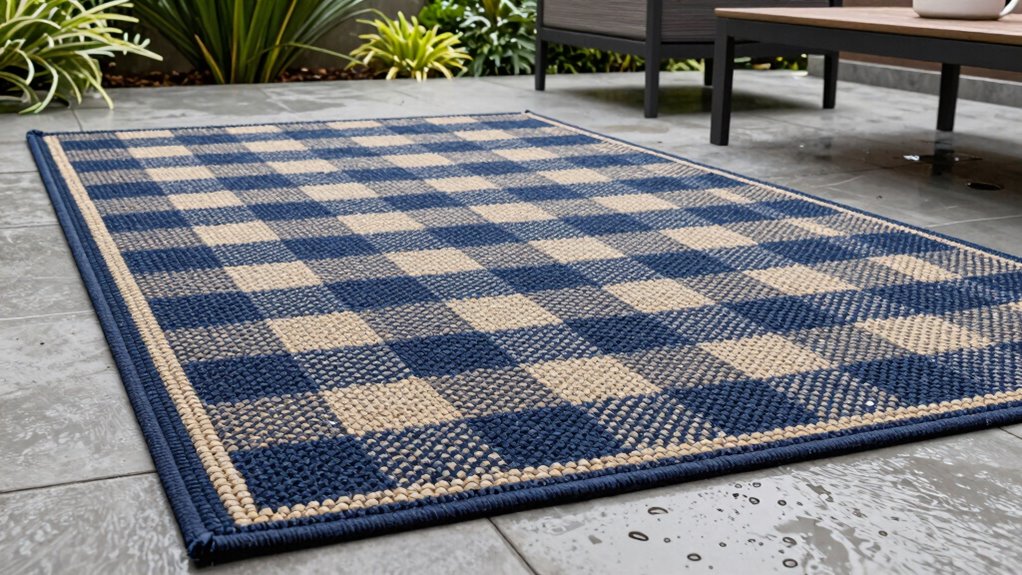
To prevent mildew buildup on your outdoor rug, selecting the right materials is essential. Look for options like polypropylene or other synthetic fibers, which dry quickly and resist moisture. Avoid natural fibers such as jute or sisal that tend to trap dampness, leading to mold. When choosing your outdoor rug, consider how it integrates with your indoor decor, guaranteeing a seamless transition between spaces. Additionally, using proper rug padding can improve airflow beneath the rug, reducing moisture retention and mold risk. Proper drainage and placement are also key factors in minimizing dampness and preventing mildew formation. Selecting moisture-resistant materials is crucial for maintaining a clean and mildew-free outdoor space. Incorporating proper airflow techniques can further minimize humidity and discourage mold growth on your outdoor rug. Furthermore, staying informed about sector performance metrics can help you select durable outdoor materials aligned with current market trends.
Top Synthetic Materials That Keep Outdoor Rugs Fresh and Mildew-Free
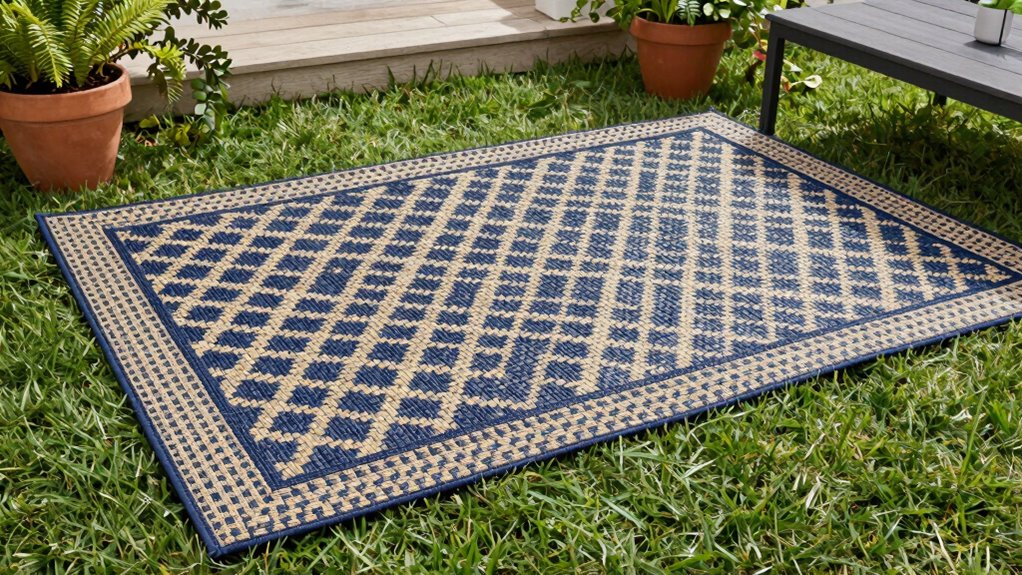
Choosing the right synthetic materials can keep your outdoor rug looking fresh and free of mildew. Durable fibers, water-resistant coatings, and easy maintenance options work together to protect your rug from moisture and dirt. With these features, you’ll enjoy a long-lasting, low-hassle outdoor rug. Additionally, selecting materials that align with local climate conditions can further enhance the longevity and performance of your outdoor decor. Incorporating mildew-resistant fabrics can provide an extra layer of protection against mold growth in humid environments. Understanding material breathability can also help prevent moisture buildup that leads to mildew formation. Being aware of air circulation properties in outdoor textiles can further reduce the risk of mold and mildew buildup, especially when combined with appropriate ventilation strategies to promote dryness.
Durable Synthetic Fibers
Durable synthetic fibers are essential for outdoor rugs that stand up to the elements. They resist moisture, mold, and mildew, keeping your outdoor space fresh and inviting. These fibers are long-lasting, making them ideal for high-traffic areas and outdoor use. When choosing fibers, consider how they enhance your garden design and help with color coordination, ensuring your outdoor space looks cohesive. Additionally, selecting smart kitchen tools designed for outdoor cleaning can further maintain the freshness and longevity of your outdoor rugs. Proper maintenance practices, such as regular cleaning and proper drying, are crucial to prevent mildew buildup and prolong the lifespan of your outdoor rugs. Using fibers with moisture-wicking properties can also help prevent dampness that leads to mildew formation.
Water-Resistant Coatings
Water-resistant coatings are a key addition to synthetic fibers, helping outdoor rugs stay fresh and free from mold or mildew. When you choose rugs with these coatings, they become excellent for enhancing your garden decor and outdoor furniture setup. These coatings create a barrier that prevents water from seeping into the fibers, reducing the chances of mold growth. This makes your outdoor space more inviting and easier to maintain, especially in humid or rainy climates. Waterproofing treatments also help dirt and spills wash away more easily, keeping your outdoor rugs looking new longer. Additionally, selecting rugs with water-resistant features can prevent mold accumulation, making maintenance less frequent and more straightforward. By selecting rugs with this feature, you guarantee your outdoor decor remains vibrant and mildew-free, creating a cleaner, healthier environment for relaxing or entertaining outside.
Easy Maintenance Options
Synthetic materials like polypropylene, polyester, and acrylic are popular choices for outdoor rugs because they require minimal upkeep while staying fresh and mildew-free. Their durability makes them ideal for integrating into your garden design and complementing outdoor furniture. To keep your outdoor rug looking its best, regular cleaning is simple: just shake off debris, vacuum, or hose it down. For deeper cleaning, spot clean with mild soap and water. Quick drying prevents mold growth, saving you time and effort. Consider these easy maintenance options:
- Use a leaf blower or broom to remove loose dirt regularly.
- Spot clean stains promptly with a gentle brush and soapy water.
- Store your rug during harsh weather to prolong its lifespan and maintain freshness.
Additionally, understanding the auditory processing involved in maintaining outdoor spaces can help optimize your cleaning routines and ensure your outdoor rug remains mildew-free. Proper airflow and ventilation are essential for quick drying, reducing the risk of odor and mold development. Incorporating proper airflow techniques can further enhance your maintenance efforts and keep your outdoor space fresh. Moreover, employing moisture control strategies can significantly contribute to preventing mildew and odors over time.
Natural Materials That Resist Mildew and Keep Your Outdoor Space Looking Great
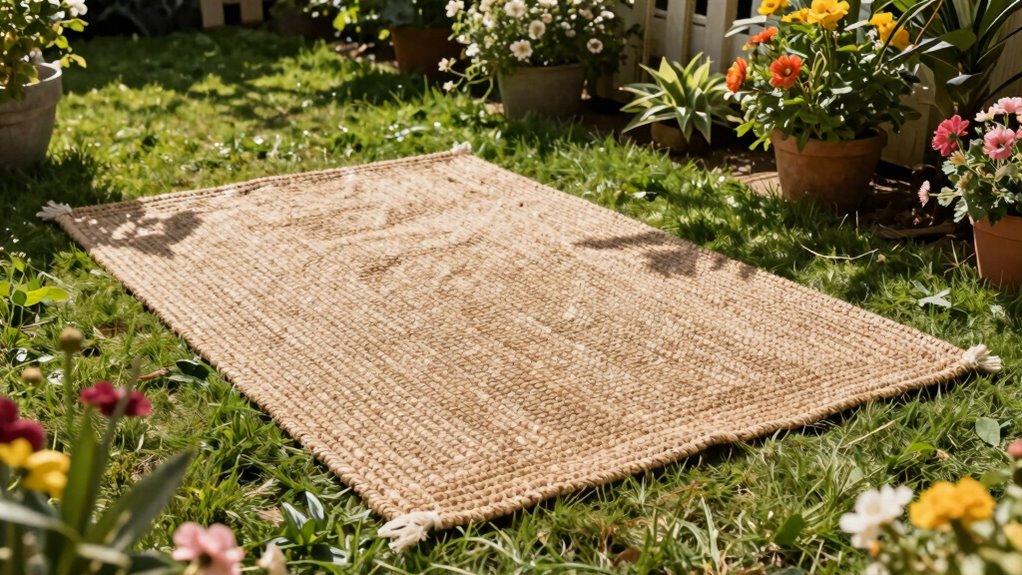
If you want outdoor rugs that stand up to the elements and stay looking fresh, choosing natural materials with mildew-resistant properties is a smart move. Materials like sisal, jute, and seagrass not only resist mold but also add a natural charm to your space. These rugs come in a variety of color options, from earthy neutrals to vibrant hues, allowing you to match your outdoor decor effortlessly. Pattern choices range from simple weaves to intricate designs, giving you flexibility in style. Natural fibers breathe better than synthetic alternatives, reducing moisture buildup and discouraging mildew growth. Pool safety and proper drainage are also important considerations to prevent excess moisture around your outdoor rug area. Plus, their durability ensures they maintain their appearance over time, helping your outdoor space stay inviting and fresh without the worry of unpleasant smells.
What Materials Should You Avoid for Outdoor Rugs?
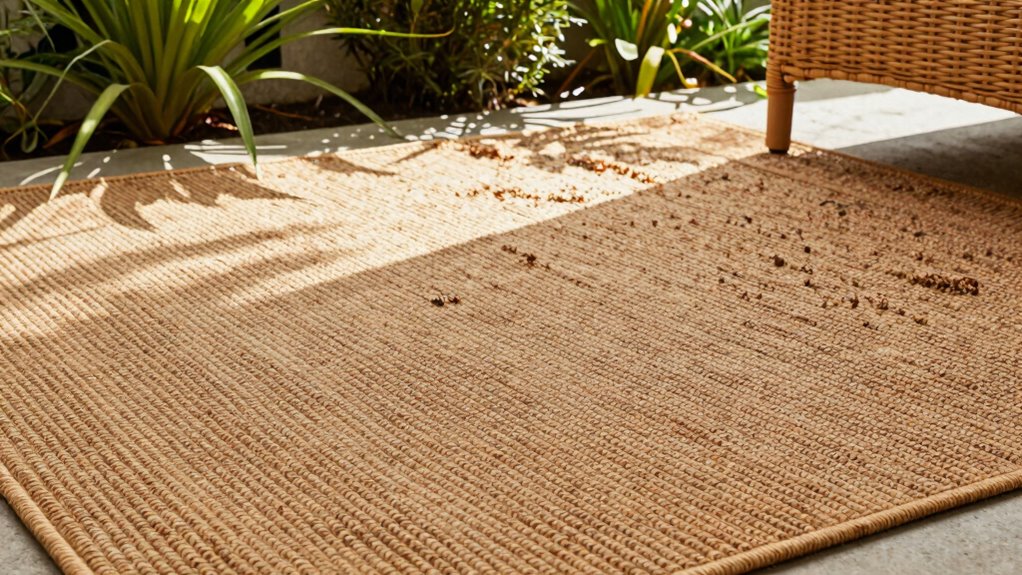
You should avoid natural fibers like jute or sisal, as they tend to absorb moisture and develop mold. Steer clear of nylon rugs, which can fade quickly and aren’t very weather-resistant. Also, skip low-quality PVC options, as they often crack or become brittle when exposed to outdoor elements.
Avoid Natural Fibers
Natural fibers like jute, sisal, and coir may seem appealing for outdoor rugs, but they often aren’t the best choice because they tend to absorb moisture, leading to mold and mildew growth. Organic materials are more vulnerable to the elements, making them less durable outdoors. These fibers quickly trap water, creating a perfect environment for mildew and unpleasant smells. Additionally, natural fibers can rot or degrade faster when exposed to rain and humidity. If you want a long-lasting outdoor rug, steer clear of organic materials. Instead, opt for synthetic options that resist moisture and mold. Avoiding these natural fibers helps prevent mildew smells and keeps your outdoor space fresh and clean.
- Absorb moisture easily, promoting mold growth
- Require frequent maintenance and replacement
- Deteriorate quickly in humid climates
Steer Clear of Nylon
Nylon is a common synthetic material, but it’s not a good choice for outdoor rugs. The nylon pitfalls include poor resistance to moisture, which can lead to mildew smells and mold growth. It also tends to trap dirt and debris, making maintenance harder and affecting outdoor comfort. When exposed to the elements, nylon rugs can fade quickly and become brittle, reducing their lifespan. Additionally, nylon isn’t breathable, so it doesn’t dry fast after rain or dew, increasing the risk of mildew. If you want a durable, mildew-resistant outdoor rug that maintains outdoor comfort, avoid nylon altogether. Instead, focus on materials like polypropylene or polyester, which handle moisture better and are designed specifically for outdoor use.
Skip Low-Quality PVC
Low-quality PVC rugs may seem like an affordable option, but they often fall short in durability and safety. These cheap alternatives tend to degrade quickly, releasing toxic fumes and harboring mold or mildew that causes unpleasant smells. Instead of risking damage and health concerns, steer clear of poorly made PVC rugs. Look for eco friendly options made from natural fibers or recycled materials that resist moisture and mold. These materials provide better longevity and are safer for the environment. Avoid rugs with thin backing or flimsy construction, as they’re more prone to tearing and mold growth. Investing in higher-quality outdoor rugs ensures you get durability, safety, and a cleaner outdoor space without sacrificing your health or the environment.
Easy Tips to Maintain and Clean Your Outdoor Rug to Prevent Mildew
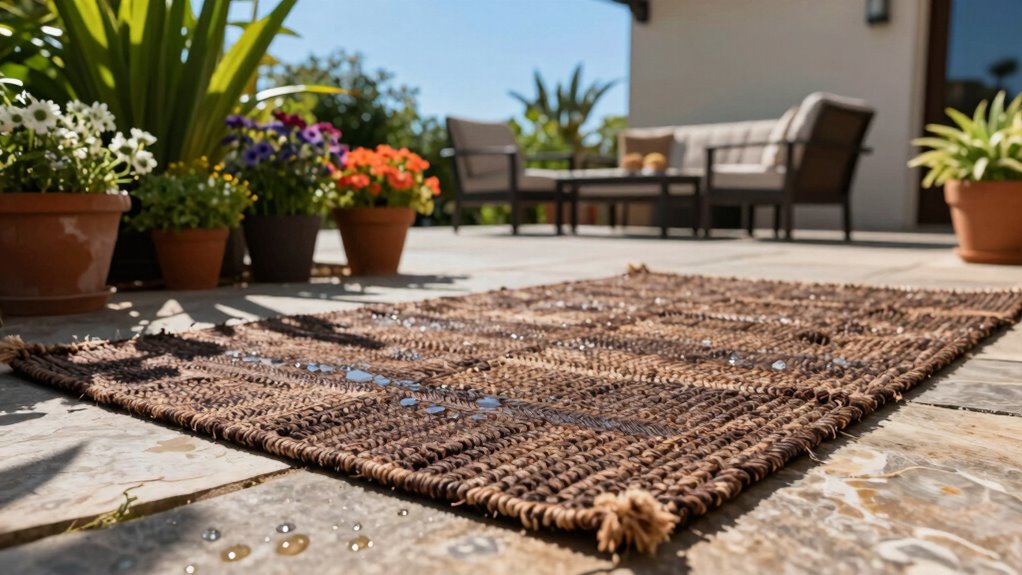
To prevent mildew from taking hold on your outdoor rug, regular maintenance is essential. Start by shaking or brushing off dirt and debris often, especially after storms or heavy winds. Keep your outdoor rug in good shape by integrating it into your indoor decor or using it as a stylish garden accessory when not in use. Regularly vacuum or sweep to remove loose particles that can trap moisture. When cleaning, mix mild detergent with water and scrub gently, then rinse thoroughly. Allow the rug to dry completely in direct sunlight, which helps kill bacteria and mold spores. If you notice any mildew, treat it with a mixture of vinegar and water. Consistent upkeep guarantees your outdoor rug stays fresh, vibrant, and free from mold or mildew smells.
Comparing Cost, Durability, and Mildew Resistance of Outdoor Rug Materials
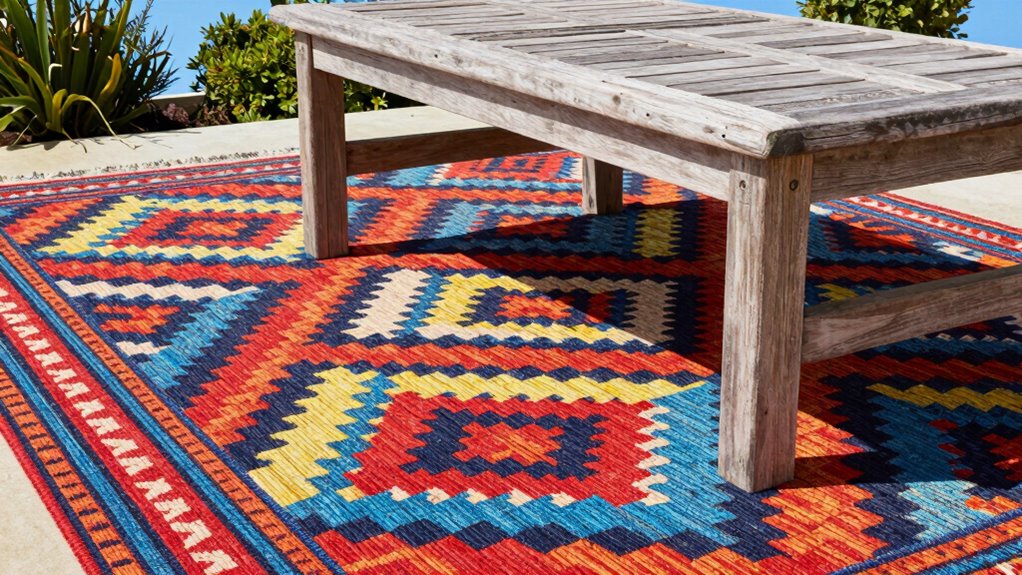
Choosing the right outdoor rug involves weighing factors like cost, durability, and resistance to mildew. Some materials offer indoor elegance while maintaining outdoor resilience. For example, polypropylene rugs are budget-friendly, highly durable, and resistant to mildew, making them ideal for high-traffic areas. Conversely, natural fiber options like jute are more affordable but may lack mildew resistance and durability over time. Consider rug color choices that complement your space; bold colors hide stains, while lighter shades can brighten your outdoor area. Key points to compare include:
Choose durable, mildew-resistant outdoor rugs like polypropylene for lasting style and practicality.
- Cost differences between synthetic and natural fibers
- Durability for varying weather conditions
- Mildew resistance levels for materials like polypropylene and polyester
How to Choose the Perfect Outdoor Rug Material for Your Space
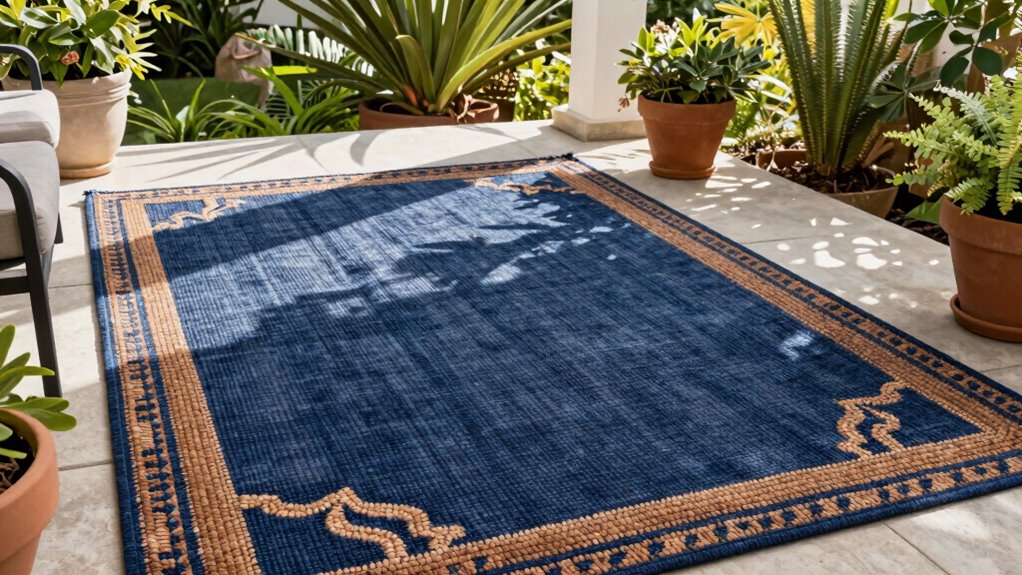
Selecting the right outdoor rug material depends on understanding your specific needs and how you plan to use the space. If your outdoor area blends with your indoor decor, opt for materials like polypropylene or synthetic fibers that mimic indoor styles while resisting weather. Consider seasonal trends to keep your space fresh; natural fibers like jute or sisal can add texture but may not suit winter months. Think about foot traffic, exposure to moisture, and maintenance when choosing a material. For high-traffic or damp areas, durable options like polypropylene are ideal, as they resist mildew and odors. By matching your lifestyle and aesthetic preferences, you ensure your outdoor rug enhances your space and stays fresh, regardless of seasonal changes.
Frequently Asked Questions
Can Outdoor Rug Materials Affect Allergy Symptoms?
Yes, outdoor rug materials can affect your allergy symptoms. If you’re sensitive to allergy triggers, choose rugs made from hypoallergenic materials like polypropylene or polyester, which resist mold and dust mites better. Avoid natural fibers like jute or coir, as they tend to trap allergens and moisture, worsening material sensitivities. Selecting the right material helps minimize allergy symptoms and keeps your outdoor space comfortable and allergen-free.
Are There Eco-Friendly Outdoor Rug Options That Resist Mildew?
Imagine a lush, green forest where every leaf is a promise of sustainability. You’ll find eco-friendly outdoor rugs made from sustainable fibers and biodegradable options that resist mildew, keeping your outdoor space fresh and vibrant. These environmentally conscious choices not only protect nature but also prevent mold buildup. By selecting these materials, you create a safe, healthy environment, blending eco-awareness with durability, so your outdoor haven remains beautiful and mildew-free.
How Does Climate Influence Outdoor Rug Material Choice?
Climate considerations greatly influence your outdoor rug material choice. If you face high humidity or frequent rain, opt for durable, water-resistant materials like polypropylene or synthetic fibers, which resist mold and mildew. For sunny, dry climates, natural fibers like jute or coir work well but may need extra care. Always consider how climate impacts material durability to guarantee your outdoor rug stays attractive and functional over time.
Do Certain Materials Fade Faster When Exposed to Sunlight?
Did you know that 60% of outdoor rug owners report noticeable color fading after just one year of sun exposure? Sunlight degradation varies by material, with natural fibers like jute fading faster due to UV rays. Synthetic options like polypropylene resist color fading better, maintaining their vibrancy longer. So, if you want your rug to stay vibrant, choosing UV-resistant materials can make a significant difference against sunlight degradation.
Can Outdoor Rug Materials Be Recycled or Reused?
Yes, outdoor rug materials can often be recycled or reused. You can explore recycling options through local waste management programs or specialty recycling centers that accept synthetic fibers like polypropylene. To promote material sustainability, consider repurposing old rugs for craft projects or garden use. By choosing eco-friendly materials and properly recycling or reusing your outdoor rugs, you help reduce waste and support environmental conservation efforts.
Conclusion
Choosing the right outdoor rug material is your best defense against stubborn mildew smells and endless maintenance headaches. Whether you opt for durable synthetic fibers or natural options with special treatments, your outdoor space can stay fresh, vibrant, and inviting. Don’t settle for a rug that’s easily overwhelmed by moisture—think of it as the fortress that keeps mildew at bay. With the right material, your outdoor area will stay beautiful, clean, and mildew-free for years to come!