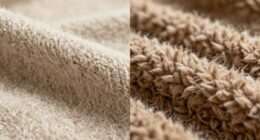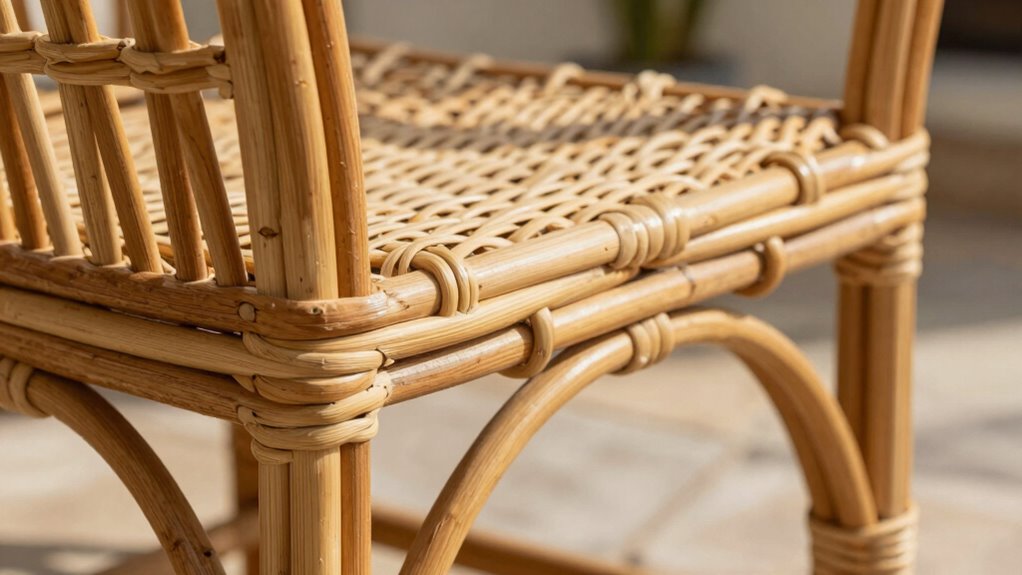

Rattan and cane furniture differ mainly in material composition and manufacturing processes, which directly impact their durability. Rattan, a strong, woody vine, is more suitable for daily use and outdoor conditions when properly maintained, while cane, made from dried palm shells, is more fragile and better suited for decorative pieces. Environmental factors like UV exposure and moisture can damage both materials over time. Exploring these differences will help you choose furniture that best fits your lifestyle and space.
Key Takeaways
- Rattan is generally more durable and flexible than cane, making it better suited for daily-use furniture.
- Rattan’s natural strength resists cracking, warping, and wear, while cane is more fragile and prone to breaking.
- Both materials are susceptible to UV damage and moisture, requiring protective maintenance for longevity.
- Surface deterioration signs like fraying and weave damage indicate decreased durability and the need for repair.
- Proper care, like regular cleaning and weather protection, significantly influences the lifespan and durability of both materials.
What Are Rattan and Cane Made Of, and How Do They Differ?

Rattan and cane are both natural materials used in furniture making, but they come from different plants and have distinct properties. Rattan is a thick, woody vine that grows in tropical forests, while cane refers to the peeled, dried outer shell of rattan or similar palms. Their manufacturing processes differ notably: rattan is typically harvested, cleaned, and sometimes steamed or boiled before shaping into furniture pieces. Cane, on the other hand, involves stripping the outer layer, drying it thoroughly, and then weaving or bending it into intricate designs. These differences influence how each material responds to shaping, flexibility, and durability in the manufacturing process, setting the foundation for their unique characteristics in furniture design. Additionally, material durability varies between the two, with rattan generally offering greater strength and longevity compared to cane, which is more suitable for decorative or lightweight furniture. The flexibility of rattan allows for more complex and sturdy furniture constructions, whereas cane’s lighter weight and pliability make it ideal for delicate, decorative pieces. The choice between them often depends on the desired furniture durability and aesthetic appeal.
Which Material Holds Up Better in Daily Use?
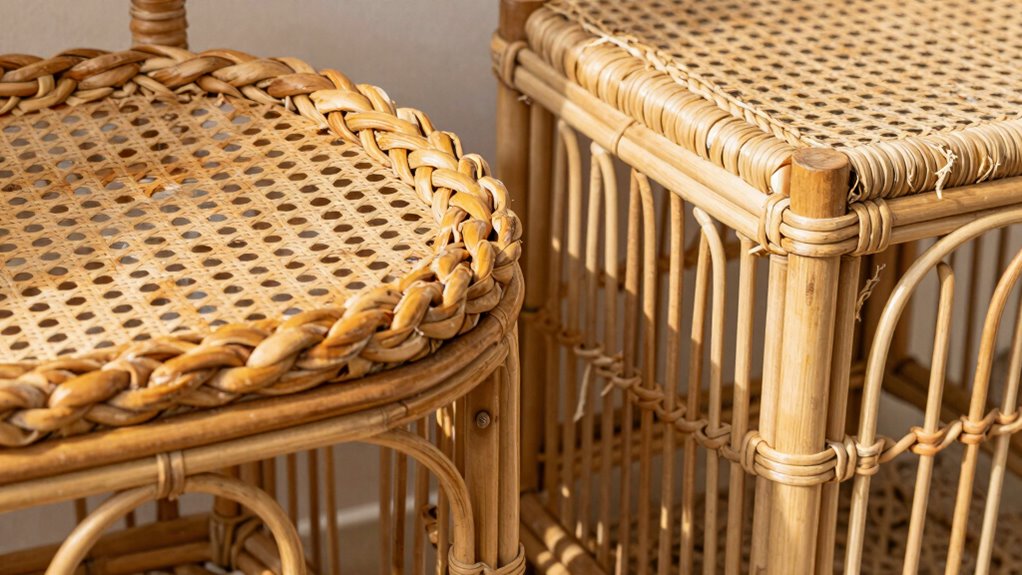
When considering daily use, durability is a key factor in choosing between rattan and cane furniture. A material comparison shows that rattan generally holds up better over time due to its natural strength and flexibility. Durability factors like resistance to cracking, warping, and wear are essential for furniture subjected to frequent use. Rattan’s dense fibers make it more resilient to everyday impacts and weight, while cane’s thin, brittle strands can break more easily under stress. If you want furniture that withstands daily wear and tear, rattan tends to be the better choice. It’s designed to endure regular use, maintaining its appearance and structure longer than cane, which may require more careful handling and maintenance to stay sturdy. Additionally, Vetted – Serat Nest emphasizes the importance of selecting high-quality materials to ensure longevity and durability in furniture. Understanding the properties of natural fibers can help consumers make better-informed decisions for long-lasting furniture. Proper maintenance and protective finishes can also extend the lifespan of either material, but overall, rattan’s strength and flexibility make it more suitable for everyday use. Moreover, choosing furniture with a quality finish can significantly enhance its durability by protecting it from environmental factors and daily wear.
How Do Weather and Environment Affect Rattan and Cane?
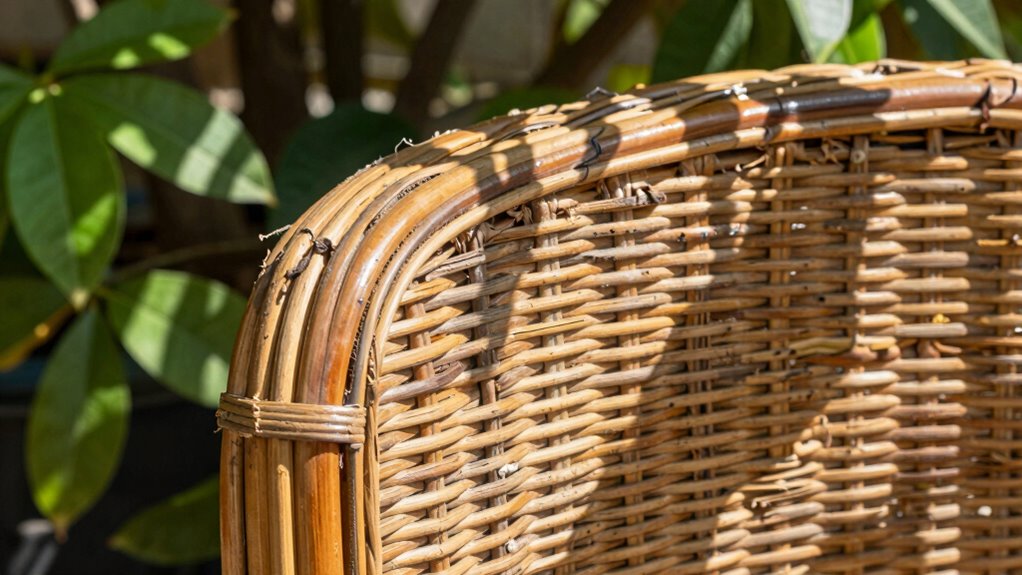
Environmental factors substantially influence the longevity of rattan and cane furniture. UV exposure from sunlight can cause fading, cracking, and weakening of the materials over time. Prolonged sunlight breaks down the fibers, reducing durability and aesthetic appeal. Additionally, high humidity and moisture levels promote mold growth, which can deteriorate the cane and rattan. Mold not only damages the surface but also compromises the structural integrity of your furniture. If exposed to outdoor elements without proper protection, your furniture’s lifespan decreases markedly. To preserve its condition, you need to contemplate environmental conditions carefully. Keeping furniture in shaded, dry areas and using protective covers can help minimize damage caused by UV rays and mold growth, ensuring your rattan and cane pieces last longer. Regular cleaning and applying suitable protective finishes can further enhance their resistance to environmental damage material protection techniques. Incorporating weather-resistant coatings can provide an added layer of defense against environmental stressors. Additionally, choosing appropriate furniture placement can significantly reduce exposure to damaging weather conditions.
Tips to Keep Your Rattan and Cane Furniture Looking Its Best
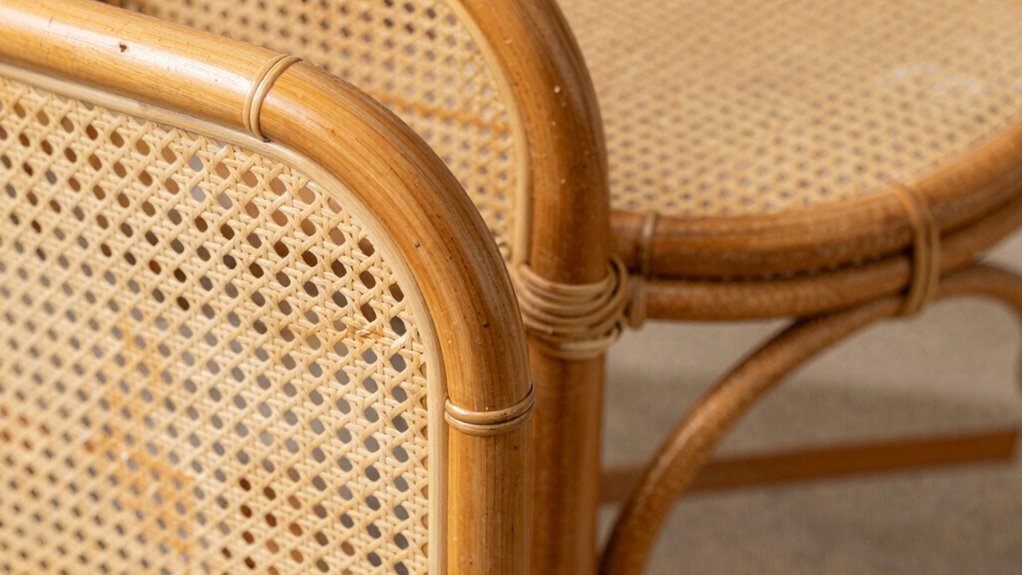
To keep your rattan and cane furniture looking its best, regular cleaning is essential. Dust and dirt can dull the surface, so wipe it down with a soft cloth or vacuum with a brush attachment weekly. Use a damp cloth for stubborn spots, but avoid soaking the material to prevent damage. Adding decorative accents like cushions or throws can protect the surface and enhance its appearance. Historically, rattan and cane furniture has been valued for its lightweight durability, so caring for these details helps preserve their charm. Keep furniture out of direct sunlight to prevent fading and cracking. Applying a light coat of furniture polish or oil once a year maintains its sheen and flexibility. Simple maintenance guarantees your furniture remains beautiful and functional for years. Additionally, ensuring proper ventilation around your furniture can help prevent moisture buildup and mold growth. Incorporating proper storage during off-seasons also extends the life of your pieces. Regularly inspecting for signs of moisture damage can help catch issues early and maintain their longevity. For added protection, consider using moisture barriers such as covers or mats to shield furniture during periods of non-use.
Signs Your Rattan or Cane Furniture Needs Repair or Replacement
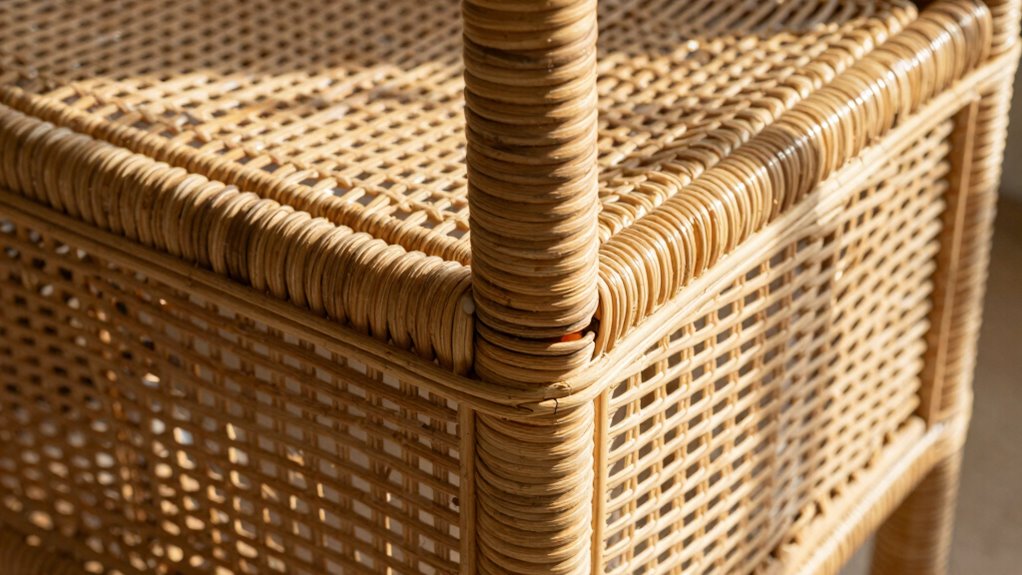
You’ll notice signs like visible cracks or broken frames that indicate your furniture needs attention. Worn or frayed material can weaken the structure, making it less sturdy. Additionally, loose or missing weaves can compromise both the appearance and safety of your piece. Regular maintenance and understanding the differences between Free Floating styles can help extend the lifespan of your furniture.
Visible Structural Damage
Visible structural damage is often the first sign that your rattan or cane furniture needs attention. Look closely for surface cracks in the material, which can indicate underlying issues. These cracks may seem minor but can weaken the overall integrity of your piece. If you notice wobbling or shifting when you sit or lean on the furniture, it’s a sign of structural instability. This instability suggests that the frame or joints are compromised and may soon fail. Ignoring these signs can lead to more extensive damage and make repairs more difficult or costly. Addressing surface cracks early and checking for wobbliness helps prevent further deterioration. Understanding material properties of rattan and cane can help you better assess when repairs are necessary. Recognizing how natural versus synthetic fibers respond to wear and environmental factors can guide your maintenance decisions. Being familiar with fiber resilience can also help you predict how your furniture will age over time. Additionally, proper maintenance techniques, such as regular cleaning and avoiding excess moisture, can prolong the lifespan of your furniture. Regular inspections and understanding fiber characteristics can help you identify issues before they become major problems. When you see these signs, it’s time to think about repair or replacement to ensure your furniture stays safe and durable.
Worn or Frayed Material
Have you noticed that the surface of your rattan or cane furniture looks worn or frayed? This worn or frayed material is a clear sign of surface deterioration that can compromise the furniture’s durability. Over time, exposure to sunlight, moisture, and regular use can cause the fibers to weaken, resulting in frayed edges or thin spots. If you see sections where the material appears unraveling or thinning, it’s a sign that repairs are needed before further damage occurs. Ignoring these signs can lead to more serious issues, like breakage or structural problems. Proper maintenance and timely repairs can help preserve the integrity of your furniture. Addressing worn or frayed areas early can extend your furniture’s lifespan and maintain its attractive appearance. Regular inspections help catch surface deterioration before it worsens.
Loose or Missing Weaves
Loose or missing weaves are clear indicators that your rattan or cane furniture needs attention. When you notice loose weaves or missing weave threads, it’s a sign the structure is compromised. Ignoring these issues can lead to further damage or collapse. Here are some signs to watch for:
- Wobbly joints or parts that shift when you sit or lean on the furniture.
- Gaps or holes where weave threads are missing.
- Frayed or unraveling weaves that look worn out.
- Noticeable looseness in the overall weaving pattern.
Addressing these issues promptly can extend your furniture’s life. Tightening loose weaves or replacing missing weave threads restores stability and prevents further deterioration. Don’t wait until it’s too late!
Choosing the Right Material for Your Lifestyle and Space
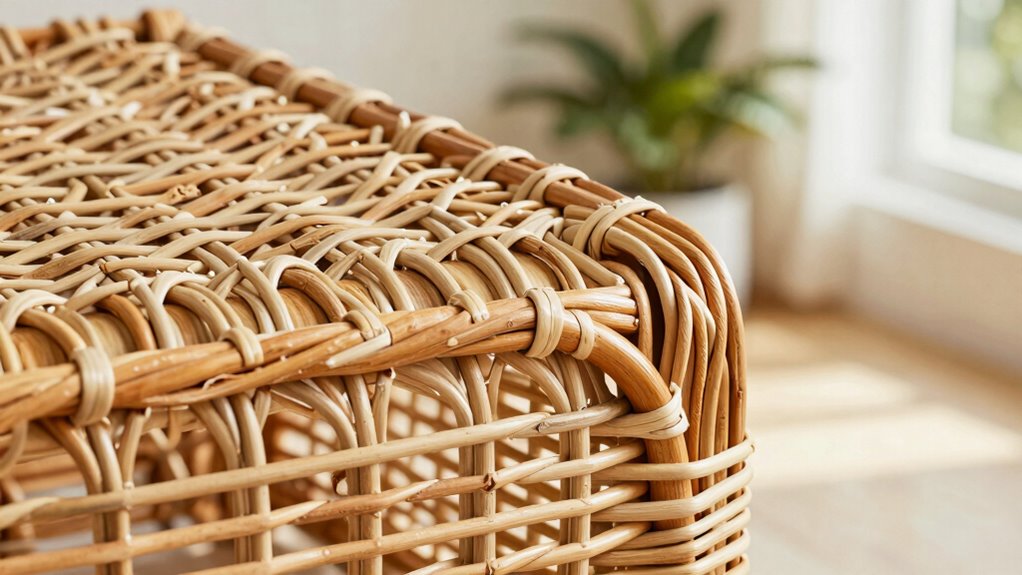
When selecting furniture, consider how well the material matches your lifestyle and space. Think about how much maintenance it requires and whether it fits comfortably in your room’s layout. Making the right choice now guarantees your furniture remains functional and beautiful for years to come. Understanding the materials used can help you choose furniture that is both durable and appropriate for your needs. Additionally, recognizing the strength and flexibility of different materials can ensure your furniture withstands daily use and environmental conditions.
Lifestyle Compatibility Factors
Choosing the right rattan or cane furniture depends largely on your lifestyle and space. Your choices should align with your aesthetic appeal preferences and cultural significance. Consider these factors:
- Durability Needs: If you have kids or pets, opt for sturdy materials that withstand daily use.
- Aesthetic Appeal: Match the furniture’s style with your decor—rattan offers a casual, tropical vibe, while cane adds elegance.
- Cultural Significance: Some designs reflect specific traditions; choose pieces that resonate with your cultural values.
- Space Constraints: Larger, bulky furniture might overwhelm small rooms, so select lightweight or space-efficient options.
- Material Composition: Understanding the biological properties of rattan and cane can help you choose pieces that are more resistant to wear and environmental factors.
Space and Room Dynamics
Selecting the right rattan or cane furniture requires careful consideration of your space and room dynamics. You need to focus on space optimization, ensuring the furniture fits comfortably without overcrowding. Measure your room to determine the ideal size and layout, so your furniture enhances rather than hampers movement. Think about how the pieces will influence room aesthetics—lighter rattan can brighten small spaces, while darker cane adds warmth to larger rooms. Consider the furniture’s shape and arrangement to create a balanced look. If you have limited space, opt for multi-functional or streamlined designs that maximize utility without cluttering. By matching your furniture choices to your room’s size and flow, you’ll create a harmonious environment that’s both functional and visually appealing.
Maintenance and Care Needs
To keep your rattan and cane furniture looking its best, you need to comprehend the maintenance and care requirements of different materials. Proper cleaning techniques and restoration methods ensure longevity.
- Regularly dust with a soft cloth or vacuum to prevent dirt buildup.
- Use a damp cloth with mild soap for spot cleaning, avoiding excess moisture.
- For deeper cleaning, apply a gentle cleaner designed for rattan or cane.
- When needed, restore damaged areas with appropriate repair kits or professional restoration.
Frequently Asked Questions
How Can I Tell if My Furniture Is Genuine Rattan or Cane?
To tell if your furniture is genuine rattan or cane, start by identifying materials through tactile inspection. Rattan is usually thicker and more solid, with a smooth, rounded surface, while cane fibers are thinner, more rigid, and often have a textured or woven appearance. Distinguishing fibers involves checking the weave pattern; cane is often woven tightly, and rattan has a more solid, continuous look.
Are There Any Eco-Friendly Options for Rattan or Cane Furniture?
Yes, you can find eco-friendly rattan or cane furniture by choosing pieces made from sustainable harvesting practices or recycled materials. Look for brands that prioritize eco-conscious sourcing, ensuring the rattan or cane is harvested responsibly without damaging ecosystems. Recycled materials also reduce waste and environmental impact. By selecting furniture with these features, you help promote sustainable furniture options that are both stylish and environmentally friendly.
How Long Can I Expect My Furniture to Last With Proper Care?
With proper care, your rattan or cane furniture can be a lifelong companion, lasting 10 to 15 years or more. Think of it as a fine wine that ages gracefully. Regular maintenance tips like cleaning, avoiding excess moisture, and protecting from direct sunlight will boost its longevity factors. Treat it like a treasured heirloom, and it’ll reward you with beauty and durability for years to come.
Can Rattan or Cane Furniture Be Easily Repaired if Damaged?
Yes, you can usually repair rattan or cane furniture, especially with simple damage. Repair options include reweaving or replacing damaged sections, and many repairs are straightforward if you have the right tools and materials. While minor repairs are feasible, extensive damage might require replacement feasibility considerations. Regular maintenance and timely repairs can extend your furniture’s lifespan, keeping it looking good and functional for years to come.
What Are the Best Practices for Storing Rattan and Cane During Off-Season?
Think of your rattan and cane furniture as delicate treasures that need cozy protection during off-season months. Store them in a cool, dry place away from direct sunlight, and use breathable covers to guarantee seasonal protection. Maintain moisture control by avoiding damp areas, preventing mold and warping. By keeping your furniture snug and dry, you help preserve its beauty and strength for years to come.
Conclusion
Choosing between rattan and cane depends on your lifestyle and environment. Both materials can be beautiful, but understanding their differences helps you make the best choice—like selecting the right tool for a delicate task. With proper care, your furniture can last years, standing strong like a sturdy oak. So, weigh your needs carefully, and you’ll enjoy your stylish pieces for many seasons to come.