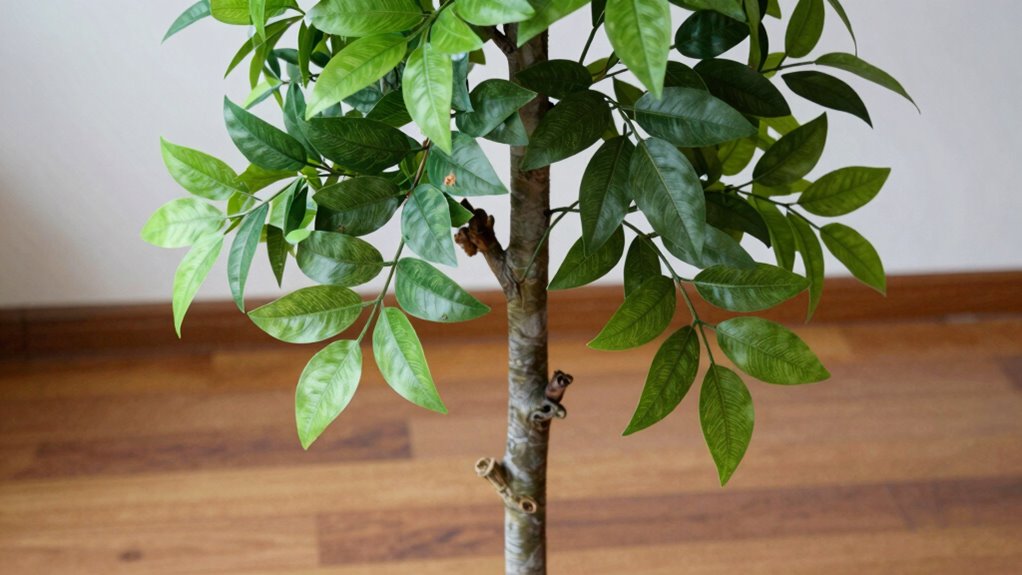

To make artificial trees indoors look real, pay attention to the materials, like silicone or PE, which mimic natural textures and imperfections. Focus on detailed leaves that vary in size, shape, and color, and choose trees with irregular growth patterns for authenticity. Proper lighting and shadow effects enhance depth and conceal any artificial features. When these elements come together, your artificial trees blend seamlessly with your space—keep exploring to discover even more tips for ultimate realism.
Key Takeaways
- Use high-quality materials like silicone or PE that mimic real leaf textures and subtle imperfections.
- Incorporate varied leaf sizes, shapes, and colors to create a natural, non-uniform appearance.
- Apply strategic lighting to highlight depth, texture, and realistic shadows.
- Ensure irregular growth patterns and asymmetrical shapes for authentic tree structure.
- Focus on detailed textures, realistic bark, and imperfections to enhance visual authenticity.
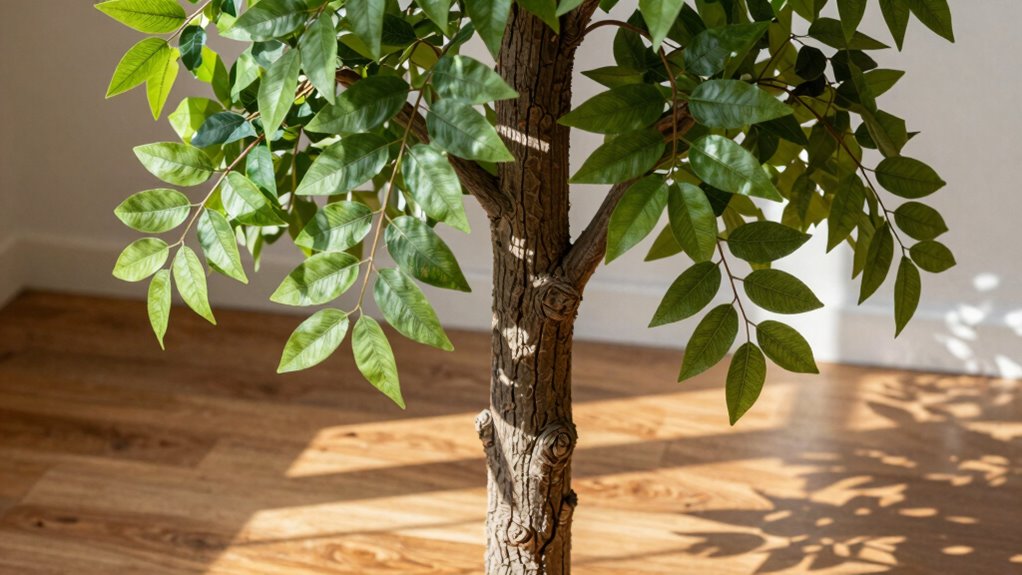
Have you ever considered bringing the beauty of nature inside without the hassle of maintenance? Artificial trees indoors make that possible, but the key to making them look convincing lies in understanding what makes them appear real instead of fake. You might think that simply choosing a tall, leafy sculpture would do the trick, but the secret is in the details. When it comes to artificial plant materials, the best ones mimic natural textures, colors, and imperfections. High-quality artificial plants use materials like silicone or PE (polyethylene), which have a soft, lifelike feel and appearance. These materials can replicate the subtle variations in leaf surface and color, giving your artificial tree a more authentic look.
Indoor plant maintenance is minimal with artificial trees, but that doesn’t mean you should settle for ones that look artificial at first glance. Instead, opt for designs that feature realistic bark textures and nuanced foliage. Good artificial trees will have leaves that vary in size, shape, and color—just like real trees. Some even incorporate slight imperfections, such as tiny holes or color variations, which prevent them from looking overly uniform or plastic. This attention to detail is *essential* for creating a natural aesthetic that convincingly blends with your interior decor. Additionally, understanding the materials used in artificial plants can help you select products that are more durable and realistic over time. Properly choosing realistic textures can significantly enhance the visual authenticity of your artificial tree.
Choose artificial trees with realistic bark, varied leaves, and subtle imperfections for a natural, convincing look.
Lighting plays a significant role in making artificial trees look real. Properly positioned lighting highlights the depth and texture of the leaves and trunk, reducing the chances of revealing their fake nature. When you choose an artificial tree, consider how it will be illuminated in your space. Well-designed artificial trees are crafted with layered leaves and branches that cast realistic shadows, further enhancing their natural appearance. It’s also helpful to consider how lighting techniques can be applied to emphasize their lifelike qualities and hide any artificial features. Using appropriate lighting can make a notable difference in how convincing your artificial tree appears, especially in dimmer rooms.
Another important aspect is the shape and density of the foliage. Overly dense or unnaturally symmetrical arrangements can give away their artificial origin. Instead, look for trees that have a natural, asymmetrical growth pattern, with leaves and branches spreading irregularly. This mimics how real trees grow, adding authenticity to your indoor space. Additionally, some artificial trees come with adjustable branches, allowing you to customize their shape and density, which helps them blend seamlessly with your existing decor.
To further enhance realism, it’s beneficial to understand how lighting and shadow play can be used effectively to conceal artificial elements and emphasize their lifelike qualities. Ultimately, the secret to a lifelike artificial tree lies in choosing quality materials, paying attention to fine details, and considering how the piece interacts with light and space. When you do, you’ll enjoy all the beauty of a real tree—without the ongoing indoor plant maintenance—making your home or office both vibrant and effortlessly stylish.
realistic artificial indoor trees
As an affiliate, we earn on qualifying purchases.
As an affiliate, we earn on qualifying purchases.
Frequently Asked Questions
How Long Do Artificial Indoor Trees Typically Last?
Artificial indoor trees typically last between 5 to 10 years, depending on durability factors and material quality. High-quality materials like PE and UV-resistant plastics resist fading, cracking, and damage from sunlight or humidity. You can prolong their lifespan by regular cleaning and avoiding harsh cleaners. Investing in well-made trees guarantees they stay looking realistic longer, making them a smart choice for long-term indoor decor.
Are There Eco-Friendly Options for Artificial Indoor Trees?
Yes, there are eco-friendly options for artificial indoor trees. You can choose ones made from eco-friendly materials like recycled plastics or biodegradable substances. Look for brands that prioritize sustainable manufacturing practices, such as using renewable energy or eco-conscious sourcing. These options help reduce environmental impact while still providing realistic, durable indoor trees. By selecting eco-friendly artificial trees, you make a sustainable choice that benefits both your space and the planet.
Can Artificial Trees Be Customized to Match Specific Decor Styles?
Yes, artificial trees can be customized to match your decor style perfectly, transforming your space into a stunning masterpiece! With endless options for color, size, and leaf types, you can create a tree that seamlessly blends with your decor customization needs. Whether you want a modern, rustic, or eclectic look, these trees adapt effortlessly, making your interior design look cohesively stunning and uniquely yours—no detail is too small!
Do Artificial Indoor Trees Require Any Maintenance?
Artificial indoor trees require minimal maintenance, making them a hassle-free decor choice. You just need to occasionally wipe the leaves with a damp cloth to remove dust and keep them looking fresh. Durability factors like high-quality materials guarantee they withstand indoor conditions without fading or damage over time. Unlike real trees, they don’t need watering or pruning, so you can enjoy their natural look without ongoing artificial maintenance.
How Do You Prevent Artificial Trees From Fading Indoors?
To prevent artificial trees from fading indoors, you should focus on fading prevention through proper indoor light control. Keep your trees away from direct sunlight, which accelerates fading, and consider using UV-protective sprays designed for artificial plants. Additionally, placing them in shaded areas or using curtains and blinds helps limit UV exposure. Regularly dusting the leaves also maintains their vibrant appearance and prolongs their lifespan.
Conclusion
Imagine walking into a room where a stunning, lifelike tree stands proudly next to a sleek, modern lamp. The contrast highlights just how convincing artificial trees can be when crafted with realism in mind. While they’re made of synthetic materials, their natural appearance can fool the eye and bring warmth to your space. With the right details, your indoor tree becomes a quiet, enduring symbol of nature’s beauty—without ever needing watering or pruning.