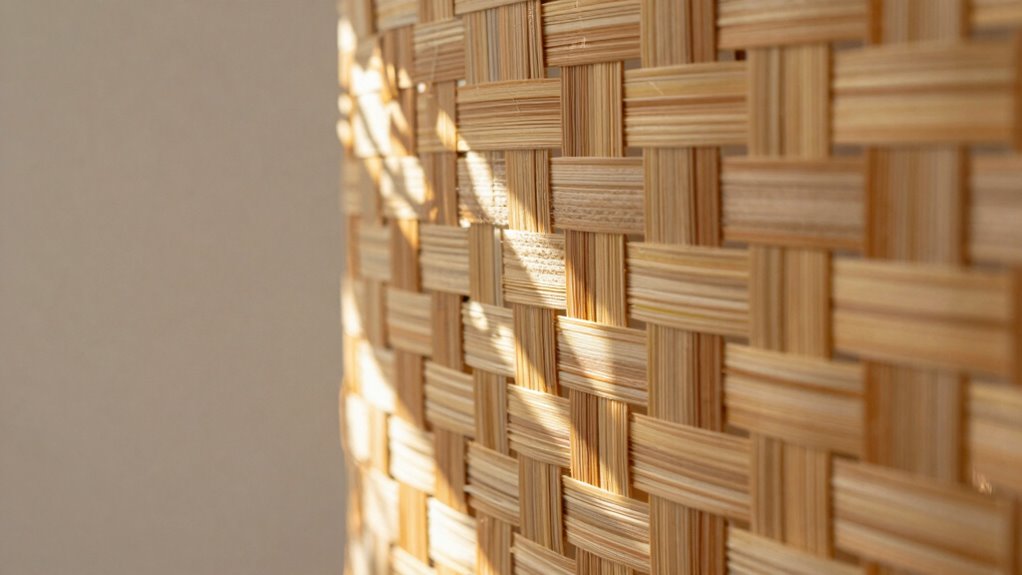

Woven wood and bamboo shades filter light by diffusing it gently and reducing glare, creating a warm, inviting glow. They offer some UV protection, helping to slow furniture fading, but don’t block all UV rays. These shades also help absorb sound and improve airflow, adding a natural touch to your space. However, they don’t fully provide privacy or darkness, especially at night. To learn more about their capabilities, keep exploring how these shades can complement your decor and needs.
Key Takeaways
- Woven wood and bamboo shades filter sunlight, softening and diffusing light, but do not block it entirely.
- They provide UV protection, reducing UV rays and preventing furniture fading, though effectiveness varies with weave density.
- These shades absorb sound, helping reduce indoor noise and echoes, but do not offer complete soundproofing.
- They offer semi-privacy; silhouettes may be visible at night, and they do not fully block views or provide complete privacy.
- They allow air circulation through gaps in the weave, promoting ventilation, but are not suitable for complete darkness or high-humidity environments.
How Do Woven Wood and Bamboo Shades Filter Light?
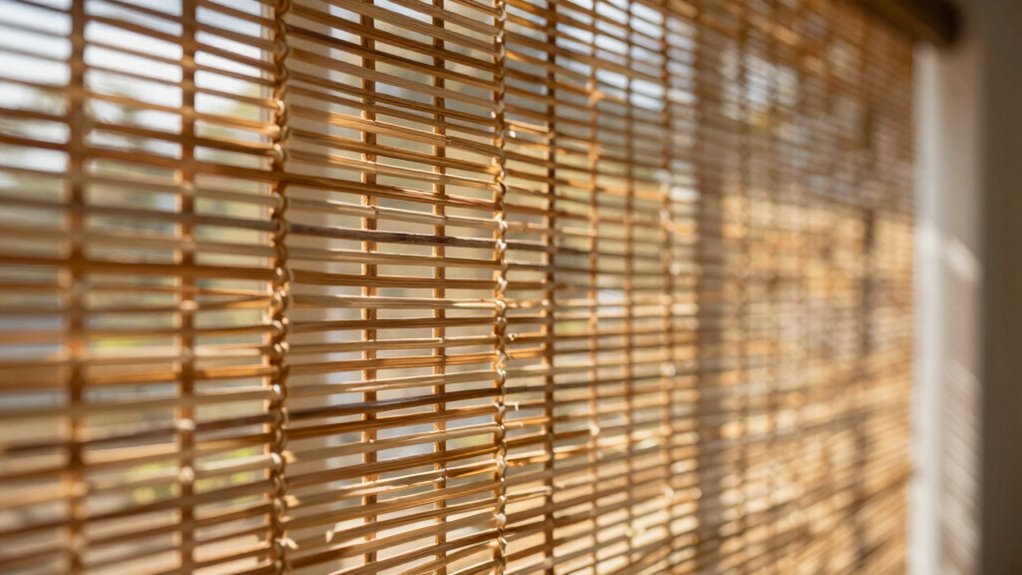
Ever wonder how woven wood and bamboo shades control the light in your room? These shades serve as decorative accents that add natural texture and warmth to any space. Their material durability guarantees they hold up well over time, even with daily exposure to sunlight. The tightly woven design allows you to filter light gently, creating a soft, diffused glow that reduces glare without darkening the room completely. Depending on the weave, you can adjust how much light enters—ranging from sheer to more opaque options. This versatility makes them perfect for settings that need a balance of natural light and privacy. Plus, their aesthetic appeal enhances your decor, blending functionality with visual charm. When choosing woven shades, consider their light-filtering capabilities to ensure they meet your specific needs. Additionally, the sustainable materials used in their construction contribute to eco-friendly design choices. Their material durability ensures they remain functional and attractive over time, even in high-exposure environments.
What UV Protection Do These Shades Offer?
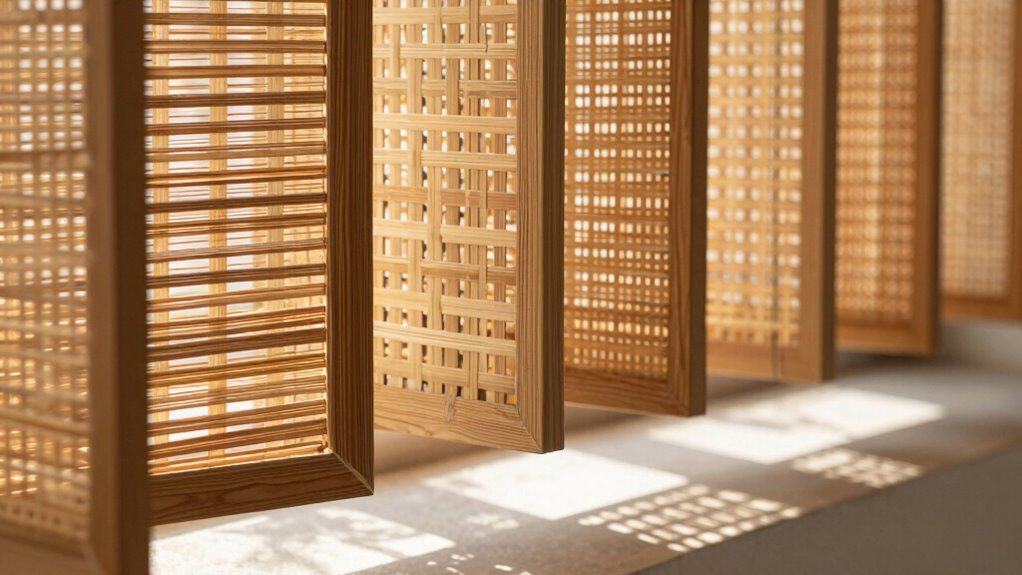
Woven wood and bamboo shades offer effective natural UV protection, helping to shield your indoor spaces from harmful rays. While they don’t block 100% of UV rays, they significantly reduce sun exposure, providing valuable sun blocking benefits. The tightly woven fibers create a barrier that filters out much of the ultraviolet light, preventing it from penetrating deep into your rooms. This natural UV protection helps preserve furniture, artwork, and flooring from fading and damage caused by prolonged sun exposure. Keep in mind, the level of UV protection varies depending on the weave density and material used. Additionally, understanding UV filtration can help you further protect your home and loved ones from UV-related damage. To optimize their protective benefits, consider shade placement and how the shades are installed to maximize UV shielding. Proper shade installation is essential for achieving optimal UV protection and ensuring the shades function effectively. Overall, these shades are a stylish, eco-friendly way to enjoy natural light while minimizing UV damage, enhancing both comfort and preservation in your home. Proper fiber density also plays a crucial role in determining the effectiveness of UV filtering in woven shades.
Can Woven Wood and Bamboo Shades Reduce Noise?
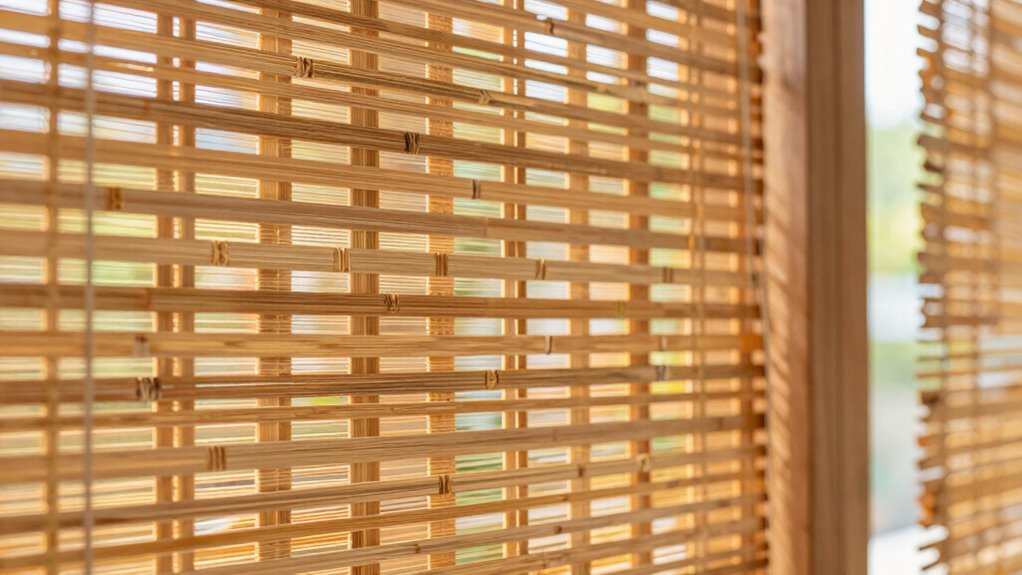
Woven wood and bamboo shades can help reduce noise levels in your home by absorbing sound waves and minimizing echoes. While they don’t provide full sound insulation, they can considerably enhance privacy and lessen ambient noise. Imagine:
- Soft textures that dampen sound reflections, creating a quieter atmosphere.
- Thick, layered materials that absorb mid to high-frequency sounds.
- Placement on large windows or open spaces to block out street noise or household sounds.
- Their natural, textured materials also contribute to calmer environments by reducing harsh sound reflections. Additionally, choosing shades with dense weaving techniques can further optimize their sound-absorbing properties, making them an effective noise reduction option for everyday comfort. Proper installation and positioning can also maximize their acoustic benefits, helping to create a more peaceful living space. Dense weaving techniques and strategic placement are essential for enhancing their sound absorption, ensuring a more effective noise buffer in your home environment.
These shades can improve your privacy by muffling external noises, making your space feel more secluded. Keep in mind, they’re best for reducing everyday background sounds rather than complete noise cancellation. Their natural materials contribute to a calmer environment and better sound insulation in your home.
Do These Shades Help With Air Circulation and Ventilation?
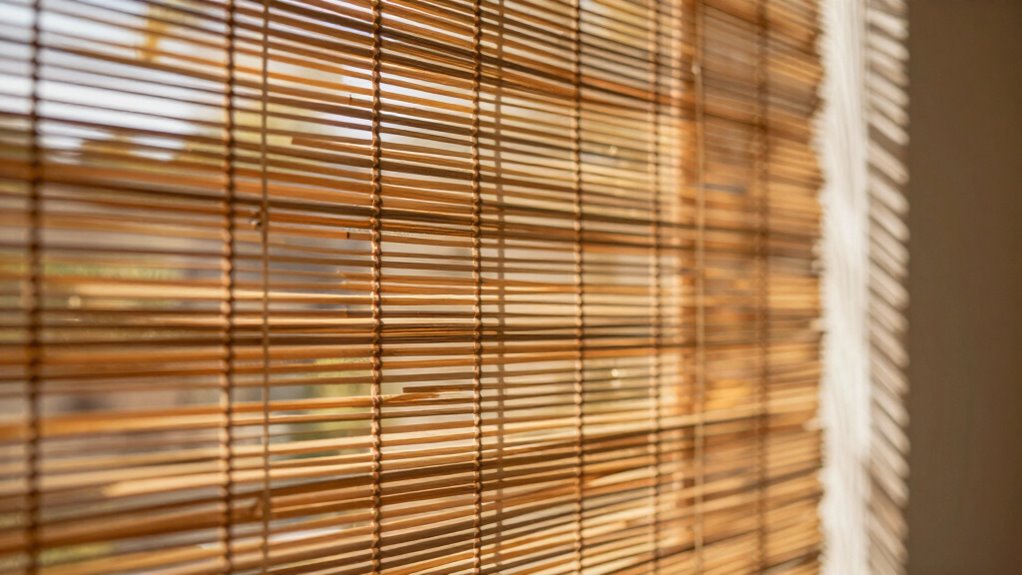
Woven wood and bamboo shades have gaps that allow air to pass through, promoting natural airflow. This design can improve ventilation without sacrificing privacy or style. Understanding how effective these shades are in circulating air helps you decide if they meet your comfort needs. Additionally, their airflow potential makes them a practical choice for enhancing indoor ventilation naturally. The open weave design also allows for better air circulation, which can help reduce indoor humidity and improve overall indoor air quality. Moreover, their ventilation benefits can contribute to a more comfortable outdoor living space by minimizing heat buildup. Proper installation and placement can further optimize these ventilation advantages, ensuring maximum benefit.
Airflow Through Gaps
Because of their natural design, bamboo and wood shades often feature small gaps that allow air to pass through. These gaps enable some air exchange, helping to promote better circulation without fully sacrificing privacy. You might notice:
- Gentle breezes flowing through the spaces, creating a light draft.
- Improved ventilation, reducing stuffiness indoors.
- A subtle, natural airflow that can help prevent stale air buildup.
While these gaps aid in draft prevention, they also allow fresh air in, making your space feel more open. However, since airflow is limited, these shades aren’t a replacement for dedicated ventilation systems. Instead, they work alongside them to help maintain a more comfortable indoor environment.
Ventilation Effectiveness
While bamboo and wood shades do allow some air to pass through their gaps, their overall impact on ventilation is limited. They can help improve air quality slightly by promoting some air circulation, but they’re not designed for ideal ventilation. These shades mainly serve as filters, reducing direct drafts and controlling light, rather than acting as ventilation systems. Because of their natural materials, they can also contribute to mold resistance if properly maintained, preventing excess moisture buildup that could impair air quality. However, they don’t replace dedicated ventilation solutions like fans or air exchangers. If ventilation and mold resistance are priorities, consider combining woven wood or bamboo shades with other ventilation strategies to maintain good air quality and reduce humidity effectively.
Are Woven Wood and Bamboo Shades Good for Privacy?
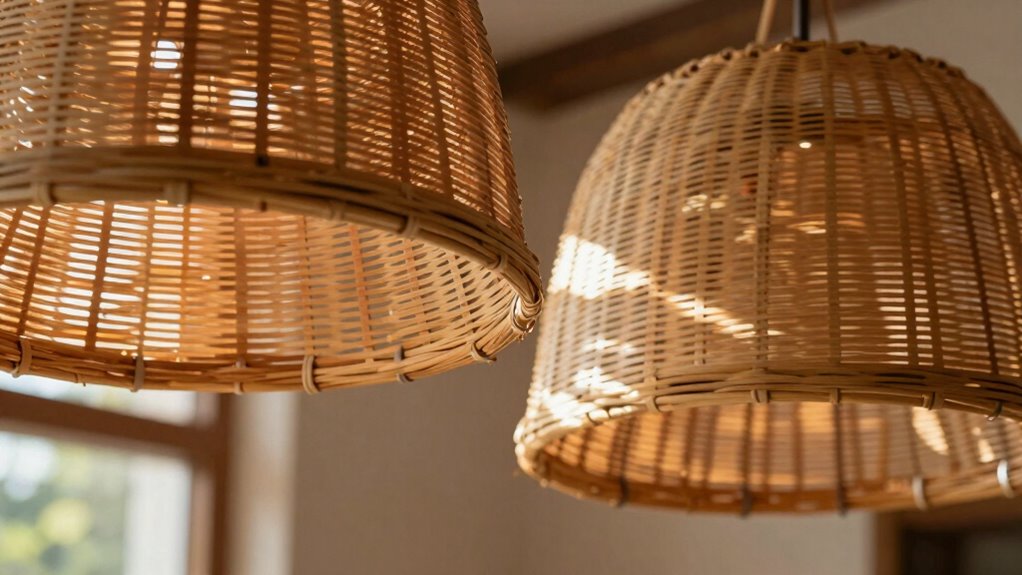
Are woven wood and bamboo shades a good choice when it comes to privacy? The answer depends on your privacy concerns and aesthetic considerations. These shades provide some level of privacy, but they’re not fully opaque.
Woven wood and bamboo shades offer limited privacy; ideal for semi-private spaces with natural aesthetic appeal.
Here’s what to keep in mind:
- Light Filtration – They block out some view, but silhouettes may still be visible at night.
- Opacity – Not ideal if you need complete privacy; they’re more suited for semi-private spaces.
- Design Appeal – Their natural look enhances aesthetics, but you may need additional window treatments for full privacy.
- Material Transparency – The light filtering properties of woven wood and bamboo shades mean they are better suited for areas where semi-private ambiance is desired rather than complete seclusion. Additionally, understanding the privacy limitations of these shades can help you decide if they meet your specific needs. Considering the material composition can also influence how much privacy they provide, especially in different lighting conditions. Moreover, the lighting conditions of your space can significantly impact how well these shades serve your privacy needs.
If privacy is a top priority, consider how these shades fit with your overall privacy needs and aesthetic style before making a choice.
How Do These Shades Affect Glare and Visibility?
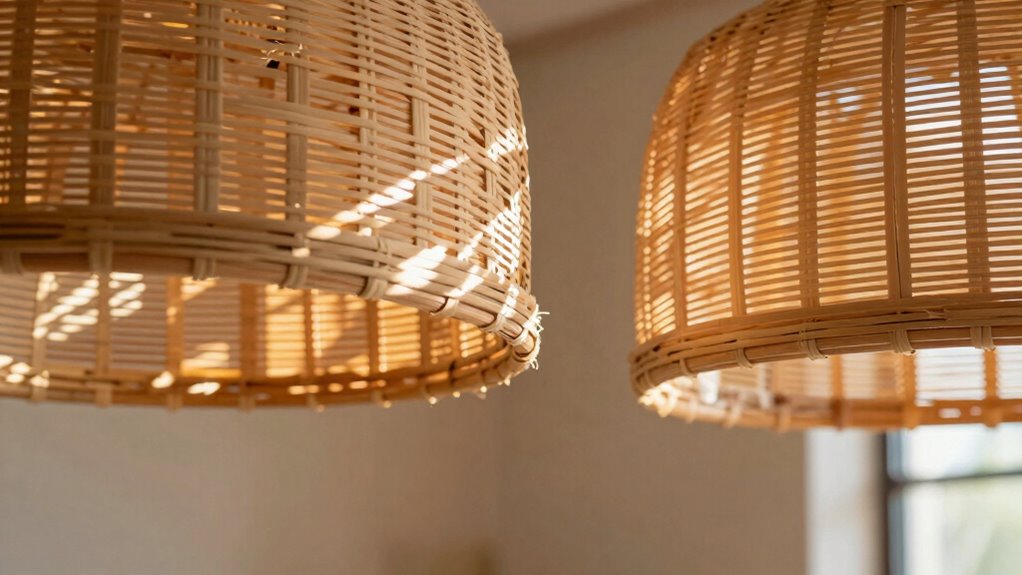
Woven wood and bamboo shades soften incoming light, reducing glare while still letting some brightness through. You’ll notice how they balance visibility and privacy, making your space feel open without sacrificing seclusion. Understanding how they diffuse light helps you choose the right shades for your needs. Additionally, their light-filtering properties contribute to creating a comfortable and inviting environment in your home. Their ability to diffuse natural light makes them a versatile choice for various rooms and lighting preferences. These shades also help minimize harsh sunlight, making spaces more comfortable for reading or relaxing.
Light Diffusion and Glare
Woven wood and bamboo shades naturally soften incoming light, reducing glare and making your space more comfortable. They diffuse sunlight, creating a warm, inviting atmosphere while maintaining visibility. This balance enhances the decorative appeal and helps blend the shades seamlessly into your interior’s aesthetic integration. To envision this, consider:
- Gentle light filtering that highlights textures and colors in your décor.
- Reduced harsh shadows, making screens and work surfaces easier to see.
- A cozy ambiance that minimizes eye strain during daytime activities.
These shades don’t block all light but instead transform it, creating a soothing environment. Their ability to diffuse sunlight enhances the overall aesthetic appeal, making your room both functional and beautifully integrated into your design style.
Visibility and Privacy
By diffusing sunlight and softening incoming glare, woven wood and bamboo shades also influence how clearly you see through your windows and how much privacy they offer. Their decorative appeal adds warmth and texture to your space, balancing openness with privacy. These shades allow some visibility during the day, letting in natural light while obscuring detailed views outside, which enhances privacy without sacrificing brightness. Their natural materials contribute environmental benefits, such as sustainability and reduced chemical use. However, at night, interior lighting can compromise privacy, so consider layering with curtains or blinds if needed. Overall, woven wood and bamboo shades provide a charming, eco-friendly way to control visibility and glare, making your home both stylish and private.
What Are the Limitations of Woven Wood and Bamboo Shades?
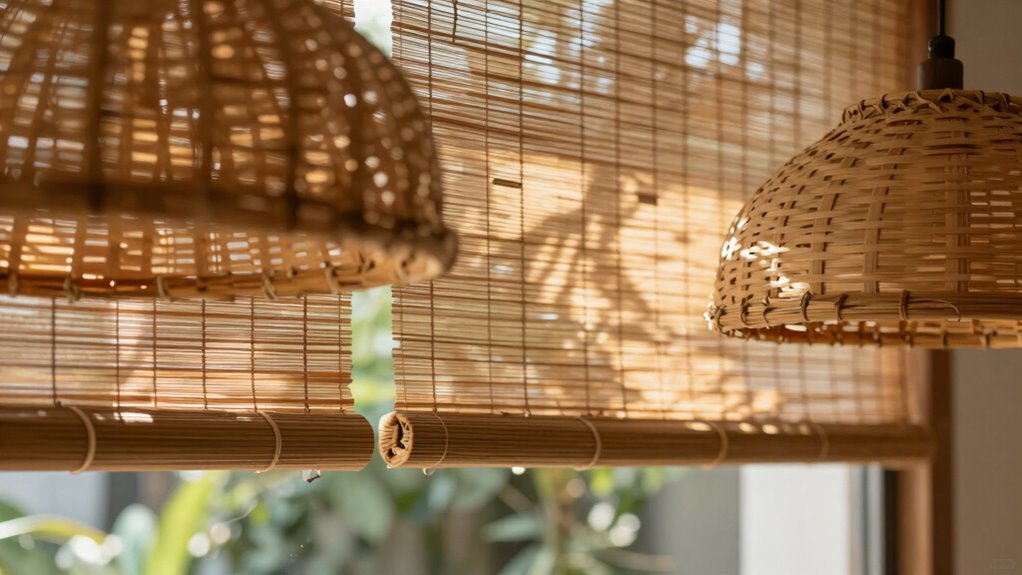
Although woven wood and bamboo shades offer a natural and stylish look, they do come with some limitations you should consider. First, privacy concerns may arise, especially at night when interior lights are on, since these shades are semi-porous. Second, they have aesthetic limitations; their rustic appearance might not suit modern or minimalist decor styles. Third, durability can be an issue in high-humidity environments like bathrooms or kitchens, where moisture can cause warping or mold. Additionally, they don’t block out much light, which can be a downside if you need complete darkness. Keep in mind that while they add charm, these shades might not meet all your functional needs. Weigh these limitations carefully before choosing woven wood or bamboo shades for your space.
How Can You Improve Light Control With These Shades?
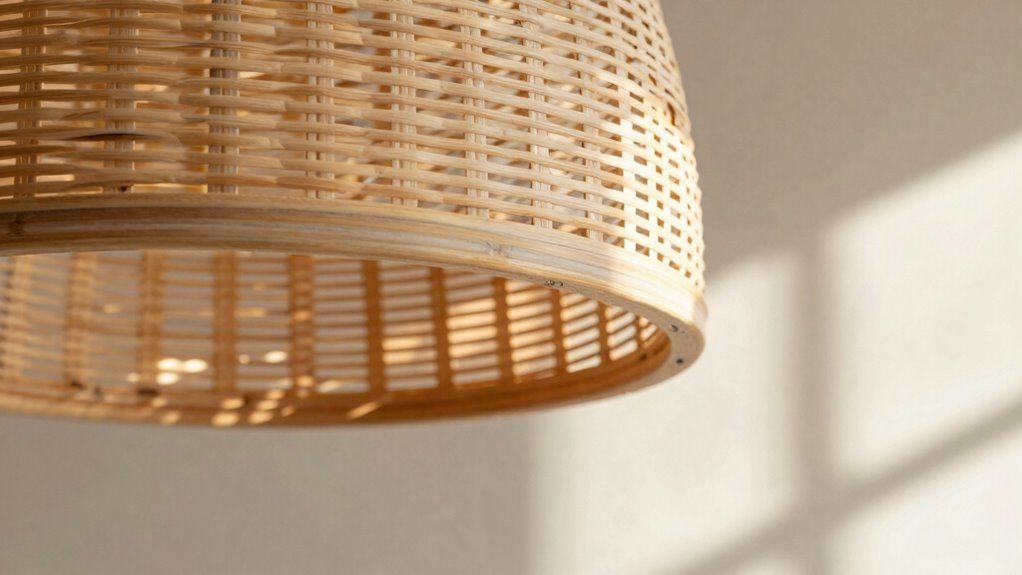
To improve light control with woven wood and bamboo shades, consider layering them with additional window treatments or accessories. This approach enhances their decorative appeal while maintaining the charm of traditional craftsmanship. For example, pairing these shades with sheer curtains can soften incoming light, giving you more control and aesthetic variety. Alternatively, adding blackout roller shades behind them offers privacy and darkness when needed. Here’s a quick comparison:
| Layering Option | Benefit |
|---|---|
| Sheer curtains | Diffuses light, adds elegance |
| Blackout shades | Blocks light, increases privacy |
| Valances or cornices | Conceals hardware, adds decorative appeal |
Layering options help you tailor the amount of light entering your space, balancing function with style.
What Factors Should You Consider When Choosing Woven Wood or Bamboo Shades?
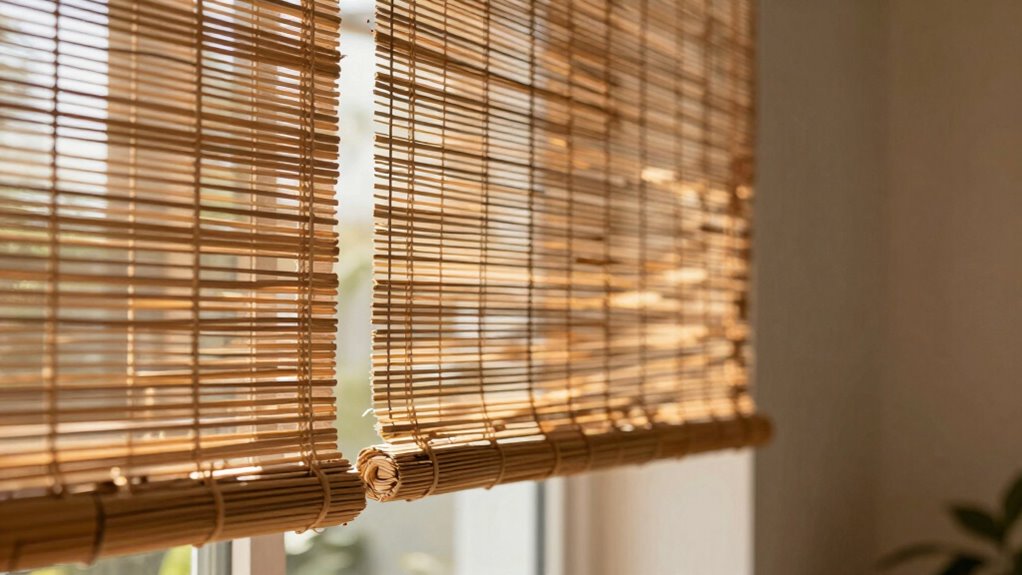
When choosing woven wood or bamboo shades, several factors come into play to guarantee you select the right fit for your space. First, consider material durability; these shades face daily exposure to sunlight and humidity, so sturdy materials ensure longevity. Second, evaluate their aesthetic appeal—think about whether the natural textures complement your decor. Third, think about your light control needs; some shades allow more light in, while others offer more privacy. Also, check the construction quality to prevent cracking or fraying over time. Keep in mind that the right shades should blend durability with visual harmony, enhancing your space without sacrificing functionality. By weighing these factors, you’ll find woven wood or bamboo shades that meet both your practical and aesthetic preferences.
Frequently Asked Questions
Are Woven Wood and Bamboo Shades Environmentally Sustainable?
Yes, woven wood and bamboo shades are environmentally sustainable. You’ll appreciate their eco-friendly benefits, like using renewable materials and natural fibers. While the manufacturing impact varies, choosing shades from responsible sources minimizes environmental harm. These shades often require less energy to produce and are biodegradable, making them a smart, sustainable choice for eco-conscious homeowners like you. By selecting eco-friendly options, you support sustainable practices and reduce your overall environmental footprint.
How Durable Are These Shades Against Moisture and Humidity?
Sure, your woven wood and bamboo shades are practically invincible against moisture and humidity—said no one ever. In reality, they’re quite sensitive to humidity effects, which can cause warping, cracking, or mold over time. While some treatments improve moisture resistance, don’t expect them to handle high humidity environments flawlessly. If you live in a damp climate, consider other options or be prepared for some maintenance drama.
Can These Shades Be Customized to Fit Unusual Window Sizes?
Yes, you can get woven wood and bamboo shades custom-sized to fit your unusual window. Many suppliers offer custom sizing services, ensuring your shades fit perfectly, even if your window has irregular dimensions. You simply provide the measurements, and they craft the shades accordingly. This way, you get a tailored look that enhances your space and provides the ideal light control and privacy, no matter how unique your window shape or size might be.
What Maintenance Is Required to Keep Them Looking Their Best?
You’ll want to clean your woven wood and bamboo shades every 4-6 months to keep them looking fresh. With over 80% of homeowners preferring natural materials, proper maintenance is key. Use a gentle vacuum or a soft brush for dust removal, and spot-clean stains with a damp cloth. For repairs, tighten loose slats or reattach frayed cords promptly to maintain their beauty and function.
Do These Shades Block Out Light Completely When Closed?
When you close woven wood and bamboo shades, they don’t block out light completely but provide moderate light filtering. If you want total darkness, these shades offer limited light blocking and may not fully guarantee privacy levels. They’re ideal for creating a warm, inviting atmosphere while reducing glare, but for complete privacy and darkness, consider adding blackout linings or layered window treatments.
Conclusion
Think of woven wood and bamboo shades as a delicate dance between light and privacy. They filter what you need while leaving some things uncovered, like a gentle breeze through open windows. By understanding their strengths and limits, you can create a space that feels just right—bright enough to inspire, private enough to relax. Embrace these shades as partners in your home’s harmony, guiding light softly where you want it to go.