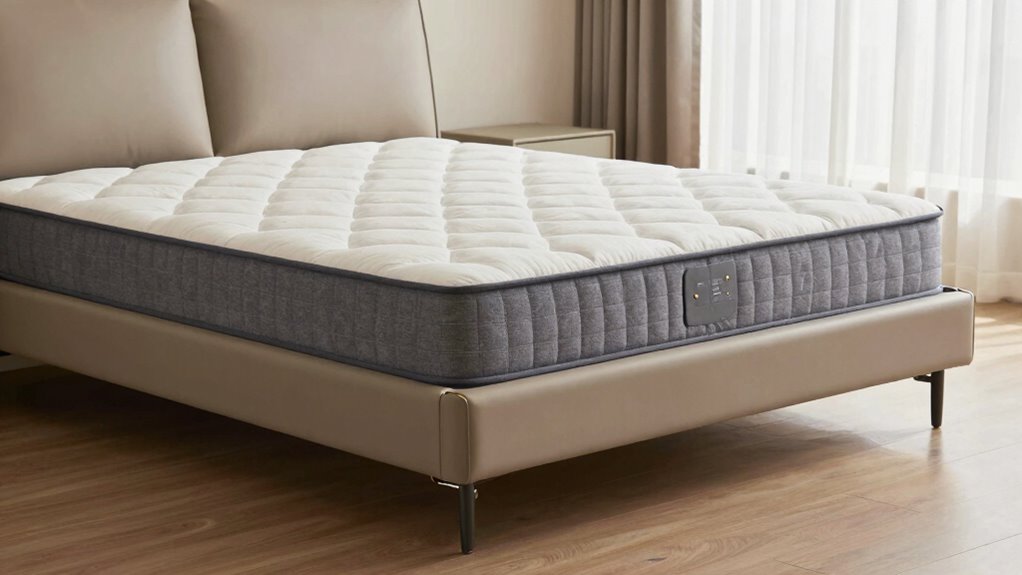
To guarantee your adjustable bed works well, choose a mattress that’s flexible and fits the bed’s size, usually between 10 to 14 inches thick. Memory foam or latex mattresses tend to bend easily, while traditional innerspring models might cause issues. Make sure your bed frame can support both the mattress and the adjustable motors without sagging. Keep these compatibility tips in mind, and you’ll find all the key details you need to optimize your setup ahead.
Key Takeaways
- Choose flexible mattresses like memory foam or latex for better movement with adjustable bases.
- Match mattress thickness (10-14 inches) to your bed frame’s specifications for proper support.
- Verify manufacturer guidelines to ensure mattress compatibility with adjustable bed bases.
- Select sturdy, low-profile frames that support the mattress and accommodate adjustable mechanisms smoothly.
- Test the setup by lying on the mattress and activating the adjustable features before purchase.
What Are Adjustable Bed Bases and Why Do They Matter?
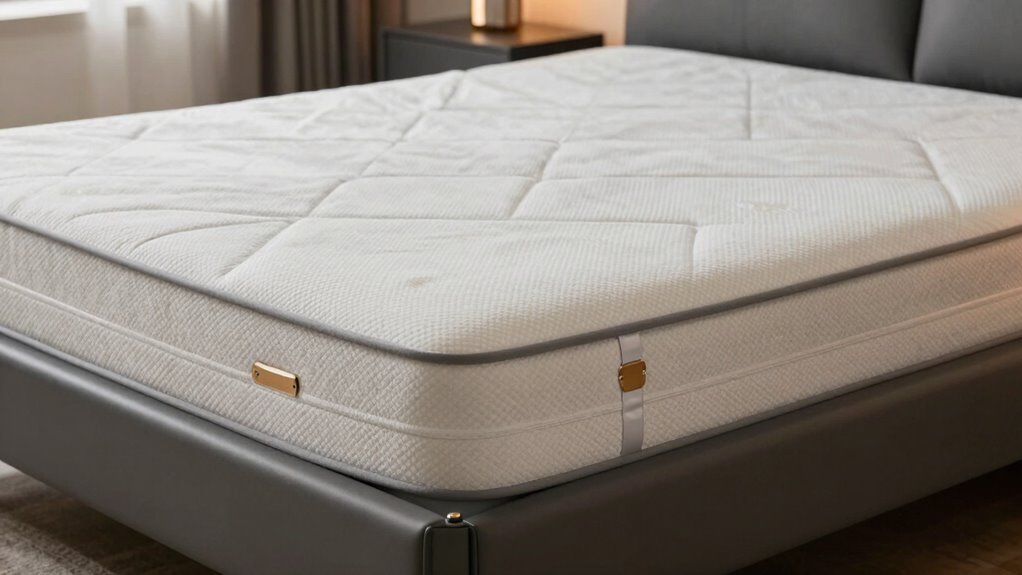
Adjustable bed bases are innovative foundations that let you customize your sleeping position for comfort and health benefits. Unlike traditional bed frames, these bases can be adjusted to elevate your head, feet, or both, improving sleep ergonomics. This flexibility helps reduce issues like acid reflux, snoring, and back pain by allowing you to find the most comfortable angle. The bed frame supporting an adjustable base is designed to accommodate these adjustments seamlessly, ensuring stability and durability. Additionally, choosing the right compatible mattress is essential for optimal performance and longevity of your adjustable bed. For example, mattress flexibility is crucial to ensure the mattress can bend and contour properly with the adjustable base, preventing damage and maintaining comfort. Using a properly designed mattress can also enhance the lifespan of your investment and improve overall sleep quality. Proper bed frame compatibility ensures that all components work together safely and effectively. When selecting a mattress, considering its material composition can also influence how well it adapts to the adjustable base and maintains its shape over time. With an adjustable bed base, you’re in control of your sleep environment, promoting better rest and overall well-being. Whether you prefer sitting up to read or elevating your legs, these bases transform how you experience sleep, making them a valuable addition to your bedroom setup.
The Best Mattress Types for Adjustable Bed Bases

Choosing the right mattress for your adjustable bed base is essential for comfort and durability. Not all mattress types work well with adjustable frames, so you need to take into account compatibility. Let’s explore the best options and what to keep in mind for a perfect fit. When selecting a mattress, consider mattress flexibility and how well it can bend and move with the adjustable base without damaging or compromising its structure. Additionally, selecting a mattress with adequate support can enhance longevity and user comfort during adjustments. Understanding mattress materials that are compatible with adjustable bases can further improve your overall experience. For example, body-friendly materials like latex and memory foam tend to perform well with adjustable frames due to their flexibility. Consulting with architectural solutions experts can help ensure that your chosen mattress and frame work seamlessly together for optimal performance.
Best Mattress Types
Are you wondering which mattress types work best with adjustable bed bases? The right mattress enhances ergonomic benefits and improves your sleeping posture. Memory foam and latex mattresses are excellent choices because they contour well, providing support during adjustments. Hybrid mattresses combine foam and innerspring layers, offering flexibility and durability. In contrast, traditional innerspring mattresses may struggle with movement and may not support the bed’s range of motion effectively. Additionally, understanding support levels can help you choose a mattress that best fits your comfort needs. Selecting a mattress with appropriate flexibility is essential for maintaining comfort and functionality in an adjustable setup. Being aware of market trends can also help you make informed decisions about mattress options for your adjustable bed, especially as new technologies continue to improve compatibility and performance. Keeping up with industry innovations can ensure you select a mattress that remains compatible as designs evolve.
Compatibility Considerations
Selecting the right mattress type is vital for guaranteeing compatibility with your adjustable bed base. Your choice depends on bed frame styles and mattress material specifics. Some mattresses, like memory foam and latex, are highly flexible and move well with adjustable bases, preventing damage or discomfort. In contrast, traditional innerspring mattresses may not bend easily and could cause issues over time. Consider the thickness of your mattress as well; most adjustable bases work best with mattresses between 10 to 14 inches. Always check the manufacturer’s guidelines to verify the mattress material specifics align with your bed frame style. Understanding material flexibility can help ensure your mattress moves smoothly without damage or discomfort. Additionally, selecting a mattress with appropriate compatibility features can enhance the longevity and performance of your adjustable bed. When choosing a mattress, paying attention to adjustability considerations can further improve your experience. Ensuring the correct mattress compatibility can make a significant difference in the overall performance of your adjustable bed. Recognizing bed frame styles and their compatibility requirements can help you make more informed decisions. Choosing the right combination guarantees smooth adjustments, durability, and comfort, making your investment in an adjustable bed truly worthwhile.
How to Know If Your Mattress Is Compatible With an Adjustable Bed

Not all mattresses work well with adjustable beds, so it’s important to determine compatibility before making a purchase. Start by checking your mattress size; it should match your adjustable bed’s bed size to ensure proper fit and function. Additionally, consider mattress firmness—medium or plush mattresses often adjust better and provide comfort when the bed is inclined or reclined. Avoid mattresses that are too thick or made of materials like memory foam that can restrict movement or cause overheating. Some mattresses, especially traditional innerspring types with a solid construction, may not bend properly or could damage the adjustable mechanism. Always review the manufacturer’s guidelines to confirm your mattress is suitable for an adjustable base, ensuring safety, comfort, and longevity. Being aware of Free Floating characteristics can also help determine if your mattress will adapt well to the adjustable frame and maintain its durability over time. Furthermore, understanding the industry trends can help you choose a mattress that remains compatible as technology and designs evolve.
Choosing the Right Frame for Your Adjustable Bed Base
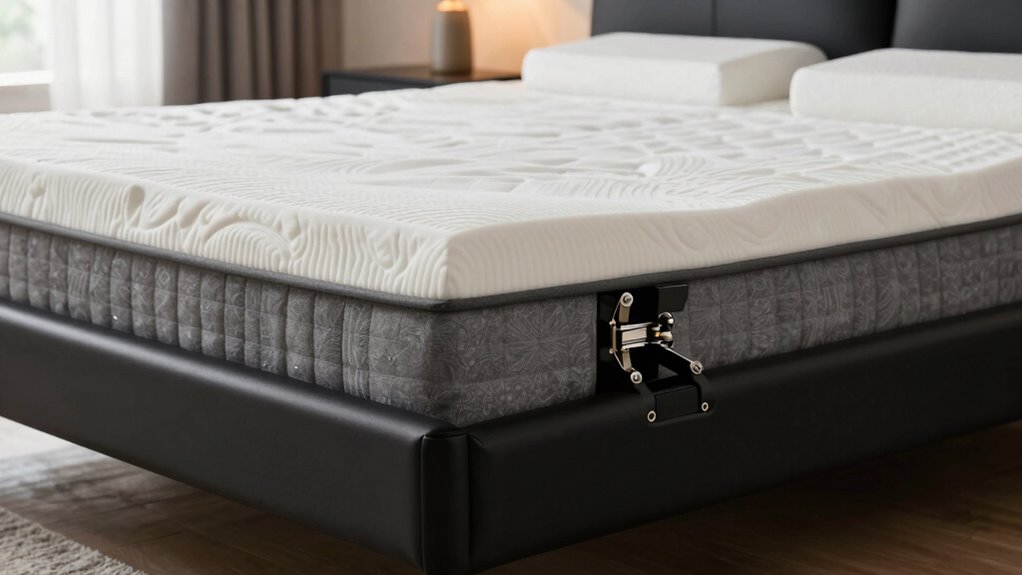
Choosing the right frame for your adjustable bed base guarantees stability, durability, and proper functionality. When selecting a frame, consider bed frame materials like metal or wood, as they affect support and longevity. Confirm the frame can accommodate your mattress thickness to prevent sagging or fitting issues. A sturdy, low-profile frame often works best with adjustable bases, providing stability without hindering movement. Here’s a quick comparison:
| Material | Mattress Thickness Compatibility | Stability Level |
|---|---|---|
| Metal | Thinner to medium | Very stable |
| Wooden | Medium to thick | Stable |
| Hybrid | Varies, check specs | Depends on build |
In addition, ensuring the frame has proper support can enhance the longevity and performance of your adjustable bed setup. Proper support helps maintain the structural integrity of your mattress and frame, especially over time. Selecting a frame with adequate reinforcement can prevent sagging and ensure consistent operation of your adjustable base. Choose a frame that supports your mattress material and thickness for ideal performance.
Top Factors to Consider When Matching Mattresses and Frames for Compatibility
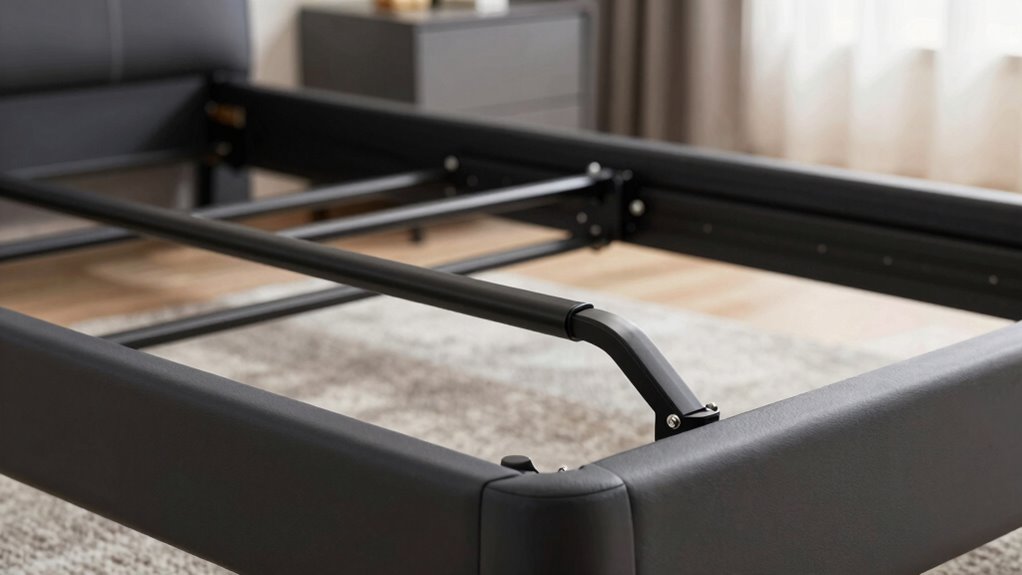
When matching a mattress and frame, it’s essential to take into account mattress compatibility standards to ensure they work well together. You also need to check the frame’s weight capacity so it can support your mattress comfortably. Paying attention to these factors helps you avoid issues and guarantees a secure, comfortable fit.
Mattress Compatibility Standards
Ensuring your mattress and adjustable bed frame are compatible is essential for maximum comfort and safety. Start by checking bed frame sizing to match your mattress dimensions precisely—mismatched sizes can cause instability or damage. Next, consider mattress firmness; some adjustable frames work best with softer or firmer mattresses, depending on their design. Compatibility also involves ensuring the mattress’s construction supports movement without sagging or shifting. If your mattress is too thick or too thin, it might interfere with the frame’s mechanisms or limit range of motion. Always verify manufacturer recommendations for compatibility, especially when selecting specialty mattresses like memory foam or hybrid types. Proper matching guarantees your setup functions smoothly, prolongs mattress life, and delivers the comfort you expect.
Frame Weight Capacity
Your adjustable bed frame’s weight capacity is a critical factor to contemplate because it directly affects the safety and durability of your setup. The frame weight determines how much weight your bed can support safely, including your mattress, bedding, and yourself. Exceeding the frame weight capacity can cause structural failure or damage over time. Always check the specified weight capacity before selecting a mattress, especially if you have a heavier one or if multiple people use the bed. Choosing a frame with an adequate weight capacity ensures stability and longevity. Keep in mind that lower frame weight limits may restrict your options, so prioritize frames designed to handle your desired mattress and user weight. Proper matching prevents accidents and extends your bed’s lifespan.
Common Mistakes When Matching Mattresses and Frames With Adjustable Beds: and How to Avoid Them
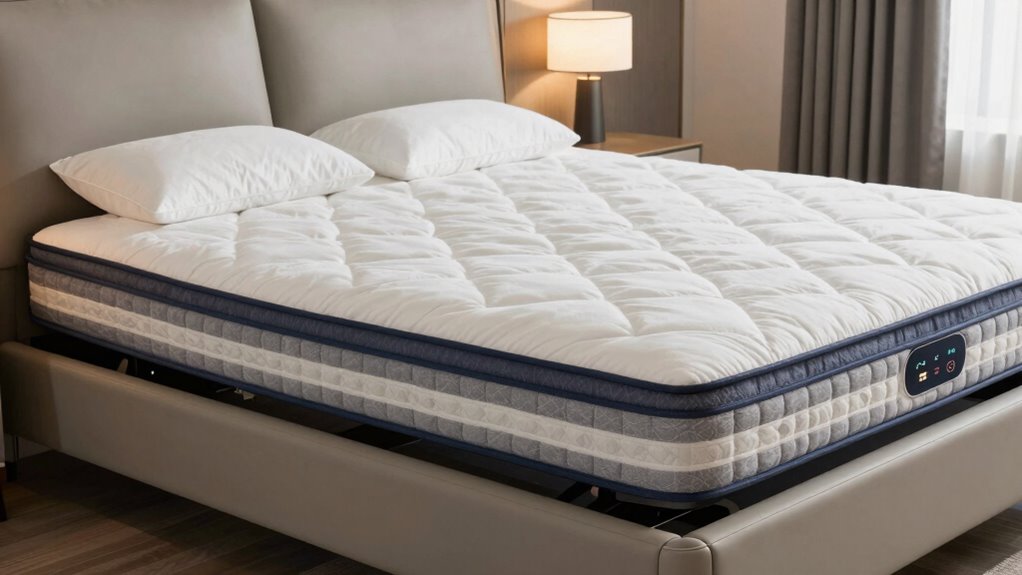
One common mistake is choosing a mattress that isn’t compatible with adjustable bed frames, which can lead to discomfort and damage over time. If your mattress isn’t flexible enough, you might experience mattress sagging as it doesn’t bend properly with the frame’s movement. This can cause uneven support and sleep discomfort. Additionally, using an incompatible mattress may increase frame squeaking due to improper fit or excessive movement. To avoid these issues, verify that your mattress is designed for adjustable beds—preferably memory foam or latex, which are more flexible. Also, ensure your mattress fits the frame’s size and weight limits. Properly matching your mattress and frame helps prevent sagging and reduces squeaking, extending the lifespan of both components.
How to Test Your Mattress and Frame Compatibility Before Buying
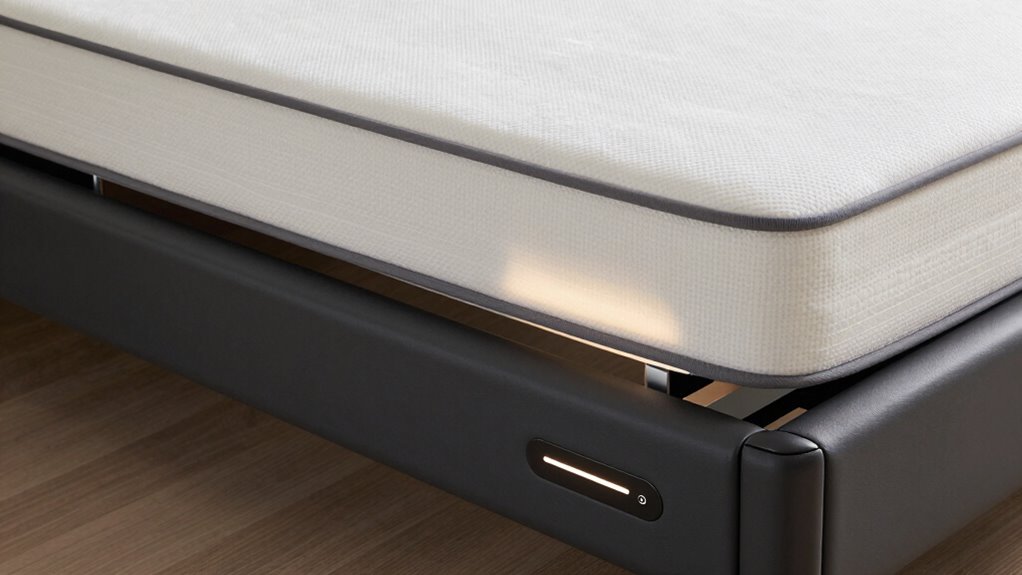
Before making a purchase, it’s important to test your mattress and frame compatibility to avoid issues later on. Start by checking the bed height to ensure it suits your needs and makes getting in and out easier. Sit or lie on the mattress to assess your sleep posture—your spine should remain aligned, and there should be no uncomfortable pressure points. Confirm that the mattress is compatible with the adjustable bed’s mechanisms, especially around the head and foot sections. If possible, test the setup in-store with the frame’s elevation features active, ensuring the mattress moves smoothly without slipping or binding. Proper testing now helps prevent problems later, ensuring your mattress and frame work harmoniously for comfortable, long-term sleep.
Tips for Maintaining and Adjusting Your Adjustable Bed Setup for Long-Term Comfort
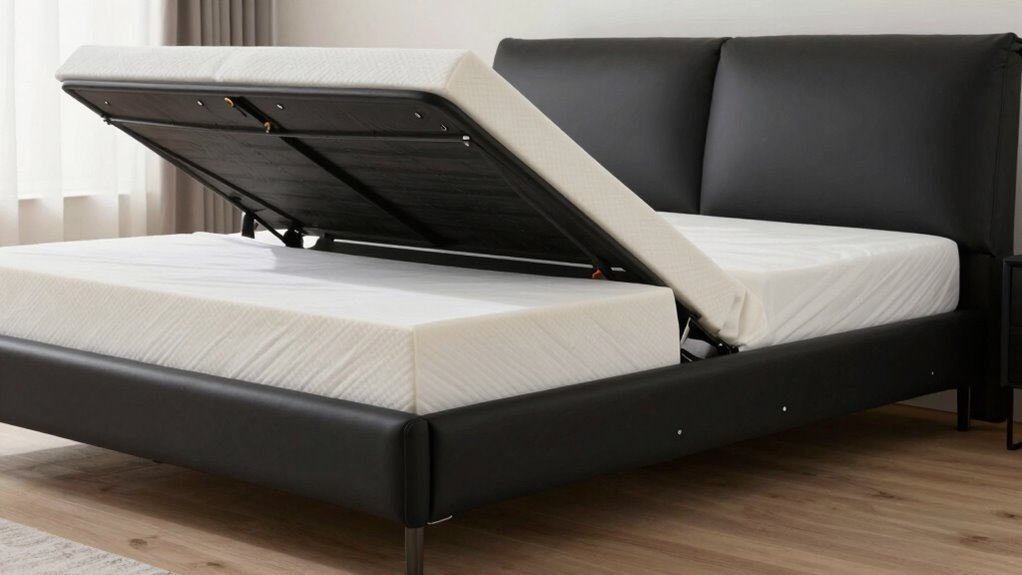
Regularly inspecting and adjusting your adjustable bed guarantees it remains comfortable and functions properly over time. Keep an eye on the bed’s mechanics and check for loose connections or signs of wear. Adjust the frame and mattress alignment as needed to support good sleep hygiene and prevent discomfort. Incorporate your bed into your bedroom decor by maintaining a clean, inviting space that encourages relaxation. Ensure your bed’s position promotes proper posture, reducing strain and improving sleep quality. Use the remote or app to fine-tune settings for ideal comfort every night. Regular maintenance helps prevent issues that could disrupt your sleep or damage the bed. By staying proactive, you’ll enjoy long-term comfort and a well-coordinated bedroom environment.
Expert Tips to Ensure Your Mattress and Frame Stay Compatible Over Time

Maintaining compatibility between your mattress and adjustable bed frame is key to ensuring long-lasting comfort and proper functionality. To do this, regularly check your mattress’s size and type against your frame’s specifications, especially if you’re updating your bedroom decor. Avoid using incompatible mattresses that may cause misalignment or damage, which can compromise sleep hygiene. Keep your bed clean and free of debris to prevent uneven wear. If you notice sagging or difficulty adjusting, consider replacing your mattress or frame to maintain ideal support. Proper compatibility also helps your bedroom look cohesive and inviting. By staying attentive to these details, you ensure your setup remains comfortable, supportive, and aligned with your sleep needs over time.
Frequently Asked Questions
Can I Use a Memory Foam Mattress With Any Adjustable Bed Base?
Yes, you can use a memory foam mattress with most adjustable bed bases. Memory foam offers good mattress compatibility because it’s flexible and conforms well to adjustable bases. Just make sure your mattress is not too thick or heavy, as this can impact the base’s functionality. Check the manufacturer’s guidelines to guarantee compatibility. With the right combination, you’ll enjoy customizable comfort and support.
Are There Specific Weight Limits for Mattresses on Adjustable Frames?
Yes, there are specific weight limits for mattresses on adjustable frames. You should check the frame’s weight capacity to verify it can support your mattress weight comfortably. Exceeding the weight capacity might cause damage or malfunction. Always consider your mattress weight and the frame’s recommended limits to maintain safety and longevity. If your mattress is heavier, opt for a frame rated for higher weight capacity to prevent issues.
Do All Bed Frames Support All Types of Adjustable Bed Bases?
Imagine you have a sleek platform bed—most bed frame types like this might not support all adjustable bed bases. Not all frames are compatible; some, like traditional wooden frames, lack the necessary motor clearance or support for the base’s movement. To make certain of mattress compatibility, check the frame’s specifications and choose adjustable bases designed for your frame type. This prevents damage and guarantees smooth operation.
How Do I Know if My Existing Mattress Needs Modifications for Compatibility?
You can tell if your mattress needs modifications by checking its thickness and bed frame style. If your mattress is too thick or thin, it might not work well with an adjustable bed base. Measure your mattress thickness and compare it to the recommended range for your bed frame style. If it’s outside that range, consider a thinner or thicker mattress or speak with the manufacturer for specific compatibility advice.
Are There Adjustable Bed Base Features That Influence Mattress Compatibility?
Features like flexible frame compatibility and innovative mattress modifications considerably influence mattress compatibility. You’ll want to check if your adjustable bed base has smooth, supportive, and sturdy frame features that fit your mattress type. Some bases require specific mattress modifications, like low-profile designs or specialized edge support. By understanding these adjustable bed base features, you can confidently select a compatible mattress without unnecessary modifications, ensuring comfort and convenience in your sleep setup.
Conclusion
To keep your adjustable bed experience comfortable, always check mattress and frame compatibility before buying. Did you know that over 60% of adjustable bed users report issues due to incompatible mattresses? By understanding the rules and testing your setup beforehand, you can avoid costly mistakes and enjoy long-term comfort. Stay informed, follow expert tips, and regularly maintain your bed to guarantee it remains a perfect fit for years to come.