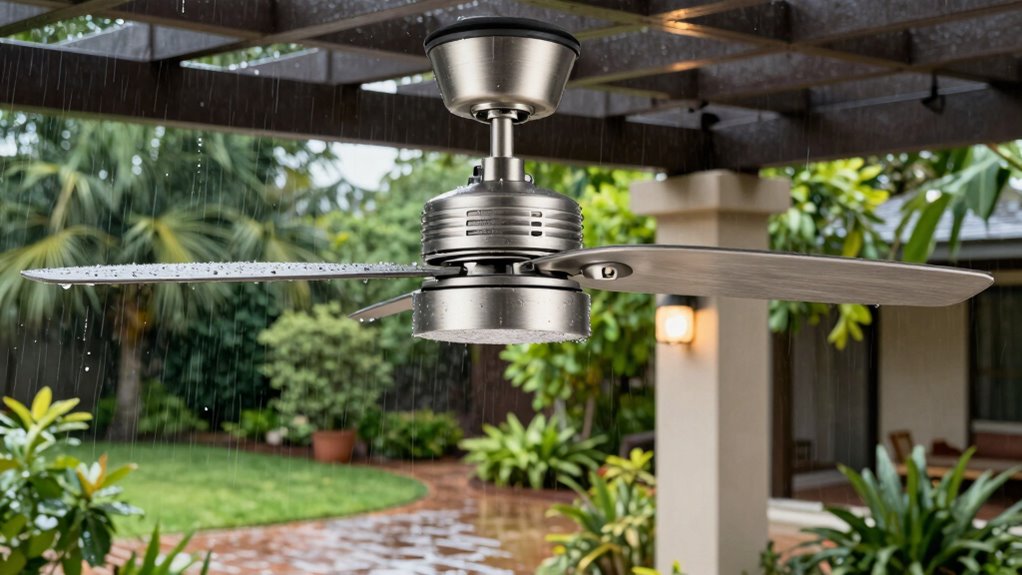

Outdoor ceiling fans are rated as damp or wet to match their ability to handle moisture. Damp-rated fans can withstand humidity and light rain but aren’t designed for direct water exposure, making them ideal for covered patios. Wet-rated fans handle heavy rain, snow, and harsher weather conditions, perfect for open areas. Choosing the right rating depends on your outdoor space’s environment; stay with us to learn more about making the best choice for your needs.
Key Takeaways
- Damp-rated fans tolerate humidity and moisture but are not suitable for direct rain exposure.
- Wet-rated fans are designed to withstand full water contact, including rain, snow, and harsh weather conditions.
- Proper rating selection depends on installation location, such as covered patios versus open decks.
- Wet-rated fans use corrosion-resistant materials like marine-grade metals for durability.
- Choosing the correct rating ensures safety, longevity, and optimal performance in outdoor environments.
What Do Damp-Rated and Wet-Rated Outdoor Fans Mean?
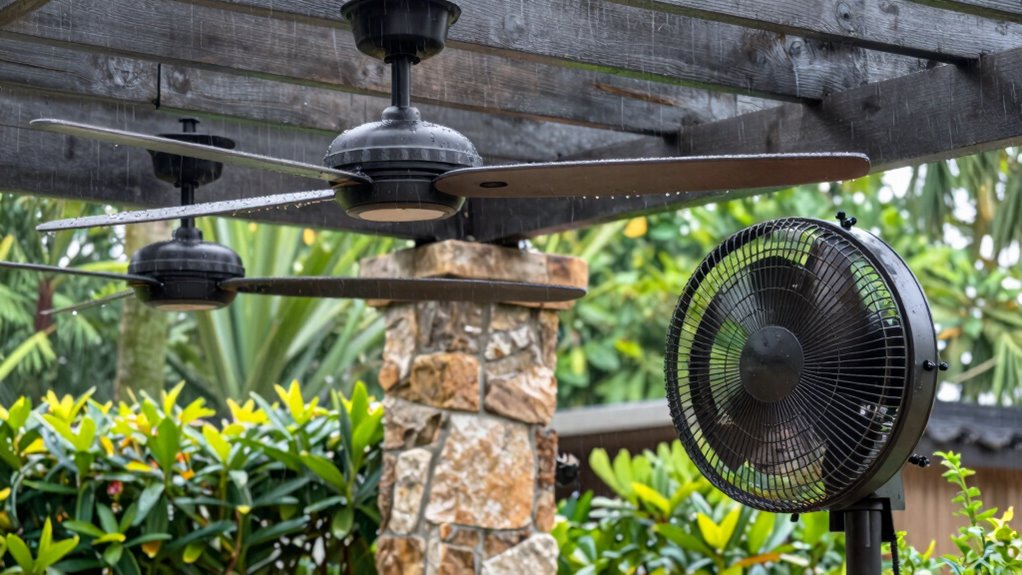
Understanding the difference between damp-rated and wet-rated outdoor fans is essential for choosing the right fixture for your space. Damp-rated fans are designed for covered areas where rain might hit but isn’t directly exposed, offering decent storm protection. Wet-rated fans, on the other hand, are built to withstand direct exposure to rain, snow, and harsh weather conditions, providing full storm protection. Both types can help improve energy efficiency by circulating air and reducing cooling costs. Selecting the correct rating guarantees your fan operates safely and reliably, preventing damage from moisture. Properly rated fans also contribute to overall climate resilience, ensuring your outdoor space remains functional and safe under varying weather conditions. By understanding these ratings, you can make smarter choices that protect your investment and optimize performance, especially in variable weather conditions. Properly rated fans ensure durability and efficient operation year-round. Proper installation is crucial to maximize the lifespan and safety of outdoor ceiling fans. Additionally, choosing the right rating can help you comply with local building codes and safety standards, further safeguarding your investment. Knowing how moisture exposure affects outdoor fixtures can help you select the most appropriate fan for your environment. Being aware of moisture resistance properties ensures your outdoor fan will perform well over time and withstand environmental challenges.
How Are Damp and Wet Ratings Different? Key Features Explained
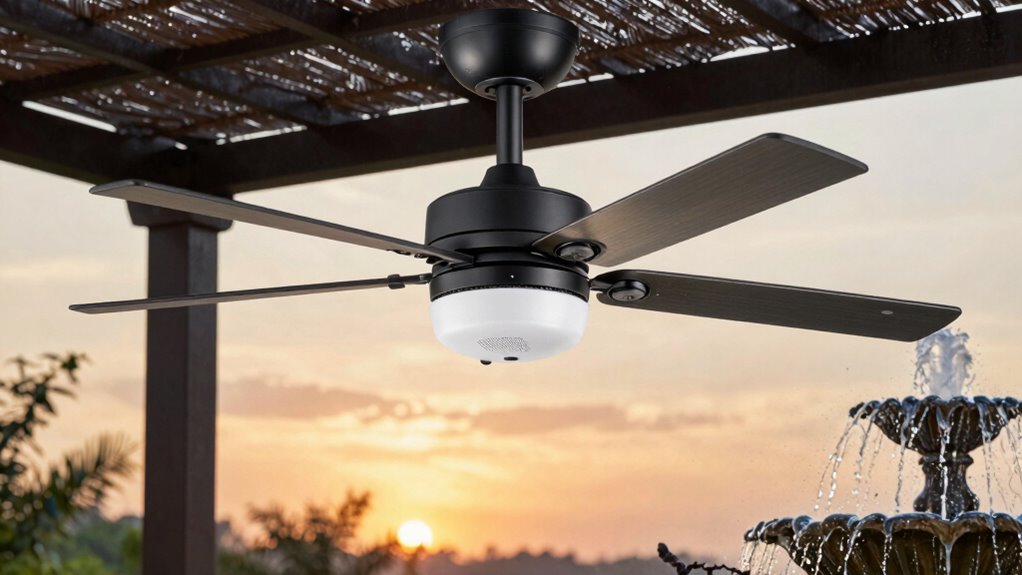
Understanding the water exposure levels helps you choose the right fan for your space. Material durability features guarantee your fan withstands the elements, depending on its rating. Knowing placement and usage guidelines makes sure you install your fan safely and effectively.
Water Exposure Levels
When choosing outdoor ceiling fans, knowing their water exposure ratings is vital to guarantee longevity and safety. Damp-rated fans tolerate moisture but aren’t designed for direct rain, while wet-rated fans can handle full water exposure. This distinction affects their corrosion resistance and electrical safety, ensuring safe operation in varying conditions. Visualize a fan surrounded by:
- Raindrops hitting its blades
- Humid coastal air
- Morning dew on outdoor patios
- Splashing from garden sprinklers
- Wind-driven rain during storms
These factors determine whether a fan maintains performance without rust or electrical hazards. Wet-rated fans are built to withstand continuous water contact, offering durability and safety in harsh environments. Additionally, Vetted products are tested to meet these rating standards, providing peace of mind for outdoor installations. Recognizing the water exposure levels helps you select the right fan for your outdoor space. Understanding outdoor environment factors can further guide your choice, ensuring your fan endures seasonal weather variations. For example, considering environmental conditions can help prevent premature wear and ensure optimal performance over time. Being aware of water exposure standards also supports safer, more reliable outdoor electrical equipment.
Material Durability Features
The key difference between damp-rated and wet-rated outdoor ceiling fans lies in their material durability features, which determine how well they withstand moisture and environmental exposure. Damp-rated fans typically use materials with enhanced corrosion resistance, such as coated metals or weatherproof plastics, to handle high humidity without rusting or degrading. Wet-rated fans, on the other hand, are constructed with highly durable material compositions, like marine-grade metals or sealed components, designed to endure direct exposure to rain and standing water. These materials guarantee the fan’s structural integrity and longevity even in harsh weather conditions. By selecting a fan with the appropriate material features, you guarantee it remains functional and visually appealing, regardless of the outdoor environment’s moisture levels. Additionally, understanding the specific material durability features helps in choosing the right fan for different outdoor settings and weather conditions. Properly rated fans also often include corrosion-resistant coatings, which further extend their lifespan in challenging environments.
Placement and Usage Guidelines
Choosing the right outdoor ceiling fan depends heavily on where and how you plan to use it. Proper placement guarantees durability and safety while enhancing your space. Damp-rated fans work well under covered patios or porches, shielding them from direct rain but still exposed to moisture. Wet-rated fans are designed for open areas like pool sides or uncovered decks, where they face rain and humidity. When selecting fans, consider their decorative styles to match your outdoor decor. Think about energy efficiency features to save on electricity costs. Visualize a fan spinning gently over a cozy patio, a poolside breeze, or a porch that stays stylish and functional in any weather. Proper placement maximizes performance and longevity, making your outdoor space both inviting and practical. Understanding the differences in pool terminology helps ensure you choose the right fan for your environment. Additionally, understanding product ratings and certifications can help you select fans that meet safety and quality standards. To further ensure safe operation, always review installation guidelines and follow manufacturer recommendations.
Which Rating Is Best for Your Outdoor Space? A Decision Guide
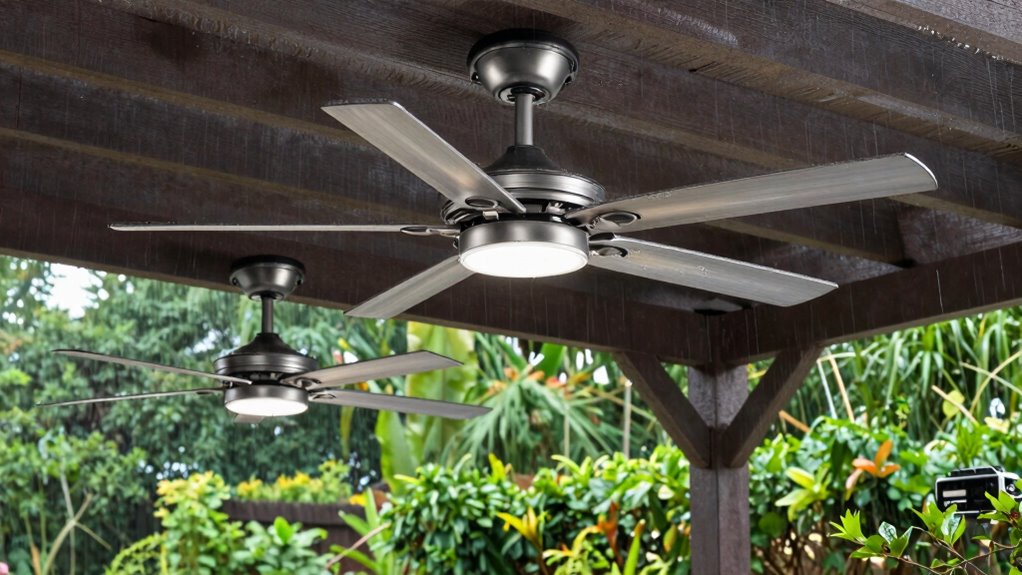
Choosing the right outdoor ceiling fan depends on climate, durability, and safety needs. You’ll want to contemplate how well it withstands weather and how long it will last with minimal maintenance. Additionally, understanding the different ratings and protections can help you select a fan that performs reliably in your specific environment. For instance, Free Floating technology can influence how well a fan handles exposure to moisture and temperature fluctuations, ensuring longevity. Proper piercing care and hygiene are essential to prevent infection and irritation, which parallels ensuring outdoor fans are properly rated to prevent weather-related issues. Moreover, considering energetic alignment with your space can enhance the overall ambiance and harmony of your outdoor area. Proper installation and placement are crucial to maximize safety and performance, especially in varying weather conditions. Let’s look at these factors to help you pick the best rating for your outdoor space.
Climate Compatibility Factors
Understanding the climate in your outdoor space is essential when selecting the right ceiling fan. Your environment’s specific conditions influence which rating—damp or wet—is best suited for longevity and performance. Consider climate considerations like humidity, rain exposure, and temperature fluctuations. Environmental factors such as coastal salt air or intense sun can accelerate wear if the fan isn’t rated correctly. Visualize your space:
- A porch exposed to occasional drizzle
- An open patio facing sea breezes
- A garden area with frequent rainstorms
- A gazebo under a protective roof
- A poolside with high humidity
Matching your outdoor environment with the appropriate rating ensures your fan withstands weather elements, minimizes maintenance, and maximizes lifespan. Always evaluate climate considerations carefully to choose the most suitable outdoor ceiling fan.
Durability and Longevity
To guarantee your outdoor ceiling fan lasts through various weather conditions, selecting the right rating is essential. Damp-rated fans are generally suitable for covered areas where exposure to moisture is limited, offering decent corrosion resistance. Wet-rated fans, designed for direct contact with rain and splashes, typically feature corrosion-resistant materials like stainless steel or coated metals, which enhance material longevity. Investing in high-quality materials ensures your fan withstands harsh elements over time, reducing rust, warping, and other damage. Durability depends on choosing the appropriate rating for your space and prioritizing fans built with corrosion resistance in mind. This careful selection helps your fan maintain performance and appearance, extending its lifespan despite exposure to humidity, rain, or wind. Corrosion resistance is a key factor in selecting durable outdoor fans.
Maintenance and Safety
Selecting the right outdoor ceiling fan rating is essential for maintaining safety and ease of maintenance. Properly rated fans help prevent electrical hazards and reduce upkeep efforts. For damp-rated fans, expect protection against moisture and humidity, making cleaning and inspections simpler. Wet-rated fans are designed to withstand direct exposure to rain, so you won’t worry about water damage or corrosion. When choosing, consider airflow efficiency for better cooling and energy conservation, which saves you money long-term. Regular maintenance includes cleaning blades, checking wiring, and tightening fixtures, regardless of rating. Ensuring safety involves inspecting for rust or corrosion and replacing damaged parts promptly. Visualize:
- A fan spinning smoothly in a humid patio
- Clear access to electrical connections
- No rust or corrosion on metal parts
- Easy blade cleaning
- Secure mounting to withstand weather
When Should You Choose a Damp-Rated Ceiling Fan?
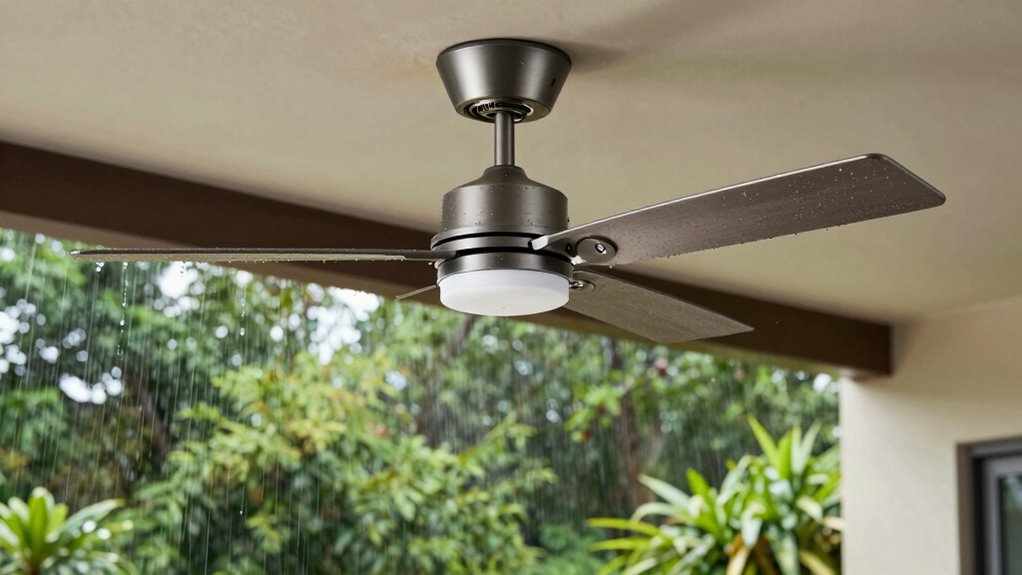
Choosing a damp-rated ceiling fan is essential when your fan will be exposed to moisture but not direct water contact. If your outdoor space features solar lighting or outdoor furniture that stays somewhat moist, a damp-rated fan offers protection against humidity and light rain. You’ll want this type of fan in covered patios, porches, or pergolas where rain might reach but doesn’t fall directly on the fan. Damp-rated fans handle humidity well, ensuring durability without the need for full waterproofing. If your outdoor area is frequently exposed to dew or mist, this rating is a smart choice. It balances weather resistance with affordability, making it ideal for spaces where moisture is present but direct water contact isn’t a concern. Understanding the weatherproofing levels of outdoor fans helps you select the most suitable option for your environment, especially since some models incorporate advanced corrosion protection to withstand harsher conditions. Additionally, proper installation and regular maintenance can extend the lifespan of damp-rated fans in moist environments. For optimal performance, selecting fans with corrosion-resistant materials can further enhance durability in humid conditions.
Do You Need a Wet-Rated Fan for Your Outdoor Area?
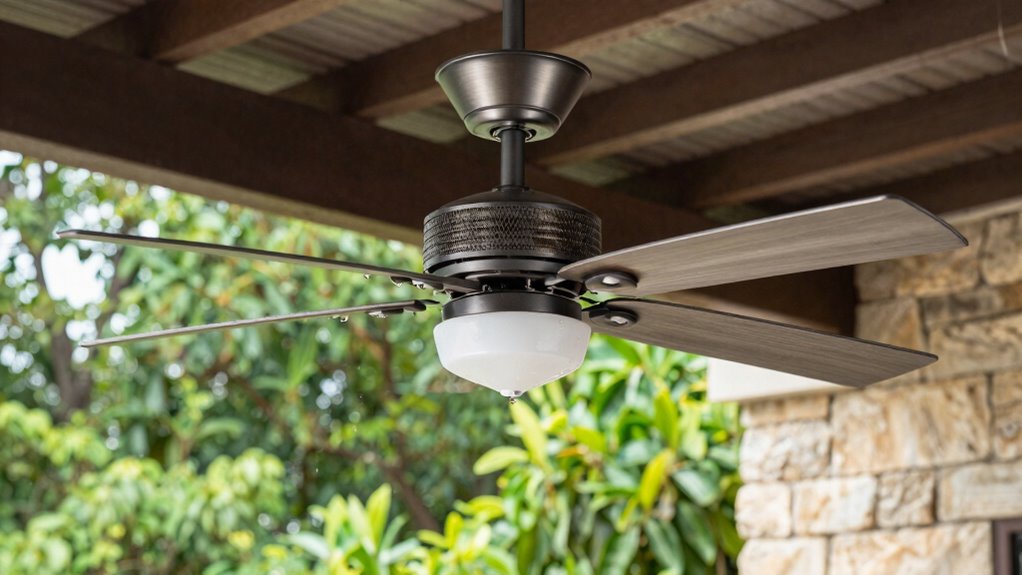
While damp-rated fans work well in covered outdoor areas, situations with direct water exposure demand a different level of protection. If your outdoor space is open to rain, spray, or splashes, a wet-rated fan is essential. Think of a rainy porch, poolside patio, or garden gazebo where water hits directly. A wet-rated fan is built to withstand constant moisture and corrosion, ensuring durability and safety. Plus, choosing a wet-rated fan can boost energy efficiency, especially if it features solar power options. Imagine an outdoor space illuminated by sunlight, with a fan that conserves energy while keeping the air fresh. Consider these visuals:
- Rain pouring down as the fan spins
- Poolside breeze during a summer storm
- Garden parties in drizzling rain
- Solar-powered fans harnessing sunlight
- Continuous protection against water damage
How to Install Your Outdoor Ceiling Fan Safely and Correctly
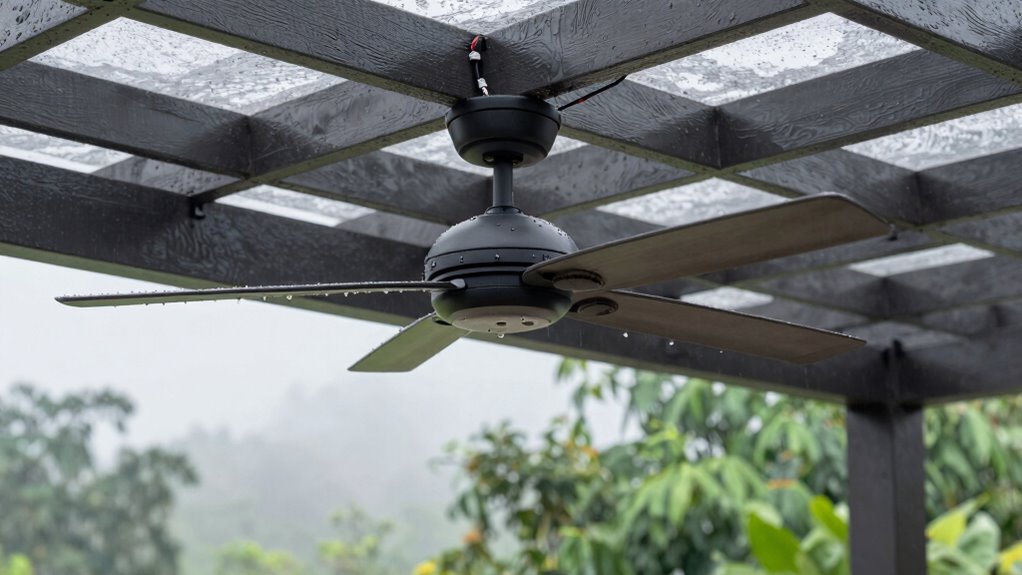
Installing your outdoor ceiling fan safely and correctly is crucial to guarantee it operates efficiently and remains secure over time. Start by turning off power at the breaker, then follow the manufacturer’s instructions for wiring and mounting. Use a sturdy ceiling box rated for fans, especially in outdoor spaces, to ensure durability. Proper installation enhances your design aesthetics and maximizes energy efficiency. Consider choosing a fan with a downrod to match your space, improving airflow and visual appeal. Regularly check connections and blades for stability. To help visualize, here’s a quick guide:
| Step | Action | Tips |
|---|---|---|
| Turn off power | Before starting installation | Safety first! |
| Mount bracket | Secure to ceiling with appropriate hardware | Use outdoor-rated hardware |
| Connect wiring | Follow wiring diagram carefully | Use wire nuts and connectors |
| Attach fan blades | Ensure balanced and tight connections | Prevent wobbling |
| Test operation | Turn on power and check for smooth running | Adjust as needed |
Common Mistakes When Choosing Outdoor Ceiling Fans
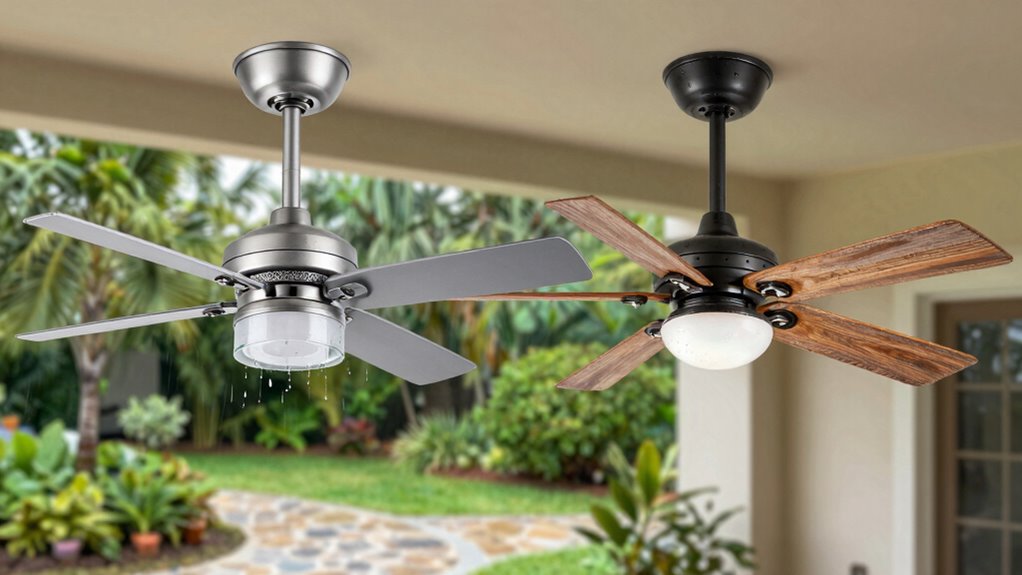
One common mistake homeowners make is focusing only on the fan’s appearance rather than its performance and suitability for outdoor use. It’s tempting to pick a fan based on style or matching existing lighting fixtures, but outdoor fans need proper ratings like damp-rated or wet-rated to withstand weather. Ignoring these ratings can lead to damage or safety hazards. Also, overlooking how the fan complements your outdoor space’s interior design can result in a disjointed look. When choosing, avoid these pitfalls:
Avoid selecting outdoor fans based solely on appearance; prioritize weather ratings and proper fit for your space.
- Picking a fan without checking its weather resistance
- Ignoring the size and airflow needed for your space
- Choosing a fan based solely on style, neglecting durability
- Overlooking compatibility with existing lighting fixtures
- Not considering noise levels or energy efficiency
Make sure your outdoor fan is both functional and visually cohesive for long-term satisfaction.
How to Maintain and Protect Your Outdoor Fan Over Time

Regular maintenance is essential to keep your outdoor ceiling fan functioning smoothly and looking great over time. Start by cleaning the blades and motor housing regularly to prevent dust buildup that can impact lighting design and reduce efficiency. Check and tighten any loose screws or brackets to ensure stability. Protect your fan from harsh weather by installing a cover during storms or winter months, especially if it’s not wet-rated. To improve energy efficiency, ensure the fan is properly balanced and blades are clean. Lubricate moving parts if needed, following the manufacturer’s instructions. Regularly inspecting and maintaining your outdoor fan extends its lifespan, keeps it running efficiently, and preserves its aesthetic appeal for years to come.
Frequently Asked Questions
Can Damp-Rated Fans Be Used in Indoor Humid Areas?
Yes, damp-rated fans can be used in indoor humid areas, but they’re not ideal. Indoor humidity levels can fluctuate, and damp-rated fans are designed to withstand moisture but not constant exposure. For better fan durability and long-term performance, especially in high-humidity spaces like bathrooms or kitchens, consider using wet-rated fans. This ensures the fan remains reliable and safe despite the moisture, protecting your investment.
Are Wet-Rated Fans More Expensive Than Damp-Rated Fans?
You’ll find wet-rated fans tend to be more expensive, with a cost difference averaging about 20-30%, mainly due to their durability against harsher weather. Surprisingly, installation costs are similar for both types, but investing in a wet-rated fan can save you money long-term if you need it for exposed outdoor spaces. So, if you’re on a budget, damp-rated fans suit covered areas, but for open outdoor use, wet-rated fans are worth the extra expense.
How Long Do Outdoor Ceiling Fans Typically Last?
Outdoor ceiling fans typically last between 10 to 15 years, depending on their fan lifespan and maintenance. You can prolong their durability by cleaning blades regularly and checking electrical components. Replacement intervals vary based on exposure to weather, with damp-rated fans usually lasting longer than wet-rated ones in moderate conditions. Proper installation and protective covers can also help guarantee your fan stays functional for many seasons.
Do All Outdoor Fans Come With Weatherproofing Features?
Not all outdoor fans come with weatherproofing features, but many are designed for durability. Look for corrosion resistance to withstand moisture and harsh conditions, ensuring longevity. Weatherproofing also enhances energy efficiency by preventing damage that can cause inefficiency. If you want a fan that can handle your outdoor space, choose one labeled as damp-rated or wet-rated, as these are specifically built to resist weather elements and keep functioning well over time.
What Maintenance Is Required to Keep Outdoor Fans Functioning Properly?
To keep your outdoor fan functioning properly, you should regularly clean the blades to prevent dust buildup, which can affect airflow. Additionally, check the motor and apply lubrication if needed—this reduces friction and keeps the fan running smoothly. Make sure to turn off the power before maintenance. Regularly inspecting and maintaining your outdoor fan guarantees it stays durable and efficient, no matter the weather conditions.
Conclusion
So, next time you pick out an outdoor fan, remember that “damp” and “wet” ratings aren’t just fancy labels—they’re your ticket to avoiding electrical disasters. It’s almost amusing how something as simple as a fan’s rating can turn into a DIY safety lesson. But hey, at least now you can confidently choose the right fan for your space—without risking a shocking surprise. Because nothing says “relaxing outside” like a little safety wit.