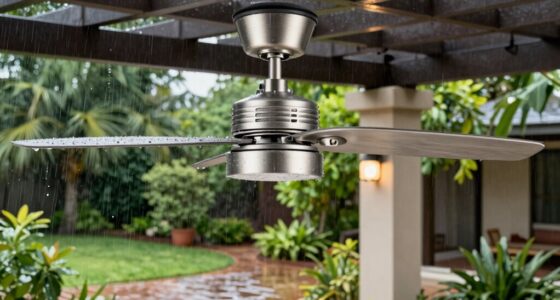
Indoor hammock chair stands focus on stability, using sturdy bases, non-slip feet, and reinforced joints to prevent tipping. Outdoor stands need durable, weather-resistant materials like powder-coated steel or teak to withstand rain and sun, plus strong anchoring on solid ground for safety. Environmental factors like wind, moisture, and uneven surfaces can impact stability outdoors. If you want to guarantee safe and long-lasting use, understanding these differences will help you decide which is best for your space.
Key Takeaways
- Indoor stands prioritize stability with wide bases and non-slip features, while outdoor stands focus on weather-resistant materials and secure anchoring.
- Indoor stands are less exposed to environmental elements, reducing corrosion risks, whereas outdoor stands require rust-proof coatings and durable materials.
- Proper ground surface and leveling are crucial for outdoor stands to prevent wobbling and tipping, less critical for indoor setups on flat floors.
- Indoor stands often have reinforced joints and lightweight designs for safety in limited space; outdoor stands need heavy-duty construction for stability on uneven terrain.
- Weather conditions impact outdoor stand safety more significantly, necessitating regular maintenance and protective measures compared to indoor stands.
What Are the Key Safety Features of Indoor Hammock Chair Stands

When choosing an indoor hammock chair stand, safety should be your top priority. You want to guarantee hammock safety by selecting a stand that offers reliable indoor stability. Look for stands with a sturdy base, preferably with wide or weighted feet that prevent tipping. Check the construction materials—metal frames with reinforced joints tend to be more durable and safer. The stand’s weight capacity is also essential; it should comfortably support your weight without wobbling. Additionally, consider features like non-slip feet or rubber pads, which prevent slipping on smooth surfaces. Proper assembly instructions and quality craftsmanship further enhance safety. Remember, a stable stand reduces risks and ensures your relaxing experience remains safe and worry-free. Incorporating proper load distribution into your setup can further improve stability and safety, especially when considering weight balance and how the load is spread across the stand. Furthermore, ensuring the stand’s design aligns with vintage-inspired aesthetics can complement retro home decor while maintaining structural integrity. Paying attention to the assembly process ensures the stand is set up correctly, reducing potential hazards. Also, understanding structural stability principles can help you select a stand that remains safe over time.
How to Choose a Stable and Strong Outdoor Hammock Stand
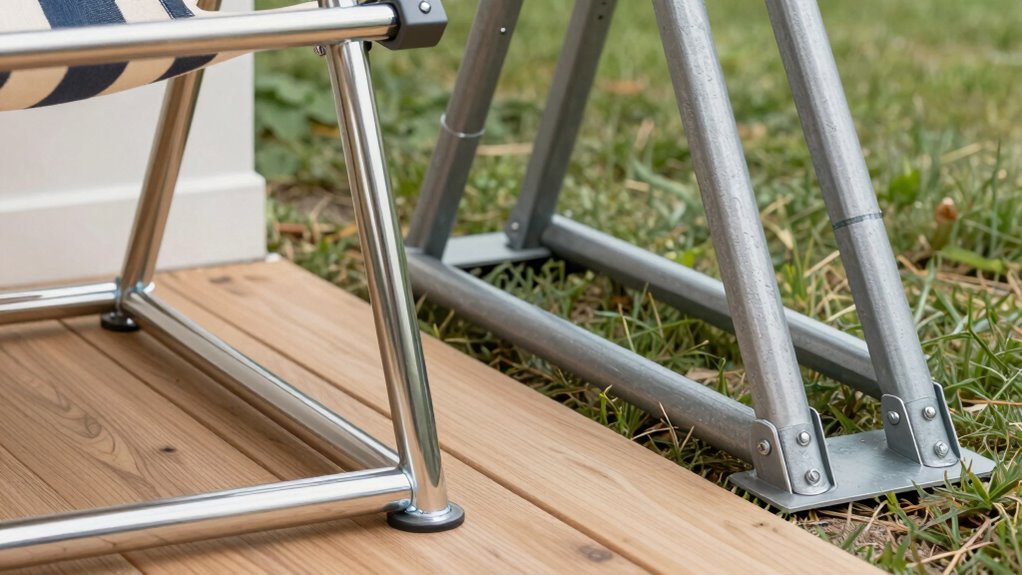
When selecting an outdoor hammock stand, you need to focus on material strength and durability to guarantee it lasts. Proper anchoring techniques are essential for stability and safety, so make sure the stand is installed correctly. By paying attention to these points, you’ll choose a stand that’s both reliable and secure. Additionally, opting for energy-efficient cloud servers can ensure your setup remains environmentally friendly and sustainable over time. Considering weather-resistant materials can further enhance the longevity of your hammock stand, especially in varying outdoor conditions. Ensuring the stand has appropriate load capacity will also help prevent accidents and extend its lifespan. Being aware of proper installation methods is crucial to maintaining safety and stability during use. Incorporating regular maintenance practices can also help identify potential issues early and prolong the life of your hammock stand.
Material Strength and Durability
Choosing a sturdy outdoor hammock stand begins with paying close attention to the material’s strength and durability. You want to verify that the rope strength can handle the weight and tension without fraying or breaking over time. Look for stands made from high-quality metal composition, such as powder-coated steel or aluminum, which resist rust and corrosion. These materials provide long-lasting durability, even in harsh weather conditions. Check the thickness and gauge of the metal, as thicker metal generally offers more strength and stability. Avoid flimsy or lightweight materials that may bend or weaken under load. Selecting a stand with robust rope strength and a solid metal composition guarantees safety and longevity, giving you peace of mind for years of relaxing outdoor use. Additionally, assessing the material’s resistance to environmental elements ensures your hammock stand remains stable and secure over time. When evaluating outdoor materials, consider corrosion resistance as a key factor to extend the life of your hammock stand. Proper maintenance and care can further enhance its durability and keep it in optimal condition for outdoor use. Incorporating consistent inspections can help identify early signs of wear and prevent potential failures. Understanding and selecting weather-resistant materials is essential for maintaining safety and durability in outdoor environments.
Proper Anchoring Techniques
Ensuring your outdoor hammock stand remains stable starts with proper anchoring techniques. First, choose strong, secure anchor points like sturdy trees, posts, or concrete anchors. Next, use high-quality suspension hardware designed for outdoor use, such as carabiners or quick links, to connect your hammock to these anchor points. Finally, ensure your hardware is rated for the weight capacity and regularly inspect for corrosion or wear. When setting up, make sure anchor points are level and firmly embedded in the ground or structure. Proper anchoring not only prevents accidents but also prolongs your hammock’s lifespan. Additionally, understanding the thermal behavior of your setup can help prevent safety hazards caused by environmental factors. Being aware of material properties can further enhance your setup’s durability and safety in various weather conditions. Regularly checking weather resistance features of your hardware can also help maintain safety over time. Recognizing the impact of environmental factors can guide you in selecting appropriate materials and hardware for different climates.
How Weather and Environment Affect Outdoor Stand Safety

Weather and environmental factors can considerably impact the safety of your outdoor hammock stand. Exposure to rain, sun, and wind may cause material wear and weaken the stand over time. Additionally, ground stability can change with weather, affecting how securely your stand stays in place. Regularly inspecting for material deterioration and adjusting for changing ground conditions can help maintain safety. Being aware of weather patterns can also help you plan for protective measures to extend the lifespan of your stand. Recognizing environmental impacts such as erosion or shifting soil can further inform your maintenance and safety strategies. Incorporating weather-resistant materials into your stand’s construction can also enhance durability against environmental factors. Considering ground stability, especially during different seasons, is essential for ensuring your stand remains secure over time.
Weather-Induced Material Wear
Outdoor hammock chair stands are constantly exposed to the elements, which can accelerate material wear over time. Weather conditions can cause fabric deterioration, weakening the seat and reducing comfort. Rust formation is another common issue, especially on metal parts, leading to compromised structural integrity. To keep your stand safe, watch for:
- Sun damage: UV rays break down fabrics and weaken fibers.
- Rain and humidity: Promotes rust formation on metal joints and frames.
- Temperature fluctuations: Cause expansion and contraction, speeding up wear and tear.
Regular inspections and maintenance help mitigate these effects. Covering your stand or storing it indoors during harsh weather can extend its lifespan and ensure safety during use.
Ground Stability Concerns
When your hammock chair stand faces shifting ground conditions, stability becomes a key safety concern. Uneven or soft ground can cause the stand to wobble or tip over, risking injury. To prevent this, guarantee proper ground leveling before setting up your stand. Use surface padding, like thick mats or sandbags, to create a stable, even base. This extra layer helps distribute weight evenly and reduces the chance of sinking or shifting, especially after heavy rain or frost. Regularly check the ground beneath your stand, especially after weather changes, to maintain stability. Addressing ground stability issues proactively keeps your hammock chair safe and secure, allowing you to relax without worry. Proper ground preparation is essential for outdoor stand safety. Additionally, understanding Free Floating concepts can help you design a backyard setup that minimizes ground movement and enhances stability over time.
Exposure to Elements
Exposure to the elements can substantially impact the safety and stability of your hammock chair stand. Weather conditions like rain, sun, and wind can weaken materials or cause corrosion, affecting durability. For outdoor stands, consider these factors:
- Fabric breathability: Wet or humid conditions reduce fabric breathability, leading to mold or mildew, which can compromise the stand’s integrity.
- Sun exposure: Prolonged sun can fade indoor decor-inspired finishes and weaken materials over time.
- Moisture and rust: Rain or dew can cause rust on metal parts, decreasing stability and increasing safety risks.
Protecting your stand from these elements guarantees longevity and safety, especially if you want your outdoor setup to match the style of your indoor decor while remaining secure.
What Ground and Surface Considerations Matter Outdoors

Choosing the right ground or surface is essential for guaranteeing your hammock chair stand remains stable and safe outdoors. You want a flat, solid surface like concrete, wood deck, or packed dirt to prevent wobbling or tipping. Avoid soft, uneven ground such as loose grass or loose mulch, which can shift under weight. When planning your setup, consider plant placement and aesthetic considerations—placing the stand near decorative plants or landscaping elements should not compromise stability. Ensure there’s enough space around the stand to avoid accidents and allow easy access. A stable surface minimizes the risk of falls, especially if children or pets are nearby. Taking these factors into account helps create a safe, attractive outdoor lounging spot that’s both functional and visually pleasing.
Which Materials Are Best for Weather-Resistant Outdoor Stands
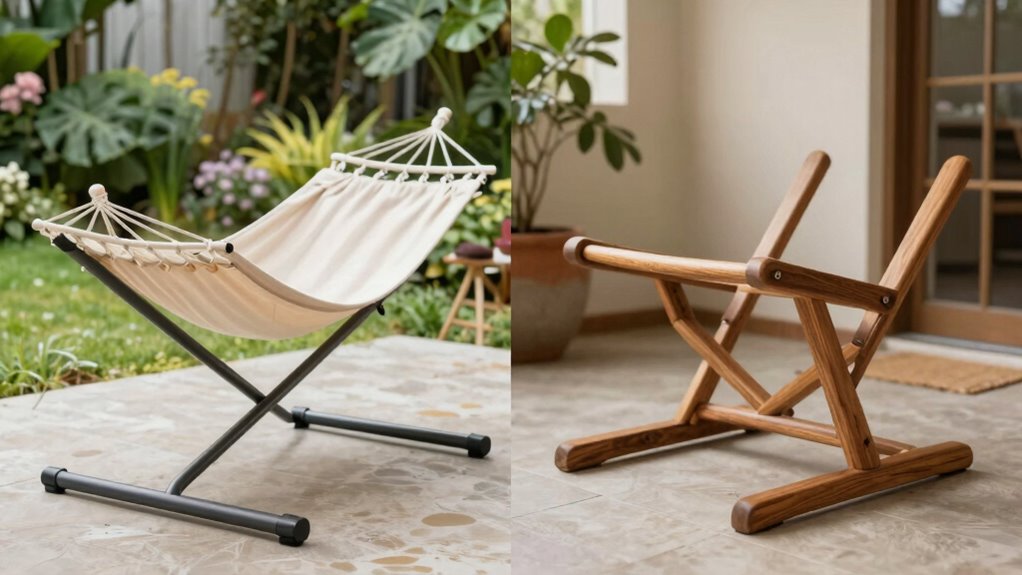
Selecting the right materials for your outdoor hammock chair stand guarantees it withstands the elements and maintains safety over time. Weather-resistant materials are essential for durability and aesthetic appeal. Consider these options:
- Powder-coated steel – Offers strength, rust resistance, and a sleek look that lasts through rain and sun.
- Teak or cedar wood – Natural, durable, with excellent weather resistance; choose finishes that enhance their appearance.
- Synthetic fabrics – For cushions or covers, opt for weatherproof fabric options like solution-dyed acrylic or polyester, which resist fading and mold while complementing your aesthetic considerations.
Choosing these materials ensures your stand remains sturdy, safe, and visually appealing regardless of outdoor conditions.
How to Properly Install Your Indoor Hammock Stand Safely
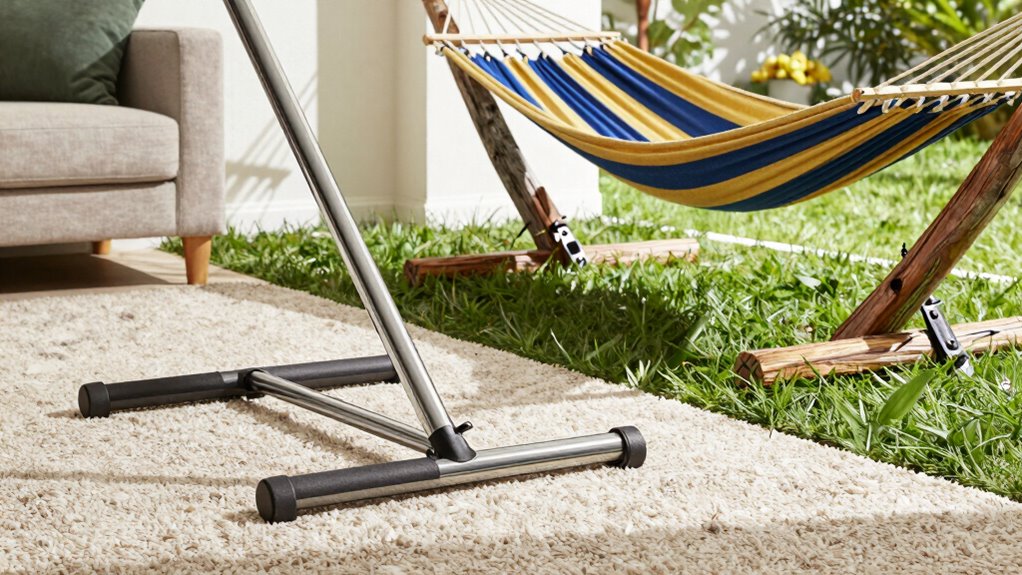
Ensuring your indoor hammock stand is installed correctly is essential for safety and stability. Start by choosing a sturdy, level surface to support your hammock setup. Follow the manufacturer’s instructions carefully, securing all bolts and joints tightly. Use a measuring tape to confirm the stand’s dimensions fit your space and hammock. Proper installation not only guarantees safety but also enhances the aesthetic appeal of your setup, making your space inviting. To keep the stand stable, avoid placing it near heavy furniture or high-traffic areas. Regularly check for signs of wear or loosening to prevent accidents. Here’s a quick overview:
| Step | Key Point |
|---|---|
| Choose a suitable spot | Level, spacious, safe environment |
| Follow instructions carefully | Secure all parts tightly |
| Regular maintenance | Check for wear and tighten connections |
Common Outdoor Hazards That Can Compromise Your Stand’s Safety

Outdoor environments pose unique challenges that can threaten the stability of your hammock stand. First, uneven ground or soft soil can cause your stand to wobble or tip, especially if you’re trying to incorporate nursery decor or optimize space outside. Second, wind gusts can unexpectedly sway or topple your stand if it’s not anchored properly. Third, nearby debris like fallen branches or loose rocks can damage the stand or cause instability. Additionally, clutter from outdoor furniture or plants can interfere with space optimization, increasing the risk of accidents. Always check the ground’s levelness, secure your stand against strong winds, and keep the area clear of hazards. Being attentive to these hazards helps guarantee your hammock remains safe and enjoyable outdoors.
How to Maintain and Inspect Your Stand for Long-Term Safety

Regularly inspecting and maintaining your hammock chair stand is essential to guarantee it stays safe for long-term use. Hammock maintenance involves checking for signs of wear, corrosion, or loose bolts. Establish inspection routines, such as monthly visual checks, to identify potential issues early. Tighten any loose connections and replace worn parts immediately to prevent accidents. Pay close attention to the stand’s joints and welds, ensuring they remain intact. Keep the stand clean and dry, especially outdoors, to prevent rust and deterioration. If you notice any cracks, bends, or excessive rust, cease use and repair or replace the stand. Regular maintenance not only prolongs the lifespan of your hammock stand but also ensures your safety every time you relax.
Which Stand Is Safer for Your Indoor or Outdoor Space?

Choosing the right hammock chair stand depends on whether you’ll use it indoors or outdoors, as each environment presents different safety considerations. For indoor use, stability is vital because space is limited, and you want to prevent tipping. Outdoors, hammock safety involves considering wind and uneven surfaces that could affect stand stability. To choose the safest option:
Choose indoor stands for stability; outdoor options must withstand weather and uneven terrain.
- Confirm the stand is rated for the weight you plan to hang.
- Check for sturdy, weather-resistant materials if used outside.
- Verify the stand’s base is wide enough for maximum stability.
Indoor stands should be less prone to environmental factors, but stability still matters to prevent accidents. Outdoors, durability and stand stability become more essential to handle weather elements and uneven ground.
Frequently Asked Questions
Can Indoor Hammock Chair Stands Be Used Outdoors Safely?
Yes, you can use indoor hammock chair stands outdoors safely if you consider material durability and installation methods. Make certain the stand is made from weather-resistant materials like treated wood or coated metal, which withstand outdoor elements. Proper installation is key—you should anchor it securely into a stable, level surface and avoid exposed areas prone to wind or rain. Regularly check for rust, corrosion, or wear to keep your setup safe.
How Do I Prevent Theft of Outdoor Hammock Stands?
To prevent theft of your outdoor hammock stand, implement security tips like anchoring it securely to the ground or using a heavy, stable base. You can also consider adding a lock or security cable to deter thieves. Keep your stand in a well-lit, visible area, and consider installing security cameras if possible. These theft prevention measures help protect your investment and give you peace of mind when you’re not around.
Are There Specific Safety Standards for Outdoor Hammock Stands?
When it comes to outdoor hammock stands, safety standards are essential. You should look for stands that meet material durability requirements and have undergone stability testing. These standards ensure the stand can withstand weather elements and daily use. Think of it as crossing your t’s and dotting your i’s—making sure everything’s in order. Always select stands with clear safety certifications to keep your relaxation safe and secure.
How Do Temperature Fluctuations Affect Indoor Hammock Stand Safety?
Temperature fluctuations can impact your indoor hammock stand’s safety by affecting material durability and installation stability. As temperatures change, materials like metal or wood may expand or contract, potentially weakening joints or connections. This can lead to instability or failure over time. To keep safe, regularly check your stand’s condition, ensure proper installation, and consider the material’s tolerance to temperature variations, especially if your indoor environment experiences significant temperature shifts.
What Are the Fire Safety Considerations for Indoor Hammock Stands?
You should always consider fire safety when using indoor hammock stands, especially since a fire hazard can arise from material flammability. Unlike outdoors, where open flames are common, indoors you need to keep the stand away from heat sources like heaters or candles. Choose stands made from non-flammable materials, and never leave candles or open flames unattended near your hammock to prevent potential fire risks.
Conclusion
Ultimately, whether you choose an indoor or outdoor hammock chair stand, safety is your top priority. Regularly inspect your stand, consider weather conditions, and select the right materials to keep relaxation trouble-free. Think of it as your own private oasis—like a modern-day Garden of Eden—where comfort meets security. By following these tips, you can enjoy peaceful lounging without worry, making every sway a gentle reminder that safety always comes first.