
To hang heavy textiles and tapestries safely, start by choosing sturdy hardware rated for their weight, like heavy-duty hooks or brackets, and use multiple anchors to distribute the load evenly. Identify your wall type—drywall, brick, or plaster—and select appropriate anchors such as toggle bolts, masonry anchors, or wooden cleats. Measure carefully and use a level for proper alignment. Proper hardware and support prevent damage and guarantee stability; keep going to learn more.
Key Takeaways
- Use appropriate wall anchors like toggle or masonry bolts based on wall type and textile weight.
- Distribute weight evenly with multiple hooks and a sturdy support rod.
- Accurately measure and level the hanging points to ensure proper alignment.
- Select hardware rated for the textile’s weight and regularly inspect for safety.
- Consider installing a wooden cleat or strong support system for better weight distribution.
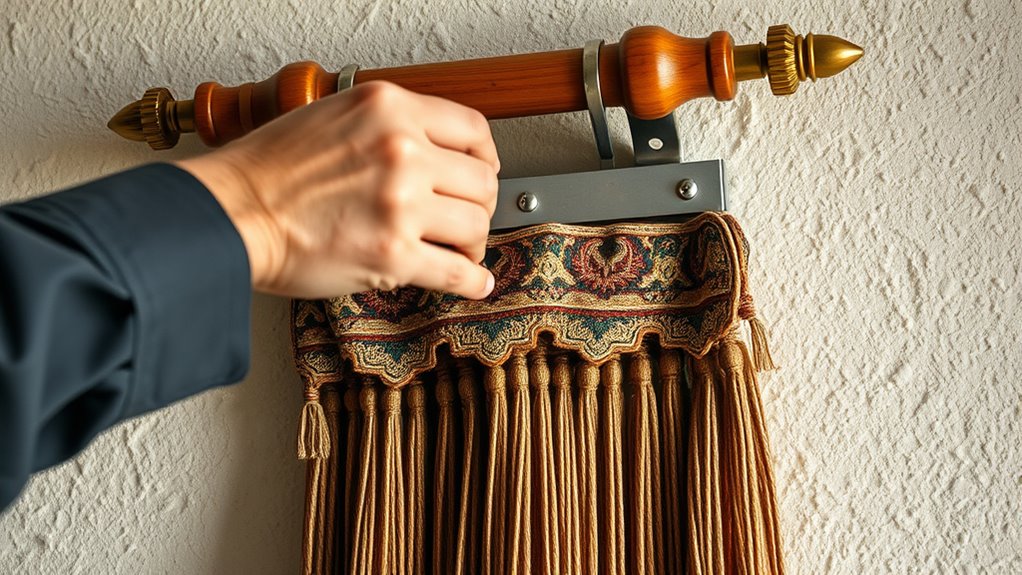
Hanging heavy textiles and tapestries can dramatically transform a space, adding warmth, texture, and visual interest. However, because these pieces are substantial, you need to plan carefully to guarantee they stay securely in place. One of the most important considerations is managing weight distribution. You want to evenly distribute the weight across the wall to prevent undue stress on any single point, which could lead to damage or accidents. Using multiple hooks or a sturdy rod that spans the width of the tapestry helps spread the load, reducing strain on your wall and making the display safer and more stable.
Distribute weight evenly with multiple hooks or a sturdy rod for secure, stable tapestry hanging.
When it comes to wall anchor options, you have a few reliable choices. If your wall is drywall, toggle bolts or molly bolts often provide the necessary support for heavier textiles. They expand behind the wall, creating a secure hold that can sustain significant weight. For brick or concrete walls, masonry anchors or expansion anchors are your best bet—they grip tightly into the solid surface and hold heavy loads without slipping. If you’re hanging on plaster or lath-and-plaster walls, consider using specialized plaster anchors or installing a wooden cleat that distributes the weight more evenly and offers a sturdy mounting point.
Before hanging, it’s vital to identify the best anchor option for your wall type and the weight of your textile. Never rely solely on regular picture hooks or nails for heavy tapestries, as they simply won’t provide enough strength. Instead, drill carefully at the right points, and insert your anchors following the manufacturer’s instructions. Be sure to measure and mark your wall accurately to keep the tapestry level and centered. Using a level tool can help you avoid crooked displays that detract from your decor. Additionally, understanding wall material types can help you select the most suitable hardware and avoid potential damage during installation.
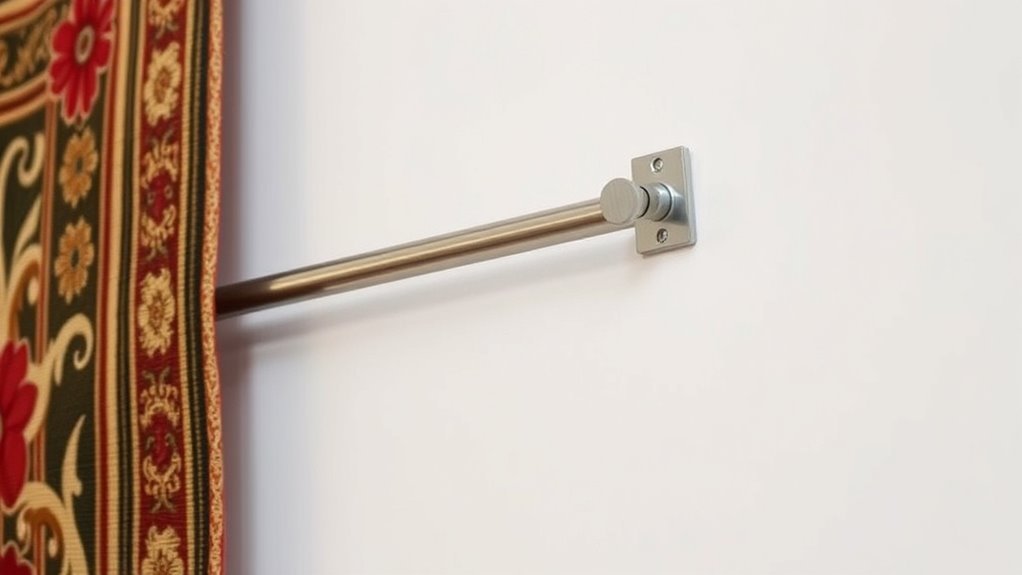
Additionally, think about the hanging hardware itself—whether it’s a rod, a wire, or hooks—and ensure it’s rated for the weight. For example, a metal rod with strong brackets can support larger, heavier tapestries better than thin or flimsy wire. Regularly check the hardware and wall anchors over time, especially if you notice any shifting or sagging. This proactive approach guarantees continued safety and stability.
Frequently Asked Questions
Can I Hang Heavy Textiles on Drywall Alone?
You shouldn’t hang heavy textiles on drywall alone, as it may not support the weight. Instead, use wall anchors designed for heavy loads or fabric adhesives that secure the textile directly to the wall. Wall anchors provide extra strength, preventing damage or falls. Combining these methods guarantees your tapestry stays securely in place, protecting both your wall and the artwork. Always check the weight limit of your hanging hardware before installation.
What Tools Are Best for Mounting Heavy Tapestries?
You should use sturdy tools like a power drill and a level to guarantee secure mounting. For alternative mounting techniques, consider hidden wall anchors—they provide extra support without visible hardware. These anchors distribute weight evenly, making them ideal for heavy tapestries. Use a stud finder to locate studs or joists behind the drywall, and then install the anchors into those spots for maximum stability and safety.
How Do I Prevent Damage to My Wall?
Imagine your wall as a delicate canvas needing gentle care. To prevent damage, use sturdy wall anchors suited for your tapestry’s weight, ensuring even weight distribution across the mounting points. This approach spreads the load, reducing stress on any single area. Properly installed anchors and balanced support keep your wall pristine, allowing your textile to hang beautifully without causing unsightly marks or damage over time.
Is It Necessary to Reinforce the Hanging Points?
Yes, you should reinforce the hanging points. Using wall anchors and reinforcement techniques guarantees your heavy textiles stay secure and prevent damage to your wall. Install sturdy anchors designed for heavy loads, and consider additional reinforcement like mounting hardware or support bars. This extra step provides peace of mind, especially for large or valuable tapestries, and helps distribute the weight evenly to avoid loosening or pulling away over time.
How Often Should I Check the Stability of Hung Textiles?
You should check the stability of your hung textiles at least once a month. During your hanging schedule, inspect the wall anchors and reinforcement points for any signs of wear or looseness. If you notice any movement or damage, tighten or replace the anchors immediately. Regular checks ensure your textiles stay secure, preventing accidents and preserving your decor. Staying proactive keeps your wall hangings safe and looking great.
Conclusion
Remember, safety comes first when hanging heavy textiles and tapestries. Use the right anchors and tools, and double-check your work before fully hanging your pieces. Don’t rush the process—taking your time guarantees everything stays secure. As the saying goes, “Better safe than sorry.” By following these tips, you can enjoy your beautiful textiles without worry, knowing they’re securely mounted and safely displayed for years to come.