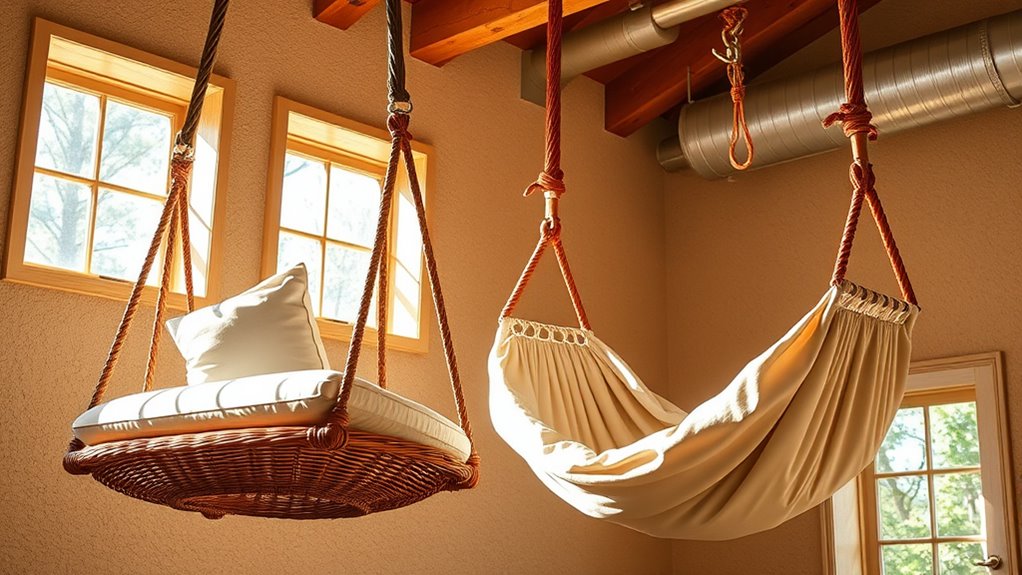

To guarantee your indoor swing or hammock is safe, choose sturdy hardware like rated eye bolts, hooks, and swivel connectors made from stainless steel or heavy-duty metal. Install them into strong support beams or joists using proper anchors, following the manufacturer’s instructions carefully. Regularly inspect all hardware and fabric for wear or rust. Proper installation and maintenance help prevent accidents, so if you keep these tips in mind, you’ll be able to enjoy your swing safely for years to come.
Key Takeaways
- Use high-quality, durable fabrics like woven nylon or polyester designed for weight-bearing applications.
- Select heavy-duty hardware such as stainless steel eye bolts and hooks rated for maximum load capacity.
- Install hardware into sturdy support structures like ceiling joists or beams, using appropriate anchors or toggles for drywall.
- Regularly inspect fabric, hardware, and mounting points for wear, rust, or looseness, replacing components as needed.
- Follow manufacturer instructions carefully, ensuring hardware is tightened securely and area underneath is clear for safety.
Indoor swings and hammocks can add a fun and relaxing touch to your home, but making sure they are installed securely is vital for safety. The first step is choosing the right material for your swing or hammock, as this impacts both durability and safety. Opt for strong, high-quality fabrics like woven nylon, polyester, or cotton blends designed to withstand weight and wear. For the hardware, stainless steel or heavy-duty metal components are best because they resist rust and offer reliable support over time. Avoid cheap or lightweight materials that may degrade quickly or fail under load, risking injury.
Once you’ve selected the appropriate materials, paying close attention to installation guidelines becomes vital. Follow manufacturer instructions meticulously, especially regarding weight limits and recommended mounting points. Before hanging your swing or hammock, identify a sturdy ceiling beam, joist, or dedicated support structure capable of bearing at least twice the maximum weight you plan to use. Use a stud finder to locate these beams accurately, and confirm their load capacity if possible. If you’re installing into drywall or plaster alone, you’ll need appropriate anchors or toggles rated for heavy loads to prevent the hardware from pulling out.
Follow manufacturer instructions carefully and verify load capacity before mounting your swing or hammock.
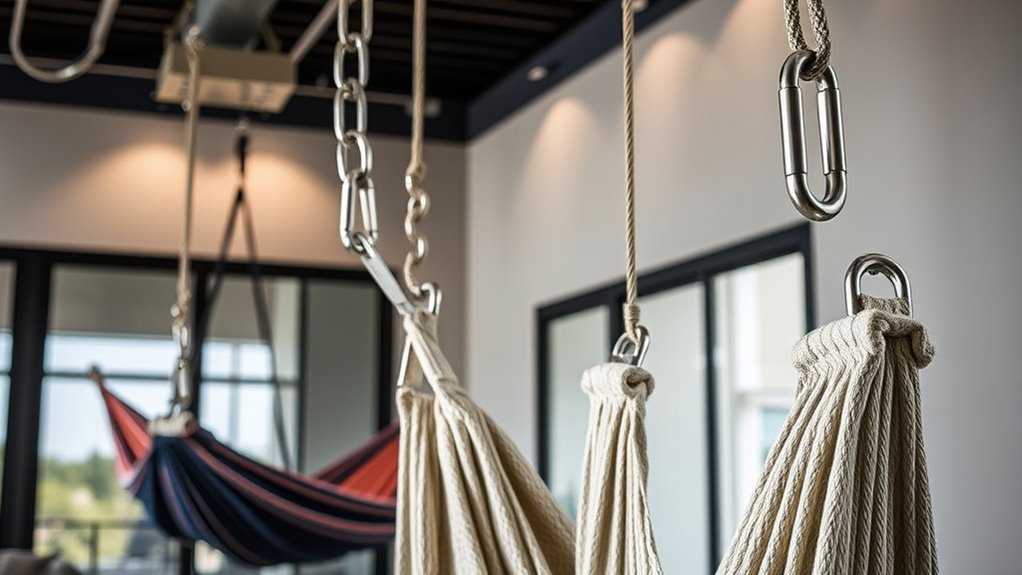
When it comes to hardware, choose eye bolts or hooks specifically designed for hanging swings and hammocks. Make sure they are rated for the weight and stress they will encounter. Use washers to distribute the load evenly and prevent the hardware from pulling through the fabric or material. Always tighten fittings securely but avoid over-tightening, which can damage the hardware or the ceiling material. For added safety, consider installing a swivel hook to reduce twisting and stress on the hardware during use.
Regularly inspect your setup for signs of wear, rust, or loosening. Check the condition of the fabric, hardware, and mounting points periodically, especially if you notice any creaking, shifting, or if the swing becomes unstable. Replace any worn hardware or frayed fabric immediately. When hanging your swing or hammock, ensure the suspension points are even to prevent unnecessary strain and swinging imbalance. Keep the area underneath clear of obstacles to avoid injuries if you fall or if the swing swings unexpectedly. Incorporating regular maintenance into your routine can significantly extend the lifespan of your setup and ensure ongoing safety.
Frequently Asked Questions
Can Indoor Swings Support Multiple Users at Once?
Indoor swings can support multiple users if you choose the right hammock material safety and proper installation. Confirm your indoor swing installation uses sturdy hardware rated for the combined weight and size of all users. Always check the manufacturer’s weight limits and avoid overloading. Using high-quality, durable hammock material safety is essential. When installed correctly, with secure hardware, your indoor swing can comfortably accommodate more than one person, providing safe and fun shared experiences.
What Is the Maximum Weight Capacity for Various Hammock Types?
Imagine yourself relaxing in a sturdy hammock that sways gently. The maximum weight capacity varies by material strength: cotton hammocks usually support around 250 pounds, nylon ones up to 300 pounds, and heavy-duty polyester models can handle 450 pounds or more. Always check the weight limit specified by the manufacturer to guarantee safety. Knowing the material strength helps you choose the right hammock for your comfort and security.
How Often Should Hardware Be Inspected and Replaced?
You should inspect your hardware at least once a month to guarantee safety and account for hardware lifespan. Look for signs of wear, corrosion, or damage, and replace any components that show deterioration. If you notice loose bolts or frayed straps, don’t delay—urgent replacement is necessary. Regular inspections help prevent accidents and prolong hardware longevity, keeping your indoor swing or hammock safe and secure for enjoyable use.
Are There Child-Proofing Measures for Indoor Swing Safety?
Did you know that falls are a leading cause of injury for children on indoor swings? To child-proof your swing area, use child-proofing tips like securing hardware tightly, installing safety mats, and ensuring the swing is at a safe height. Always supervise your child, and follow indoor safety measures to prevent accidents. Regularly check for loose or worn parts, and never leave your child unattended while using the swing.
What Materials Are Safest for Indoor Hammock Frameworks?
You should choose sturdy materials like solid wood or metal for indoor hammock frameworks, as they offer excellent durability. When selecting materials, consider mounting techniques that guarantee stability, such as secure bolts and brackets, to prevent accidents. Avoid weak or brittle materials like thin plastics or flimsy wood, which can break under weight. Prioritize high-quality, durable materials combined with proper mounting techniques to create a safe, long-lasting indoor hammock setup.
Conclusion
To keep your indoor swings and hammocks safe and satisfying, prioritize proper hardware, proactive planning, and regular checks. When you choose quality, quick inspections, and cautious care, you create a secure, soothing space for swinging and relaxing. Remember, safety stays supreme when you’re vigilant, vigilant, and vigilant. So, stay steadfast in your safety strategies, and your swinging sanctuary will remain a fun, fabulous, and fuss-free haven for all to enjoy.