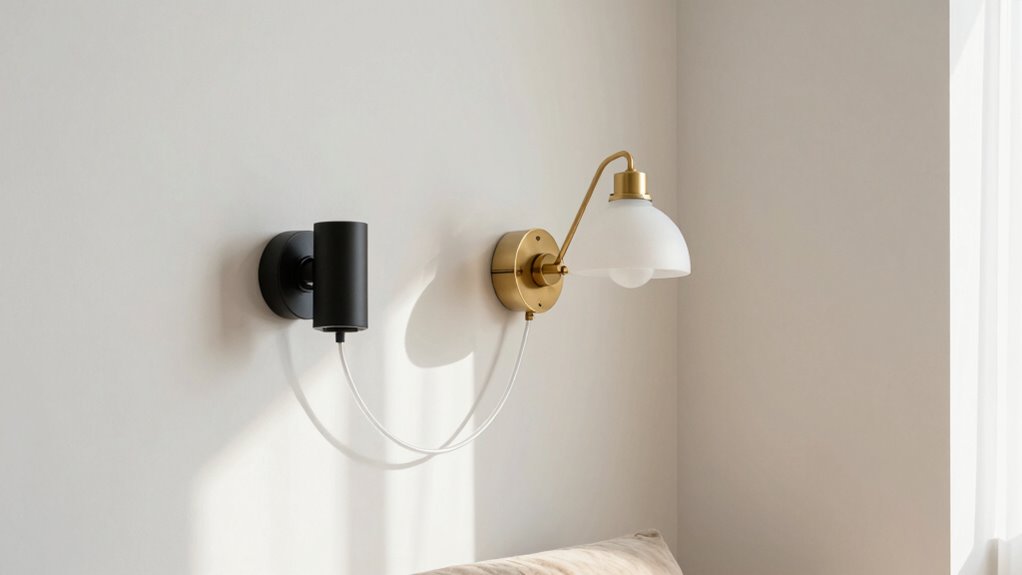

When choosing between hardwired and plug-in sconces, evaluate safety and convenience. Plug-in sconces are easier to install with no wall damage and pose less risk of electrical issues if cords are maintained properly. Hardwired fixtures, although more permanent, require wiring knowledge and can be safer if installed correctly. For renters, plug-in options are often smarter due to flexibility and damage-free installation—but there’s more to contemplate if you want the best fit for your space.
Key Takeaways
- Plug-in sconces are safer for renters due to easy, damage-free installation without wall modifications.
- Hardwired sconces offer a more permanent, seamless look but require complex wiring and wall alterations.
- Both types must adhere to safety standards (UL, ETL) to minimize fire and electrical risks.
- Plug-in options provide flexibility to move and upgrade without electrical work, ideal for temporary or rental settings.
- Hardwired fixtures are generally more durable and cost-effective long-term but less renter-friendly for quick changes.
What Are Hardwired and Plug-In Sconces?
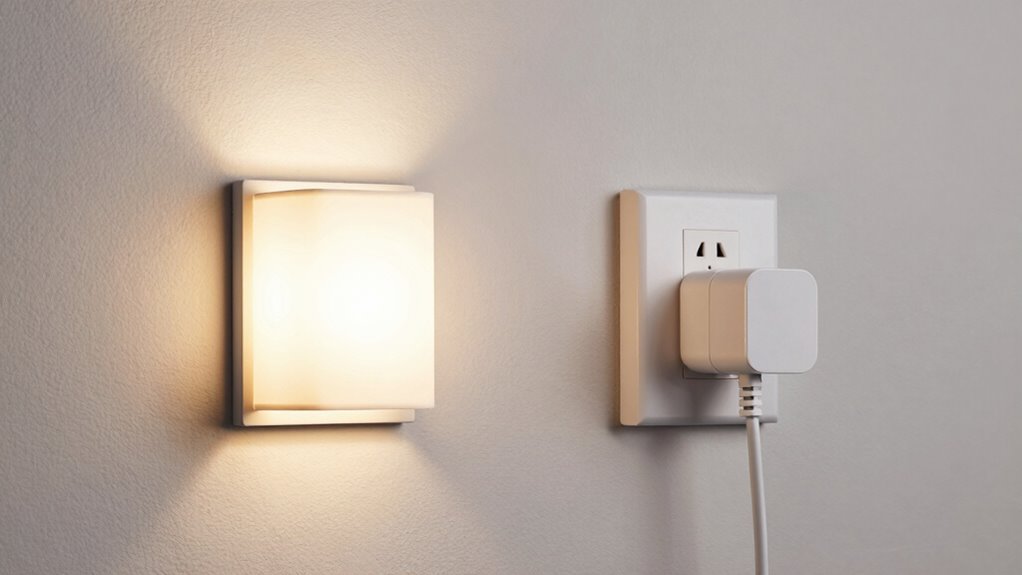
Hardwired and plug-in sconces are two common types of wall-mounted lighting fixtures that serve different installation needs. Hardwired sconces are integrated directly into your electrical system, making them a permanent part of your decor. They often suit traditional or modern decor styles, offering a seamless look. Plug-in sconces, on the other hand, connect to an outlet via a cord, making them more flexible and easier to install. They’re ideal for renters or spaces where electrical work isn’t feasible. When choosing between them, consider energy efficiency; both types can support energy-saving bulbs, but plug-in sconces often offer more options for quick upgrades. Understanding these differences helps you select the best lighting fixture for your style and needs. Additionally, choosing the right fixture can influence your overall home theater setup by optimizing lighting conditions for viewing comfort.
How Easy Is It to Install Sconces in a Rental?

Installing sconces in a rental often requires temporary mounting options that won’t damage walls. You’ll need basic tools and should consider safety precautions to avoid accidents. Using damage-free mounting methods can help protect your security deposit while allowing you to personalize your space. Additionally, selecting removable adhesives designed for wall mounting can provide a secure hold without leaving residue. Understanding these factors helps you choose the easiest and safest way to add lighting without risking your security deposit. When selecting wall attachment methods, ensure they are compatible with your wall type to prevent any unintended damage.
Temporary Mounting Options
When you’re renting, putting up sconces can seem like a challenge, but many options make it surprisingly simple. Temporary mounting solutions, such as adhesive hooks or suction-cup brackets, allow you to hang sconces without harming walls. These options come in decorative styles that blend seamlessly with your space, enhancing aesthetics while keeping the installation reversible. Many plug-in sconces also feature cordless designs or lightweight forms, making them easy to move and adjust. Plus, using energy-efficient LED fixtures ensures you get stylish lighting without worrying about high electricity costs or permanent wiring. Free Floating fixtures and mounts are also available, offering versatile placement options that can be easily removed or repositioned. This flexibility lets you customize your ambiance easily, all without risking damage to your rental property—making decorating both safe and smart. Additionally, choosing adhesive mounting options that are designed for easy removal can help prevent wall damage while maintaining a secure hold.
Tool Requirements and Safety
Setting up sconces in a rental often means balancing ease of installation with safety. You’ll need basic tools like a screwdriver and voltage tester to work safely and check fixture compatibility. Making certain the power supply is turned off before installation reduces the risk of electric shock. If you’re installing hardwired sconces, you might need wire strippers and possibly a drill for mounting brackets. For plug-in sconces, fewer tools are required, but verifying fixture compatibility with your existing outlets is still vital. Keep these in mind:
- Screwdriver and wire strippers
- Voltage tester for safety
- Drill for mounting, if needed
- Compatibility with your electrical system
- Turning off the power supply before starting
Proper tools ensure a safe, efficient setup, especially in a rental where permanence isn’t an option. Additionally, understanding the European cloud innovation landscape can inspire safer, smarter lighting solutions that align with sustainable practices.
Are Plug-In Sconces Safer Than Hardwired?
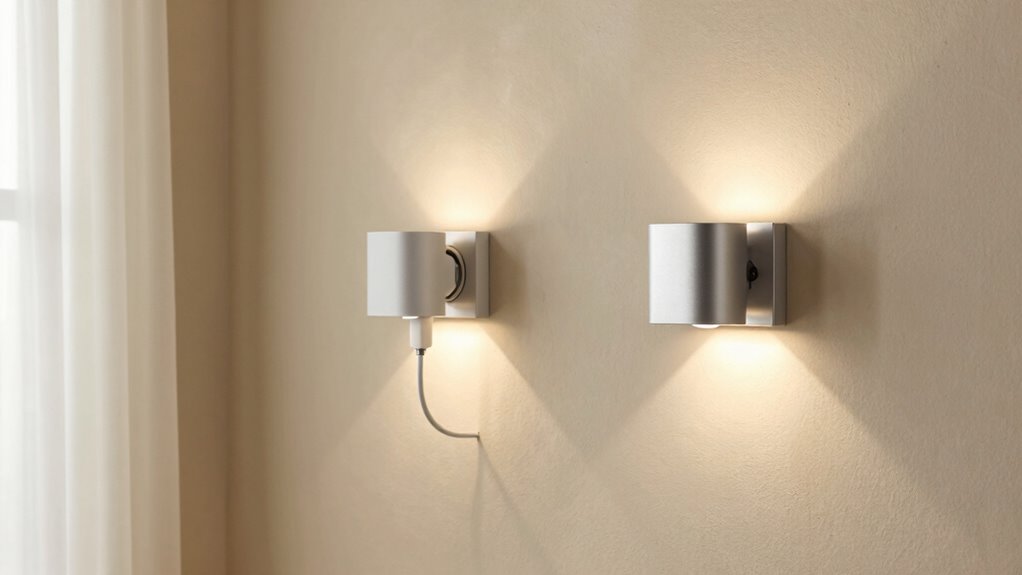
When comparing safety, you should consider electrical safety standards and how they’re maintained with each type. Plug-in sconces are easier to install, but they might pose a different fire risk than hardwired options. Understanding these factors helps you decide which sconce type keeps your space safer. Additionally, the use of electric power generation technologies in some lighting solutions can influence overall electrical safety.
Electrical Safety Standards
Electrical safety standards play a crucial role in determining whether plug-in or hardwired sconces are safer for your home. These standards ensure that wiring complies with safety regulations to prevent electrical hazards. When evaluating sconces, check that they meet local codes and have proper certifications, such as UL or ETL. Proper adherence to wiring standards minimizes risks like short circuits or electrical fires. Keep these points in mind:
- Confirm the fixture’s compliance with safety regulations
- Ensure wiring connections are secure and insulated
- Use fixtures with built-in overload protection
- Avoid DIY modifications that breach standards
- Regularly inspect for wear or damage
Following these standards helps protect you and your property, regardless of the sconce type. Always prioritize fixtures that meet or exceed established safety regulations for peace of mind.
Ease of Installation
Plug-in sconces often offer a simpler and quicker installation process compared to hardwired options, making them a popular choice for DIYers or those looking to avoid complex wiring. With no need to cut into walls or work with electrical boxes, you can easily mount and plug in these fixtures, saving time and effort. Their flexibility allows you to easily move or change decor style without major renovations. Additionally, plug-in sconces can be energy-efficient, especially if paired with LED bulbs, and you can control their power with switches or timers. This ease of installation appeals to renters who want stylish lighting without the hassle of permanent wiring. Overall, plug-in sconces provide a convenient, adaptable, and energy-efficient lighting option for various decor styles. Electrical safety considerations are also important when choosing between hardwired and plug-in options to ensure safe installation and operation.
Risk of Fire
The safety of your lighting options often hinges on factors like the risk of fire, which can vary between plug-in and hardwired sconces. Plug-in sconces generally reduce fire risk through simpler wiring, minimizing wiring complexity and potential faults. However, they may pose a fire hazard if cords are frayed or overloaded. Hardwired sconces, while often more secure, involve more complex wiring that increases the chance of improper connections if not installed correctly. To enhance fire prevention, guarantee proper installation and regular inspections, regardless of type. Keep these considerations in mind:
- Proper wiring and connections minimize fire risk
- Avoid overloading outlets
- Use quality components and fixtures
- Regularly check for frayed cords
- Follow manufacturer safety instructions
- Electrical safety practices are essential to prevent fire hazards in both types of sconces.
Can I Achieve the Look I Want With Rent-Friendly Sconces?

Is it possible to create the stylish, functional lighting you want without making permanent changes? Absolutely. Rent-friendly sconces come in many styles that can complement your decor style, whether you prefer modern, vintage, or eclectic looks. You can find plug-in options that mimic traditional hardwired fixtures, offering sleek designs and textured finishes. Plus, these sconces often come in a variety of color options, allowing you to match or contrast with your existing decor. Additionally, safety considerations are important when choosing lighting solutions for rentals, as they help prevent electrical issues or damage. You won’t need to drill holes or deal with complicated wiring, making them perfect for renters. With the right choice, you can achieve the aesthetic you desire while keeping your rental safe and damage-free. It’s a simple way to personalize your space without sacrificing style. Understanding safe alternatives can help you select the best lighting options for your rental.
Which Sconce Type Is More Budget-Friendly Over Time?
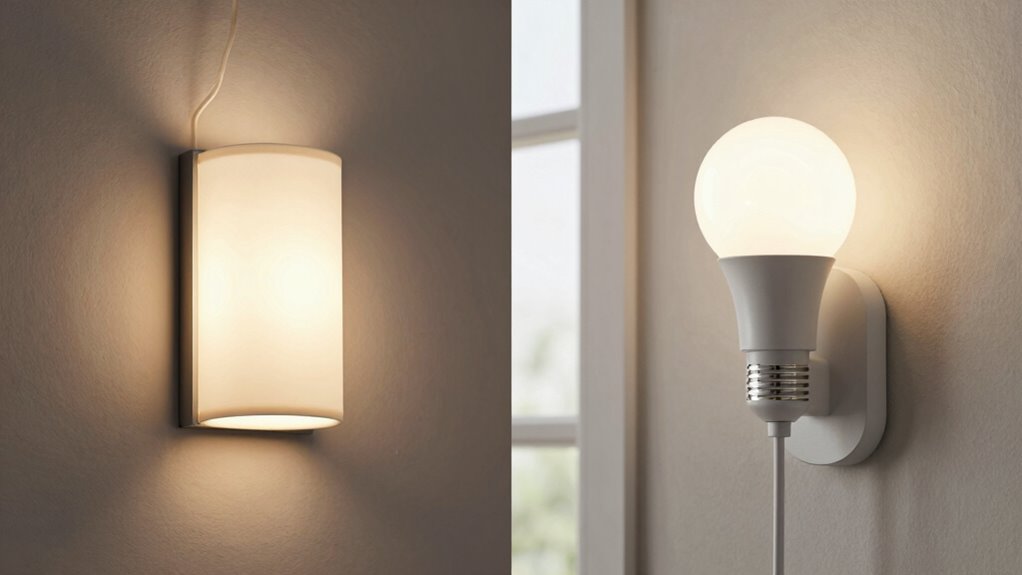
Over time, hardwired sconces can be be more cost-effective because they typically have higher upfront prices but tend to last longer and require fewer replacements or repairs. When considering the cost comparison, durability factors play a key role. Hardwired fixtures often use durable materials and quality components, reducing maintenance costs. Plug-in sconces are usually cheaper initially but may need more frequent replacements due to wear and tear. Additionally, performance ratings based on durability and quality can influence long-term savings. Consider these points:
Hardwired sconces often last longer and cost less over time despite higher initial prices.
- Hardwired sconces often have longer lifespans
- Fewer repairs mean lower long-term expenses
- Plug-in options are cheaper upfront
- Replacement bulbs for plug-ins can add up
- Durability factors favor hardwired options for longevity
Incorporating quality construction can further enhance the overall value and lifespan of your fixture. Moreover, energy efficiency can also play a role in long-term savings, especially with newer models designed to consume less power. Ensuring proper installation and safety standards compliance is crucial for long-term safety and performance. Choosing based on these factors helps you save money over time, especially when considering long-term performance.
Which Sconce Is the Best Fit for Your Rental Home?

When choosing sconces for your rental home, practicality and ease of maintenance should guide your decision. Consider your decor style and how each option complements it. Hardwired sconces often suit traditional or modern aesthetics but require professional installation. Plug-in sconces are versatile, easy to move, and perfect for casual or eclectic decor styles. Think about maintenance ease—plug-ins generally need less upkeep and are simpler to replace or upgrade. To visualize, imagine this:
| Decor Style | Maintenance Ease |
|---|---|
| Modern | Easy with plug-in options |
| Vintage | Hardwired for authenticity |
| Industrial | Both work; depends on setup |
| Minimalist | Prefer plug-in for simplicity |
| Eclectic | Flexible with either choice |
Choose based on your decor style and how much effort you’re willing to invest in upkeep.
Frequently Asked Questions
Can Renters Legally Install Hardwired Sconces Without Landlord Approval?
You typically can’t legally do a DIY installation of hardwired sconces without landlord approval. Local laws and your lease agreement often require tenants to obtain permission before making electrical changes. To stay safe and avoid issues, always ask your landlord for approval first. If they approve, consider hiring a licensed electrician to ensure the installation meets safety standards and complies with regulations.
Are There Specific Electrical Code Considerations for Plug-In Sconces?
Yes, there are specific electrical code considerations for plug-in sconces. You need to verify they meet electrical compliance and safety regulations, like using UL-listed products and avoiding overloading outlets. Check that cords are in good condition without frays or damage, and avoid extension cords or daisy chaining. Properly securing cords and outlets minimizes fire risks and ensures safety, keeping your installation compliant with local electrical standards.
How Do I Safely Remove or Replace Sconces When Moving Out?
Ever wondered how to safely remove or replace sconces when moving out? You should turn off the power at the breaker to guarantee electrical safety first. For plug-in fixtures, unplug them carefully, and for hardwired sconces, disconnect the wires following proper procedures. Use temporary fixtures if needed, and avoid forcing anything. Are you confident in handling electrical work, or should you call a professional to avoid damage or injury?
Do Plug-In Sconces Require Any Special Wiring or Adapters?
Plug-in sconces don’t require special wiring or adapters, making DIY installation safer and simpler. You just need to make certain the outlet is grounded and rated for the fixture’s wattage. Always prioritize electrical safety by turning off power before installing, and follow the manufacturer’s instructions. If you’re unsure, consider consulting an electrician. This way, you avoid risks and ensure your sconce is securely and safely set up.
What Are the Long-Term Maintenance Needs for Each Sconce Type?
You’ll find that hardwired sconces often need professional bulb replacements and periodic electrical inspections to guarantee safety. Plug-in sconces are easier—you can simply unplug for bulb replacements or cleaning maintenance. Both types require regular dusting and checking for loose connections, but plug-in versions tend to be lower maintenance overall. Keep an eye on bulbs and wiring, and you’ll keep your sconces functioning beautifully and safely for years.
Conclusion
Choosing between hardwired and plug-in sconces depends on your priorities. Hardwired sconces offer a permanent, sleek look but require more effort to install, while plug-in options are flexible and renter-friendly but might feel less seamless. Think about safety, budget, and style—sometimes, the easiest solution is the smartest. Whether you prefer a clean, built-in vibe or quick, temporary charm, your ideal sconce balances safety and style without locking you in.