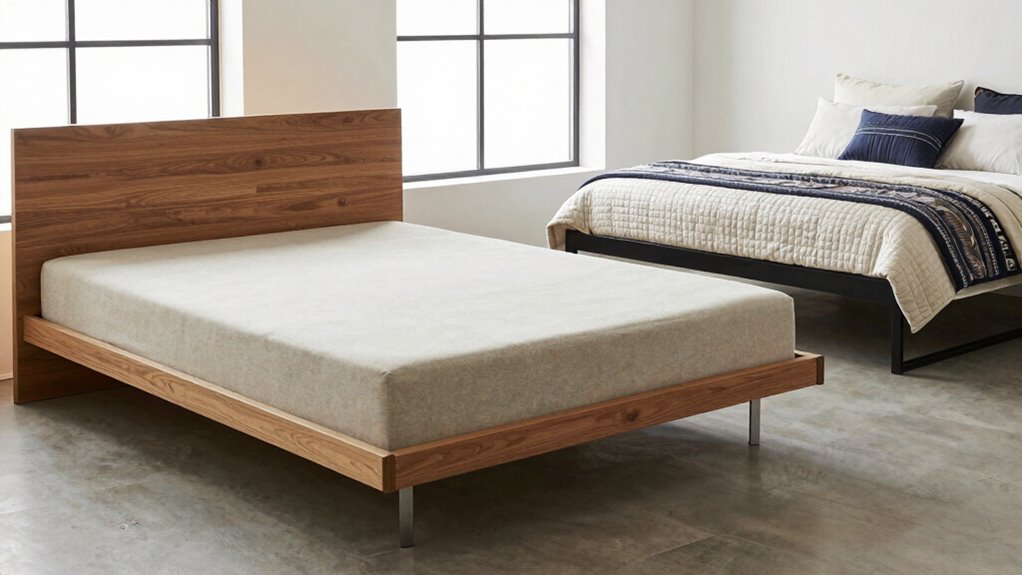

Choosing between a platform bed and a box spring depends on your support needs, style preference, and budget. A platform bed offers a modern, low-profile look with a solid surface that supports your mattress directly, while a box spring adds height, shock absorption, and traditional support. If you want to maximize comfort and save money over time, understanding their differences can help you avoid paying for the wrong setup. Stay tuned to discover which foundation suits your sleep style best.
Key Takeaways
- Match your mattress type and support needs to choose between a solid platform or a box spring foundation.
- Platform beds offer a sleek, low-profile look with better airflow, while box springs provide added height and shock absorption.
- Consider long-term costs: platform beds are generally cheaper and easier to maintain, reducing overall expenses.
- Proper support enhances mattress durability and sleep quality; select the foundation that best suits your mattress and lifestyle.
- Your preferred bed height, style, and accessibility should guide whether a platform bed or box spring setup is right for you.
How Do Platform Beds and Box Springs Differ in Design and Support?
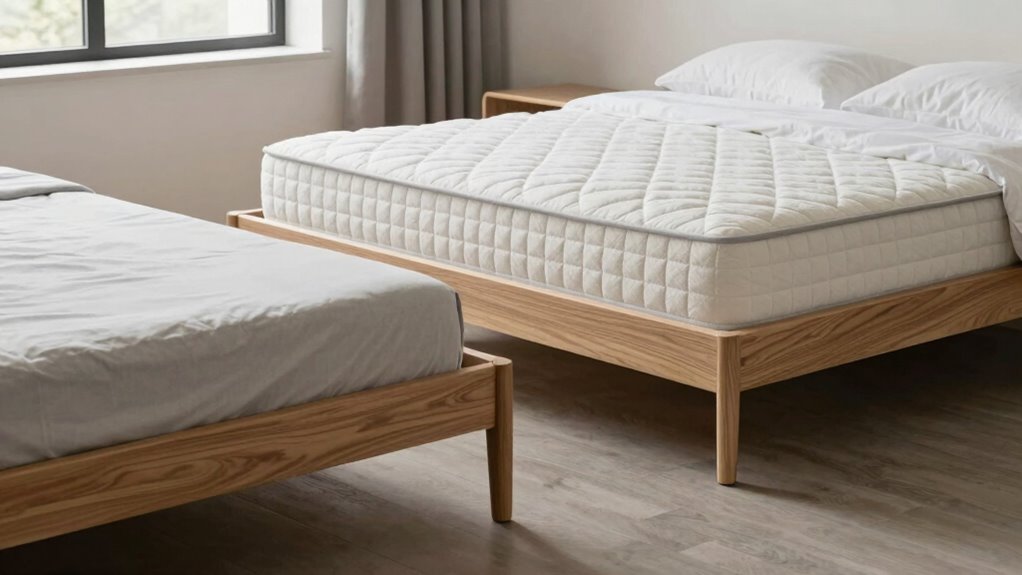
Platform beds and box springs differ considerably in both design and support. Material differences are evident: platform beds are usually made from wood, metal, or upholstered materials, offering a sleek, modern look. Box springs, on the other hand, consist of a wooden frame with springs inside, designed to absorb shock and provide bounce. Aesthetic variations are also notable—platform beds tend to have a minimalist, contemporary appearance, often with a low profile, while box springs are more traditional, with a boxy shape that elevates the mattress. Support-wise, platform beds provide a solid, even surface that eliminates the need for additional foundation, whereas box springs act as a shock absorber, adding height and cushioning. Your choice depends on your style preferences and how you prefer your bed to feel.
What Are the Pros and Cons of Using a Platform Bed?
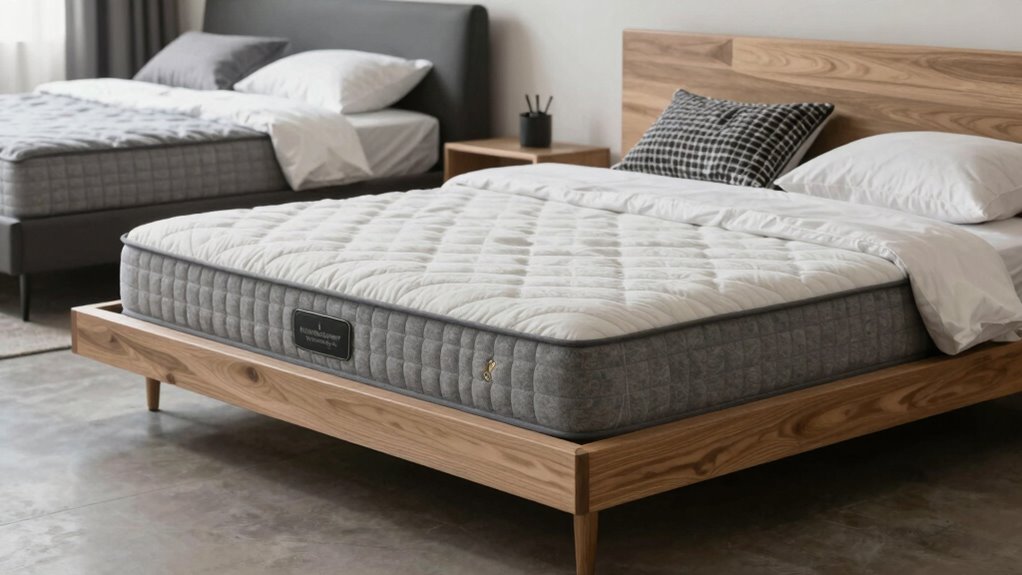
Platform beds are easy to assemble, making setup quick and hassle-free. They also offer a sleek, space-saving design that can enhance your room’s style. Plus, they provide solid support and durability, but it’s important to contemplate both the advantages and potential limitations before choosing one.
Easy to Assemble
Because they typically come with a simple design, platform beds are generally easy to assemble, making them a popular choice if you want to set up your bedroom quickly. You’ll appreciate how minimal tools are needed, often just a few screws or bolts. The bed height is usually lower, which makes making your bed and changing bedding materials straightforward. This simplicity also means you won’t struggle with complicated instructions or extra parts. Plus, if you prefer a clean, modern look, the easy assembly process lets you enjoy your new setup sooner. Just confirm you follow the instructions carefully to avoid misalignments. Overall, the quick setup and hassle-free construction make platform beds a practical choice for those seeking convenience and efficiency. Additionally, understanding the projector technology can help you choose the right setup if you plan to create a home cinema. A natural pool setup can also be integrated into your backyard for a relaxing retreat. Moreover, being aware of bed frame materials can influence your decision based on durability and style preferences. Interestingly, the energy efficiency of your bed setup can also contribute to a more sustainable bedroom environment. For example, selecting a lightweight design can make moving or rearranging your bed easier over time.
Stylish and Space-Saving
A key advantage of using a platform bed is its sleek, modern look that can instantly elevate your bedroom’s style. Its clean lines and minimalist design complement various decor styles, from contemporary to industrial. Because it sits low to the ground, it maximizes space, making rooms feel larger and less cluttered. Plus, platform beds work well with different mattress materials, including memory foam, latex, and hybrid options, providing versatile support without the need for a box spring. This space-saving feature is especially beneficial in smaller rooms or apartments. The streamlined design also simplifies decorating, as you can easily add a statement rug or bedding accessories. Overall, a platform bed balances aesthetics and functionality, giving your bedroom a stylish, clutter-free vibe. Additionally, bed frame options can influence the overall look and support of your mattress setup. Many platform beds incorporate ventilation considerations, which help prevent moisture buildup and prolong the lifespan of your mattress. Incorporating material choices in the frame can further enhance durability and style. Exploring sleep surface compatibility can also ensure your chosen platform bed meets your comfort needs and maintains proper support.
Support and Durability
While some worry that platform beds lack the durability of traditional box springs, many models actually offer solid support and long-lasting performance. Their sturdy frames provide consistent support for your mattress, ensuring comfort over time. Proper support is crucial for maintaining mattress health and sleep quality. Plus, the sleek aesthetic appeal of modern platform beds enhances your bedroom’s look, making them a stylish choice. Unlike box springs, platform beds often feature noise reduction benefits, as their solid construction minimizes squeaks and creaks that can disturb your sleep. This durability and support mean you won’t need frequent repairs or replacements. Overall, a well-built platform bed combines aesthetic appeal with reliable support, making it a smart investment. You get a durable, noise-free setup that keeps your bedroom looking great and feeling comfortable for years.
When Is a Box Spring the Right Choice for Your Mattress?
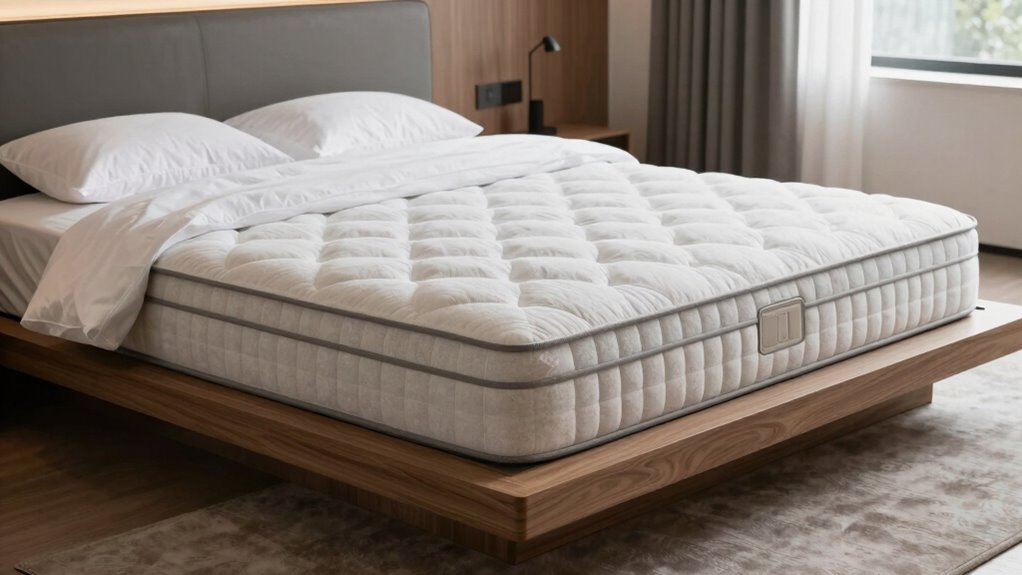
A box spring might be be the right choice if your mattress requires specific support or is not compatible with a platform bed. Consider your mattress type and the support it needs to stay comfortable and durable. Also, verify if your bed frame is designed to work with a box spring to ensure proper fit and stability. If your existing bed setup lacks a reliable backup power system, it could lead to discomfort or inconvenience during outages.
Mattress Compatibility Factors
Choosing the right support for your mattress depends on several compatibility factors, especially when considering a box spring. Your bed frame styles matter—some frames are designed specifically for box springs, guaranteeing proper fit and support. Additionally, mattress weight considerations play a vital role; heavier mattresses, like memory foam or hybrids, often need the extra support a box spring provides to prevent sagging and maintain longevity. If your mattress is lightweight or designed to be low-profile, a box spring might be unnecessary or even detrimental. Always check your mattress manufacturer’s recommendations to guarantee compatibility. Proper support not only extends your mattress’s lifespan but also guarantees comfort and correct spinal alignment. Keep these compatibility factors in mind to choose the support setup that suits your mattress best.
Enhanced Support Benefits
If your mattress is heavier or designed for added support, a box spring can provide the stability needed to prevent sagging and guarantee proper alignment. This enhanced support is especially useful with certain bed frame styles that may not offer enough reinforcement on their own. A box spring helps distribute weight evenly, protecting your mattress and extending its lifespan. Additionally, it allows you to choose from various mattress height options, making it easier to get in and out of bed comfortably. If you prefer a taller sleeping surface or have a heavier mattress, a box spring ensures consistent support and ideal comfort. This setup is ideal when your mattress and frame combination benefits from added stability and tailored height.
Specific Bed Frame Needs
Determining whether a box spring is right for your mattress depends on your bed frame’s design and support features. Some bed frame styles, like traditional metal or wooden frames, often require a box spring to provide adequate support and optimize mattress height. If your frame lacks a solid foundation or has slats spaced far apart, a box spring can help distribute weight evenly and prevent sagging. Additionally, if you prefer a higher mattress height for easier access or aesthetic reasons, a box spring can boost your setup. However, platform beds typically don’t need a box spring, as they provide built-in support and elevate the mattress directly. Assess your frame’s support system and desired mattress height to decide if a box spring is the right choice. Understanding bed support systems can help you make the best decision for your sleep setup.
How to Choose the Best Bed Foundation for Your Sleep Needs

Selecting the right bed foundation is essential for a good night’s sleep because it directly affects comfort, support, and durability. If you want a clean, modern look, consider a platform bed that offers a sleek base without the need for a box spring, and allows for decorative headboards to be attached easily. Think about your preferred mattress height—if you like a taller bed, choose a foundation that adds to that, or opt for a lower profile if you prefer easy access. Your sleep needs also determine whether a sturdy box spring or a solid platform is best. Matching your foundation to your mattress type and personal style ensures better support and enhances your overall sleep experience.
Cost and Maintenance: Which Foundation Is More Affordable?
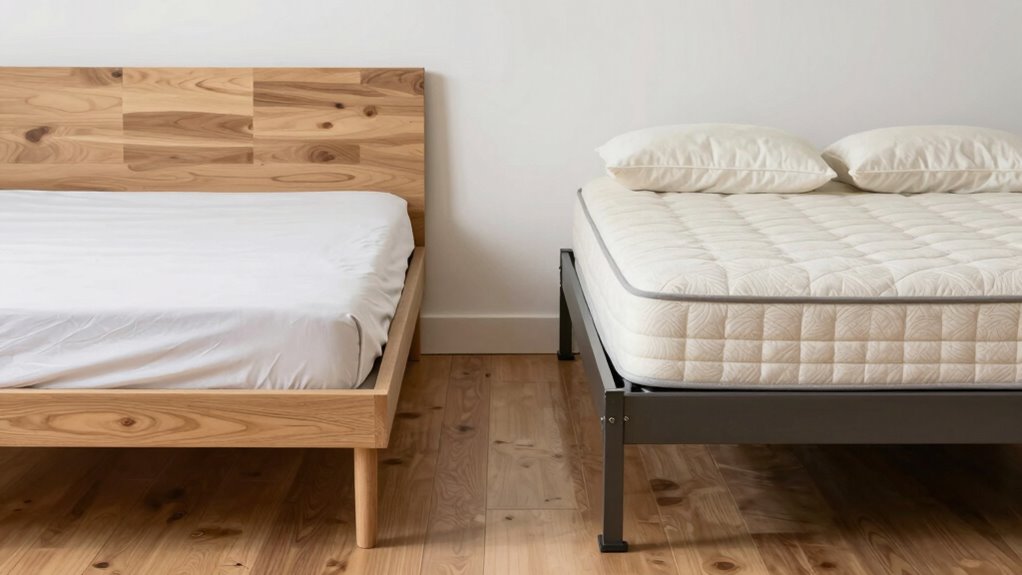
When comparing the costs of platform beds and box springs, it’s clear that upfront prices and ongoing maintenance influence your choice. Platform beds often have a lower initial cost and require no box spring replacement. They come in various bed frame styles, which can impact your budget, but generally, they’re more affordable long-term. Box springs tend to be pricier upfront and may need replacement over time, especially if damaged. Additionally, mattress height varies between setups, affecting ease of getting in or out of bed. Consider this table:
| Feature | Platform Bed | Box Spring |
|---|---|---|
| Initial Cost | Lower | Higher |
| Maintenance | Minimal | May need replacement |
| Mattress Compatibility | Multiple bed frame styles | Usually standard height |
Furthermore, performance cookies can help you understand how different foundation types impact overall sleep quality and durability. Recognizing the long-term savings potential can also guide your decision-making process. A foundation type that suits your needs can contribute to better sleep and reduce the need for future replacements. Selecting the right foundation can also influence bed height and accessibility, making it easier to get in and out of bed daily.
Deciding Between a Platform Bed and Box Spring: Which Is Best for You?
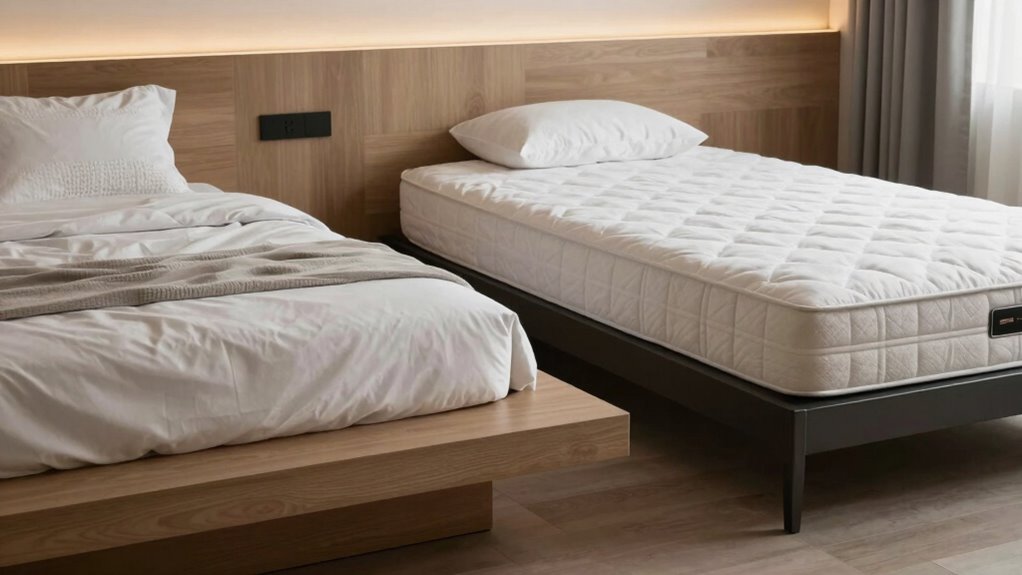
Choosing between a platform bed and a box spring depends on your priorities for comfort, style, and budget. Consider how each option affects bed height, as a platform bed usually offers a lower profile, making it easier to get in and out of bed. Additionally, mattress ventilation is vital; platform beds often promote better airflow, helping your mattress stay fresh. To help decide, think about:
- Your preferred bed height—do you want it higher or closer to the ground?
- The importance of mattress ventilation—does airflow impact your comfort?
- Your style preference—sleek, modern platform beds or traditional box springs?
Assessing these factors will guide you toward the best choice for your sleeping needs.
Frequently Asked Questions
Can I Combine a Platform Bed With a Box Spring?
Yes, you can combine a platform bed with a box spring if your bed frame compatibility allows it. Just check if your frame has enough clearance and supports the added height. Using a box spring can give you extra mattress height options and added support, but make sure it doesn’t compromise your comfort or stability. Always verify your bed frame’s specifications before mixing these setups.
Do Platform Beds Require a Mattress Topper?
Think of your mattress as the crown jewel of your bed. You don’t always need a topper on a platform bed, especially if your mattress materials are plush and supportive. However, if your bed feels too low or uneven, a topper can boost bed height and add extra comfort. So, consider your mattress type and your preferred height to decide if a topper’s worth a shot.
Are Platform Beds Suitable for All Mattress Types?
Yes, platform beds suit most mattress types, including memory foam, latex, and innerspring. They offer sleek aesthetic options and often eliminate the need for a box spring. Plus, many platform beds provide built-in storage alternatives, helping you maximize space. Just make certain your mattress is compatible with the platform’s slats or surface, and you’ll enjoy comfortable nights with a stylish, versatile setup that suits your needs.
How Does Weight Capacity Differ Between the Two Setups?
Wondering about weight capacity? You’ll find that box springs often boast higher weight limits and durability standards, supporting heavier loads more reliably. Platform beds, while sturdy, generally have lower weight capacities, making them less suited for heavier sleepers or shared beds. You should choose based on your weight needs and durability demands, ensuring your setup safely supports you without risking damage or discomfort.
Is Assembly Easier With a Platform Bed or Box Spring?
You’ll find assembly easier with a platform bed since it usually comes as a single piece or fewer parts, making setup quicker and less frustrating. It also complements various decor styles, providing a sleek look, and requires minimal cleaning maintenance. On the other hand, box springs involve more steps and parts, which can be messier and more time-consuming to assemble. Overall, a platform bed simplifies your setup process and upkeep.
Conclusion
Choosing between a platform bed and a box spring is like selecting the perfect dance partner—each offers its own rhythm and support. Consider your style, comfort, and budget, and you’ll find the foundation that grounds your sleep in harmony. Don’t settle for a setup that’s out of tune; instead, pick the one that turns your bedroom into a sanctuary of restful elegance. Your ideal sleep awaits, waiting like a gentle dawn after a night’s journey.