

To hang a porch swing securely and quietly, first locate your ceiling joists with a stud finder or tapping test and reinforce them if needed with sistering or cross braces for extra strength. Choose weatherproof, high-capacity hardware like stainless steel eye bolts and rust-resistant chains. Proper installation involves securing hardware directly into the joists, adjusting chain length for smooth movement, and regularly inspecting for wear. Keep your setup creak-free and durable, and you’ll enjoy your swing for years to come.
Key Takeaways
- Identify and reinforce ceiling joists with sistering, cross bracing, or metal supports to ensure stable, safe swing mounting.
- Choose corrosion-resistant hardware rated for outdoor use, ensuring proper weight capacity and weatherproofing.
- Install hardware directly into strong ceiling joists using level markings, secure fasteners, and appropriate tools for safety.
- Regularly inspect, tighten, lubricate, and replace hardware and chains to prevent creaking and maintain longevity.
- Use cushions and proper chain length adjustments for comfort, while verifying load limits and supporting materials to prevent hardware failure.
How to Safely Identify Ceiling Joists for Hanging a Porch Swing
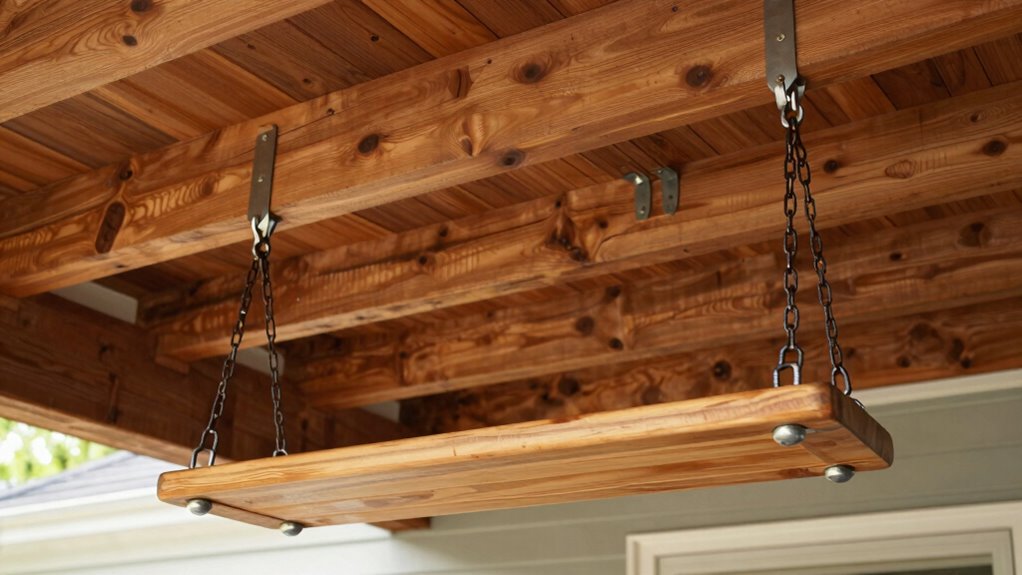
Hanging a porch swing safely begins with accurately locating the ceiling joists, as they provide the necessary support for the weight. To do this, use a stud finder or tap the ceiling to hear the solid sound of wood. Mark the joists with a pencil for precise placement. Once identified, consider your swing style and how decorative cushions might affect the hanging points, ensuring they don’t interfere with the support structure. Different swing styles, such as traditional or modern designs, may require varying mounting heights, so knowing your ceiling’s framing helps prevent accidents. Remember, hitting the joists is essential for safety and stability, especially when attaching heavier swings or accommodating decorative cushions that add charm but shouldn’t compromise the hanging points. Additionally, understanding the contrast ratio of your setup can help you optimize lighting conditions to avoid glare and ensure a comfortable environment for relaxing on your porch swing.
How to Reinforce Your Ceiling for Safe, Heavy Loads
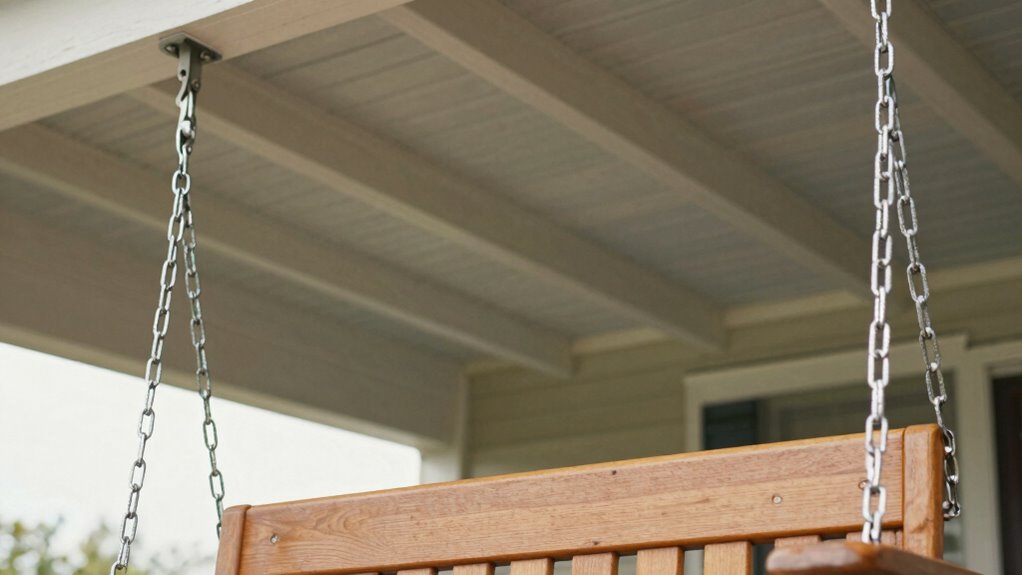
To hang a heavy porch swing safely, you need to reinforce your ceiling joists to handle the load. Using proper hardware guarantees the swing stays secure and prevents damage. Reinforcing the structure is essential for peace of mind and long-lasting support. Additionally, understanding safe installation practices can help prevent accidents and ensure the setup remains secure over time. Incorporating Free Floating techniques can also help distribute weight evenly across the ceiling structure, further enhancing safety. For example, considering the net worth of individuals involved in related industries can provide insights into the quality and reliability of recommended hardware and accessories. Properly assessing your home’s load capacity ensures that the reinforcement is adequate for the swing’s weight and helps avoid structural issues down the line. It’s also important to consult professional structural assessments to confirm your ceiling can support the additional load safely.
Reinforce Ceiling Joists
Reinforcing your ceiling joists is essential if you want to guarantee your porch swing is safe and can support heavy loads. To do this, consider sistering new lumber alongside existing joists, which provides extra strength. Use wood treatment to prevent rot and insect damage, ensuring longevity without sacrificing aesthetic design. This reinforcement not only increases load capacity but also maintains a clean, attractive look. Before starting, evaluate the current joists for cracks or sagging, and select appropriate lumber for reinforcement. Proper load distribution is crucial to avoid uneven stress that could compromise your porch’s stability. Additionally, understanding structural support principles can help you choose the most effective reinforcement method. When planning your reinforcement, it’s important to consider building codes and safety standards to ensure compliance and safety. It’s also advisable to verify your existing structure’s capacity with a structural engineer to prevent future issues. Here’s a quick comparison:
| Reinforcement Method | Benefits |
|---|---|
| Sistering Joists | Adds strength, preserves aesthetics |
| Cross Bracing | Distributes weight evenly, enhances stability |
| Metal Supports | Provides extra load capacity, durable reinforcement |
Choose based on your porch’s style and load requirements. Additionally, consulting a structural engineer can help ensure your reinforcement method is properly suited to your specific setup.
Use Proper Hardware
Using the right hardware is crucial to guarantee your porch swing is securely anchored and can handle heavy loads safely. Carefully consider hardware selection, opting for heavy-duty eye bolts, U-bolts, and chain links rated for the weight you plan to support. Confirm all components are corrosion-resistant, especially if exposed to weather. Pay attention to safety considerations by choosing hardware with appropriate weight capacities and secure fastening methods. Use washers and nuts to prevent loosening over time, and double-check that the hardware fits your ceiling joists and chains perfectly. Proper hardware not only keeps your swing stable but also reduces the risk of accidents. Investing in high-quality, rated hardware is essential for a safe, long-lasting porch swing setup that won’t creak or fail. Weight capacity is a crucial factor to ensure safety and durability over time. Additionally, understanding the proper hardware can help prevent common issues like loosening or failure, ensuring your porch swing remains secure for years to come. Using hardware with corrosion resistance is especially important to maintain safety and longevity in outdoor conditions. Incorporating rust-resistant materials will further enhance durability in outdoor environments. Selecting hardware with weatherproof coatings can extend the lifespan of your setup and reduce maintenance needs.
Choosing the Best Chains and Hardware for Your Porch Swing
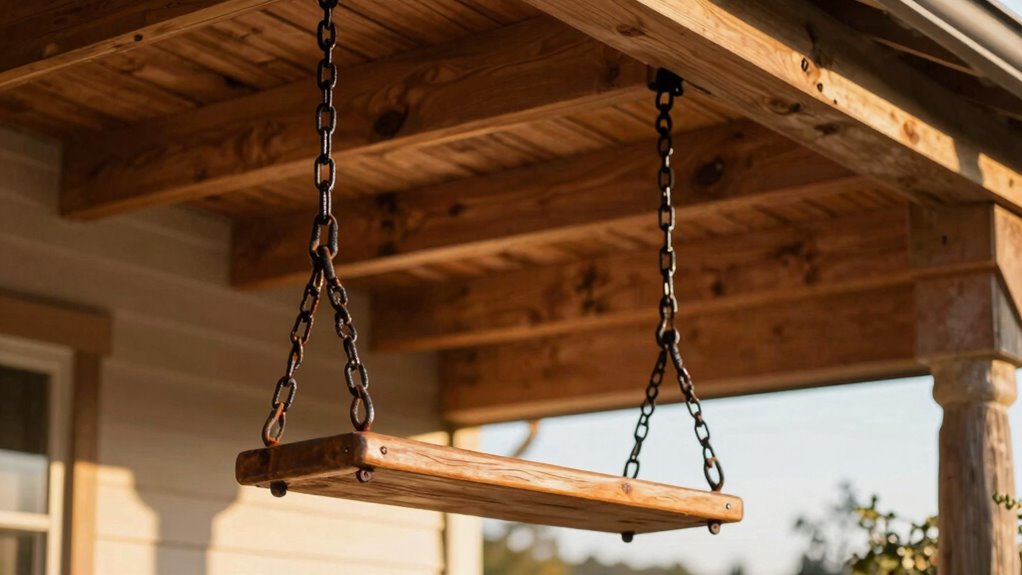
When selecting chains and hardware for your porch swing, you need to consider material durability to ensure they last outdoors. Pay attention to weight capacity limits so your swing stays safe and secure. Also, look for rust-resistant coatings to prevent corrosion and keep everything looking great over time. Additionally, opting for products with trusted reputation can provide added confidence in their quality and performance. Selecting hardware that is weather-resistant can significantly enhance longevity and performance in outdoor conditions. To maximize safety, choose hardware that meets industry standards for outdoor use and load capacity. Ensuring your chosen hardware complies with outdoor safety regulations can further protect you and your loved ones. Incorporating corrosion-resistant materials into your hardware selection can further prolong the lifespan of your porch swing setup.
Material Durability
Choosing the right chains and hardware is essential to guarantee your porch swing remains safe and sturdy over time. You want materials that withstand the elements and maintain their strength through seasons of use. Look for hardware with excellent weather resistance to prevent rust and corrosion. Durable metals like stainless steel or galvanized steel offer superior material longevity, ensuring your swing stays secure year after year. Additionally, selecting hardware designed specifically for outdoor use can prevent premature deterioration, prolonging the functional life of your setup. Using hardware with corrosion resistance ensures your porch swing remains safe and reliable for many seasons to come. Proper installation techniques and weatherproof hardware further enhance durability and safety. You can feel confident knowing your setup won’t weaken or break under pressure. Investing in high-quality hardware is also crucial to avoid unexpected failures, which can pose safety risks and lead to costly repairs. Enjoy peaceful moments on your porch without worrying about safety. Watch your investment last through harsh weather conditions. Savor the beauty of your porch swing season after season. Rest easy knowing your hardware is built to stand the test of time.
Weight Capacity Limits
To guarantee your porch swing remains safe and secure, it’s essential to pay attention to weight capacity limits when selecting chains and hardware. Always check the load distribution to ensure the chains can evenly handle the weight of the swing plus its occupants. Hardware components like hooks, eye bolts, and brackets should specify their maximum weight limits and be rated for outdoor use. Exceeding these limits can cause failure and compromise safety. Choose chains with a higher weight capacity than your swing’s total load for added security. Properly rated hardware distributes weight evenly, preventing undue stress on any single point. By respecting weight capacity limits, you help ensure your porch swing remains stable, safe, and enjoyable for everyone.
Rust-Resistant Coatings
Since porch swings are exposed to outdoor elements, selecting chains and hardware with rust-resistant coatings is essential for durability and safety. Rust-proofing techniques and corrosion resistance coatings protect your hardware from moisture, preventing rust and deterioration over time. Choosing hardware with quality coatings ensures your swing remains secure and looks great season after season. Look for chains coated with zinc, powder paint, or galvanized finishes, as these provide excellent resistance. Investing in rust-resistant hardware means fewer replacements and a safer, more enjoyable swing experience. Keep these in mind:
- Reliable corrosion resistance coatings
- Zinc or galvanized finishes
- Powder-coated hardware
- Rust-proofing techniques for longevity
- Durable, weather-resistant materials
Step-by-Step: How to Install Your Porch Swing Securely and Quietly
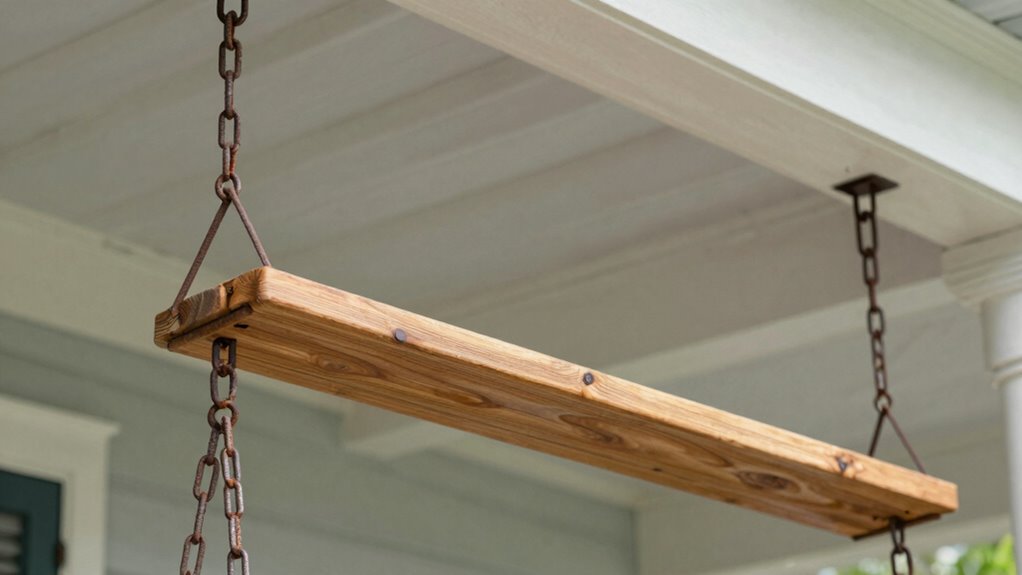
Installing your porch swing securely and quietly requires careful preparation and attention to detail. Begin by inspecting your ceiling joists to ensure they’re sturdy enough to support the weight. Use a level to mark the exact spots where you’ll hang the chains, making sure they’re even. Attach heavy-duty hooks or eye bolts directly into the ceiling joists, not the drywall, to prevent creaking. When hanging the swing, add decorative cushions for comfort and consider seasonal decorating to keep it inviting year-round. Adjust the chain length for a gentle swing motion, avoiding excessive slack that could cause noise. Finally, test the swing carefully, making sure it’s stable and silent. Proper installation guarantees a relaxing, creak-free porch experience.
Common Mistakes to Avoid When Hanging a Porch Swing
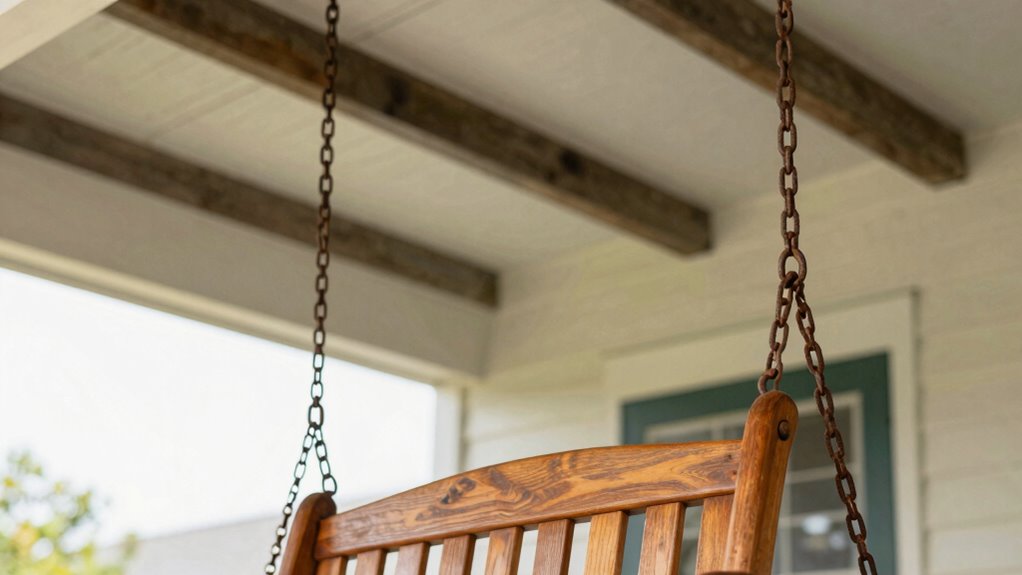
Hanging a porch swing incorrectly can lead to safety hazards and unwanted noise, so it’s important to avoid common mistakes. Failing to check ceiling joists for strength can cause the swing to fall. Using chains that aren’t rated for weight limits may result in breakage. Ignoring cushion comfort and decorative accents can limit your enjoyment and curb appeal.
Be sure to avoid:
- Hanging from weak or damaged ceiling joists
- Using chains or hardware that aren’t rated for your swing’s weight
- Overlooking proper height, making entry difficult
- Sacrificing cushion comfort for style
- Ignoring decorative accents that tie your space together
How to Prevent Creaks and Noise in Your Porch Swing Setup
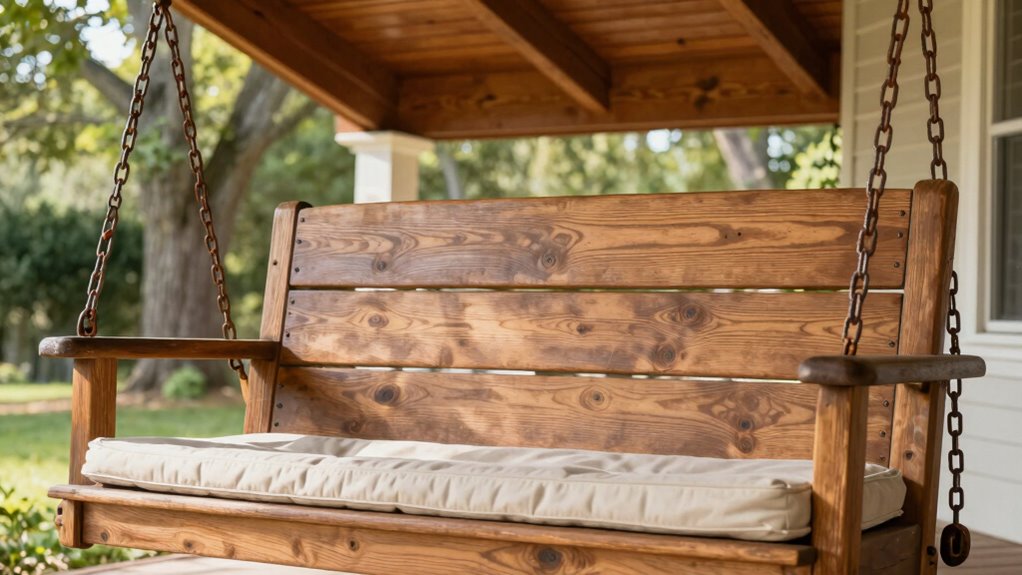
Creaks and noise in your porch swing can quickly become annoying, but you can prevent them with some simple steps. Start by ensuring the chains are properly lubricated with a silicone-based spray, reducing metal-on-metal squeaks. Use high-quality hardware and tighten all bolts regularly. Choosing swing cushions with smooth, durable fabric can also lessen rubbing noises. When decorating porch areas, opt for cushions and pillows that don’t shift or rub against the swing frame. To further minimize noise, add felt pads or rubber washers between metal parts and the ceiling joists.
| Action | Benefit |
|---|---|
| Lubricate chains | Reduces squeaks and metal noise |
| Tighten hardware | Prevents loose parts that cause creaks |
| Choose smooth cushions | Less rubbing and noise during swinging |
Best Materials and Chains for a Long-Lasting, Creak-Free Swing
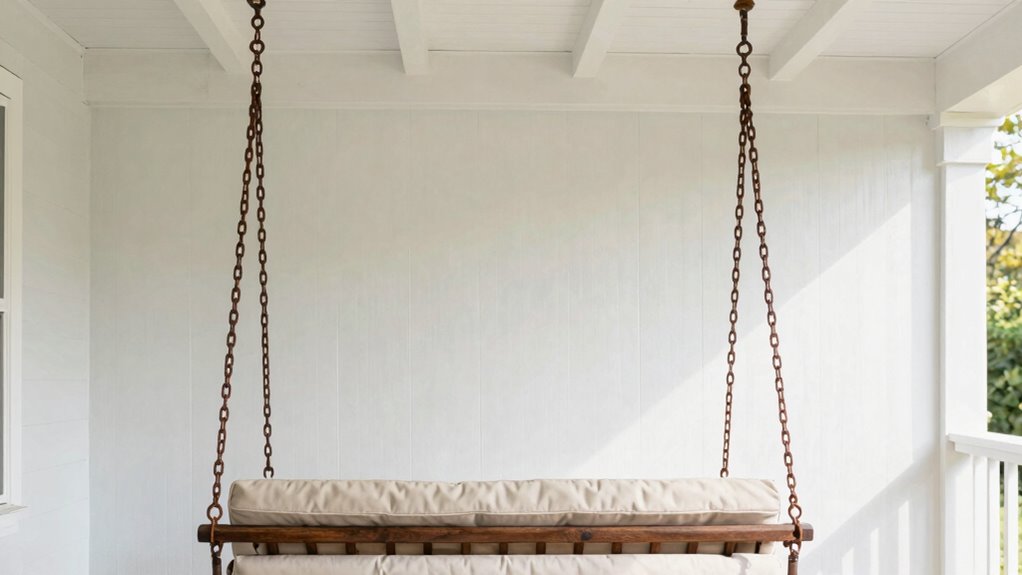
Choosing the right materials and chains is essential for ensuring your porch swing remains durable and silent over time. Material selection impacts longevity, weather resistance, and comfort, while quality chains prevent squeaks and rust. Opt for galvanized or stainless steel chains—they resist corrosion and require minimal chain maintenance. Look for thick, sturdy chains that can support weight without sagging. Use weatherproof, treated wood or durable plastics for the swing itself to prevent cracking. Regularly inspect chains for wear and lubrication to avoid creaks and rust. Proper chain maintenance keeps your swing smooth and silent, saving you from future repairs.
Choose weatherproof materials and stainless steel chains for a durable, silent porch swing that lasts for years.
- Feel the thrill of swinging on a rust-free, squeak-free chain
- Enjoy the peace of worry-free outdoor relaxation
- Trust in materials that withstand rain and sun
- Experience smooth, silent movement every time
- Know your swing will last for years to come
Troubleshooting: Fixing Stability and Noise Issues in Your Porch Swing
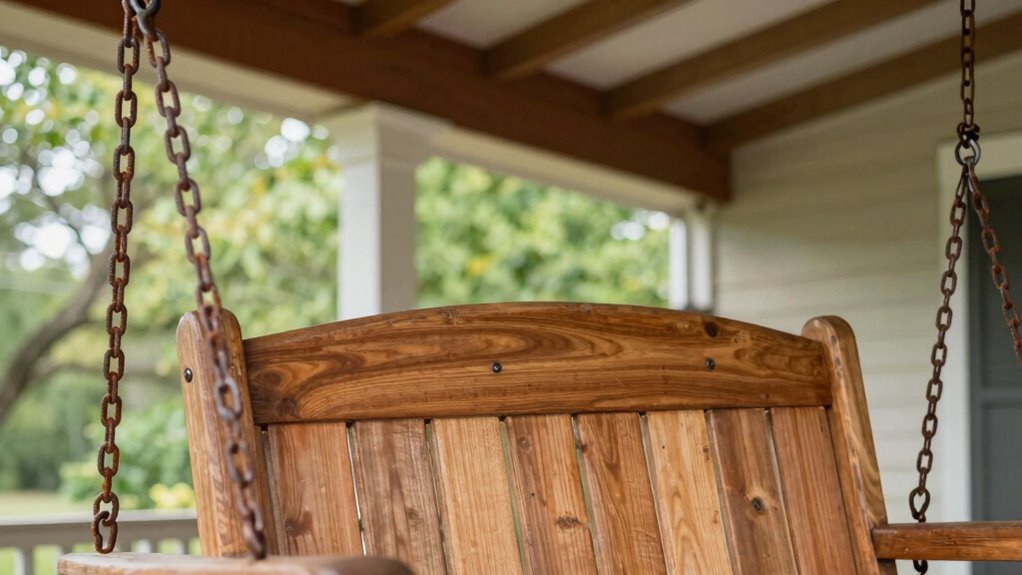
Even the most durable porch swing can develop stability or noise issues over time, especially if the chains or support points aren’t maintained properly. Loose or worn chains can cause wobbling or creaking, while unstable ceiling joists may lead to unsafe swinging. To troubleshoot, start by checking and tightening all hardware, including hooks and fasteners. Replace any worn chains and consider adding swing accessories like rubber pads or chain links to reduce noise. Decorative cushions can also help dampen sound and improve comfort, but ensure they don’t interfere with the swing’s balance. Regularly inspect support points and ceiling joists for signs of damage. Proper maintenance keeps your swing stable, quiet, and safe for relaxing afternoons.
Tips for Maintaining Your Porch Swing for Years of Relaxation
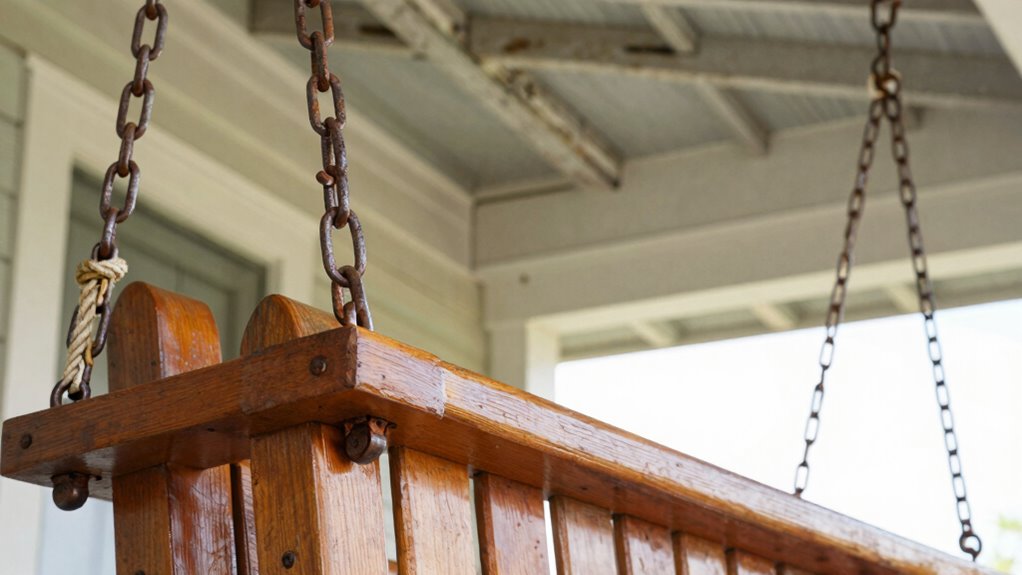
To guarantee your porch swing provides years of relaxing enjoyment, regular maintenance is essential. Keep it cozy and inviting by inspecting chains and joints regularly, tightening any loose bolts, and applying a fresh coat of weatherproof sealant annually. Refresh your space with decorative cushions that invite relaxation and seasonal decorations that bring joy throughout the year. Protect your swing from harsh weather when not in use to prevent wear and tear. Clean cushions and decorative accessories frequently to keep your space inviting. Additionally, check the ceiling joists for stability to ensure safety. Proper care preserves not only the structural integrity but also the charm of your porch swing, making every moment spent there a true comfort.
Frequently Asked Questions
How Often Should I Inspect My Porch Swing’s Hardware for Safety?
You should inspect your porch swing’s hardware at least once a season to guarantee safety. During these checks, look for rust prevention issues and tighten any loose bolts or hooks. Regular hardware maintenance keeps everything secure and prevents creaking or failure. Also, apply rust-resistant paint or lubricant to metal parts to prolong their life. Staying proactive helps avoid accidents and keeps your swing safe and enjoyable.
Can I Hang a Porch Swing Without Ceiling Joists?
You can hang a porch swing without ceiling joists by using alternative mounting options like sturdy wall brackets or free-standing frames. These ceiling joist alternatives give you flexibility, especially if your ceiling isn’t reinforced for weight. Just make certain your chosen support is strong enough, secure, and rated for the swing’s weight. Always double-check the hardware, and consider consulting a professional to keep your swing safe and steady.
What Weight Capacity Should My Chains and Hardware Support?
You should choose chains and hardware rated to support at least 300 pounds, ensuring safety and durability. Check the chain strength and hardware ratings before hanging your porch swing; they should match or exceed your swing’s weight plus additional capacity for safety. Opt for heavy-duty chains and hardware designed for outdoor use, and always follow manufacturer guidelines to prevent accidents or damage.
How Do Weather Conditions Affect the Durability of Porch Swing Chains?
Like a knight faces storms, your porch swing chains battle weather. Rain, snow, and humidity cause rust, weakening the metal over time. To safeguard your chains, choose rust prevention and weatherproof coatings, which act as armor against the elements. Regular maintenance, like applying these coatings and inspecting for corrosion, ensures your swing stays sturdy and safe, so you can relax without worry, no matter the forecast.
Are There Specific Tools Recommended for Installing Ceiling Anchors?
You’ll want a power drill and a stud finder to install ceiling anchors securely. Use the stud finder to locate ceiling joists for maximum support, then mark the spots. With the power drill, pre-drill holes to prevent cracking, and insert the anchors. This setup guarantees your porch swing stays safe and sturdy, even with weather changes. Always double-check that you’re anchoring into solid joists for best results.
Conclusion
With your porch swing securely hung and whisper-quiet, imagine settling in as the breeze gently sways the chains, and the soft creak of the wood becomes a soothing lullaby. By choosing the right materials, reinforcing your ceiling, and following proper installation steps, you create a cozy haven that invites relaxation for years to come. Now, your perfect outdoor retreat awaits—calm, stable, and free of unwanted noise, ready to become your favorite spot to unwind.