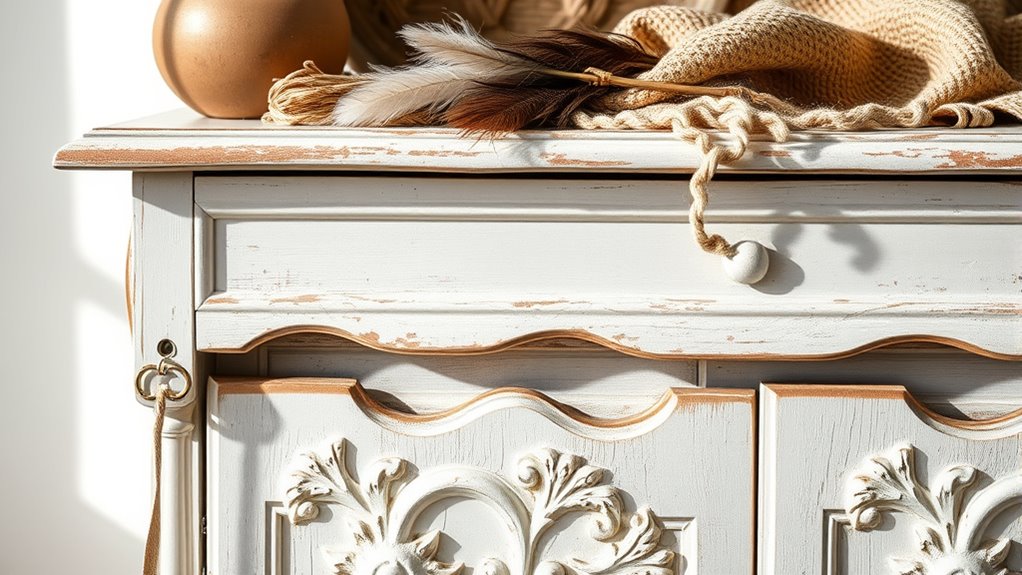

To create a boho look from vintage wood furniture, start by thoroughly cleaning and lightly sanding the surface. Choose earthy or muted colors, layering different shades for depth, and intentionally distress areas like edges and corners to reveal underlying layers. Focus on creating an aged, weathered appearance with techniques like sanding after painting. Finish with a protective sealant and vintage-inspired hardware for authenticity. Keep experimenting with colors and distressing methods to add character—if you continue, you’ll learn all the tips and tricks for success.
Key Takeaways
- Clean, sand, and lightly distress the furniture to create a weathered, vintage appearance.
- Use layered, earthy or pastel paints with contrasting colors for depth and boho charm.
- Focus on edges and details for intentional distressing, exposing underlying layers for a worn look.
- Apply matte or satin sealants to preserve the finish while maintaining a natural, understated vibe.
- Incorporate vintage hardware and decorative elements to enhance the eclectic, boho aesthetic.
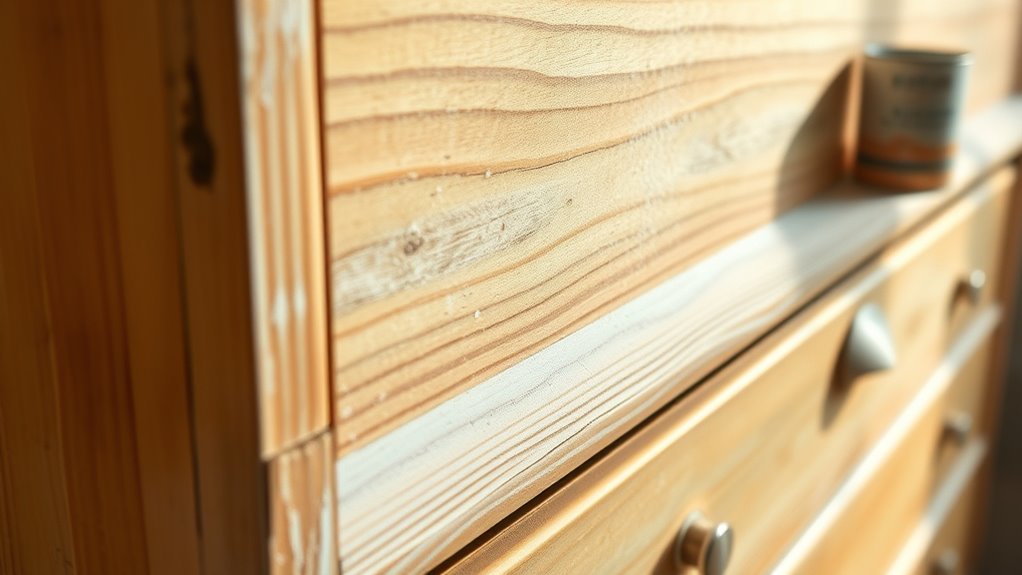
Refinishing vintage wood furniture can breathe new life into cherished pieces, restoring their beauty and extending their lifespan. If you’re aiming for a boho look, this process allows you to combine rustic charm with artistic flair. To achieve this style, start by considering your desired color palette. Boho decor thrives on earthy tones, muted pastels, and unexpected pops of vibrant color. Think warm terracotta, soft blush, sage green, or deep navy. These hues create a relaxed, inviting vibe that pairs perfectly with vintage furniture’s natural character. When selecting your paint or stain, keep in mind that a distressed finish can add authenticity and charm. A distressed look involves intentionally aging the surface, revealing layers of paint or wood underneath, which enhances the piece’s history and uniqueness.
To begin, clean your furniture thoroughly, removing dirt, grease, and old wax. Sand the surface lightly to smooth out rough spots and create a good base for paint or stain adherence. If you want a distressed finish, focus on areas where natural wear would occur—edges, corners, and raised details. Using a small brush or sandpaper, gently sand down these spots after painting or staining, exposing the underlying wood or previous layers of color. This technique gives your furniture a weathered, vintage feel that perfectly complements a boho aesthetic. Don’t be afraid to experiment with layered colors — applying a base coat in one hue, then adding a contrasting or muted topcoat, and finally distressing the surface, creates depth and visual interest. Additionally, understanding maintenance and cleaning practices can help preserve the distressed finish and overall look of your piece over time.
Adding a protective sealant ensures your work lasts and maintains its distressed charm. Choose a matte or satin finish to keep the look natural and understated, aligning with boho’s effortless vibe. You can also incorporate decorative elements like stenciled patterns, decals, or carved details to personalize your piece further. When choosing hardware, opt for vintage-inspired knobs or handles in brass, copper, or aged bronze to enhance the rustic appeal. Remember, the key to a successful boho refinishing project is embracing imperfection. The distressed finish isn’t about perfection; it’s about highlighting the character and history of your furniture, making each piece a one-of-a-kind statement. With patience and a creative eye, you’ll transform a tired vintage piece into a stunning, eclectic addition that perfectly captures the free-spirited essence of boho decor.
Frequently Asked Questions
What Are the Best Tools for Vintage Furniture Refinishing?
You’ll want to choose the right brush selection, like natural bristle brushes for staining and synthetic brushes for painting, to get a smooth finish. Sanding equipment such as orbital sanders or handheld sanders helps you efficiently remove old paint or varnish. Make sure to have different grit sandpapers for a thorough prep. Together, these tools guarantee your vintage furniture looks stunning with a boho vibe.
How Do I Choose the Right Stain or Paint for a Boho Style?
To choose the right stain or paint for a boho style, consider your desired color palettes and texture options. Opt for earthy tones like terracotta, mustard, or muted greens that evoke warmth and natural vibes. Texture options like matte or chalk paint add a layered, relaxed feel. Test samples on small areas first, ensuring they complement your overall aesthetic and create the imperfect, eclectic charm characteristic of boho decor.
Can I Refinish Furniture Without Sanding?
You can refinish furniture without sanding by using alternative painting techniques like chalk or milk paint, which adhere well to existing surfaces. This approach helps with furniture preservation while giving your piece a fresh look. Sometimes, a simple cleaning and light sanding in high-traffic areas is enough, but embracing these techniques lets you update your vintage piece effortlessly, creating that boho charm without the hassle of extensive prep work.
How Long Does the Refinishing Process Typically Take?
Refinishing furniture typically takes anywhere from a few hours to several days, depending on your refinishing techniques and the furniture’s condition. If you’re stripping, sanding, and sealing, expect a longer timeline for furniture transformation. For quicker projects, using paint or stain with minimal prep can speed things up. Keep in mind, patience guarantees a smooth, professional finish, especially when aiming for a boho aesthetic.
Are There Eco-Friendly Finishes Suitable for Vintage Wood?
They say, “Every cloud has a silver lining,” and eco-friendly finishes are a bright spot for vintage wood. You can choose eco-friendly finishes and natural sealants that protect your furniture without harming the environment. These options are safe, sustainable, and enhance your piece’s natural beauty. So, when refinishing, go for environmentally conscious products to achieve a stunning boho look while keeping Mother Earth happy.
Conclusion
By refinishing your vintage wood furniture, you breathe new life into pieces that tell a story, transforming them into stunning boho accents. Think of it as giving your space a fresh canvas, where each brushstroke adds character and charm. With patience and a bit of creativity, you craft a unique island amidst your decor. Your vintage finds become the heart of your home, radiating warmth and personality like a well-loved treasure waiting to be discovered anew.