To use space heaters safely, check that your outlet can handle the wattage—most are rated for 15 amps (around 1800W at 120V)—and keep the load below 80% of the circuit’s capacity. Place heaters on stable, clear surfaces away from water, furniture, or curtains, and avoid using extension cords or power strips. Watch for signs of overload or overheating, and guarantee proper maintenance. Keep these tips in mind to prevent fire risks and enjoy safe warmth—more vital details await you.
Key Takeaways
- Ensure heater wattage stays within outlet and circuit capacity to prevent overloads and electrical fires.
- Place heaters on stable, flat surfaces, maintaining at least 3 feet clearance from furniture and combustibles.
- Use only high-rated, heavy-duty cords designed for high wattage appliances; avoid extension cords or power strips.
- Regularly inspect outlets, cords, and heaters for damage, overheating, or signs of electrical stress.
- Turn off and unplug heaters when unattended, and keep combustible materials away to reduce fire risk.
Why Space Heater Safety Is Crucial in Cold Weather
When the temperatures drop, many people rely on space heaters to keep their homes warm. However, safety becomes a top concern during cold weather. Using space heaters improperly can impact indoor air quality, leading to dry air or the circulation of dust and allergens. Making sure safe placement and correct operation helps maintain healthier air inside. Additionally, safety measures improve energy efficiency, helping you save on heating costs while keeping your space warm. Overloading outlets or blocking vents can increase fire risk, so being vigilant is essential. Properly inspecting electrical connections and adhering to safety guidelines help prevent hazards. Understanding your outlet load capacity is crucial to avoid overloads that could cause electrical fires. Being aware of fire safety precautions ensures you can respond effectively in emergencies. Regularly monitoring space heater usage can help detect potential issues before they become hazards. Recognizing the importance of AI-driven safety innovations can further enhance your home safety measures. By prioritizing space heater safety, you protect your home from potential hazards, ensure better indoor air quality, and maximize energy efficiency—all important during chilly seasons.
Common Fire Hazards From Improper Space Heater Use
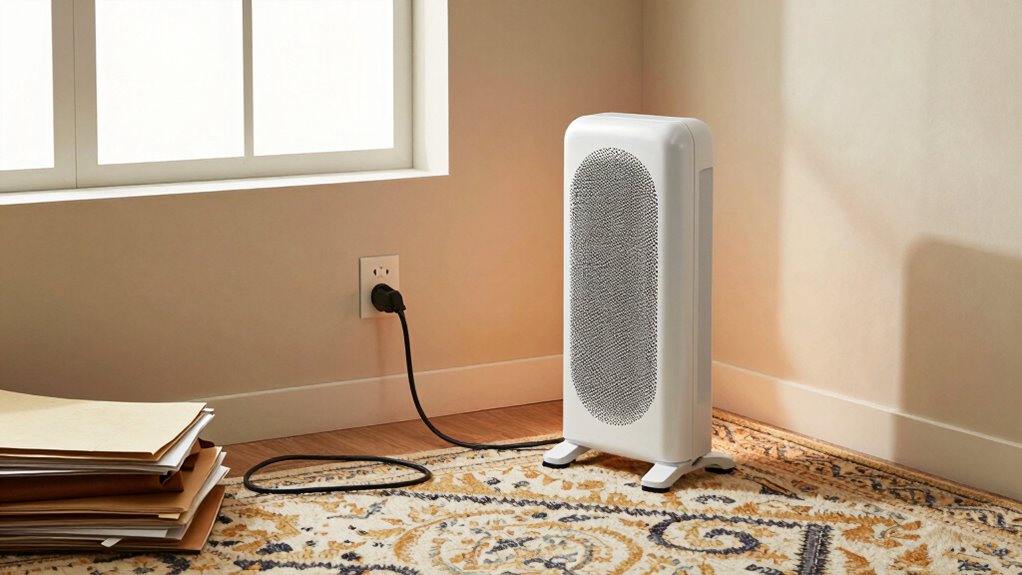
Using your space heater improperly can lead to serious fire hazards. Overloading outlets, placing heaters too close to furniture, or leaving them unattended can ignite a fire. Being aware of these dangers helps you stay safe while keeping warm. Additionally, ensuring your heater is placed on a stable surface reduces the risk of tipping over and causing a fire. Proper ventilation is also important to prevent buildup of harmful fumes and overheating. Regularly inspecting your heater for any electrical faults can help prevent potential fire risks. Understanding outlet loads and managing power consumption is essential to avoid overloading circuits.
Overloading Outlets Risks
Overloading electrical outlets is a common mistake that can lead to serious fire hazards when using space heaters. When you plug multiple devices into the same outlet, you risk exceeding the outlet’s capacity, which can damage electrical wiring and cause a power surge. This overload can generate heat and ignite nearby materials. To avoid this, never connect a space heater to an extension cord or power strip with multiple devices. Use outlets rated for high wattage and guarantee your home’s wiring can handle the load. Additionally, selecting the appropriate best outlets for high wattage can help prevent overloads and ensure safe operation. Regularly inspecting your electrical system for outlet capacity can further reduce the risk of overloads and fires. Being aware of vetted electrical safety tips is essential for maintaining a safe environment when operating space heaters.
Improper Heater Placement
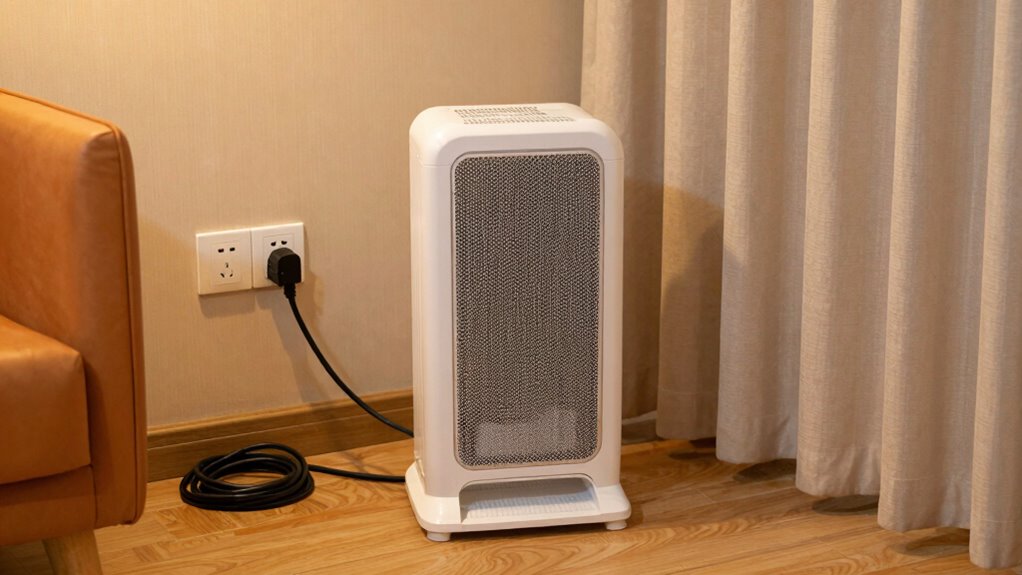
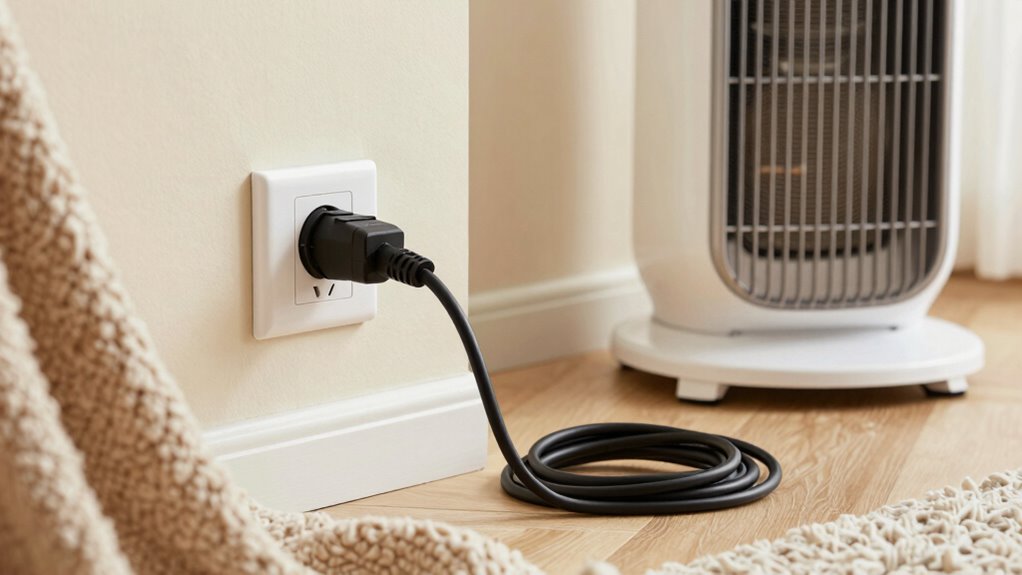
Placing a space heater improperly can quickly turn a cozy room into a fire hazard. Poor cord placement is a common mistake; never run the cord under rugs or furniture, as this can cause overheating and sparks. Keep the cord straight and avoid pinching or bending it sharply. Heater positioning is equally important—you should place the heater on a flat, stable surface, away from curtains, furniture, or anything combustible. Maintain at least three feet of clearance around the unit to prevent heat buildup and accidental contact. Never place a heater near water sources or in high-traffic areas where it could be knocked over. Proper space heater placement reduces fire risk, ensuring safe use while keeping your space warm and cozy. Following manufacturer instructions and consulting safety guidelines and fire prevention practices can help you understand the safest practices for space heater use. Regularly inspecting your heater for damage and ensuring the electrical load on your outlets is not exceeded can further prevent potential hazards.
Unattended Usage Dangers
Leaving a space heater unattended can quickly lead to dangerous fires. When you’re not watching, risks increase considerably. To stay safe, ensure your heater has an automatic shutoff feature that activates if it tips over or overheats. Additionally, check that it has a reliable tip over switch that turns the unit off if accidentally knocked over. Always unplug your heater when leaving the room or going to sleep. Keep flammable materials away, and never cover the heater or block its vents. If the heater has safety features like an automatic shutoff or tip over switch, use them consistently. Remember, even with safety devices, never leave a space heater unattended for extended periods. Staying vigilant helps prevent fires and keeps everyone safe. Proper home safety precautions include understanding how to monitor and maintain your space heater effectively. Using electric space heaters with built-in safety features adds an extra layer of protection. Regularly inspecting your heater for damage or wear can also help prevent malfunctions that could lead to fires. Being aware of outlet loads and ensuring your heater is plugged into an appropriate outlet reduces the risk of overloads that can cause electrical fires. Additionally, understanding proper placement and keeping the heater away from furniture or curtains further minimizes fire hazards.
How to Know If Your Outlet Can Handle Your Space Heater
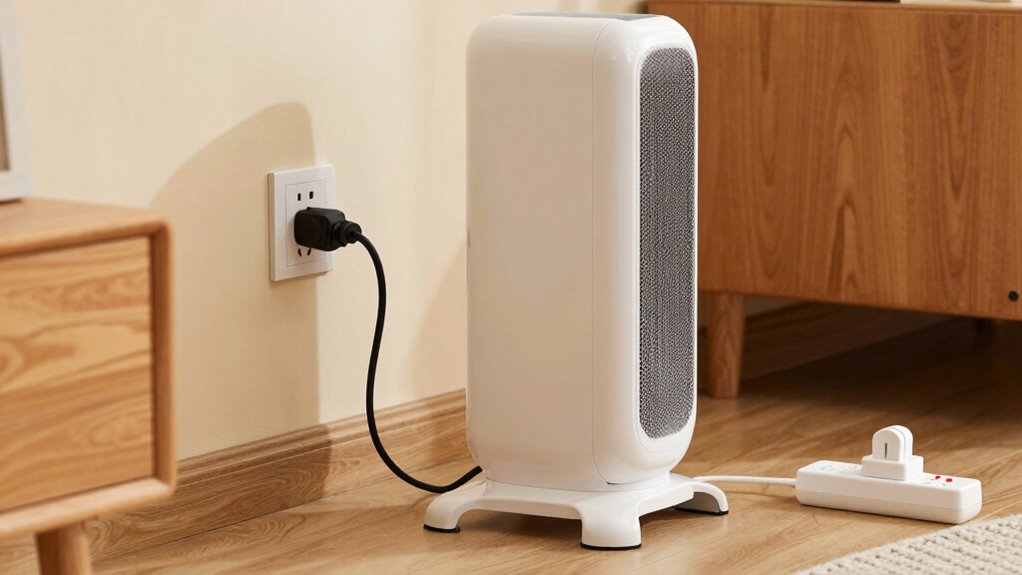
Before plugging in your space heater, you need to make sure your outlet can handle it. Check the outlet’s amp capacity and compare it to your heater’s power needs, which are usually listed on the unit. Avoid overloading circuits by not plugging multiple high-wattage devices into the same outlet. Ensuring your electrical system is energetically aligned can help prevent potential hazards and maintain safety.
Check Outlet Amp Capacity
To guarantee your outlet can safely handle your space heater, you need to verify its amperage capacity. Start by finding the circuit’s breaker or fuse box. Then, follow these steps:
- Look for the breaker label indicating its maximum amperage, typically 15 or 20 amps.
- Confirm the outlet’s capacity matches this rating for circuit safety.
- Check the outlet itself for any signs of damage or overload.
- Ensure the total load on the circuit, including other devices, doesn’t exceed the breaker’s capacity.
- Remember that circuit capacity is crucial to prevent electrical hazards and ensure safe operation of your space heater.
- Also, be aware that essential oils used in aromatherapy should not be applied near electrical outlets or space heaters to prevent potential hazards.
Identify Heater Power Usage
Understanding your space heater’s power usage is crucial to guarantee your outlet can handle it safely. Check the heater wattage, usually listed on the label or in the manual, to determine its energy consumption. Most space heaters range between 750 and 1500 watts. Knowing this helps you assess whether your outlet and circuit can support the load without overloading. For example, if your outlet is rated for 15 amps, it can handle up to 1800 watts at 120 volts, but it’s wise to stay below that to prevent issues. Always compare the heater’s wattage with your outlet’s capacity. This ensures safe operation, reduces fire risk, and avoids tripping circuit breakers. Being aware of your heater’s energy consumption is a key step in safe space heater use.
Avoid Overloading Circuits
Knowing whether your outlet can handle your space heater is essential for safe operation. To avoid overloading circuits and guarantee outlet safety, follow these steps:
- Check your circuit capacity—most household circuits are 15 or 20 amps.
- Determine your heater’s wattage and convert it to amps (divide watts by 120).
- Confirm that adding the heater won’t exceed 80% of the circuit’s capacity.
- Inspect your outlet for signs of overload, like sparks or frequent trips.
Space Heater Outlet Load Limits You Need to Know
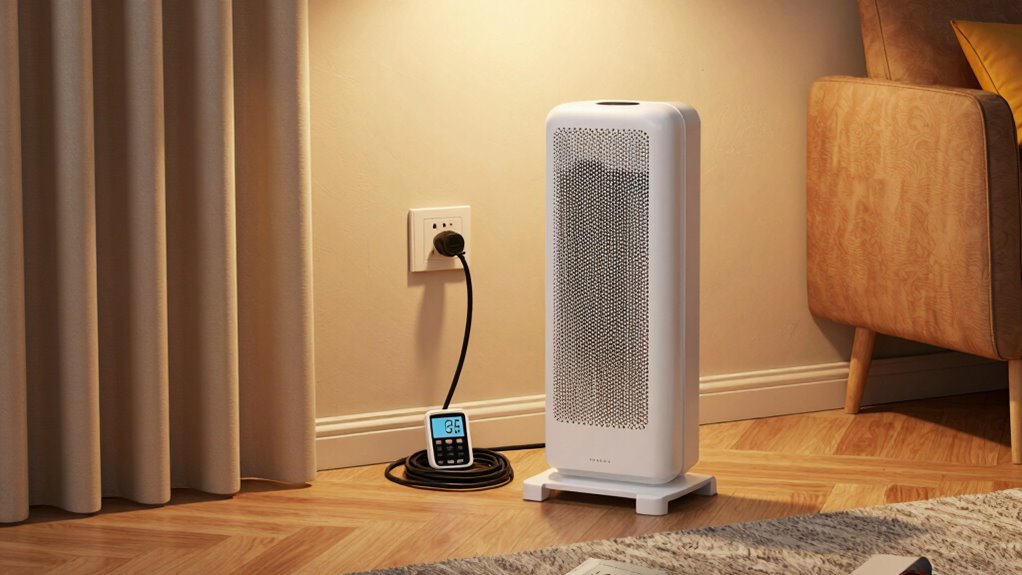
Since space heaters draw significant power, monitoring your outlet’s load limits is vital to prevent electrical hazards. Most household outlets are designed to handle a specific power capacity, typically around 15 or 20 amps. Exceeding this limit can compromise outlet safety and increase the risk of overheating or fire. To stay within safe parameters, check the heater’s wattage and compare it to your outlet’s maximum load. For example, a space heater using 1500 watts at 120 volts draws about 12.5 amps, which is generally safe for a standard outlet. Avoid plugging multiple high-wattage devices into the same outlet or power strip, as this can overload the circuit. Staying aware of your outlet’s load limits helps guarantee safe, effective use of your space heater.
Choosing the Right Power Cord for Safe Operation

Choosing the right power cord is essential for safe space heater operation, especially when dealing with high wattage devices. Using the wrong cord can cause overheating and fire hazards. To guarantee safety, follow these guidelines:
- Avoid extension cords unless designed for high wattage appliances, as they may not handle the load.
- Never plug a space heater into a power strip; most are not rated for the power draw.
- Use a heavy-duty, properly rated cord that matches your heater’s wattage requirements.
- Check cords regularly for damage or fraying, and replace them immediately if needed.
Where to Place Your Space Heater for Maximum Safety
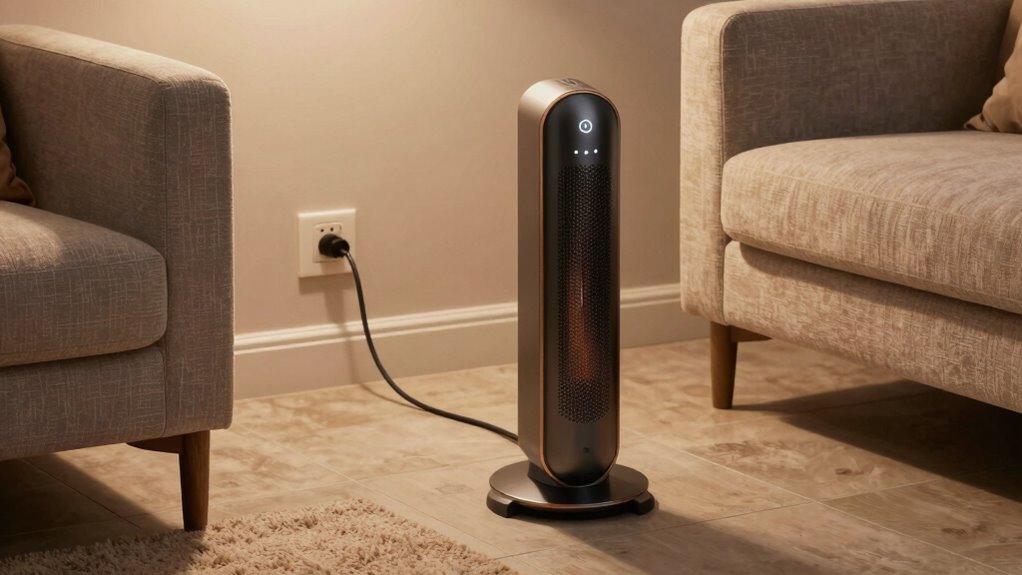
Placing your space heater in the right spot is essential for safety and efficient heating. You should position it on a flat, stable surface away from foot traffic to prevent accidental knocks. Keep the heater at least three feet from curtains, furniture, or other combustible materials to reduce fire risk. Proper heater positioning also involves avoiding areas where cords might be pinched, frayed, or become a tripping hazard. Ensure the power cord is safely routed, not stretched or placed under rugs or furniture, which can cause overheating or damage. Never place the heater behind doors or near water sources. By carefully choosing the location and maintaining cord safety, you can maximize warmth while minimizing potential hazards.
Signs You’ve Overloaded Your Electrical Outlet
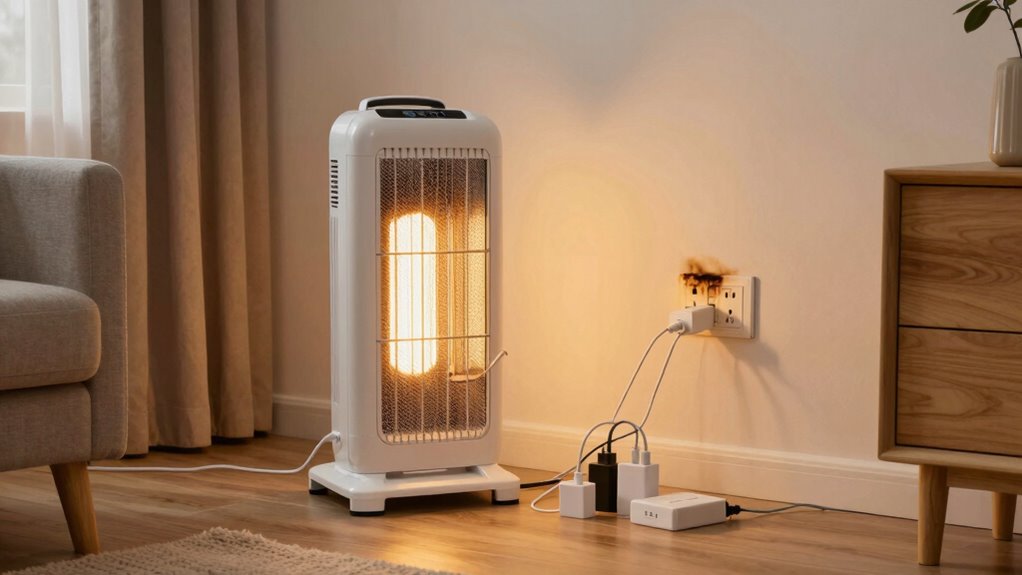
If your outlet feels unusually warm or you notice your circuit keeps tripping, you might be overloading it. These are clear signs that too many devices are drawing power through the same outlet. Pay attention to these warning signs to prevent electrical hazards.
Unusual Outlet Warmth
When an electrical outlet begins to feel unusually warm or hot to the touch, it’s a clear sign you may have overloaded it. You might notice a space heater flickering or the outlet showing discoloration. These are warning signs that your wiring is under stress. To confirm, check for:
- Consistent warmth or heat coming from the outlet
- Visible discoloration or burn marks around the socket
- Flickering lights when using the space heater
- A burning smell or minor smoke near the outlet
Ignoring these signs increases the risk of electrical fires. An overloaded outlet can’t handle the load safely, causing overheating. Always unplug devices and have a professional inspect the outlet before using it again. Safety first to prevent fire hazards.
Frequent Circuit Tripping
Frequent circuit tripping is a common sign that you’ve overloaded an electrical outlet. When you connect a space heater or multiple appliances, the circuit breaker may trip to prevent overheating or fires. This is a clear overload symptom, indicating your outlet is handling more than it can safely support. If your breaker keeps shutting off, it’s a sign you need to reduce the load or spread out your devices. Ignoring this warning increases the risk of overheating wiring and potential fire hazards. Always pay attention to circuit breaker responses; they’re designed to protect your home. To avoid overload symptoms, don’t plug high-wattage devices into a single outlet or extension cord. Proper load management ensures safety and prevents unnecessary circuit interruptions.
How to Reduce Fire Risks When Using Space Heaters
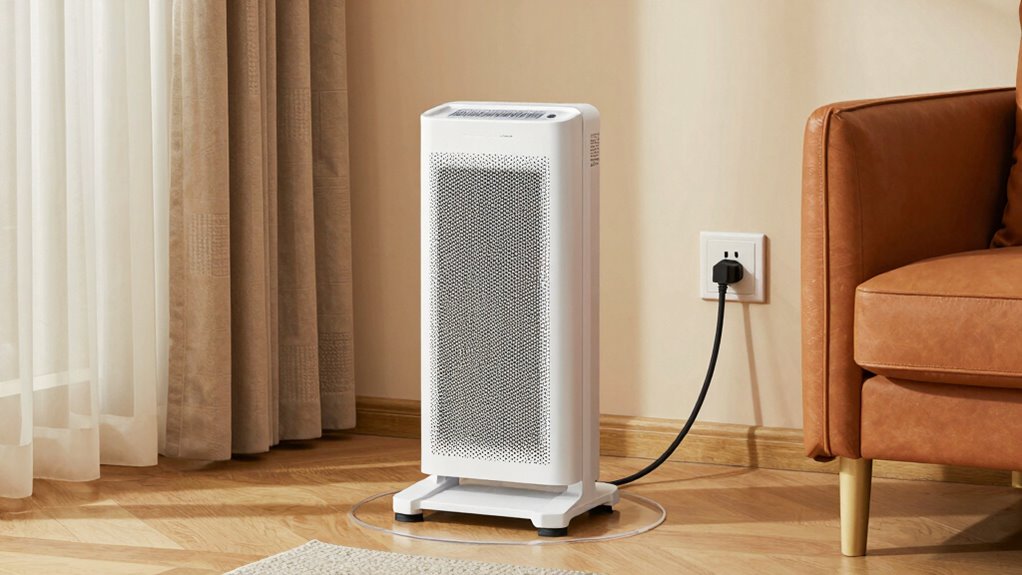
To reduce fire risks when using space heaters, always place the heater on a flat, stable surface away from clutter and combustible materials. Keep the heater’s cord in good condition, ensuring electrical insulation remains intact. Use heaters with fire-resistant materials for added safety. Follow these tips:
- Regularly inspect the power cord and plug for damage.
- Avoid using extension cords; plug directly into a grounded outlet.
- Keep the heater at least three feet away from furniture and curtains.
- Turn off and unplug the heater when unattended or sleeping.
What to Do If You Suspect an Electrical Overload or Fire Risk

If you notice flickering lights, a burning smell, or smoke near your space heater, act immediately to prevent a fire. First, unplug the heater and turn off the circuit breaker to cut power. Check the electrical insulation around the cord and plug for damage or fraying, which can increase fire risk. If the circuit breaker trips repeatedly, it indicates an overload that needs addressing. Avoid using extension cords or overloading outlets, as these can cause overheating. If you suspect a fire or see signs of damage, evacuate the area and call emergency services. Regularly inspect your space heater’s wiring and ensure your electrical system can handle the load. Taking swift action helps prevent serious damage and keeps your home safe.
Essential Tips to Keep Your Space Heater Use Safe
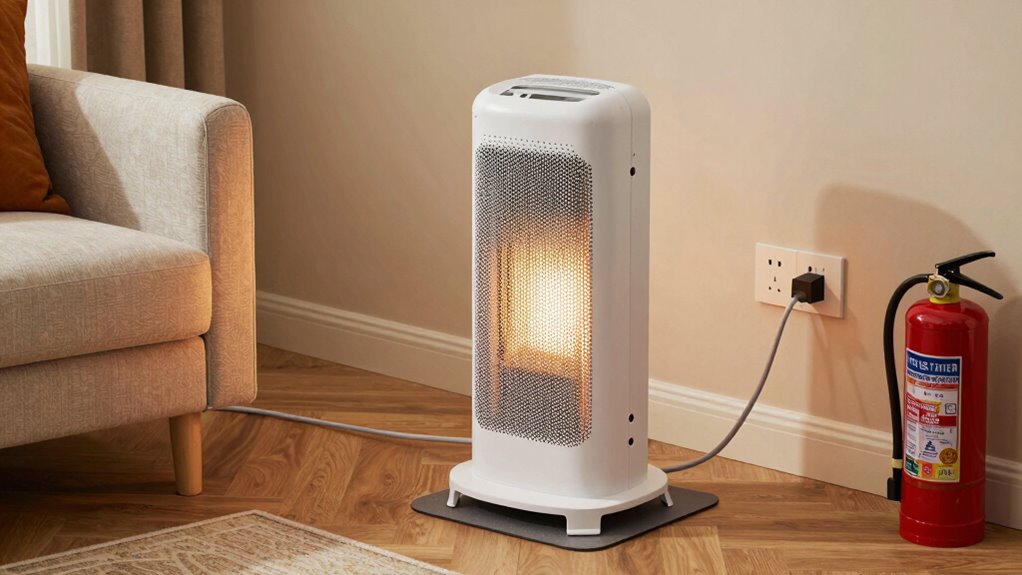
Using your space heater safely starts with selecting the right location—place it on a flat, stable surface away from curtains, furniture, and other combustibles. To guarantee safe operation, consider these tips:
Place your space heater on a stable surface, away from curtains and furniture, for safe operation.
- Check the electrical insulation of your heater regularly to prevent shocks and fire hazards.
- Keep the heater away from water or moisture to preserve its durability and avoid electrical issues.
- Avoid using extension cords; instead, plug directly into a grounded outlet capable of handling the load.
- Regularly inspect the heater for signs of wear or damage, replacing it if the electrical insulation or components show deterioration. Following these tips helps maintain the heater’s durability and reduces fire risk, keeping your space warm and safe.
Frequently Asked Questions
Can Using Multiple Heaters Overload My Electrical System?
Yes, using multiple heaters can overload your electrical system if you exceed your circuit’s capacity. Your electrical system has a limited capacity, and plugging in several space heaters can cause circuit overloads. To stay safe, check your circuit’s amperage and avoid running multiple high-wattage heaters simultaneously. Distributing the load across different outlets and circuits helps prevent overloads and reduces fire risk.
What Are the Signs of an Electrical Fire Risk From Space Heaters?
You might notice signs of an electrical fire risk from space heaters if you see scorch marks or melting around cords, which indicate cord overload. Smelly, burning odors or flickering lights can also signal wiring deterioration. If a heater’s cord feels hot or if you experience frequent breaker trips, these are warnings to unplug the device immediately and have your wiring inspected to prevent potential fire hazards.
Are There Specific Outlet Types Recommended for Space Heater Use?
Did you know that using the right outlet minimizes fire risk by up to 85%? For space heaters, always choose outlets designed for high power loads, like dedicated 15 or 20-amp circuits. Confirm outlet compatibility and check the power rating considerations for your heater. Avoid using extension cords or power strips, and opt for grounded outlets to safely handle your heater’s electrical demand, minimizing fire hazards.
How Often Should I Inspect My Space Heater for Safety Issues?
You should perform maintenance checks and safety inspections on your space heater at least once a month. Regularly inspect for frayed cords, loose plugs, or signs of wear and tear. Make sure the heater is clean and free of dust or debris, and check for any unusual smells or noises during operation. Consistent inspections help prevent fire risks and guarantee your heater operates safely and efficiently.
Can Placement Near Furniture or Curtains Increase Fire Hazards?
Yes, placing your space heater near furniture or curtains can considerably increase fire hazards. Keep furniture, curtains, and other flammable items at least three feet away from the heater. Proper furniture placement ensures good airflow and reduces the risk of heat buildup. Always monitor curtain proximity and avoid draping fabrics over the heater, as this can quickly lead to fires. Safe placement helps protect your home and loved ones.
Conclusion
By following these safety tips, you can enjoy the warmth of your space heater without worry. It’s understandable to worry about safety, but with proper outlet checks, correct placement, and cautious use, you greatly reduce fire risks. Remember, taking a few extra minutes now can prevent costly accidents later. Stay vigilant, follow guidelines, and stay warm safely—after all, your comfort and safety are worth it.