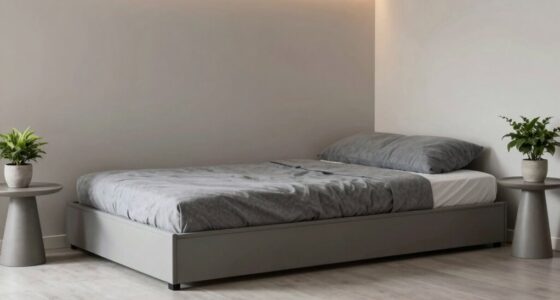
When selecting a canopy bed, you need to take into account your ceiling height to ensure it looks balanced and feels comfortable. For low ceilings, opt for low-profile frames and simple fabrics to avoid overwhelming the space. If you have high ceilings, embrace taller, more elaborate designs with flowing drapes and bold decor. Proper measurement is key to making your perfect layout, and there’s more to discover to make your room both stylish and functional.
Key Takeaways
- Measure ceiling height accurately, accounting for obstacles like crown molding and fixtures, to ensure canopy beds fit safely and proportionally.
- Standard canopy beds work best with 8-foot ceilings, while elaborate or tall frames benefit from 9-10 foot ceilings.
- For low ceilings, opt for low-profile beds and simple fabrics to prevent a cramped look.
- Tall ceilings allow for dramatic, ornate, or flowing canopy designs that enhance room grandeur.
- Proper planning around ceiling height helps create balanced, proportionate bedroom aesthetics and avoid clutter or imbalance.
Why Ceiling Height Is Key to Choosing the Perfect Canopy Bed

If you’re considering adding a canopy bed to your bedroom, ceiling height is one of the most important factors to evaluate. Low ceilings can make elaborate bed frame styles feel cramped or overwhelming, while high ceilings provide space to showcase intricate designs and tall posts. Additionally, ceiling height influences ceiling fan considerations; a large fan or chandelier might look out of place in a low-ceilinged room, while in a taller space, you can opt for statement lighting that complements your canopy. Understanding your ceiling height ensures your bed looks proportional and functional, avoiding a cramped or overly sparse feel. Moreover, interior proportions play a crucial role in creating a balanced and harmonious bedroom design. Properly assessing room dimensions helps you select a canopy bed that fits seamlessly into your space. Considering ceiling height early in your planning process ensures your canopy bed enhances the room’s overall aesthetic and comfort. In addition, understanding architectural features can help you make the most of your ceiling height and design choices. For example, knowing how to incorporate built-in storage or decorative elements can optimize your space and elevate your bedroom’s style. Ultimately, choosing the right ceiling height helps balance aesthetics with practicality, creating a cozy yet stylish bedroom environment.
How to Measure Your Ceiling Height Quickly and Accurately

Start by grabbing a measuring tape and measuring from the floor straight up to your ceiling. Make sure to account for any obstacles like crown molding or light fixtures that might influence your measurement. This quick step ensures you get an accurate height for choosing the right canopy bed. Additionally, consider modern design trends that incorporate ceiling height to enhance your space’s aesthetic and functionality. Remember to accurately measure the ceiling to avoid issues like family photoshoot fails with unexpected elements, which can sometimes highlight the importance of precise measurements in decorating. Being aware of your contrast ratio can also help you select lighting that complements your ceiling height and overall room ambiance.
Use a Measuring Tape
Measuring your ceiling height quickly and accurately is essential for choosing the right canopy bed. Grab a sturdy measuring tape, preferably one with a locking mechanism for ease. Start at the floor and extend the tape up to the ceiling, making sure it’s straight and taut. If you have a ceiling fan, turn it off and measure from the floor to the lowest point of the fan blades or the ceiling fan housing. When measuring around a bed frame, consider the height of the mattress and frame—this helps determine the available space for a canopy. Keep your tape measure level and steady, avoiding angles or slack. Precise measurements ensure you’ll select a canopy bed that fits comfortably without hitting the ceiling or obstructing fixtures. Additionally, understanding heat distribution in your room can help you decide if ceiling height adjustments or additional ventilation are necessary for comfort. Checking the room dimensions before purchasing can save you time and ensure proper fit.
Measure From Floor to Ceiling
To measure from floor to ceiling quickly and accurately, position your tape measure at eye level or a comfortable height near the floor. Stand straight and extend the tape upward, ensuring it’s flush against the ceiling without sagging. Keep the tape straight and tight for a precise reading. Imagine these steps:
- Place the end of your tape at your chosen starting point near the floor.
- Extend it upward, keeping it aligned with the wall behind.
- Note the measurement where the tape touches the ceiling directly above your bed frame or ceiling fan.
- Record the number to determine if your ceiling height suits a canopy bed or requires adjustments.
This method ensures you get an accurate ceiling height, helping you plan your bed frame placement perfectly.
Consider Room Obstacles
When measuring your ceiling height, it’s important to take into account obstacles like light fixtures, ceiling fans, or beams that might interfere with a straight measurement. These obstacles can affect your bed placement and how a canopy bed fits in the space. To get an accurate reading, use a tape measure or laser device, and measure around or beneath these features. For ceiling decoration, note any low-hanging fixtures that could clash with tall bedposts or canopies. If an obstacle is in the way, measure from the highest point of the ceiling, ensuring your bed won’t hit or crowd these elements. Considering room obstacles helps you select the right canopy bed height and avoid future headaches with ceiling clearance. Additionally, understanding smart-home integrations can help automate lighting or climate control to enhance your bedroom environment. Incorporating room layout planning can further optimize the space and ensure your canopy bed fits seamlessly. Proper mammography guidelines can also inform how you evaluate room safety and accessibility if you plan to include medical or diagnostic equipment in your space. Moreover, paying attention to essential oil diffusion techniques can create a calming atmosphere in your bedroom, enhancing relaxation and sleep quality. Being aware of safe installation practices ensures your ceiling fixtures and supports are securely installed to hold a canopy bed safely.
Ideal Ceiling Heights for Different Canopy Bed Styles

Your ceiling height plays a big role in choosing the right canopy bed style. Modern designs often work well with lower ceilings, while traditional styles typically need higher ones to look proportionate. Understanding these requirements helps you select a canopy bed that fits perfectly in your space. Additionally, considering safety guidelines ensures your bedroom remains a secure environment when installing or arranging your canopy bed. Being aware of space planning principles can also prevent overcrowding and ensure comfortable movement around your bed. Incorporating appropriate ceiling height considerations can enhance the overall aesthetic and functionality of your bedroom setup. Recognizing AI ethicist jobs can also inspire creative approaches to designing safe and ethically sound bedroom environments. Proper room layout considerations can further optimize your space for both comfort and style.
Modern Canopy Heights
Choosing the right ceiling height is essential for making a canopy bed look balanced and proportionate. Modern canopy heights vary based on bed frame styles and canopy fabric options, creating diverse visual impacts. For sleek, minimalist frames, a ceiling height of around 8 to 9 feet works well, allowing the canopy to appear airy without overwhelming the room. If you prefer a more dramatic effect with flowing fabrics, opting for ceilings of 9 to 10 feet enhances the sense of grandeur. Consider these options to visualize your space:
- Low-profile bed frames with light fabric drapes suit 8-foot ceilings.
- Tall, statement frames with heavy fabrics benefit from 9-10 foot ceilings.
- Floating canopies require slightly higher ceilings, around 9 feet.
- Minimalist designs thrive in standard 8-foot ceilings, with less fabric.
- Ceiling height plays a crucial role in ensuring the canopy bed complements your room’s overall design aesthetic. Additionally, understanding standard room dimensions can help you better plan the placement of your canopy bed for optimal visual harmony.
- Keep in mind that outdoor-inspired design principles can also influence how you choose your canopy height to create a cozy, inviting atmosphere.
Traditional Ceiling Requirements
A well-balanced canopy bed relies on the right ceiling height to look proportionate and stylish. Traditional ceiling requirements suggest a minimum of 8 feet for standard canopy bed styles, ensuring enough space to showcase the bed frame materials and maintain an open feel. For more ornate canopy bed styles with intricate headboards and detailed draping, a ceiling height of 9 feet or higher is preferable to avoid a cramped appearance. If you opt for a minimalist design, like a sleek metal frame, you might get away with slightly lower ceilings, but 8 feet remains ideal for balanced proportions. These guidelines help you select the right ceiling height to create a harmonious look, regardless of whether your canopy bed features classic wood, metal, or fabric components.
Tips for Making a Canopy Bed Fit in Low-Ceiling Rooms
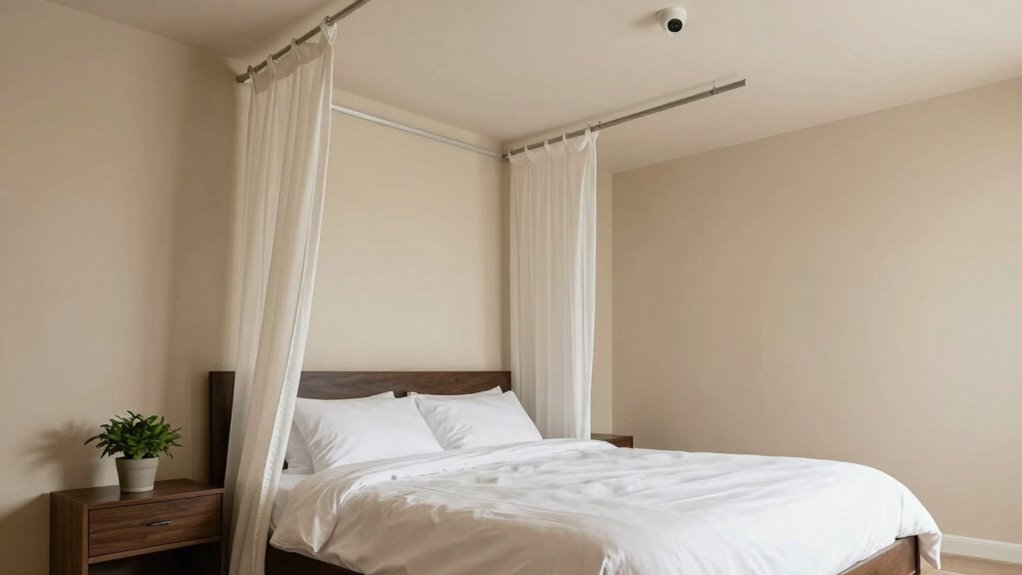
When working with low-ceiling rooms, it’s essential to select a canopy bed design that doesn’t overwhelm the space. Opt for sleeker bed frame styles with minimal ornamentation to keep the room feeling open. Choose bedding materials that reflect light, such as crisp linens or soft pastels, to create an airy vibe. Here are some tips:
- Use a low-profile bed frame to avoid adding height and clutter.
- Opt for transparent or light-colored drapes for the canopy to reduce visual weight.
- Keep the canopy simple—avoid heavy fabrics or elaborate designs.
- Incorporate bedding materials that enhance brightness and contrast, making the room feel larger.
These choices help your canopy bed blend seamlessly without making the room feel cramped.
Designing Your Room Around Tall Ceilings and a Canopy Bed

With tall ceilings, you have the opportunity to create a dramatic and luxurious bedroom that highlights the grandeur of your space. Choose color schemes that complement the height—deep, rich hues or bold contrasts can emphasize the vertical scale. Light, airy tones also work well, making the room feel spacious and inviting. When selecting bedding accessories, opt for layered textures and oversized pillows to add depth and comfort without overwhelming the space. Consider incorporating a canopy bed with flowing drapes or a statement frame that reaches toward the ceiling. Keep the design balanced by avoiding clutter around the bed, allowing the height and structure to stand out. This approach guarantees your room feels both impressive and cozy, making the most of your tall ceilings.
Common Mistakes When Installing Canopy Beds in Varying Ceiling Heights: And How to Avoid Them

Installing a canopy bed in a room with varying ceiling heights can be tricky if you don’t plan carefully. Common mistakes often stem from poor bed frame selection and neglecting bedding accessories. To avoid these pitfalls:
- Choose a bed frame that’s too tall for lower ceilings, making the space feel cramped.
- Overlook ceiling clearance when hanging canopy fabrics, causing them to touch or hang unevenly.
- Use bedding accessories that clash with the ceiling height, creating visual imbalance.
- Ignore the room’s proportions, resulting in a canopy that overwhelms or underwhelms the space.
Creative Ideas to Enhance Your Canopy Bed in Any Ceiling Space

No matter your ceiling height, there are plenty of creative ways to make your canopy bed a stunning focal point. Choose different bed frame styles to add personality—sleek modern frames or ornate vintage designs can dramatically change the room’s vibe. Enhance your bed with eye-catching bedding accessories like layered throws, decorative pillows, or canopy fabric drapes that complement your decor. If ceiling height allows, hang string lights or lightweight curtains from the canopy frame to create a cozy, inviting atmosphere. For lower ceilings, opt for a minimalistic frame and simple bedding to avoid clutter. Small details, like contrasting bedding colors or textured fabrics, also draw attention and elevate your space. These ideas help you maximize your canopy bed’s visual impact, regardless of ceiling height.
What to Do If Your Ceiling Is Too Low or Too High for a Canopy Bed

When dealing with ceilings that are either too low or too high for a traditional canopy bed, you need to adapt your approach to maintain style and functionality.
If your ceiling is too low, consider bed frame styles that sit closer to the floor, like platform or low-profile frames. Use bedding accessories that create a cozy, intimate feel without overwhelming the space.
For low ceilings, opt for low-profile or platform beds to keep your space feeling open and cozy.
For high ceilings, opt for taller bed frames that fill the vertical space, and add drapes or fabric accents that bring warmth and softness.
- Choose low-profile or platform bed frames for low ceilings.
- Use minimal canopy structures or skip the canopy entirely.
- Incorporate tall headboards to add visual height.
- Add bedding accessories like layered pillows for a layered look.
Frequently Asked Questions
Can a Canopy Bed Work in a Room With Sloped Ceilings?
A canopy bed can work in a room with sloped ceilings if you choose the right bedframe styles and consider ceiling slope considerations. Opt for a low-profile canopy frame that doesn’t extend too high, avoiding obstruction of the slope. Position the bed where the ceiling is highest, and use tall, vertical bedding to enhance the look. With thoughtful planning, a canopy bed adds charm even in rooms with sloped ceilings.
What Lighting Options Complement a Canopy Bed in Different Ceiling Heights?
Ever thought your canopy bed needs a spotlight? Think again! For low ceilings, opt for sleek pendant lighting that drapes down without crowding the space. High ceilings scream for statement chandelier styles, adding drama and elegance. You’ll want to choose fixtures that complement your ceiling height—compact pendants for cozy rooms and grand chandeliers for soaring ceilings. Lighting should enhance, not overshadow, your dreamy canopy retreat.
How Does Ceiling Height Affect Canopy Bed Mattress and Bedding Choices?
Your ceiling height directly influences your canopy bed’s mattress and bedding choices. If you have a low ceiling, opt for a smaller bed size and streamlined bedding styles to avoid making the room feel cramped. In rooms with high ceilings, you can choose larger mattresses and layered bedding for a luxurious look. Always consider the overall room proportions to create a balanced, comfortable space that complements your ceiling height.
Are There Specific Canopy Bed Designs That Suit Low or High Ceilings Better?
Think of your ceiling as the sky that frames your sanctuary. For low ceilings, opt for sleek, low-profile bed frame styles and lightweight canopy fabric options that create a sense of space. High ceilings welcome taller, more elaborate canopy designs and richer fabrics, adding drama and elegance. By choosing designs suited to your ceiling height, you’ll craft a cozy or grand retreat that feels just right.
How Can I Modify My Existing Canopy Bed for Different Ceiling Heights?
You can modify your existing canopy bed for different ceiling heights by adding or removing canopy bed accessories like fabric drapes or decorative trim to adjust visual height. Use DIY canopy modifications such as shortening or extending the bed posts or fabric length to suit your space. For low ceilings, opt for minimal draping, while tall ceilings can handle more elaborate canopies, making your bed feel proportionate and cozy.
Conclusion
So, next time you dream of a canopy bed, don’t forget the ceiling’s secret role. Ironically, the very height that might seem limiting can actually inspire clever solutions — or turn your room into a cozy cave. Whether your ceiling’s too low or sky-high, there’s always a way to make it work. Just remember, in the world of canopy beds, height isn’t just a number — it’s the whole story.