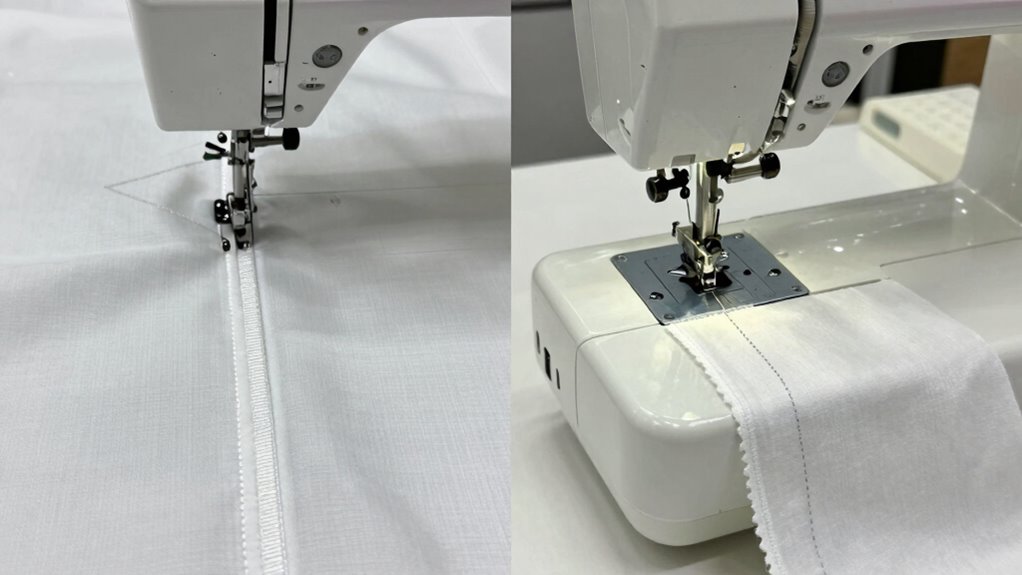
A sewing machine is your go-to for precise seams, hems, and detailed stitching, while a serger creates professional overlock edges that prevent fraying and add stretch. Using both tools lets you achieve durable, clean finishes with sleek seams and neat edges. For garments that look polished and last longer, knowing when to switch between a serger and a sewing machine is key. Keep exploring to discover how to combine these tools for top-tier results.

Get your wardrobe favorites delivered free with Prime
- Fast, free delivery on millions of items
- Prime Video, Amazon Music and more included
- Member-only deals all year
Key Takeaways
- Sergers create overlock seams that prevent fraying and give garments a clean, professional edge, especially on stretchy fabrics.
- Sewing machines handle detailed stitching, hems, and precise seam construction for a polished, tailored finish.
- Combining serger overlock stitches with sewing machine techniques results in durable, high-quality, and aesthetically appealing garments.
- Proper finishing techniques like rolled hems and bias tape application enhance the appearance and longevity of clothes.
- Matching finishing methods to fabric type and using the right tools ensures a professional, high-end look in finished garments.
Popular right now

Vitamix Propel Series 510 Professional-Grade Blender, 3 Programs, Black

Breville Bambino Espresso Machine, Brushed Stainless Steel

Vitamix Propel Series 750 Professional-Grade Blender, 4 Programs, Black
As an affiliate, we earn on qualifying purchases.
Serger vs Sewing Machine: What’s the Difference for Finishing?
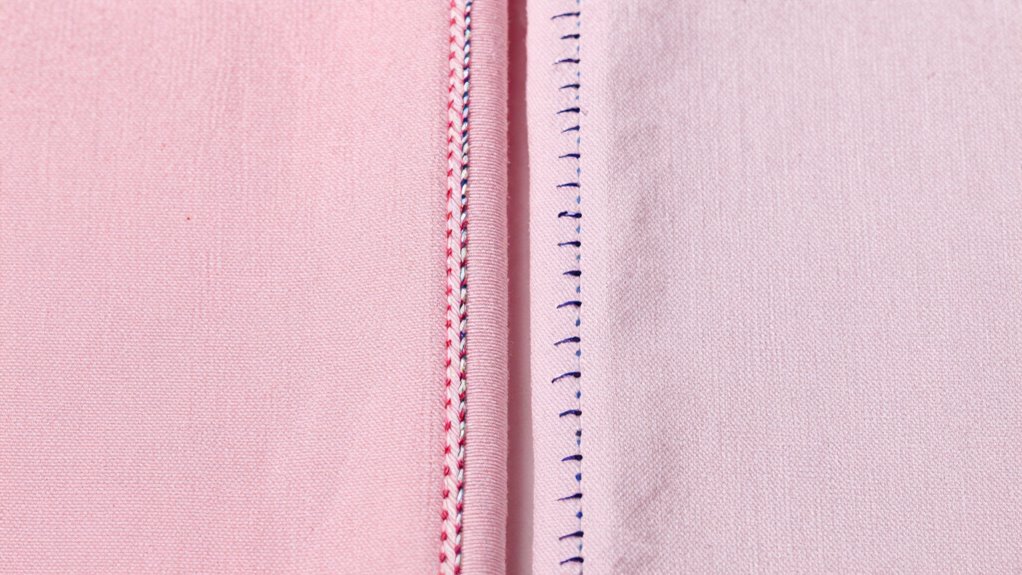
While both sergers and sewing machines are essential tools for finishing projects, they serve different purposes when it comes to the final touches. A sewing machine is versatile, allowing you to perform sewing and fabric cutting techniques with precision. Proper sewing machine maintenance guarantees smooth operation and clean finishes, preventing skipped stitches or fabric puckering. When preparing fabric, you’ll use fabric cutting techniques to achieve accurate edges and shapes, which is vital regardless of the machine you choose. A sewing machine excels at creating seams, hems, and detailed stitches, making it ideal for foundational construction. Understanding these differences helps you decide which tool to use for the finishing process, ensuring your project looks professional and polished. Additionally, choosing the right project finishing techniques can significantly enhance the overall appearance of your garments. Incorporating AI-powered tools can further streamline your workflow and improve sewing precision, making your projects more efficient and polished.
Best Finishing Techniques With a Serger for a Professional Look
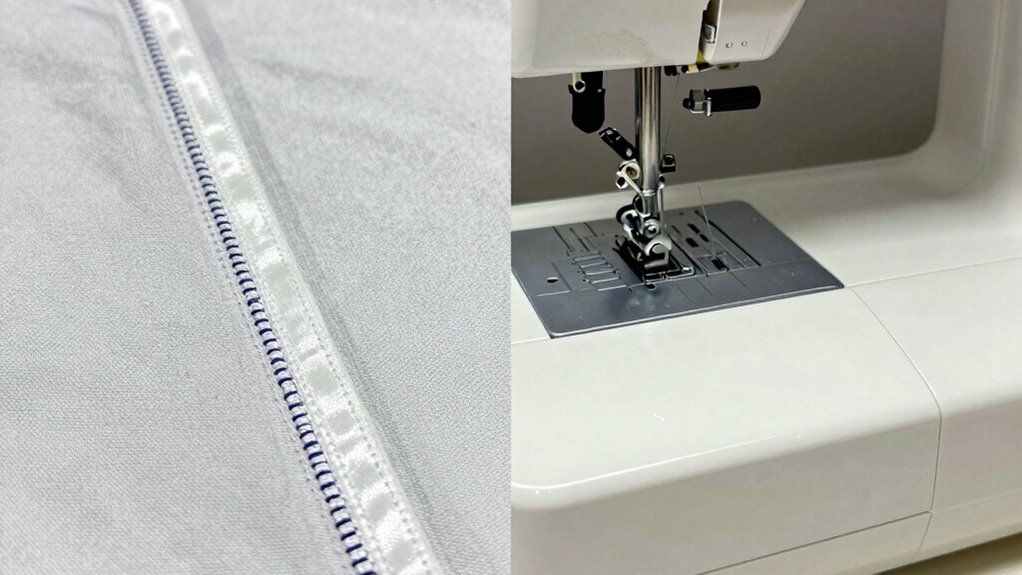
Using your serger, you can achieve a polished finish with overlock seams that prevent fraying and give your project a clean look. Sticking Wall Decor can be easily incorporated into your sewing space to keep tools organized and accessible. Rolled hem finishes add a delicate touch to hems and edges, perfect for lightweight fabrics. For a decorative flair, flatlock stitches offer both strength and visual appeal, elevating your sewing projects to a professional level. Incorporating traditional Italian craftsmanship techniques can further enhance the quality and authenticity of your finished garments. Additionally, mastering proper tension adjustment ensures your stitches are even and durable, resulting in a more refined final product.
Overlock Seam Techniques
To achieve a polished finish with your serger, mastering overlock seam techniques is essential. Using your serger, you can create neat, durable seams that enhance your garment’s professional look. Incorporate bias tape along raw edges for a clean, decorative finish, especially on necklines or armholes. To add a decorative touch, try appliqué with contrasting or coordinating threads, which your serger can secure with precision. Overlock seams prevent fraying and give your projects a refined appearance. When sewing seams, keep the fabric aligned and maintain consistent tension to ensure smooth, even stitches. Additionally, understanding the Free Floating feature of sergers can improve your stitch quality and allow for more versatile finishing options. Proper tension adjustment is crucial to achieving even stitches, ensuring your seams look professional and last longer. Utilizing proper tension settings can significantly impact the final look of your project, making your seams both durable and aesthetically pleasing. Paying attention to thread tension helps prevent puckering and ensures a clean, professional finish. Remember, practicing these techniques will help you develop a more consistent sewing skill set for better results.
Rolled Hem Finishes
A rolled hem finish is a sleek and professional way to finish raw fabric edges with your serger. It creates a narrow, tightly rolled edge that adds a polished look to lightweight fabrics like chiffon or silk. This hemming technique is perfect for scarves, curtains, or delicate garments, giving them a clean finish without bulky seams. You can also use rolled hems as a form of seam binding, preventing fraying and ensuring durability. To achieve this, adjust your serger settings for a narrow rolled edge and select the appropriate stitch. Here’s a quick comparison:
| Hemming Technique | Best For | Key Benefit |
|---|---|---|
| Rolled Hem | Light fabrics | Sleek, professional finish |
| Seam Binding | Raw edges | Prevents fraying |
Flatlock Decorative Stitches
Flatlock decorative stitches elevate the look of your finished seams, providing a professional and polished appearance. They mimic decorative embroidery, adding visual interest to hems, edges, or seams. Using a serger, you can create flatlock stitches that lie flat against the fabric, making finishes both durable and attractive. This technique also helps with fabric stabilization, preventing stretching or puckering during wear. You can experiment with different thread colors and stitch widths to customize the design and enhance your garment’s style. Flatlock stitches are perfect for activewear, sportswear, or decorative accents, giving your project a high-end look. With a bit of practice, you’ll master this versatile finishing technique that combines function and flair effortlessly. Proper technique is essential for achieving a smooth, professional finish with flatlock stitches, and understanding serger settings can greatly improve your results. Additionally, mastering sewing machine compatibility ensures you select the right equipment for your desired finish. Exploring finishing techniques can further elevate your sewing projects and achieve even more polished results. Incorporating correct tension adjustments can also make a significant difference in the quality of your flatlock stitches, ensuring they are even and secure.
How to Achieve a Polished Finish Using Your Sewing Machine
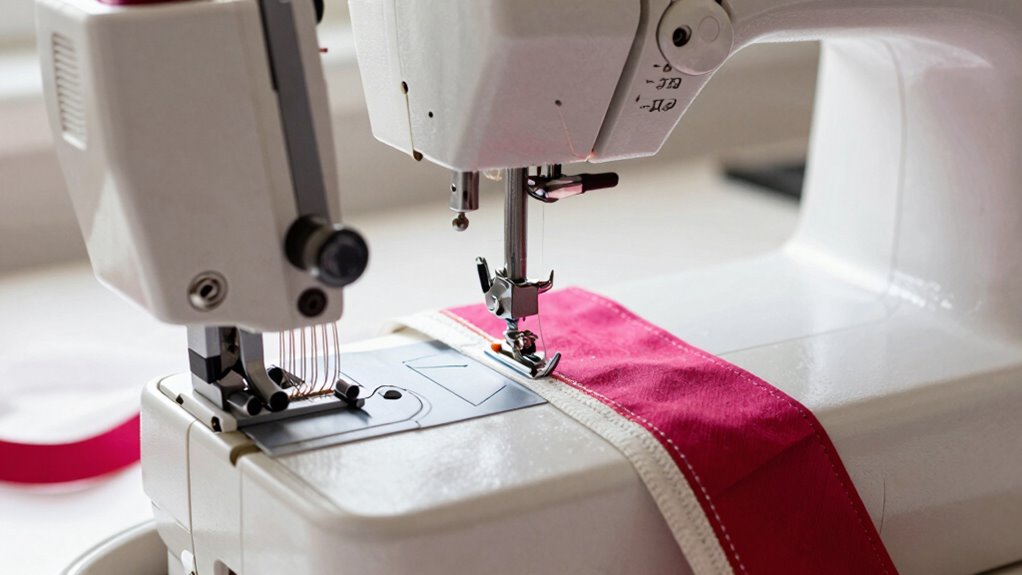
Achieving a polished finish with your sewing machine starts with paying attention to stitch quality and finishing techniques. First, check your thread tension; uneven tension can cause seam puckering, making your project look unprofessional. Adjust the tension so the stitches lay flat and smooth without puckering or bunching. Use a sharp needle suited to your fabric to prevent skipped stitches and uneven seams. Trim excess threads carefully for a clean look. Press seams as you sew, which helps set the stitches and reduces puckering. For a truly professional finish, consider using a stabilizer or interfacing on delicate fabrics. Consistently monitoring tension and stitch quality guarantees your seams stay even and smooth, giving your finished project a clean, refined appearance. Proper sewing machine maintenance also ensures consistent stitch performance and prolongs the life of your machine. Regularly inspecting and cleaning your machine’s parts helps maintain optimal stitch quality, which is essential for achieving professional-looking results. Additionally, understanding fabric types and selecting the appropriate settings can greatly improve your finishing results. Paying attention to your machine’s proper tension adjustment is also critical for maintaining even stitches across different projects.
Choosing the Right Finish for Different Fabrics

When choosing the right finish, consider the fabric type to guarantee proper seam construction. Think about how much flexibility you need—some fabrics require more stretch to prevent puckering. Also, evaluate the durability you want, so your seams hold up over time without sacrificing functionality. Incorporating appropriate finishes can also help prevent fraying and extend the lifespan of your garments, especially with seam integrity. Understanding fabric properties can guide you toward the most suitable finishing techniques for your project. Additionally, recognizing the fabric weight can influence your choice of seam finishing to ensure comfort and longevity. Being aware of garment construction techniques can further enhance the professional appearance of your finished clothing. Taking into account finishing methods can lead to more durable and polished results in your sewing projects.
Fabric Type Considerations
Choosing the right finish for different fabrics is essential to guarantee your project looks professional and holds up over time. When selecting finishes, consider fabric stretch and fabric weight. Lightweight fabrics, like chiffon, need delicate finishes to prevent fraying without adding bulk. Heavy fabrics, like denim, require sturdier seams to handle stress. Knits demand stretch-friendly finishes to maintain flexibility. Use the table below to match fabric types with ideal finishes:
| Fabric Type | Recommended Finishes |
|---|---|
| Light & delicate | Narrow serging or zigzag |
| Heavyweight | Overlocked seams or double stitching |
| Knit | Stretch stitches or serging |
Matching your finish to fabric characteristics guarantees durability and a polished look, making your clothes stand out beautifully.
Seam Flexibility Needs
Understanding the seam flexibility your fabric requires is essential to selecting the right finish. If your fabric has significant stretch, you’ll need a seam finish that maintains seam strength without restricting movement. For stretch fabrics like knits, choose finishes that allow fabric stretch, such as serger overlock stitches, which provide elasticity and prevent seam breakage. Woven fabrics with little to no stretch benefit from more stable finishes like zigzag or straight stitches, offering added durability. The goal is to balance seam strength with flexibility, ensuring your seams can move with the fabric without tearing or puckering. By understanding your fabric’s stretch properties, you can select a finish that preserves its natural movement while maintaining a professional look.
Finishing Durability
Selecting the right seam finish is essential for making sure your garment withstands frequent wear and washing. Different fabrics require specific finishes to maintain durability. For instance, tightly woven fabrics benefit from serger overlock stitches, which prevent fraying and hold up well over time. On the other hand, delicate fabrics like silk or lace may need a narrow zigzag stitch from your sewing machine, combined with gentle handling during sewing machine maintenance. Additionally, understanding fabric dyeing techniques helps you choose finishes that preserve color vibrancy and prevent fading. Proper finishing not only extends the life of your garment but also keeps it looking professional. By matching the finish to your fabric type and maintaining your equipment, you ensure your clothes are durable and well-finished, ready for long-term wear.
Combining Sergers and Sewing Machines for a High-End Finish
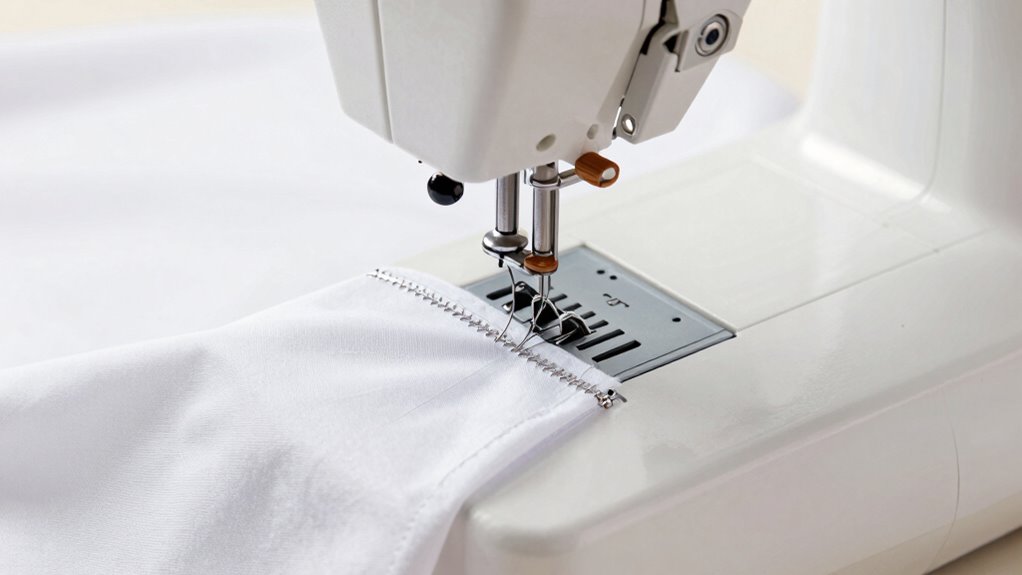
Combining sergers and sewing machines allows you to achieve a professional, high-end finish that neither machine can accomplish alone. Use your sewing machine for precise sewing and fabric cutting techniques, ensuring clean edges before serging. Then, switch to your serger for secure, stretchy seams and edge finishing that add durability and a polished look. Proper sewing machine maintenance keeps both tools running smoothly, preventing snags or skipped stitches during complex projects. Integrating these techniques results in stronger, cleaner seams, elevating your garment quality. Here’s a quick comparison:
| Task | Sewing Machine | Serger | Combined Approach |
|---|---|---|---|
| Seam Strength | Basic stitching | Overlock for durability | Reinforced, professional finish |
| Edge Finishing | Not typically used | Finishes raw edges | Seamless, clean edges |
| Fabric Cutting Techniques | Precision cuts | Not involved | Use machine for precise cuts |
| Maintenance Needs | Regular cleaning | Oiling, blade maintenance | Both require upkeep |
| Final Look | Neat stitches | Overlocked edges | High-end, polished appearance |
Common Finishing Mistakes and How to Avoid Them
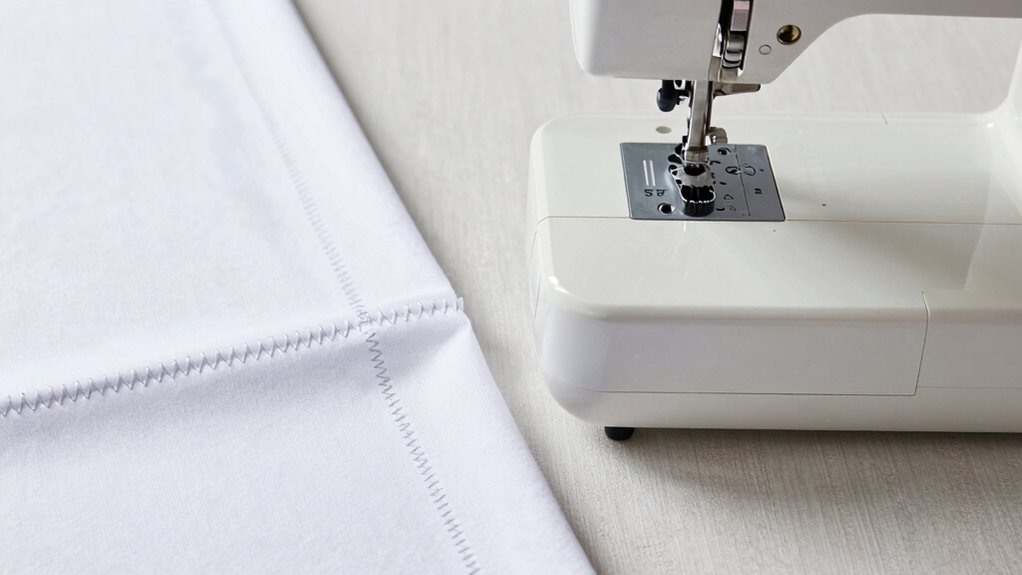
Even experienced sewers can make mistakes that compromise the professional look of their finished projects. Common finishing errors often stem from poor sewing thread selection or neglecting fabric stabilization techniques. Using the wrong thread can cause puckering, skipped stitches, or breakage, while skipping stabilization can lead to uneven edges or shifting fabric. To avoid these issues, verify you choose the appropriate thread weight and type for your fabric. Always stabilize delicate or slippery fabrics with interfacing or stay tape before sewing. Additionally, double-check tension settings and seam allowances to prevent uneven finishes. By paying attention to sewing thread selection and fabric stabilization techniques, you can achieve clean, durable edges that elevate your projects’ professional appearance.
Tips to Select the Best Tools for Professional Edges
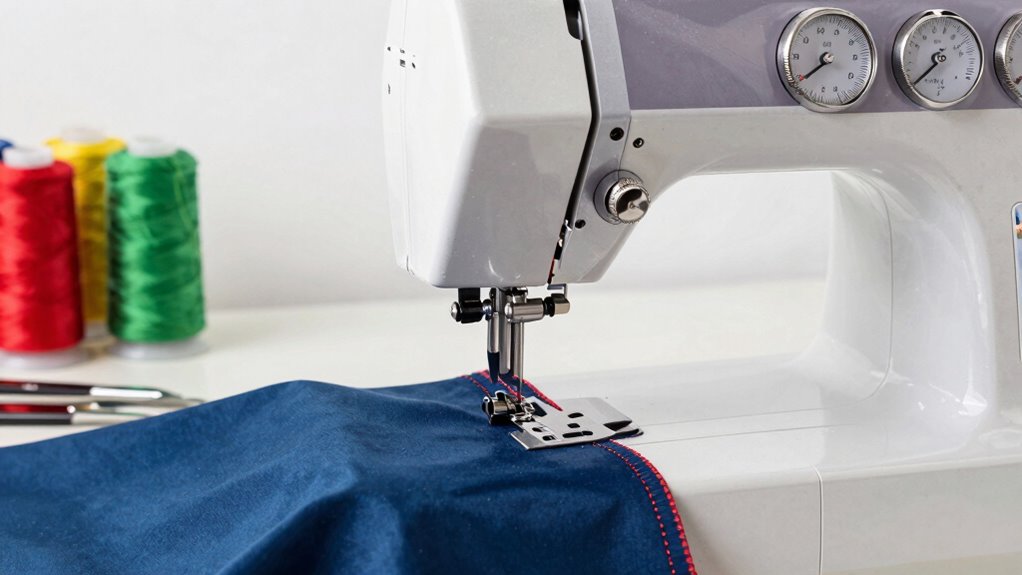
To achieve professional-looking edges, choosing the right tools is essential. Start by considering tools that support proper fabric care; gentle handling prevents fraying and damage. A quality serger or sewing machine with specialized feet can make finishing edges cleaner and more durable. When selecting threads, opt for high-quality options suited to your fabric type—this ensures smooth stitching and reduces breakage. For delicate fabrics, lightweight threads minimize puckering, while sturdier threads work better on heavier textiles. Match your thread color carefully to create seamless finishes, and always test on scrap fabric first. Investing in the right needles and presser feet also boosts precision. By paying attention to fabric care and thread selection, you’ll set a solid foundation for achieving flawless, professional edges.
Final Tips to Elevate Your Garments With Perfect Finishes
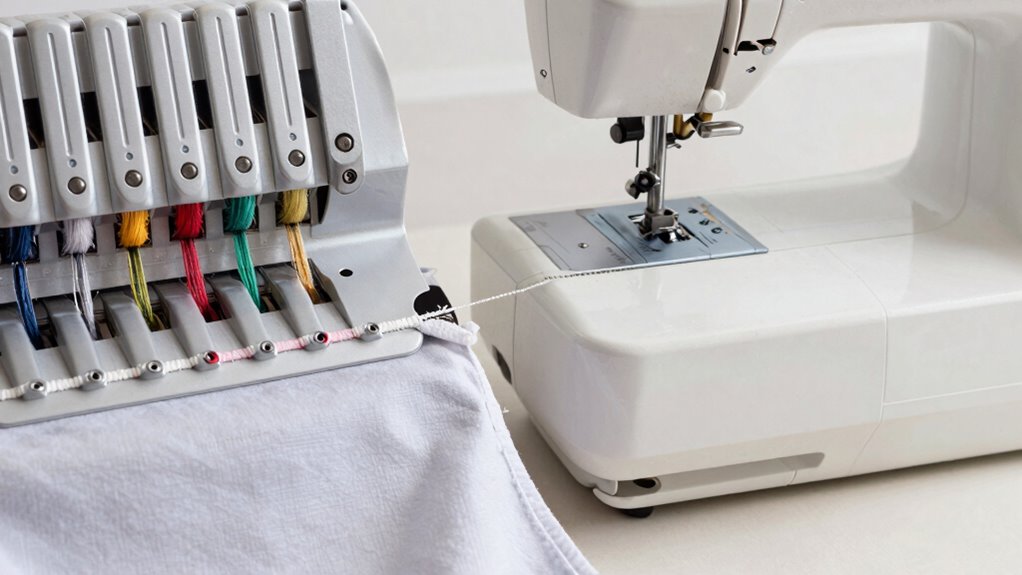
Achieving perfect garment finishes elevates your sewing projects from good to professional. To do this, focus on fabric stabilization to prevent puckering and maintain clean edges. Properly managing your seam allowance ensures consistent, neat seams that contribute to a polished look. Use pressing techniques after sewing to set your stitches and flatten hems. Trim excess fabric carefully, especially in curved areas, for a smoother finish. Additionally, reinforce high-stress seams with serging or topstitching to enhance durability. Remember to finish raw edges thoroughly to prevent fraying over time. These small but essential steps help you create garments with professional-quality finishes that truly stand out.
- Prioritize fabric stabilization for a smooth finish
- Maintain consistent seam allowances throughout
- Use pressing to set and shape seams
- Reinforce high-stress areas for longevity
Frequently Asked Questions
Can I Use a Serger and Sewing Machine Interchangeably?
You can’t always use a serger and sewing machine interchangeably because they serve different purposes. Your sewing machine handles seams and precise stitching, while a serger trims excess fabric and creates professional finishes. To switch between them effectively, adjust thread tension and needle selection accordingly. Keep in mind, sergers excel at finishing edges quickly, but for detailed work or topstitching, your sewing machine is essential.
What Maintenance Is Required for Professional-Looking Finishes?
To keep your finishes looking professional, you need to regularly check thread tension and adjust it as needed to prevent puckering or loose stitches. Also, perform needle maintenance by changing needles frequently — dull or bent ones can cause uneven stitching. Clean your machine or serger after each use to remove lint and dust. Proper maintenance guarantees smooth sewing, consistent stitches, and a polished, professional look for your garments.
How Do Different Stitch Types Affect Garment Durability?
Imagine you’re sewing a pair of jeans. Using a strong, reinforced stitch with proper tension increases seam strength, making the jeans more durable against daily wear. Different stitch types, like a double-stitched seam or zigzag, directly affect garment durability by improving stretch and resisting fraying. Adjusting stitch tension guarantees each stitch maintains ideal seam strength, preventing tears or unraveling over time. Your choice of stitches truly impacts your garment’s longevity.
Are There Specific Fabrics That Require Special Finishing Techniques?
Certain fabrics do require special finishing techniques to guarantee durability and a polished look. For example, delicate fabrics like silk or chiffon benefit from gentle fabric treatments and hand-finishing to prevent fraying. Heavyweight materials such as denim or canvas need sturdy seam finishes and proper fabric treatments to withstand wear. By choosing the right finishing techniques, you help your garments last longer and look professionally made.
What Are Cost Considerations When Choosing Between a Serger and Sewing Machine?
When choosing between a serger and a sewing machine, consider the price comparison to stay within your budget. Sergers tend to be more expensive upfront but can save time on finishing seams, which might reduce long-term costs. Sewing machines are generally more affordable and versatile. Budget planning helps you decide whether investing in a serger’s professional finish benefits your projects or if a basic sewing machine suits your needs better.
Conclusion
Perfecting finishes transforms your garments from basic to beautiful. Whether you’re wielding a serger’s swift seams or a sewing machine’s smooth stitches, mastering the methods makes your creations professional and polished. With keen knowledge, careful choice, and consistent practice, you can conquer common mistakes and craft mesmerizing clothes. Elevate your expertise, enjoy the journey, and embrace every edge with excellence—because your finished fashion deserves flawless finesse!